分类: business

  • Hill highlights Caribbean investment opportunities at CAF International Economic Forum

    Hill highlights Caribbean investment opportunities at CAF International Economic Forum

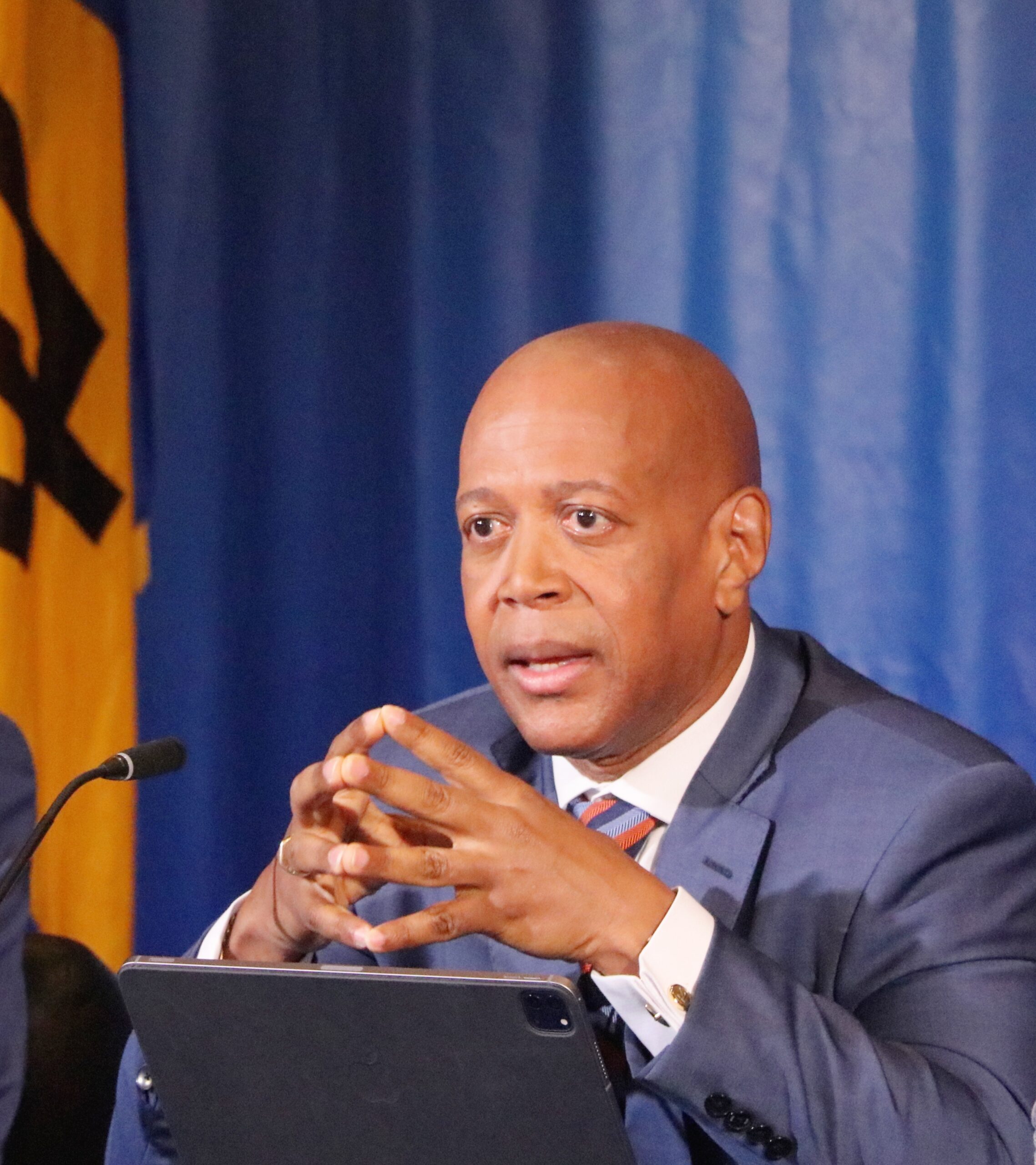
    Jamaica’s Minister of Industry, Investment and Commerce, Senator Aubyn Hill, has positioned the Caribbean as an increasingly attractive hub for sustainable capital, championing the nation’s economic discipline as a model for regional growth. The declaration was made during a high-level panel at the CAF International Economic Forum: Latin America and the Caribbean 2026 in Panama City.

    Participating in the ‘Economic Development Opportunities for the Caribbean’ discussion, Minister Hill detailed the strategic pillars making Jamaica a premier investment destination. He underscored the country’s internationally recognized fiscal management, which has successfully maintained manageable debt levels. ‘Government spending is strategically channeled into investments that build future resilience and fuel long-term economic expansion,’ Hill stated.

    Highlighting institutional strengths, the Minister pointed to Jamaica’s independent central bank, absence of currency controls, and robust legal frameworks. He emphasized a national commitment to advancing education, information technology, and skills development as critical components for sustainable development.

    The ministerial delegation, including Prime Minister Andrew Holness and Finance Minister Fayval Williams, engaged in pivotal talks with CAF President Sergio Diaz-Granados. These discussions yielded substantial progress on near-term and long-range financial collaboration, signaling deepened ties with the Development Bank of Latin America and The Caribbean.

    Beyond multilateral negotiations, Minister Hill conducted numerous bilateral meetings with financial and infrastructure firms from Panama, Europe, and the Middle East. The forum also facilitated business-to-business networking sessions, connecting Jamaican ICT and manufacturing executives with potential partners across Latin America to expand their commercial footprint.

  • TT Chamber calls for phased approach to gas price hike

    TT Chamber calls for phased approach to gas price hike

    Trinidad’s business sector is bracing for significant economic disruption as the National Gas Company’s (NGC) 77% price increase for commercial and industrial natural gas takes effect January 31. The Trinidad and Tobago Chamber of Industry and Commerce (TT Chamber) has urgently called for a phased implementation approach, warning that the abrupt hike threatens both domestic price stability and international export competitiveness.

    In a January 29 statement, the TT Chamber emphasized that manufacturers have historically relied on favorable natural gas pricing arrangements to support economic diversification efforts. The organization cautioned that the sudden price escalation could trigger widespread consumer price increases while undermining companies’ operational viability. Particularly concerning are potential ripple effects on electricity and water subsidies, which the chamber describes as “critical” to maintaining competitive positioning in regional and international markets.

    Trinidad Cement Limited (TCL), a major construction sector stakeholder, has confirmed impending cement price adjustments in response to the energy cost surge. General Manager Gonzalo Rueda Castillo identified natural gas as a critical manufacturing input, noting that the company has already absorbed substantial cost increases in raw materials, packaging, and general inflationary pressures. TCL stated that while it opposes the gas price increase and continues seeking alternative solutions, a price revision becomes “unavoidable” to ensure business continuity and market supply.

    The TT Chamber revealed that the manufacturing sector consumes approximately 1.5% of NGC’s total gas production, supporting over 100 manufacturers that employ thousands of Trinidadians. The business advocacy group proposed a coordinated policy framework including tiered pricing based on consumption levels, progressive utility metering systems, and rules-based subsidy adjustments tied to global energy market fluctuations.

    Emphasizing the need for transparent national dialogue, the chamber warned that Trinidad faces “broader and unavoidable structural adjustment challenges” in its historically subsidized economy. While acknowledging the government’s revenue needs, businesses urged measures that would minimize economic strain on both enterprises and consumers while protecting employment and export-led growth strategies.

  • Imports outstrips exports for Jan-Sept 2025

    Imports outstrips exports for Jan-Sept 2025

    Jamaica’s economic landscape for the first three quarters of 2025 reveals a deepening trade imbalance, with the nation’s import expenditures significantly outpacing its export revenues. Official data released by the Statistical Institute of Jamaica (STATIN) paints a clear picture of this challenging trend.

    Import spending surged to US$5.7 billion between January and September, marking a 3.6 percent increase from the US$5.5 billion recorded in the corresponding period of 2024. This upward trajectory was primarily fueled by a substantial 13.3 percent rise in purchases of raw and intermediate goods, coupled with a 10 percent jump in consumer goods acquisitions.

    In a contrasting development, the nation’s export sector experienced a contraction. Total export earnings fell by two percent, dropping to US$1.3 billion from the previous year’s US$1.4 billion. A sharp 10.7 percent decline in the value of mineral fuel shipments was identified as the principal driver behind this downturn.

    An analysis of Jamaica’s international trade partnerships shows the United States, China, Brazil, Japan, and Nigeria as its top five import sources. Expenditure on goods from these nations reached US$3.5 billion, a 6.8 percent increase from 2024’s US$3.3 billion, largely due to heightened imports in the ‘chemicals’ category.

    Conversely, the primary destinations for Jamaican exports were the United States, the Russian Federation, Iceland, the Netherlands, and Canada. However, revenues from these key markets fell by 3.0 percent to US$946.7 million, a decrease predominantly caused by reduced export values of ‘crude materials’.

  • Foton picks up new pickup

    Foton picks up new pickup

    Foton Jamaica has officially entered the full-size pickup segment with the grand launch of its flagship model, the Tunland V9, at its Oxford Road showroom on January 24. The introduction marks a strategic expansion for the brand into a premium and previously underserved sector of the Jamaican automotive market.

    Under the theme of ‘dominance,’ the V9 makes a significant visual statement with dimensions that align more closely with North American trucks than traditional compact pickups. Jhanelle Wagstaffe, Senior Sales Manager at Foton, expressed strong enthusiasm for the model’s arrival, stating it “speaks dominance, presence, versatility” and is an “excellent addition” to the existing lineup.

    Technologically, the Tunland V9 is engineered as a powerhouse. It features a sophisticated drivetrain combining a 2.0-litre turbo-diesel engine with a 48-volt mild-hybrid system. This configuration is designed to deliver robust performance and enhanced fuel efficiency through electric torque assistance and energy recovery. Power is managed by a standard eight-speed automatic transmission and a capable four-wheel-drive system complete with a locking rear differential and multiple off-road modes.

    A key differentiator from competitors is its rear suspension. Departing from the conventional leaf-spring design typical for work-focused trucks, the V9 employs a multi-link coil setup, which Foton claims provides a notably smoother ride and superior handling without sacrificing utility.

    The vehicle is built for dual purposes: serious work and premium comfort. It boasts a spray-coated bed capable of handling a full pallet and payloads up to one tonne, alongside a formidable 3.5-tonne towing capacity. Practical work features include integrated side steps and a damped tailgate with an auxiliary step.

    Inside, the V9 transitions into a luxury cabin. It is outfitted with powered leather seats, ambient lighting, a 12.3-inch digital driver’s cluster, and a massive 14.6-inch touchscreen infotainment system supporting Apple CarPlay. This screen also serves as the display for a standard 360-degree camera with a built-in dash-cam. Safety is addressed with six airbags and a suite of collision warning systems, while driving aids like Adaptive Cruise Control and Hill Descent Assist enhance both on and off-road experiences.

    The Tunland V9 now sits atop the Foton range in Jamaica, joining the compact G7 pickup, Miler truck, and C-series buses. With the smaller G7 already receiving a favourable market response, company executives are optimistic that the V9 will achieve similar success, appealing to both commercial buyers seeking a heavy-duty workhorse and individuals desiring a refined, luxurious daily driver.

  • REBUILD FACES EXECUTION TEST

    REBUILD FACES EXECUTION TEST

    Jamaica’s ambitious national rebuilding program following the devastating Hurricane Melissa faces significant implementation risks due to structural weaknesses in the state’s project execution capacity, according to a stark assessment from the Independent Fiscal Commission (IFC). The fiscal watchdog’s report, presented to Parliament on Tuesday, indicates that despite Jamaica’s strong fiscal buffers and available financing, the government’s historical pattern of capital underspending threatens to undermine reconstruction efforts.

    The October hurricane caused an estimated US$8.8 billion in damages, equivalent to approximately 41% of Jamaica’s GDP, prompting the temporary suspension of fiscal rules and triggering a major reconstruction initiative. However, the IFC’s January assessment reveals concerning execution trends, with central government capital spending between April and September reaching just $19.2 billion—nearly 46% below the original budget of $35.5 billion.

    The commission emphasized that the government’s stronger-than-expected budget performance in the first half of the 2025/26 fiscal year reflected widespread under-execution of capital projects rather than improved implementation capacity. This pattern of underspending, while supporting near-term fiscal outcomes, masks fundamental weaknesses in the state’s ability to deliver large-scale public investment programs.

    Jamaica entered the current fiscal year with robust macroeconomic indicators, including declining public debt, low unemployment, and improved credit ratings. By September 2025, the debt-to-GDP ratio had fallen to 60.3%, positioning the country to meet its legislated 60% debt target ahead of schedule. However, Hurricane Melissa has dramatically altered this trajectory, with public debt now projected to rise to 68.2% of GDP by fiscal year-end.

    The IFC acknowledged that Jamaica’s fiscal buffers and disaster-risk financing arrangements—including access to approximately US$663 million in contingent resources—enabled an immediate response to the catastrophe. International development partners have additionally mobilized up to $6 billion in potential financing to support recovery and reconstruction efforts.

    Despite these financial resources, the commission stressed that financing availability is not the primary constraint. Instead, it identified long-standing deficiencies in public investment management, including procurement delays, inadequate project preparation, and limited project-management capacity across government ministries and public bodies. The report specifically cautioned against what it termed “over-ambition in materially executing additional capital projects amid local capacity constraints.”

    As Jamaica transitions into the reconstruction phase, the IFC recommended aligning capital budgets more closely with actual delivery capacity while strengthening execution frameworks to ensure rebuilding efforts translate into sustainable economic growth rather than temporary fiscal improvements.

  • A note from the liquidator

    A note from the liquidator

    In a significant development for Caribbean media, Trinidad and Tobago Newsday has published its final edition and entered formal liquidation proceedings. Liquidator Maria Daniel confirmed the difficult decision, acknowledging the profound impact on employees, readers, and the nation’s media landscape.

    The closure stems from challenges facing legacy media worldwide, including escalating operational expenses, transformative digital disruption, and structural decline in traditional advertising markets. Despite these pressures, Daniel emphasized that the liquidation process prioritizes treating employees with fairness and dignity, recognizing their decades of service and contributions to national storytelling and democratic discourse.

    Notably, employee severance obligations constitute the largest creditor claim in the liquidation. Daniel called upon all parties with outstanding debts to Newsday to fulfill their obligations promptly, as these collections are essential for providing former staff with deserved financial compensation for their service.

    While the print edition has ceased, Newsday’s substantial digital assets remain valuable. The publication maintains significant digital traction with millions of annual website visits, an engaged social media following, and one of the most comprehensive journalistic archives documenting Trinidad and Tobago’s modern history. These assets—including digital reach, brand equity, and historical archives—represent meaningful commercial value and form a core component of the liquidation sale.

    During the transition period, businesses can leverage greatly reduced advertising rates and free digital subscriptions to access Newsday’s established national audience at below-market costs. These measures aim to support the business community while maintaining platform engagement and funding operational expenses.

    The liquidator has issued a formal call for prospective buyers and partners, describing Newsday as a “uniquely positioned media asset: nationally recognized, digitally active, culturally embedded, and historically significant.” Opportunities exist for media operators seeking expansion, investors desiring digital footholds, academic institutions valuing historical archives, or corporations needing trusted communication platforms.

    Interested parties are directed to contact the liquidator’s office at the provided email addresses for confidential discussions regarding asset acquisition or partnership opportunities.

    The message concluded with gratitude to readers who welcomed Newsday into their lives for over three decades, recognition of staff who built the institution, and affirmation that the stories captured in Newsday’s pages remain part of Trinidad and Tobago’s national memory.

  • Wage pressures strain budget

    Wage pressures strain budget

    Jamaica’s fiscal stability faces mounting pressure as public sector wage demands intensify, creating significant budgetary challenges during the nation’s critical post-hurricane recovery phase. The Independent Fiscal Commission (IFC) has issued a stark warning about compensation costs that have already surpassed allocated amounts in the first half of the fiscal year, with further increases anticipated as pending wage negotiations reach conclusion.

    The financial strain emerges at a particularly vulnerable moment, with the Caribbean nation grappling with the extensive aftermath of Hurricane Melissa’s devastating impact last October. The catastrophic weather event inflicted an estimated US$8.8 billion in damages, compelling the government to suspend existing fiscal regulations through disaster clauses while seeking a two-year extension for its legislated debt reduction targets.

    According to the IFC’s January assessment presented to Parliament, employee compensation reached $255.1 billion between April and September, exceeding original budgetary projections by $3.2 billion. Wage and salary expenditures alone surpassed expectations by $2.3 billion, even before the resolution of ongoing negotiations. These compensation costs constituted nearly half of the central government’s recurrent expenditure during this period, highlighting their substantial role as one of the budget’s most inflexible components.

    The commission emphasized that Jamaica currently operates without active fiscal rules governing wage and salary expenditures, and the government has not committed to reinstating such frameworks despite repeated recommendations. This regulatory gap has created fiscal uncertainty, as wage settlements frequently occur outside the standard budget cycle, forcing post-approval revisions to spending plans already authorized by Parliament.

    While the national accounts rebasing in 2025 placed the wage bill at approximately 12.1% of GDP—lower than previous estimates but still elevated by regional standards—the absence of a structured compensation negotiation cycle continues to pose substantial fiscal risks. The IFC reiterated that implementing Section 48H of the Financial Administration and Audit Act, which provides for a formalized negotiation process aligned with budget preparation, would enhance predictability and mitigate financial vulnerabilities.

    As the government prepares to outline its reconstruction financing strategy, concerns mount that increased wage costs may necessitate reductions in capital expenditure, which already experienced a $16.3 billion (46%) under-execution during the same six-month period. Public debt is projected to rise to 68.2% of GDP by year-end, up from 60.3% in September, further complicating Jamaica’s financial landscape as it enters a demanding reconstruction phase.

  • BCMG introduces parametric insurance to deliver faster relief and lower costs

    BCMG introduces parametric insurance to deliver faster relief and lower costs

    KINGSTON, Jamaica – In response to Jamaica’s escalating vulnerability to extreme weather patterns, BCMG Insurance Brokers has introduced a groundbreaking parametric insurance solution aimed at addressing critical deficiencies in the nation’s insurance landscape.

    The innovative product, announced through an official company release, fundamentally reimagines disaster compensation by enabling automatic payouts when predefined environmental thresholds are breached. This approach eliminates lengthy damage assessment processes that typically delay financial assistance following catastrophic events.

    Chief Executive Officer William Craig emphasized the product’s strategic importance: “Recent hurricane seasons have revealed a dangerous disparity between urgent financial needs post-disaster and the sluggish pace of conventional insurance settlements. Our parametric model delivers funds to policyholders within weeks rather than months, preventing economic paralysis during recovery phases.”

    The mechanism operates through objectively verified parameters including wind velocity, precipitation measurements, or seismic activity within specified geographical boundaries. Independent data from meteorological services, satellite imagery, and international agencies trigger automatic disbursements without requiring physical inspections or claims negotiations.

    Chief Technical Officer Ian Miller highlighted the product’s accessibility: “Many Jamaicans remain underinsured due to complex procedures and prohibitive costs associated with traditional coverage. Parametric insurance simplifies this dynamic – clients purchase protection based on clear triggers and receive predetermined payments when those triggers occur.”

    While not replacing comprehensive traditional policies, the parametric product complements existing coverage by providing immediate liquidity for deductibles, uninsured repairs, or business continuity needs. The company has implemented sophisticated policy designs to minimize basis risk – ensuring payouts closely correlate with actual losses through geographically tailored triggers.

    By streamlining administrative overhead, BCMG asserts the new product reduces operational expenses, resulting in more affordable premiums while maintaining substantial protection value. Policyholders retain flexibility in allocating funds according to their most pressing recovery needs.

    The initiative represents a significant advancement in climate resilience for Caribbean nations increasingly affected by intensifying weather systems, offering a hybrid risk management approach that combines rapid parametric response with comprehensive traditional coverage.

  • Trump picks former US Fed official as next central bank chief

    Trump picks former US Fed official as next central bank chief

    WASHINGTON—In a significant economic policy move, former President Donald Trump announced his intention to nominate Kevin Warsh, a former Federal Reserve governor, as the next chairman of the U.S. central bank. The selection concludes a highly scrutinized search for leadership at the nation’s most powerful financial institution.

    Warsh, who served on the Fed’s board from 2006 to 2011 as its youngest-ever governor at the time of his appointment, has emerged as Trump’s preferred candidate to replace current Chair Jerome Powell. Trump has repeatedly criticized Powell for what he perceived as insufficiently aggressive interest rate reductions during his tenure.

    “I have known Kevin for a long period of time, and have no doubt that he will go down as one of the GREAT Fed Chairmen, maybe the best,” Trump declared on his Truth Social platform, adding that Warsh possessed the ideal appearance and reliability for the role.

    Financial markets responded positively to the announcement, with precious metals declining and the dollar strengthening—indicators that investors viewed the selection favorably. Josh Lipsky of the Atlantic Council noted that “markets are broadly happy at the moment,” characterizing Warsh as a conventional Republican choice who respects the Fed’s institutional history and independence.

    However, the nomination faces substantial political hurdles. Warsh must secure confirmation from the U.S. Senate, where Banking Committee members have already expressed concerns about Trump’s apparent efforts to influence monetary policy. Republican Senator Thom Tillis has vowed to oppose all Fed nominations until an investigation into Powell is resolved, while Democratic Senator Elizabeth Warren warned the selection represents “Trump’s attempt to seize control of the Fed.”

    The nomination occurs amid delicate economic conditions, with policymakers balancing concerns about persistent inflation against signs of cooling employment. Warsh, historically considered an inflation “hawk,” has recently aligned more closely with the Trump administration’s calls for lower rates. His challenge will be to maintain the Fed’s independence while pursuing its dual mandate of price stability and maximum employment.

  • Agro-Industrial Park at Diamonds to Launch Immediately, Cabinet Says

    Agro-Industrial Park at Diamonds to Launch Immediately, Cabinet Says

    The government of Antigua and Barbuda has issued an immediate directive to commence construction on the Diamonds Estate Agro-Industrial Park, declaring the initiative a critical component of the nation’s strategy to enhance food security and economic stability. The urgent mandate was delivered by Maurice Merchant, Director General of Communications in the Prime Minister’s Office, during a recent Cabinet briefing.

    Emphasizing the administration’s serious commitment, Merchant stated that the Gaston Browne government views food security as an utmost national priority. This sense of urgency has been magnified by recent global disruptions to shipping lanes and international supply chains, exposing vulnerabilities in the nation’s food import dependency.

    The planned Agro-Industrial Park is designed to tackle deep-rooted structural deficiencies within the domestic agricultural sector. Key challenges targeted include significant post-harvest losses, a lack of value-added processing capabilities, and overall supply chain inefficiencies. The facility will concentrate on cultivating priority crops such as cassava, sweet potatoes, tomatoes, peppers, onions, and various legumes.

    Implementation will emphasize the adoption of advanced agricultural technologies, including modern irrigation systems for efficient water use, mechanization, and sophisticated post-harvest management techniques. A core objective is to boost local processing and value-addition, enabling domestically grown produce to displace a substantial portion of food imports while simultaneously creating improved market pathways for local farmers.

    This project is not standalone but rather a pivotal element of a broader governmental strategy. This comprehensive plan includes initiatives to ramp up local production volumes, supply essential equipment to farmers, and reduce duties and taxes on crucial agricultural inputs. Further operational details regarding implementation and access for farmers and agri-businesses are anticipated to be released as project work gets underway.