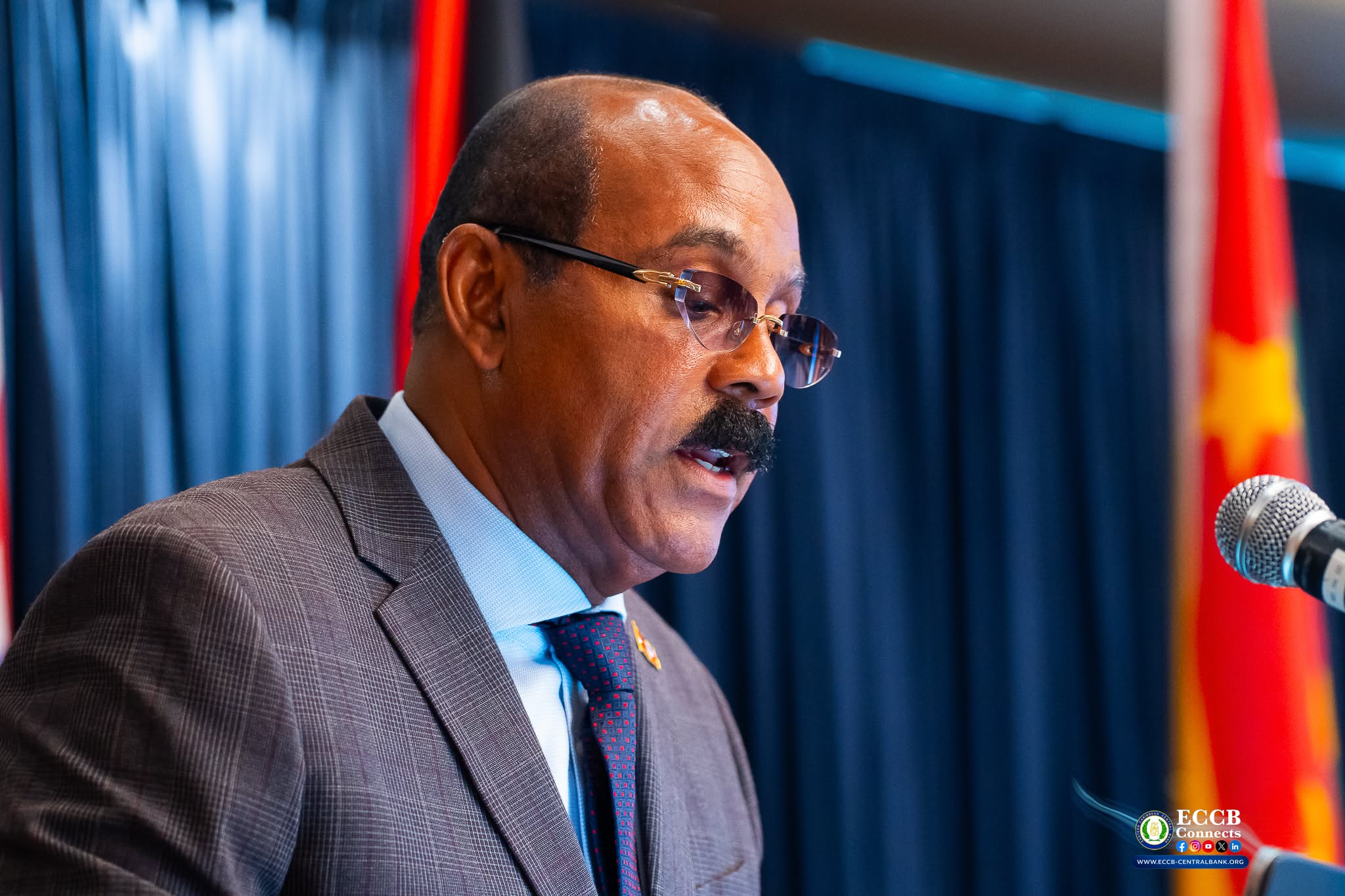
The twin-island Caribbean nation of Antigua and Barbuda has ruled out local transmission of malaria following the detection of two imported cases, one of which ended in a fatality, Prime Minister Gaston Browne has confirmed. In an address to local radio station Pointe FM on Saturday, Browne shared that public health teams have concluded all mandatory contact tracing and routine monitoring protocols for the two cases, and no evidence of secondary community spread has been identified.\n\n”We recorded two malaria cases, both of which were imported into the country, and tragically one patient did not survive the infection,” Browne stated during the interview. He went on to clarify that after exhaustive contact tracing and public health follow-ups, there is no data to suggest the pathogen has spread beyond the initial imported cases.\n\nThe prime minister emphasized that the overall risk of sustained local transmission remains extremely low, noting that the primary mosquito species responsible for carrying and spreading malaria is not widely established across Antigua and Barbuda. “We do not have large populations of that vector here, which makes widespread transmission via mosquitoes or other carriers highly unlikely,” he explained.\n\nThe announcement comes as the Antigua and Barbuda government moves to strengthen national public health surveillance systems, prompted by growing global concern over ongoing Ebola outbreaks in multiple regions of Central and East Africa. As part of updated precautionary measures to mitigate risks from incoming international travelers, the country has reactivated its specialized Infectious Disease Centre (IDC) – a facility first established during the height of the COVID-19 pandemic.\n\nBrowne explained that the reactivated IDC will serve as a dedicated hub for isolating any travelers who develop symptoms of a contagious infectious disease while in the country, with pre-planned protocols in place to immediately launch contact tracing and containment efforts. The prime minister also pushed back against past criticism of the facility, which opponents once labeled an unnecessary public expense.\n\n”Epidemics and pandemics are an ongoing recurring risk that all countries face,” Browne noted. “Maintaining a dedicated infectious disease center to manage these kinds of transmittable illnesses is a critical asset, and a core component of our national health infrastructure.”\n\nIn addition to reactivating the IDC, national public health authorities have also restored enhanced entry screening protocols at the country’s international airports. These measures include the reintroduction of infrared thermal scanners to screen arriving passengers for fever, a common early symptom of many infectious diseases, as public health teams continue to monitor the evolving global outbreak situation closely.
作者: admin
-

Shooting incident at White House; suspect killed after opening fire on Secret Service
A violent incident near the heart of U.S. government power ended with a suspect dead Saturday evening, after the 21-year-old gunman opened fire at a White House security checkpoint, according to a recent report from CBS News.
Law enforcement and intelligence sources confirmed the attacker has been identified as Nasire Best, a young man already on the Secret Service’s radar prior to the shooting. Officials familiar with the case have confirmed Best had a documented record of mental health challenges, a detail that adds context to the pre-existing awareness of the suspect among federal security agents assigned to protect the presidential complex.
Following the confrontation, former U.S. President Donald Trump publicly commended the responding Secret Service officers for their rapid, disciplined response to the threat. In a public statement posted to his Truth Social platform, Trump noted that the suspect carried a history of violent behavior and what he described as a possible obsession with the White House, one of the most iconic and heavily protected buildings in the United States.
This latest security breach attempt comes exactly one month after another armed incident near the White House, when a separate gunman opened fire in the vicinity of the annual White House Correspondents’ Dinner, an event that draws hundreds of high-profile journalists, political figures, and celebrities to Washington D.C. each year. The back-to-back security incidents near the presidential residence have renewed conversations about the vulnerabilities of perimeter security around the White House complex, even as federal security officials highlight the training and quick response that prevented broader loss of life in both cases. As of this reporting, no additional details about possible motives for Best’s attack have been released to the public, and an investigation into the incident remains ongoing.
-

Antigua and Barbuda confirms two imported malaria cases; one traveller dies
The twin-island Caribbean nation of Antigua and Barbuda is on high public health alert after health authorities confirmed two imported cases of malaria, one of which has ended in the death of an international traveler. In an official public statement released Friday, the country’s Ministry of Health, Wellness, Environment and Civil Service Affairs moved quickly to reassure residents that no evidence of local malaria transmission has been detected to date, keeping overall population risk at a low level.
According to ministry documentation, the first confirmed case involved an adult male traveler coming from a country where malaria is considered endemic. The man sought medical care almost immediately after his arrival in Antigua and Barbuda, and was promptly hospitalized to start malaria treatment. Health officials report that he responded well to clinical interventions, and departed the country roughly five days after his initial arrival.
The second case, which resulted in the fatality, involved another adult male traveler who also journeyed to the islands from a malaria-endemic region. This traveler became ill shortly after crossing into Antigua and Barbuda, and was admitted to the Sir Lester Bird Medical Centre in critical condition. Despite aggressive medical intervention and round-the-clock supportive care, the patient could not be saved.
Public health officials confirmed that both travelers either displayed active malaria symptoms upon arrival or developed symptoms within just a few hours of entering the country. A full review of their travel history and the timeline of symptom onset has led investigators to classify both infections as clearly imported, meaning they were contracted outside of Antigua and Barbuda’s borders.
Immediately after the cases were identified, national public health surveillance and response protocols were activated. Epidemiological teams have launched full investigations into the cases, conducted widespread vector surveillance to track local mosquito populations, completed contact tracing for any individuals who may have had exposure, and implemented ongoing monitoring to catch any potential secondary spread early.
For context, malaria is a life-threatening mosquito-borne disease caused by Plasmodium parasites, which is primarily spread through bites from infected female Anopheles mosquitoes. Common symptomatic presentations include high fever, chills, severe headaches, body aches, nausea, vomiting, and general muscular weakness.
While local entomological surveys have confirmed that Anopheles mosquitoes do exist in Antigua and Barbuda, ongoing surveillance shows that the species remains limited in range and is only present in very small populations across the islands. As part of the targeted public health response, authorities have ramped up mosquito control operations in all areas linked to the two confirmed cases. Current measures include comprehensive environmental inspections, source reduction efforts to eliminate mosquito breeding grounds, targeted larvicide treatment, focused fogging in high-risk areas, and continuous monitoring of local mosquito population levels.
Beyond direct control operations, the Ministry of Health is issuing a public advisory urging all local residents to take proactive steps to reduce mosquito breeding sites around their homes and places of business. Recommended actions include draining all standing water from containers, covering all stored water vessels, cleaning clogged drains on a regular schedule, and seeking immediate medical care if anyone develops fever or flu-like symptoms, particularly after returning from international travel.
Officials emphasized that the evolving situation is under constant close monitoring, and reassured the public that the country’s established public health infrastructure remains fully activated and prepared to address any further developments.
-

Restoring vision and hope
A recent four-day humanitarian cataract surgery mission in Trinidad and Tobago has thrown a sharp spotlight on a growing public health crisis: thousands of elderly citizens across the twin-island nation are living with preventable blindness, trapped by financial barriers and limited access to timely care. Leading the mission organized by disaster and medical humanitarian group HANDS International at the Community Hospital of Seventh-day Adventists in Cocorite, Trinidad-born US-based physician Dr. Reynold Agard detailed the scale of unmet need that his team encountered during their work.
According to Agard, the vast majority of patients affected are elderly people living with age-related cataracts, a condition whose progression is significantly accelerated by common regional health issues including high diabetes rates, poor dietary habits, and chronic overexposure to strong Caribbean sunlight. Cataracts develop when the eye’s natural lens becomes clouded, essentially leaving sufferers to view the world through frosted glass, and surgery is the only effective treatment to restore vision. Across the entire Caribbean, Agard noted, cataracts have emerged as a leading cause of preventable blindness, driven by overlapping demographic and public health trends: populations across the region are aging, rates of lifestyle-related conditions such as diabetes and heart disease are rising rapidly, and many low-income patients cannot access or afford the care they need.
When the mission launched, organizers initially set a goal of completing 3,000 free or subsidized cataract surgeries. But the overwhelming flood of demand pushed the team to raise their target to 4,000 procedures. Despite this adjustment, multiple logistical and financial barriers prevented the team from hitting the expanded goal. Pre-surgery screenings and lens measurements, required to prepare for successful procedures, normally cost patients between TT$300 and TT$500 — a sum that was out of reach for most patients seeking care through the mission. As a result, the surgical team had to divert significant time and resources away from procedures to conduct these essential screenings on-site for free. Additional delays came from supply chain holdups and broken air conditioning at the hospital, further slowing the pace of work.
Agard emphasized that the issue is not a lack of local medical skill: Trinidad already has highly trained surgeons capable of performing cataract procedures. To address the gap in access, Agard and his team, which included world-renowned high-volume cataract surgeon Dr. Jacobs — one of the pioneers of the four-minute rapid cataract procedure — have offered to train local clinicians in this efficient, high-throughput surgical technique that allows more patients to be treated in less time.
For the patients who did receive surgery, the results have been life-changing. Agard shared moving accounts of the emotional reactions many had when their bandages were removed and vision was restored. One elderly woman, who had only been able to see the faint shadows of her grandchildren for three years, trembled and cried when she was able to view clear photos of her family on her mobile phone for the first time. “Everyone cries when they realize blue is really blue again, and they can finally see red clearly,” Agard said.
For Agard, the mission was far more than a humanitarian project — it was a personal homecoming. A graduate of Roxborough Secondary School and the Polytechnic Institute, Agard migrated to the US, where he completed medical training at Penn State College of Medicine, now runs a private practice in Delaware, and teaches at hospitals across the Philadelphia-Delaware region. He has been part of HANDS International since the organization was founded 18 years ago, in the wake of devastating hurricanes that struck the eastern Caribbean. Since its launch, the group has deployed to respond to humanitarian crises and medical needs across the globe, including disaster response in Haiti, Dominica, Nepal, Ukraine, and multiple African nations, as well as post-hurricane relief in Jamaica, the Bahamas, Louisiana, and New York after Hurricane Sandy.
Preliminary discussions are already underway for HANDS International to return to Trinidad next year, with plans to expand services to Tobago and South Trinidad, with the goal of making these cataract mission an annual event. Agard praised the support the mission received from the Trinidadian government, Minister of Health Dr. Lackram Bodoe, and the South Caribbean Conference of Seventh-day Adventists, which was instrumental in hosting the project. All medications used during the mission were provided free of charge, with only one unregistered drug held up at customs — an issue organizers are working to resolve ahead of the next trip. The team is also encouraging all patients who received surgery to complete their required follow-up care at the host hospital.
Beyond the immediate surgical work, the mission highlights broader public health priorities for the region. Agard emphasized that simple lifestyle adjustments can significantly slow the progression of cataracts and reduce risk, especially for people with diabetes. He encouraged Caribbean residents to adopt a diet centered on whole, plant-based foods, rich in vitamins A, C, and E, limit consumption of red meat and ultra-processed foods, and avoid smoking and excessive alcohol consumption — two major modifiable risk factors for early cataract development.
“Some people literally go to their graves blind with a procedure that could have given them sight and improved their quality of life,” Agard said. For thousands of underserved Trinbagonians, this mission has already changed that outcome — and future trips hope to bring clear vision to thousands more.