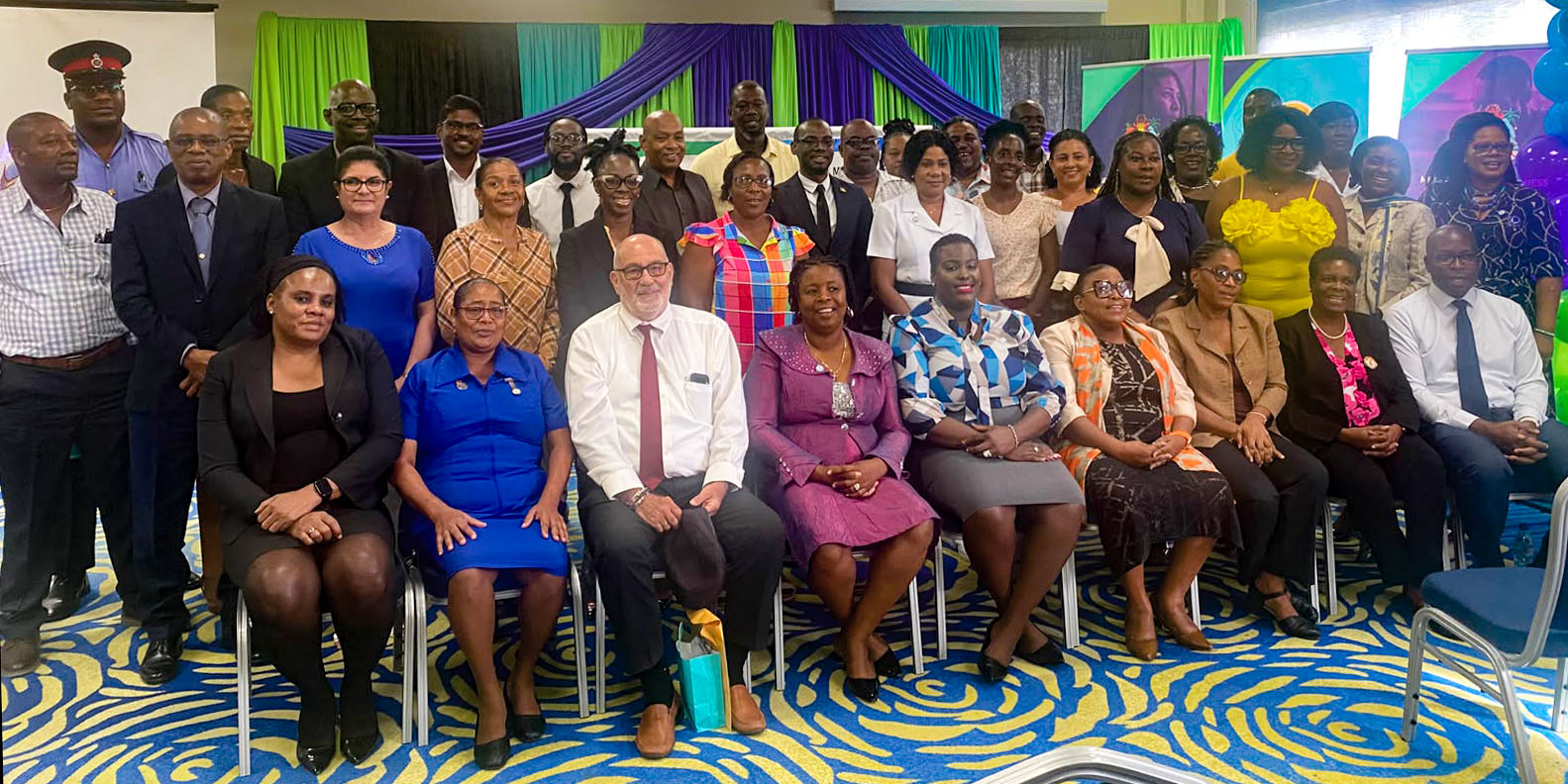
As Barbados moves forward with landmark legislation to protect the rights and well-being of its aging population, the island nation’s leading advocacy group for retired people has offered a measured welcome: praising the bill as a long-overdue milestone while cautioning that robust implementation and enforcement will determine its real-world impact. \n\nThe Older Persons (Care and Protection) Bill, which was tabled before Barbados’ lawmakers this week, marks a historic shift in how the country frames the value of its senior citizens, according to Marilyn Rice-Bowen, president of the Barbados Association of Retired Persons (BARP). In comments on the proposed legislation, Rice-Bowen emphasized that the bill fills a critical gap in national policy, finally enshrining in law the principle that older Barbadians deserve full state protection as they enter their later years. \n\n“This bill challenges the harmful, outdated narrative that seniors are a societal burden or an economic liability,” Rice-Bowen explained. “Ageing is a natural stage of life that we can only hope to reach, and it comes with a lifetime of contribution to our nation. The legislation recognizes that reality. It moves us past the dehumanizing idea that older people are a drain on resources, and instead affirms their role as living reservoirs of intergenerational knowledge and cultural experience.”\n\nAt its core, Rice-Bowen said, the bill is about honoring the decades of work and sacrifice that current seniors gave to build modern Barbados. “Every older person in this country gave their time, their labor, and their love to our communities and our families over a full lifetime. This legislation isn’t just a set of rules—it’s a promise that they can age with dignity, financial security, and a sense of purpose, knowing the state has their back.”\n\nBut while BARP has welcomed the framework laid out in the proposed law, the organization’s leader stressed that good legislation is only as useful as its enforcement. The bill includes financial penalties for elder mistreatment, which Rice-Bowen said serve an important deterrent purpose—but penalties without follow-through and resourcing will not deliver meaningful change. \n\n“Penalties send a clear signal that elder abuse is unacceptable, but laws on paper don’t protect anyone if they aren’t enforced,” she noted. “Effective implementation depends on so much more than just passing legislation: it requires consistent, long-term funding for the social agencies that will support vulnerable seniors, it requires hiring and training a dedicated workforce to respond to reports of abuse, and it demands sustained public education to shift cultural attitudes. Without those investments, even the most carefully written bill will achieve very little.”\n\nRice-Bowen also reflected that the need for punitive measures in elder protection is a disappointing sign of shifting social norms in Barbados. “It’s a poor reflection on where we are as a society that we have to put stiff fines in law just to make sure people treat their elders with basic respect,” she said. “Our ultimate goal should be a return to the cultural values that once defined our communities: a Barbados where elders are revered, cared for, and loved within extended families, where abuse never happens at all, so we never need to punish anyone for it.”\n\nTo get to that point, Rice-Bowen argued, the country must first be open and honest about the problem of elder mistreatment, rejecting vague language and euphemisms that hide abuse and protect perpetrators. She called for clear, explicit definitions of all forms of elder abuse, saying direct language is the foundation of public awareness and accountability. \n\n“We can’t afford to cloak abuse in soft, fancy terms,” she contended. “When someone talks about ‘unfairing’ a senior, we need to call that what it is: abuse. Naming it correctly is the first step to making sure everyone recognizes it, and it sends an unambiguous message that this behaviour will not be tolerated. Euphemisms don’t help victims—they only help the people who are harming seniors get away with it. Plain language is what protects vulnerable older people.”\n\nOutlining the key pillars that will make the bill effective once enacted, Rice-Bowen reiterated that implementation requires intentional planning and resourcing. She said the law must include clear, accessible reporting mechanisms for people to report suspected abuse, adequate sustained funding for frontline social services, specialized training for personnel who work with older populations, and widespread public outreach to educate both seniors and caregivers about their respective rights and responsibilities under the new framework.\n\nsummary: “This news covers the reaction of the Barbados Association of Retired Persons (BARP) to the newly tabled Older Persons (Care and Protection) Bill. BARP President Marilyn Rice-Bowen praises the bill as a long-overdue step that affirms the dignity of older Barbadians and rejects harmful narratives that frame seniors as societal burdens. However, BARP stresses that the legislation’s success depends entirely on robust enforcement, adequate funding for social services, trained personnel, public awareness, and clear, direct definitions of elder abuse, noting that unimplemented laws will deliver little meaningful protection for vulnerable seniors.
作者: admin
-

Ministry of Agriculture suspends issuance of open burn permits
The Caribbean nation of Grenada has enacted an immediate, indefinite suspension on all open burning license approvals, announced Friday by the country’s Ministry of Agriculture, Lands and Forestry. The sweeping policy change comes as officials confront rising seasonal and long-term threats, from heightened wildfire risk during the annual dry period to worsening environmental degradation and widespread public health hazards tied to unregulated open burning.
Public health and environmental experts have long documented the severe harms of widespread open burning: the practice releases large volumes of harmful particulate matter and toxic pollutants into the atmosphere, driving poor air quality that exacerbates asthma, chronic obstructive pulmonary disease and other life-threatening respiratory conditions. Beyond health impacts, out-of-control open fires pose constant risks to private property, commercial agricultural operations, and the island’s fragile native ecosystems, which support unique biodiversity and draw millions in tourism revenue each year.
Ministry officials emphasized that the suspension is not an isolated policy, but a core component of a national initiative to advance more sustainable land stewardship and boost Grenada’s overall climate resilience. As extreme weather and prolonged dry seasons become more frequent due to global climate change, curbing unregulated burning is seen as a critical step to reduce the island’s vulnerability to destructive, large-scale wildfires.
To support affected groups in transitioning away from open burning, the government is offering free practical guidance and technical support to farmers, private landowners, construction contractors, and general community members. Alternative, low-impact methods for land clearing and organic waste management are being promoted, including composting, organic mulching, and mechanical land clearing. Assistance is available through the Ministry’s local Extension District Offices, the national Forestry Department, and the Fire Department under the Royal Grenada Police Force.
Enforcement of the new policy will also be ramped up: the Fire Department and partnered regulatory agencies will increase patrols and monitoring across the island to detect unauthorized open burning. Any individual caught conducting unapproved burning will face fines and other legal penalties outlined in Grenada’s existing environmental and public safety regulations.
In closing, the Government of Grenada issued a public appeal for cooperation, framing the policy as a collective effort to protect the island’s natural environment and safeguard the health and safety of all residents. A disclaimer from local publication NOW Grenada notes that the outlet is not liable for opinions or content shared by external contributors, and invites users to report any abusive content via official platform channels.
-

Kandidaten VN-chef beloven hervormingen en herstel vertrouwen
As the United Nations prepares to select a new leader to succeed incumbent Secretary-General António Guterres in 2027, four early candidates took center stage this week at public hearings with UN member states and civil society groups, all pledging to embrace sweeping institutional reforms to reverse the global body’s declining credibility and restore its central role in international cooperation.
Founded in the aftermath of World War II to prevent catastrophic global conflict and advance shared development, the UN has faced growing criticism in recent years over eroding authority and public trust. Deepening geopolitical rifts between major powers have strained the organization’s ability to respond to global crises, while its sprawling institutional structure has led to calls for cost-cutting and greater efficiency, putting pressure on the 193-member body to prove its ongoing relevance in a shifting world order.
Among the candidates is Rebeca Grynspan, 70, a former vice-president of Costa Rica and current head of the UN Conference on Trade and Development (UNCTAD), who identified UN peacekeeping operations as her top priority if selected. She sounded the alarm over falling global confidence in the organization, urging bold, decisive action to update its structures. “Defending the United Nations today means having the courage to change it,” Grynspan stated during her hearing.
She is joined on the candidate list by another former regional leader, 74-year-old Michelle Bachelet, ex-president of Chile and former UN High Commissioner for Human Rights. If either candidate wins, they will make history as the first woman to lead the UN. Bachelet used her hearing to emphasize her longstanding commitment to advancing gender equality and women’s rights globally, though her candidacy has drawn backlash from conservative U.S. politicians over her public support for abortion access.
Former Senegalese President Macky Sall, 64, is also in the race, campaigning on a platform of rigorous institutional management. Sall has pledged to streamline coordination across the UN’s dozens of independent agencies and eliminate redundant work practices. “This is the moment to deliver better performance with fewer resources,” he argued, outlining a vision of a revitalized UN whose most impactful work still lies ahead.
The fourth early candidate is Rafael Grossi, 65, an Argentine diplomat who has served as head of the International Atomic Energy Agency (IAEA), the UN’s nuclear watchdog, for six years. Grossi framed ongoing institutional reform efforts as a necessary starting point for the organization, but stressed that significant work remains to address the UN’s structural challenges.
The winning candidate will secure a five-year term, with an option to renew for a second five-year term. Compared to the 2016 selection cycle that ultimately elevated Guterres from a field of 13 contenders, the current candidate pool is far smaller at this early stage, though the door remains open for new contenders to join the race in the coming months.
By longstanding convention, the secretary-general role is not filled by a national of the UN Security Council’s five permanent members — China, France, Russia, the United Kingdom, and the United States — a rule designed to prevent an unhealthy concentration of power among the world’s major nuclear-armed states. Even so, the backing of these permanent powers remains a critical factor in the complex, closed-door selection process, which requires Security Council endorsement before a candidate is confirmed by the General Assembly.
Against a backdrop of overlapping global crises, from intensifying armed conflicts to accelerating climate change and widening global inequality, the next UN secretary-general will face one of the most daunting leadership jobs in the world: rebuilding public and multilateral trust in the UN, and reasserting the organization’s place as the central platform for collective global problem-solving.
-

Defending Cuba means defending justice and sovereignty
Authored by Yadirys Echenique Paz, Cuba’s Ambassador to Grenada, this commentary traces Cuba’s modern trajectory through decades of external pressure, while framing the island’s revolutionary project as a enduring example of self-determination and global solidarity that demands renewed international support in 2026.
No account of Cuba’s modern history can be complete without addressing the persistent threats that have shaped the island’s national experience up to the present day. For more than six decades, a crippling economic blockade, coordinated international smear campaigns, and relentless diplomatic pressure have all been wielded with the explicit goal of cutting Cuba off from the global community. Yet this campaign of isolation has been met with a powerful counter-movement: tens of thousands of people across every continent have rallied to Cuba’s defense, recognizing that protecting the island’s right to self-determination is itself a defense of national dignity for all small and developing nations.
From its earliest days, the 1959 Cuban Revolution emerged as a guiding light for progressive movements across the globe. Its unwavering resolve in the face of imperial pressure inspired generations of anti-colonial and progressive fighters across Latin America, Africa, and Asia, while earning widespread sympathy among progressive social groups in Europe. The transformations that followed the overthrow of Fulgencio Batista’s authoritarian regime were never confined to Cuba’s borders; the revolution crossed continents to become a global banner of progressive change that retains its urgent relevance more than 60 years later.
Cuba’s global influence after 1959 extended far beyond symbolic inspiration. Over the past six decades, the Cuban people have intertwined their national story with the struggle of Global South nations for independence and equity. From the valiant resistance of Cuban military contingents against the 1983 United States invasion of Grenada, to the deployment of tens of thousands of Cuban civilians and service members to support anti-colonial liberation movements across Africa, the island has a long track record of standing in solidarity with marginalized nations. This commitment also extends to social development: Cuba has implemented life-changing public health programs such as Operación Milagro (Operation Miracle), which has provided free eye care to millions of low-income people across the Global South, and literacy initiatives such as Yo Sí Puedo (Yes I Can) that have lifted millions out of illiteracy. During global crises ranging from natural disasters to the COVID-19 pandemic, Cuban medical brigades have been among the first to arrive in hard-hit nations to provide critical care.
This decades-long commitment to international solidarity has come at a steep human cost. Hundreds of Cuban internationalists have lost their lives serving in distant lands, united by the core belief that the fight for justice does not stop at national borders. Their sacrifice stands as proof of the consistency of Cuba’s revolutionary project: it does not merely proclaim lofty principles, but turns them into tangible, on-the-ground action in every struggle beyond the island’s borders.
Today, as external threats grow more intense and coordinated disinformation campaigns multiply, defending Cuba has become synonymous with defending justice and national sovereignty for all peoples resisting foreign domination. Expressions of solidarity with the island are part of a shared global struggle against great power hegemony. Standing up to the United States’ longstanding hostile policies toward Cuba is an act of supporting a people’s right to live in peace, shape their own future free from external coercion, and uphold the resilience of a nation that continues to be a beacon of hope for progressive movements across the globe.
Against the backdrop of a renewed 2026 offensive by U.S. imperialism against Cuba—marked by harsh new energy sector sanctions and coordinated attempts at political destabilization within the island—active international solidarity has become an urgent necessity. Every public statement condemning aggression, every mass march rallying to defend the Cuban Revolution, every public manifesto denouncing the ongoing blockade is a direct act of defending the universal principles of sovereignty and justice. By contrast, those who choose silence at this critical moment stand complicit with the forces seeking to undermine Cuba’s right to self-determination.
In this moment of heightened pressure, the commentary calls on global supporters to recall Fidel Castro’s words during a May 8, 1959 address: “Our Revolution needs the solidarity of other brotherly peoples (…) to become stronger, to become firmer, and to carry forward a programme of the broadest dimension.” That 65-year-old call remains just as urgent today, because as Cuba’s revolutionary project survives, it preserves a global vision of national sovereignty, social justice, and cross-border solidarity that is worth defending—not only for the Cuban people, but for all peoples across the world.
*Disclaimer: NOW Grenada does not take responsibility for the opinions and content shared by this contributing author.*