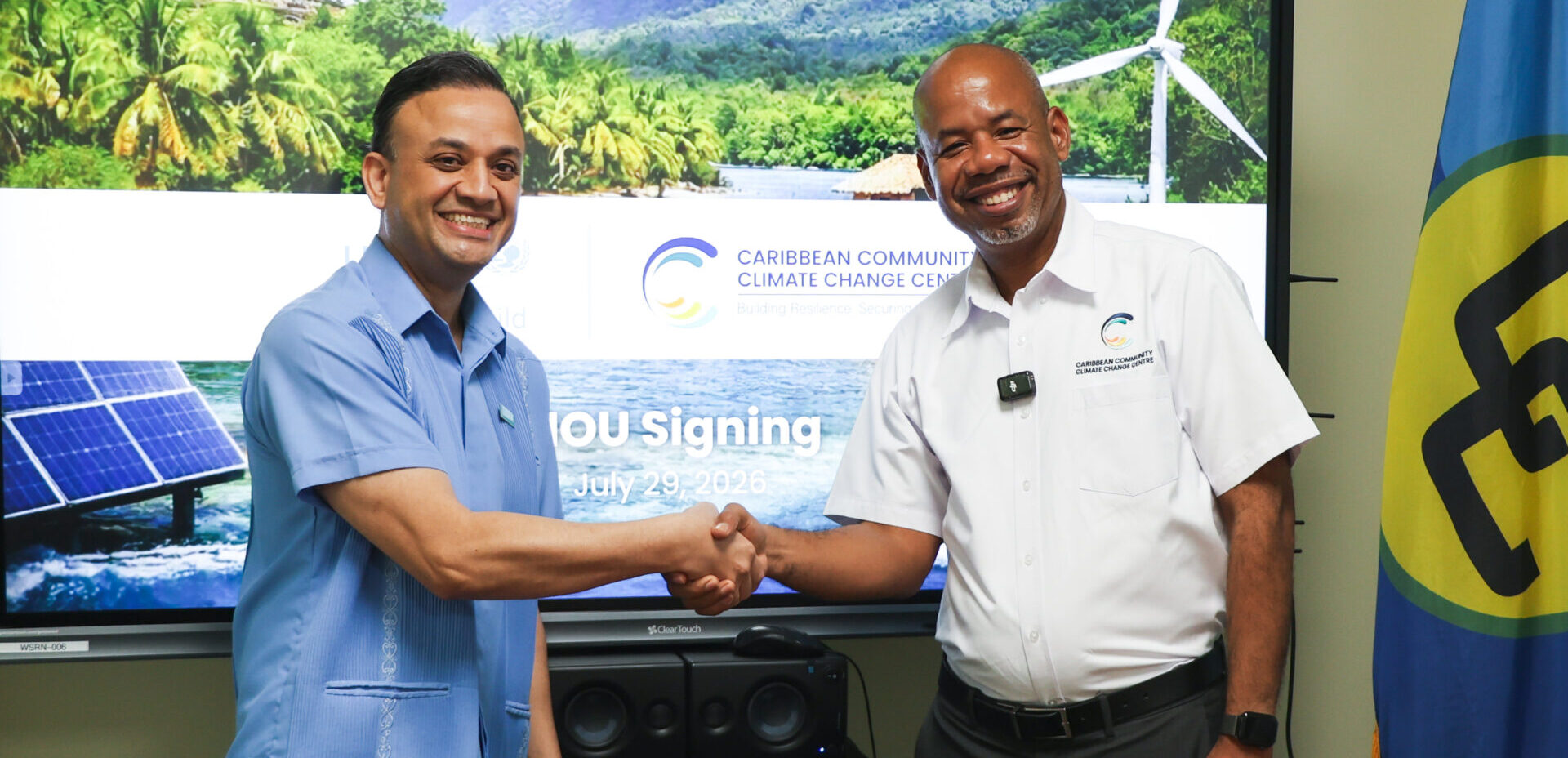
In a formal signing ceremony held at the Caribbean Community Climate Change Centre (CCCCC) headquarters in Belmopan, Belize, UNICEF and the regional climate body have launched an ambitious five-year strategic partnership designed to shield Caribbean children and young people from the accelerating harms of the global climate crisis. The newly signed Memorandum of Understanding (MoU) establishes a formal collaborative framework centered on embedding the unique needs of children into every level of regional climate policy and action. For years, Caribbean communities have grappled with a sharp rise in the frequency and intensity of climate-related disasters, including destructive hurricanes, widespread flooding, prolonged droughts, and record-breaking extreme heat. For children across the region, these events have triggered cascading harm: interrupting access to education, cutting off critical healthcare services, contaminating safe drinking water supplies, undermining nutrition programs, and breaking down child protection systems that vulnerable young people depend on. As UNICEF Representative Sajid Ali emphasized during the ceremony, the climate crisis is far more than an environmental issue—it is a fundamental violation of children’s rights. “Children are among those least responsible for the climate crisis yet they bear some of its greatest consequences,” Ali noted. This new partnership, he explained, will prioritize centering children in regional climate policies, investments, and programming, while reinforcing the essential public services and systems that children rely on daily. Under the terms of the agreement, the two organizations will work in lockstep to advance child-sensitive climate governance across the Caribbean. Key priorities include building climate resilience into core social systems, from education and healthcare to nutrition, water access, and sanitation and hygiene (WASH) services. The collaboration will also scale up child-focused social protection programs, expand community-level disaster preparedness initiatives, support targeted research on child climate vulnerability, coordinate global climate resource mobilization, and share evidence-based knowledge on building child-centered climate resilience. CCCCC Executive Director Dr. Colin Young highlighted that children and youth have long been overlooked in climate resilience planning, both across the Caribbean and globally. He noted that UNICEF’s decades-long track record of advancing child rights and centering young people in climate action aligns perfectly with the CCCCC’s strategic priorities, filling a critical gap that has gone unaddressed for too long. “This Memorandum of Understanding sets out the framework for the work we will do together and allows us to combine our expertise to ensure that children are at the heart of climate action,” Young said. “We are absolutely delighted to be partnering with UNICEF and to draw on its extensive experience working with children and youth across the Caribbean and in Belize.” One of the flagship components of the new partnership will focus on transforming climate-resilient sanitation systems across the region’s most vulnerable communities. Leveraging UNICEF’s deep technical expertise in WASH programming, the initiative will advance evidence-based policy advocacy, build local technical capacity, facilitate cross-community knowledge sharing, and unlock targeted climate financing to upgrade and protect sanitation infrastructure for at-risk populations. Beyond infrastructure and service delivery, the partnership will also expand leadership opportunities for children and young people—with a specific focus on including adolescent girls and marginalized youth groups. The organizations aim to empower young people to build the skills they need to actively participate in climate solution design, contribute to national and regional public policy debates, and lead grassroots advocacy efforts for climate action. This joint initiative brings together UNICEF’s global mandate to protect and advance child rights with the CCCCC’s role as the leading coordinator of regional climate action in the Caribbean. The shared end goal is to build a more resilient, sustainable, and equitable region where every child can grow and thrive, even as the impacts of climate change continue to intensify.
作者: admin
-
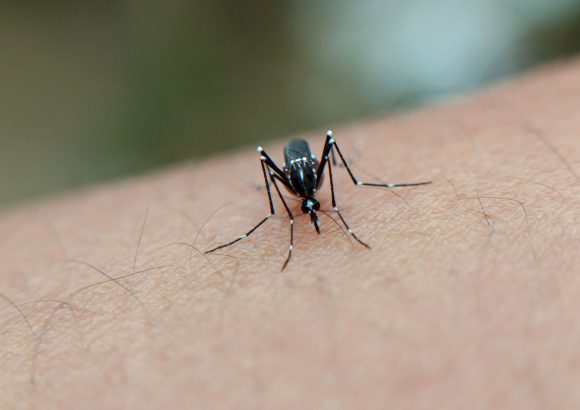
Public Health: Dengue cases reach 185 as respiratory illnesses remain stable
Santo Domingo, Dominican Republic – The nation’s Ministry of Public Health has issued its latest weekly epidemiological bulletin confirming that all locally endemic communicable diseases remain contained across the country, with sustained low transmission rates and ongoing proactive public health surveillance.
-

Arajet and Centro León extend alliance to showcase Dominican art internationally
In Santo Domingo, three leading Dominican institutions have announced the renewal of a groundbreaking collaborative agreement aimed at amplifying the global profile of Dominican art and culture, while expanding access to visual arts education across the region. The Eduardo León Jimenes Foundation, Centro León, and low-cost Caribbean airline Arajet have extended their original partnership, first launched in August 2024, to deepen their shared work of showcasing Dominican and Caribbean creative talent to international audiences.
Over the course of their initial collaboration, the three organizations have already made significant inroads in bringing Dominican cultural work to global stages. Their joint projects have reached seven countries across the Americas: Ecuador, Guatemala, Brazil, Puerto Rico, Colombia, and the United States. Key initiatives supported by the partnership include the Curando Caribe cultural program, which centers Caribbean artistic narratives, and the prestigious Eduardo León Jimenes Art Competition, a long-running platform that elevates emerging creative voices from the region.
Under the terms of the renewed agreement, the partnership will expand its focus to develop new cross-cultural exchanges, large-scale international exhibitions, accredited academic programs, and targeted global outreach campaigns. A new consumer-facing component will also bring Dominican culture directly to air travelers: Arajet passengers will gain access to exclusive curated cultural experiences, allowing them to engage with local art and heritage both in-flight and through destination-based activations. Arajet will continue its core support for Centro León’s rotating gallery exhibitions, community cultural events, and international artist exchange programs.
The official signing ceremony brought together the leadership of all three partner institutions. Signatories included Víctor Pacheco Méndez, CEO and founder of Arajet; María Amalia León, president of the Eduardo León Jimenes Foundation; and María Luisa Asilis, executive director of Centro León, marking a formal commitment to the next phase of their cultural collaboration.
-
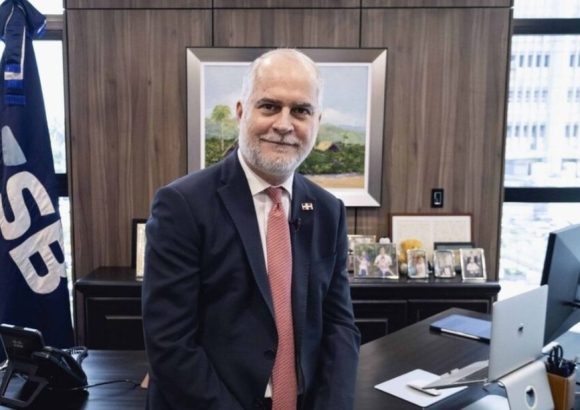
Alejandro Fernández to conclude six-year tenure as Superintendent of Banks
SANTO DOMINGO — The top official leading the Dominican Republic’s national banking regulation announced Wednesday he will depart his post this summer, bringing a close to six years of leadership at the nation’s top financial oversight body. Alejandro Fernández W., who has served as Superintendent of Banks since 2018, shared the timeline of his planned exit in a public farewell address, confirming his final day in office will fall on August 16.
In his statement, Fernández extended public thanks to Dominican Republic President Luis Abinader for the opportunity to lead the critical regulatory agency, framing the role as a foundational platform to push forward transformative reforms to the country’s national financial system. He opened up about the timeline of his decision, noting that he formally submitted a request to President Abinader in early April asking that his current term not be renewed, adding that the choice to step away was reached collaboratively with his family.
Beyond his acknowledgment of the president’s support, Fernández also dedicated thanks to the full technical team at the Superintendency of Banks, as well as members of the national Monetary Board, highlighting the consistent collaboration and shared commitment to public service that marked his entire time in the role. No official announcement has yet been shared regarding who will be appointed to fill the vacant superintendent position once Fernández departs.
-
Operation Red Card: Dominican Republic blocks 256 domains linked to sports piracy
An international anti-digital piracy initiative codenamed Operation Red Card has resulted in the Dominican Republic blocking 256 internet domains and suspending an additional domain tied to the unauthorized streaming of 2026 FIFA World Cup matches. This coordinated enforcement action, carried out alongside law enforcement and regulatory partners from nine other countries, targets unlicensed platforms that profit from distributing copyrighted sports content without the permission of intellectual property holders.
Multiple Dominican agencies joined forces for the local component of the sweep: the Public Prosecutor’s Office’s specialized Intellectual Property Unit, the High Technology Crimes Prosecutor’s Office, the national Criminal Investigation Unit, and the local office of U.S. Homeland Security Investigations (HSI) collaborated to map and take down illegal streaming operations. Over the course of the investigation, the joint team identified more than 300 domains linked to notorious piracy platforms including Tarjeta Roja, Roja Directa, Fútbol Libre, and Pirlo TV, all of which are known for offering unauthorized access to premium global sports content.
After securing formal court approval, authorities implemented dynamic blocking for 256 of the identified domains. This innovative measure not only disables the current sites but also streamlines the process of taking down future mirror sites—copycat domains that piracy operators typically launch to replace blocked platforms, allowing for faster action against new iterations of illegal operations. One additional domain was fully suspended as part of the enforcement action.
Law enforcement officials emphasized that the crackdown serves two critical public interests beyond upholding copyright law. First, it protects the financial interests of sports rights holders, who lose billions of dollars annually to global digital piracy of live sports content. Second, it safeguards everyday internet users: illegal streaming platforms frequently embed hidden malware, spyware, and other malicious tools that expose visitors to risks ranging from identity theft to large-scale data theft. Beyond these immediate outcomes, officials noted that the successful operation underscores the Dominican Republic’s ongoing commitment to cross-border collaboration in addressing transnational digital crime, highlighting that piracy cannot be effectively tackled by individual nations acting alone.
-

Dominican Republic promotes open justice at regional public defenders summit
QUITO, ECUADOR – The inaugural First Inter-American Summit of Public Defenders: Open Justice and Artificial Intelligence brought together legal and public defense leaders from across Latin America and the Caribbean to explore collaborative, technology-driven strategies for expanding fair access to justice. At the gathering, the Dominican Republic emerged as a central voice shaping the regional conversation on balancing judicial innovation, transparency, and inclusive public defense systems.
Leading the Dominican delegation was Rodolfo Valentín Santos, who holds dual roles as director of the country’s National Office of Public Defense (ONDP) and Caribbean regional coordinator for the Inter-American Association of Public Defenders (AIDEF). Speaking during a dedicated panel focused on humanizing judicial processes, Santos framed meaningful access to justice as a goal that extends far beyond basic legal representation. For marginalized communities and ordinary people to benefit from fair judicial outcomes, he explained, they must first be able to understand complex judicial procedures and engage fully with every stage of the legal process.
Santos used his platform to showcase the progressive initiatives the Dominican Public Defender’s Office has rolled out in recent years to advance these goals. These efforts include expanding core legal services to underserved communities across every region of the country, launching virtual assistance channels to support families of incarcerated individuals, increasing systemic transparency through regular public prison reports, and integrating targeted digital tools to strengthen protections for fundamental human rights.
A core focus of the summit centered on the growing role of artificial intelligence in modern judicial systems, and Santos offered a balanced, stakeholder-centered perspective on AI integration. He emphasized that while digital tools hold great promise for boosting judicial efficiency and increasing procedural transparency, they must never replace the critical human element of legal representation or amplify existing structural discrimination in justice systems. Santos closed his remarks with a call to action for all regional governments: build regulatory and operational frameworks that ensure AI acts as a tool to expand access to justice, rather than creating new barriers that limit it for vulnerable populations.
By the close of the three-day gathering, all participating countries united behind a shared commitment to advance three core priorities: deepening cross-regional collaboration on public defense reform, embedding ethical guardrails for artificial intelligence use in judicial systems, and modernizing public defense infrastructure across the hemisphere. The collective goal, delegates agreed, is to build justice systems that are more transparent, inclusive, and accessible to all people across Latin America and the Caribbean.
-
Blackout
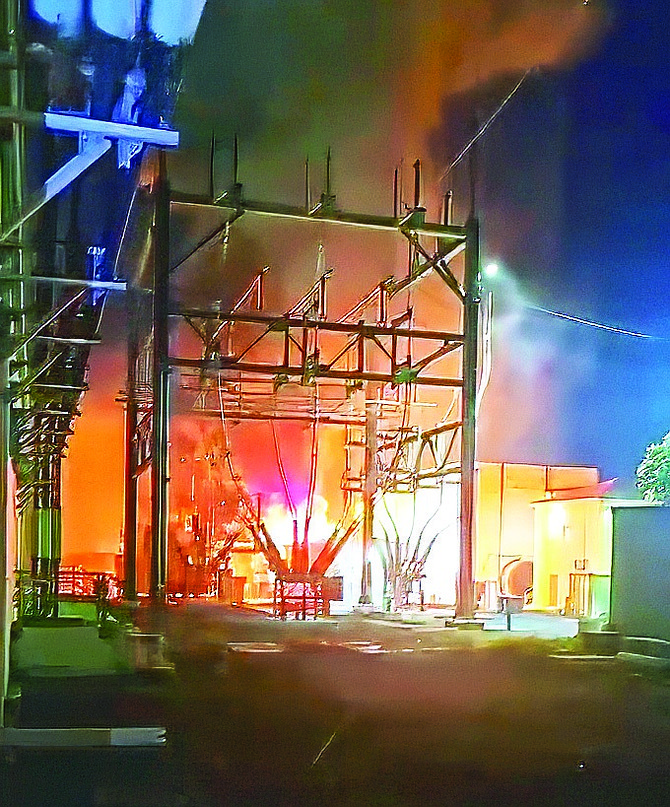
A catastrophic infrastructure failure left the entire island of New Providence, Bahamas, without power for seven hours or longer in some communities yesterday, triggering widespread disruption to daily life, travel and healthcare while reviving long-simmering public fury over exorbitant energy costs and chronically unreliable service from national utility Bahamas Power and Light (BPL).
The outage struck abruptly at approximately 1:45 a.m., right in the middle of the night when temperatures remain dangerously high and residents are most dependent on cooling systems. BPL officials quickly traced the blackout to an explosion of a 15MVA transformer at the Blue Hills Primary substation, which they say was initiated by an underground cable fault. Footage released by the utility showed critical equipment completely engulfed in flames before firefighting crews were able to extinguish the blaze.
With no air conditioning to counter stifling overnight heat, thousands of residents were forced to flee their homes in search of cooler conditions. A field report from the Tribune found residents huddled along shorelines with blankets and pillows, chasing the faint ocean breeze, while others opted for early morning swims to beat the heat. Roads were unusually congested in the pre-dawn hours, and many residents slept inside their running cars with fogged windows, evidence of hours spent waiting out the outage. Gas station parking lots also became informal gathering spots for groups seeking vehicle-powered cooling. Multiple residents reported waking up completely soaked through with sweat as indoor temperatures climbed overnight.
Public frustration boiled over quickly on BPL’s social media channels, where hundreds of customers flooded comment sections with complaints. Many condemned the utility for repeatedly failing to deliver consistent service, even as customers are forced to pay some of the highest electricity rates in the region. “Hours after they sent those crazy bills, a night of darkness and sweat…what are we paying for?” one Facebook user wrote. Another commented: “It seems completely unfair to be paying hefty bills and melting in the heat. You want the customers to be patient but the scales are tipped in your favour.” Calls for systemic change were widespread, with some residents demanding full privatization of BPL and others pushing for the introduction of open competition to the Bahamian electricity sector.
The disruption extended far beyond residential areas, upending commercial operations and travel across the island. Fast food chains faced delayed openings and extended customer wait times after many hourly employees were unable to arrive for their shifts on schedule. At Lynden Pindling International Airport, the outage knocked out main internet services, halting international check-in processes for Bahamasair and triggering long queues at check-in counters. Airport operations switched over to backup generator power and a reserve internet connection to resolve delays, with full service restored shortly after 8 a.m. when main power returned. Princess Margaret Hospital, the island’s main public medical facility, avoided major disruption, with officials reporting only minor temperature fluctuations that did not impact patient care.
Bahamas Energy Minister JoBeth Coleby-Davis publicly acknowledged the widespread anger caused by the outage, confirming that a high-voltage system fault destroyed one of the network’s primary transformers. She explained that the explosion caused a flashover, which required crews to isolate critical equipment to protect both on-site workers and the broader electricity grid. Once the system was secured and stabilized, BPL crews launched a complex “black start” restoration process, one of the most technically challenging operations an energy provider can undertake. The process requires bringing generation units online in a carefully controlled sequence, then progressively energizing substations and restoring power to customer areas in stages, with every step coordinated in real time between control room staff, generation facilities, substation teams and field crews.
Coleby-Davis also extended recognition to the BPL workers who led the restoration effort, noting that many crews worked nonstop through grueling conditions just days after the utility lost a valued colleague to recent death. “While I fully understand the frustration experienced by households and business, I also wish to express my sincere thanks to the dedicated men and women of BPL,” she said.
The outage quickly became a political flashpoint, with Free National Movement (FNM) leader Michael Pintard placing full blame for the crisis on the ruling Progressive Liberal Party (PLP) Davis administration. Pintard rejected recent claims from PLP chairman Fred Mitchell that blamed the current infrastructure problems on decisions made by the previous FNM administration. He countered that the current administration canceled a major infrastructure contract with Finnish firm Wärtsilä, terminated development contracts for the critical Station A power facility and took multiple functioning generators offline during its tenure. Pintard argued that the FNM had returned disabled generators to service and stabilized the national transmission and distribution network during its time in office. “What’s the bottom line? What accounts for the chaos that we now are experiencing with BPL? The PLP,” he said. “They have had carte blanche—In other words, nobody has been able to interrupt what they have done in terms of privatizing BPL—and yet they have not been able to provide cleaner power, more affordable power, or worst of all, consistent power for the Bahamian people.”
Power restoration began in phases, with some areas regaining service as early as 6:30 a.m., and service gradually extended to most communities throughout the day. But the crisis did not end once main power was restored. BPL immediately announced temporary rotational blackouts for parts of western New Providence to prevent further strain on the grid, warning customers of scheduled outages between 1 p.m. yesterday and 1 a.m. today. The utility also confirmed it was responding to multiple separate minor outages across the island yesterday, though it has not yet released details on the cause of each additional incident.
-
PM warns of ‘growing pains’ after island-wide blackout
A total island-wide power outage that brought daily life across New Providence to a standstill has sparked intense public scrutiny of the Davis administration’s energy policy, just weeks after officials insisted the national utility was fully prepared to meet peak summer demand. The shutdown, triggered by an electrical fire at Bahamas Power and Light (BPL)’s Blue Hills Power Station, left thousands of residents trapped in sweltering, unairconditioned homes, forced business closures, and disrupted commercial air travel through Nassau’s major airport.
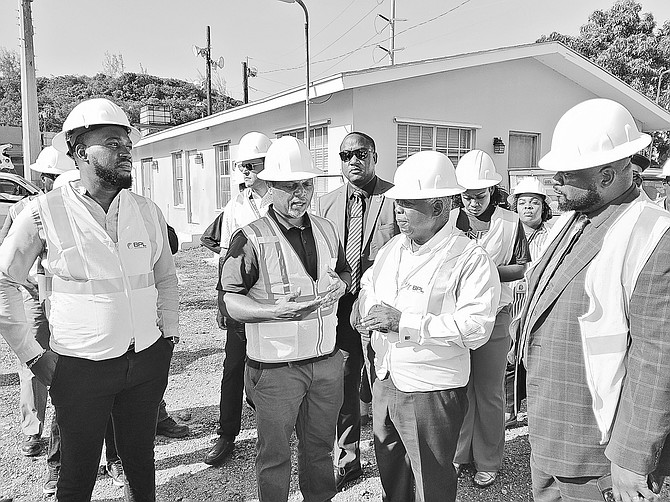
In a press briefing held hours after power was cut, Prime Minister Philip Davis pushed back against critics who have pinned the blame for the outage on poor infrastructure maintenance or insufficient action by his administration. He framed the incident as the result of uncontrollable external factors, pointing to record-breaking regional heat that has strained the Bahamas’ already outdated electricity network beyond its designed limits.
According to preliminary findings from BPL, an undetermined fault in an underground cable sparked a fire that damaged a 15 MVA transformer, triggering a cascading failure that shut down generation at both the Blue Hills and Clifton Pier power stations. Investigations into the root cause of the initial cable fault are still ongoing, with no definitive conclusion reached as of the briefing.
Davis pushed back against claims of human error or institutional neglect, asking: “You have a transformer that’s blown up because of overheating of underground cables, was that man’s fault? The excessive heat, the record heat that we are experiencing over the last several months. May, for example, was the hottest in history. June — same thing.” He added that persistent extreme temperatures have overwhelmed the country’s aging transmission and distribution network, which his administration inherited when it took office.
The Prime Minister also revealed long-standing systemic gaps that have complicated infrastructure maintenance and incident response: decades of institutional turnover at BPL and its predecessor, the Bahamas Electricity Corporation, have left the utility without a complete centralized inventory mapping the location of all underground cables, erasing critical institutional knowledge of the national grid.
Davis warned Bahamians to brace for additional power disruptions in the coming months as the government undertakes a sweeping overhaul of BPL’s outdated infrastructure, much of which has already reached the end of its planned service life. “There will be growing pains to get to where we need to be because of what we inherited,” he said. “Incidents like these remind us of the state of play of BPL.”
To address public anger over the outage, Davis confirmed he has directed BPL leadership to explore potential financial concessions for residential and commercial customers affected by the shutdown, with the utility set to announce what relief it can offer in the coming days.
He also pushed back against claims that the crisis is a unique failure of Bahamian governance, noting that power grid disruptions linked to extreme heat have become increasingly common across the globe. Still, he stressed that his administration is prioritizing aggressive grid modernization, pointing to ongoing transmission and distribution upgrades, new substation construction, and a major renewable energy project at the Blue Hills site that will add 20 megawatts of solar generation and 25 megawatts of battery storage once completed.
BPL’s top leadership has echoed Davis’s framing, while acknowledging gaps in the utility’s contingency response and apologizing to the public. Chief Operating Officer Anthony Christie suggested the underground cable likely had an undiagnosed pre-existing fault that was exacerbated by extreme peak electrical demand amid the heat wave, triggering a chain reaction that damaged nearby cables as well. He denied that poor maintenance contributed to the incident, though he confirmed the full investigation is still ongoing.
Executive Chair Christina Alston acknowledged in a formal statement that BPL’s contingency plans have clear limits when multiple critical failures occur in close succession. “That is not an excuse. It is the reality we’re confronting — and responsibility we understand,” she said, adding that public trust can only be restored through tangible, measurable improvements to service reliability and communication, not just verbal assurances.
BPL Chief Executive Officer Toni Pratt offered a public apology to New Providence residents, acknowledging the severe discomfort the outage caused during a period of extreme heat. “We know that it is very, very hot, and we understand your frustration. We are working as safely and as quickly as we possibly can to restore supply,” she said. As of the latest updates, power has been systematically restored to most parts of the island, though limited outages persist in some areas while final repairs are completed.
Bahamas Grid Company Chief Operating Officer Ryan Holder said repair crews began assessing the damaged transformer overnight, with total repair work projected to take between eight and ten hours. Crews have been working around live energized infrastructure to excavate the affected area, install new protective conduit, and lay replacement transmission cable.
This outage marks one of the worst summer power outage events the Bahamas has seen in a decade, an issue that has become a key political measuring stick for sitting administrations, renewing public pressure on the Davis government to deliver on its promises of grid reliability.
-

Public Health warns of scammers posing as inspectors in Santiago
Authorities from the Santiago I Provincial Health Directorate (DPS) in the Dominican Republic have issued an urgent alert to local business owners, flagging a growing fraud scheme where criminals impersonate public health inspectors to extort illegal cash payments during sham inspections.
Dr. Víctor Tomás Méndez Gómez, the top official leading the provincial health agency, confirmed that no authorized DPS staff or institutional representatives are permitted to collect direct payments from commercial establishments for inspections or any other public health services. All legitimate service fees related to health inspections are processed through formal government payment channels, not collected in cash by individual inspectors during on-site visits.
According to details released by the DPS, the scammers typically approach a range of local commercial establishments, falsely present official-looking credentials to pose as accredited health inspectors, and then demand immediate cash payments from business owners or on-site managers under the false pretense of covering inspection costs or avoiding penalties for non-compliance.
To protect local merchants from financial loss, the DPS is urging all business operators across the Santiago region to remain vigilant against this scam. The agency has made it clear that under no circumstances should owners or managers hand over cash to anyone claiming to conduct a health inspection. Instead, any individual suspected of participating in this fraud should be reported immediately to DPS authorities.
Residents and business owners can file official complaints either in person at the main DPS Santiago I offices during regular business hours, or via telephone through the dedicated hotline at 809-576-6000.
-

Indomet forecasts downpours and thunderstorms through Saturday
Officials from the Dominican Institute of Meteorology (Indomet) have released an updated weather advisory warning that significant unstable atmospheric conditions will bring widespread wet, stormy weather to multiple regions of the Dominican Republic through the end of this weekend. The event kicks off on Friday, when a low-pressure trough moving through the area will trigger heavy rain, thunderstorms, and sudden isolated gusty winds across large swathes of the country.
Forecasters outlined that the day will start with scattered light showers and isolated thunderstorm activity concentrated along the nation’s Caribbean coastline during the early morning hours. As local heating and atmospheric interactions interact with the approaching trough through the afternoon and into early evening, precipitation will intensify dramatically. By the peak of the storm activity, intense downpours, sustained thunderstorm activity, and gusty wind conditions will impact the country’s southeast, northeast, the Central Mountain Range, and all regions along the Dominican-Haitian border.
The wet weather will not clear on Friday night, however. Indomet forecasts that a second weather system, an approaching tropical wave, will move into the area and extend the rainy conditions through Saturday. Morning showers are expected to develop first across a long list of provinces, including popular tourist destinations La Altagracia (home to Punta Cana) and La Romana, as well as San Pedro de Macorís, Hato Mayor, the national capital district of Santo Domingo, San Cristóbal, Peravia, Samaná, María Trinidad Sánchez and Duarte. As the tropical wave advances further inland through Saturday afternoon, rainfall coverage and intensity will increase across most of the Dominican Republic, bringing an extended period of unsettled weather to the entire nation.