
In this incoming news submission, only social media sharing buttons (including share, tweet, and pin options) and three links to hosted image files are provided. No core descriptive text, event details, source information, or contextual narrative that is required for a complete news report is included in the submission. Without the fundamental text content that outlines the event, key figures, timeline, core claims, or background context of the reported story, it is impossible to conduct a full structured rewrite, in-depth analysis, or accuracy verification of the purported news. The three image links are hosted on the external domain news-minio.triplec.cc, with file paths dated August 3, 2026, but no further explanatory information is provided to clarify what these images depict or what news story they are associated with.
作者: admin
-
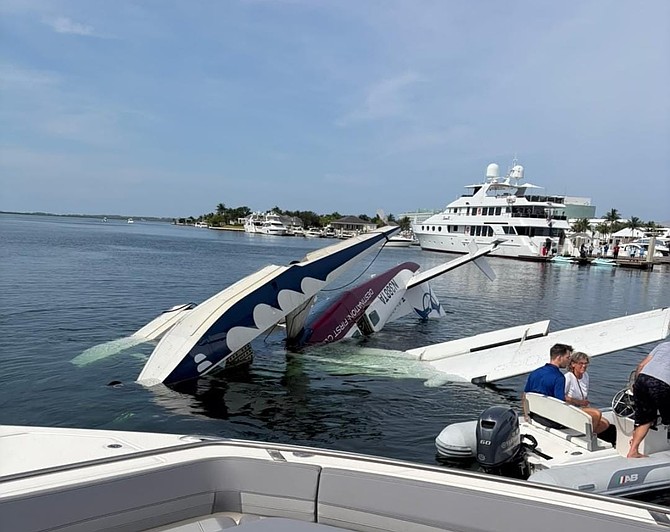
Ten escape uninjured after seaplane strikes Bimini dock
A harrowing incident unfolded off the coast of North Bimini in the Bahamas on Saturday, when a commercial seaplane collided with a fixed dock structure and sank while the pilot attempted to navigate around heavy marine traffic. No injuries were reported among the eight tourists and two crew members on board, but quick thinking and immediate emergency response from nearby vessels allowed all passengers to evacuate before the aircraft settled roughly 100 feet below the water’s surface.
According to official reports from the Bahamas’ Aircraft Accident Investigation Authority (AAIA), the aircraft involved was a Cessna 208B registered in the United States under the call sign N388TA, operated by U.S.-based Tropic Ocean Airways. The incident occurred just after 10 a.m. as the plane was taxiing through the water at the North Bimini Seaplane Base, preparing for departure.
Royal Bahamas Police Force officials explained that the pilot noticed a buildup of unexpected heavy boat traffic along the plane’s planned departure route. To avoid a potential mid-water collision, the pilot made the decision to divert north to find a clearer path for takeoff. As the plane taxied north, however, it began to pull sharply to the left, and the pilot lost control before the aircraft crashed into the nearby dock.
Jeanne O’Brien, an American tourist who was one of the passengers on the flight, described the chaotic moments leading up to the collision in an interview with ABC News. O’Brien noted that the plane sank with surprising speed, saying that within seconds of the collision, water began flooding the cabin. “All of a sudden, the dock started getting closer and closer, and one of the people in the plane behind me said, ‘Where are you going?’ And then it just was boom, and it hit,” she recalled.
Raw video captured by a passenger inside the plane’s cabin captures the sudden jolt of the collision, followed immediately by an automated warning beep. Within seconds, a passenger can be heard saying, “Time to get out,” triggering a rapid evacuation. Passengers quickly unbuckled their seatbelts and moved to exit the aircraft as it drifted closer to shore. Witness footage shows one passenger tossing personal belongings onto dry land before the entire group exited the sinking plane.
Nick Pavlakis, a local boat captain who was nearby when the collision occurred, told local outlet WPBF that he rushed to the scene after hearing panicked shouts from passengers and seeing them waving for help. By the time Pavlakis reached the seaplane, water had already begun filling the plane’s pontoon floats, and the cabin was starting to flood. “He got off of the plane just as it started to roll, and it eventually rolled, sat on the bottom where it still is today,” Pavlakis said of the pilot, who was the last person to leave the aircraft.
Pavlakis estimated that all passengers except the two pilots were brought aboard his rescue boat within 5 to 10 minutes, though the stress of the emergency made the timeline feel much longer. “It must have been five minutes, ten minutes tops. But between getting the boat situated, getting all the luggage off, it felt like a few hours. But I think it was probably 20 or 30 minutes,” he explained. Pavlakis added that the collision with the dock and nearby seawall punctured one of the plane’s pontoons, which caused the progressive flooding that ultimately sank the aircraft.
The AAIA has launched a full official investigation into the incident, following protocols outlined in the International Civil Aviation Organisation’s Annex 13 standards and meeting all local Bahamian regulatory requirements. The agency announced that it will release additional public updates as the investigation advances. Tropic Ocean Airways, the operator of the seaplane, has referred to the event as a “mishap” that occurred during pre-departure taxiing, and said it is cooperating fully with AAIA and other investigating authorities.
This incident comes just weeks after a separate deadly plane crash in the Bahamas that killed 10 people. That crash occurred on Independence Day, when an aircraft traveling between New Providence and Andros crashed into a wooded area after striking trees while on approach for landing, before catching fire. Preliminary findings from that ongoing investigation have been released, but a final report is still pending.
-

Fusion questions Sony block on new Spider-Man release
A major distribution dispute has unfolded in The Bahamas’ film exhibition market, after Sony Pictures unexpectedly blocked one of the country’s largest cinema chains from carrying its highly anticipated summer blockbuster *Spider-Man: Brand New Day*, leaving local movie-goers with only one limited screening option and triggering questions about the decision’s link to a recent cybersecurity breach at the theater.
Fusion Superplex, a popular nine-screen entertainment complex that draws thousands of Bahamian audience members, has confirmed that its international film booking team was repeatedly denied licensing rights to the title ahead of its global July 31 theatrical launch. Sony Pictures, the official distributor of the latest Spider-Man installment, has offered no public or private explanation for the refusal, even as Fusion notes that its account remains in good standing with no unpaid balances owed to the studio.
What has deepened the uncertainty around the call is Fusion’s disclosure that it explicitly asked Sony if the denial was connected to the cinema’s recent ransomware and cyberattack incident — a query that the studio has yet to answer, as of press time. Unlike the United States, where the blockbuster opened wide to multiplexes across the country on July 31, The Bahamas currently only hosts screenings at The Island House, a small boutique resort that also operates an independent cinema. Following overwhelming demand from local fans, The Island House moved quickly to add extra showings via announcements on its social media channels.
Tecoyo Bridgewater, co-founder and chief legal officer of Fusion Superplex, clarified that Sony’s standard industry practice is to approve film licensing on a title-by-title basis for exhibitors, a framework that Fusion has operated under successfully for previous releases. For the majority of Bahamian audiences, the limited single-location release has created significant access barriers, Fusion emphasized. Many residents rely on the large nine-screen complex for major blockbusters, and the current distribution setup puts the film out of reach for most people who would have chosen to see it at Fusion.
Despite the standoff, the cinema said it remains optimistic that Sony will reverse its decision and approve licensing for a August 7 release at its locations. Fusion also issued a formal apology to its customers who had planned to watch the new Spider-Man installment at its complex.
-
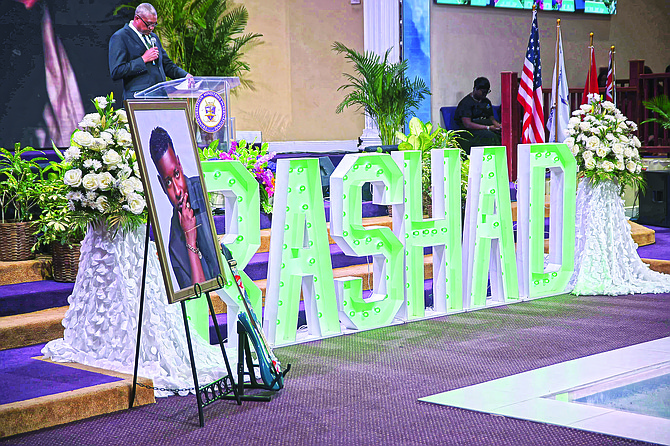
Independence Day crash victim memorial
Nearly one month after a devastating plane crash claimed 10 lives during the Bahamas’ Independence Day celebrations, families of the victims are trapped in extended anguish, marked by the first funeral held on Saturday and an incomplete memorial held without a loved one’s remains.
In Nicholls Town on the island of Andros, hundreds of mourners packed the local Church of Christ to lay 24-year-old Macaro Rolle to rest, the first of the 10 crash victims to be buried. Rolle was one of the initial survivors of the crash, but ultimately succumbed to his injuries three hours after impact – a window of time that allowed him to say final goodbyes to his family and leave a lasting testimony of his deep Christian faith.
Rolle, who owned his own home by age 24, had built a reputation as a disciplined, reliable worker over seven years of employment at MSC Ocean Cay, where he missed only a single day of work. “That speaks about his character. That speaks about his legacy and life at MSC Ocean Cay,” said Anna Albury, the resort’s human resources manager. The company covered travel costs for more than 20 employees to attend the funeral and brought in professional grief counselors to support staff following the disaster.
Friends and relatives shared warm memories of Rolle’s consistent faith, recalling he would pray even before eating a small snack like a potato chip or piece of candy. In his final hours waiting for rescue, he called repeatedly on the name of Jesus. His aunt Linda Rolle noted that the three hours of survival after the crash gave his family a small measure of closure his counterparts in other bereaved families have yet to receive. “It’s not easy but I want to encourage my family today to know that God is faithful, just to keep him alive to bring closure to the other family members but most of all to leave a testimony. That’s important. We serve a faithful God,” she said.
Close family members shared poignant reminders of their final interactions before the fateful flight. One cousin recalled receiving Rolle’s room key just hours before takeoff, with plans to meet up later. “That’s the very same key I had to use later to pack up his things and bring it home,” he said, his grief raw weeks after the crash. Rolle was remembered as a loving sibling, loyal friend, avid fisherman and joke-teller who dedicated himself to helping others. His former high school classmates honored his memory by gifting his family a custom portrait, while local lawmaker Leonardo Lightbourne sent official condolences via a representative after being unable to attend.
Meanwhile, 40 kilometers away in New Providence, dozens of family members and friends gathered at Kingdom Evangelistic Apostolic Ministries for a memorial service for Rashad Storr – a member of the popular Da Pond Band and a mechanic for Western Air. Like several other victims, Storr’s remains have not been recovered and returned to his family due to severe burn damage that has complicated identification efforts, which currently rely on DNA testing to confirm victims’ identities. Even as speakers celebrated Storr’s life, the absence of his body hung over the entire service, with his relatives saying they will not find closure until his remains are returned.
Attendees wore dark green and gold to honor Storr, remembering his warmth as a musician, his generosity toward others, and his dedication to his craft. Bandmate Shaniese Miller said Storr’s kindness to everyone he met earned him the nickname “the great Rashad” long before the crash. “Not because he asked to be call that but because there was something truly great about the way he treated people,” Miller said. Friend Phil Rolle described Storr as a chosen brother who taught him to play guitar and always showed up for people in need. “I don’t know if I’ll ever be as good on the guitar as him but I have to keep the legacy going,” he said.
Western Air manager Ricardo Wilson also paid tribute to Storr’s work ethic, noting “He came to our organisation as an employee but he left as family.”
Alongside Rolle and Storr, the eight other victims of the crash include Da Pond Band leader Giovanni McKenzie, band members Mateo Winder, Toniquea Gilot and Tra’vis Johnson, popular DJ Melvin “DJ Fresh International” Henfield, Andros native Quintin Myers, lead pilot Franklyn Cambridge, and 16-year-old Nicholas Oliver Jr. As families continue to wait for identification results to bring their loved ones home, the dual services on Saturday highlighted the prolonged pain bereaved relatives continue to endure weeks after the tragedy.
-
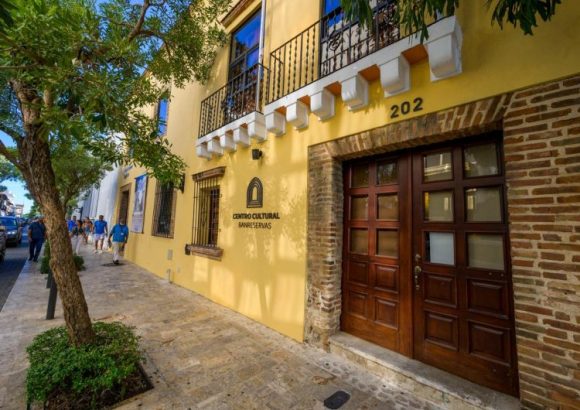
Dominican Republic launches Paris artist residency program with France
A groundbreaking new cultural initiative aimed at elevating Dominican visual artists onto the global stage has been jointly launched by the Dominican Republic Embassy in France and Banco de Reservas via its Banreservas Cultural Center. Dubbed the “Dominican Republic x Cité internationale des arts” program, the project will open doors for creators from the Caribbean nation to conduct three-month artistic research residencies in one of the world’s most iconic cultural capitals: Paris.
The residency scheme is developed in close collaboration with Cité internationale des arts, a long-renowned European leader in hosting international artist residency programs that has nurtured creative talent from across the globe for decades. Under the three-year rolling plan running from 2026 through 2028, six Dominican artists will earn spots in the program, with two creators selected annually to take up their residency in Paris.
To remove financial and logistical barriers for participating creators, the program provides comprehensive support for selected artists. This includes fully covered accommodation in the city, a dedicated private studio space to develop new work, access to one-on-one professional mentoring from established arts practitioners, and a monthly stipend that covers everyday living costs and local transportation throughout the residency period.
Eligibility for the program is open to any Dominican visual artist currently based in the Dominican Republic, whose proposed creative project carries conceptual or contextual ties to Paris or France. A wide range of creative disciplines are accepted, covering traditional mediums such as painting, sculpture, and photography, as well as contemporary practices including installation art, digital art, performance art, and interdisciplinary cross-medium work.
The application window for the first round of residencies is open now, and will close on August 30, 2026. Names of the inaugural selected artists will be publicly revealed in October that same year, timed to coincide with the annual Dominican Week in France celebration.
Speaking on the launch of the initiative, Dominican Ambassador to France David Puig emphasized the program’s broader strategic role beyond supporting individual artists. Puig noted that the residency scheme strengthens bilateral cultural diplomacy between the two nations, expands the global footprint of Dominican creative talent, and lays the groundwork for long-term collaborative artistic partnerships between creators and cultural institutions in the Dominican Republic and France.
-

Dominican ambassador receives Duarte busts for Saudi Arabia and Djibouti
In a formal ceremony held in advance of the Dominican Republic’s 2027 national Independence Day and Homeland Month celebrations, the Dominican Republic’s Ambassador to Saudi Arabia Andy Rodríguez Durán accepted two sculpted busts of Juan Pablo Duarte, the nation’s iconic founding father, from representatives of the Duartian Institute.
This handover marks a key step in the Dominican Republic’s initiative to share its foundational historical heritage with the global community. Per the planned installation schedule, one of the two bronze busts will be placed in Djibouti, a country that falls under the diplomatic accreditation of the Dominican Embassy based in Riyadh. This placement will make the sculpture the second official public monument to Duarte located on the African continent. The first official Duarte bust was unveiled in Egypt in 2023, when Ambassador Rodríguez Durán was serving in a diplomatic posting there.
The second bust, which portrays Duarte in his historic role as a military leader of the Dominican independence movement, will remain on permanent display at the Dominican Embassy’s headquarters in Riyadh, serving as a permanent reminder of the nation’s founding ideals for visitors and diplomatic staff alike. Alongside the two sculptures, Ambassador Rodríguez Durán also received an official Dominican national flag and a curated collection of books and institutional publications that detail Duarte’s life, contributions, and enduring legacy.
Wilson Gómez Ramírez, president of the Duartian Institute, emphasized during the ceremony that his organization has long prioritized expanding global awareness of Duarte’s transformative role in Dominican history. The institute remains dedicated to preserving his ideals and extending recognition of his legacy beyond Dominican borders to international audiences. For his part, Ambassador Rodríguez Durán expressed sincere gratitude to the Duartian Institute for its ongoing work to safeguard the patriot’s legacy and create opportunities to share it with communities across the globe, noting that the installations will strengthen cultural diplomacy and highlight Dominican national identity in the Middle East and Africa.
-
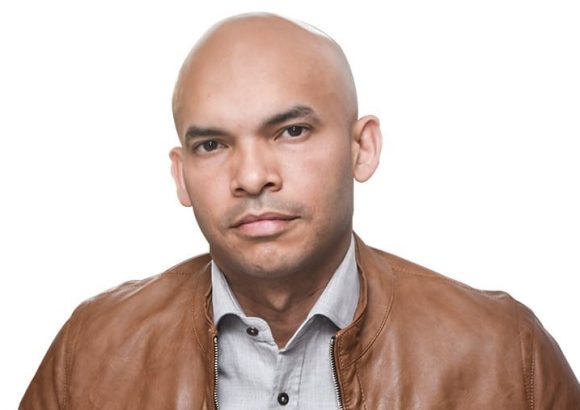
Aneudys Santos apologizes to U.S. ambassador Leah Francis Campos over offensive remarks
Nearly two months after making derogatory, faith-targeting comments about United States Ambassador to the Dominican Republic Leah Francis Campos, Dominican television personality Aneudys Santos has issued a formal public apology, acknowledging his actions were unjustified and wrong.
In a video statement circulated across his personal social media channels, the prominent broadcaster opened by directly addressing Campos, noting he owed an apology to her first as an individual and a woman, and second in her official capacity as the diplomatic representative of the U.S. government. Santos went on to distance himself from the inappropriate language he used, describing his original comments as erratic, undeserved, and unnecessary. He emphasized that he fundamentally opposes calling into question any person’s religious beliefs, a core line of criticism he leveled at Campos that he now admits was out of line. Invoking shared Christian values of forgiveness, he urged the ambassador to accept his public apology.
Santos also provided context for his original confrontation, explaining that his criticism grew out of political disagreement: he had opposed Campos’ decision to join the public debate surrounding revisions to the Dominican Penal Code and related discussions of freedom of expression. Even as he clarified the root of his disagreement, he took full personal ownership of the offensive language he deployed, explicitly denying claims that he was acting on behalf of any third party when he made the original remarks.
The public apology marks a resolution to a diplomatic friction point that emerged after Santos first shared his offensive video targeting Campos. At the time, the ambassador had publicly reaffirmed her commitment to freedom of expression while responding to the derogatory comments directed at her.
-
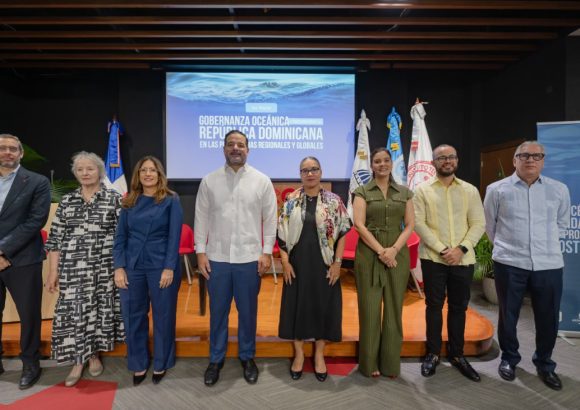
Dominican Republic holds first National Oceans Forum to strengthen marine conservation
In a landmark gathering focused on safeguarding one of the Dominican Republic’s most critical natural assets, the Ministry of Environment and Natural Resources, in partnership with the United Nations Development Programme (UNDP) and the Technological Institute of Santo Domingo (INTEC), has convened the country’s First National Oceans Forum in the capital city of Santo Domingo. The cross-sector event brought together a diverse cohort of stakeholders, including senior government representatives, leading academic researchers, private sector leaders, civil society advocates, and global organization experts, all aligned around the shared goal of advancing progressive ocean governance and responsible long-term management of marine resources.
Framed by the theme “The Ocean as the Foundation of Sustainable Prosperity,” the forum carried a clear core mission: to elevate ocean conservation from a niche environmental concern to a central priority on the Dominican Republic’s national policy agenda, while establishing a collaborative foundation for the development of the country’s first formal National Ocean Strategy.
Speaking at the opening of the event, Environment Minister Paíno Henríquez framed the forum as a transformative milestone for the nation’s approach to marine and coastal ecosystem management. He underscored that the long-term future of the Dominican Republic is inextricably linked to the ecological health of its surrounding seas, noting that continued degradation of marine habitats would put economic and social progress at risk across multiple sectors.
Attendees across sectors echoed that sentiment, emphasizing a little-known but critical fact: the ocean makes up approximately 90 percent of the Dominican Republic’s total national territory. Beyond its ecological importance, this vast marine resource is the backbone of many of the country’s most vital economic sectors, from world-renowned coastal tourism that draws millions of visitors annually to small-scale and commercial fisheries that support millions of livelihoods. It also underpins the social and economic stability of hundreds of thousands of residents living in coastal communities across the nation.
Over the course of the forum, participants dove into robust discussions centered on the most pressing threats facing the country’s marine ecosystems. Key challenges highlighted included accelerating climate change impacts such as ocean warming and acidification, growing levels of marine plastic and chemical pollution, worsening coastal erosion that threatens communities and infrastructure, and unsustainable overfishing that depletes fish stocks critical to food security and economic activity. Alongside these challenges, attendees explored a wide range of untapped opportunities to expand the country’s sustainable blue economy, balancing economic growth with long-term conservation of marine resources.
officials also used the forum to call for urgent systemic changes to ocean management, including more effective coordination across disparate government agencies, the adoption of science-backed policy frameworks to guide decision-making, and scaled up investment in conservation initiatives across all levels of governance. Organizers confirmed that the National Oceans Forum is set to become an annual recurring event, designed to sustain cross-sector collaboration, strengthen national ocean governance frameworks, and advance the long-term protection of the Dominican Republic’s irreplaceable marine resources for future generations.
-
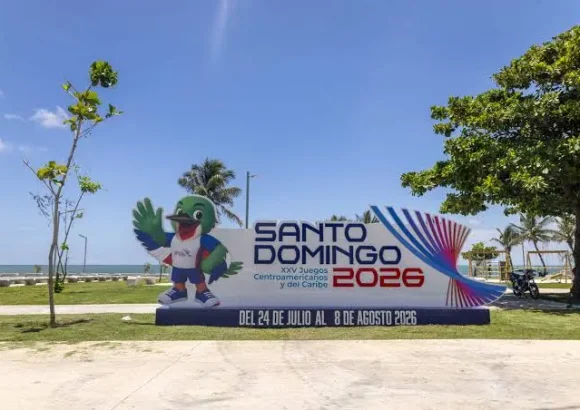
Santo Domingo Este Malecón closed today for Central American and Caribbean Games triathlon
Santo Domingo, Dominican Republic – Ahead of the triathlon competition kicking off as part of the XXV Central American and Caribbean Games 2026, local transportation authorities have formally announced temporary traffic restrictions along a key coastal corridor in the capital’s eastern district.
The National Institute of Transit and Land Transportation (Intrant) confirmed Monday, August 3, that the entire stretch of Santo Domingo Este Malecón, officially known as Avenida España, will be closed to all motor vehicle traffic for 11 hours on the day of the event. The shutdown is set to begin at 3:00 a.m. and will remain in place until 2:00 p.m., giving event organizers time to set up race infrastructure before the competition and clear the course for regular use once the triathlon concludes.
In an official statement, Intrant has urged all drivers who typically travel along the corridor to adjust their travel plans in advance to prevent unexpected delays and congestion at nearby access points. To help commuters and commercial vehicles reroute smoothly, the agency has identified three primary alternate routes: Las Américas Avenue, Estados Unidos Avenue, and Mirador del Este Avenue, all of which are designed to accommodate increased traffic volume during the closure.
To further assist road users, Intrant confirmed that all details of the temporary closure have already been updated and integrated into the popular Waze real-time navigation application, allowing app users to automatically receive rerouting suggestions when planning trips through the affected area. Additionally, uniformed traffic officers have been deployed to key intersections and diversion points along the restricted zone. These personnel will be on site throughout the closure to manually direct vehicle flow, respond to unexpected congestion issues, and uphold overall traffic safety for both race participants and road users during the event.
-
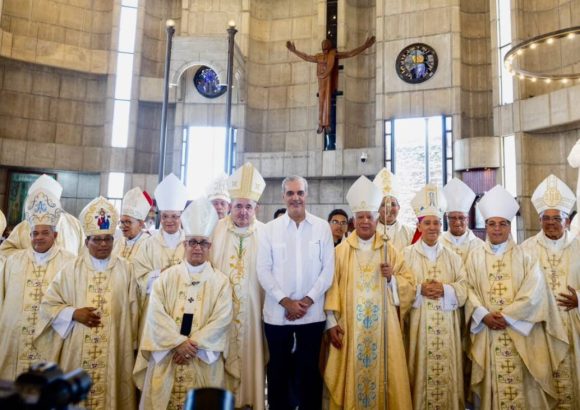
President Abinader attends installation of new bishop of La Vega Diocese
LA VEGA – A landmark ceremonial event unfolded this week at the Immaculate Conception Cathedral in La Vega, where newly appointed Bishop Andrés Napoleón Romero Cárdenas was formally installed as the top leader of the Diocese of La Vega. The installation followed an official appointment by Pope Leo XIV, with Apostolic Nuncio Archbishop Piergiorgio Bertold presiding over the formal religious gathering. Dominican Republic President Luis Abinader was in attendance to mark the historic occasion for the regional Catholic community.
In his inaugural homily delivered moments after taking office, the new bishop laid out a clear vision for his tenure leading the diocese. Romero Cárdenas committed to guiding a faith community rooted in proximity to local residents, built around open dialogue and collaborative partnership, while intentionally steering clear of partisan political divides. He emphasized his intent to work constructively alongside government officials, educational establishments, local business groups, and community-focused organizations to advance shared public good across the diocese’s coverage area.
Beyond collaborative governance, Romero Cárdenas reinforced his dedication to upholding the Dominican Republic’s long-held religious and cultural heritage. He highlighted core values that will anchor his pastoral work: respect for life, support for family structures, a commitment to justice and peace, investment in education, upholding human dignity, and advancing meaningful action for environmental protection.
Among his key pastoral priorities, the new bishop singled out youth ministry as a central focus for growth in the coming years. He announced concrete plans to expand and strengthen existing support programs for young people, delivered through coordinated cross-community pastoral initiatives designed to meet the evolving needs of the diocese’s youth population.
The Diocese of La Vega is one of the Dominican Republic’s larger regional Catholic jurisdictions, serving four provinces: La Vega, Hermanas Mirabal, Monseñor Nouel, and Sánchez Ramírez. Across its service area, the diocese oversees 63 individual parishes and supports a roster of more than 120 active priests serving local faith communities.