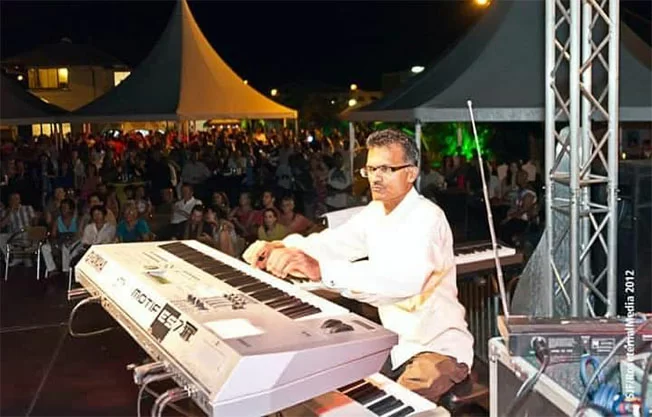
In a reflective opinion piece shared in early August, Surinamese artist and musician Sonny RJ Khoeblal draws a parallel between musical harmony and national unity to address recent tensions that have shaken the country’s National Assembly. Drawing on four decades of experience creating art that fosters connection and hope, Khoeblal frames his argument around a simple but powerful lesson he learned through music: true harmony is never achieved when every instrument sounds identical. Instead, it emerges when distinct, diverse tones learn to collaborate, lifting one another up to create something greater than the sum of its parts. Our societies, he argues, work exactly the same way, functioning as a vast, multi-voiced orchestra where difference is not a flaw, but the foundation of collective strength. Recent upheaval in the National Assembly has laid bare a critical truth, Khoeblal writes: when raw human emotion is allowed to dominate political discourse, the core mission of public service—representing and serving the Surinamese people—fades into the background. Too often, after conflict erupts, the only question the public and politicians ask is, “Who is in the right?” But according to Khoeblal, we must push ourselves to ask more constructive, wiser questions that move the conversation forward. Do our current responses breed further division? Do they amplify tension? Or do they spark new creation, generate solutions, and rebuild collective trust? For more than forty years, Khoeblal says he has dedicated his career and his life to cultivating what he calls theta: the life-giving energy of creativity, hope, inspiration, and connection. Against the negative, enturbulated energy of conflict, confusion, and division—what he terms entheta—stands a far more powerful, universal force: the innate human ability to create something new and better, no matter how deep the current rift. Khoeblal emphasizes this creative capacity is not reserved for a select few. It lives in every member of society, from members of parliament and small business owners to artists, parents, and young people. Every single person gets to make a choice: to react from a place of raw anger and emotion, or to create from a place of intentional awareness, mutual understanding, and compassion. Great nations, he reminds readers, are not built by people who never make mistakes. They are built by communities that can step back after conflict, ask what they can learn from the division, work together to repair broken trust, and move forward as one. Suriname, Khoeblal argues, is blessed with extraordinary untapped potential. It holds rich, diverse cultural traditions, world-renowned musical heritage, vast natural treasures stretching from mineral-rich soil to lush ancient rainforests and open skies, and an inherently creative population that has long thrived in spite of challenge. He closes with a call to action for all Surinamese people, wherever they live: let us choose to shift our collective energy from being controlled by conflict to being driven by the desire to build something better. He highlights the elegant parallel in the phrases “reactie” and “creatie”—the two words are made up of exactly the same letters, but represent two entirely different paths forward. This shift means moving from division to collaboration, from unregulated emotion to thoughtful wisdom. Khoeblal reminds readers that the positive energy each person holds within is always stronger than the negative energy of conflict. Closing with a traditional phrase in Suriname’s Sranan Tongo—*“Na Bun Fu Yu Mi Suku Tru, Da Na Ogri Musu Wai,”* which translates broadly to “I seek the good for you and me, so evil cannot stay”—Khoeblal calls on all Surinamese people to collectively build the future they want to see, rather than reacting to the conflict that divides them today.
作者: admin
-

FLASH Quarter-finals : Champions League 2026, change of stadium and time
Organizers of the 2026 CONCACAF U-20 Championship have issued a last-minute adjustment to the quarterfinal matchup between Haiti and Costa Rica, shifting both the venue and kickoff time to address unforeseen logistical challenges and preserve the playing surface at the originally planned site.
The high-stakes encounter, which will decide a spot in both the tournament semifinals and the 2027 U-20 World Cup, was initially set to kick off at 4:30 PM Central American time on August 4, 2026, at Puebla’s Cuauhtémoc Stadium. Under the revised schedule, the match will now get underway at 2:00 PM local Puebla time (4:00 PM in Haiti) at BUAP University Stadium, another venue within the same Mexican host city that has already welcomed group stage matches earlier in the tournament, meaning both squads will already have familiarity with the facility.
For Haiti, whose U-20 side goes by the nickname Les Grenadiers, this quarterfinal represents a historic opportunity. The team secured its place in the knockout stage as the Group A runner-up, finishing with six points from three matches and a -1 goal difference. After a opening 3-0 defeat to tournament favorites the United States, Haiti bounced back in spectacular fashion, notching a hard-fought 3-2 win over Cuba before securing a narrow 2-1 victory against El Salvador that locked in their knockout spot. A win over Costa Rica would mark the first time in Haitian men’s U-20 history that the nation has qualified for the U-20 World Cup.
Costa Rica, nicknamed Les Ticos, also advanced to the quarterfinals as one of the best group stage runners-up, finishing with an identical six points to Haiti but a stronger +2 goal difference across their three matches. The side opened group play with a 1-0 win over Guatemala, fell 2-0 to host nation Mexico, then closed out group play with a 4-1 rout of Antigua and Barbuda to secure their knockout spot. For Costa Rica, a victory would book their 10th appearance at the U-20 World Cup, adding to their long history of success at this age-group level.
The winner of this quarterfinal will claim one of four CONCACAF confederation slots allocated for the 2027 U-20 World Cup, in addition to advancing to the tournament’s semifinal round.
-
Programma moet mentale problemen bij zwangere vrouwen eerder helpen herkennen
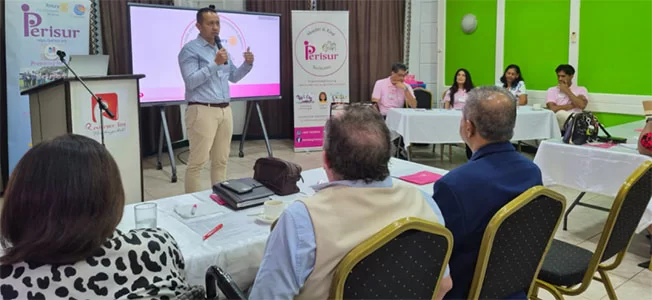
A groundbreaking public health effort to prioritize maternal mental health is moving forward in Suriname, bringing together cross-sector partners to tackle a long-overlooked issue that impacts thousands of women and their families across the country. Stichting Perisur, in close collaboration with Suriname’s Ministry of Public Health, Labor and Welfare, and the Rotary Club Paramaribo Residence, has launched a national program designed to equip frontline healthcare workers with the tools and training needed to identify perinatal and postpartum mental health concerns earlier and connect patients to appropriate, timely support.
More than 50 stakeholders, including practicing clinicians, public health policy leaders, and academic researchers, gathered for the program’s official launch event on Friday. Organizers note that the high turnout for the gathering underscores growing recognition of how critical maternal mental health is to the overall strength of Suriname’s healthcare system.
During the opening sessions, participants highlighted a troubling gap in current care: mental health struggles during and after pregnancy very often go undetected, even though these conditions carry severe, long-lasting consequences for both maternal well-being and child development. By prioritizing early identification and streamlined referral pathways, the initiative’s backers aim to reinforce the quality of care available to new and expecting mothers across the nation.
Deputy Minister of Public Health, Labor and Welfare Raj Jadnanansing emphasized the scale of the unaddressed crisis in his opening remarks. He shared that an estimated 90% of maternal mental health conditions currently go untreated in Suriname, placing unnecessary, significant strain on both the national healthcare system and broader Surinamese society.
Neuropsychologist Sila Kisoensingh from Kliniek Kiros presented local prevalence data to contextualize the need for intervention. Her figures show that 27.5% of pregnant people in Suriname experience clinically high levels of stress during pregnancy, while between 18% and 22% develop postpartum depression following childbirth. Kisoensingh reinforced that consistent, early recognition and targeted support are critical to improving long-term outcomes for affected women.
A core component of the new program is the newly developed Maternity Mental Health Checklist, a practical screening tool created to support general practitioners, midwives, and other frontline care providers in spotting early warning signs of perinatal and postpartum mental distress. The checklist was officially introduced by physician and researcher Simran Mokiem during the launch event.
In addition to rolling out the screening tool, Ashna Hindori-Mohangoo, lead researcher at Stichting Perisur, announced a forthcoming pilot study that will measure the real-world effectiveness of the early detection framework. Throughout the day, participating healthcare professionals took part in interactive working sessions to practice using the new checklist, discuss best practices for holding confidential, non-judgmental conversations with expecting patients, and clarify protocols for when referral to specialized mental health care is required. Participants shared on-the-ground clinical experiences during these sessions, which collectively confirmed that maternal mental health concerns are far more common than routine care systems currently acknowledge.
Afternoon sessions focused on refining and standardizing referral protocols for women who require specialized mental health support, a key infrastructure gap the program seeks to address. Initiative leaders frame the effort as a foundational step toward building a fully integrated, accessible approach to maternal mental health care across Suriname. By fostering sustained collaboration between government agencies, clinical institutions, civil society organizations, and research teams, the program aims to both expand public awareness of the issue and improve access to evidence-based care for all expecting and new mothers in the country.
The launch event concluded with formal agreements outlining the next phases of national rollout, with a shared ambition to integrate the new screening tools and care protocols into public health systems across Suriname. Organizers emphasized a core guiding principle: investing in the mental health of mothers is ultimately an investment in the long-term health and well-being of children, families, and the entire Surinamese community.
-

Mother appeals for public’s help as search continues for missing Portsmouth teenager (with video)
As the search operation for a missing 19-year-old Portsmouth resident Jerbiah Kaysia Paul stretches into its ninth consecutive day, the teenager’s mother Jacinta Paul has delivered a heartfelt, urgent appeal to members of the public, begging anyone with even the smallest piece of information to come forward to help bring her daughter home safely.
In her public address, Jacinta opened by expressing her profound gratitude to the hundreds of local residents, volunteer search teams, and law enforcement officers who have dedicated time, energy and resources to combing the area for any trace of Kaysia over the past week and a half. She emphasized that the outpouring of community support has been a small source of comfort for her family during this terrifying, uncertain period, but that the lack of updates on her daughter’s whereabouts has left the entire family in overwhelming distress.
Local law enforcement agencies have confirmed that they are continuing to actively process all tips and leads that have been submitted by the public, and have stepped up patrols in areas that Kaysia was known to frequent before she was reported missing. Investigators have not released further details about the circumstances of her disappearance to avoid compromising the ongoing search operation, but have reiterated that any information, no matter how insignificant it may seem to the person holding it, could prove critical to resolving the case.
Community groups across Portsmouth have also organized voluntary search parties, shared missing person flyers across social media platforms, and offered support to the Paul family as they wait for news. Local residents have been encouraged to check their private property, including outbuildings, sheds and vehicles, for any signs of the teenager, and to contact the dedicated police tip line immediately if they spot anything that matches Kaysia’s description.
-
Prescod links low Emancipation Day turnout to lack of historical consciousness
This year’s Emancipation Day observance in Barbados drew far fewer attendees than expected, prompting the island nation’s Minister of Pan-African Affairs and Heritage Trevor Prescod to issue a rallying cry for collective action to reclaim Black ancestral history, alongside the launch of groundbreaking new educational programs focused on reparations and Black studies.
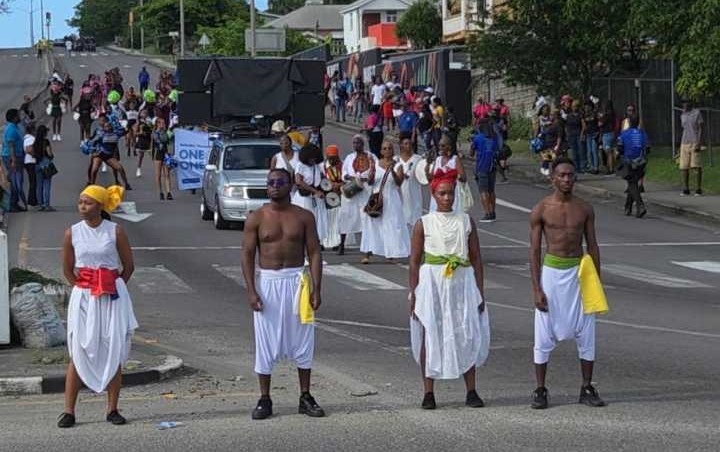
Hosted at Haggatt Hall, the 2024 commemoration brought together a diverse cross-section of stakeholders, including cultural performance troupes, interfaith spiritual leaders, and senior government officials. The day’s schedule opened with a formal procession to the iconic Emancipation Statue – widely known locally as the Bussa Statue, a monument honoring the leader of one of Barbados’ most influential 19th-century slave rebellions. Key participating groups included delegates from the Nyabinghi Order and the Spiritual Baptist faith, whose members led opening prayers for the occasion. Cabinet members including Minister of Educational Transformation Chad Blackman and Minister of Agriculture Dr. Shantal Munro-Knight also joined the gathering to mark the historic date.
Speaking to the modest crowd, Prescod framed emancipation not as a one-off achievement locked in 19th-century history, but as an ongoing struggle that requires constant stewardship from successive generations. Drawing direct connections between the mass resistance that forced colonial powers to end chattel slavery across the Caribbean and contemporary fights for racial justice, he warned that hard-won freedoms cannot be taken for granted. “Freedom is not a fixed thing. If you don’t protect it, you lose it,” Prescod emphasized, noting that the 1834 abolition of slavery in the British colonies only came to pass after sustained, organized resistance from enslaved people across the region.
The minister publicly voiced his disappointment at the low turnout, arguing that the weak public turnout signals a troubling gap in historical consciousness among segments of the Barbadian public. He urged attendees to confront and honor the unthinkable hardships their enslaved ancestors endured to build the foundation for modern Barbadian freedom.
To address this gap in historical awareness and advance the movement for reparatory justice, Prescod announced a landmark new scholarship initiative that will fund fully funded master’s degrees in Black studies and reparations. The program will be run by the Ministry of Pan-African Affairs in formal partnership with two leading higher education institutions: the University of the West Indies and Scotland’s University of Glasgow. The partnership draws on Glasgow’s documented historical ties to the transatlantic slave trade and its ongoing work to acknowledge and redress that legacy.
Prescod also highlighted two recent cultural reclamation projects that he framed as critical stepping stones to rebuilding national collective memory: a well-attended tribute mass honoring iconic Jamaican Pan-African musician Bob Marley at St. Barnabas Church, and the successful recovery of a 300-pound plantation bell from the St. Joseph region, a physical relic of the island’s slavery era.
The commemoration included traditional rituals including ceremonial wreath-laying, formal speeches, community prayer, and a symbolic ringing of the recovered plantation bell by restoration specialist Shane Wiseman. In closing, the procession wrapped up with a vehicle and motorcycle tribute to fallen freedom fighters, a go-kart demonstration showcasing intergenerational engagement with the holiday, and a solemn moment of silence at the Bussa Statue to honor the sacrifice of all who resisted slavery and fought for emancipation.
Nyabinghi Order member Ras Martin echoed Prescod’s call for continued advocacy for reparations and the repatriation of African descendants whose ancestors were trafficked to the Caribbean during the slave trade. He noted that while Barbados is now widely marketed as a tropical paradise for visitors and wealthy residents, that transformation has not delivered equal justice and prosperity to the descendants of enslaved people who built the island’s economy. “Barbados was once thought of as hell on earth for the victims coming over from Africa,” Ras Martin said. “Over the years, Barbados was able to move from hell on earth to a paradise—but paradise for who? It is here that the reasoning on reparations and repatriation must be rooted. Freedom is not a fixed thing; if you don’t protect it, you lose it.”
-
Historic 300-pound plantation bell unveiled
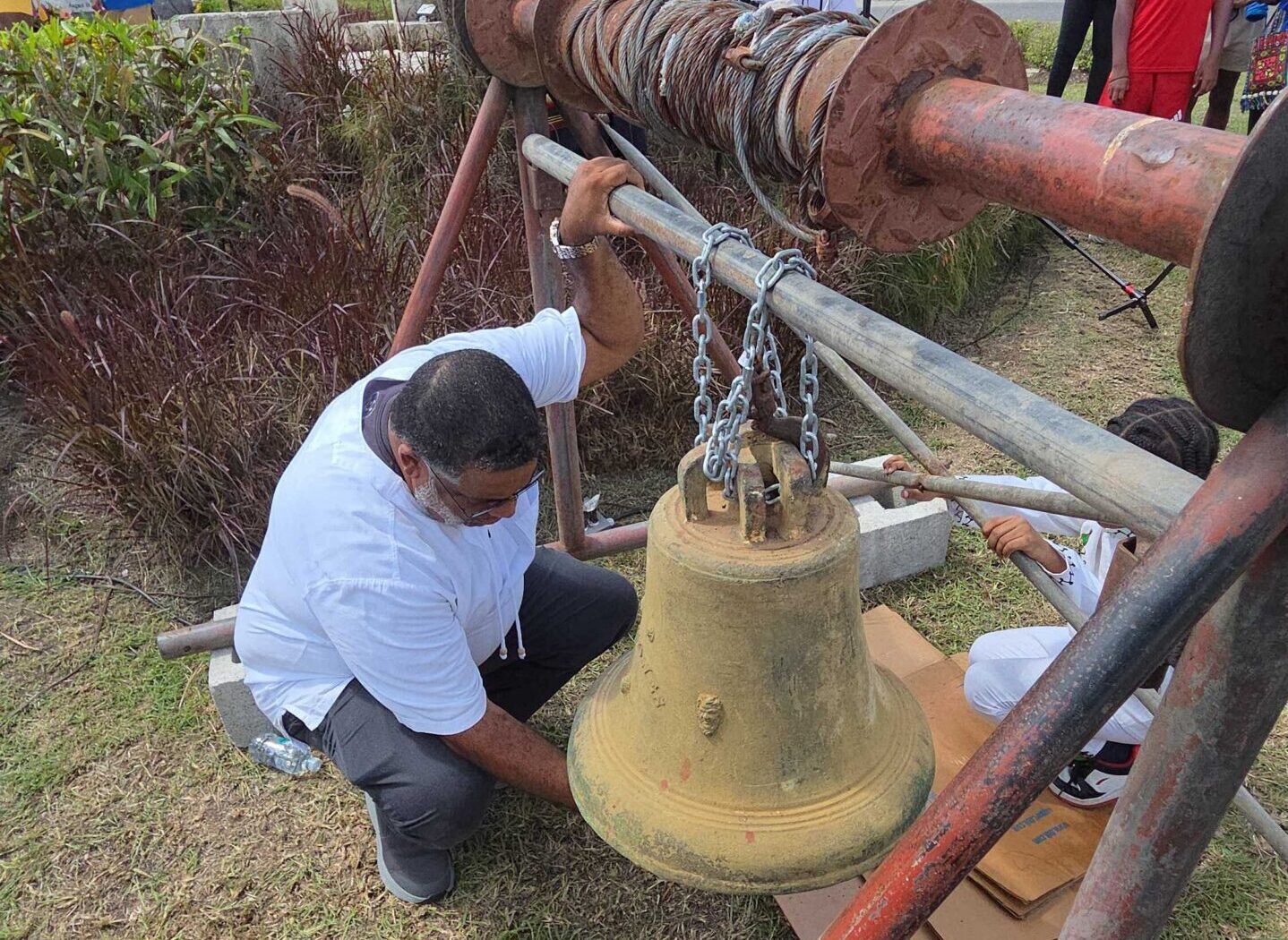
On Barbados’ annual Emancipation Day, a one-of-a-kind historical artifact that holds centuries of layered history connected to transatlantic chattel slavery made its public debut: an 18th-century bronze plantation bell weighing roughly 300 pounds, confirmed by historians to be the only surviving example of its kind globally.
Commissioned between 1743 and 1760 in England by Benjamin Mellows, a former parliamentary representative for Barbados’ St Joseph parish, the custom-cast bell was created exclusively for Bully Tree Hall, the sugar estate that would later be renamed Blackman Plantation. Cast directly into the bell’s front face is Mellows’ name, a permanent mark of its original commissioner, and the artifact was shipped directly to the Barbadian island at the height of its lucrative colonial sugar production industry.
Local historian and lead researcher Shane Wiseman shared the bell’s complicated legacy with attendees at the unveiling event, walking the crowd through its centuries-long story. “Mellows commissioned it, covered its cost, and it was shipped straight to Barbados,” Wiseman explained. “His name is permanently imprinted on the bell, and after decades of research, we can confirm it is the only surviving bell of this specific type and provenance anywhere in the world.”
For the hundreds of enslaved Africans forced to work the Blackman Plantation’s sugar cane fields, the bell dictated nearly every aspect of daily life under bondage. It functioned as an unforgiving timekeeper, marking the pre-dawn start of the 12+ hour workday and its end only after sunset. Beyond its role as a work schedule regulator, the bell carried other grim purposes: it sounded alarms to alert enslavers and forced laborers when dangerous cane field fires broke out, it rang to signal when an enslaved person had attempted to escape, and it summoned the entire enslaved community to gather for public, punitive punishments designed to terrorize them into compliance.
During the unveiling ceremony, community leader Carl Padmore reflected on the bell’s modern meaning as a tangible link to ancestors who suffered under slavery, reading aloud from a prepared text: “A bell delivers notice. When you hear this bell ring today, it reminds us that our ancestors survived long enough for this artifact to be preserved for us. God preserved this bell to honor our ancestors, and it is now our responsibility to carry forward the work of justice and remembrance that they could not finish in their lifetimes.”
To this day, researchers have not pinned down the exact year the bell was cast. Teams are continuing to coordinate with public and private archives across the United Kingdom to cross-reference shipping records, bronze foundry ledgers, and colonial estate documents to narrow down the precise date of manufacture, a step that will add further context to the artifact’s already significant historical record.
-

Column: Fraser, Mathoera en de paspoorten
In a major development for Suriname’s men’s national football program, former assistant coach Henk Fraser was officially introduced as the new head coach of the Suriname national team last week, a move that has already sparked cautious optimism among football followers across the country and its global diaspora.
Fraser’s appointment is widely welcomed for more than just his proven track record as a skilled manager. Beyond his well-documented ability to connect with players and genuine passion for Suriname – he is famously an enthusiast of the nation’s vast interior rainforests – the new head coach brings a plain-spoken authenticity that has endeared him to fans and players alike. In one notable example following a dismal performance from a club he previously managed, Fraser openly and calmly expressed sincere regret to supporters, acknowledging that their money had been wasted on a subpar showing. When interviewed last September, shortly after becoming assistant to then-head coach Stanley Menzo, Fraser admitted he could have chosen more diplomatic phrasing for that moment – but added that blunt honesty is simply part of his nature.
Yet for all of Fraser’s personal and professional strengths, his ability to succeed in the role hinges on a long-standing, high-stakes issue: resolving the eligibility and passport uncertainty that has derailed the national team’s plans to call up top Suriname-born and Suriname-descended professional players plying their trade in European leagues.
Fraser has made clear he intends to give opportunities to local domestic players, and is already expected to call up a cohort of young domestic talent for September’s upcoming international fixtures. But it is understood that neither he nor newly retained general manager Brian Tevreden would have taken on their roles if they were forced to build a competitive squad without diaspora professionals.
The passport controversy first erupted earlier this year, after a Dutch top-flight club Go Ahead Eagles fielded ineligible defender Dean James in a 6-0 win over NAC Breda. James, who had previously represented Indonesia at international level with an Indonesian passport, had automatically lost his Dutch citizenship under Dutch nationality law once he obtained the Indonesian travel document. This revelation sent shockwaves through Suriname’s national team setup: the same rule applied to nearly all Suriname-descended players holding Dutch passports who had been representing the country in international competition, including the qualifying campaign for the 2026 World Cup that ended in a playoff defeat to Bolivia.
Prior to that incident, all of these players had operated under the assumption that they could represent Suriname while retaining their Dutch citizenship, a core benefit that guarantees their right to work and live across the European Union. NAC subsequently brought a short legal challenge against the Royal Dutch Football Association (KNVB) to have the Go Ahead Eagles result overturned, and while NAC lost the case, the ruling left the international careers of dozens of Dutch-based Suriname internationals in limbo. As non-EU citizens, the affected players were required to reapply for work permits from the Netherlands’ Immigration and Naturalisation Service (IND). While high-profile players such as NEC Nijmegen’s Tjaronn Chery and FC Groningen’s Etienne Vaessen had their applications processed quickly – with their clubs prioritizing the approvals during the critical final stretch of the domestic season – lower-profile players faced long waiting periods and were forced to hire costly legal representation. Suddenly, representing their ancestral nation became a high-risk decision that threatened players’ livelihoods, even though nearly all of the affected athletes have expressed a strong desire to play for Suriname.
For months after the controversy broke, the public waited for a response from the Suriname Football Association (SVB) and the Surinamese government. The two bodies formed a special commission with representatives from government, the SVB, and legal experts from both the Netherlands and Suriname to craft a solution, but no updates emerged for months, leaving the future of the national program uncertain.
That silence ended last week, when SVB president Dayasankar Mathoera announced the dispute is on the cusp of being fully resolved. Mathoera explained that the issue boils down to legal interpretation of how the European-based players will obtain Surinamese passports. Under Dutch law, players do not automatically lose their Dutch citizenship if they obtain a second passport to serve their country of origin in the national interest, at the request of the Surinamese presidency.
To fit this framework, the new proposed arrangement would issue Surinamese passports exclusively for international football purposes to players that already hold Dutch nationality. These passports would not grant the holders any additional civic or property rights in Suriname: recipients will not be eligible to vote, nor can they claim land grants under the proposed scheme.
The policy is not yet final: Suriname President Jennifer Simons still needs to formally approve the new framework, and the Suriname National Assembly must pass the required amendments to Suriname’s nationality law by a majority vote, before the changes are ratified by the Council of State. But Mathoera expressed confidence that the entire approval process will be completed before September’s international match window, at which point diaspora professionals will have full guarantees that they will not risk losing their Dutch citizenship by representing Suriname.
Fraser is already fully briefed on the progress of the reforms, and will be able to build a roster that combines talent from top European leagues with promising young players from Suriname’s domestic competition when the new regulations come into force. For a national team looking to qualify for its first ever World Cup, the resolution of the passport issue and the arrival of a widely respected head coach marks a critical turning point for Suriname football.
-

COMMENTARY: Outsourcing Sermons to AI
Over the past decade, artificial intelligence (AI) has reshaped nearly every corner of modern life, from streamlining corporate workflows and academic planning to designing infrastructure and generating creative content. What was once a niche experimental technology is now marketed to the general public as a revolutionary tool that will redefine how people work, learn, and create. While AI has delivered undeniable efficiency gains across sectors including business, education, and law enforcement, its rapid proliferation has also sparked urgent ethical questions, particularly as the technology moves into one of society’s most deeply personal spaces: Christian worship.
The most pressing controversy surrounding AI’s growing role in faith communities centers on the rising trend of pastors using AI to generate full sermons and even original gospel music. A quick online search for “AI sermons” or “AI gospel songs” pulls up dozens of platforms offering ready-made spiritual content for clergy looking to cut down on preparation time. While the authors of this commentary acknowledge AI can serve as a helpful auxiliary tool for church administration, they argue that replacing the traditional sermon-writing process with AI-generated content raises profound spiritual and moral concerns that Christian leaders cannot afford to ignore.
For centuries, preparing a sermon has been a deeply spiritual discipline for pastors: it requires diving deep into biblical text, cross-referencing passages with traditional concordances, and spending extended time in prayer and meditation to seek guidance from the Holy Spirit. Outsourcing this core work to an algorithm, the authors argue, erodes the authentic spiritual connection that gives preaching its power. They note that overreliance on AI mirrors the biblical warning against spiritual slavery, pointing to Galatians 5:1, where the Apostle Paul urges believers to stand firm in the freedom Christ offers, refusing to be yoked to new forms of bondage. In the modern context, the authors frame overreliance on AI as a new form of legalism, where clergy prioritize the convenience of a machine-generated product over reliance on the supernatural guidance of the Holy Spirit.
Widespread acceptance of AI-generated sermons also reflects a growing lukewarmness among many believers and clergy, the commentary argues, echoing the biblical rebuke of the Laodicean church in Revelation 3:15-16, where Jesus condemns believers who are neither hot nor cold in their faith. The authors stress that true followers of Christ are called to spiritual discernment, and the pulpit must remain a space uncompromised by artificial shortcuts to uphold biblical integrity. AI lacks a soul, a personal relationship with God, and the ability to understand the specific spiritual needs of a local congregation, making it incapable of delivering the Spirit-led message that preaching requires.
When pastors outsource the work of sermon preparation to AI, they not only rob themselves of the spiritual growth that comes from wrestling with scripture and prayer — a process the authors compare to building spiritual muscle that atrophies without use — they also risk turning church services into hollow, mechanical rituals disconnected from divine guidance. Deception, the authors note, so often hides behind the veil of convenience and efficiency, two of AI’s biggest selling points. Christian leaders have a responsibility to guard against this infiltration, holding fast to their role as shepherds of truth rather than conduits for shallow, unauthentic teaching. While AI can be used carefully as an auxiliary tool for administrative tasks, the authors warn that ceding core spiritual work to algorithms leaves churches vulnerable to losing the presence of the Holy Spirit entirely, a risk that all believers must take deliberate steps to avoid.
-
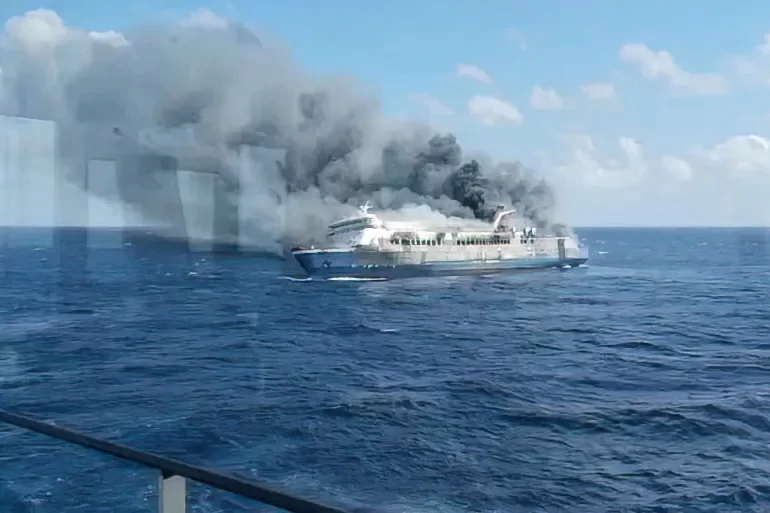
Minstens vijf doden en 41 vermisten na brand op veerboot bij Indonesië
A devastating blaze on the Indonesian passenger ferry Mutiara Sentosa 2 has claimed at least five lives, with 41 people still unaccounted for, the country’s national search and rescue agency Basarnas confirmed Sunday.
The incident unfolded in the early hours of local time, between 6 a.m. and 7 a.m., as the vessel carried 271 people – 232 passengers and 39 crew members – on a scheduled voyage from Surabaya, East Java, to Makassar, South Sulawesi. The fire broke out roughly 35 kilometers north of Buruan Sapudi Island, off the northeast coast of Madura Island, a small landmass northeast of Java.
According to Basarnas officials, the ferry operator PT Atosim Lampung Pelayaran alerted emergency responders roughly one hour after the fire started, following a distress report from the captain. Communication with the vessel was lost immediately after the initial alert. Rescue teams pinpointed the ferry’s location with the help of a nearby cargo ship, though the freighter could not approach the burning vessel due to its own cargo of flammable materials.
Footage released by Basarnas shows thick plumes of black smoke billowing from the ferry, with panicked passengers donning life vests as they crowded the deck waiting for evacuation. User-generated videos circulating on social media capture terrified passengers on the upper deck, with several jumping into the Java Sea as flames spread rapidly across the vessel. By the time tugboats and rescue craft arrived to begin evacuation operations, the ferry was almost entirely engulfed in flames.
By midday Sunday, rescue teams had pulled 225 survivors from the water and surrounding area, recovered five deceased victims, and confirmed 41 people remain missing. Search and rescue operations are ongoing at the incident site.
Indonesia’s national navy dispatched a military vessel to support the search effort, while a large rescue craft was deployed from Surabaya, with an expected arrival time of six hours after departure. A smaller rigid inflatable boat launched from a nearby rescue station was forced to turn back mid-voyage due to rough sea conditions and high swells that made a safe approach impossible.As of Sunday, the official cause of the fire remains under investigation.
The incident is the latest in a long string of maritime accidents across Indonesia, an archipelagic nation made up of more than 17,000 islands that relies heavily on ferry networks to connect populations across its territory. Maritme safety experts have repeatedly flagged poor regulatory compliance and unpredictable tropical weather as two of the leading contributing factors to frequent transportation accidents in the country’s waters.
-
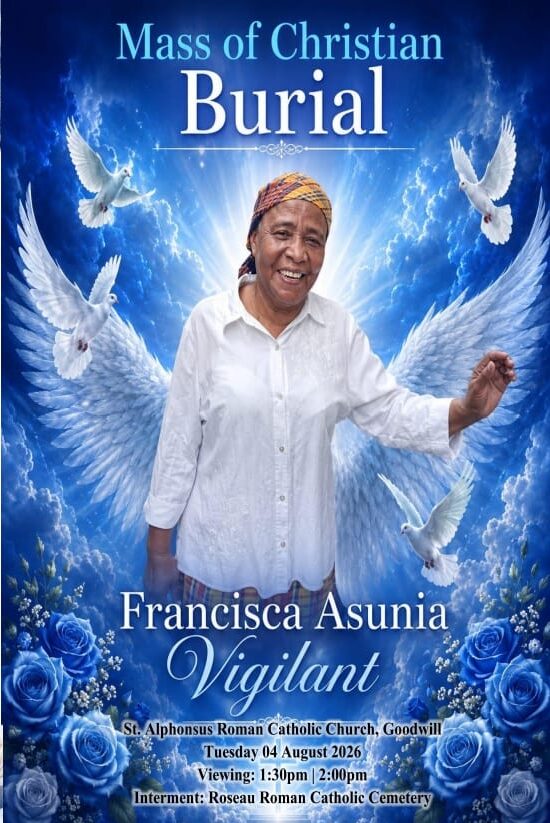
FUNERAL ANNOUNCEMENT: Francisca Asunia
In this incoming news submission, only social media sharing buttons (including share, tweet, and pin options) and three links to hosted image files are provided. No core descriptive text, event details, source information, or contextual narrative that is required for a complete news report is included in the submission. Without the fundamental text content that outlines the event, key figures, timeline, core claims, or background context of the reported story, it is impossible to conduct a full structured rewrite, in-depth analysis, or accuracy verification of the purported news. The three image links are hosted on the external domain news-minio.triplec.cc, with file paths dated August 3, 2026, but no further explanatory information is provided to clarify what these images depict or what news story they are associated with.