作者: admin

  • Stakeholders weigh-in on new price regime — Dreading new hikes

    Stakeholders weigh-in on new price regime — Dreading new hikes

    Trinidad and Tobago’s business sector entered 2026 with significant apprehension as multiple government-mandated cost increases took effect on January 1st. The sweeping changes include doubled customs declaration fees from $40 to $80 and substantial increases in container examination fees, with 20-foot containers now costing $750 (up from $375) and 40-foot containers rising to $1,050 (from $525).

    The pharmaceutical industry expressed particular concern, with Pharmacy Board president Dr. Andrew Rahaman warning that these increases would exacerbate already rising medication costs. “The population could do with some relief,” Rahaman stated, emphasizing that essential medications should be exempt from such increases. He explained that additional landing costs would inevitably be transferred through wholesale suppliers to pharmacies and ultimately to consumers.

    Glenwayne Suchit, President of the Private Pharmacy Retail Association, noted that while large conglomerates could absorb the increased fees, many importers would likely use them as justification for further price hikes. Suchit revealed that stakeholders would meet with customs officials and health authorities on January 26th to address monopolistic practices and price transparency issues.

    Manufacturing representatives joined the chorus of concern. TT Manufacturers Association CEO Dr. Mahindra Ramdeen acknowledged the importance of border security but warned that the increased costs would “disproportionately impact the manufacturing sector.” Various business chambers amplified these concerns, noting the cumulative effect on small and medium enterprises already struggling with multiple cost increases.

    The automotive sector faced separate challenges with adjustments to the Motor Vehicles Act that raised import age limits for CNG vehicles to eight years. TT Automotive Dealers Association president Visham Babwah warned consumers about the pitfalls of older vehicles, citing potential quality issues and emission concerns. While supporting a fairly implemented 30% quota increase for stakeholders, Babwah called for revisions to minor traffic fines, suggesting grace periods for minor repairs.

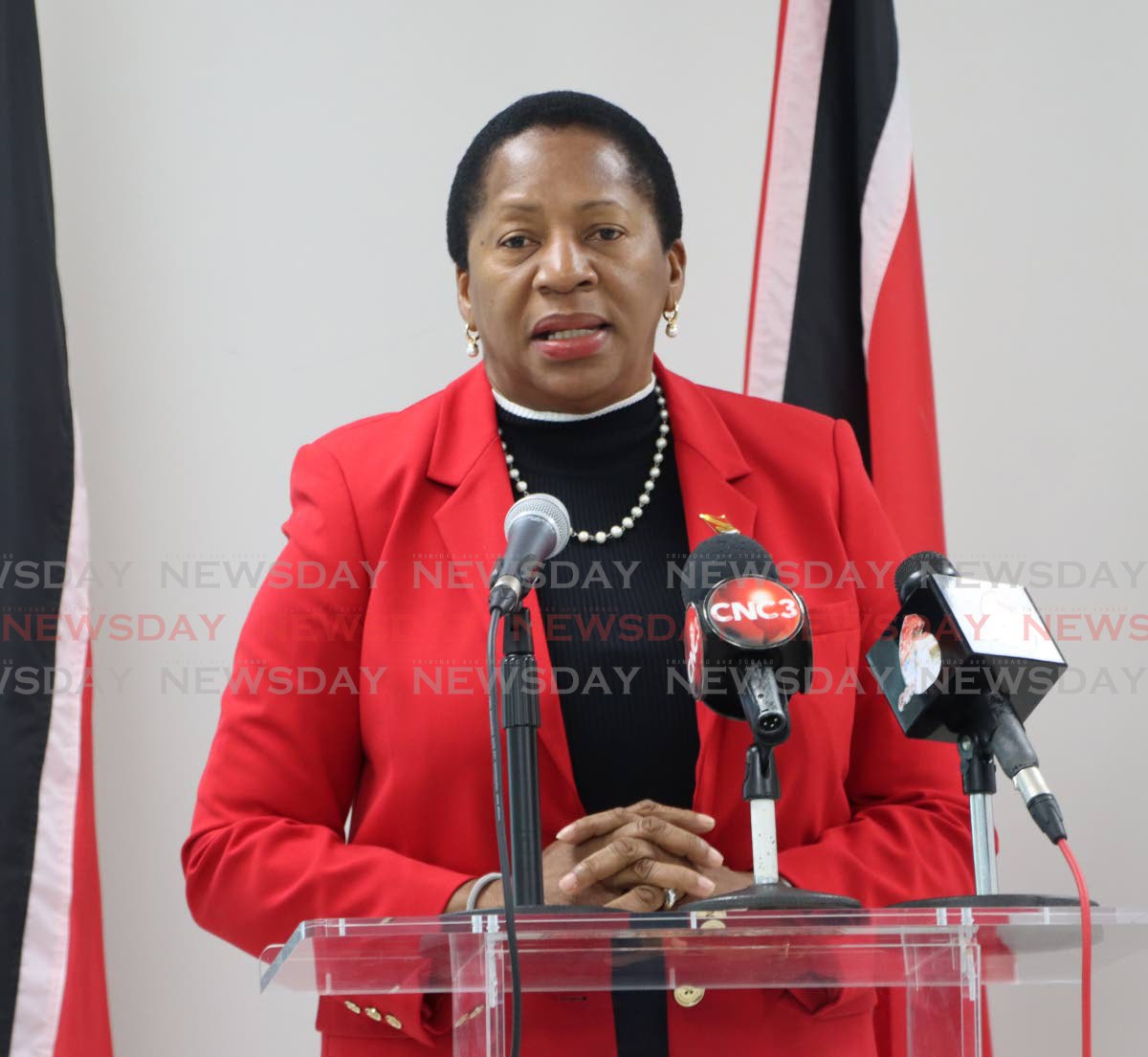
    Despite the widespread concerns, some business leaders acknowledged the government’s need to balance operational costs. TTCSI president Dianne Joseph emphasized that “revenue increases must be matched by service improvements,” urging enhanced efficiency at ports. Couva Point Lisas Chamber of Commerce president Deoraj Mahase reported early improvements in customs processing times, suggesting that faster clearance could offset some increased costs.

    The business community now awaits the practical implementation of these changes, with many stakeholders conducting impact assessments and advocating for balanced enforcement that considers both economic realities and necessary regulatory improvements.

  • Leadership imperative: Engineering service excellence for 2026

    Leadership imperative: Engineering service excellence for 2026

    TRINIDAD AND TOBAGO – As the nation enters 2026, the Trinidad and Tobago Coalition of Services Industries (TTCSI) has issued a compelling mandate for transformative leadership and governance reform within the country’s crucial services sector. TTCSI President Dianne Joseph declared that the era of informal operations has conclusively ended, emphasizing that compliance must now be recognized as a competitive advantage rather than a regulatory burden.

    The services industry, described as the ‘heartbeat’ of Trinidad and Tobago’s economy, faces a pivotal moment requiring rigorous recalibration rather than mere reflection. Joseph’s vision centers on establishing corporate governance excellence as the sector’s defining characteristic, moving beyond transactional relationships to build trust-based ecosystems.

    Critical to this transformation is what Joseph terms ‘the new breed of leader’—executives who demonstrate visible commitment to excellence beyond titles or boardroom positions. This leadership paradigm requires courage to innovate while maintaining disciplined adherence to evolving regulatory frameworks, including recent legislative changes such as the Finance Bill 2025.

    The TTCSI advocates for a fundamental rethinking of organizational structures, emphasizing clear separation of powers between boards, management, and staff. The board’s role must remain strictly strategic and fiduciary, while management focuses on tactical execution, and staff deliver technical and administrative functions. This clarity, Joseph argues, is essential to prevent organizational chaos and ensure accountability.

    Continuous director development emerges as another cornerstone of the reform agenda. The coalition challenges the dangerous fallacy that board appointment marks the end of learning, insisting that directors must pursue ongoing education in emerging areas including ESG standards, financial oversight, and AI ethics. Static knowledge, in today’s rapidly evolving business landscape, renders directors liabilities rather than assets.

    The TTCSI plans to spearhead this educational thrust through strategic partnerships with key institutions, providing members with tools to professionalize governance structures. The organization will encourage member firms to conduct internal audits ensuring their leadership teams actively add value rather than merely occupying positions.

    Joseph’s vision positions Trinidad and Tobago’s services sector as an international benchmark for corporate governance, where members are sought not only for technical skills but for their reputation as ethical, well-governed partners. This transformation, she concludes, requires moving from ‘business as usual’ to ‘business at its best,’ honoring the trust of stakeholders through distinction, clarity, and unwavering commitment to excellence.

  • A ‘topsy-turvy’ year in Trinidad and Tobago’s energy sector

    A ‘topsy-turvy’ year in Trinidad and Tobago’s energy sector

    The year 2025 proved to be a period of significant volatility and unexpected developments within Trinidad and Tobago’s energy landscape, characterized by both promising advancements and substantial setbacks across upstream and downstream operations.

    Upstream production metrics revealed crude oil and condensate averaging approximately 52,000 barrels per day during the first half of 2025, while natural gas production maintained 2.5 billion cubic feet per day. These figures represented a marginal oil production increase from 2024 levels alongside a slight gas production decline, according to Ministry of Energy consolidated bulletins.

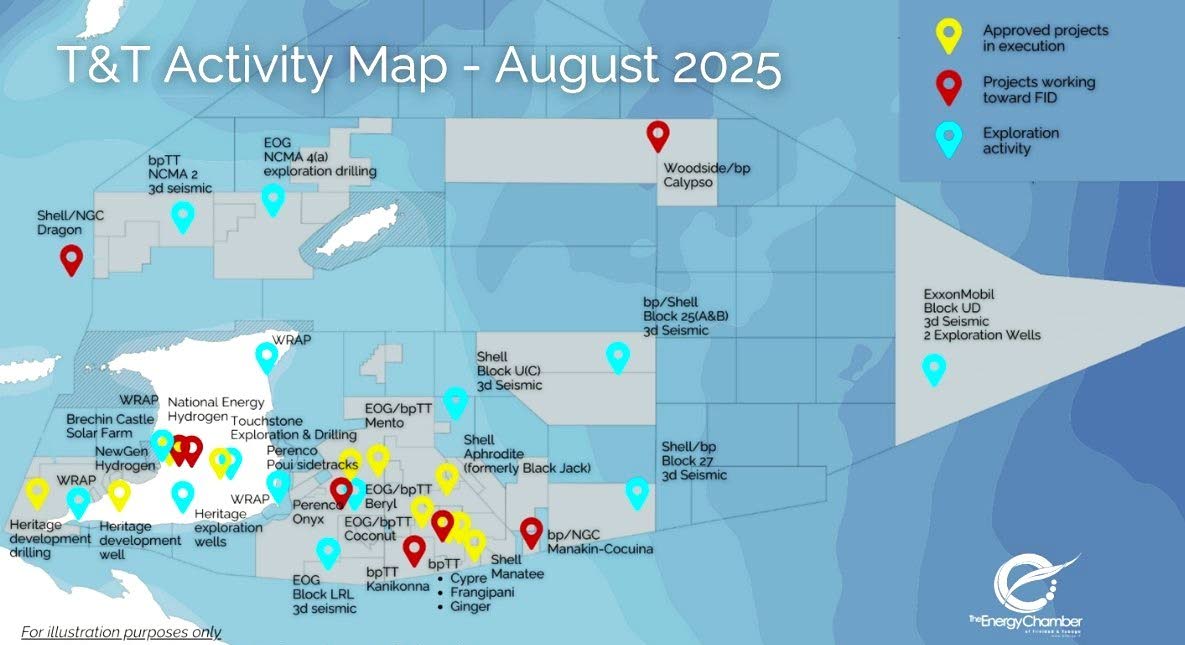
    Several medium-scale gas development projects achieved critical milestones, with BP, Shell, Perenco and EOG advancing initiatives including Cypre, Mento, Coconut, Ginger, Frangipani, Onyx, Kanikonna and Aphrodite. These developments are expected to mitigate production declines from mature fields. The landmark Manatee project is scheduled to commence drilling in 2026 with production anticipated by late 2027 or early 2028.

    Conversely, all Venezuelan cross-border gas initiatives experienced complete stagnation. Both the Dragon and Manakin-Cocuina projects faced suspension due to geopolitical tensions between the United States and Venezuela, with concerns emerging that Manatee might similarly be affected. The critical Calypso project continued to languish without reaching Final Investment Decision, despite rumors of BP potentially assuming operatorship.

    A surprising development emerged as ExxonMobil secured seven ultra-deepwater blocks through fast-tracked negotiations, theorizing that Guyana’s prolific petroleum system might extend into Trinidadian waters. Exploration activities are scheduled to commence during first-quarter 2026.

    Downstream operations suffered a major blow with Nutrien’s complete shutdown of its ammonia and urea facilities, idling 600 employees amid contract disputes with National Energy, gas availability challenges, and global competitiveness pressures. Meanwhile, the new administration progressed with plans to reactivate the Petrotrin refinery through phased restart initiatives, though technical and economic feasibility questions persist.

    The energy sector’s trajectory remains heavily influenced by geopolitical dynamics between the United States and Venezuela. Optimal outcomes would involve bilateral support for cross-border gas field development through Trinidadian infrastructure, potentially including utilization of flared gas from Venezuelan onshore operations. Such cooperation could unlock substantial opportunities for Trinidad’s energy services sector.

    Renewable energy initiatives gained momentum with BP’s Brechin Castle solar farm achieving initial electricity generation capacity. The Ministry of Energy and National Energy received recognition for pioneering green hydrogen development, while wind resource assessment programs expanded to additional monitoring locations.

    Leadership transitions across state energy enterprises including NGC, Heritage Petroleum, and National Energy introduced organizational uncertainty following the April general election. Board restructuring and executive departures raised concerns about institutional stability within these critically important energy institutions.

  • The capabilities SMEs must build to compete globally

    The capabilities SMEs must build to compete globally

    Trinidad and Tobago’s persistent efforts to boost exports through trade missions and forums have yielded limited sustainable results, not due to lack of ambition among local firms but because of fundamental capability gaps in international market penetration. The Trinidad and Tobago Chamber of Industry and Commerce, through its Export Action Programme (EAP), is addressing these challenges by providing structured support to small and medium-sized enterprises (SMEs) seeking global expansion.

    Funded by the EximBank of Trinidad and Tobago, the EAP currently supports 24 firms across diverse sectors including maritime services, fashion, film, IT, and accounting. The program emphasizes that exporting represents a fundamental capability rather than a one-time activity, requiring deliberate preparation, disciplined execution, and sustained commitment to competitiveness.

    The program identifies five critical capabilities essential for export success: customer understanding, compliance readiness, strategic branding, structured planning, and relationship management. Rather than focusing solely on promotion, the EAP provides customized support including export diagnostics, tailored action plans, and technical assistance across market intelligence, compliance, branding, strategy, and aftercare services.

    A key insight from the program reveals that export development must begin with comprehensive customer understanding. Firms must develop detailed customer profiles supported by focused market research that examines buying patterns, decision-making processes, and price sensitivity in target markets. The EAP assists SMEs in identifying ideal customers, accessing relevant market research through its Trade Desk, and developing export marketing plans grounded in actual market conditions.

    Compliance requirements represent another significant barrier, with many SMEs discovering too late that they lack necessary certifications for target markets. The program helps firms identify market-specific compliance needs and sequence required documentation before market entry, transforming compliance from an administrative burden to a strategic enabler.

    Digital presence and professional branding have emerged as critical factors in global competitiveness, as first impressions are increasingly made online through websites and digital catalogs. The EAP supports firms in strengthening their export-facing brand identity and digital platforms to signal reliability and readiness to international buyers.

    The program also addresses the common absence of structured export plans, helping firms develop clear strategies for priority markets, entry approaches, and practical implementation steps. Finally, the EAP emphasizes that export development doesn’t end with initial shipments but requires ongoing relationship management, buyer feedback responsiveness, and adaptation to market evolution for sustainable growth.

  • 5 critical pivots for Trinidad and Tobago in 2026

    5 critical pivots for Trinidad and Tobago in 2026

    As Trinidad and Tobago enters 2026, the nation confronts what analysts are calling a “decision year” rather than a fresh start. The global landscape has undergone fundamental shifts that disproportionately impact small nations, characterized by rapid technological displacement of jobs, mounting fiscal pressures on governments worldwide, and persistently rising living costs. These conditions represent permanent structural changes rather than temporary disruptions.

    Leadership Paradigm Shift
    Globally effective leadership models demonstrate that preparation for reality trumps political campaigning. Singapore’s Prime Minister Lawrence Wong exemplifies this approach through direct engagement with citizens about inflation, global conflicts, and economic restructuring. Similarly, Estonia’s former Prime Minister Kaja Kallas transformed her small nation into a digital governance powerhouse through transparent systems that reduced bureaucracy. Both leaders treated citizens as informed partners rather than passive spectators, establishing new benchmarks for effective governance.

    Employment Transformation
    Traditional employment models centered on job availability are collapsing as governments digitize and automate. The critical pivot requires shifting from job-seeking to value creation through problem-solving skills in design, accounting, marketing, education, technology, or operations. The emerging work paradigm emphasizes project-based collaboration where three solopreneurs can generate revenue without traditional corporate structures.

    Foreign Exchange Imperative
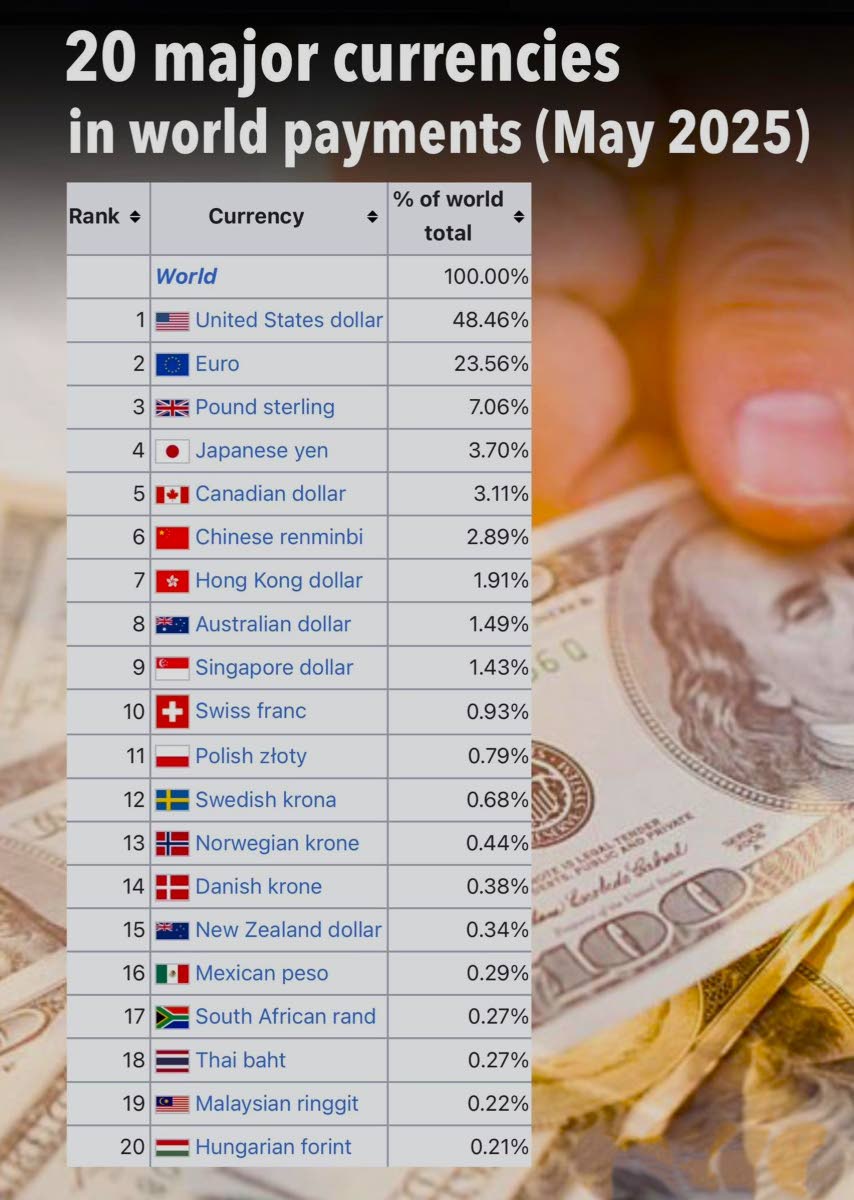
    Economic growth remains constrained when limited to domestic transactions within Trinidad and Tobago’s 1.4 million population. Every business concept must now be evaluated through a foreign exchange lens, as forex availability directly impacts food imports, fuel, medicine, and technology access. Service exports present the most viable path forward, enabling professionals to earn globally while residing locally through digital work, consulting, teaching, and creative services.

    Strategic Mobility Framework
    The mismatch between trained teachers and local opportunities illustrates the need to reframe mobility as career acceleration rather than failure. English-speaking educators enjoy strong demand across Asian markets including Japan, Vietnam, and Thailand. Comparative analysis reveals that lower nominal salaries in lower-cost countries often yield better savings and quality of life when accounting for living expenses.

    Risk Reassessment
    The conventional understanding of risk has inverted—inaction now represents the greatest danger. Remaining in stagnant industries or relying on single employers constitutes greater risk than pursuing calculated ventures in skill development, global market exploration, and income diversification. Adaptability has replaced comfort as the safest strategic approach in 2026’s economic landscape.

    Success in this decisive year will favor those who adjust early, think beyond national borders, and take proactive responsibility for their economic security, rather than awaiting external rescue.

  • Opposition Leader: Preparation and renewal in 2026

    Opposition Leader: Preparation and renewal in 2026

    In her New Year’s Day address, Opposition Leader Pennelope Beckles articulated the People’s National Movement’s strategic roadmap for 2026, emphasizing organizational preparation and structural renewal as core priorities. The first female political leader in PNM’s history declared the party’s fundamental objective involves rebuilding public trust in governance while ensuring optimal management of national resources for all citizens’ benefit.

    Beckles, who assumed leadership responsibilities in 2025 following the PNM’s electoral defeat, underscored her solemn duty to advocate for Trinidad and Tobago’s populace and maintain governmental accountability. The April 28 general election had resulted in a significant political shift, with the United National Congress securing 26 parliamentary seats against PNM’s 13, alongside two seats captured by the Third Party Platform.

    The Opposition Leader acknowledged profound national challenges throughout the past year, citing escalating living expenses, economic volatility, struggling small enterprises, and persistent criminal activity affecting citizens’ security. These realities, she emphasized, necessitate responsible leadership, clear vision, and reinvigorated dedication to national interests.

    Beckles reaffirmed her commitment to standing alongside citizens in defending their dignity and right to governance that serves rather than exploits. While recognizing the seriousness of existing challenges, she expressed confidence that disciplined leadership and national unity could overcome these obstacles.

    The New Year’s message highlighted the unique global moment where cultures, borders, and beliefs converge in shared anticipation of improved circumstances. Beckles extended greetings to domestic and international citizens, along with Caribbean and global communities, urging purposeful advancement into 2026 with collective dedication to creating a safer, more equitable, and prosperous Trinidad and Tobago.

  • Coach Enzo Maresca leaves Chelsea

    Coach Enzo Maresca leaves Chelsea

    Chelsea Football Club has formally announced the departure of head coach Enzo Maresca after just 18 months at the helm. The decision, confirmed by the club on Thursday, severs ties with the Italian manager during a challenging period in their Premier League campaign.

    The club’s official statement cited a mutual agreement to part ways, emphasizing the need for a strategic shift to salvage the remainder of the season. Currently positioned fifth in the league standings, Chelsea finds itself trailing a staggering 15 points behind arch-rivals Arsenal, having secured only one victory in their last seven domestic matches.

    Mounting speculation regarding Maresca’s future intensified throughout Chelsea’s recent performance slump, compounded by reports of deteriorating relations between the coach and the club’s leadership. The situation reached a critical point following Tuesday’s tumultuous 2-2 draw against Bournemouth, after which Maresca notably abstained from the customary post-match press conference, with officials attributing his absence to illness.

    Maresca’s tenure, which began with considerable promise, saw the club capture both the Europa Conference League and Club World Cup titles in 2025 while successfully securing qualification for the prestigious Champions League. However, the coach had previously voiced frustrations regarding perceived lack of support from within the organization, particularly referencing what he described as “the worst 48 hours” of his Chelsea experience preceding December’s victory over Everton.

    The separation concludes a contract originally set to extend until summer 2029, featuring an optional additional year at the club’s discretion. Chelsea’s leadership now faces the urgent task of identifying a successor capable of revitalizing their campaign across four ongoing competitions, with Champions League qualification remaining a paramount objective.

  • ‘Several dozen’ presumed dead after fire at ski resort New Year party

    ‘Several dozen’ presumed dead after fire at ski resort New Year party

    CRANS-MONTANA, Switzerland — A devastating fire engulfed a popular nightclub in the upscale Alpine resort of Crans-Montana during New Year’s celebrations, resulting in what authorities describe as one of Switzerland’s deadliest nightlife disasters in recent history. The blaze erupted approximately at 1:30 AM local time (0030 GMT) at Le Constellation bar, which was operating at near-capacity with hundreds of revelers welcoming the new year.

    Cantonal police commander Frederic Gisler confirmed multiple fatalities and approximately 100 injuries, many critical, with victims being transported to medical facilities across Switzerland. Emergency services mounted a massive response operation involving more than a dozen helicopters, 40 ambulances, and 150 medical personnel. The scale of the tragedy overwhelmed local hospitals, requiring patient transfers to specialized facilities in Zurich, Lausanne, and Geneva.

    While the exact cause remains under investigation, authorities have preliminary ruled out terrorist involvement. Wallis prosecutor Beatrice Pilloud stated that current evidence suggests the fire originated internally rather than from pyrotechnics or explosive devices, contrary to initial speculation. The investigation is focusing on accidental causes, with forensic teams working to determine the ignition source.

    The international dimension of the tragedy emerged as foreign ministries confirmed citizens among the victims. Italy’s foreign ministry offered specialized burn treatment facilities in Milan, while France confirmed at least two injured nationals. Swiss President Guy Parmelin, who assumed office the same day, declared national mourning, describing the event as a transformation from “moment of joy to day of mourning.”

    Le Constellation, with a maximum capacity of 340 patrons including terrace seating, represented the vibrant apres-ski culture for which Crans-Montana is renowned. The resort is scheduled to host World Cup skiing events later this month, with preparations now overshadowed by the tragedy. Identification procedures continue as authorities work to notify families across multiple countries.

  • Residents protest New Year’s killing in Granville

    Residents protest New Year’s killing in Granville

    The community of Granville in St. James, Jamaica, was thrust into turmoil on New Year’s Day as enraged residents mounted street protests following a deadly confrontation with state security forces. The demonstration was triggered by the alleged killing of three individuals, which included a four-year-old child and two adult males.

    Armed with placards denouncing the security forces, local inhabitants barricaded critical sections of roadway utilizing discarded furniture, household appliances, and various debris. This act of civil disobedience effectively disrupted transportation networks as protesters demanded accountability for the fatalities.

    Emotional outcries from community members highlighted profound grievances against perceived military impunity. One distraught woman articulated the collective anguish to gathered media representatives, stating, ‘Them kill the baby, four year old baby,’ while another male protester criticized the security approach as ‘shoot now and ask question after.’

    Preliminary reports indicate the tragedy unfolded when security personnel responded to reports of celebratory gunfire in the area. The situation allegedly escalated beyond control, resulting in the fatal shootings. Following the initial exchange, security forces were reportedly inquiring about wanted individuals in the vicinity, further inflaming community tensions.

    The incident has prompted formal demands for independent investigation, with residents explicitly calling for the Independent Commission of Investigations (INDECOM) to initiate immediate proceedings. Community leaders have issued warnings of continued demonstrations should their demands for justice remain unaddressed, with one resident vowing, ‘We will block the road again.’

  • In New Year’s message, PM reflects on overcoming challenges while staring down crises

    In New Year’s message, PM reflects on overcoming challenges while staring down crises

    Prime Minister Andrew Holness delivered a sobering yet resolute New Year’s address, framing Jamaica’s recovery from Hurricane Melissa—the most destructive storm in the nation’s history—as a catalyst for transformative change. The Category 5 hurricane, which claimed numerous lives and caused widespread devastation, has prompted what Holness termed a “renewed sense of purpose” among Jamaicans.

    Significant progress has been made in restoring critical infrastructure, with 90% of customers now having electricity, water, and telecommunications services reinstated. The government has initiated comprehensive school repairs and is implementing rotational learning modalities to ensure educational continuity, particularly for exam-bound students. Medical facilities are being restored with support from field hospitals, while first responders and healthcare workers received special commendation for their heroic efforts.

    A landmark home-repair program is underway, leveraging the administration’s economic management which enabled one of Jamaica’s largest social-care initiatives. Over 16,000 citizens have already received rehabilitation grants, with 50,000 damage assessments completed to facilitate targeted aid distribution. The Jamaica Defence Force, alongside engineering corps from Ghana and Guyana, is actively engaged in roof restoration, while modular housing solutions have been procured for those rendered homeless.

    Holness announced the establishment of a National Reconstruction and Resilience Authority with sweeping powers to coordinate rebuilding efforts across multiple sectors including infrastructure, healthcare, tourism, and agriculture. This ambitious initiative is backed by $6.7 billion in multilateral support for reconstruction, which the Prime Minister attributed to Jamaica’s strengthened economic foundation.

    The address highlighted remarkable security achievements, with murders declining by 42% in 2025—marking the first time in 31 years that homicides fell below 700. This third consecutive year of reduced violence demonstrates the success of Plan Secure Jamaica, which involved transforming security forces, creating MOCA, tripling security budgets, and implementing emergency measures.

    Despite these accomplishments, Holness issued a stark warning about impending challenges in 2026, citing climate change as an existential threat. He noted that historically rare weather events are now occurring with alarming frequency, citing back-to-back hurricanes Beryl (2024) and Melissa (2025) as evidence of this new reality. The Prime Minister also pointed to shifting global秩序, geopolitical maneuvering, and economic instability as additional sources of potential crisis, urging national preparedness and resilience in the face of multifaceted challenges.