作者: admin

  • Agriculture ministry says egg supply under watch amid farmers concerns

    Agriculture ministry says egg supply under watch amid farmers concerns

    Jamaica’s Ministry of Agriculture, Fisheries and Mining is implementing strategic measures to balance market stability with local industry recovery following devastating hurricane impacts on the nation’s egg production sector. The government’s intervention comes as domestic producers struggle to rebuild after successive hurricanes crippled poultry operations.

    The crisis began with Hurricane Beryl in 2024, which disrupted production cycles across the industry. Before full recovery could occur, Hurricane Melissa struck on October 28, 2025, delivering a catastrophic blow to poultry infrastructure. Official assessments confirmed losses of approximately 400,000 laying hens, representing a substantial portion of the nation’s egg-laying capacity.

    This dual disaster scenario prompted immediate government action. The ministry authorized temporary egg imports with waived import duties, additional stamp duties, and general consumption tax—a measure initially scheduled to conclude on February 28, 2026. However, current production data indicates slower-than-expected recovery, with output for the first half of 2026 projected at 30-40% below the five-year average.

    Market analysis reveals domestic egg supply declined by approximately 40% post-Melissa, with full recovery estimated to require eight to twelve months. Monthly production levels are not expected to surpass 2025 benchmarks until August 2026 at the earliest, prompting the ministry to seek extension of import waivers until May 2026.

    The Jamaica Egg Farmers Association had previously implemented significant price adjustments, increasing recommended rates from $550 to $670 per dozen for unbranded eggs and from $580 to $700 for branded varieties. These increases, attributed to reduced production capacity and elevated operational costs, have placed additional pressure on consumers and hospitality businesses.

    The ministry emphasizes that its temporary import strategy remains under continuous evaluation to ensure neither local farmers nor consumers face market disadvantages. This calibrated approach aims to maintain price stability while domestic producers rebuild capacity, with the government committing to regular monitoring of both supply chains and farmer livelihoods throughout the recovery period.

  • U20 Reggae Boyz beat Bonaire 3-0 in opening Concacaf qualifier

    U20 Reggae Boyz beat Bonaire 3-0 in opening Concacaf qualifier

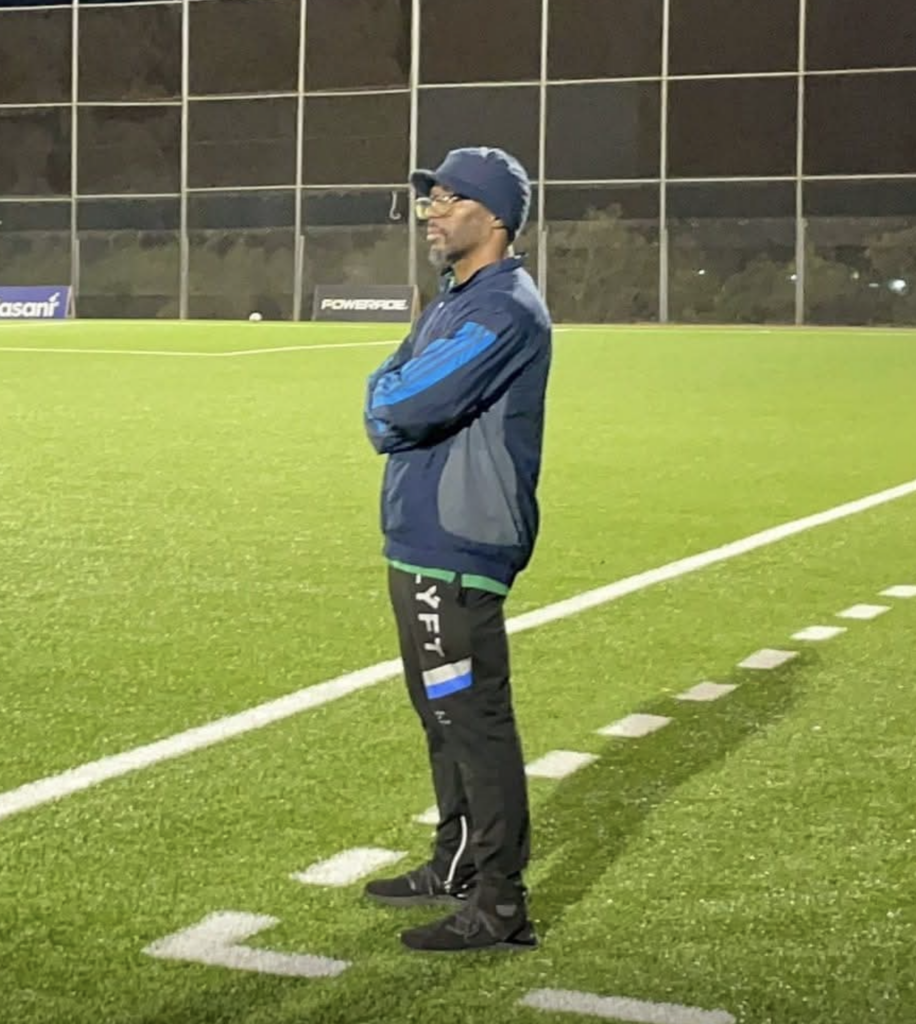
    Jamaica’s Under-20 national team launched their CONCACAF qualification campaign with a commanding 3-0 victory against Bonaire in Group B action on Monday. The match, held at Stadion Rignaal ‘Jean’ Francisca in Willemstad, Curaçao, saw the young Reggae Boyz establish early dominance with a two-goal lead by halftime before finishing with ten men following a second-half dismissal.

    The scoring opened in the 24th minute when Sean Leighton expertly headed the ball across the goal line from close range. Deshawn Talbert doubled Jamaica’s advantage just before halftime with a well-executed finish in the 43rd minute. Substitute Raequan Campbell-Dennis sealed the comprehensive victory in the 71st minute with a decisive third goal that effectively ended the contest.

    Despite the convincing win, Jamaica faced adversity when second-half substitute Jamoy Dennis received two yellow cards in quick succession, resulting in his dismissal and forcing the team to play the remainder of the match with reduced numbers. The disciplinary setback didn’t prevent Jamaica from maintaining their clean sheet and securing all three points.

    The victory places Jamaica atop Group B on goal difference following narrow 2-1 victories by Turks and Caicos Islands over Cayman Islands and Puerto Rico over St Kitts Nevis in the group’s other opening matches. The tournament serves as qualification for multiple prestigious international competitions, including the 2026 CONCACAF U-20 Championship, the 2026 Central American and Caribbean Games, and the 2027 Pan American Games.

    Jamaica’s U-20 squad will return to action on Wednesday evening with a crucial match against Turks and Caicos Islands at 7:00 PM local time.

  • U20 Reggae Boyz beat Bonaire 3-0 to kick-start Concacaf  championship

    U20 Reggae Boyz beat Bonaire 3-0 to kick-start Concacaf championship

    WILLEMSTAD, Curaçao — Jamaica’s Under-20 national team launched their Concacaf qualification campaign with an authoritative 3-0 victory against tournament newcomers Bonaire in Group B action on Monday. The match, held at Stadion Rignaal ‘Jean’ Francisca, established Jamaica as early group leaders on goal differential.

    The young Reggae Boyz demonstrated tactical superiority despite finishing the match with ten men following the dismissal of substitute Jamoy Dennis, who received two yellow cards during his second-half appearance.

    Jamaica’s offensive prowess was evident throughout the contest, with Sean Leighton breaking the deadlock in the 24th minute through a precise close-range header. Deshawn Talbert doubled the advantage just before halftime, finding the net in the 43rd minute to establish a comfortable 2-0 lead at the interval.

    The victory was sealed in the 71st minute when substitute Raequan Campbell-Dennis delivered the final blow, effectively eliminating any possibility of a Bonaire comeback.

    This opening round victory places Jamaica atop Group B standings after other group matches concluded with narrow 2-1 victories for Turks and Caicos Islands over Cayman Islands and Puerto Rico against St Kitts/Nevis.

    The Jamaican squad continues their qualification journey Wednesday with a 7:00 PM fixture against Turks and Caicos Islands. This tournament serves as the qualifying pathway not only for the 2026 Concacaf U-20 Championship but also determines participation in the 2026 Central American and Caribbean Games and the 2027 Pan American Games.

  • Hetmyer not getting carried away after record-breaking West Indies demolish Zimbabwe

    Hetmyer not getting carried away after record-breaking West Indies demolish Zimbabwe

    MUMBAI, India — The West Indies cricket team delivered a breathtaking performance on Monday, crushing Zimbabwe by a massive 107 runs in their Super Eights opener of the Twenty20 World Cup. This dominant display at Mumbai’s Wankhede Stadium showcased the Caribbean side’s formidable batting prowess and clinical bowling execution.

    Shimron Hetmyer emerged as the undisputed star of the match, hammering an explosive 85 runs from just 34 deliveries. His spectacular innings, which included seven sixes and seven fours, propelled the West Indies to a monumental total of 254-6. This score stands as the second-highest in the history of the T20 World Cup tournament, surpassed only by Sri Lanka’s 260-6 against Kenya in 2007.

    The match turned decisively when Zimbabwe’s Tashinga Musekiwa dropped a routine catch at deep fine leg with Hetmyer on just nine runs. The batsman capitalized mercilessly on this reprieve, racing to his half-century in merely 19 deliveries—equaling the tournament’s fastest fifty record set by South Africa’s Aiden Markram.

    Hetmyer found able support from Rovman Powell, with the pair assembling a devastating 122-run partnership from just 52 balls. Powell contributed a brisk 59 from 35 deliveries before Sherfane Rutherford’s unbeaten 31 from 13 balls provided the final flourish. The West Indies’ batting onslaught saw 38 runs plundered from the final two overs, with Romario Shepherd and Jason Holder adding quick-fire contributions.

    Zimbabwe’s response never gained momentum as their chase faltered immediately. Left-arm spinners Gudakesh Motie (4-28) and Akeal Hosein (3-28) dismantled the top order, reducing the surprise qualifiers to 20-3 within the third over. Despite a late counterattack from Brad Evans, who smashed 43 from 21 balls with five sixes, Zimbabwe were eventually dismissed for 147 in 17.4 overs.

    West Indies captain Shai Hope praised the comprehensive team performance while maintaining perspective: ‘When everyone is firing like that, it’s a real joy to watch. It was a complete performance but you can always improve.’

    Hetmyer, awarded Player of the Match, remained grounded despite his extraordinary achievement: ‘It does feel good to have achieved something like that, but as a team, we haven’t really accomplished anything yet. We’re taking it one game at a time.’

    The victory establishes the West Indies as serious contenders as the tournament enters its crucial Super Eights phase, while Zimbabwe must regroup after their stunning run was halted so emphatically.

  • Rubio to attend Caricom summit as US presses Venezuela, Cuba

    Rubio to attend Caricom summit as US presses Venezuela, Cuba

    WASHINGTON, DC — U.S. Secretary of State Marco Rubio is set to participate in a high-level summit of Caribbean nations this Wednesday, representing a significant diplomatic engagement for the Trump administration. The meeting of the Caribbean Community (Caricom), hosted in St. Kitts and Nevis, will serve as a platform for addressing critical regional issues including immigration enforcement and policy coordination regarding Venezuela and Cuba.

    State Department spokesman Tommy Pigott confirmed Rubio’s attendance, noting the Secretary would articulate President Trump’s priorities including combating illegal immigration and reinforcing hemispheric stability. ‘Secretary Rubio will reaffirm the United States’ commitment to collaborative efforts with Caricom member states to promote prosperity and security throughout the region,’ Pigott stated.

    The summit occurs amid ongoing regional evaluation of Venezuela policy following the January 3rd U.S. military operation in Caracas that resulted in the capture of leftist leader Nicolas Maduro. The Trump administration has since intensified pressure on interim President Delcy Rodriguez through control mechanisms over Venezuela’s vital oil industry and implied military threats to ensure compliance.

    While Caribbean nations have maintained cautious public statements regarding Venezuela, many have privately aligned with the U.S. position against Maduro’s government, which has been widely criticized for territorial claims against Guyana and causing regional instability through economic collapse and mass migration.

    The diplomatic calculus becomes more complex regarding Cuba, which maintains historical ties with numerous Caricom members despite not belonging to the bloc. The island nation faces severe energy shortages after U.S. sanctions disrupted Venezuelan oil shipments, its primary energy source, while simultaneously threatening penalties against alternative fuel suppliers.

    Rubio, a Cuban-American politician with longstanding opposition to Cuba’s communist government, has moderated his public rhetoric despite his historical advocacy for regime change. The administration claims to be pursuing an unspecified agreement with Havana, though previous efforts to pressure Caribbean nations to remove Cuban medical professionals faced significant resistance during last year’s Caricom meeting in Jamaica.

    Additional summit agenda items include addressing Haiti’s protracted crisis, where a U.S.-backed prime minister recently assumed control from a transitional council that failed to curb gang violence or conduct elections.

    Rubio’s visit marks the highest-level U.S. diplomatic engagement with St. Kitts and Nevis, a microstate of approximately 50,000 people that gained independence from Britain in 1983.

  • Caricom meets under Cuba crisis cloud

    Caricom meets under Cuba crisis cloud

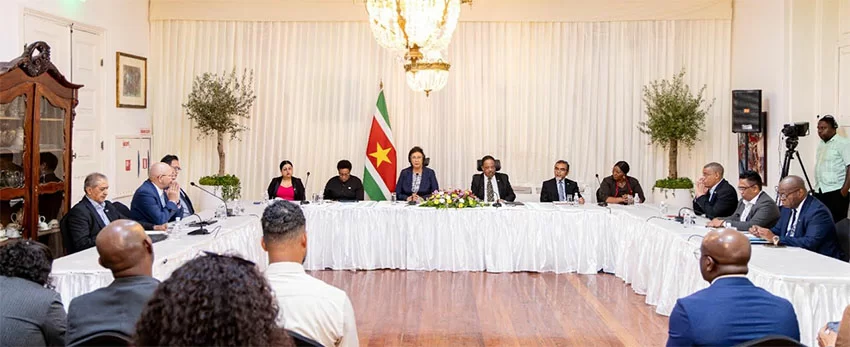
    The 50th Regular Meeting of the Caribbean Community (Caricom) Heads of Government commences today in St. Kitts and Nevis, with the regional bloc’s agenda dominated by mounting apprehensions over a deteriorating humanitarian situation in Cuba. This crisis has been significantly exacerbated by the stringent oil embargo reinstated under the administration of former US President Donald Trump.

    Chaired by St. Kitts and Nevis Prime Minister Dr. Terrance Drew, the summit will continue through February 27th. The gathering occurs amidst heightened diplomatic tensions, particularly following the announcement that US Secretary of State Marco Rubio will attend the proceedings. A State Department spokesman, Tommy Pigott, stated that Rubio aims to “reaffirm the United States’ commitment to working with Caricom member states to enhance stability and prosperity” throughout the region.

    However, this pledge of cooperation is set against a backdrop of strong regional criticism directed at US foreign policy toward Cuba. Although not a member of Caricom, Cuba maintains long-standing and deep-rooted relations with numerous member nations. The summit’s discourse is anticipated to be heavily influenced by a powerful appeal issued last week by eight former Caricom heads of government. These distinguished former leaders vehemently urged Washington to rescind its sanctions, which they condemned as an “inhumane weapon of mass destruction” devastating the Cuban populace. This collective condemnation underscores a significant rift between US policy and the consensus within the Caribbean community, positioning the humanitarian impact of the embargo as a critical test for regional diplomacy and US-Caricom relations.

  • Manhunt for 3-year-old boy’s killers

    Manhunt for 3-year-old boy’s killers

    A West Kingston community is grappling with profound grief and trauma following the brutal murder of three-year-old Jayce Pinnock during a violent home invasion this past weekend. The tragedy has been compounded by the subsequent death of Jayce’s father, who initially survived the shooting but succumbed to his injuries late Monday.

    The incident occurred in the early hours of Saturday on Nelson Street, where armed assailants approached the family residence—which also housed a small business—posing as customers before opening fire indiscriminately. When the shooting ceased, young Jayce, his father, and another sibling were discovered with gunshot wounds. Despite emergency medical response, Jayce was pronounced dead upon arrival at hospital, while his father and sibling were admitted in critical condition.

    Ladania Cunningham, Jayce’s mother, expressed the devastating impact on her surviving children, who are experiencing severe psychological trauma following the loss of their brother. In the face of this tragedy, the Denham Town community has demonstrated remarkable solidarity, providing both emotional support and practical assistance to the grieving family.

    Law enforcement authorities have identified the violence as part of a resurgence in gang activity within the community. Two persons of interest, known only by the aliases ‘Juby’ and ‘Romy,’ have been named in connection with the killing. Both are alleged members of the local Scream Corner gang.

    Kingston Western Member of Parliament Desmond McKenzie accompanied Ms. Cunningham on a visit to Edward Seaga Infant School, where Jayce was a student. During the emotional visit, McKenzie vowed to pursue those responsible for the horrific crime. The Denham Town Police have similarly pledged relentless efforts in their pursuit of justice.

    The school community has established memorials to honor Jayce’s memory, with classmates participating in touching tributes. Young students including Jirehfaith Gentles and Kyron Campbell placed flowers and roses on their slain classmate’s desk, creating spontaneous memorials to the three-year-old whose life was tragically cut short.

  • Call to honour ‘father or rocksteady’ Vere Johns

    Call to honour ‘father or rocksteady’ Vere Johns

    As Jamaica prepares to commemorate the 60th anniversary of rocksteady music in 2026, the pivotal figure who fundamentally shaped the genre remains conspicuously absent from national recognition. Vere Johns, the visionary impresario who passed away in Kingston at age 72 in September 1966—coinciding with the recording era of the first rocksteady tracks—has yet to receive his rightful place in Jamaican cultural history.

    A multifaceted professional who served as both a World War I veteran in the British military and an established journalist, Johns engineered the foundational platform for Jamaica’s musical revolution through his pioneering talent competitions. His legendary ‘Opportunity Hour’ and ‘Opportunity Knocks’ shows, originating in the 1950s at prestigious Kingston venues including the Ambassador, Carib, Majestic, and Palace theatres, became the definitive launching pad for generations of iconic artists.

    The roster of talents discovered through Johns’ competitions reads as a veritable who’s who of Jamaican music: Alton Ellis, John Holt, Desmond Dekker, The Wailers, Bob Andy, Dobby Dobson, Joe Higgs, Jimmy Cliff, Jackie Edwards, Derrick Morgan, The Blues Busters, and Millie Small all launched their careers through these transformative showcases. While working as a journalist at The Daily Gleaner, Johns orchestrated events that carried social significance comparable to American institutions like ‘The Ed Sullivan Show’ and ‘American Bandstand’.

    Despite this monumental legacy, Johns has never been awarded a national honor in Jamaica. Audley Rollen, who competed in Johns’ contests in 1958-1959, advocates for posthumous recognition: ‘I would like to see the Government of Jamaica and the entertainment industry give Vere Johns his long-overdue OD [Order of Distinction], or the highest merit anyone in entertainment could ever get.’ Rollen emphasizes Johns’ indirect influence on reggae history, noting that ‘the godfather of reggae Joe Higgs was discovered on Vere Johns’ Opportunity Hour, and it was Joe Higgs who tutored Bob Marley and Jimmy Cliff.’

    The Manchester-born innovator’s contributions have received limited acknowledgment, including a posthumous induction into the Jamaica Association of Vintage Artistes and Affiliates (JAVAA) Hall of Fame in 2008. Yet as anniversary celebrations approach, the music community confronts the paradoxical reality that the architect behind rocksteady’s greatest voices remains largely absent from the narrative he helped create.

  • Why Greenery Is Your Best Friend

    Why Greenery Is Your Best Friend

    The visual spectacle of Bad Bunny’s 2026 Super Bowl halftime performance, featuring over 300 dancers costumed as animated sugarcane shrubs, transcended mere entertainment to ignite a significant design movement. This artistic homage to Puerto Rican heritage captivated global audiences and catalyzed a serious conversation about organic aesthetics in event design, particularly weddings.

    Greenery—defined as any predominantly green plant or floral element—has evolved from a supplementary filler to a central design feature in contemporary weddings. This botanical trend dominates settings from Jamaican luxury resorts to intimate garden ceremonies, representing a fundamental shift toward organic luxury and sustainable design principles.

    The appeal lies in greenery’s multidimensional advantages: It introduces texture through layered arrangements of monstera leaves, olive branches, and tropical palms; creates atmospheric depth with overhead vines and suspended installations; and provides architectural softening through draped foliage and living backdrops. Modern interpretations include sculptural leaf centerpieces, candle-interwoven garlands, and lush ceremony arches entirely composed of foliage.

    This trend aligns perfectly with 2026’s design ethos emphasizing authenticity, tactile experiences, and immersive environments. Couples increasingly seek décor that feels intentionally grounded rather than artificially manufactured. Greenery delivers an effortlessly elegant aesthetic that photographs exquisitely while maintaining a refined yet relaxed atmosphere.

    Practical versatility constitutes another key advantage. Where spatial constraints limit traditional floral arrangements, greenery adapts through ceiling suspensions, pillar wrappings, window drapery, or cascading cake table arrangements. It enhances without competing with existing architecture, making it ideal for both minimalist interiors and outdoor venues where strategic uplighting amplifies natural surroundings.

    From bouquets featuring trailing ivy and eucalyptus to experiential elements like botanical chandeliers and foliage tunnels, greenery operates at every design scale. Its sustainable nature—potted installations can be replanted or gifted post-event—resonates with environmentally conscious couples.

    Unlike transient trends, greenery’s foundation in natural beauty ensures enduring relevance. As preferences continue shifting toward sensory experiences and authentic aesthetics, this botanical movement represents not merely a stylistic choice but a fundamental reimagining of how living elements can transform spatial experiences and create genuinely atmospheric celebrations.

  • Human survival at stake

    Human survival at stake

    A coalition of eleven former Caribbean Community (CARICOM) heads of government has intensified diplomatic efforts to address Cuba’s escalating humanitarian crisis, urging immediate termination of the United States’ oil embargo against the island nation. Their intervention precedes the 50th CARICOM Heads of Government Conference commencing in St Kitts and Nevis.

    The distinguished group, including former Jamaican Prime Minister P.J. Patterson as principal spokesperson, characterized the fuel embargo as an existential threat to Cuba’s civilian population. “There can be no justification for imposing a fuel embargo which could extinguish 11 million civilian lives,” their collective statement emphasized. “Exposing citizens to starvation, disease, and extinction through energy resource denial constitutes a mortal danger that transcends ideological considerations.”

    The former leaders’ roster comprises significant regional figures: Donald Ramotar (Former President of Guyana), former Prime Ministers Freundel Stuart (Barbados), Edison James (Dominica), Tillman Thomas (Grenada), Bruce Golding (Jamaica), Dr. Kenny Anthony (St. Lucia), Dr. Keith Rowley (Trinidad & Tobago), alongside subsequent endorsers Baldwin Spencer (Antigua & Barbuda), Said Musa (Belize), and Dr. Ralph Gonsalves (St. Vincent & The Grenadines).

    This diplomatic maneuver occurs against Cuba’s severe energy catastrophe, exacerbated by the Trump administration’s policies designed to restrict oil access. The crisis deepened following the collapse of Venezuelan crude shipments after US intervention against Nicolás Maduro’s government, with additional threats against alternative suppliers.

    Cuban authorities have implemented drastic energy conservation protocols, including stringent fuel rationing and substantial reductions in public transportation services. The former CARICOM leaders condemned these developments as creating “catastrophic consequences” through the “strangulation of Cuba’s vital requirements for energy, food, medication, education, and basic livelihood.”

    The coalition specifically acknowledged Trinidad & Tobago Prime Minister Kamla Persad-Bissessar’s consistent advocacy against the embargo, noting her historical support for United Nations resolutions demanding its termination. Their statement concluded with a powerful appeal for regional solidarity: “Our considerable vocal firepower as past, present, and future leaders must be directed against hegemonic economic aggression threatening havoc in our Caribbean space.”