作者: admin

  • VS voert grootschalige aanval uit op Venezuela

    VS voert grootschalige aanval uit op Venezuela

    In a stunning pre-dawn operation on Saturday, the United States executed what former President Donald Trump described as a “large-scale attack” in Venezuela, reportedly resulting in the capture and extraction of Venezuelan President Nicolás Maduro and his wife. Trump announced the unprecedented military action through his Truth Social platform mere hours after explosions rocked the Venezuelan capital.

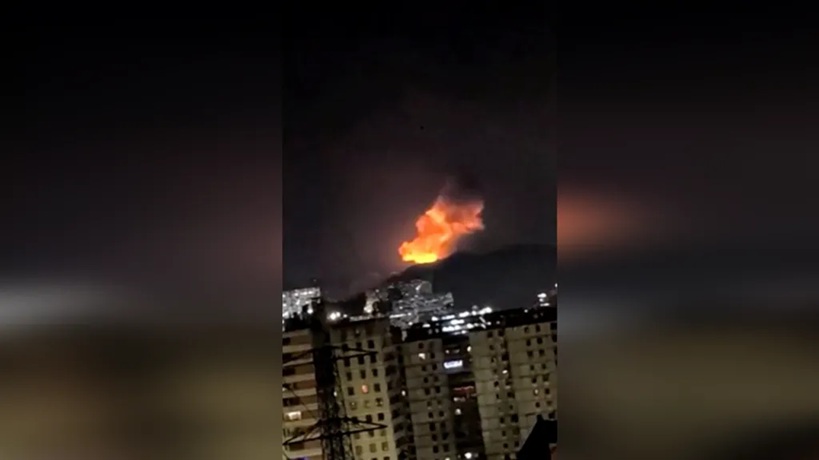
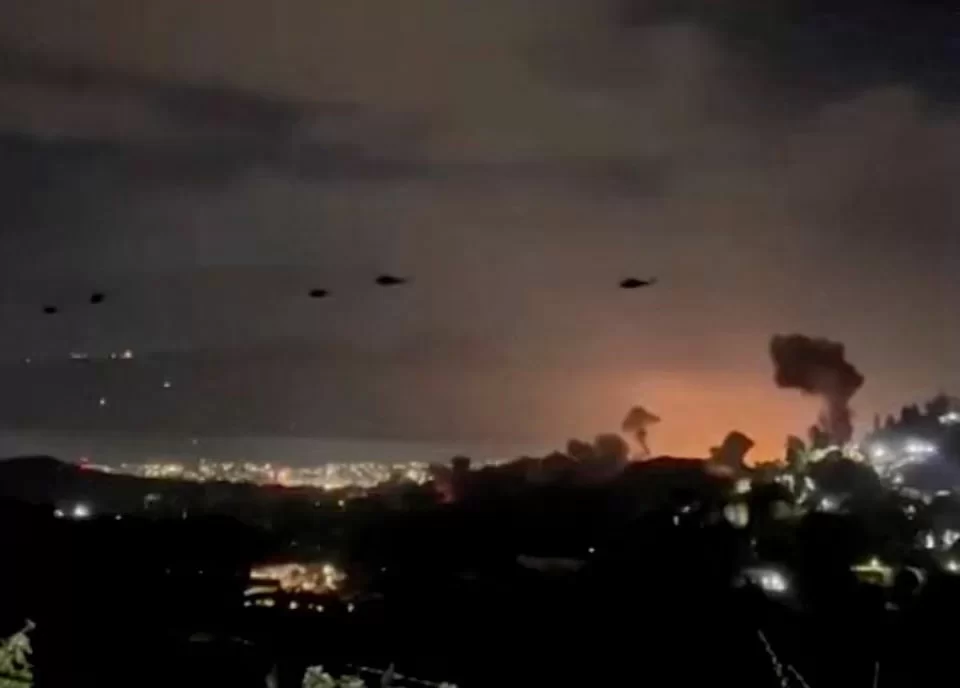
    Residents of Caracas reported multiple detonations echoing through city streets as low-flying aircraft circled overhead. The Venezuelan regime immediately condemned the operation as an “imperialist assault” targeting both civilian and military installations, calling for mass public demonstrations against foreign intervention.

    The current power structure in Venezuela remains unclear, with uncertainty surrounding Maduro’s exact whereabouts. Venezuelan Vice President Delcy Rodríguez utilized state media channels to demand “proof of life” for the president, highlighting the ambiguous status of the nation’s leadership.

    Trump indicated that additional operational details would be revealed during a Saturday morning press conference, noting the mission was conducted in coordination with U.S. law enforcement agencies. This development represents a dramatic escalation in the long-standing tensions between Washington and Caracas.

    The United States has maintained consistent pressure on Maduro’s administration through economic sanctions and support for opposition movements, citing concerns over political repression and systemic corruption. Venezuela’s government has consistently emphasized national sovereignty and resisted foreign influence, particularly from Western nations.

    International observers await responses from global powers including Russia and China, both of which have maintained significant economic and diplomatic ties with Venezuela. Neighboring Latin American nations also face potential ramifications from this sudden military intervention in a region historically sensitive to U.S. involvement.

    The operation occurs against the backdrop of Venezuela’s prolonged economic crisis and political instability, raising questions about potential power transitions and future governance structures. The situation remains fluid with significant uncertainty regarding both domestic consequences and international reactions to this extraordinary development in hemispheric relations.

  • A Legacy of Hope: The Diocese of St. John’s-Basseterre Concludes the Jubilee Year

    A Legacy of Hope: The Diocese of St. John’s-Basseterre Concludes the Jubilee Year

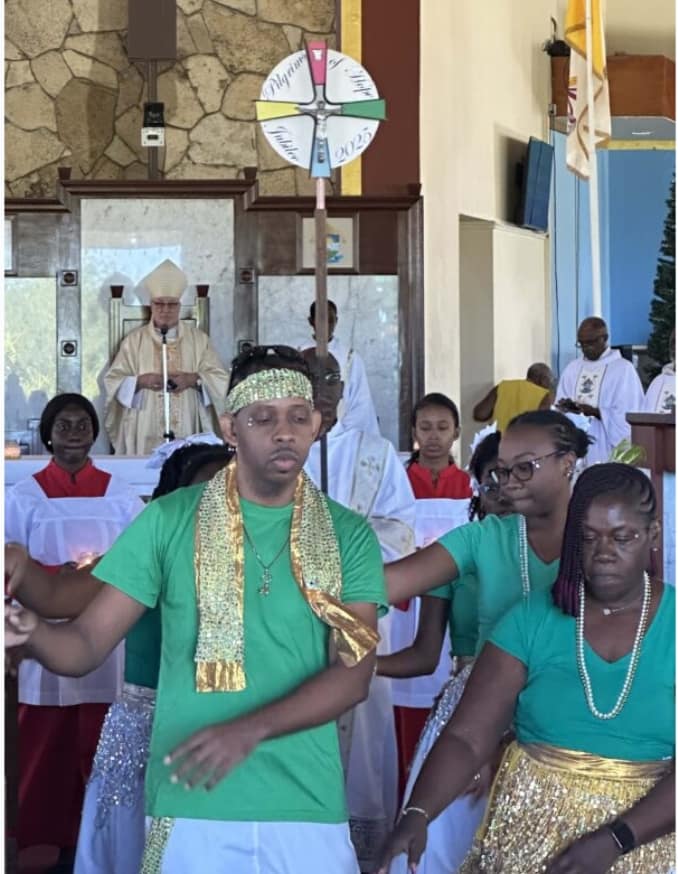
    The Catholic Diocese of St. John’s-Basseterre formally concluded its Jubilee Year 2025 celebrations on December 28, coinciding with the Feast of the Holy Family observance. The spiritually significant event marked the culmination of a year-long period dedicated to reflection and religious renewal across the island communities.

    Throughout 2025, the diocese actively participated in the global Catholic Church’s “Pilgrims of Hope” initiative, emphasizing both physical and spiritual reconciliation through open doors. Community activities included organized pilgrimages, extended Eucharistic Adoration sessions, and widespread engagement with the Sacrament of Penance.

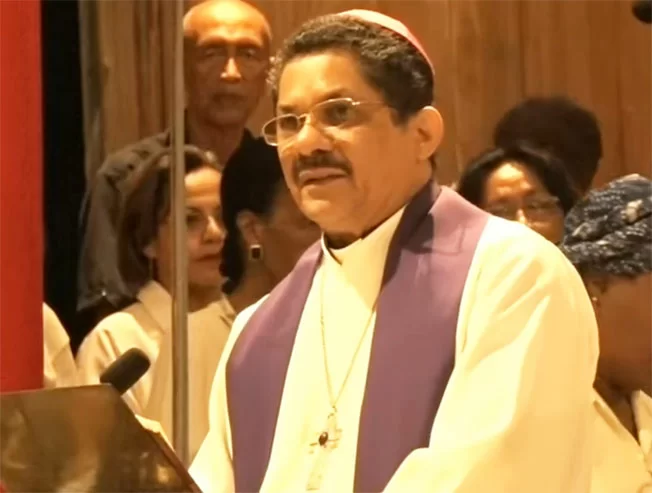
    Bishop Robert Llanos presided over the closing ceremonies, addressing clergy members, religious figures, and lay congregants. In his homily, the Bishop emphasized that although the formal Jubilee period has concluded and its Holy Doors have been ceremonially closed, the essential mission of maintaining hope continues unchanged. He specifically challenged families to model their relationships after the Holy Trinity’s example and demonstrate divine sacrificial love in their daily interactions.

    Bishop Llanos further articulated the need to combat spiritual indifference by carrying the jubilee’s transformative spirit into secular environments including workplaces and homes. He identified the Feast of the Holy Family as particularly symbolic for this transition, urging domestic units to become centers of hope and service amid growing secularization trends.

    The Bishop’s closing remarks emphasized converting received blessings into tangible charitable actions as the diocese enters 2026. While the structured celebrations have ended, the enduring legacy of the Jubilee Year continues to inspire the community’s faith journey. The “Pilgrims of Hope” vocation remains active, encouraging believers to maintain strong spiritual foundations while engaging in proactive service. The spiritual benefits garnered throughout the year are expected to positively influence the diocese for years to come, reinforcing communal bonds among parishioners.

  • Antigua and Barbuda enforces closed season on key reef fish

    Antigua and Barbuda enforces closed season on key reef fish

    The Caribbean nation of Antigua and Barbuda has officially commenced its annual three-month fishing moratorium on key reef species, implementing comprehensive protections for Nassau grouper, red hind, and coney fish populations. The closed season, which remains in effect from January 1 through March 31, establishes stringent prohibitions against harvesting, purchasing, selling, or possessing these protected species in any form—whether fresh, frozen, or prepared.

    The Fisheries Division, in collaboration with the Environmental Awareness Group (EAG), has launched an extensive public awareness campaign to emphasize the biological significance of this conservation measure. During this critical period, these particular reef fish species undergo their peak spawning activities, making them exceptionally vulnerable to overfishing pressures. The seasonal protection strategy represents a scientifically-informed approach to marine stewardship, designed to facilitate successful reproduction and population recovery.

    These protected species constitute fundamental components of both local culinary traditions and commercial fishing operations throughout Antigua and Barbuda. However, fisheries authorities have documented concerning population declines attributed to decades of unsustainable fishing practices. The implementation of this seasonal ban reflects the government’s commitment to reversing this ecological trend through targeted conservation measures.

    Enforcement protocols have been significantly strengthened, with authorities emphasizing that violations will incur substantial penalties including significant fines. The Fisheries Division has established a dedicated reporting mechanism (462-1372) to enable citizens to report suspected infractions, creating a collaborative framework for regulatory compliance.

    Government officials stress that these conservation efforts serve dual purposes: protecting marine biodiversity while simultaneously ensuring the long-term viability of the nation’s fishing industry and food security. The seasonal closure represents a strategic investment in both ecological sustainability and economic resilience for coastal communities.

  • Jaarverslag Centrale Bank 2023: Economisch herstel en versterking monetaire reserves

    Jaarverslag Centrale Bank 2023: Economisch herstel en versterking monetaire reserves

    The Central Bank of Suriname (CBvS) has documented a sustained economic recovery and significantly reinforced financial standing in its recently published 2023 annual report. Under Governor Maurice Roemer’s leadership, the institution highlighted that strict monetary policy, fiscal consolidation, and successful completion of the IMF program served as foundational pillars for this progress.

    The implementation of the International Monetary Fund’s Extended Fund Facility (EFF) program returned to full compliance in 2023 after Suriname missed several reviews in 2022. The nation successfully completed four IMF reviews last year, substantially boosting confidence among both domestic and international partners.

    Economic activity demonstrated positive momentum with real GDP growth reaching 2.5% in 2023, slightly above the previous year’s 2.4% expansion. This growth was primarily driven by wholesale and retail trade sectors, markets, and manufacturing industries. Additional contributions came from mining sector recovery, modest service industry improvements, and normalized trade activities.

    Inflation showed significant improvement throughout the year, declining approximately 22 percentage points to reach 32.6% by December 2023. This reduction resulted from tight fiscal policies, the Central Bank’s constrained monetary approach, and stabilization of the foreign exchange market. However, the Bank emphasized that inflation remained elevated compared to regional benchmarks, continuing pressure on purchasing power.

    The Central Bank concluded 2023 with a positive financial outcome, reporting an operational result of SRD 6.15 billion. After accounting for unrealized portions of monetary asset and foreign currency liability revaluations, the institution recorded an allocable positive result of SRD 4.49 billion, which has been transferred to the Bank’s reserve fund.

    The financial statements, prepared according to International Financial Reporting Standards (IFRS) and audited by BDO Assurance NV with an unqualified opinion, revealed substantially strengthened capital position. This improvement was facilitated by provisions in the 2022 Banking Act that enable self-adjusting capital and reserve fund mechanisms.

    Looking beyond 2023, Governor Roemer emphasized the critical importance of further consolidating macroeconomic stability and deepening structural reforms. Economic diversification, improved business climate, and targeted investments in productive sectors remain essential for achieving sustainable and inclusive growth while developing a more resilient economic model.

  • Maduro, wife arrested and flown out of Venezuela,  says Trump

    Maduro, wife arrested and flown out of Venezuela, says Trump

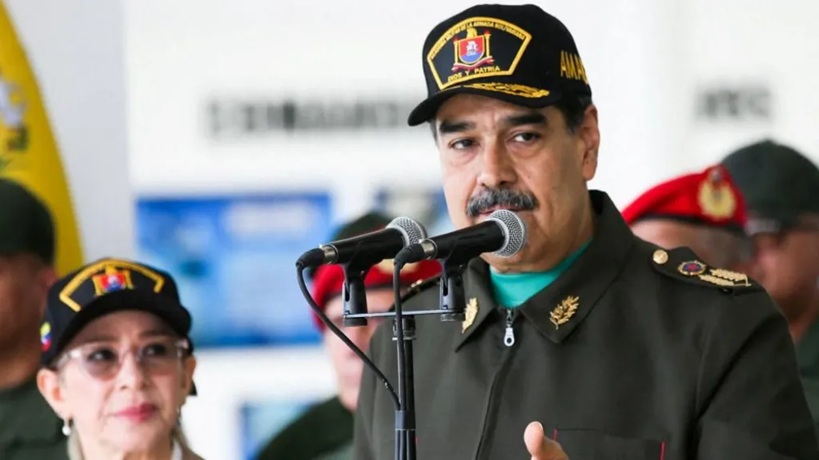
    In a stunning geopolitical development, United States President Donald Trump has declared the successful capture and extraction of Venezuelan President Nicolás Maduro and his wife following coordinated military strikes on Caracas. The operation, which targeted multiple Venezuelan military installations in pre-dawn raids on Saturday, represents one of the most significant international interventions in recent Western Hemisphere history.

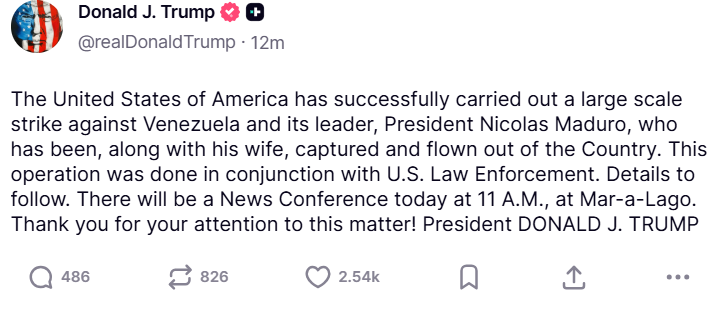
    President Trump confirmed the extraordinary military action through an official statement, revealing that U.S. forces apprehended the Venezuelan leader and transported him out of the country. “The United States of America has successfully carried out a large scale strike against Venezuela and its leader, President Nicolas Maduro, who has been, along with his wife, captured and flown out of the Country,” Trump announced.

    The operation was conducted in coordination with U.S. law enforcement agencies, with Trump promising additional details during an upcoming press conference at his Mar-a-Lago estate. This dramatic development follows months of escalating tensions between Washington and Caracas, during which the U.S. government designated Maduro as a narco-terrorist and offered a $50 million reward for information leading to his arrest.

    Contradicting Trump’s account, the Venezuelan government issued an emergency statement in Maduro’s name declaring full mobilization of civilian, police, and military resources to resist what it termed “imperialist aggression.” Defense Minister Vladimir Padrino López appeared on state television urging calm and resistance, though no visual evidence emerged of Maduro himself speaking after the alleged capture.

    The operation marks a dramatic escalation in the long-standing confrontation between the United States and Venezuela’s socialist government, potentially reshaping the political landscape of South America and setting significant precedents for international intervention against regimes accused of narcoterrorism.

  • Maduro declares state of emergency after US bombs military installations

    Maduro declares state of emergency after US bombs military installations

    Venezuelan President Nicolas Maduro has proclaimed a nationwide state of emergency following what his administration characterizes as an act of “extremely serious military aggression” by United States forces against the capital city of Caracas. The dramatic escalation occurred early Saturday morning as multiple explosions reverberated throughout the city, accompanied by audible aircraft flyovers.

    The Venezuelan government issued an official statement vehemently condemning the military action, declaring it “rejects, repudiates, and denounces before the international community” the offensive operations conducted by the U.S. government against Venezuelan territory and citizens. President Maduro has mobilized the nation’s armed forces in response to what he labeled an “imperialist attack” on Venezuelan sovereignty.

    In a decisive address, Maduro announced the activation of all constitutional defense protocols under national security legislation, signing an executive decree that establishes a state of “external commotion” across the nation. This declaration grants the government extraordinary powers to protect civilian rights, ensure institutional continuity, and prepare for potential armed resistance if necessary.

    The comprehensive defense strategy includes the immediate nationwide deployment of the Command for the Comprehensive Defence of the Nation, with regional and municipal defense bodies ordered to mobilize without delay. Maduro emphasized that this constitutes a unified effort involving civilian populations alongside military and police forces to safeguard national sovereignty and public order.

    Internationally, Venezuela plans to formally lodge complaints with the UN Security Council, the UN Secretary-General, the Community of Latin American and Caribbean States (CELAC), and the Non-Aligned Movement. Citing Article 51 of the UN Charter, Maduro asserted Venezuela’s right to self-defense while calling for global solidarity against the alleged aggression.

    Multiple U.S. media outlets, including CBS News and Fox News, reported that unnamed Trump administration officials confirmed American military involvement in the strikes. While the White House and Pentagon have remained officially silent regarding the explosions and aircraft sightings over Caracas, a Reuters source speaking on condition of anonymity acknowledged that the U.S. is conducting military operations within Venezuelan territory, though specific details about the nature and scope of these attacks remain undisclosed.

  • Guyana activates security plan in wake of US invasion of Venezuela

    Guyana activates security plan in wake of US invasion of Venezuela

    In response to escalating regional tensions following United States military operations in Venezuela, Guyana has initiated its full security mobilization protocol. President Irfaan Ali confirmed the activation Saturday, emphasizing measures to safeguard national sovereignty and citizen security amid the volatile situation.

    President Ali disclosed that Chief of Defence Staff Brigadier Omar Khan has established communication channels with regional security partners, though specific operational details remain classified. The Guyanese leader indicated that information would be released through official channels as developments unfold.

    The administration is concurrently organizing an emergency summit with the Caribbean Community (CARICOM), seeking coordinated diplomatic and security responses from the 15-nation bloc. This move signals Guyana’s commitment to multilateral approaches in addressing regional instability.

    Regarding critical energy infrastructure, President Ali confirmed direct communications with ExxonMobil Guyana President Alistair Routledge. With approximately one million barrels of oil produced daily offshore Guyana, both parties have implemented coordinated security measures around production facilities.

    Previous assessments from US War College Professor Evan Ellis suggested substantial US military presence in the Caribbean would likely deter Venezuelan aggression toward Guyana. Professor Ellis noted that any potential offensive would face overwhelming response capabilities given regional US force deployment.

    US Ambassador Nicole Theriot previously reinforced Washington’s security commitments, stating American readiness to ‘stand shoulder to shoulder with Guyana in defence of your country’ should security situations deteriorate.

  • BREAKING: Multiple explosions rock Venezuelan capital Caracas, as US invades

    BREAKING: Multiple explosions rock Venezuelan capital Caracas, as US invades

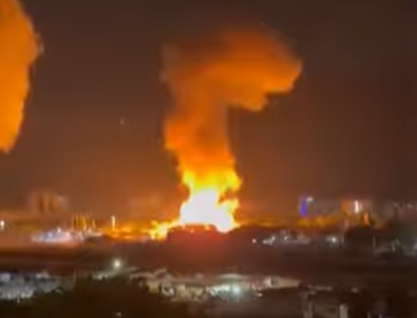
    Caracas was thrust into chaos in the early hours of Saturday as multiple explosions reverberated through the Venezuelan capital. Eyewitness accounts and circulating social media footage depicted plumes of smoke ascending from key military installations, including La Carlota airfield and the primary Fuerte Tiuna military base. The immediate aftermath saw several surrounding communities plunged into darkness due to widespread power outages.

    US officials confirmed to CBS News that President Donald Trump authorized targeted strikes against Venezuelan military sites. This aggressive action follows the recent deployment of a US naval task force to the Caribbean region, where Washington has been conducting operations against vessels suspected of narcotics trafficking. Just days prior, Trump had publicly acknowledged a US strike on a dock area connected to alleged Venezuelan drug operations.

    The Venezuelan government issued a vehement statement condemning what it characterized as “extremely serious military aggression” by the United States. The administration of President Nicolás Maduro declared a national emergency while appealing to the international community to denounce American actions. Maduro has consistently accused Washington of pursuing regime change tactics and seeking control over Venezuela’s substantial oil reserves.

    The White House and Pentagon maintained official silence regarding the operations as of Saturday morning. This development marks a significant escalation in tensions between the two nations, with the US government having previously labeled Maduro as illegitimate and directly implicated him in international drug smuggling operations. The 2025 Venezuelan presidential election results had drawn widespread international criticism and skepticism.

  • Trump dreigt Iran over hardhandig optreden tegen protesten

    Trump dreigt Iran over hardhandig optreden tegen protesten

    Amid escalating civil unrest in Iran, U.S. President Donald Trump issued a stark warning on Friday, threatening to support Iranian protesters if security forces employ violence against them. This declaration comes as Iran faces its most severe domestic crisis in years, with widespread demonstrations against soaring inflation and economic hardship resulting in multiple casualties.

    “We stand ready and are fully prepared,” Trump declared via social media, echoing his administration’s previous military actions against Iranian nuclear facilities earlier this year in coordination with Israeli airstrikes targeting Tehran’s atomic program and military leadership.

    Iran’s influential senior official Ali Larijani swiftly condemned Trump’s statements, warning that American interference in Iran’s internal affairs jeopardizes Middle Eastern stability. The Iranian regime, which supports various proxy groups across Lebanon, Iraq, and Yemen, responded through its UN Ambassador Amir-Saeid Iravani, who formally requested condemnation of Trump’s remarks from the United Nations Secretary-General and Security Council president.

    Current protests, while smaller than the massive 2022 demonstrations that paralyzed the nation, have spread nationwide with particular intensity in western provinces. State media and human rights organizations report at least ten fatalities since Wednesday, including one paramilitary Basij militia member. A local official in western Iran warned through state media that any unauthorized protest would be dealt with “decisively and without mercy.”

    The clerical establishment has historically suppressed dissent through mass arrests and severe security measures, though the current economic crisis has rendered the government increasingly vulnerable. The situation represents the most significant challenge to Iranian authorities since the 2022 protests triggered by the death of a young woman in custody, which resulted in hundreds of casualties.

    Trump provided no specific details regarding potential American support for protesters, though Washington has maintained severe sanctions against Tehran since Trump withdrew from the nuclear deal in 2018 and initiated a ‘maximum pressure’ campaign.

    The timing of Trump’s threat follows his meeting with Israeli Prime Minister Benjamin Netanyahu, known for his hardline stance against Iran. U.S. and Israeli airstrikes in June 2025 further increased pressure on Iranian authorities amid regional conflicts including the Syrian civil war and tensions with Hezbollah in Lebanon.

    Domestically, Iran’s elected President Masoud Pezeshkian has adopted a more conciliatory tone, promising dialogue with protest leaders regarding living costs despite reports of security forces using tear gas and live ammunition against demonstrators. Iran’s persistent economic troubles, exacerbated by international sanctions, have created regular social unrest with high inflation diminishing purchasing power.

    The historical tensions between Iran and the United States, deepened by regional conflicts and Iran’s nuclear program, continue to present challenges for international diplomacy. The involvement of Iranian-backed proxy groups adds geopolitical complexity to the situation, creating potential for escalations with significant implications for regional and global security.

  • Oecumenische dienst sluit nationale rouwdag af na tragedie in Commewijne

    Oecumenische dienst sluit nationale rouwdag af na tragedie in Commewijne

    Suriname observed a National Day of Mourning on Friday with an ecumenical service at the Cathedral Basilica, addressing the profound grief following the devastating Commewijne tragedy that claimed nine lives, including five children. Bishop Karel Choennie led the solemn ceremony, delivering a powerful sermon that explored the incomprehensible nature of evil while emphasizing communal solidarity and spiritual comfort.

    Addressing a congregation united in sorrow, Bishop Choennie selected Matthew 11:27-30 as his scriptural foundation, highlighting Jesus’ invitation to those burdened by life’s heaviest loads. “Jesus speaks not to those who have everything in order,” Choennie articulated, “but precisely to people like us today: weary, broken, and heavily laden with grief.” He clarified that faith offers no simple explanations for such tragedies but creates space for mutual comfort and shared suffering.

    The bishop addressed the additional complexity arising from the subsequent suicide of perpetrator Dennis Aroma in police custody, acknowledging this development deepened the community’s confusion. “Some questions remain temporarily unanswered,” Choennie noted. “Rather than judging, we must carry our pain together. This isn’t weakness—it is humanity.”

    Central to his message was the Christian symbolism of the cross as representing both senseless suffering and divine proximity within that suffering. Choennie encouraged attendees to entrust their grief, helplessness, and unanswered questions to God, whom he described as “not absent in any tear, but intimately near.”

    While acknowledging persistent sorrow, the bishop simultaneously called for hope—not as an eliminator of pain but as a destination for carrying that pain. He specifically requested prayers for surviving victims still fighting for their lives in hospitals and for all families shattered by the violence.

    The service concluded with heartfelt gratitude expressed by victims’ family members toward the community for their moral support. Bishop Choennie ended with an urgent appeal for social cohesion, stating: “Let us look out for one another, remain vigilant for signals of distress, and build tightly-knit communities. Only together can we bear this grief and gradually rise again.”