作者: admin

  • Elite Blazers capture third place at Caribbean clash 3×3 Lite Quest

    Elite Blazers capture third place at Caribbean clash 3×3 Lite Quest

    Last weekend, Saint Lucia’s rising basketball program Elite Blazers turned heads across the Caribbean regional basketball circuit, securing a hard-earned third-place finish at the 2026 Caribbean Clash 3×3 Lite Quest hosted in Paramaribo, Suriname. This standout podium result marks a key milestone for the club as it continues to build its reputation among top Caribbean basketball outfits.

    Composed of core players Troy Louison, Andre Louison, Sharmoir JnBaptiste and Desir Joseph, the Elite Blazers delivered a cohesive, high-energy performance against a stacked field of the region’s most talented 3×3 squads. Every member of the four-player roster stepped up to contribute critical points and defensive effort throughout the tournament, laying the foundation for their successful run to the podium.

    Leading the team’s offensive charge was guard Andre Louison, who finished the competition as the squad’s top scorer with a total of 37 points. His sharp shooting from all over the court translated to 11 one-point baskets, 11 successful two-point shots from beyond the 3×3 arc, and four converted free throws. Anchoring the team’s consistent offense alongside his teammate was Troy Louison, who put up an impressive 29 points across all matches, made up of 15 one-pointers, five two-pointers and four free throws, providing reliable scoring in every round of the tournament.

    Forward Desir Joseph added 18 key points to the team’s total, while wing Sharmoir JnBaptiste chipped in 11 points of his own, rounding out a well-balanced scoring attack that kept the Blazers competitive in every matchup. This all-around, determined effort from every roster spot was the driving force behind the club’s historic podium finish.

    Beyond the final result, the third-place placement underscores the Elite Blazers’ steady growth and unwavering commitment to building a high-performance basketball program for Saint Lucia. Their strong showing on the Suriname court makes clear the organization’s ambition to continuously raise its competitive standards, while flying the flag for Saint Lucia as an emerging force in Caribbean regional 3×3 basketball.

  • 15-y-o Vincy sails solo 70 miles from St. Vincent to Grenada

    15-y-o Vincy sails solo 70 miles from St. Vincent to Grenada

    Against the rolling open waters of the Caribbean, 15-year-old sailing prodigy Kai Marks Dasent from St. Vincent and the Grenadines has etched his name into regional youth sports history by pulling off an extraordinary solo voyage: a 70-mile crossing from his home country to Grenada, sailed entirely in a 14-foot ILCA dinghy.

    Marks Dasent launched his ambitious journey from Blue Lagoon, St. Vincent, at 5:41 a.m., cutting through the open ocean for more than 10 hours before touching down at Grenada’s northern tip at 4:06 p.m. that same day, logging a total crossing time of 10 hours and 25 minutes. To ensure his safety throughout the expedition, Horizon Yacht Charters provided a dedicated support boat that shadowed his route the entire way.

    The young sailor did not face the challenge without hurdles. Along the route, persistent seaweed became his most persistent foe, clogging his dinghy’s rudder and centreboard repeatedly and forcing him to stop multiple times to clear the debris. To occupy his mind and distract himself from the daunting distance still ahead, he turned to his music playlist — a plan that hit a snag when his device ran out of battery after eight hours at sea. With just a couple of hours left to go, Marks Dasent said the sight of Grenada’s coastline growing on the horizon gave him the motivation to push through the final stretch. He carried water to stay hydrated and packed energy-boosting food and granola bars to sustain his strength through the long voyage.

    This landmark achievement is the product of three years of deliberate, incremental preparation that saw Marks Dasent steadily build his skill and endurance with progressively longer offshore journeys. At 13, he completed a 10-mile crossing from St. Vincent to Bequia; at 14, he took on an 18-mile trip to Mustique, followed soon after by a 42-mile voyage from St. Vincent to Union Island. Each step of the way, these smaller adventures gave him the seamanship and confidence to take on his largest challenge to date.

    Beyond being a personal athletic milestone, the sponsored voyage carries a deeply community-focused mission: raising funds for Marks Dasent’s home club, Vincy Sailing, to expand competitive opportunities and lower barriers to entry for young people interested in the sport. The funds will go toward launching a new “Learn to Sail” programme, whose first cohort will serve children from the Lowmans Leeward fishing village, giving many of them their first chance to step onto a sailboat and build new transferable skills both on and off the water.

    Jennifer Deane, a representative of Vincy Sailing, emphasized that Marks Dasent’s feat is far more than a one-off personal victory: it is a transformative source of inspiration for young sailors across St. Vincent and the Grenadines. “This initiative is not just about one sail, it’s about creating opportunities for more young people, especially from coastal communities, to get involved in sailing and develop lifelong skills,” Deane explained.

    The Grenada crossing caps an already exceptional year of competition for the young sailor on the regional racing circuit. He took home first place in the ILCA 6 division at the Antigua ILCA Nationals, claimed second in the same class at Barbados Sailing Week, and earned the chance to represent St. Vincent and the Grenadines at Midwinters East in Miami. Beyond his dinghy racing success, Marks Dasent has also built valuable deep-water experience through offshore yacht racing: he crewed aboard *The Blue Peter* during St. Vincent Sailing Week, and spent eight days and nights as part of the crew of *Galiana* at the Antigua Classic Regatta.

    Looking forward, the teenage sailor is already deep in preparation for his next big challenge: representing St. Vincent and the Grenadines at the ILCA 6 Youth World Championships in Denmark this coming summer, as he continues to climb the ranks of competitive sailing.

    Marks Dasent’s breakthrough achievement also aligns with the larger strategic vision of the SVG Sailing Association, which has centered its youth development work on three core pillars: fun, competitive racing, and vocational opportunity. The association works to introduce young people to sailing in a supportive, accessible environment, provide pathways to competitive competition, and show youth that sailing can open doors to long-term careers and life-changing opportunities. For the SVG sailing community, Kai Marks Dasent’s determined journey perfectly embodies this mission, proving what young people can achieve with consistent commitment — and inspiring the next generation of Caribbean sailors to chase their own goals.

  • UAE President, VPs congratulate Prime Minister of Antigua and Barbuda on re-election

    UAE President, VPs congratulate Prime Minister of Antigua and Barbuda on re-election

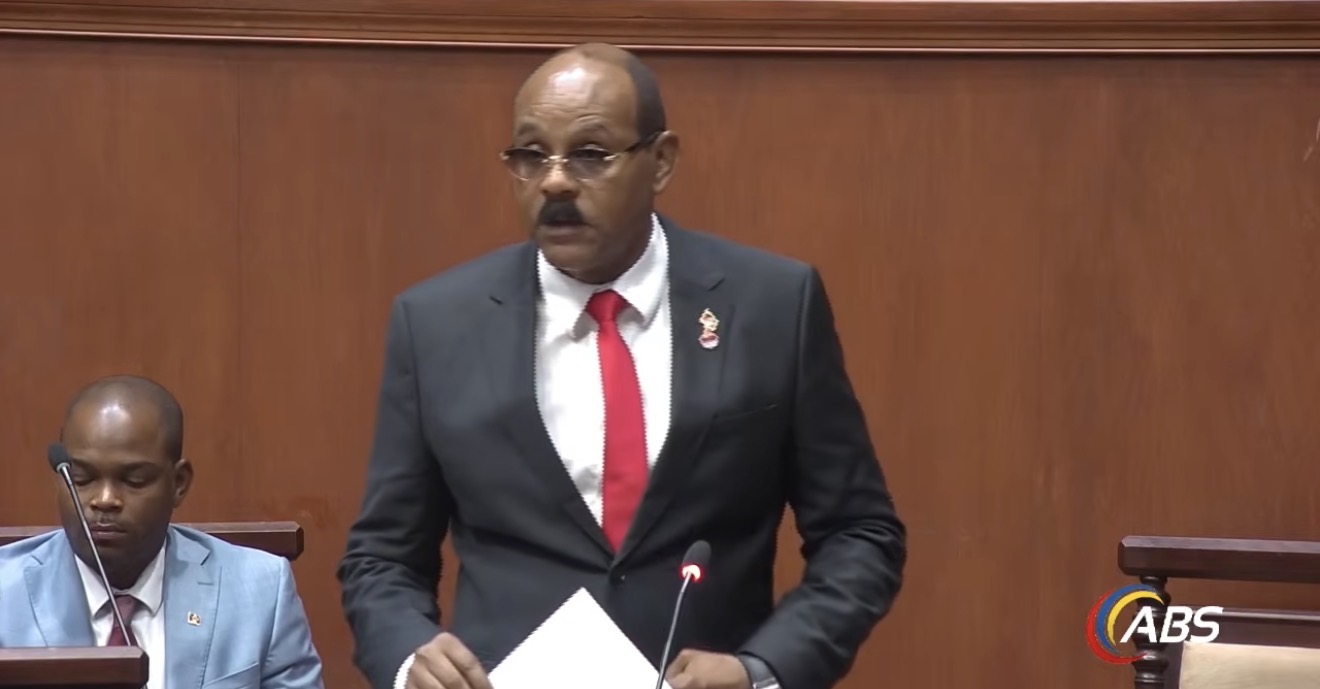
    ABU DHABI — The United Arab Emirates’ top leadership has extended formal congratulations to Prime Minister Gaston Browne of Antigua and Barbuda after he secured re-election for another term in office.

    Sheikh Mohamed bin Zayed Al Nahyan, the President of the UAE, was the first to deliver the message of goodwill, marking the official recognition of Browne’s new electoral mandate. In a demonstration of the unified diplomatic stance of the UAE’s highest governing bodies, two of the nation’s most senior leaders followed with identical congratulatory communications.

    These messages came from Sheikh Mohammed bin Rashid Al Maktoum, who holds three key roles as UAE Vice President, Prime Minister, and Ruler of Dubai, and Sheikh Mansour bin Zayed Al Nahyan, who serves as Vice President, Deputy Prime Minister, and Chairman of the Presidential Court. The exchange of congratulations underscores the diplomatic goodwill between the UAE and the Caribbean nation, reinforcing the ongoing bilateral relationship between the two countries ahead of Browne’s new term.

  • Survey Launched in Barbuda to Help Council Determine Most Pressing Social and Economic Concerns

    Survey Launched in Barbuda to Help Council Determine Most Pressing Social and Economic Concerns

    After securing a landmark legal victory that protects collective land ownership on the Caribbean island of Barbuda, local governing body the Barbuda Council has launched a widespread outreach effort, urging both on-island residents and Barbudans living in the global diaspora to contribute to a new community survey.

    The court ruling, announced last week in collaboration with the Global Legal Action Network (GLAN), reaffirmed a long-standing core principle of Barbudan society: that land on the island cannot be privately sold. In an official public statement released online alongside GLAN, the Council framed the ruling as nothing short of a turning point for the island community. ‘Last week marked an important moment for Barbuda,’ the statement read, emphasizing that the outcome was a testament to collective action. The win serves as a powerful reminder of what marginalized island communities can accomplish when they unify around shared priorities, the Council added.

    Moving past the legal victory, the Council is now turning its focus to long-term community-led planning, turning to the island’s people to map out the most pressing social and economic priorities for the future. The 2026 Barbuda Council Survey is designed to capture direct feedback from all segments of the Barbudan population, whether they currently reside on the island or live abroad. By participating, community members will directly shape how local leaders approach development, infrastructure, public services, and governance decisions for years to come.

    ‘Wider participation will strengthen the voice of the Barbudan community in discussions surrounding development and governance,’ the statement explained. For decades, outside development proposals have threatened the island’s collective land model, so centering community input is seen as a critical step to ensuring any future progress aligns with the needs and values of Barbudan people themselves. The Council has called on respondents to not only complete the survey themselves but also share the official link with other members of the diaspora to ensure broad representation.

    Closing the statement, the Council reiterated its commitment to community self-determination, noting: ‘The future of Barbuda must be shaped by Barbudans.’

  • IMF Calls for Stronger Oversight of Credit Unions in Antigua and Barbuda

    IMF Calls for Stronger Oversight of Credit Unions in Antigua and Barbuda

    The International Monetary Fund (IMF) has issued a formal call for stricter regulatory oversight of credit unions operating across Antigua and Barbuda, framing the reform as a critical pillar of broader work to shore up stability and resilience in the Caribbean nation’s financial sector. In its recently released Article IV consultation report, the global financial body confirmed that Antigua and Barbuda’s overall financial system remains on solid footing, with healthy levels of liquidity and sustained stability. Even so, the organization has pushed for continuous regulatory and supervisory overhauls to strengthen sector-wide governance. IMF executive directors put forward targeted recommendations, urging local authorities to shift toward a risk-focused model of supervision for the credit union industry. This shift, they argue, should be paired with targeted actions to improve loan loss provisioning practices and shore up capital buffers across credit unions, closing existing gaps in financial preparedness. The IMF emphasized that robust financial sector oversight is particularly vital at this juncture, as Antigua and Barbuda continues to navigate post-shock economic recovery and works to build long-term defenses against external volatility and structural domestic vulnerabilities. Beyond credit union reform, the report also underlined the urgent need for sustained progress on two key financial priorities: deepening the country’s financial markets to support greater access to capital, and updating frameworks to counter money laundering and terrorist financing, bringing them in line with evolving global standards. The nation’s high-profile Citizenship by Investment Programme was also flagged as an area requiring ongoing regulatory scrutiny, a key component of the government’s broader push to upgrade national financial governance. These policy recommendations come alongside the IMF’s latest economic forecasts for the twin-island nation, which confirm that Antigua and Barbuda’s economy kept expanding through 2025. Growth was driven largely by a boom in domestic construction activity, which offset a marked slowdown in the critical tourism sector. The IMF estimates that real gross domestic product grew by 3% for the year, while inflation cooled dramatically to 1.4% — a significant improvement from previous higher levels. Despite the positive growth trajectory, the report warned that notable downside risks remain on the horizon. Persistent global economic uncertainty, swings in global commodity prices, and domestic capacity constraints all threaten to derail progress moving forward. Strengthened financial oversight and targeted structural reforms, the IMF concluded, would position Antigua and Barbuda to lock in long-term economic stability and lay the groundwork for sustained inclusive growth. As the nation continues to build out its economic foundations, these regulatory updates are framed as a critical investment in both financial security and long-term prosperity.

  • LETTER:  Upholding Integrity in the Civil Service: The Need for Fairness, Accountability, and Due Process

    LETTER:  Upholding Integrity in the Civil Service: The Need for Fairness, Accountability, and Due Process

    As the foundational backbone of effective governance across every sovereign nation, the civil service bears the critical mandate of sustaining administrative continuity, delivering equitable public services, and entrenching the rule of law. Rooted in core values of fairness, professionalism, and impartiality, this institution’s credibility stands or falls based on how it upholds these principles in every day operational practice. Yet growing evidence of flawed processes and embedded bias in handling internal allegations has sparked widespread concern over systemic vulnerabilities that erode both individual well-being and public confidence.

    In recent discourse, growing attention has centered on gaps in how complaints and internal reports are managed across multiple branches of the civil service. All allegations, whether filed through formal channels or raised informally, carry outsized weight that can shape career trajectories, destroy professional reputations, and foster toxic, hostile working climates for those targeted. This inherent impact demands that every complaint be processed with the utmost rigor, professionalism, and unwavering fairness—an expectation that too often goes unmet in current practice.

    One of the most pressing flaws identified is the trend of advancing complaints and compiling official reports without comprehensive, impartial investigation and fact-checking. In far too many cases, unfounded assumptions, personal prejudices, or unresolved workplace rivalries have skewed the official narrative presented to disciplinary bodies. When these unvetted claims form the basis of administrative action, the entire process is fundamentally compromised. Unverified or inadequately investigated allegations can wrongfully stain an individual’s professional standing, triggering unwarranted disciplinary penalties that have no basis in verifiable fact.

    Equally troubling is the persistence of discriminatory behavior—whether hidden in implicit bias or expressed openly—in the adjudication of internal complaints. Preferential treatment or unfair targeting based on personal connections, institutional rank, gender, or other extraneous factors has no place in any professional setting, and it is especially corrosive in the civil service, where all decisions are required to be guided exclusively by evidence and formally established procedures.

    At its core, upholding the integrity of internal processes requires unwavering commitment to the principle of natural justice. This foundational legal and ethical standard demands three non-negotiable safeguards: every individual must be given full opportunity to respond to allegations brought against them, all investigations must be conducted by impartial parties free from conflicting interests, and all final conclusions must be drawn solely from verified, corroborated facts. Without these guardrails in place, the civil service’s accountability mechanism risks transforming into a tool for personal retaliation and arbitrary victimization, rather than a system to uphold institutional standards.

    Leaders and senior officials within the civil service carry a unique responsibility to model ethical practice when documenting incidents and adjudicating complaints. Official incident reports must be objective, unambiguous, and fully supported by tangible evidence. Personal conjecture and unsubstantiated claims must never be allowed to form the foundation of official government documentation. After all, the integrity of the entire process depends entirely on the integrity of the public servants tasked with overseeing it.

    To rebuild and sustain public trust in the civil service, institutions must renew their collective commitment to transparency, procedural fairness, and accountability. Systemic reform requires prioritizing comprehensive training for all staff on ethical conduct, rigorous investigative protocols, and identifying and mitigating unconscious bias that can skew decision-making. Beyond training, clear and proportionate consequences must be enforced for public servants who deliberately abuse the internal complaints system to file false or misleading allegations for personal gain.

    Critically, the goal of these reforms is not to discourage legitimate reporting of misconduct. Instead, it is to ensure that all reporting is conducted responsibly, in line with ethical and procedural standards. A genuinely fair and just civil service protects both parties: the individual bringing forward a complaint of misconduct, and the individual who has been accused. This balance ensures that truth triumphs over unfounded assumption, and that justice is not only carried out, but is visibly seen to be carried out by the public.

    Public confidence in the civil service is constructed on a foundation of trust. That trust can only be maintained over time when internal systems are structurally fair, processes are open to transparent scrutiny, and every person interacting with the institution is treated with inherent dignity and respect. Only once these reforms are fully implemented can the civil service fully deliver on its core mandate: serving as a steadfast guardian of the public interest and a national model of uncompromising integrity.

  • VS scherpt sancties tegen Cuba aan; VN waarschuwt voor ‘energiesterfte’

    VS scherpt sancties tegen Cuba aan; VN waarschuwt voor ‘energiesterfte’

    On Thursday, the United States rolled out a fresh slate of economic sanctions targeting Cuba, expanding on a months-long pressure campaign that has steadily ratcheted up tensions between Washington and Havana. The announcement came just hours after independent United Nations experts condemned the ongoing U.S. fuel blockade against the island nation as a form of “energy starvation” that inflicts severe damage on Cubans’ fundamental human rights.

    The latest penalties target high-profile Cuban entities and individuals, headlined by Grupo de Administracion Empresarial SA (GAESA), a large business conglomerate controlled by the Cuban military that holds sway over nearly every major sector of the country’s economy. Ania Guillermina Lastres Morera, who serves as president of both GAESA and Moa Nickel SA (MNSA) — a nickel industry joint venture between Canadian firm Sherritt International and Cuba’s state-owned nickel enterprise — was also sanctioned. Within hours of the U.S. announcement, Sherritt International confirmed it had temporarily suspended all of its operational activities in Cuba to comply with the new measures.
    U.S. Secretary of State Marco Rubio stated via social platform X that the new sanctions make clear the Trump administration will not tolerate what it frames as threats to regional security from the Cuban government. “We will continue taking action until the regime implements the necessary political and economic reforms, Rubio said.

    Cuba’s government has not issued an immediate official response to Thursday’s new round of sanctions, but earlier this week, Cuban officials already denounced U.S. restrictive measures as unilateral coercive tools that amount to collective punishment of the entire Cuban population.

    Washington has significantly ramped up pressure on Havana since the start of 2026, a shift that followed the kidnapping of Venezuelan leader Nicolas Maduro on January 3. Since that event, the U.S. has cut off all oil shipments from Venezuela to Cuba, and issued an executive order imposing secondary sanctions on any third countries that supply fuel to Cuba, effectively creating a full fuel blockade. President Trump has repeatedly repeated threatened military action to overthrow the Cuban government.

    The three UN special rapporteurs who released Thursday’s human rights assessment emphasized that the illegal blockade not only disrupts daily life across the island, but also systematically undermines the exercise of basic human rights for all Cubans. They defined the situation as “energy starvation”, a crisis where widespread fuel shortages paralyze the essential services that are required for a dignified human existence.

    The experts also noted that only one Russian oil tanker has reached Cuban ports in recent months, a shortage that has drastically worsened the existing energy crisis sparked by long-term economic stagnation on the island. Local reports confirm that fuel shortages have blocked thousands of Cubans from accessing hospitals and prevented children from traveling to school. Cuba’s public health system alone is now backlogged with more than 96,000 delayed surgeries, including over 11,000 procedures for pediatric patients.

    “Energy starvation used as a tool of coercion is incompatible with international human rights standards, the UN rapporteurs warned.

  • LETTER: Antigua and Barbuda Cannot Sustain the One-House, One-Plot Dream Forever

    LETTER: Antigua and Barbuda Cannot Sustain the One-House, One-Plot Dream Forever

    For decades, political candidates across Antigua and Barbuda have ridden a popular campaign promise into office: pledges of more available land and more standalone housing to help working families achieve the long-held dream of property ownership. This pledge resonates deeply with populations that have long tied personal and financial security to owning a stretch of land and a detached home, but the small twin-island nation can no longer ignore the growing unsustainability of its current approach to residential development.

    Antigua and Barbuda’s total land supply is inherently finite, yet national development policy has clung stubbornly to a decades-old model: one plot of land, one single-family home per household. Across the islands, entire unspoiled communities are being split into thousands of tiny residential lots, paved road networks are cutting deeper into untouched natural terrain, and successive governments continue to open new swathes of land for private residential sale, acting as though crippling land scarcity remains a distant problem rather than a rapidly approaching crisis.

    This fragmented, low-density model may have made practical sense generations ago, when Antigua and Barbuda’s population was far smaller, land was abundant and affordable, and the pressures of rapid development were minimal. Today, that equation no longer adds up. Every new low-density subdivision requires major public investments in extended infrastructure: new roads, expanded power grids, longer water pipelines, upgraded drainage systems, new schools, and improved highway access to connect far-flung neighborhoods to urban centers. This kind of urban sprawl places unnecessary, long-term financial strain on taxpayers, while inflicting severe environmental harm on a small island nation already on the frontlines of climate change, facing heightened risks of flooding, chronic water scarcity, and coastal erosion.

    Most critically, this approach is fundamentally unsustainable for future generations. If current consumption patterns hold, what will be left of Antigua and Barbuda’s undeveloped land in 30 or 40 years? What becomes of the nation’s domestic agricultural sector when all prime farmland is converted to residential lots? How will young working people ever afford to buy property when the limited land supply is either exhausted or concentrated in the hands of a small number of private owners? These are questions the nation can no longer afford to put off answering, writes contributor Marcus Jeffers.

    To avoid this bleak future, Antigua and Barbuda must immediately begin pursuing intentional, well-planned higher-density housing solutions as a core part of national housing policy. The country’s future cannot rely on endless low-density subdivisions creeping further into rural and natural landscapes. Instead, sustainable housing policy must embrace a range of alternative options: multi-unit apartment buildings, attached townhouses, condominium complexes, and even thoughtfully designed high-rise residential developments in appropriate, well-located urban zones.

    For too long, cultural attitudes across many Caribbean societies have framed multi-unit apartment living as a less desirable, inferior alternative to owning a standalone single-family home on a private plot. But Jeffers points to a clear global precedent: densely populated, developed nations around the world have already adapted to limited land supplies by embracing vertical, high-density living as a pragmatic, practical solution.

    Well-designed higher-density housing delivers widespread benefits that align with both affordability and sustainability goals. It makes homeownership accessible to more low- and middle-income families while preserving large tracts of open, undeveloped land. Shared infrastructure for multi-unit developments is far more cost-efficient than building separate, extended networks for sprawling subdivisions, supporting cheaper utility costs for all residents. Public transit systems become far more feasible and cost-effective to operate when more people live in concentrated areas, and residents gain easier access to jobs, schools, and essential services without the need for long commutes from far-flung neighborhoods.

    This call for policy change is not an attack on the dream of homeownership, Jeffers emphasizes. It is a push for pragmatic, sustainable planning that preserves that dream for future generations rather than allowing it to be destroyed by short-term overconsumption. The dream of owning a home should not turn into a collective nightmare where the entire nation’s land supply is exhausted, putting property ownership out of reach for all coming generations.

    As a small island state, Antigua and Barbuda cannot sustainably apply the sprawling land-use models designed for much larger, land-rich nations indefinitely. Opening this conversation about shifting to higher-density development may be politically uncomfortable, and may challenge long-held cultural attitudes about property and housing. But it is a conversation that cannot wait, Jeffers argues. If the nation continues to consume land at its current pace without reforming how it develops residential housing, future Antiguans and Barbudans will inherit an island where the dream of land ownership is permanently out of reach.

  • Chef launches food business in tribute to late daughter

    Chef launches food business in tribute to late daughter

    For nearly 10 years, Shakira Drakes honed her culinary craft across some of Barbados’ most respected food and hospitality venues, working her way up from an entry-level salad station role to senior management. Now, this veteran chef is channeling a lifetime of experience and profound personal grief into a new venture that honors her greatest loss: on what would have been her late daughter’s 21st birthday, Drakes officially opened the doors to Kira’s Cuisine, her very own eatery located at St. James’ Husbands Heights Park.

    Reflecting on the bittersweet milestone at the launch event Thursday, Drakes shared that opening her business on this meaningful date was a deliberate choice, one designed to celebrate both her daughter’s memory and her own journey through grief. “I’m very proud to say that I started my business yesterday on my daughter’s birthday. She would have been 21,” Drakes said. “I wanted to do something really amazing to reflect my resilience, my humbleness and my art.”

    Drakes’ culinary career began at Barbados’ Open Kitchen, where she started in an entry-level role before working her way up to supervisor. Over the following years, she built her skills and reputation across a roster of iconic local establishments, including luxury resort Sandy Lane, popular waterfront venue Pier One, and Fusions Rooftop. Her most recent position as a restaurant manager gave her the confidence and expertise to strike out on her own, fulfilling a long-held personal goal. “I wanted to be an entrepreneur. I wanted to do this for myself and for my children,” she explained.

    The path to opening Kira’s Cuisine was not without its setbacks, Drakes acknowledged. She originally planned to operate from a mobile food trailer, but securing a permitted, suitable parking location proved far more challenging than she anticipated. For weeks, she persisted in searching for a spot, but repeated dead ends left her discouraged and ready to abandon the dream. “Every week we were still connected until one time it was like I gave up. I wanted to throw in the towel because it was very depressing,” she recalled.

    Drakes credits her network of supporters with pushing her to keep going, when she was ready to walk away. In particular, she highlighted the ongoing encouragement of Taahir Bulbulia and representatives from the Barbados Trust Fund Ltd, who worked alongside her to secure the Husbands Heights Park location. After months of searching, Bulbulia delivered the good news she had been waiting for: “He said: ‘Kira, I get a spot for you.’ From there it was nothing but up,” Drakes said.

    Today, Kira’s Cuisine serves a diverse, accessible menu of casual comfort food and signature dishes to the St. James community, ranging from chicken and fried fish platters to tacos, blackened fish entrees, subs, and fresh wraps. Drakes also emphasized that all menu items are certified halal, expanding accessible dining options for Muslim consumers in the area. The eatery operates 10 a.m. to 6 p.m. Monday through Thursday, and 11:30 a.m. to 9:30 p.m. on Fridays and Saturdays, and remains closed on Sundays.

  • DABA launches two-day referee clinic to strengthen basketball officiating in Dominica

    DABA launches two-day referee clinic to strengthen basketball officiating in Dominica

    The Dominica Amateur Basketball Association (DABA) has launched a targeted two-day Referee Clinic on Wednesday, marking a key milestone in the organization’s ongoing work to elevate officiating standards and grow competitive basketball across the Caribbean island nation.

    In an official press statement announcing the initiative, DABA noted that the training program gathers seasoned veteran referees, promising new aspiring officials, and other key stakeholders from Dominica’s local basketball ecosystem for a packed schedule of rigorous skill-building activities. The core goal of the gathering is to refine existing officiating capabilities and deliver greater consistency in decision-making across all levels of domestic play.

    Throughout the clinic, participating officials are receiving specialized, up-to-date instruction across a full spectrum of professional officiating competencies. Topics covered include the latest interpretations of international basketball rules, strategies for maintaining tight control during high-stakes games, optimal on-court positioning for referees, standardized officiating mechanics, effective communication between crew members, and other critical elements of elite game management. Per DABA, this clinic is not an isolated training event, but rather a core component of a wider, multi-year strategy to strengthen the quality of refereeing for every tier of basketball competition on the island.

    The two-day agenda blends multiple learning formats to cater to different skill levels and learning styles: attendees will complete structured classroom-based theory sessions, hands-on practical drills held directly on court, detailed video reviews of past game calls to identify areas for improvement, and collaborative group discussions to address shared challenges faced by local officials. Organizers explain that combining theoretical learning with applied, on-site practice is designed to help officials build both the confidence and technical expertise required to perform at a higher competitive level.

    DABA leadership emphasized that consistent investment in referee development remains non-negotiable for the long-term growth of basketball in Dominica. High-quality, well-trained officiating, the association notes, plays an outsize role in fostering healthy player development, ensuring smooth and fair game management, and lifting the overall level of professionalism across the sport nationally.

    Association officials also reaffirmed their ongoing commitment to creating accessible, high-quality training opportunities for all key groups within the national basketball community, including referees, head coaches, players, and league administrators. This commitment aligns with DABA’s long-term strategic vision for sustained, inclusive growth of basketball across Dominica.

    As the clinic got underway, DABA extended a reminder to all participants to take full advantage of the access to expert training and networking opportunities the event provides. The organization also offered public gratitude to the lead facilitators, participating officials, and community partners who worked to bring the clinic to fruition and support its successful execution.