作者: admin

  • Humphrey warns of dangerous HIV myths, calls for renewed education drive

    Humphrey warns of dangerous HIV myths, calls for renewed education drive

    Barbados faces a critical setback in its HIV prevention efforts as dangerous misconceptions, including the false belief that a cure exists, are gaining traction among the population. Minister of People Empowerment and Elder Affairs Kirk Humphrey issued this stark warning during the Man Aware event held at his constituency office on Saturday, pointing to troubling findings from recent research.

    Minister Humphrey revealed that preliminary data indicates a regression in public knowledge about HIV, leading to concerning decision-making and unusual beliefs. “The initial results from our research seem to suggest that the knowledge of HIV is regressing and persons are making unusual decisions, with some very strange beliefs,” Humphrey stated, emphasizing the urgent need to intensify educational campaigns.

    The minister called for the reinstatement of dedicated HIV awareness budgets across all government ministries, advocating for a comprehensive, whole-of-government strategy to address critical gaps in public understanding. He cautioned that previous gains could be rapidly reversed through complacency and inadequate educational consistency.

    While acknowledging significant advancements in medical treatments that enable people with HIV to live longer, healthier lives, Humphrey unequivocally stated: “HIV is still here, there is no cure for HIV.” He specifically addressed young people, warning against reckless behavior inspired by overconfidence in medical technology: “I don’t want anyone to think that because we have had these advancements in medical technologies, that it means that you can be reckless.”

    The Man Aware initiative, launched in 2016 by the National Wellbeing and HIV Commission, was developed to address previous imbalances in outreach efforts. According to Acting Director Lynn Armstrong, the program specifically targets male engagement after concerns emerged that previous campaigns predominantly focused on women through the Speak Sister program.

    Saturday’s event combined practical services with educational content, offering free haircuts for the back-to-school season alongside interactive learning activities. These included innovative approaches such as ‘Ups and Downs’—an educational game developed by Jamilia Williams-Phillips—condom demonstrations, and HIV information sessions between musical sets by deejay Ronald Henry. The Live Well Clinic provided on-site health checks, creating immediate access to services in a community-based setting.

    Minister Humphrey expressed satisfaction with the initiative’s community impact, noting: “Education has to be spread across the country in a way that reaches people and I think that is exactly what we are doing here.”

  • Latin American Countries and Spain reject aggression on Venezuela

    Latin American Countries and Spain reject aggression on Venezuela

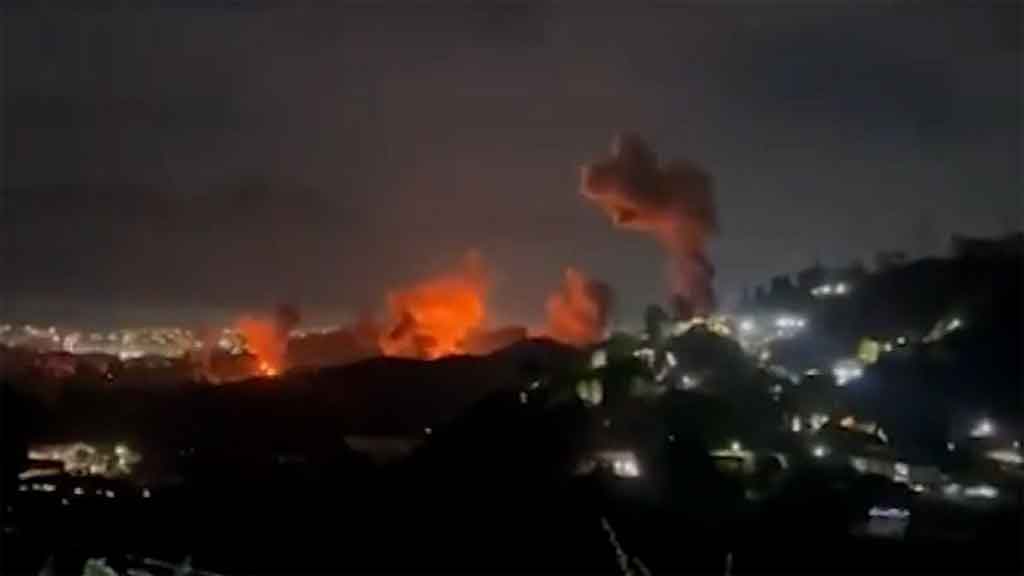
    A coalition of nations has issued a formal condemnation of recent actions authorized by former U.S. President Donald Trump, declaring them in direct violation of fundamental principles of international law. The collective statement emphasizes that these operations contravene core tenets of the United Nations Charter, specifically the prohibition against the use and threat of force and the imperative to respect state sovereignty and territorial integrity.

    The nations further characterized these actions as establishing an ‘extremely dangerous precedent’ that severely undermines regional peace and security while placing civilian populations at significant risk. The statement articulates a firm position that the resolution of the Venezuelan situation must be achieved exclusively through peaceful means, including dialogue and negotiation that respects the expressed will of the Venezuelan people, free from any form of external interference and in strict compliance with international legal standards.

    Reaffirming the foundational status of Latin America and the Caribbean as a ‘Zone of Peace,’ the document underscores principles of mutual respect, the peaceful settlement of disputes, and absolute non-intervention. It issues a powerful call for regional unity, transcending political differences, to confront any measures that threaten to destabilize the area.

    The coalition has formally urged United Nations Secretary-General António Guterres, along with member states of pertinent multilateral mechanisms, to employ their diplomatic offices to actively contribute to de-escalating tensions and safeguarding regional peace.

    Concluding the declaration, the nations expressed profound concern regarding any external attempts to seize governmental control, administration, or ownership of Venezuela’s natural and strategic resources. They emphasized that such appropriation is fundamentally incompatible with international law and poses a direct threat to the political, economic, and social stability of the entire region.

  • City admin removes vendors outside Yhip’s Bakery, plans afoot to move all vendors on Robb Street

    City admin removes vendors outside Yhip’s Bakery, plans afoot to move all vendors on Robb Street

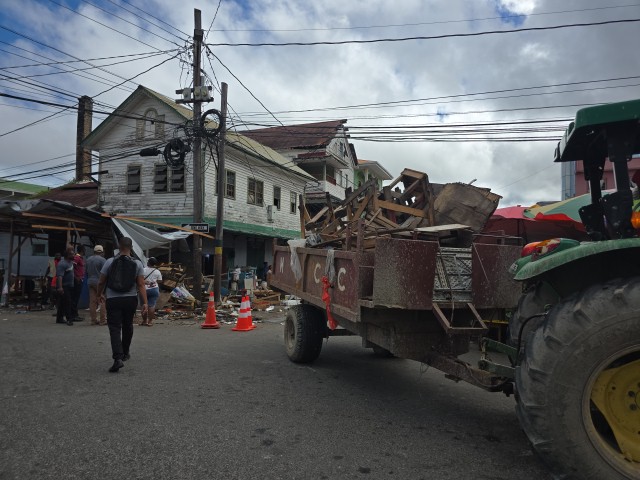
    The Georgetown City Administration executed a High Court mandate on Sunday, January 4th, 2026, forcibly removing street vendors operating outside the defunct Yhip’s Bakery at the intersection of Robb and Alexander Streets. This enforcement action has ignited intense debate regarding urban vending rights and municipal governance.

    Mayor Alfred Mentore revealed preliminary strategies to relocate displaced merchants to Merriman’s Mall, situated between Orange Walk and Cummings Street. However, this proposed solution has encountered significant resistance from both vendors and political figures. The demolition of vendor stalls proceeded despite Mayor Mentore’s formal request to Town Clerk Candace Nelson for an emergency statutory meeting scheduled January 5th to establish a comprehensive vending policy and temporarily halt removals.

    Vendor representatives expressed profound dissatisfaction with the relocation site, citing inadequate infrastructure including absent water facilities, electrical connections, and security concerns due to criminal elements. Approximately fourteen predominantly female vendors—many commuting from distant regions like Mahaica, Cane Grove, and Bath Settlement—now face severe economic uncertainty. They argue that selective enforcement creates unfair market advantages and demand equitable treatment for all Robb Street vendors.

    Political intervention emerged through We Invest in Nationhood (WIN) party leader Azruddin Mohamed and senior member Tabita Sarabo-Halley, who condemned governmental indifference toward improving Stabroek and Bourda market conditions despite Guyana’s substantial oil revenue streams. They criticized the administration’s two-year failure to develop adequate vending solutions since initial legal proceedings began.

    Mayor Mentore’s budgetary proposal for 2026 includes infrastructure upgrades at Merriman’s Mall, featuring new sheds and sanitary facilities intended to accommodate approximately fifty vendors. He emphasizes eliminating unfair competitive practices through consistent enforcement across all Robb Street vending operations. The ongoing legal confrontation continues with a scheduled court appearance on January 9th, where municipal authorities intend to present their relocation commitments to the judiciary.

  • First Motorcycle Accident of 2026 Leaves One Dead

    First Motorcycle Accident of 2026 Leaves One Dead

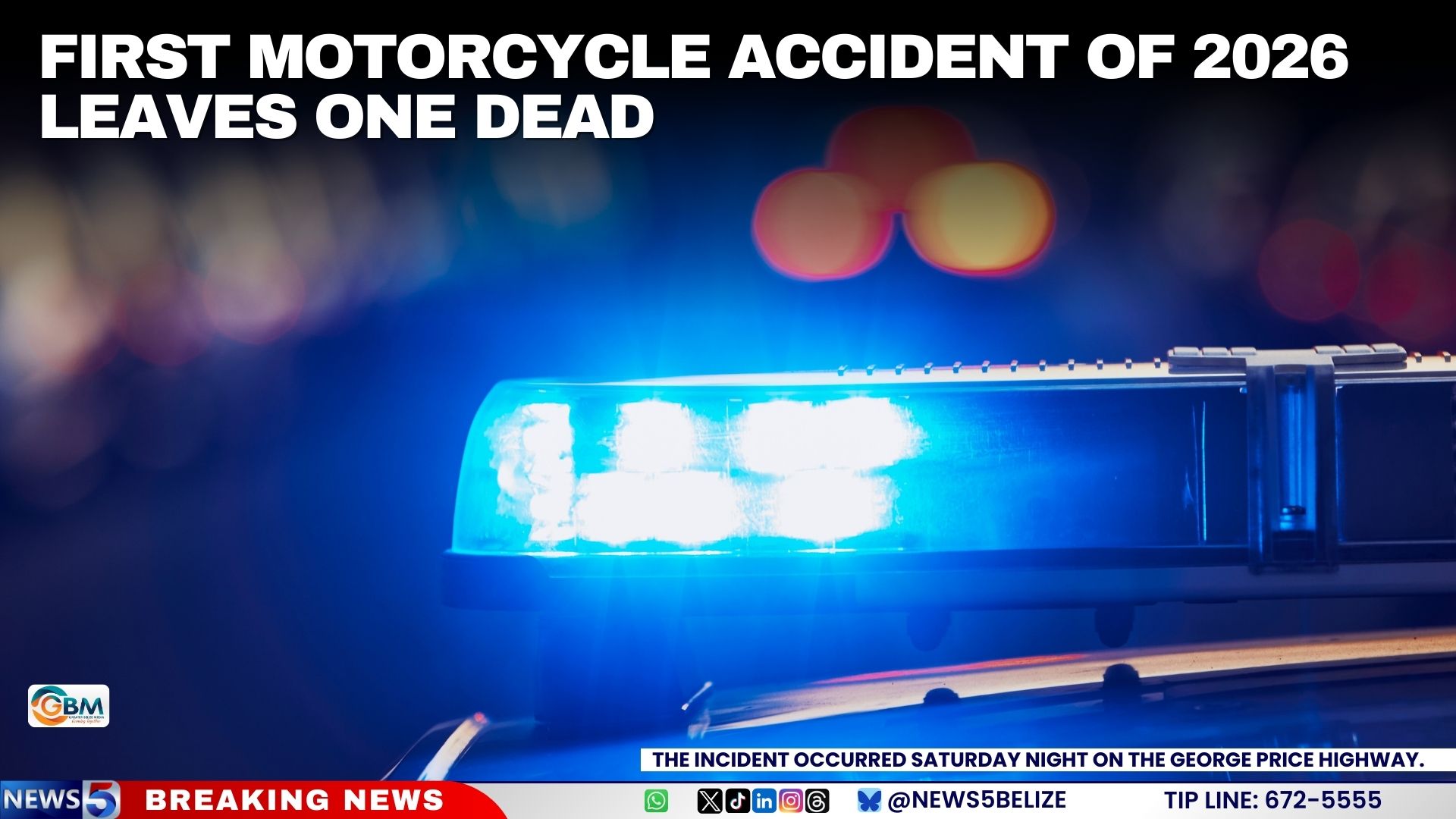
    Belizean authorities are conducting a thorough investigation into the year’s inaugural traffic fatality, which occurred on the evening of January 3rd, 2026. The victim has been identified as Brian Miguel, a 24-year-old agricultural worker from St. Matthew’s Village, who succumbed to injuries sustained in a devastating highway collision.

    The tragic incident unfolded approximately between miles 40 and 41 along the George Price Highway, where law enforcement personnel were dispatched at approximately 8:30 p.m. Upon arrival, first responders discovered Miguel’s lifeless body on the roadway beside his damaged motorcycle.

    Preliminary forensic reconstruction suggests the catastrophe occurred when a Ford F-150 pickup truck, operated by 35-year-old William Antonio Aleman of Burrell Boom, allegedly executed an improper lane change maneuver. This action reportedly resulted in a direct collision with Miguel’s motorcycle, though the complete sequence of events remains under active investigation by traffic division specialists.

    Authorities have confirmed the detention of Mr. Aleman pending formal charges. The legal proceedings will consider whether traffic regulations were violated and determine potential liability in this tragic case. This incident has reignited community discussions about road safety measures on Belize’s highway networks, particularly regarding motorcycle visibility and lane discipline enforcement.

    The Belize Police Department has extended condolences to the victim’s family while emphasizing the importance of heightened caution during nighttime travel on the nation’s roadways.

  • Uruguay reiterates rejection of US intervention in Venezuela

    Uruguay reiterates rejection of US intervention in Venezuela

    In a nationally televised statement, Uruguay’s President Luis Lacalle Pou articulated his nation’s firm commitment to foundational principles of international relations, emphasizing non-intervention and the peaceful settlement of disputes. The address outlined Uruguay’s diplomatic stance regarding external military involvement in Venezuela’s political affairs.

    The president underscored that Uruguay maintains a long-established foreign policy tradition that rejects interference in the internal matters of sovereign states, particularly through coercive measures or military force. He reiterated his government’s dedication to resolving international conflicts through dialogue and negotiation rather than confrontation.

    Central to Uruguay’s position are the core tenets of international law, including the sovereign equality of all nations and the imperative of defending multilateralism. President Lacalle Pou emphasized that these principles form the bedrock of his administration’s approach to global affairs.

    Significantly, the Uruguayan leader revealed that his country coordinates with a coalition of nations including Brazil, Colombia, Chile, Mexico, and Spain regarding the Venezuela situation. This collaborative approach aims to present a unified perspective in international forums while seeking diplomatic solutions.

    President Lacalle Pou confirmed that Uruguay will pursue this consensus position through multiple diplomatic channels, including active engagement within the Community of Latin American and Caribbean States (CELAC) and the Organization of American States (OAS). The ultimate objective remains facilitating a peaceful resolution to the ongoing political crisis in Venezuela through institutional frameworks and dialogue.

  • Violence against women persists in El Salvador

    Violence against women persists in El Salvador

    Newly released statistical data for 2024-2025 has exposed the severe magnitude of gender-based violence plaguing El Salvador, with the Attorney General’s Office (FGR) documenting a staggering 18,949 cases targeting women. Among these reported incidents, sexual assault accounted for 8,938 cases, representing nearly half of all gender violence reports.

    According to analyses by the Organization of Salvadoran Women for Peace (ORMUSA), these figures position El Salvador among nations with the highest rates of femicide in the Americas, with 82 gender-motivated killings recorded during this reporting period. The breakdown of violence types shows psychological abuse as the most prevalent form at 7,062 cases, followed by physical violence accounting for 2,339 incidents.

    While the statistics indicate a slight reduction compared to previous reporting cycles, ORMUSA emphasizes that sexual violence remains the most persistent and widespread manifestation of gender-based aggression throughout the country. The organization’s comprehensive assessment concludes that sexual violence constitutes a deep-rooted, structural problem requiring immediate and coordinated intervention.

    The findings underscore the critical need for enhanced commitment from state institutions and civil society to implement effective protective measures, strengthen legal frameworks, and transform societal attitudes toward gender-based violence. ORMUSA advocates for a multifaceted approach combining prevention, prosecution, and support systems to address this pervasive human rights challenge.

  • Cubans in Ecuador condemn US aggression against Venezuela

    Cubans in Ecuador condemn US aggression against Venezuela

    A prominent international association has issued a forceful condemnation of recent actions targeting Venezuelan leadership, characterizing them as unlawful under established global governance principles. The Association of Caribbean Unity and Regional Entities (ACURE) has formally denounced what it describes as the effective abduction of Venezuelan President Nicolás Maduro and First Lady Cilia Flores, asserting these actions constitute a blatant violation of diplomatic immunities granted to sitting heads of state.

    In an official communiqué disseminated through the Cuban Consulate in Ecuador, ACURE posed a challenging question to United States authorities: “Under which specific tenets of International Law does the United States presume the authority to act as global adjudicator while simultaneously disregarding fundamental international legal standards?”

    The organization additionally expressed strong opposition to President Donald Trump’s assertion of American jurisdiction over Venezuelan affairs during a recent press briefing. ACURE specifically condemned the invocation of the nineteenth-century Monroe Doctrine as justification, labeling this approach “entirely illicit and contrary to contemporary international legal frameworks.”

    Further analysis from the association suggests that potential military engagement would be principally motivated by Washington’s strategic interests in controlling Venezuela’s substantial natural resources, including petroleum reserves, gold deposits, and critical rare earth elements essential for modern technology.

    The statement provided historical context referencing previous military interventions throughout the region, cautioning against the repetition of such patterns driven primarily by economic ambitions rather than humanitarian or democratic concerns. ACURE emphasized the imperative of immediately restoring President Maduro and his wife to their rightful positions while advocating for strengthened respect for national sovereignty and international law as cornerstones of peaceful global coexistence.

  • Spain in mass  drives in support of  Venezuela

    Spain in mass drives in support of Venezuela

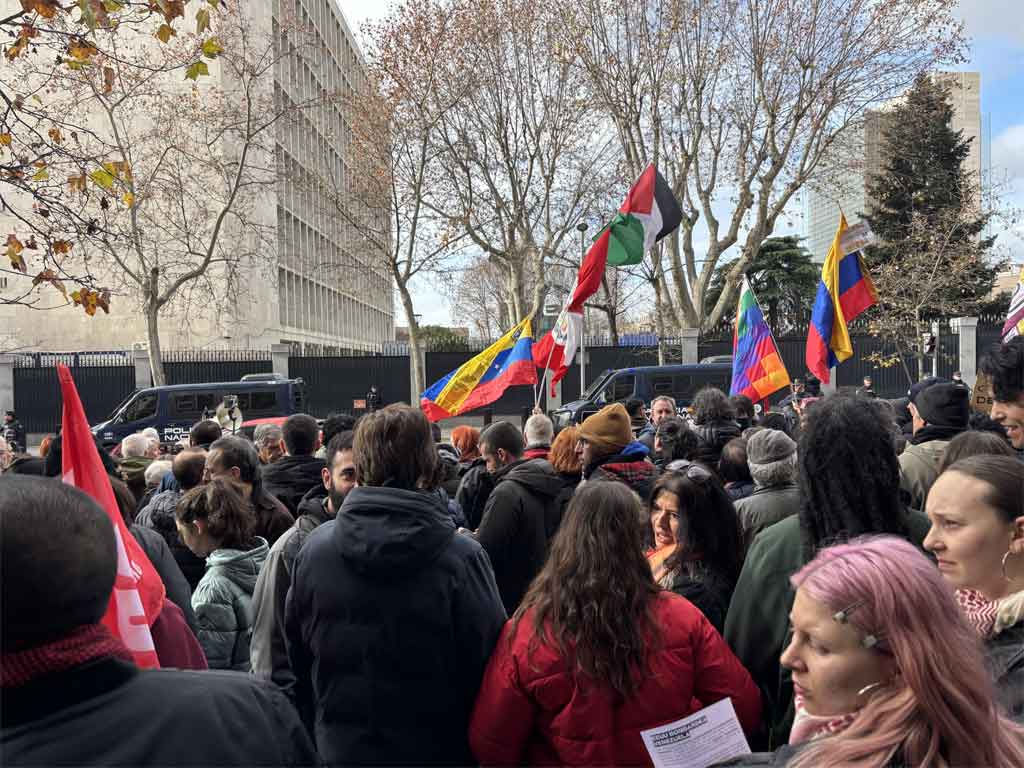
    A substantial crowd of demonstrators convened peacefully outside the United States diplomatic mission in Madrid on Sunday, responding to a mobilization call from the Committee Against NATO and Military Bases alongside the Antifascist International. The assembly, which drew thousands, was met with a significant security presence comprising Spanish Civil Guard and national police forces.

    Protesters vocalized strong opposition to U.S. foreign policy through resonant chants including “Yankees hands off Venezuela” and demands to cease American interference while respecting Latin American sovereignty. The visual symbolism of the gathering extended beyond Venezuelan flags to include Palestinian banners, merging condemnation of Israel’s military actions in Gaza with criticisms of NATO’s escalating militarism and European Union complicity.

    Araceli Escudero, representing the Bolivarian Solidarity Platform and Cuban friendship associations, characterized the event as exceptionally successful. She noted the unprecedented turnout for such a demonstration in recent memory, warning that current developments in Venezuela represent a comprehensive violation of rights with potential to destabilize the entire Latin American and Caribbean region. Escudero’s statements to Prensa Latina emphasized the interconnected nature of global geopolitical struggles against Western interventionism.

  • Social rejection grows in El Salvador against aggression of Venezuela

    Social rejection grows in El Salvador against aggression of Venezuela

    A coalition of international voices has sharply criticized what they characterize as an unprecedented interventionist escalation by the United States government against Venezuela’s leadership. The coordinated response follows reports of operations targeting Venezuelan President Nicolás Maduro and First Lady Cilia Flores, which multiple organizations have denounced as an illegal kidnapping attempt designed to destabilize the legitimately constituted government of the Bolivarian Republic.

    Central to the condemnation is the assertion that these actions represent an extrajudicial application of force that undermines international norms. The movement argues that Washington’s operations seek to effectively decapitate Venezuela’s democratic institutions through means that circumvent established legal frameworks.

    Amid the widespread criticism, Salvadoran legislator Claudia Ortiz of the center-right Vamos party offered a more nuanced perspective. While not defending the Maduro government, Ortiz questioned the methodological implications of such operations, emphasizing that “the challenge for the region is not only to combat organized crime, but to do so without making the exception the rule or weakening the rule of law.” The parliamentarian, quoted extensively in El Mundo, further expressed concerns about the United States exercising power without democratic constraints, warning that “without active institutions, no democracy can withstand the pressure” of such approaches.

    The political condemnation has been amplified by social and popular movements across El Salvador. Multiple labor unions have aligned with statements from the World Federation of Trade Unions, which contends that Washington’s true objective centers on gaining control over Venezuela’s substantial oil reserves. This economic interpretation of geopolitical motives has gained traction among critical voices.

    Adding to the chorus of disapproval, three significant organizations—the Antifascist International El Salvador Chapter, the Operation Solidarity Network, and Mission Miracle—have jointly reaffirmed their rejection of the operations against Venezuela’s leadership. These groups have characterized the actions as violations of national sovereignty that establish dangerous precedents for international relations in the Western Hemisphere.

  • Against the  odds

    Against the odds

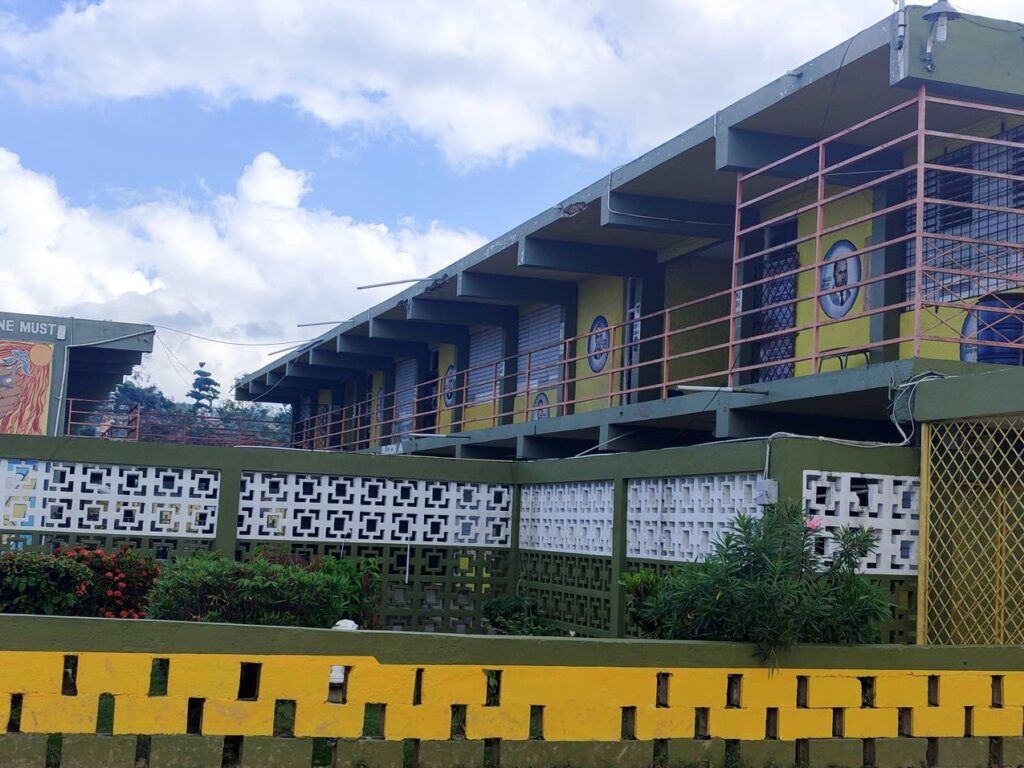
    In an extraordinary display of resilience, multiple educational institutions in St James Parish, Jamaica, are proceeding with full class resumptions today despite sustaining catastrophic damage from Hurricane Melissa two months prior. Among the most severely impacted schools reopening are Maldon High and Catherine Hall Primary, whose administrators acknowledge operating far from ideal conditions while implementing comprehensive contingency measures.

    Maldon High Principal Janet Manning confirmed the school remains substantially below full operational capacity but emphasized their commitment to creating a safe learning environment. “We are nowhere near 100 percent readiness, but we’re addressing critical priorities,” Manning stated, detailing extensive roof damage from the Category 5 hurricane that struck October 28. The institution has implemented temporary roofing solutions using tarpaulins and conducted intensive sanitization campaigns to ensure health standards despite ongoing infrastructure challenges.

    The school faces additional complications including complete power outage throughout the region, necessitating reliance on donated generators for electricity. Accessibility presents another significant hurdle as the primary access road collapsed during the storm, requiring coordinated transportation alternatives through the rural school bus system to ensure student attendance.

    Meanwhile, Catherine Hall Primary School, located in one of the most devastated communities, will receive crucial psychosocial support from UNICEF representatives who will remain on campus for four to six weeks. Principal Kay-Esther Malcolm highlighted the traumatic impact on students, many of whom lost uniforms, textbooks, and home structures during the disaster. “Many children arrive with nothing except their home structures intact,” Malcolm noted, emphasizing the urgency of educational continuity particularly with impending Primary Exit Profile examinations.

    The school endured catastrophic flooding that left classrooms buried under mud deposits, with kindergarten facilities and the cafeteria suffering particularly severe damage. Despite these challenges, staff conducted extensive cleanup operations throughout the weekend, with final deep-sanitization procedures completed last Friday in preparation for today’s reopening. Malcolm acknowledged the critical assistance received from Barracks Road Primary School in Montego Bay, which temporarily accommodated their sixth-grade students during the worst of the recovery period.