作者: admin

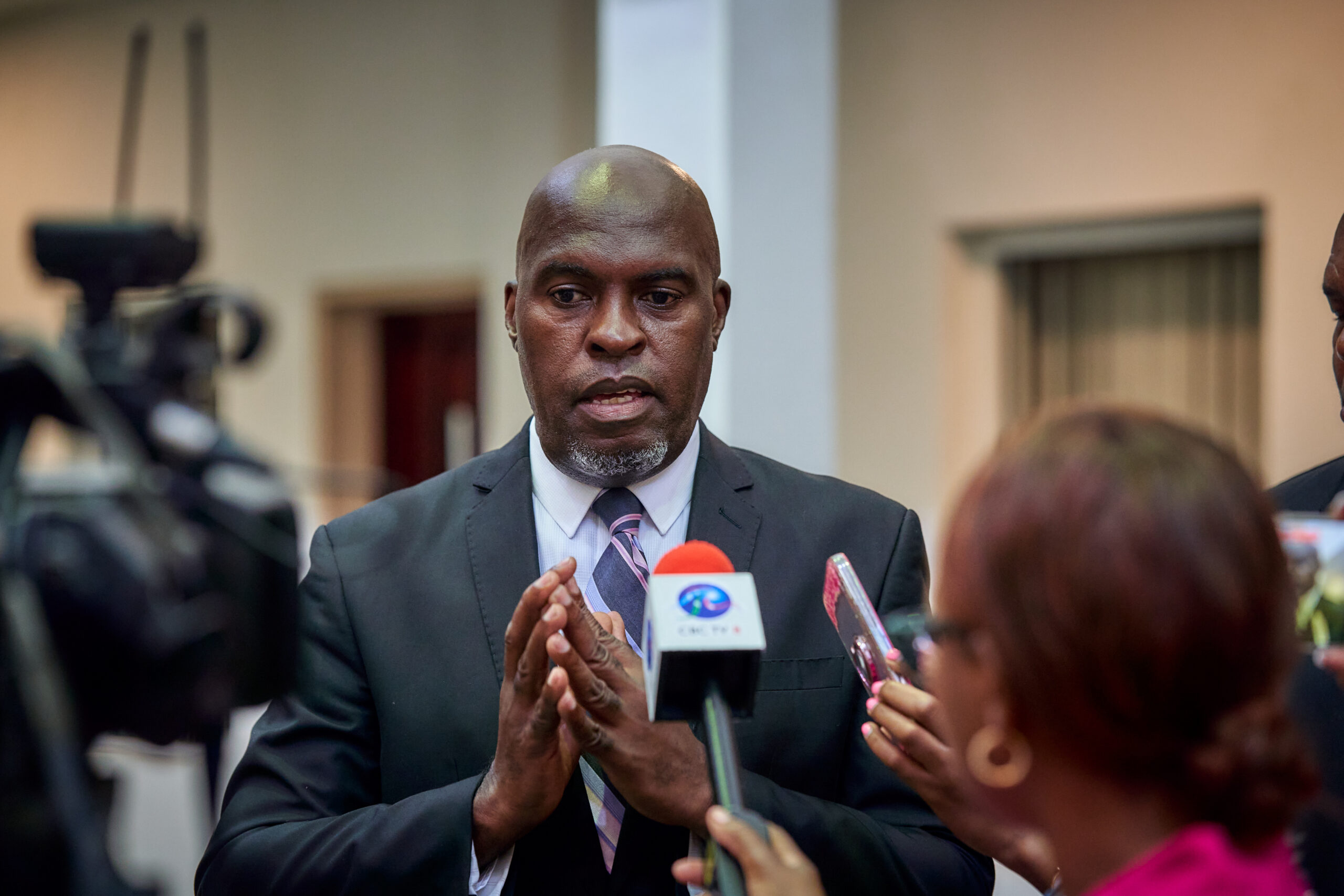
  • Haitian group welcomes US immigrant rights protection task force

    Haitian group welcomes US immigrant rights protection task force

    In a bold rebuke of harsh federal immigration policies, Maryland Governor Wes Moore has signed an executive order launching the Maryland Immigrant Rights Protection Task Force, a move that has earned widespread praise from immigrant advocacy organizations across the country.

    Based in California, the Haitian Bridge Alliance (HBA), a leading group focused on defending the rights of Haitian and Caribbean immigrant communities, has lauded Moore’s action as a critical stand for justice at a moment when immigrant populations across the United States face growing hostility from the Trump administration.

    The 12-month interagency task force will bring together multiple state bodies, including the Maryland Attorney General’s office, to coordinate cross-system efforts to shield immigrant residents from widespread harm, including fraud, economic exploitation, and systemic discrimination. Speaking to the Caribbean Media Corporation (CMC) from San Diego, HBA Executive Director Guerline Jozef emphasized that the new initiative arrives at an urgent turning point for vulnerable immigrant communities.

    “Across the nation, immigrant groups are facing increasingly sophisticated scams engineered by bad actors who exploit their fear of deportation, on top of the Trump administration’s draconian, racist policies that target and persecute immigrant communities,” Jozef explained. “This task force is both a protection for our communities and a direct response to these harmful actions. Over the next year, its core work will focus on strengthening existing safeguards and enforcing accountability for those who harm immigrants.”

    Jozef commended Moore for taking decisive, proactive action to protect immigrant families, noting that the executive order sends an unmissable message: all people residing in Maryland, regardless of immigration status, deserve dignity, safety, and equal protection under the law. “By proactively addressing the unique challenges immigrant communities face and holding bad actors accountable, Maryland is showing the country what courageous, principled leadership looks like,” she added. She also reaffirmed HBA’s longstanding commitment to partnering with policymakers, community organizers, and local leaders across the U.S. to advance policies that protect the rights and well-being of all immigrants.

    For his part, Governor Moore highlighted the massive, underrecognized contributions that immigrants make to Maryland when he signed the order. Immigrants make up roughly 17% of the state’s total population and account for nearly 22% of Maryland’s entire labor force, meaning they are a core pillar of the state’s economic and social fabric.

    “Despite the enormous contributions immigrants make to our state’s economic, social, and cultural life, many immigrant Marylanders have faced systemic discrimination and substandard access to critical services for decades, from legal support to employment opportunities and housing,” Moore said. “More recently, we have seen a sharp rise in predatory new schemes that target immigrants, who are often too fearful of federal immigration enforcement to report abuse to authorities.”

    The governor stressed that this exploitative activity does not only harm immigrant families—it also undermines fair market competition, distorts local economies, and erodes public safety for all Maryland residents. “Our immigrant communities make Maryland a better, stronger state. I have been clear: we will not stand idly by while bad actors prey on members of our community,” Moore said. “By forming this task force, we are demonstrating the unity and strength of our state when we stand together against injustice.”

    The new executive order follows Moore’s pledge to address the fraud and exploitation of immigrant residents during his annual State of the State address earlier this year. This is not the first pro-immigrant action Moore has taken: earlier in 2025, he signed legislation designating schools and hospitals as “safe spaces” that are off-limits for federal civil immigration enforcement, and banned state and local governments from deputizing local law enforcement to carry out federal immigration actions. In February, Moore also publicly raised objections to the Department of Homeland Security’s plan to develop and operate an ICE detention facility near Williamsport, in a letter sent to then-DHS Secretary Kristi Noem.

    The task force will be chaired by Moore’s own Office of Immigrant Affairs, and its work will center on addressing rising exploitation, strengthening anti-discrimination protections, and coordinating state resources to better serve immigrant communities across Maryland.

  • Thirty-four foetuses found in Polish doctor’s garden

    Thirty-four foetuses found in Polish doctor’s garden

    A high-profile criminal investigation has roiled Poland following the shocking discovery of 34 buried human foetuses in the backyard of a former residence of a 57-year-old medical pathologist, who has since been arrested and placed in pre-trial detention, Polish law enforcement officials confirmed Monday.

    The case, unfolding in the deeply Catholic southeastern region of the country, has sparked fierce public debate amid Poland’s already strict abortion regulations, with many members of the public questioning how a licensed medical professional could access the biological material for unapproved personal use. The pathologist, identified only as Magdalena H. in line with Polish privacy legislation and who has no prior criminal record, is suspected of conducting unauthorized experiments with the foetuses. If convicted on all charges, she faces a maximum sentence of 12 years behind bars.

    Prosecutors have clarified that so far, no evidence has emerged to link the foetuses to illegal abortions. The formal charges brought against the specialist include desecration of human corpses, improper management of medical waste, and illegally abandoning hazardous biological materials in an unregulated site.

    The investigation was launched last week, when construction workers carrying out renovations at the property in the small village of Lutoryż tipped off local prosecutors about the presence of suspicious medical waste. Authorities launched a large-scale search operation involving dozens of police officers, ground-penetrating radar and cadaver dogs, which uncovered the 34 foetuses buried in the garden.

    District Prosecutor’s Office spokesman Krzysztof Ciechanowski told reporters that the biological material was most likely collected and used by the detained pathologist to conduct private off-site testing. Unnamed sources close to the investigation told Polish outlet Radio Eska that Magdalena H. removed the foetuses from the Rzeszow hospital where she worked during the COVID-19 pandemic to conduct personal research at her private property.

    Alongside the human remains, search teams also recovered tens of thousands of prepared microscope slides, paraffin blocks for tissue sampling, and partial fragments of related medical documentation, Ciechanowski confirmed. The pathologist was taken into custody on Friday, and a court approved a three-month pre-trial detention period to prevent her from interfering with the ongoing investigation.

    After being formally presented with the charges, Magdalena H. did not enter a guilty plea. However, the prosecutor’s spokesman confirmed that she has acknowledged she personally transported the foetuses and other medical waste to the property and buried them herself. Investigators are still working to identify the origins of the foetuses, and have not yet confirmed whether the pathologist acted alone or had accomplices.

  • Puerto Plata to host PAMAC Cruise Summit 2026

    Puerto Plata to host PAMAC Cruise Summit 2026

    The Dominican Republic’s coastal city of Puerto Plata has earned the right to host the 2026 PAMAC Cruise Summit, one of the cruise sector’s most high-profile international gatherings organized by the Florida-Caribbean Cruise Association (FCCA). Scheduled to take place from June 22 to 26, 2026, the summit will draw top-level attendees from across the Caribbean and Latin America, including C-suite executives from major cruise lines, senior tourism government officials, infrastructure investors, and other core industry stakeholders.

    The official confirmation of the host selection was delivered by Carlos Atahualpa Paulino, the Dominican Republic’s Regional Tourism Director. Paulino emphasized that this designation marks a transformative milestone for both Puerto Plata and the entire country, noting that the summit will thrust the destination into the global cruise tourism spotlight. This global attention will highlight Puerto Plata’s rapidly expanding reputation as a top-tier Caribbean cruise port and sought-after travel destination.

    Local and national tourism authorities credit the successful bid to coordinated efforts spearheaded by Dominican Tourism Minister David Collado, as well as the longstanding collaborative partnership between the Dominican government and the FCCA. Economists and industry analysts project that the five-day event will deliver substantial tangible economic benefits to the region. These gains include boosted hotel occupancy rates, increased non-resident spending, and expanded revenue streams for local transportation providers, eateries, retail businesses, and tourism-focused service sectors that form the backbone of Puerto Plata’s economy.

    Beyond the immediate economic injection that the summit will bring, industry leaders expect the event to deliver long-term strategic advantages for the destination. It will elevate Puerto Plata’s international brand recognition, draw new foreign and domestic investment in cruise and general tourism infrastructure, and solidify the Dominican Republic’s standing as one of the Caribbean’s dominant cruise tourism hubs. Additionally, the summit will serve as a critical strategic platform to showcase the country’s modern tourism infrastructure to global decision-makers and deepen long-standing commercial ties with the world’s largest cruise operating companies.

  • Children’s advocacy group calls for online safety framework amid proposal to restrict social media

    Children’s advocacy group calls for online safety framework amid proposal to restrict social media

    KINGSTON, Jamaica — Jamaica’s ongoing discussion around youth digital safety has gained a new layer of input, as the Fi We Children Foundation (FWCF), a prominent local child rights advocacy organization, has pushed back against the narrative that limiting children’s access to social media alone can address growing online threats to young people. The group issued its formal response Monday after Jamaican Health Minister Dr. Christopher Tufton recently announced the government was exploring new access restrictions for minors on social media platforms.

    While FWCF openly welcomed the government’s growing recognition of the urgent need to address online harm to children, the organization emphasized that incremental access limits cannot deliver the meaningful, long-term protection young Jamaicans need in an increasingly digital world. Today, children interact with digital platforms for education, social connection, and recreation from a young age, making piecemeal restrictions an incomplete solution that fails to address the root causes of online danger.

    Instead, FWCF argues that robust, holistic change is required: this framework must center on updated national legislation, greater corporate accountability from global technology firms, and digital spaces intentionally built around the unique developmental needs and rights of children.

    At the top of the organization’s policy agenda is urgent legislative reform, specifically targeted amendments to Jamaica’s existing Child Care and Protection Act (CCPA). FWCF stresses that existing legal protections for children have not kept pace with rapid technological innovation, and the law must be updated to explicitly codify protections against the full range of modern online harms facing minors, to guarantee children’s equal rights to safety both offline and online.

    FWCF has laid out six core pillars for its proposed regulatory reform, each designed to shift the default of digital platforms from profit-driven engagement to child-centered safety. First, the group requires mandatory age-appropriate design for all major digital services, requiring platforms to prioritize children’s well-being over the business model of maximizing user engagement and addictive scrolling behavior. Second, child accounts must be set to the strongest possible privacy defaults by default, including automatic disabling of location tracking and built-in restrictions on unsolicited contact from unknown users. Third, the commercial collection and use of children’s personal data for behavioral profiling must be banned outright to stop exploitative targeting of minors. Fourth, platform algorithms must be adjusted to prioritize developmentally appropriate, educational, and creative content for children, while actively filtering out harmful material including content promoting self-harm, eating disorders, and sexually explicit content unsuitable for minors. Fifth, technology firms must be assigned a statutory legal duty of care, requiring companies to proactively identify, assess, and mitigate potential harms to children that may arise from their products and services. Finally, independent regulatory oversight must be strengthened, giving government regulators clear authority to conduct compliance audits, enforce existing rules, and deliver meaningful remediation to children when harm does occur.

    The advocacy group also grounded its demands in international human rights framework, noting that the United Nations Office of the High Commissioner for Human Rights (OHCHR) reaffirmed in 2026 that all fundamental children’s rights recognized under international law apply fully in digital spaces. As a signatory to the UN Convention on the Rights of the Child, Jamaica is legally bound to uphold two core principles relevant to digital safety: Article 3 requires the state to prioritize the best interests of the child in all policy decisions, while Article 5 mandates respect for children’s evolving capacities as they grow and develop.

    “The digital world should be designed with children in mind,” the FWCF statement said. “Children have the right not only to protection from harm but also to participation, information, privacy, and development in online spaces.”

    The organization closed by urging the Jamaican government to pursue evidence-based policy making that balances the urgent need for child protection with the full spectrum of children’s digital rights. Any new restrictions on child social media access, FWCF emphasized, must be paired with sweeping legal reform and stricter legal obligations for technology companies operating in Jamaica.

    “Every child deserves a safer internet — one built for children, not merely one that excludes them,” FWCF said.

  • Shaggy’s Boombastic single hits 2x platinum in New Zealand

    Shaggy’s Boombastic single hits 2x platinum in New Zealand

    Three decades after it first hit commercial airwaves, one of reggae-dancehall’s most enduring hits continues to rack up historic milestones. On June 11, Shaggy’s genre-defining title track *Boombastic* — pulled from his third studio album of the same name — was officially awarded 2x platinum certification by music industry authorities in New Zealand. This distinction marks the track has moved more than 60,000 combined units, counting both traditional sales and streaming equivalent units.

  • UK PM announces ban on social media for under-16s

    UK PM announces ban on social media for under-16s

    LONDON, United Kingdom – In a landmark policy announcement made from Downing Street on Monday, British Prime Minister Keir Starmer has unveiled plans to introduce a full national ban on social media use for children under the age of 16, framing major platforms as a direct threat to young people’s mental wellbeing.

  • Dominican Republic to host Ibero-American film industry meetings

    Dominican Republic to host Ibero-American film industry meetings

    The Caribbean nation of the Dominican Republic is set to welcome hundreds of regional media and cultural leaders in mid-2026, after being selected to host two of Ibero-America’s most important audiovisual industry gatherings. From June 22 to 26, the Hemingway Club in the coastal community of Juan Dolio will serve as the primary venue for both the 48th Ordinary Meeting of the Conference of Audiovisual and Cinematographic Authorities of Ibero-America (CAACI) and the annual Ibermedia Program Meeting. Local organizers, led by the country’s Ministry of Culture and General Directorate of Cinema (DGCINE), say the selection cements the Dominican Republic’s rising influence across the regional film and media landscape.

    The five-day event will draw top film regulators, government cultural delegates, and independent audiovisual sector executives from more than 20 Ibero-American nations. Attendees will dedicate time to collaborative discussions across a range of pressing industry topics, including frameworks for deeper cross-border cooperation, expanded routes for regional film circulation across international markets, new avenues for collaborative co-production projects, and actionable strategies to boost the resilience and growth of the audiovisual sector across the region.

    Marianna Vargas Gurilieva, Director General of DGCINE, emphasized that the decision to hold the summits in the Dominican Republic is far more than a logistical arrangement: it represents a vote of confidence from the entire Ibero-American audiovisual community in the country’s trajectory, and formalizes its standing as a central, strategic player in the regional industry. This 2026 gathering will also mark an unprecedented milestone for the Ibermedia Program, the leading regional funding and support initiative for Ibero-American cinema. For the first time since the program’s founding in 1997, member nations will gather to elect a new technical and executive secretary, a process that will shape the program’s direction for years to come.

    Local cultural authorities have framed the hosting opportunity as long-overdue international recognition of the Dominican film industry’s rapid progress over the past decades, as well as the country’s expanding role in global cultural cooperation frameworks. To complement the official working meetings, organizers have planned a public-facing Ibero-American Film Series, which will screen standout productions from across the region at three iconic Dominican venues: the Cinemateca Dominicana, the historic Fortaleza Ozama, and the host venue Hemingway Club. The film series is designed to open the summits to local audiences and deepen cross-cultural connection through the shared art of cinema.

  • Dominican Defense Minister meets with U.S. Southern Command delegation

    Dominican Defense Minister meets with U.S. Southern Command delegation

    In high-level diplomatic defense talks held in Santo Domingo, senior military leaders from the Dominican Republic and the United States have moved to solidify decades of collaborative ties, reaffirming their shared commitment to deepening bilateral military cooperation. The gathering brought together Dominican Republic Defense Minister Carlos Antonio Fernández Onofre with a high-ranking delegation from United States Southern Command, headed by the command’s Deputy Commander Evan Pettus and senior enlisted leader Rafael Rodríguez.

    Discussion at the meeting centered on multiple priority areas designed to strengthen collaborative work across the two nations’ armed forces. Key agenda items included advancing joint action in regional security, expanding tailored military training opportunities, boosting the operational capacity of both defense forces, developing advanced professional military education programs, and improving tactical interoperability between the two countries’ military units. Beyond these core focus areas, participating officials also exchanged perspectives on new initiatives to upgrade military readiness, drive forward the modernization of defense infrastructure and equipment, and support continuous professional growth for service members from both nations.

    Both delegations used the meeting to restate their shared dedication to growing joint defense programs that deliver tangible benefits to regional stability. Leaders emphasized that the long-standing strategic partnership between the Dominican Republic and the United States has been carefully built over generations of collaboration, spanning everything from targeted technical assistance and large-scale training initiatives to regular professional exchanges between military personnel. This latest high-level visit serves as a public demonstration of the ongoing strength of this defense relationship, and signals both nations’ intent to continue expanding cooperative work to address shared security challenges in the region.

  • Banco Popular to channel US$50 million from ICO into tourism, energy, and strategic sectors

    Banco Popular to channel US$50 million from ICO into tourism, energy, and strategic sectors

    In a move designed to deepen bilateral economic cooperation between the Dominican Republic and Spain, Banco Popular Dominicano has secured a new flexible financing agreement worth up to $50 million from Spain’s state-owned Official Credit Institute (ICO). This collaboration is targeted at empowering business initiatives that strengthen commercial and investment links between the two Iberian-American nations, with core goals including boosting productive capital flows, simplifying cross-border trade operations, and opening up new accessible financing channels for enterprises active in both markets.

    This latest agreement marks the third round of financing that Banco Popular has obtained through ICO’s International Channel Line program. Cumulatively, the Spanish public financial institution has now committed a total of $150 million to the Dominican bank across the three partnership rounds. The ongoing collaboration has already helped hundreds of companies across both nations address working capital gaps, meet urgent liquidity requirements, and scale up bilateral export activities that drive job creation and economic output on both sides.

    The newly allocated $50 million will be channeled to high-priority strategic sectors that underpin both economies. Key target areas include tourism, power generation, infrastructure construction, real estate development, and hospitality – all critical growth drivers for the Dominican Republic. Additional funding will also be directed to forward-looking projects focused on environmental sustainability, improved energy efficiency, technological innovation, and widespread digital transformation across industries. Banco Popular emphasized that this financing framework aligns fully with the institution’s long-standing pledge to advance responsible banking practices and inclusive, sustainable economic development across the Dominican Republic.

    This new agreement builds on Banco Popular’s already robust track record of supporting the country’s productive sector. Official data from the Dominican Superintendency of Banks shows that as of March 2026, the institution’s total business loan portfolio hit RD$395 billion, with nearly 45 percent of that sum – equal to RD$178.3 billion – allocated to micro, small, and medium-sized enterprises (MSMEs), which form the backbone of the Dominican economy. Beyond direct financing, Banco Popular supplements its lending support with a range of auxiliary services, including user-friendly digital banking solutions for businesses, targeted skills training programs for company leaders, and dedicated initiatives to nurture new entrepreneurship across the country.

  • MSF warns of ‘dangerous gaps’ in Ebola response in DR Congo

    MSF warns of ‘dangerous gaps’ in Ebola response in DR Congo

    GENEVA, SWITZERLAND – International medical humanitarian organization Doctors Without Borders (known by its French acronym MSF) sounded an urgent alarm Monday, highlighting that devastating, unaddressed gaps continue to hobble containment efforts against a fast-moving Ebola outbreak that has already claimed more than 180 lives in the Democratic Republic of the Congo.

    While global and local response teams have expanded their operations substantially since the outbreak was formally declared in the vast Central African nation on May 15, MSF emphasized that the full magnitude of the public health crisis remains shrouded in uncertainty. A month into the official response, the spread of the virus is still outpacing intervention work, according to Kate White, MSF’s emergency medical coordinator for the DRC.

    “No-one knows the true scale or exactly where the disease is spreading,” White stated in an official briefing. “What we do know is that most treatment centres in Ituri province are overwhelmed; many of our patients arrive at a late stage of the disease, and the majority were never identified or monitored as contacts before seeking care.”

    Latest official data from the World Health Organization puts the current confirmed caseload at 782 infections and 181 deaths within the DRC, with an additional 19 cases and two fatalities recorded in neighboring Uganda. MSF cautioned that actual infection and death numbers are almost certainly far higher than the confirmed counts.

    The current outbreak is driven by the Bundibugyo strain of Ebola, a variant for which there are no widely approved vaccines or targeted treatments. The epicenter of the outbreak is northeastern DRC’s Ituri province, with spillover cases also detected in the adjacent North Kivu and South Kivu provinces. Ebola, which spreads through close physical contact and exposure to infected bodily fluids, causes life-threatening hemorrhagic fever; public health investigators confirm the virus circulated undetected for several weeks in local communities before the outbreak was formally announced.

    Persistent insecurity across affected regions has blocked access to many at-risk communities, MSF reported. Even in areas with relatively stable security conditions, core response work including case detection, patient testing, contact identification, and transmission monitoring remains inadequate, the organization added.

    White pointed to diagnostic testing as one of the most crippling weaknesses in the current response. While laboratory capacity has been expanded in recent weeks and mobile testing kits specifically designed for the Bundibugyo strain have started arriving in eastern DRC, many remote communities still lack access to these critical tools. At the same time, overstretched testing infrastructure has led to substantial delays in returning results to treatment facilities, and North Kivu currently operates just a single laboratory capable of processing Ebola test samples.

    “Without faster and more widely available testing, we will struggle to detect cases early enough to contain the outbreak,” White warned.

    Over the past half century, Ebola outbreaks have killed more than 15,000 people across Africa. The DRC’s previous deadliest outbreak, recorded between 2018 and 2020, killed nearly 2,300 people among 3,500 confirmed cases. Infectious disease experts have repeatedly warned that without immediate, targeted action to close response gaps, the current outbreak could grow to match the scale of the 2014 West Africa Ebola epidemic, which killed more than 11,000 people and infected more than 28,000 across the region.