作者: admin

  • FLASH: Guide to getting your tickets to the 2026 FIFA World Cup

    FLASH: Guide to getting your tickets to the 2026 FIFA World Cup

    As Haiti’s national football team prepares for its historic participation in the 2026 FIFA World Cup, the Haitian Football Federation has released comprehensive guidelines for supporters seeking to secure match tickets through official channels. The ticket acquisition process operates exclusively through FIFA’s digital platform at FIFA.com/tickets, with authorities strongly cautioning against unauthorized resale websites that cannot guarantee stadium access.

    The registration protocol requires prospective attendees to establish an account on FIFA’s official portal by selecting ‘Tickets’ followed by ‘Create an account,’ meticulously completing personal information fields, and executing email validation to activate the account. Without successful verification, application submission remains impossible.

    Rather than conventional immediate purchasing, FIFA employs a Random Selection Draw mechanism designed to ensure equitable distribution. The current application phase concludes precisely on Tuesday, January 13, 2026 at 11:00 AM Eastern Time, with banking verification implemented to deter speculative practices. Successful applicants will receive notification commencing February 5, 2026, accompanied by confirmation emails and portal updates.

    Payment protocols vary according to preselected options: automatic debit arrangements process immediately upon selection, while manual payment requires swift completion within a constrained timeframe. When configuring ticket requests, supporters must designate Haiti as their preferred team and select specific matches, accompanied by seating category preferences ranging from Category 1 (premium lower stands) to Category 4 (economy upper stands). Financial transactions exclusively accept Visa and Mastercard payments.

    Group seating arrangements necessitate identical match selections, equivalent ticket categories, and mutual application number linkages among all party members. Critical administrative note: submitted applications become immutable, requiring complete cancellation and reapplication for any modifications. Ticket limits fluctuate according to match significance and are explicitly displayed during the selection process.

    The Haitian Football Federation offers supplemental assistance through partnership@fhf.ht and secretariat.general@fhf.ht for citizens experiencing technical challenges or requiring clarification beyond FIFA’s comprehensive FAQ section.

  • Several injured after bus accident in Higüey

    Several injured after bus accident in Higüey

    A public transportation vehicle carrying hotel workers veered off course and crashed in the eastern Dominican Republic on Sunday, resulting in multiple casualties. The incident occurred near the entrance to Anamuya, a coastal town within the province of La Altagracia, a region renowned for its tourism infrastructure.

    According to preliminary investigations by local authorities, the commercial bus was navigating a sharp curve when the driver reportedly lost control of the vehicle. This loss of control precipitated a collision with a large roadside advertising billboard. The impact caused significant damage to the front section of the bus.

    Emergency services were promptly dispatched to the scene to provide medical assistance and transport the injured to nearby medical facilities. While official sources have not released a finalized count of those harmed or their specific conditions, initial reports confirm that all passengers were employees of local hospitality establishments concluding their work shifts. The investigation into the precise cause of the accident, including potential factors like mechanical failure or road conditions, remains ongoing as authorities work to notify the victims’ families.

  • Information from the Revolutionary Government on combatants who fell in the line of duty in Venezuela

    Information from the Revolutionary Government on combatants who fell in the line of duty in Venezuela

    Cuba has confirmed the deaths of 32 military personnel in what it describes as a “criminal act of aggression and state terrorism” by the United States government against Venezuelan territory. The incident occurred during early hours of January 3, 2026, when Cuban combatants were reportedly conducting security operations at the request of Venezuelan authorities.

    According to official statements from the Cuban government, the deceased personnel were serving with the Revolutionary Armed Forces and Ministry of the Interior on cooperative defense missions in the Bolivarian Republic of Venezuela. The casualties resulted from both direct combat engagements with American forces and aerial bombardment of military facilities where Cuban troops were stationed.

    The Cuban government emphasized that its personnel demonstrated “dignity and heroism” during what it characterized as fierce resistance against the attackers. Following verification procedures, all affected families have been notified and have received personal condolences from Cuban leadership, including Army General Raúl Castro Ruz and President Miguel Díaz-Canel Bermúdez.

    The Revolutionary Government has announced plans to organize appropriate memorial actions to honor the fallen combatants, whom they describe as having embodied the solidarity principles valued by millions of Cubans. This incident represents a significant escalation in the ongoing geopolitical tensions between Cuba, Venezuela, and the United States.

  • President of the Republic Declares National Mourning

    President of the Republic Declares National Mourning

    Cuban President Miguel Díaz-Canel Bermúdez has issued Presidential Decree 1147, establishing a period of national mourning following the deaths of 32 Cuban military personnel in Venezuela. The solemn observance will commence at 6:00 a.m. on January 5 and continue through midnight on January 6, 2026.

    The decree, published in Cuba’s Official Gazette, comes in response to what the Cuban government describes as a criminal attack against Venezuela by the United States government on January 3, 2026. According to the presidential statement, the deceased Cubans were fulfilling missions at the request of Venezuelan counterpart agencies when they perished during combat operations or facility bombings.

    President Díaz-Canel characterized the fallen personnel as having fulfilled their duties with dignity and heroic resistance, noting that they embodied the solidarity principles valued by millions of Cubans. The declaration was made under constitutional authority granted by Article 125 of the Cuban Constitution and relevant provisions of Law 136 from October 28, 2020.

    During the mourning period, the Lone Star Flag will be flown at half-mast on all public buildings and military institutions nationwide. Additionally, all public entertainment and festive activities have been suspended throughout the two-day observance.

    The implementation and enforcement of these measures fall under the responsibility of ministers from the Revolutionary Armed Forces, Interior Ministry, and Foreign Affairs Ministry. The decree was formally issued from the Palace of the Revolution on January 4, 2026, designated as the ‘Year of the Centennial of Commander-in-Chief Fidel Castro Ruz.’

  • There can be no silence or acceptance in the face of this act of state terrorism

    There can be no silence or acceptance in the face of this act of state terrorism

    Havana witnessed massive demonstrations over the weekend as Cuban leadership and citizens united in vehement condemnation of what they termed “fascist” military aggression against Venezuela. The attack, which reportedly resulted in civilian casualties, has sparked international concern and drawn parallels to historical imperial interventions.

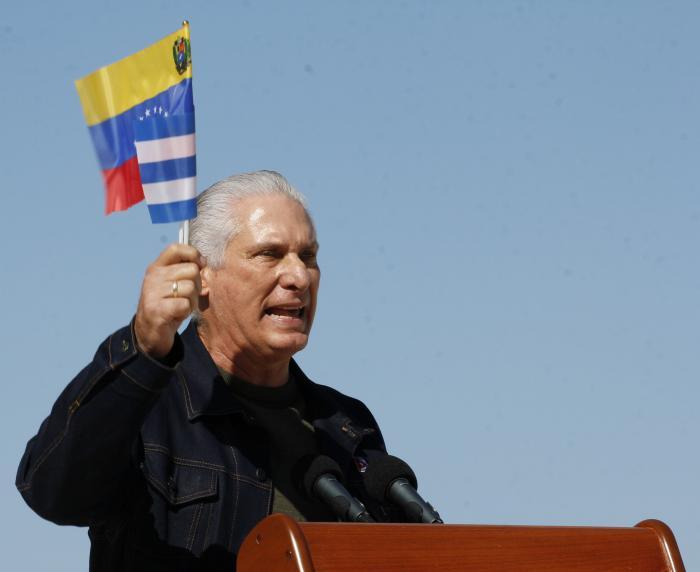
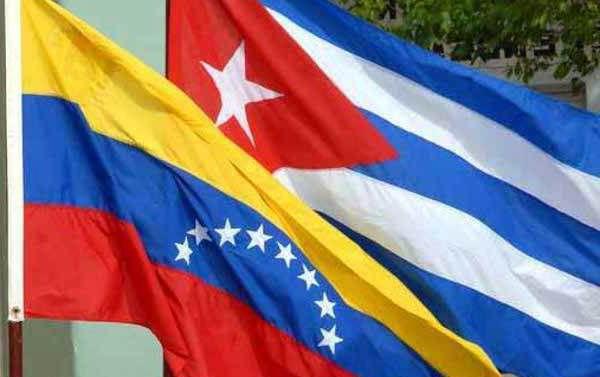
    President Miguel Díaz-Canel Bermúdez joined citizens at the Anti-Imperialist Tribune to protest both the assault on Venezuelan sovereignty and the alleged kidnapping of President Nicolás Maduro and First Combatant Cilia Flores. The gathering represented a significant show of solidarity between the two nations, with participants echoing the historic slogan “Cuba and Venezuela, one flag.”

    Gerardo Hernández Nordelo, national coordinator of Cuba’s Committees for the Defense of the Revolution, delivered a stark warning about the consequences of imperial aggression. “Humanity must raise its voice and tell the empire that we are in the 21st century,” he declared, criticizing unilateral actions that violate international norms. He emphasized that the bombs striking Venezuelan cities “did not ask who was a Chavista and who was not when they exploded,” highlighting the indiscriminate nature of the attacks.

    Cultural and political leaders framed the conflict as a fundamental struggle between opposing forces. Abel Prieto Jiménez, president of Casa de las Américas, characterized it as a battle between “the forces of hatred, war, and death and the forces of sovereignty, dignity, and life.” He invoked Fidel Castro’s famous statement on Vietnam—”We are willing to give even our own blood”—applying it to the current Venezuelan crisis.

    Fernando González Llort of the Cuban Institute of Friendship with the Peoples described the operation as a “cowardly and vile attack” that constitutes “a heinous assault on the aspiration to build a zone of peace.” He warned that the aggression transcends Venezuela’s borders and represents a direct challenge to international law.

    The scientific community joined the condemnation, with prominent researcher Belinda Sánchez Ramírez contrasting Cuba’s medical missions with what she called “specialists who cause death and pain.” She warned that today’s target might be Venezuela, but tomorrow it could be “Cuba, Nicaragua, Mexico, or any country with natural resources or independence.”

    Medical worker Agnerys Cruz Rodríguez, who spent a decade serving in Venezuela, questioned the international community’s silence: “Where is the United Nations? Where are those who define themselves as defenders of peace?”

    Young activists highlighted patterns of imperial strategy, with Adriana Amore Moreno noting a “familiar sequence” of economic sanctions, media warfare, financial blockade, and finally direct aggression. She affirmed that “Venezuela is not alone, because its cause is our cause,” emphasizing that Venezuelan sovereignty remains inseparable from broader Latin American struggles.

  • APNU demands GY$2.7 billion govt accounting on markets, drainage

    APNU demands GY$2.7 billion govt accounting on markets, drainage

    Guyana’s political opposition has launched a formal demand for financial transparency regarding substantial government allocations for urban infrastructure projects. The A Partnership for National Unity (APNU) coalition is pressing the administration to provide complete public accounting for GY$2.7 billion (approximately US$13 million) designated for market rehabilitations and drainage improvements throughout Georgetown.

    APNU Parliament member Ganesh Mahipaul, who serves as the party’s local government spokesman, issued a formal statement expressing profound public dissatisfaction with the apparent lack of visible progress. “Citizens see little to no tangible improvement on the ground,” Mahipaul declared, highlighting the growing disparity between budget announcements and physical implementation.

    The political challenge emerges against a backdrop of ongoing urban tensions, including the recent removal of vendor stalls from outside Yhip’s Bakery on Robb and Alexander streets under a High Court order. While no APNU representatives were present during the demolition of these predominantly female-operated businesses, Mahipaul pledged his party’s continued advocacy for market vendors across the capital.

    Citing official responses provided during February 2025 Budget Estimates discussions, the opposition lawmaker detailed specific allocations that remain unaccounted for, including GY$40 million for Bourda Green project design consultancy, GY$260 million for phase one construction of Bourda Green, and substantial sums earmarked for market rehabilitations in East Ruimveldt, La Penitence, and Stabroek areas.

    Mahipaul described concerning conditions persisting at multiple market locations, with Bourda Market reportedly remaining in “deplorable condition” while Merriman’s Mall shows “no transformation.” He noted widespread infrastructure deficiencies, sanitation challenges, and unsafe environments for both vendors and shoppers throughout Georgetown’s commercial spaces.

    The APNU demands extend beyond mere financial accounting, seeking detailed explanations of specific works completed under each budget line item, expenditure rates, current fund locations, contract award details, and explanations for missed completion timelines. The party emphasizes that ministerial consultations and public walkabouts cannot substitute for concrete deliverables, particularly when billions of dollars and public welfare are at stake.

    The infrastructure concerns are compounded by Georgetown’s persistent drainage problems, with many drains and trenches remaining choked by silt and solid waste despite recent desilting of some outfall channels to the Demerara River. During heavy rainfall, sections of Bourda Market reportedly flood with foul-smelling water, while clogged drains overflow throughout the commercial district.

    The opposition’s financial transparency demand arrives as Georgetown faces additional urban management challenges, including overflowing government-donated waste bins that have complicated drainage systems since late December 2025.

  • USA : Maduro and his wife will appear this Monday before a federal judge

    USA : Maduro and his wife will appear this Monday before a federal judge

    In an extraordinary development in international relations, Venezuelan President Nicolás Maduro and First Lady Cilia Flores are scheduled to appear before Federal Judge Alvin K. Hellerstein in Manhattan on Monday at 12:00 p.m. local time (17:00 GMT). This follows their dramatic capture by American military forces during an unprecedented operation in Caracas on January 3rd, 2026.

    The high-profile defendants currently remain detained at the Metropolitan Detention Center in Brooklyn, a high-security federal facility, while facing serious allegations from U.S. prosecutors. Maduro confronts four federal charges including criminal conspiracy, narcoterrorism, conspiracy to import cocaine, and weapons violations involving automatic firearms and explosive devices.

    According to court documents referenced by American media outlets, Flores faces accusations of providing both logistical and financial support to criminal organizations designated as terrorist entities by Washington.

    The recently unsealed indictment presents a comprehensive case alleging that Maduro personally led the ‘Cartel of the Suns’—a drug trafficking network whose name reportedly references Venezuela’s military leadership. Prosecutors assert this organization pursued dual objectives of personal enrichment and political consolidation while deliberately flooding American territories with cocaine, effectively weaponizing narcotics against the United States.

    Evidence detailed in the indictment outlines sophisticated alliances with multiple transnational criminal organizations including the FARC, ELN, Sinaloa Cartel, Los Zetas, and the Tren de Aragua Cartel. The documentation further describes exploitation of diplomatic privileges, government-controlled airports, and state-protected maritime routes for narcotics transportation.

    Official estimates from the State Department, cited within the legal filing, indicate that approximately 200-250 tons of cocaine transited through Venezuelan territory annually en route to the United States around 2020.

    This current indictment expands upon previous charges filed against Maduro in Manhattan during March 2020, which emerged from an extensive Drug Enforcement Administration (DEA) investigation encompassing similar allegations of narcoterrorism and cocaine importation conspiracies.

  • Our Lady of Fatima Parish Jubilee Festival of Lights

    Our Lady of Fatima Parish Jubilee Festival of Lights

    A groundbreaking artificial intelligence platform has demonstrated unprecedented capabilities in solving complex, multi-step problems, marking a significant leap forward in machine intelligence. The advanced neural network architecture, developed through collaborative research efforts, successfully processed and synthesized information from diverse data sources with remarkable precision.

    The system’s breakthrough performance stems from its novel approach to contextual understanding and pattern recognition. Unlike conventional AI models that specialize in narrow tasks, this platform integrates multiple cognitive functions to emulate human-like reasoning processes. Researchers observed the technology successfully navigating intricate scenarios requiring real-time adaptation and strategic decision-making.

    Industry experts highlight the technology’s potential applications across critical sectors including healthcare diagnostics, climate modeling, and logistics optimization. Early testing indicates the system could reduce analysis time for complex scientific problems from months to hours while maintaining exceptional accuracy standards.

    This development arrives amid growing global investment in artificial intelligence infrastructure. The research team has implemented comprehensive ethical guidelines throughout the development process, addressing concerns about autonomous systems while promoting transparent AI advancement. Further validation studies are underway to prepare the technology for real-world implementation within the next fiscal year.

  • FLASH : Trump justifies the operation against Venezuela with a doctrine more than 200 years old

    FLASH : Trump justifies the operation against Venezuela with a doctrine more than 200 years old

    In a dramatic geopolitical development, former President Donald Trump has invoked a centuries-old foreign policy doctrine to rationalize recent U.S. military operations in Venezuela that resulted in the capture of Nicolás Maduro. During a January 3rd press briefing at his Mar-a-Lago estate in Florida, Trump resurrected the Monroe Doctrine—originally articulated in 1823—to validate American interventionism in the Western Hemisphere.

    The Monroe Doctrine, established by President James Monroe during a period of global transformation following Latin American independence movements, fundamentally distinguished between the ‘Old World’ (Europe) and the ‘New World’ (the Americas). It committed the United States to non-interference in European affairs while declaring the Americas closed to further colonization, positioning any European meddling as a direct provocation against U.S. interests.

    The doctrine was significantly expanded by President Theodore Roosevelt in 1904 through his ‘Roosevelt Corollary,’ which cast the United States as the ‘Policeman of the Americas.’ This amendment granted Washington purported authority to militarily intervene in Latin American nations during instances of perceived ‘governmental failure,’ setting precedents for actions ranging from the annexation of Puerto Rico to Cold War anti-communist operations.

    Trump’s contemporary application of this doctrine aligns with his administration’s newly articulated National Security Strategy, which emphasizes three core objectives: securing priority access to strategic resources (particularly Venezuelan oil reserves), stabilizing governments to reduce northward migration, and countering influence from global competitors like China and Russia in the region.

    The updated strategy explicitly states that the U.S. will prevent ‘non-hemispheric competitors’ from establishing military presence or controlling strategic assets in the Americas—a clear reference to China’s role as Venezuela’s primary oil purchaser. Trump’s vision appears to extend beyond Venezuela, with aspirations ranging from Greenland acquisition to Panama Canal reclamation, suggesting an expansionist reinterpretation of American sovereignty that challenges conventional geographical boundaries.

  • Maduro zit vast in Amerikaanse hechtenis, terwijl zijn aanhangers verzet zweren

    Maduro zit vast in Amerikaanse hechtenis, terwijl zijn aanhangers verzet zweren

    In an unprecedented military operation, former Venezuelan President Nicolás Maduro has been taken into custody at a New York detention facility awaiting trial on narcotics charges. The dramatic arrest, ordered directly by President Donald Trump, represents the most significant U.S. intervention in Latin America since the Panama invasion 37 years ago.

    Security footage showed the 63-year-old Maduro, blindfolded and handcuffed, being escorted through DEA headquarters in New York City. Despite his restrained condition, Maduro reportedly wished his captors “Happy New Year” upon arrival. He is scheduled to appear Monday before a federal court in Manhattan.

    The operation has triggered international consternation, with many world leaders expressing alarm at the extraordinary capture of a foreign head of state. Memories of recent U.S. interventions in Iraq and Afghanistan have heightened global concerns about the legal and geopolitical implications.

    In Venezuela, Maduro’s allies maintain control and have condemned the operation as an “imperialist kidnapping” aimed at seizing the country’s vast oil reserves. The streets of Caracas and other cities remained unusually quiet as citizens grappled with uncertainty, with many choosing to stay indoors amid the tense atmosphere.

    President Trump announced that the U.S. would assume temporary governance of the South American nation, which holds the world’s largest proven oil reserves. “We will run the country until we can ensure a safe, correct and wise transition,” Trump stated during a press conference at Mar-a-Lago, praising the operation that extracted Maduro from a secure location.

    In a surprising move, Trump dismissed the possibility of opposition leader María Corina Machado assuming presidency, citing insufficient support. This decision disappointed many in the Venezuelan diaspora who had hoped the Nobel laureate would lead a transitional government.

    The Venezuelan economy, once among Latin America’s most prosperous, has collapsed under Maduro’s leadership, triggering one of the largest migration crises in modern history. Approximately one-fifth of the population has fled the country.

    While many exiled Venezuelans expressed joy at Maduro’s removal, questions emerged about the legality of arresting a foreign leader and the practicalities of U.S. administration. Trump suggested American oil companies would return to rebuild Venezuela’s damaged energy infrastructure, though experts warn this could take years.

    The UN Security Council is scheduled to convene Monday to discuss the operation, which Secretary-General António Guterres described as “a dangerous precedent.” Russia and China, both key Venezuelan allies, strongly condemned the U.S. action, with Beijing demanding Maduro’s immediate release.

    Pope Francis expressed following events with “a concerned heart” and called for Venezuela to maintain independence while respecting human rights. “The welfare of the beloved Venezuelan people must prevail over any other consideration,” the pontiff stated.

    Back in Venezuela, security measures appeared somewhat relaxed despite the nervous atmosphere, with some businesses remaining open and residents continuing Sunday routines. The U.S. lifted Caribbean airspace restrictions that had canceled hundreds of flights following the operation.

    The long-term U.S. strategy remains unclear, with Trump’s comments about indefinite military presence echoing rhetoric from previous interventions that ultimately resulted in costly withdrawals after years of occupation.