作者: admin

  • Giraudel farmer harvests more than 250 pounds of seasoning pepper under ministry programme

    Giraudel farmer harvests more than 250 pounds of seasoning pepper under ministry programme

    The Caribbean island nation of Dominica’s Ministry of Agriculture, Fisheries, Blue and Green Economy is celebrating promising early outcomes from its newly launched Mini Seasoning Pepper Programme, after a South Region farmer delivered an impressive maiden harvest that validates the initiative’s strategic approach.

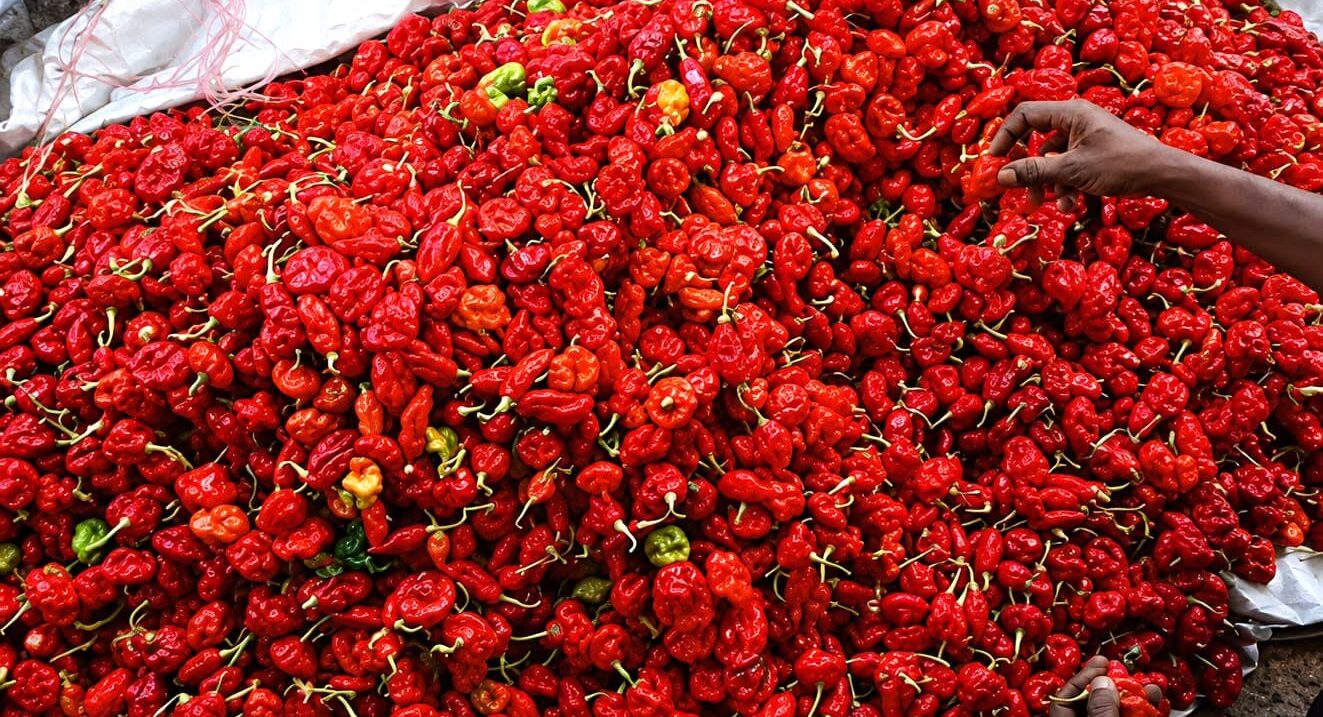
    Clint Pemberton, a grower based in Giraudel, has become the first participant in the programme to bring his crop to harvest, pulling more than 250 pounds of seasoning pepper from his plot. His successful yield comes as a tangible early proof of concept for the government-backed project, which is designed to lift local agricultural production by delivering targeted support to small-scale domestic producers.

    Unveiled earlier this year, the programme was crafted to address two key gaps in Dominica’s agricultural supply chain: first, to prevent potential seasoning pepper shortages for local agro-processors ahead of the annual Independence season celebrations, when demand for processed local goods spikes, and second, to boost consistent supplies of fresh seasoning pepper at DEXIA’s public fresh produce markets that serve local consumers.

    To set participating farmers up for success, the ministry provided each enrolled grower with 432 young seasoning pepper seedlings, alongside complimentary fertilizer to support healthy plant establishment and growth through the critical early development stages. Originally, the initiative set out to support 10 farmers to cultivate a combined total of one acre of pepper crops. However, following program adjustments to better align with farmer capacity and on-ground conditions, the target was revised to five farmers cultivating a total of half an acre.

    Ministry officials emphasize that Pemberton’s substantial first harvest is far more than a personal win for the grower: it demonstrates how targeted, strategic government support can empower local producers to scale their output, boost household incomes, improve livelihoods for farming communities, and strengthen Dominica’s broader food and nutrition security. As the country continues to build more self-reliant agricultural systems, this early success signals the value of small, targeted interventions in driving meaningful progress.

    The ministry also extended public recognition to the technical team that supported the programme’s rollout: Junior Officer Abna James, and Senior Officers Brent Symes and Delroy Williams, all of whom provided consistent on-ground technical guidance to participating farmers throughout the planting and growing process. Officials noted that the Mini Seasoning Pepper Programme is just one component of the government’s broader national strategy to expand local food production, reduce reliance on imported agricultural goods, and build a more resilient, climate-ready agricultural sector that can meet the needs of Dominica’s people for generations to come.


  • Green eyes future success following World Championship bronze

    Green eyes future success following World Championship bronze

    After a breakthrough performance that earned him a bronze medal in the men’s 200-meter event at the World Junior Athletics Championships held in Oregon, U.S.-based Barbadian sprinter Jayden Green touched down back on his home island to a rousing welcome late Tuesday night.

    Green and the rest of the Barbadian national contingent stepped out of the airport’s arrivals hall just minutes ahead of midnight, where cheering supporters and senior representatives from the Athletic Association of Barbados had gathered to celebrate the team’s successful run at the global under-20 competition.

    In interviews following his arrival, the young sprinter expressed satisfaction with his showing in Oregon, even as he revealed he is already looking ahead to a well-deserved break during the upcoming off-season to recharge ahead of future competitions.

    “There’s no better feeling than bringing another world-level medal back to my country, and earning a spot among the top under-20 sprinters on the global stage,” Green shared with reporters.

    The bronze medal in Oregon marks a significant turnaround for the athlete, who opened the 2024 season with underwhelming results that left him dissatisfied. After competing at the CARIFTA Games in Grenada and the domestic Barbados Grand Prix, Green openly admitted he was unhappy with his race times at both early-season events. Looking back, he credits his commitment to consistent training and sticking to his team’s planned process for delivering when it mattered most at the world championships.

    “For me, this result came down to showing up every day, staying consistent, and executing my race plan when it counted. Even though my final time in Oregon wasn’t as fast as I had hoped I would run, at the end of the day, it’s the medal that matters most in a championship setting,” Green said. “I knew going into the back half of the season that I would get another chance to compete for a medal, and I just had to stay ready to take advantage of the opportunity.”

    Framing his world junior bronze as a key stepping stone in his burgeoning athletic career, Green said he views the result as proof that he can compete with the world’s best young sprinters, and he is already confident he can deliver even stronger performances in future competitions.

    Opening up about the pressures of the 200m final, Green acknowledged that the race was far from an easy outing. He confessed to feeling nervous lining up against the top under-20 sprinters from around the globe, but worked to channel that energy into focus rather than letting it derail his performance.

    “I was definitely a little nervous going up against those guys, but at the end of the day, they’re just normal athletes like me,” he explained. “Even with the nerves, I just focused on blocking out the noise, sticking to my race plan, and listening to the advice my coaches had given me. It was an extra special feeling to be the only Caribbean competitor in that final and come home with a medal.”

  • NCCU encourages scholarship recipients to make the most of educational opportunities

    NCCU encourages scholarship recipients to make the most of educational opportunities

    On the Caribbean island of Dominica, the National Co-operative Credit Union (NCCU) has reaffirmed its long-standing commitment to accessible secondary education during its 2026 annual scholarship ceremony, held at the Dominica Public Service Union building in the capital city of Roseau.

    At the event, Delix St. Hilaire, NCCU’s Human Resources Assistant and a former scholarship recipient himself, addressed this year’s award winners, urging them to seize every opportunity created by the organization’s Secondary Scholarship Programme. St. Hilaire encouraged students to maintain consistent focus and pursue academic excellence throughout their secondary school careers, noting that the financial aid provided through the initiative has meaningfully reduced the educational cost burden that weighs on most parents and guardians across the island.

    What many attendees may not know is that NCCU’s investment in Dominican youth extends more than 16 years back. Since launching the programme, the credit union has awarded approximately 240 scholarships to deserving students across the country. For the 2025/2026 academic year alone, the institution allocated just over $136,000 to fund its scholarship sponsorship efforts, demonstrating its ongoing dedication to growing educational access for local communities.

    Today, the programme supports secondary students across all grade levels, with a longstanding naming tradition that dates back to 2011. Each scholarship is named in honor of an individual who made extraordinary contributions to the growth and development of Dominica’s credit union movement, preserving the legacies of key community leaders while supporting the next generation.

    St. Hilaire’s personal connection to the programme added a deeply personal touch to this year’s ceremony. Back in 2012, he was himself an NCCU Secondary Scholarship recipient. After receiving the financial support he needed to complete his secondary education, he went on to pursue higher education, and ultimately returned to work for the very institution that helped him achieve his academic and professional goals.

    His full-circle journey is held up by NCCU as a powerful example of how targeted educational support can empower young people to pursue their personal and professional ambitions, and in many cases, create opportunities for them to give back to their local communities through skilled, purpose-driven work. As the credit union continues to expand its programme year over year, it remains focused on its core mission of lifting up Dominican families and investing in the island’s future through education.

  • Green leads Tridents to winning CPL start

    Green leads Tridents to winning CPL start

    The 2024 Republic Bank Caribbean Premier League kicked off with a heart-stopping opening clash at Kingston’s Sabina Park on Tuesday night, where new Barbados Tridents captain Chris Green enjoyed a dream debut in leadership, guiding his side to a tense five-run victory over host franchise Jamaica Kingsmen.

    Sent into bat first by Jamaica’s skipper Rovaman Powell, the Tridents got their campaign off to a blistering start through opening pair Brandon King and Zachary Carter. The duo scattered boundaries across every corner of Sabina Park, with Carter blasting 27 runs from only 15 deliveries before falling in the 16th over of the innings. King carried on his aggressive form, finishing as the Tridents’ top scorer with a 51-ball 73, studded with five fours and four sixes. Wicket-keeper batter Quinton de Kock added a quickfire 42 from 25 deliveries, while all-rounder Sherfane Rutherford remained unbeaten on a 28-ball 50. By the end of their 20 overs, the Tridents had posted a challenging total of 206 runs for the loss of three wickets, a target the Kingsmen ultimately could not reach.

    In response, the Kingsmen got off to a solid start, with Powell contributing a quick 38 from 24 deliveries and Keacy Carty hitting 42 from 27 runs to keep the hosts in the hunt. It was Tridents paceman Daniel Sams, named Player of the Match, who turned the tide with timely wicket-taking bursts at critical stages of the innings, finishing with outstanding figures of four wickets for just 20 runs.

    The match came down to a nail-biting final over, with the Kingsmen requiring 15 runs to seal a win off the last six balls. Tridents seamer Ramon Simmonds took the ball and delivered a dramatic finish, claiming two key wickets to swing the result back in his side’s favour. After a single and two wides from Simmonds’ first three deliveries, Andre Russell launched a massive six that left the Kingsmen needing just six runs off three deliveries. Simmonds responded with a clutch wicket, catching Russell off his own bowling the very next delivery. Russell had carried the Kingsmen’s late-innings charge with an explosive 68 off 38 balls, which included nine towering sixes. On the very next delivery, Simmonds dismissed Vitel Lawes (who had compiled a well-set 32 off 20 balls) to put the game out of Jamaica’s reach. The Kingsmen closed their innings at 201 runs for nine wickets, falling five runs short of the target.

    Speaking after the match, Green acknowledged the quality of Jamaica’s star batters and praised his side’s ability to hold their nerve under pressure. “Rovman Powell and Andre Russell are two of the most powerful hitters in the world. They’re some of the best in the business for a reason, and even when you think you’re ahead of the game or sneaking close to home, they just hit their way out of it. Sometimes you just have to tip the cap and say we entertained the crowd tonight,” the Tridents captain said.

  • Unhealthy food marketing must be tackled, coalition says

    Unhealthy food marketing must be tackled, coalition says

    As childhood obesity rates continue to climb across Barbados, public health advocates and government nutrition officials are urging policymakers to place strict limits on the marketing of unhealthy processed foods and sugary beverages to children, identifying this industry practice as one of the most underaddressed drivers of the national public health crisis.

    During a recent IN FOCUS virtual discussion exploring how food marketing shapes youth eating habits, Francine Charles, program manager for the Barbados Childhood Obesity Prevention Coalition, argued that consumer choices are never truly independent. With her professional background spanning communications, media and advertising, Charles pushed back against the common narrative that obesity is purely a result of poor individual decision-making.

    “I always laugh when people talk about making a choice. You’re not making a choice,” Charles explained. She noted that food and beverage brands deploy highly sophisticated, data-driven advertising strategies designed to manufacture artificial demand for their products, programming consumers to develop cravings for items high in salt, sugar and fat. Many of these products are also intentionally engineered to have specific textures and flavor profiles that trigger repeated overconsumption, a cycle that directly contributes to unhealthy weight gain and obesity over time.

    Charles emphasized that young children are uniquely susceptible to these marketing tactics, as most kids under 10 lack the critical thinking skills needed to distinguish between unbiased information, opinion, and persuasive advertising content. To address this gap, the coalition recently organized a youth summit attended by roughly 52 secondary school students, designed to teach them how brands target them with manipulative marketing. Many participants left the event shocked at how effectively they had been influenced without realizing it, Charles reported. Early exposure to this advertising also builds lifelong brand loyalty, cementing unhealthy eating habits that persist into adulthood.

    Beyond restrictive marketing, public health workers also highlight the disproportionate cost of healthy eating as a major systemic barrier that must be addressed by policymakers, civil society groups, and the private sector. Sheena Edwards, social media manager and communications officer for the Healthy Caribbean Coalition, shared research showing that while covering basic calorie needs for children only takes up roughly 20% of a family’s food budget, meeting nutritional guidelines with healthy foods can consume as much as 90% of a household’s food spending.

    To push for systemic change, Edwards announced that civil society organizations across the country will launch an ambitious advocacy campaign starting in September, demanding policy and market changes that make nutrient-dense healthy foods far more accessible and affordable for all families. Edwards added that constant aggressive marketing of unhealthy products remains pervasive across every space children occupy: her team conducts daily monitoring of advertising in schools, on digital platforms and across social media, and finds round-the-clock promotion of sugary drinks, salty snacks, and sugary processed treats. Reduced levels of daily physical activity among children, she added, acts as a compounding factor that exacerbates the risk of obesity.

    Brian Payne, Deputy Nutrition Officer at the Ministry of Health’s National Nutrition Centre, echoed these concerns, framing unregulated food marketing to children as a core public health issue rather than a purely commercial matter. He explained that taste preferences are established in early childhood, so repeated exposure to high-sugar, high-salt, ultra-processed and fast foods creates lifelong preferences for these unhealthy items that are hard to reverse. “When we expose our children to [these foods], they develop that taste preference from very early and oftentimes they are hooked on these foods for life,” Payne said.

    In response to growing evidence of systemic drivers of obesity, Payne confirmed that the Ministry of Health is shifting its public health strategy away from an overemphasis on individual responsibility, and instead prioritizes reforms that change the broader food environment that shapes consumer choices. Marketing is a central pillar of that environment, he noted, and lasting progress against childhood obesity will not be possible without meaningful change to how unhealthy products are promoted to young people. “Unless the food environment changes… it’s going to be very difficult,” Payne concluded.

  • OP-ED: Fidel at 100 – A legacy of dignity, solidarity and resilience

    OP-ED: Fidel at 100 – A legacy of dignity, solidarity and resilience

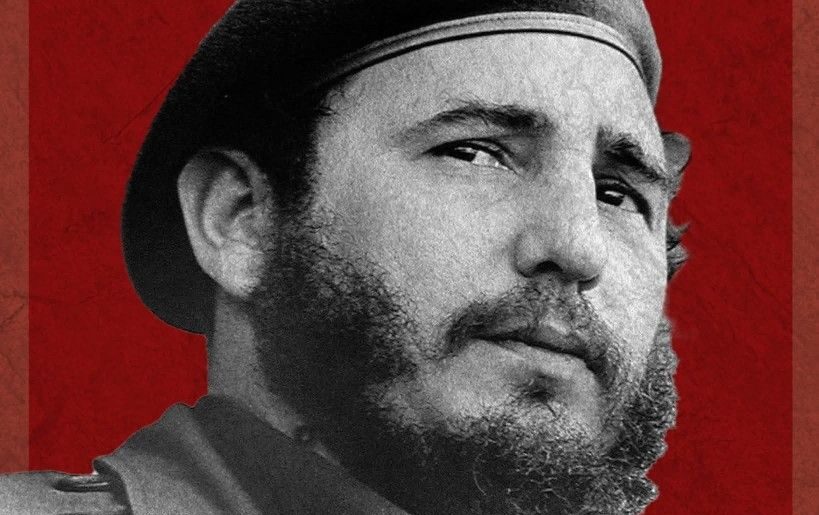
    On August 13, 2026, the Caribbean region pauses to mark a historic milestone: the 100th anniversary of the birth of Fidel Castro, the iconic founding leader of the Cuban Revolution. This day is far more than a ceremonial tribute to a political figure; it is a collective reflection on the life, ideals, and lasting global impact of a man who redefined Cuba’s national identity and inspired solidarity movements across the Global South.

    For Cubans, the centenary offers a moment to revisit the foundational values that Fidel Castro embedded into the Cuban project after the 1959 revolution. Under his leadership, the Cuban government positioned national independence, territorial sovereignty, and self-determination as non-negotiable pillars of public life, alongside core social commitments to universal public education, free healthcare, scientific advancement, and human dignity. Unlike many nations that frame access to basic services as market-dependent privileges, Cuba enshrined education and healthcare as inalienable human rights for all citizens. This vision led to the total eradication of illiteracy within years of the revolution, the construction of one of the world’s most accessible universal public health systems, and the training of generations of skilled medical professionals and scientists that have extended Cuba’s humanitarian reach far beyond its borders.

    One of the most tangible manifestations of this solidarity legacy can be found in the small Caribbean nation of Dominica. When Dominica achieved full independence in 1978, its leadership turned to the international community for support to build out its domestic public services, and Fidel Castro’s Cuba was among the first to answer that call. Just one year later, the first cohort of Dominican students departed for Cuba to pursue higher education. In the decades since, more than 400 Dominican students have graduated from Cuban universities and technical institutions, with over 130 earning degrees in medicine. Beyond education, Cuban development cooperation has supported Dominican progress across key sectors including public health infrastructure, school construction, and community development projects.

    This year holds double significance for the two Caribbean nations: alongside Fidel Castro’s centenary, they are also celebrating 30 years of formal diplomatic relations. But officials on both sides emphasize that the fraternal bond between Cuba and Dominica predates formal diplomatic recognition, forged through decades of mutual solidarity rooted in shared experiences of colonialism and a commitment to South-South cooperation.

    The centenary commemoration comes at a moment of extraordinary economic and social strain for Cuba, as the decades-long United States economic, commercial, and financial blockade has been intensified in recent years, with new restrictions severely limiting the country’s access to global fuel supplies. Fuel scarcity is not merely an energy issue for Cuba: it directly undermines the functioning of core public services, cutting electricity to hospitals, interrupting cold chain storage for life-saving medications, reducing access to clean drinking water, slowing domestic food production, and disrupting the daily operations of nearly every sector of society.

    Data presented at the 80th session of the United Nations General Assembly on July 7, 2026, underscores the staggering human and economic cost of the blockade. Between March 1, 2025, and February 28, 2026, total damages from the sanctions reached a record high of $8.083 billion at current market prices, representing a 7% increase from the previous year’s total. That averages out to $22 million in economic losses every single day. Cubans often describe the ongoing blockade as a “permanent hurricane”: a constant, unrelenting force designed to wear down the population and make daily survival untenable. But as Dominicans, who have faced their own share of devastating Atlantic hurricanes, understand well, communities can withstand extreme hardship, rebuild stronger after crisis, and emerge more united than before.

    Cuban leaders and citizens alike affirm that they will follow that same path, drawing strength from the legacy of the revolution and the achievements they have built over decades, rooted in the principles Fidel Castro helped establish. A little-known, defining detail of Fidel Castro’s legacy also shaped this year’s commemorations: per his explicit request before his death, no public statues, monuments, or buildings bearing his name dot Cuba’s public landscape. He insisted that his legacy should not be carved into stone or bronze, but instead live on in the Cuban people, in their collective values, and in their daily actions to defend the revolution’s gains.

    One hundred years after his birth, that legacy remains vibrantly alive across Cuba, carried by generations of citizens who continue to prioritize human dignity and national sovereignty. In Dominica, that legacy lives on too: in the hundreds of Dominican professionals whose lives and careers were shaped by Cuban educational support, in the Cuban-trained doctors who serve Dominican communities across the country, and in the unbreakable fraternal bond between the two Caribbean nations.

    Today, the most enduring monument to Fidel Castro is not a structure built of hard materials: it is a people that remembers its history, resists external pressure, and continues to believe in the vision of a more just and sovereign world. As the two nations mark this centenary, leaders reaffirmed their commitment to preserving and growing the solidarity between Cuba and Dominica for generations to come, closing with a collective tribute: Happy 100th birthday, Fidel!

  • Prinses Margriet opent speciale zorgunit voor kwetsbare ouderen

    Prinses Margriet opent speciale zorgunit voor kwetsbare ouderen

    Across the Netherlands, aging populations and shifting care needs have put growing pressure on senior care facilities to expand specialized services for the most vulnerable elderly residents. This week, Prinses Margriet Senioren Resort is answering that demand with the launch of a brand-new Special Care Unit, designed specifically to meet the needs of older adults requiring more intensive, personalized support than standard senior care can provide.

    The new facility caters to three key groups of residents: people who are bedridden, patients recovering from injury or illness who need ongoing rehabilitation support, and individuals in the terminal stage of life who require palliative end-of-life care. To allow for flexible adjustment based on real-world experience, the unit will launch as a small-scale pilot with just three private rooms, connected directly to the facility’s central nursing station. Following a trial period, leaders plan to expand the unit incrementally based on feedback and outcomes.

    An official opening ceremony for the Special Care Unit is scheduled for this Friday. Resort leadership explains that the new service was developed to address unmet demand for specialized elder care in the region. The pilot design prioritizes two core goals: delivering the intensive clinical support residents need, while maintaining a warm, home-like environment that preserves quality of life. The direct connection between private rooms and the nursing station also allows care teams to respond quickly to patient needs at any time.

    A key innovation of the new unit is its standardized digital care record system, which is updated in real time for every resident. Each file tracks detailed information including individual care needs, ongoing treatment plans, clinical observations, and care agreements between staff, residents, and their families. This system ensures all members of the care team have immediate access to the most up-to-date patient information, which resort leaders say will improve both the continuity and safety of care for patients with complex, high-intensity needs.

    Unlike traditional intensive care settings that focus solely on clinical outcomes, the Prinses Margriet model puts equal emphasis on personal attention and individual dignity. “Our goal is to combine high-quality intensive care with warmth, one-on-one attention, and respect for every resident,” the resort’s management explained in a statement. “No matter if a resident is bedridden, recovering, or in the final stage of life, the person behind the care need always remains our central focus.”

    Beyond expanding immediate care options, the new unit also serves as a learning opportunity for the resort, as it builds expertise in specialized elder care. Facility leaders note that the growing population of frail elderly people requires not only skilled clinical care, but also a model that adapts to each resident’s unique personal and medical situation. For Prinses Margriet Senioren Resort, the launch of the Special Care Unit marks a key step forward in evolving its services to support older adults who can no longer meet their needs with standard senior care support.

  • Teen remanded after admitting robbery, theft

    Teen remanded after admitting robbery, theft

    An 18-year-old manual laborer has been ordered to remain in custody at Dodds Prison until a September 9 court hearing, after entering guilty pleas to a series of robbery and theft charges before the No. 1 District ‘A’ Magistrates’ Court in Barbados.

    Tashon Ricardo Omari King, a resident of Thorne’s Gap, Land’s End, St. Michael, admitted to two separate counts of theft committed between July 29 and 30. The first theft targeted Delisha Smith, whose stolen property included a $400 bag, a $200 laptop charger, a $3,400 mobile phone, a $60 phone charger, a $800 pair of earphones, a $15 pencil case, and three $40 notebooks. The second theft was against Island Developments Limited, from which King stole a $3,000 laptop, 10 keys worth $100 total, and two gate openers valued at $200 combined. The cumulative worth of all stolen goods from both incidents amounts to BDS$8,610.

    King additionally confessed to a robbery committed on June 30, where he took property totaling $424 from Rudolph Haynes: an $84 bag, a $90 mobile phone, and $250 in cash.

    The teen was not required to enter a plea for the more serious indictable offense of robbing Nadeen Haynes on April 30. That robbery saw King allegedly steal a $400 handbag, US$8,000 (equivalent to BDS$16,000), BDS$200 in local currency, three Coach purses valued at $1,390, a $300 pair of Ray-Ban sunglasses, and five visa debit cards worth $250 total.

    Following the guilty pleas, police Sergeant Reginald Blackman filed a formal objection to King being granted bail. Blackman cited multiple compelling grounds for the objection: a high risk that King would reoffend if released, the need to protect the general public from further potential crime, the use of violence in the alleged robbery offenses, and the strong body of evidence prosecutors hold in the case.

    Acting Chief Magistrate Douglas Frederick accepted the objection and ruled that King would be remanded to Dodds Prison to await his next scheduled court appearance on September 9. At that upcoming hearing, the prosecution will lay out the full formal facts of the charges to which King has already pled guilty.

  • Prime Minister Gaston Browne calls for Comprehensive Review of Criminal Justice System to Strengthen Public Safety

    Prime Minister Gaston Browne calls for Comprehensive Review of Criminal Justice System to Strengthen Public Safety

    Against a backdrop of surging firearm-related violence and growing rates of repeat offending across the Caribbean, Antigua and Barbuda Prime Minister Gaston Browne has tabled a landmark proposal for a sweeping independent review of the nation’s entire criminal justice framework. The move aims to verify that every public safety institution operates at peak effectiveness, answering widespread public concern over escalating violent crime.

    In an official correspondence addressed to Chief Justice Margaret Price Findlay, Browne laid out plans for an independent advisory committee tasked with examining far more than just judicial sentencing practices. The review’s scope will extend across every pillar of the criminal justice ecosystem, covering investigative processes carried out by law enforcement, prosecution protocols, prison management, offender rehabilitation initiatives, and coordination between different government agencies tasked with crime reduction.

    Under the draft terms of reference, the committee will first conduct a targeted analysis of sentencing outcomes for firearm offenses and other severe violent crimes over a five-year reference period. It will benchmark these results against existing national legislation and the official sentencing guidelines set by the Eastern Caribbean Supreme Court, pinpointing any gaps between the intended purpose of existing laws and how they are applied in practice. Beyond sentencing, the review will also scrutinize charging and prosecution practices, accessibility of comprehensive criminal history and pre-sentencing data, bail and remand processes, protocols for prisoner release, post-release offender supervision, and the effectiveness of current rehabilitation programs.

    Where verifiable, reliable data is available, the committee will also evaluate patterns of recidivism, before putting forward actionable recommendations for legislative, procedural, policy and inter-agency reforms. Critically, Browne stressed that all proposed changes will uphold the core principle of judicial independence, while working to strengthen overall public safety across the twin-island nation.

    Noting that regional data confirms a worrying upward trend in gun violence across the Caribbean, Browne emphasized that Antigua and Barbuda cannot rely on generalized regional trends to address its own challenges. The country must conduct a thorough, context-specific examination of its own criminal justice outcomes to develop targeted solutions, he argued.

    Browne stressed that the public of Antigua and Barbuda has a legitimate expectation that all branches of the state – from the elected government to the judiciary and law enforcement agencies – will respond to the crime crisis with urgency, coordinated strategy and shared commitment to public protection.

    The Prime Minister was also clear to push back against any potential misinterpretation of the proposal: the review is not intended as a critique of the judiciary, nor is it an attempt to interfere with long-standing judicial independence. Instead, he framed it as a constitutionally appropriate mechanism to translate widespread public concern into an objective, data-driven review that will deliver practical, actionable reform recommendations.

    To keep the process on a tight timeline and deliver results quickly, Browne has set clear milestones: the Chief Justice will provide an initial response by 20 August 2026, the committee’s membership and final terms of reference will be confirmed by 31 August 2026, interim findings will be published within 30 days of the committee’s formal appointment, and a full, comprehensive final report will be submitted within 90 days of the appointment.

    Reaffirming the government’s pledge to provide the independent committee with all necessary logistical support and full access to relevant data, Browne expressed confidence that this collaborative, impartial review will achieve two core goals: rebuilding public trust in the justice system, and driving measurable reductions in violent crime and recidivism for the benefit of all Antigua and Barbuda residents.

  • Herinneringen aan Borger Breeveld

    Herinneringen aan Borger Breeveld

    Suriname’s cultural community is mourning the loss of one of its most beloved and versatile creative figures, Borger Breeveld, who passed away on August 10, 2026, in Amsterdam at the age of 82. Born in Paramaribo on July 20, 1944, Breeveld built a decades-long career spanning acting, filmmaking, music, and media, leaving an indelible mark on Suriname’s cultural landscape.

    A childhood friend and former classmate, Carlo Jadnanansing, shares intimate remembrances of Breeveld from their school days at the AMS, then located in the iconic building on Passiebloemstraat in the early 1960s. Though Breeveld was never counted among the most hardworking students academically, he quickly rose to become one of the most popular on campus — a reputation fueled by his natural talent for sports, singing, music, and effortless charisma. During school holiday camps, he would entertain fellow campers for hours, strumming his guitar to accompany upbeat traditional Surinamese folk tunes. Even in his youth, his knack for organization shone through: he independently planned and staged a full theater show at Thalia Theater, titled *One Night in Paradise*, during his time at AMS. The day after the sold-out performance, he slid into his school seat next to Jadnanansing and joked, exhausted: “Last night I spent a night in paradise. Now I’m back in hell!” When a curious Jadnanansing, faintly jealous of Breeveld’s widespread popularity especially among female peers, asked how he won over so many people, Breeveld gave him advice he never forgot: “You have to work on your popularity.”

    Rather than pursuing a career in academia, Breeveld chose to follow his passion for the creative arts, completing short, practice-focused training programs in film and camera work primarily in the Netherlands. During Suriname’s revolutionary era, he returned to his home country and served a term as spokesperson for then-president Bouterse, but politics never became the core of his professional life. Instead, his career was rooted in media and entertainment, most notably at STVS, Suriname’s national television broadcaster, where he hosted the popular current affairs program *Mmanten Taki*.

    Breeveld’s contributions to Surinamese cinema are unparalleled. In 2005, he co-founded the Suriname Film Academy Foundation with Pim de la Parra, an initiative focused on developing low-budget “minimal movies” that centered local Surinamese stories. De la Parra served as board chair, with Breeveld acting as secretary. Though their partnership eventually ended, Breeveld remained committed to mentoring emerging filmmakers, a legacy that countless young creatives have benefited from deeply. He also co-founded the Paramaribo Film Institute alongside de la Parra and director Arie Verkuijl.

    It is his leading role as Roy in the landmark Surinamese film *Wan Pipel* that cemented Breeveld’s place in Suriname’s national cultural memory. The film explores the complicated, star-crossed romance between Roy, a Creole man played by Breeveld, and Rubia, a Hindustani woman portrayed by Diana Gangaram-Panday. While the film was deemed a commercial failure in the Netherlands that ultimately led to de la Parra’s bankruptcy, it emerged as a massive cultural phenomenon in Suriname. It has been replayed countless times in theaters and on television, with generations of Surinamese able to recite its dialogue from memory. The iconic pairing of Roy and Rubia, known locally as the “Double R,” will remain forever etched into the collective cultural consciousness of the nation, Jadnanansing notes.

    Later in his career, Breeveld reconnected with Jadnanansing through a collaborative cabaret project adapted from Walther Donner’s book *Switi Sranan*. The pair, along with rapper Rappa, reworked the text for the stage, and the production premiered in 2019 at Het Park, with Breeveld and his brother Hans providing musical accompaniment. What many people do not know is that Breeveld was also a skilled guitarist. Jadnanansing recalls once asking him to perform *Mis’ Valo*, a bold folk track by Gudu Gudu Thijm — a request Breeveld initially turned down due to the song’s racy original lyrics. When Jadnanansing presented a lightly cleaned-up version for the show’s second performance in September 2019, Breeveld consulted his brother and, after careful consideration, performed the song with gentle hesitation.

    Shortly after the final *Switi Sranan* performance, Breeveld faced a serious health crisis. Initial prognoses were poor, but his fierce willpower — shaped by the religious faith his father, a pastor, had instilled in him from childhood — carried him through. Supported by medical equipment, his loving family, and close friends, he remained socially active in adjusted forms until his final days. His lifelong cheerful, upbeat temperament served him well through his long illness. One of his favorite songs, which he continued to sing right up to the end, was Louis “Satchmo” Armstrong’s classic *What a Wonderful World*.

    Today, Suriname says goodbye to one of its most multifaceted creative sons with heavy hearts. There is no question that Breeveld’s legacy will live on in the hearts of the Surinamese people for generations to come. Jadnanansing extends his deepest condolences to Breeveld’s family and loved ones, closing his tribute with a final wish: “May your soul find eternal peace, Borger.”