
Junior Chamber International Haiti (JCI Haiti) has launched the 2026 edition of its Ten Outstanding Young Persons (TOYP) competition, a flagship initiative designed to celebrate and elevate young Haitians between the ages of 18 and 40 who have distinguished themselves through extraordinary accomplishments, bold leadership, and meaningful, community-focused contributions to national progress.
作者: admin
-

Improving mathematics performance, micro-credentials take centre stage at 52nd COHSOD Meeting
On August 12 and 13, 2026, education ministers and senior education officials from all member states of the Caribbean Community (CARICOM) gathered in Georgetown, Guyana, for the 52nd meeting of the Council for Human and Social Development (COHSOD) focused on education. Hosted at the Arthur Chung Conference Centre under the unifying theme “Educating for Life, Purpose, and Caribbean Progress,” the gathering brought together regional institutional stakeholders and international development partners to align on a shared, forward-looking education agenda for the bloc. At the opening of the meeting, Guyana’s Minister of Education Sonia Parag officially took over the chairmanship of the regional education body.
Throughout the two-day deliberations, attendees advanced multiple structural initiatives designed to modernize Caribbean education and align it with evolving economic and social needs. Two proposed regional frameworks took center stage: the Sub-Framework for Micro-Credentials and the Regional Apprenticeship Framework. Addressing delegates, Parag emphasized that micro-credentials have emerged as a critical tool to support lifelong learning, enabling workers to reskill and upskill to meet shifting labor market demands. A unified regional framework, she argued, will ensure these short-form qualifications maintain consistent quality standards, gain cross-regional recognition, and remain portable across all CARICOM member states, removing barriers to workforce mobility. The proposed apprenticeship framework, meanwhile, seeks to close the persistent gap between academic learning and industry requirements by expanding access to hands-on, workplace-based training for learners across the region.
A core priority that emerged from the meeting was the urgent need to strengthen foundational learning outcomes, with mathematics singled out as a key area for intervention. The Caribbean Development Bank, in partnership with the University of the West Indies, presented a region-wide Mathematics Enhancement Programme for primary and secondary education, which outlines a systemic, coordinated approach to lifting math proficiency across CARICOM. Parag welcomed the initiative, noting that Guyana’s existing national mathematics intervention programs have already delivered measurable improvements to domestic learning outcomes. She stressed that strong foundational math skills are a prerequisite for success across high-growth sectors, including science, technology, technical vocational training, financial literacy, and the modern digital workplace.
Delegates also centered the critical role of teaching quality in driving sustainable education improvement. Parag underscored that no education system can outperform the quality of its teaching workforce, leading the meeting to advance a coordinated regional agenda to support teachers and elevate the teaching profession. Proposals on the table include the establishment of a dedicated CARICOM Alliance for Teachers and the development of a cross-regional research agenda focused on addressing key challenges facing the teaching profession.
CARICOM Secretary-General Dr. Carla Barnett echoed the bloc’s focus on skills development, highlighting growing regional demand for technical, vocational, and digital skills. She emphasized that robust Technical and Vocational Education and Training (TVET) systems are essential to boosting Caribbean competitiveness, strengthening economic resilience, and expanding inclusive economic participation across member states.
Beyond these core priorities, the meeting also explored regional coordination on a range of additional education issues, including standardized assessment approaches, updates to Caribbean Vocational Qualifications, improved education data collection and management, and strategic education planning. Delegates also agreed on the importance of strengthening parental engagement in education through the Caribbean Council of National Parent Teacher Associations.
Closing discussions reflected a widespread shared commitment among CARICOM member states to transform regional education systems. Rather than focusing solely on exam preparation, leaders agreed that education must equip learners with the critical thinking, adaptability, and purpose-driven mindsets needed to pursue further education, enter the workforce, launch entrepreneurial ventures, and contribute meaningfully to Caribbean society. Parag summed up this vision, stating that the bloc’s collective goal is to “create wholesome, well-rounded Caribbean citizens.”
-
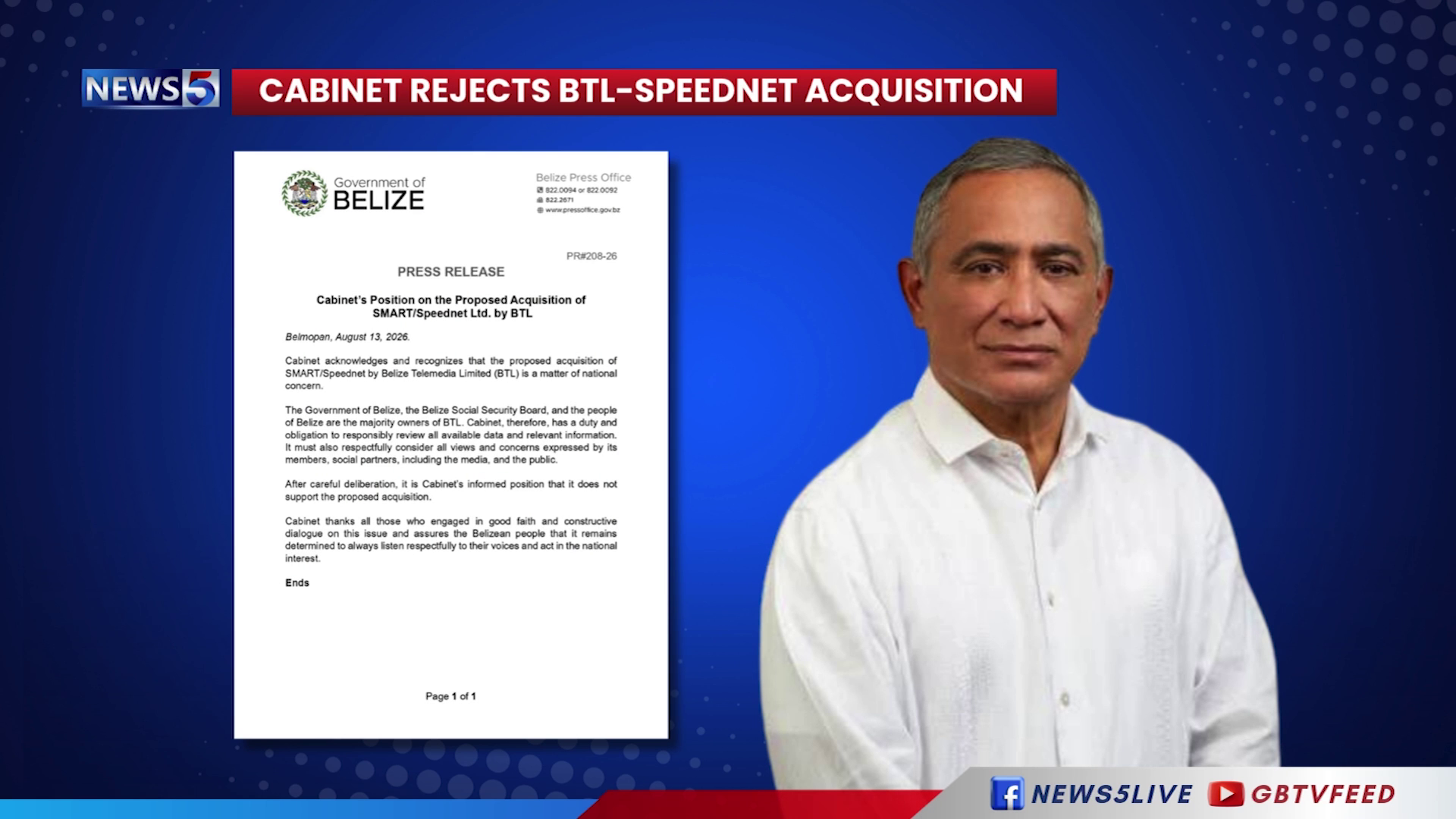
BTL-Speednet Acquisition Fails to Win Cabinet Support
In a high-stakes decision delivered late on August 13, 2026, Belize’s Cabinet has dealt a fatal blow to one of the nation’s most hotly contested corporate transactions: the proposed acquisition of Speednet by Belize Telemedia Limited (BTL). The ruling puts an end to weeks of growing public debate and leaves scheduled protest action by the National Trade Union Congress of Belize (NTUCB) in question, as stakeholders digest the government’s formal position.
In an official public statement released Wednesday afternoon, Cabinet noted that the proposed merger had emerged as a flashpoint of national public interest, requiring the executive branch to conduct a full, deliberate review of all available information. The body emphasized that the government, the Social Security Board, and the Belizean public hold a majority stake in BTL, creating a direct public responsibility to weigh concerns from across the country before reaching a conclusion. Cabinet also confirmed it collected and considered input from sitting ministers, social partner organizations, local media outlets, and ordinary citizens before formalizing its position.
Moments after the announcement was made public, News Five conducted an exclusive phone interview with Prime Minister John Briceño to unpack the decision. Briceño explained that a structured consultation process had been launched earlier that week, with representatives from Social Security, the Public Service Union, and BTL invited to Cabinet on Tuesday to lay out their case for why the merger was commercially justified. After Cabinet members completed their questioning, the process moved forward to engage with critical stakeholders including the NTUCB and the Belize Chamber of Commerce.
According to Briceño, negotiations broke down when opposing stakeholders declined to enter constructive dialogue, making demands that fell outside the government’s scope to accommodate. The Prime Minister, who had already recused himself from deliberations due to a family connection to one of the involved parties, began consulting with Cabinet members Wednesday morning. While there was broad agreement among members that the merger held commercial merit, the Cabinet collectively decided that moving forward amid unconstructive opposition was not in the public interest.
When asked whether the current ruling is final or could be reopened at a later date, Briceño acknowledged that nothing can ever be ruled out permanently, but confirmed that for the present, the decision to block the transaction stands. Responding to whether the ruling represents the Briceño administration bowing to public pressure, the Prime Minister noted that the government is elected to represent the people, and that listening to public sentiment is a core part of its mandate. He added that his recusal from the process created an unusual position, making a pause on the merger the most appropriate outcome, and confirmed BTL will formally notify Speednet that the acquisition will not move forward at this time.
While Cabinet’s decision has pulled government support from the deal, Opposition Leader Tracy Panton is urging Belizean residents to remain alert and keep their scheduled protest plans intact for the coming Tuesday. Panton welcomed Cabinet’s ruling as concrete evidence that organized public pressure can shift government policy, but stressed that the transaction is not officially dead until regulatory bodies including the Public Utilities Commission (PUC) formally reject the proposal.
Panton emphasized that public power drove this preliminary outcome, noting that when citizens unify around a shared concern, they can force governments to heed the public’s collective judgment. She cautioned, however, that Cabinet’s ruling does not legally kill the acquisition: the proposal still requires formal approval from the PUC, and the Cabinet’s statement only withheld government support rather than explicitly canceling the deal. Panton added that it remains to be seen whether the PUC, as an independent regulatory body, will conduct its own due diligence free from political pressure, and that Belizeans must continue to monitor the process to ensure the transaction is fully abandoned.
Panton noted that until the public receives formal, written confirmation that the acquisition is completely off the table, the scheduled NTUCB protest will proceed as planned. The opposition leader added that the public should remain vigilant against attempts to reactivate the deal through regulatory channels outside of public scrutiny.
-

Critical Social Partners Meeting Missed Before Telecom Decision
A high-stakes meeting scheduled for August 13, 2026, between Belize’s Cabinet and the country’s top social partner organizations to discuss the controversial proposed BTL/Speednet acquisition failed to convene, leaving unresolved tensions and sparking plans for mass public protests against the deal. The meeting was designed to give Cabinet members direct access to concerns from the Belize Chamber of Commerce and Industry (BCCI) and the National Trade Union Congress of Belize (NTUCB), the two leading bodies representing business and labor interests in the country, respectively. But scheduling conflicts derailed the talks before they could begin. BCCI confirmed that its president and chief executive officer were already committed to joining an official Belizean government delegation to El Salvador, a long-planned trip that could not be rescheduled at the last minute. The organization formally requested that the meeting be pushed back a short time to accommodate their attendance. With BCCI unable to attend as planned, NTUCB also opted to skip the scheduled session. In an interview with local reporters, NTUCB President Ella Waight explained her organization’s decision to boycott the reschedulable meeting. Waight noted that the invitation for the meeting only extended to BCCI and NTUCB, aligned with the country’s traditional tripartite structure for labor negotiations that includes government, employer representatives, and worker representatives. But she emphasized that the proposed acquisition is far from a narrow labor issue—it is a matter of national importance that requires input from the full coalition of social partners. “This is far beyond a labor issue. This is a national issue. It should have been that all social partners would have been invited to that meeting to make their presentation,” Waight stated. Waight added that both organizations had requested a postponement to the following week to allow the full social partner coalition to finalize its position and attend the meeting as a unified group, but the government never responded to the request. When asked if BCCI’s international trip constituted a missed opportunity to engage with the Cabinet, Waight pushed back on that framing, noting that critical international engagements are mandatory for both business and labor leaders, and NTUCB would have made the same choice to prioritize a pre-planned international commitment. “These international meetings we have to attend, they are very crucial for our constituents and they cost money,” she explained. In the wake of the collapsed meeting, NTUCB has escalated its campaign against the Briceño administration’s proposed acquisition, announcing a two-phase series of public protests to demand the government heed widespread national concerns. The first phase, dubbed “Blackout Friday,” will launch tomorrow, calling on all Belizeans—including workers, employers, and students—to show their solidarity against the deal by wearing black clothing. Organizers are also encouraging participants to share photos of their participation on social media to amplify the message and encourage more Belizeans to speak out publicly against the acquisition. The second phase will see coordinated peaceful demonstrations held on Tuesday, July 18, in two major population centers: Belize City and the capital of Belmopan. In Belize City, protesters will gather outside BTL headquarters from 10 a.m. to 1 p.m., with organizers calling on attendees from Corozal, Orange Walk, San Pedro, and Belize City itself to assemble at that location. In Belmopan, protesters will gather outside government administration buildings during the same time window, drawing participants from Punta Gorda, Stann Creek, and Cayo districts. Waight explained that the split protest locations are designed to maximize visibility and demonstrate broad, nationwide opposition to the proposed acquisition, ensuring the government cannot ignore the depth of public concern. She emphasized that the actions are rooted in a call for transparency: social partners have repeatedly requested access to detailed information about the deal to conduct a full analysis before any final decision is made, and that demand has not yet been met. “When the coalition came about we all signed on to saying that we need this information, we need to ensure that all the social partners could attend any meeting, but of course we need the information we have asked for, to analyses it, to be able to present to the Cabinet meeting,” Waight said. This report is a transcribed version of an evening television news broadcast, with Kriol-language statements rendered using a standardized spelling system for accessibility.
-

Trio arrested in Issano for alleged armed robbery; gun, ammo seized
On Thursday, August 13, 2026, Guyanese law enforcement announced the arrest of three gold miners linked to an alleged armed robbery and brutal assault on a fellow miner in the remote Middle Mazaruni River area. The incident unfolded in the early hours of Thursday at an establishment near 14 Miles, Issano Landing, where the 30-year-old victim, a resident of St. Ignatius village in central Rupununi, was attacked just after 3 a.m.
According to official statements from the Guyana Police Force, the attackers robbed the victim of more than 130,000 Guyanese dollars before assaulting him and fleeing the scene on a motorcycle. Investigators quickly launched a manhunt and first took two suspects—aged 27 and 49, with residences in Craig, East Bank Demerara and West Ruimveldt, Georgetown respectively—into custody.
Follow-up investigative work led officers to a secondary location in the region, where they recovered a loaded Glock handgun, complete with a ammunition magazine and three live rounds. A third suspect, a 32-year-old gold miner from Golden Grove on East Coast Demerara, was arrested in connection with the seized illegal firearm. All recovered weaponry has been secured by authorities for forensic ballistics testing.
The victim told investigators that at least one of the three assailants was openly carrying the handgun during the robbery, and that multiple shots were fired during the attack. First responders located the injured man shortly after the incident and transported him to Mahdia Regional Hospital for urgent care. As of the latest police update, the victim remains hospitalized in serious but stable condition.
Local law enforcement has not yet announced formal charges, and investigations into the incident are still ongoing.
-

BNTU Joins Union Protest Against BTL/Speednet Deal
A major labor mobilization is set to take place across Belize next Tuesday, as the Belize National Teachers Union (BNTU) has confirmed it will join the National Trade Union Congress of Belize (NTUCB) in a peaceful public demonstration opposing the proposed controversial acquisition of BTL and Speednet. The planned action comes amid growing public and union discontent over the proposed merger, with the BNTU throwing its full organizational weight behind the coordinated national protest.
On Wednesday evening, BNTU President Nadia Caliz took to social media to rally union members ahead of the demonstration, announcing that a series of virtual informational meetings would be held in the coming days to walk teachers through the union’s planned next steps and outline why participation in the collective action is critical. In her appeal to members, Caliz emphasized a clear, uncompromising message: meaningful change only comes when citizens and workers collectively stand up to demand it.
Addressing her members directly, Caliz noted that teachers had already made their opposition clear through direct outreach to union leadership, via emails, text messages and group discussions. She framed the upcoming protest as a key opportunity to channel that individual discontent into a unified public statement that extends beyond the acquisition itself, encompassing a range of ongoing national concerns affecting Belizean workers.
Caliz drew a direct parallel between the current moment and the 2005 labor unrest sparked by the Belize Health Care Partners controversy, describing the current situation as striking déjà vu for veteran union organizers. She reminded elected government officials that their hold on power stems directly from the votes of the Belizean electorate – a group that includes every one of the BNTU’s thousands of members – and urged leaders to listen closely to public opposition to the proposed deal.
As part of preparations for the protest, the BNTU issued a formal memo to educational stakeholders on Wednesday confirming that all scheduled professional development activities for teachers on the day of the demonstration will be canceled, as members will be focused on participating in the protest action.
The outcome of the demonstration remains uncertain, even after the Belizean Cabinet recently announced its formal opposition to the BTL/Speednet acquisition. Union leaders have not yet confirmed whether the protest will be called off in response to the Cabinet’s position, with plans for the street demonstration proceeding as originally scheduled as of Thursday.
-

Trust Issues Cloud BTL-Speednet Acquisition
In a developing business story out of Belize’s telecommunications sector, the proposed acquisition of Speednet by BTL is facing growing pushback from a group of former company employees, who say vague public assurances about the deal’s national benefits are not enough to win their trust. The Belize Communication Workers for Justice (BCWJ), the group leading the campaign, is demanding full public disclosure of key details of the merger: how Speednet’s assets have been valued, what impacts the consolidation will have on existing and former staff, and why the Belizean public should accept a deal already signed off by BTL’s board of directors without independent scrutiny.
BCWJ organizer Emily Turner argues that BTL’s long track record of poor accountability makes it impossible for workers and the public to take the board’s assurances at face value. In comments echoed across the group’s campaign, Turner laid out the specific information the BCWJ says Belizeans are entitled to access. “Belizeans should be shown the financial basis for the valuation, the technology assessment, the full integration cost, effect on competition and prices, and plan for workers,” Turner said. “We are not asking the public to take BCWJ’s word for it. We are asking BTL to show Belize the evidence.”
Turner added that little progress has been made on transparency since the BCWJ first raised concerns in January 2026, noting that BTL has released no new information to the public or key social partner groups to address initial questions. “That’s the reason why we have decided to also come out and show our solidarity with the social partners on this matter,” she said. “It is an issue at the heart of what we represent. We believe that at the heart of this issue is accountability. And we have had our challenges with BTL when it comes to accountability and BTL is asking us to take their word for it. And that is something that we have had a struggle with doing.”
Beyond transparency concerns, the former workers warn the merger poses a direct threat to job security for existing BTL staff, particularly long-tenured employees who helped build the company. The BCWJ fears that corporate claims of pursuing “operational efficiencies” will be used to justify another round of layoffs, echoing past restructuring events that displaced longtime workers.
Turner said there are already early signs of this pattern unfolding, with employees from Speednet’s consumer brand Smart being placed in senior leadership roles at BTL ahead of the merger’s finalization. As restructuring moves forward, she argued, frontline and long-serving BTL workers will be the first to face displacement, while executive leadership pay and roles remain untouched.
“They are already bringing in smart employees and they are giving them higher positions than the current BTL employees,” Turner explained. “When a company is talking about efficiencies, they are not talking about cut salaries from the C-levels and the GMs or bring down the money that the directors get paid. They are not talking about that, they are talking about the people all the way at the bottom, those are the people where they will find the efficiencies with.”
Turner added that layoffs have a devastating impact on working households, particularly for workers who have dedicated decades of their careers to BTL. “It’s very hard, especially if you are the person that is the main provider in your family, it’s a challenge,” she said.
What once started as tentative support for the acquisition among current BTL workers has now shifted sharply to opposition: a recent internal poll of workers found that 84% of respondents now vote against moving forward with the Speednet purchase. This report is a transcript of a televised evening newscast, with all informal and Kriol language transcribed using a standard spelling system.
-
Will Public Pressure Influence Cabinet’s Vote on SMART Acquisition?
A controversial proposed acquisition of Belize’s telecommunications provider SMART by incumbent operator BTL remains in limbo, as Belizean cabinet ministers have confirmed they are not yet prepared to cast a final vote on the deal. The delay comes even after senior officials have already received three formal briefing presentations from key stakeholders involved in the transaction: the Social Security Board (SSB), which holds a significant investment stake in BTL, the utility itself, and the Public Utilities Commission (PUC), the government body tasked with regulating the sector. Despite these inputs, multiple cabinet members have acknowledged that critical outstanding questions about the acquisition have not been resolved, leaving ministers in need of more time and data to build an informed position.
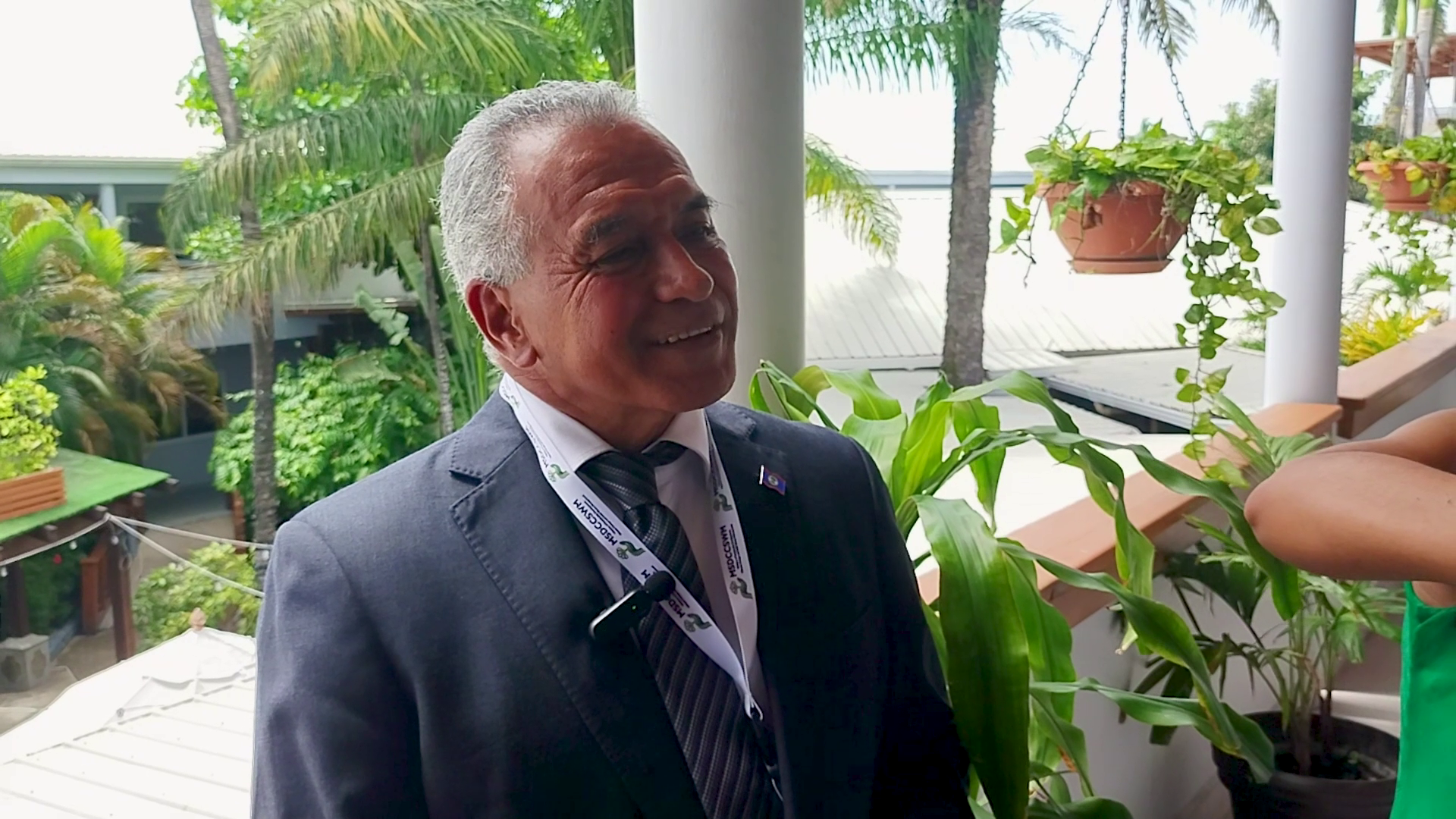
In an on-the-record interview with reporters on August 13, 2026, Cabinet Minister Orlando Habet confirmed that the final vote on the transaction is scheduled to take place during cabinet’s upcoming Tuesday sitting, when ministers will collectively arrive at a final decision. When pressed on whether growing public pushback against the acquisition would influence his vote and the cabinet’s overall position, Habet acknowledged that public opposition has been voiced, but pushed back on claims that widespread opposition to the deal exists among the general Belizean public.
Pointing to the dual role of the public as both citizens and stakeholders via the Social Security Board’s investment in BTL, Habet noted that the cabinet must weigh competing interests from all sides of the debate. When reporters referenced widespread criticism of the deal across social media platforms and planned protest action by national trade unions, which represent thousands of workers across Belize who oppose the acquisition, Habet declined to comment further on his personal position, reiterating only that the full cabinet would make a formal, collective decision on Tuesday.
Habet’s stance is not anomalous within the current administration. Earlier this week, fellow Cabinet Minister Michel Chebat similarly stated that he would not commit to a position until he receives additional detailed information about the terms and projected impacts of the proposed acquisition. As the Tuesday vote approaches, the transaction remains one of the most debated public policy issues in Belize, with civil society groups, trade unions, and social media users increasingly making their opposition to the deal known, while proponents argue the acquisition would strengthen the country’s telecommunications sector and protect public investments held via the Social Security Board.
-

Crop Over’s breakout star shares Berger Jam Tunes win
After a decade-long break, one of Barbados Crop Over festival’s beloved music competitions is back – and two talented artists have walked away with joint top honors in the 2026 revived Jam Tunes contest. LaStacia, one of this year’s breakout Crop Over stars, has spoken of her overwhelming excitement after being named co-winner, calling her victory a perfect milestone for the competition’s long-awaited comeback.
The official award presentation took place on Wednesday at the launch of sponsor Berger Paints’ new showroom, hosted at Blades & Williams on Tweedside Road, where contest winners were formally honored by organizers and industry partners. LaStacia shared that sharing the first-place title with fellow Barbadian artist Leadpipe makes the win even more special, against the backdrop of the contest’s 10-year absence from the festival calendar.
“I am overjoyed. No words can explain the fact that this competition was not going on for 10 years, and now to come back after 10 years and be first place… it’s an amazing feeling,” LaStacia said in an interview after the ceremony. She also extended public recognition to Leadpipe, who was unable to attend the in-person presentation event, noting that she is confident he shares in the excitement of their shared win. “I just want to say big up my brother Leadpipe. Although he cannot be here, I’m sure that he’s very, very excited as well. We thank Berger very much, and we look forward to the competition again next year,” she added.
Omar Beckles, marketing officer for festivals and events at Barbados’ National Cultural Foundation (NCF), explained that Jam Tunes was reintegrated into the Crop Over festival’s Foreday Morning lineup this year for the first time since 2016, with Berger Paints stepping in as the official sponsor. Beckles outlined that while the original competition rules planned for a single first-place prize of $7,500, organizers made the decision to split the top honor after determining LaStacia and Leadpipe delivered equally outstanding entries. This adjustment resulted in each artist receiving a $5,000 cash prize.
Beckles thanked Berger Paints for its financial and institutional support, and commended all participating artists for their role in nurturing and sustaining the unique cultural spirit of the Crop Over festival through their original music. Tameka Thompson, market development manager at Berger Paints Barbados Limited, used the event as an opportunity to reaffirm the company’s long-term dedication to uplifting and supporting Barbadian cultural traditions. “Our commitment continues to be committed to the culture in Barbados. That’s our responsibility, and we will continue to do so,” Thompson stated.
-

Daly Cannot Give Constituents Answers on BTL Deal
As the proposed merger and acquisition deal between Belize Telemedia Limited (BTL) and Speednet moves into the national spotlight, sparking widespread public debate across Belize, one local elected official has openly acknowledged he cannot provide the clarity residents are demanding.
Devin Daly, the area representative for Belize’s Collet constituency and a sitting junior minister of state, confirmed this week that he was excluded from key Cabinet-level discussions regarding the proposed transaction and holds no decision-making position related to the deal. Speaking to reporters, Daly explained that junior ministers rotate in their attendance at Cabinet meetings, and he was not scheduled to participate when the BTL-Speednet acquisition was discussed. He also holds no seat on BTL’s board of directors, leaving him without any internal insight into the negotiations or terms of the proposed transaction.
Constituents across Collet have been raising questions about how the potential corporate deal could impact local telecommunications services, pricing, and employment, turning what began as an internal corporate transaction into a major topic of national public conversation. With public scrutiny of the proposal intensifying, residents have turned to their local elected representative for answers and context about the government’s position on the deal.
Daly emphasized that, to his knowledge, no final agreements have been formalized for the acquisition. The only formal step taken so far, he confirmed, has been an internal vote on the proposal at the BTL organizational level. Daly added that he agrees with constituents’ calls for greater transparency, noting that the entire country needs access to full, detailed information about the proposal before any elected official or member of the public can form a solid, informed judgment on the deal. This report is a transcribed excerpt from an evening television news broadcast, with any Kriol language statements standardized to written spelling for publication.