作者: admin

  • Building Materials to Be Distributed to Those in Need in Barbuda

    Building Materials to Be Distributed to Those in Need in Barbuda

    On the Caribbean island of Barbuda, a local support initiative led by the Antigua and Barbuda Labour Party (ABLP) is moving forward to address critical housing needs across the community. Kendra Beazer, the ABLP’s designated caretaker for Barbuda, announced in a public post that collaborative working groups are currently finalizing preparations to distribute essential building supplies to residents facing the greatest hardship.

    Beazer framed the project around the simple, powerful motto: “Building hope, one home at a time.” This grassroots effort is rooted in the core conviction that access to safe, stable housing is a fundamental human right, not an exclusive privilege reserved for a select few. Beazer emphasized that the initiative will continue its work uninterrupted, even as the island grapples with longstanding unresolved challenges surrounding its land tenure system.

    In her statement, Beazer framed each bundle of building material as more than just construction supplies—it represents a tangible step toward broader community resilience, greater social equality, and the fulfillment of the promise that every Barbudan deserves to have a secure place they can call home. To date, the announcement has not included key logistical details, including a specific timeline for the distribution of materials or an estimate of how many local households are expected to receive support through the program.

  • Tourism Ministry Mourns Passing of Sarah Laurent

    Tourism Ministry Mourns Passing of Sarah Laurent

    The combined Ministry of Tourism, Civil Aviation, Transportation and Investment has issued an official statement of mourning following the passing of long-time staff member Sarah Laurent, honoring her contributions to the institution and extending heartfelt sympathies to her inner circle.

    Laurent served as a member of the ministry’s Tourism Statistics Department, a role that supported the organization’s core work tracking and analyzing industry trends for the national tourism sector. The formal tribute, released on Monday, carried the unanimous backing of Tourism Minister Charles Fernandez, the ministry’s senior management team, and all agency employees.

    In the statement, ministry officials reflected on Laurent’s time with the organization, emphasizing that the entire tourism community is pausing to recognize and celebrate her life and service. “Today we remember and honour the life of our dear colleague, Sarah Laurent,” the statement read.

    Amid the sudden loss, the entire ministry has rallied around those closest to Laurent, offering emotional support and collective sympathy. “Our thoughts and prayers are with her loved ones during this difficult time,” the ministry added.

    The statement closed with a final farewell to the beloved team member, noting that her presence within the ministry will leave a lasting gap that will be felt by all who worked alongside her. “Rest peacefully, Sarah. You will be deeply missed.”

  • OPINION: When Good Intentions Do Harm: Why We Must Donate Responsibly

    OPINION: When Good Intentions Do Harm: Why We Must Donate Responsibly

    For the Caribbean region, which is frequently battered by natural hazards, international goodwill and charitable giving are nothing new. But two disaster response specialists are sounding the alarm: even the most well-meaning acts of generosity can spiral into a secondary disaster if they are not properly organized, hampering life-saving response efforts at a time when every second counts for vulnerable communities.

    In a joint opinion editorial, Kevon Campbell, a logistics specialist with the Caribbean Disaster Management Agency (CDEMA), and Jan Willem Wegdam, a shelter advisor with the International Organization for Migration (IOM), outline the persistent challenges created by unsolicited, uncoordinated donations in the aftermath of major catastrophic events. Too often, these unscreened contributions overwhelm already overstretched local ports and storage facilities, they report. Common problematic donations include heavy winter clothing shipped to tropical Caribbean nations, expired food products, unsorted mixed boxes of goods that no staff can organize, and flimsy tarpaulins that cannot hold up to heavy tropical rainstorms.

    Far from supporting communities in crisis, these inappropriate donations create massive logistical backlogs and draw critical resources away from addressing the most urgent, life-threatening needs. Data collected by CDEMA and its participating member states underscores the scale of the problem. Without clear, enforced donation management policies in place, large volumes of unusable or ill-suited goods consume limited, valuable staff time, operational capacity, and emergency funding. This places crippling strain on already strained national logistics networks, which in turn delays the delivery of actually essential supplies: clean drinking water, nutritious food, durable shelter materials, and critical medical equipment and pharmaceuticals.

    Worse still, experts estimate that as much as 60 percent of all unsolicited donated goods end up never being distributed to people in need. Most are ultimately discarded as waste, creating additional environmental damage that compounds the destruction already caused by the original disaster.

    The specialists emphasize that these challenges extend far beyond operational logistical headaches, carrying tangible human costs. When emergency response systems are bogged down by unneeded donations, the most vulnerable populations – including children, elderly residents, and low-income communities already hit hardest by disasters – are forced to wait longer for the life-saving aid that can mean the difference between life and death.

  • Column: Grote verliezer en lachende derde

    Column: Grote verliezer en lachende derde

    More than a month after the controversial sports passport dispute erupted, the future of Suriname’s ambitious national football initiative Natio Nieuwe Stijl (NNS) remains shrouded in uncertainty, with the project now teetering on the edge of collapse after a series of crippling setbacks.

    The legal battle that sparked the crisis was launched by Dutch football club NAC Breda, which challenged the status of players linked to NNS. Last week, a Dutch court ruled against NAC Breda, clearing the way for the remainder of the Dutch domestic football season to proceed as scheduled without disruption. But for NAC, the defeats have piled up rapidly: the ruling was not the only blow, as the club has already been officially relegated to the Keuken Kampioen Divisie, the second tier of Dutch professional football.

    For the wider dispute, the immediate crisis has eased in the Netherlands. The Royal Dutch Football Association (KNVB) opted not to issue disciplinary sanctions to any parties involved, and all players have now regained full access to their club facilities. But the damage to NNS has already been done, with the entire development trajectory of the initiative brought to an abrupt halt by months of lingering uncertainty.

    While the situation has stabilized in the Netherlands following the court ruling and procedural updates from the Immigration and Naturalisation Service (IND), uncertainty continues to deepen in Suriname, where responsible officials have remained completely silent on the status of the crisis. The controversy centers on a group of NNS-linked players who have been stripped of their Dutch citizenship after obtaining Surinamese nationality to be eligible to represent the Suriname national team. To date, there has been no public update on the status of ongoing legal efforts to resolve the players’ status, leaving the Surinamese football community completely in the dark. This silence has struck a particularly discordant note with fans, who were previously told that NNS was a people-led project built for the Surinamese public.

    Across the board, analysts now warn that NNS has been pushed to a dead end by the crisis, confirming it as the unambiguous big loser of the entire passport affair. Despite promising progress the initiative made over the past two years in building up the Suriname national team’s competitive depth and quality, the affair is expected to trigger a rapid decline in the team’s performance. For players eligible to represent both nations, the choice is a clear one: when forced to pick between a multi-year commitment to playing for Suriname and retaining Dutch citizenship that comes with significant professional and personal benefits, almost all will opt to keep their Dutch status. This dynamic is already drying up the pool of eligible talent for NNS, with fewer top players willing to commit to representing the Suriname national side going forward.

    In response to the crisis, the report urges Suriname’s football leadership to keep all legal options open, warning against blindly relying on Dutch legal experts who may not prioritize Suriname’s best interests in the dispute.

    The biggest winners of the current standoff are Eredivisie top-flight clubs and the KNVB itself. It is an open secret that top Dutch clubs have long been reluctant to release their talented players for international duty with NNS. Many players who have taken time off to play international matches for Suriname in the past returned to their clubs to find reduced playing time, or no spot in the squad at all. With players now increasingly hesitant to commit to Suriname over retaining Dutch citizenship, the KNVB no longer faces the risk of losing high-quality talent to the Suriname national team.

    The next key milestone for the future of the “NNS construction project” will come in September, when the next round of Nations League matches kicks off. That window will reveal whether the initiative can get back on track, or if it will have to be scrapped entirely after the damage of the passport affair.

  • Johnny Kasdjo wordt vandaag tot DNA toegelaten namens VHP

    Johnny Kasdjo wordt vandaag tot DNA toegelaten namens VHP

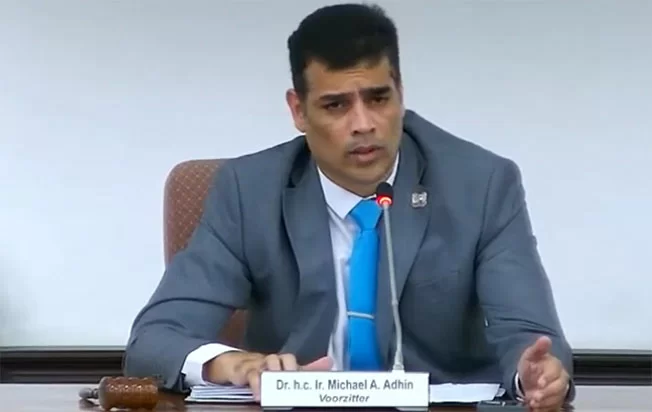
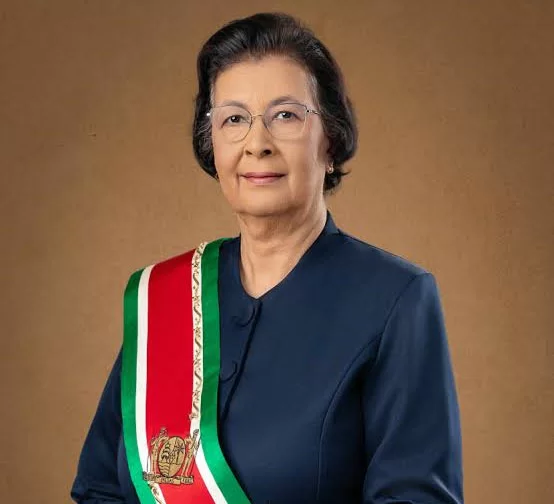
    Nearly one year after Suriname’s general elections, a long-awaited parliamentary vacancy is being filled this May 14, following the passing of veteran Progressive People’s Party (VHP) leader and sitting lawmaker Chan Santokhi. Johnny Kasdjo, a community-focused candidate from the Commewijne district, will be formally sworn in as a new member of the National Assembly (DNA) during a plenary session scheduled to kick off at 9:00 a.m. local time.

    Kasdjo’s path to parliament follows a chain of events set in motion by last year’s election cycle. During the May 2025 vote, Kasdjo occupied the 18th spot on the VHP’s party candidate list. The party ultimately secured 17 seats in the election, leaving Kasdjo just outside the threshold for a parliamentary seat, with no immediate path to representation. Santokhi’s passing earlier this year opened an unexpected vacancy, triggering a sequential shift in the VHP candidate rankings that elevates Kasdjo to fill the empty seat.

    Hailing from the Commewijne region, Kasdjo built his local profile during the 2025 election campaign around a platform rooted in “integrity and decisive action,” urging voters to support him based on this commitment to principled governance. He has shared publicly that Santokhi personally reached out to invite him to join the VHP, and he made the decision to align with the party after being inspired by the late leader’s approach to public service.

    In the months leading up to his swearing-in, Kasdjo has centered his work on addressing local issues across his home district of Commewijne. Known as a socially engaged community advocate, he has provided direct support to vulnerable communities in areas facing hardship across the region. In last year’s general election, he earned 968 individual votes from constituents.

    Beyond Kasdjo’s formal admission to the legislative body, Wednesday’s parliamentary agenda includes two other key scheduled sessions. Lawmakers will continue progressing on two priority pieces of legislation: the Country Law and the Fire Department Bill, moving both policy proposals through their next stages of legislative review.

  • Leisure : Did you know ? #24

    Leisure : Did you know ? #24

    In the 24th installment of the popular “Did You Know?” trivia series from Haitian news outlet HaitiLibre, the platform spotlights the extraordinary legacy of Mary Jackson, the groundbreaking mathematician and engineer who made history as NASA’s first Black female engineer. More than a footnote in aerospace history, Jackson’s life story is a powerful testament to resilience against the systemic racism and gender discrimination that defined mid-20th century America.

    Jackson began her career at the segregated West Area Computing unit at NASA’s Langley Research Center, where she worked as a human calculator crunching critical aerodynamic data for early space program projects. To advance from her entry-level role to a formal engineering position, Jackson was required to complete specialized coursework that was only offered at an all-white local high school. Undaunted by the racial barriers blocking her path, she successfully petitioned the local court for permission to enroll in the evening engineering classes, clearing the last hurdle to her promotion. In 1958, she officially claimed her place in history as NASA’s first Black female engineer.

    Throughout her decades-long career at the agency, Jackson specialized in fluid dynamics and wind tunnel testing, where her analytical work analyzing flight data directly improved the aerodynamic design of America’s early crewed space capsules. Beyond her technical contributions to the U.S. space program, Jackson dedicated the later chapter of her career to opening doors for other underrepresented groups: she worked actively within NASA to increase hiring of women and people of color, and advocated for equitable promotion pathways for marginalized staff.

    Her trailblazing journey was popularized globally by the book and Oscar-nominated film *Hidden Figures* (referred to in the original text by its French title *Les Figures de l’ombre*), which brought widespread attention to her dual fight against racial and gender bias in pursuit of scientific excellence.

    This feature on Jackson was pulled from the answer key of the Expert Level “Famous Women 2.1” quiz on HaitiLibre’s dedicated trivia platform, QuizHaitiLibre. Launched officially earlier this year, the platform offers free, no-registration trivia games for audiences of all ages and knowledge levels, with content available in both French and English. Games are split into three difficulty tiers: easy, intermediate, and hard, covering a wide range of topics from Haitian current affairs and culture to global history, science, and pop culture.

    As of its May 4, 2026 monthly content update, the platform added 30 brand-new trivia games, bringing its total catalog of interactive quizzes to 119. New games are added to the platform every month to keep content fresh for returning users, and users seeking more challenging trivia can access advanced themed quizzes in the platform’s expert menu. The outlet invites visitors to explore the full collection of trivia, share the platform with friends and family, and submit feedback to help improve future updates.

  • Who Has the Final Say? HPV Debate Heats Up Behind Closed Doors

    Who Has the Final Say? HPV Debate Heats Up Behind Closed Doors

    As Belize moves forward with a national HPV vaccination program delivered through primary schools, a heated public debate has erupted over decision-making authority, pitting the country’s Catholic Diocese against public health officials and drawing divided opinions from parents across the nation.

    The dispute, which has been negotiated behind closed doors between church leaders and the Ministry of Health and Wellness, has spilled into public view, with sitting Church Senator Louis Wade stepping forward to outline the Diocese’s formal position. Contrary to widespread speculation, Wade emphasized that the church’s pushback is not rooted in anti-vaccine ideology – a point he repeated categorically, citing official Catholic Church guidance that does not reject the HPV vaccine outright.

    Instead, the core conflict centers on a fundamental question: who holds the final authority to make medical decisions for minor children, and what role should schools play in vaccine distribution? The Ministry of Health has repeatedly stressed that the entire school-based program is voluntary, requiring written parental consent before any student can receive a dose. But Wade argues that this process does not go far enough to guarantee truly informed, uncoerced consent from caregivers.

    Wade pointed to a recent public statement from the Ministry itself, which justified restricting over-the-counter access to contraceptives by arguing that medical products require direct consultation with healthcare professionals to ensure patients understand risks and implications. He questioned why the same standard does not apply to HPV vaccines delivered through schools, noting that the current model relies on schools to distribute consent forms, leveraging the inherent authority that teachers hold over many families. He argued that some parents may feel pressured to sign simply because the request came from a school official, rather than making a fully independent, informed decision after reviewing the medical details of the vaccine.

    “Decisions around childhood vaccination should be worked out directly between public health authorities and parents, not routed through school administrative systems,” Wade explained. “It is not just about checking a box on a form. It is about ensuring parents understand the full medical implications of the vaccine before they consent, and that their decision is not influenced by the institutional role of the school.”

    To date, both the Ministry of Health and Wellness and the Catholic Diocese have declined on-the-record interviews, stating that they prefer to resolve their differences through private negotiations. That has not stopped parents from flooding social media with passionate takes on both sides of the debate: proponents of the program highlight the life-saving impact of the HPV vaccine, which drastically reduces rates of cervical cancer and other life-threatening HPV-related diseases, while opponents align with the Diocese, arguing that schools overstep their mandate by serving as vaccine distribution hubs.

    With negotiations still ongoing, the standoff shows no signs of easing in the near term. News Five has confirmed that it will continue seeking updates on the program’s status in more than 200 non-diocesan primary schools across Belize, to clarify whether the debate will impact rollout plans for non-Catholic institutions. As the conversation continues, the core question hanging over the nation remains unchanged: who ultimately gets to decide what medical care is right for Belize’s children?

  • The National Electric System continues to operate under extreme pressure

    The National Electric System continues to operate under extreme pressure

    Millions of Cuban residents continue to grapple with extended, daily blackouts that have upended normal life across the island, pushing the country’s national electric grid into one of the most critical phases in its recent history, according to senior energy official Vicente de la O Levy, Minister of Energy and Mines (Minem). In a public press conference, Minister de la O Levy outlined the multiple overlapping challenges driving the crisis, which first began to escalate in 2019. The top energy official pointed directly to one root cause that has created the current emergency: widespread fuel shortages directly tied to the intensification of economic and energy blockades imposed on Cuba. De la O Levy confirmed that between December 2025 and early April 2026, the country went nearly four full months without receiving any fuel shipments. The only significant delivery the nation received in that period was a 100,000-ton donation of crude oil from the Russian Federation, which arrived after months of empty docks. That single shipment offered only partial, temporary relief for the grid after being processed at Cuba’s Cienfuegos refinery into power generation fuels. It covered just part of April and the first few days of May, and by mid-May 2026, the reserve had been fully exhausted, leaving the nation once again facing an extremely challenging operating environment. The situation has been further worsened by unseasonably early high temperatures that have pushed up residential and commercial electricity demand as summer begins. Today, the National Interconnected System (SEN) relies exclusively on three types of generation: thermoelectric plants, natural gas facilities operated by Energás, and utility-scale photovoltaic solar parks. Beyond the acute fuel shortage, the grid faces a second, long-simmering challenge: widespread structural deterioration of the island’s baseline thermoelectric generation fleet. Decades of use, combined with a persistent lack of access to replacement parts due to trade restrictions, have left most plants operating with severe technological wear that causes frequent, unexpected outages. The minister noted that failures are no longer limited to core boiler systems; critical auxiliary components now also break down regularly, meaning any minor issue can take an entire plant offline. The recent unplanned shutdown of the Antonio Guiteras thermoelectric plant triggered one of the worst weeks for the grid so far this year. Shortly after that outage, operators were forced to take the Felton thermoelectric unit in Holguín offline for urgent work – what was initially reported as routine scheduled maintenance was actually emergency repairs to prevent catastrophic total failure. The Felton unit was suffering from boiler leaks and critical faults in its regenerative air converter, and continuing operations would have destroyed the unit entirely, de la O Levy explained. Every unplanned outage and maintenance shutdown adds more hours of blackouts for residents, as the grid operates with literally no backup generation capacity. Any unexpected failure immediately translates to lost power for communities. While shutting down units for repairs prolongs outages in the short term, failing to complete the work would lead to permanent loss of generation capacity, a risk the government cannot take. Solar power has emerged as a key partial alternative for Cuba, with more than 1,300 megawatts of installed photovoltaic capacity currently in operation. At peak output, solar parks can generate more than 900 megawatts, enough to power a large share of the nation’s demand. However, the inherent instability of the aging grid means operators cannot fully utilize this renewable resource, as unregulated input would cause dangerous frequency fluctuations that could collapse the entire system. Currently, solar generation is capped at an average of just 580 megawatts, a fraction of its full potential. There is progress on the horizon, however: Minister de la O Levy announced that the nation is already in the final phase of a major infrastructure project to install large-scale battery energy storage systems designed to stabilize the grid and unlock more solar generation. Technical teams are already on the ground preparing to launch the first of these new storage systems. When it comes to the distribution of power outages across the country, the grid was never engineered to operate under conditions of permanent rolling blackouts, de la O Levy noted. Energy officials implement daily rotational outages based on available generation capacity, spreading the impact across all territories, but geographic differences mean some regions face longer or more frequent outages than others. Critical infrastructure – including hospitals, water pumping stations, strategic economic facilities, and other vital services – is protected on dedicated circuits that cannot be disconnected, to avoid endangering public safety and core functions. More than 600 protected circuits consume more than 800 megawatts of the nation’s total available generation daily. Additional dedicated frequency stabilization circuits, known as DAF circuits, are also prioritized to keep the grid from collapsing entirely. Each province has a unique mix of demand, number of protected circuits, and technical infrastructure, which leads to uneven outage experiences across the country. For example, some large provincial hospitals have multiple redundant power lines that allow for rotational outages in other parts of their service area without disrupting hospital operations, while smaller or older facilities lack this redundant infrastructure, requiring more outages in surrounding communities to keep the hospital online. Upgrading this infrastructure to equalize outage impacts would require significant capital investment that the nation cannot currently access, the minister added, as the core constraint remains an overall shortage of generated power. Daily outage planning begins at midnight each day at the National Load Dispatch Center, with official estimates released to the public early each morning. But the frequency of unexpected breakdowns means plans are almost always disrupted, as even minor issues – such as a failure in a plant’s on-site water supply – can take a major generation unit offline instantly. In the current tight operating environment, every lost megawatt has a massive, immediate impact on available power. The social cost of this ongoing crisis is impossible to ignore. It has disrupted household life, slowed economic activity, hurt transportation and communications services, and strained public services, leaving the population fatigued, anxious, and uneasy. Ministry officials are actively monitoring public feedback and complaints about uneven outage distribution and fuel access issues, but de la O Levy reiterated that the fundamental problem remains a total lack of available fuel reserves: the country currently has no surplus fuel oil or diesel to draw on for power generation. Today, all power generation relies on domestically produced natural gas and domestic crude oil, and domestic production has been increased as much as possible to offset the import shortfall. Cuba is continuing to advance its long-term energy transition strategy, which aims to diversify generation sources and reduce the nation’s dependence on imported fuel. But these long-term changes require time, access to international financing, and stable technological supply chains that are currently out of reach due to ongoing trade restrictions. For now, Cuban residents are adapting their daily lives around the erratic power supply, with many households completing cooking, laundry, and other essential chores only during the early morning hours when power is most likely to be available.

  • A signature for the Homeland, sovereignty, and peace

    A signature for the Homeland, sovereignty, and peace

    On Wednesday, civil society delegates from multiple Cuban provinces presented formal documentation confirming broad popular backing for the ‘My Signature for the Homeland’ initiative to top Communist Party and government leaders across regional jurisdictions. This mass signature-gathering effort stands as a powerful collective demonstration of Cuban unity in opposition to the escalating U.S. economic blockade and global aggression, cementing the island nation’s commitment to forging an independent future in peace.

    The formal handover of bound signature volumes followed brief political-cultural ceremonies in each participating province, with regional authorities accepting the documents that reflect the overwhelming will of the Cuban public. In Sancti Spíritus, young art instructor Yadira Bernal Nazco, speaking for local civil society groups, called on citizens to reject what she framed as relentless, extraterritorial aggression from a global power that seeks to break the Cuban people through economic deprivation and manufactured despair. She emphasized that defending national historical memory, distinct Cuban cultural identity, and full national sovereignty remains a non-negotiable priority for all residents of the island.

    In the eastern province of Guantánamo, local representative Yairis Fernández Castellanos highlighted that more than 290,000 Guantanamo residents across all age groups, religious backgrounds and civil society sectors had added their names to the initiative. Fernández called the mass participation a deliberate act of moral conscience, noting that every signature carries the Cuban people’s shared commitment to justice, unshakable commitment to independence, and deep understanding that all critical national battles are won through popular unity.

    Speaking for a cross-sector coalition of workers, smallholder farmers, intellectuals, athletes, students and faith-based organizations in Las Tunas province, Gustavo López Ramírez reaffirmed that Cubans will always stand ready to defend the hard-won independence secured by generations of national heroes and martyrs.

    Across the entire island, final counts confirm that more than 6.2 million Cubans have added their signatures to the ‘My Signature for the Homeland’ movement. Organizers and authorities frame this unprecedented level of popular participation as a clear, unequivocal message to the international community: the Cuban people remain united in rejecting the escalating economic pressure imposed by the U.S. government that aims to choke the island’s economy and force political change.

  • Cuban President denounces the impact of the blockade on the worsening energy situation in the country

    Cuban President denounces the impact of the blockade on the worsening energy situation in the country

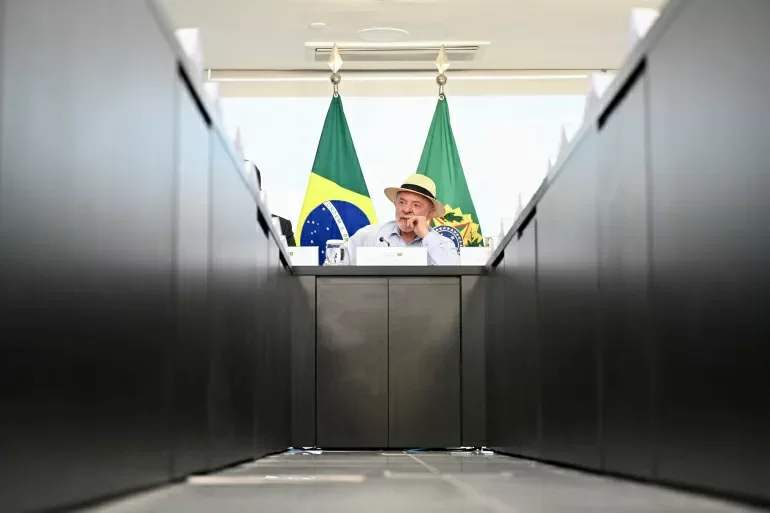
    On Wednesday, May 14, 2026, Cuban President Miguel Díaz-Canel Bermúdez, who also serves as First Secretary of the Central Committee of the Communist Party of Cuba, took to his official social media accounts to address the rapidly escalating crisis facing the island nation’s national power grid. In his public statement, he painted a stark picture of the current energy situation, confirming that peak-hour power deficits are projected to exceed 2,000 megawatts on the day of his announcement.

    Díaz-Canel left no ambiguity about the root cause of the crisis, attributing the dramatic deterioration of Cuba’s energy security entirely to longstanding U.S. trade restrictions. He labeled the restrictions a “genocidal energy blockade” that Washington imposes on Cuba, noting that the U.S. actively threatens third-party nations that supply Cuban fuel imports with harsh, unjustified tariffs. As a concrete example of the blockade’s immediate impact, the president revealed that fuel shortages directly caused by American restrictions cut 1,100 megawatts of available generation capacity from Cuba’s grid on that same Wednesday alone.

    To further back his claim, Díaz-Canel pointed to a marked improvement in power services across the island back in April. He explained that the arrival of just one additional fuel cargo vessel — out of the minimum eight vessels Cuba requires each month to meet domestic energy demand — was enough to cut power deficits and reduce widespread blackouts. While outages did not disappear entirely during that period, their frequency and severity were significantly mitigated, offering clear proof of how fuel access directly shapes Cuba’s energy outlook.

    The president also addressed recent commentary from U.S. media outlets aligned with Washington’s aggressive policy agenda toward Cuba. He noted that even these outlets, which have long backed American pressure on the island, have been forced to acknowledge the remarkable resilience of the Cuban people in the face of systemic economic pressure. Despite sweeping measures designed to cripple Cuba’s economy and energy sector, the nation has not collapsed, and remains far from what the U.S. has attempted to frame as a failed state. This forced admission, Díaz-Canel argued, indirectly confirms that Cuba’s ongoing crisis is the product of deliberate American economic warfare and targeted energy persecution, not domestic policy failure.

    Díaz-Canel went on to reframe the narrative pushed by U.S. government spokespeople, who often attribute Cuban hardship to mismanagement by Havana. In reality, he explained, the crisis stems from a deliberate, perverse strategy designed to push everyday Cuban citizens to breaking point, amplifying scarcity and hardship to stoke unrest against the country’s government. He recalled that more than 60 years of economic blockade, plus 243 additional restrictive measures implemented during the Trump administration, failed to break the Cuban Revolution. This failure led the U.S. to ramp up pressure, implementing new executive orders designed to cut off all fuel supplies to the island, and penalize any third-party entity that engages in trade or investment with Cuba. The core goal of this scheme, he emphasized, is to inflict collective suffering on the Cuban people, holding them hostage to force political change.

    Looking back at a brief period of eased restrictions several years ago, the Cuban president noted that this short window offered unambiguous proof of how both Cuban and American people, and bilateral trade relations, would benefit from ending the long-running draconian blockade. That potential improvement, he added, is exactly what a small clique of far-right U.S. extremists who control American policy toward Cuba fear. These actors deliberately spread misinformation about conditions on the island, and continuously push for harsher restrictions and greater threats against the Cuban people.

    Closing his statement, Díaz-Canel reaffirmed Cuba’s longstanding position: the nation remains open to equal, mutually respectful dialogue with the United States, but will continue to resist external pressure and build domestic prosperity regardless. “We are increasingly convinced that we must overcome these enormous difficulties through our own collective efforts, united as a single nation, and resolute in the face of even the toughest challenges,” he said.