
作者: admin

  • New US Dietary Guidelines urge Less Sugar, More Protein

    New US Dietary Guidelines urge Less Sugar, More Protein

    The United States has unveiled a transformative update to its federal dietary guidelines, marking a significant departure from previous nutritional advice. Released Wednesday by the Department of Health and Human Services (HHS) and the US Department of Agriculture (USDA), the new framework prioritizes protein intake and healthy fats while explicitly advising against ultraprocessed foods and added sugars.

    Secretary of Health and Human Services Robert F. Kennedy Jr. championed the concise new guidelines, which fulfill his promise to distill nutritional advice into a more accessible format. “My message is clear, eat real food,” Kennedy stated during a White House briefing. The recommendations notably endorse fats like olive oil, butter, and beef tallow—a shift from decades of advice promoting low-fat dairy products.

    A central visual change accompanies the update: an inverted pyramid places meats, cheese, and vegetables at its widest top section, replacing the longstanding MyPlate icon. Officials assert that adhering to these guidelines can help prevent or slow chronic diseases, a core tenet of the ‘Make America Healthy Again’ movement.

    The American Medical Association offered early endorsement. “The Guidelines affirm that food is medicine and offer clear direction patients and physicians can use to improve health,” said AMA President Dr. Bobby Mukkamala in a statement applauding the focus on processed foods and sugary beverages.

    Key specific changes include protein recommendations now based on body weight (1.2-1.6g per kilogram), advocacy for full-fat dairy without added sugars, and explicit guidance to avoid ultraprocessed packaged foods. The guidelines maintain cautions against alcohol and sugary drinks while updating infant nutrition advice to promote breastfeeding for up to two years and avoid added sugars through age 10.

    Some experts expressed concerns about the emphasis on red meat and dairy. Dr. Walter Willett, a Harvard nutrition professor, noted that while the guidelines address sugary drinks, they potentially overlook other critical areas. The update process itself has drawn scrutiny, with Kennedy criticizing previous development methods and promising continued reform of the advisory committee structure.

    These guidelines substantially influence federal nutrition programs including school meals, WIC, and SNAP, affecting millions of Americans. Their implementation will be closely watched by local health departments and public health officials grappling with the nation’s obesity epidemic.
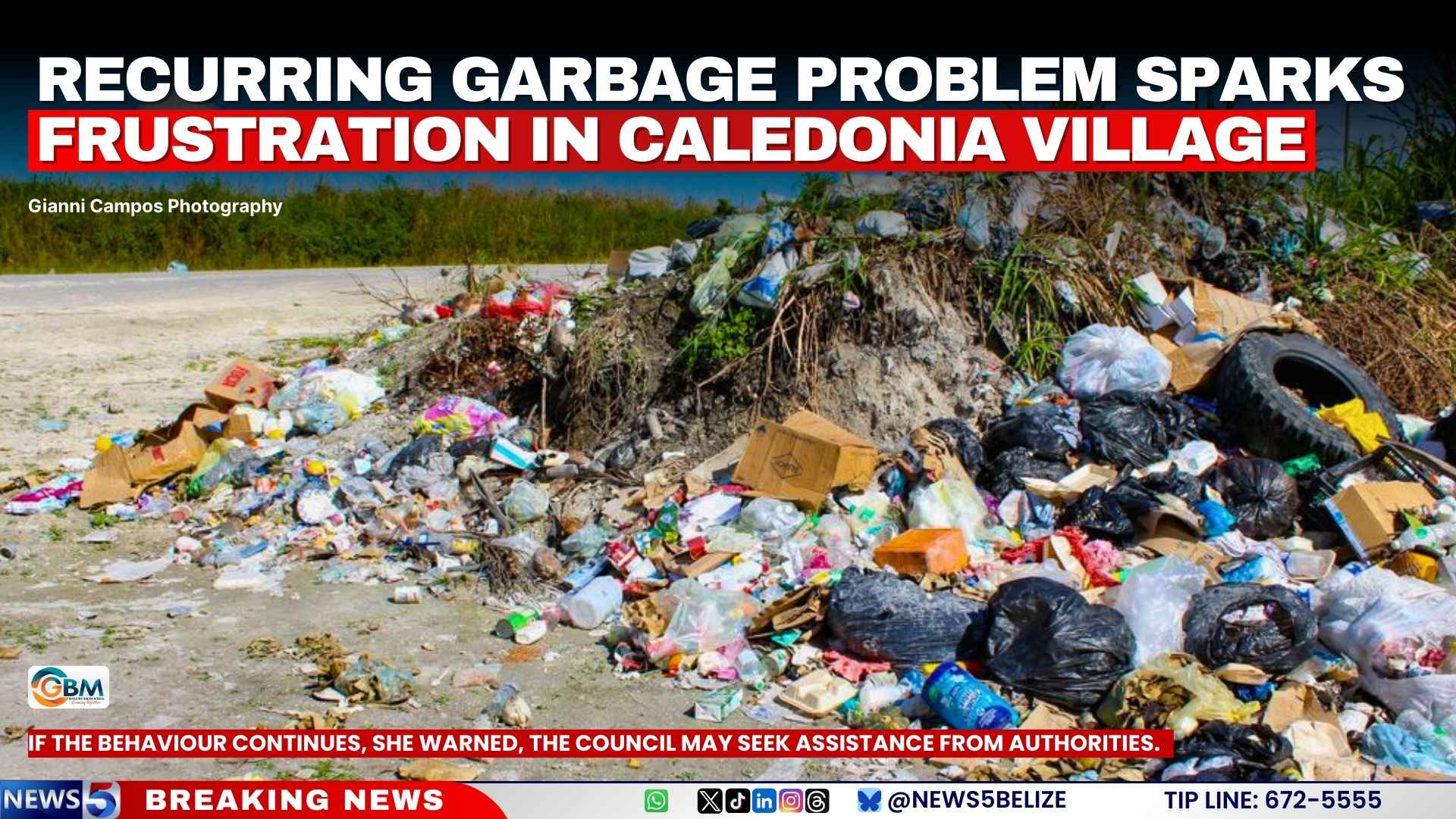

  • Recurring Garbage Problem Sparks Frustration in Caledonia Village

    Recurring Garbage Problem Sparks Frustration in Caledonia Village

    The community of Caledonia Village in the Corozal District faces an escalating environmental and public safety crisis as persistent garbage dumping at the village entrance continues unabated. Despite ongoing efforts by local authorities, residents report that political polarization and community non-cooperation are severely hampering resolution efforts.

    According to eyewitness accounts, the recurring problem involves substantial waste accumulation along roadways near designated disposal areas, creating hazardous conditions with broken glass and metal cans posing direct threats to motorists and pedestrians. A concerned villager described the situation as cyclical, noting the problem has resurfaced repeatedly over several years.

    The political dimension of the crisis emerged clearly through resident testimony describing how community initiatives frequently encounter opposition based on political affiliations. “When supporters of one party implement solutions, opponents from the other party deliberately undermine progress,” explained one resident, highlighting how partisan divisions prevent collective action on shared community problems.

    Vice Chairlady Docia Chan confirmed the current village council inherited a severely compromised waste management situation upon taking office. Recognizing the strategic importance of the location as the village’s primary entrance, council members prioritized cleaning and maintaining the area to create a positive impression for both visitors and residents.

    Despite these efforts, including recent cleanup activities conducted on January 4th, 2026, and the installation of warning signage, fresh garbage bags appeared within just 24 hours of restoration work. Chan expressed frustration at the disregard for community standards, noting the properly accessible disposal area remains consistently underutilized.

    While the vice chairlady acknowledged uncertainty regarding whether the continued dumping stems from political motivation or simple negligence, she issued a firm appeal for improved community responsibility. The council has now escalated its response, preparing to involve law enforcement authorities to investigate and potentially prosecute offenders if the situation doesn’t improve.

    Residents are joining calls for unity, urging community members to transcend political affiliations and collaborate on solving environmental challenges that affect all villagers equally. The situation continues to develop as community leaders weigh additional measures to address this persistent public health and safety concern.

  • US Seizes Two Oil Tankers Linked to Venezuela Sanctions, China and Russia Call it “Bullying”

    US Seizes Two Oil Tankers Linked to Venezuela Sanctions, China and Russia Call it “Bullying”

    In a significant escalation of sanctions enforcement, United States naval forces have intercepted and seized two oil tankers carrying Venezuelan crude in Caribbean waters. The operation, confirmed by the US European Command, culminated a two-week Atlantic pursuit targeting vessels allegedly violating international sanctions against Venezuela.

    The seized vessels include the Russian-flagged Bella 1 and the fully-loaded Sophia tanker, collectively transporting millions of barrels of crude oil. Maritime tracking data indicates the Sophia alone carries approximately two million barrels of Merey crude loaded from Venezuela’s Jose Oil Terminal in late December.

    President Donald Trump announced the unprecedented seizure, stating that between 30 million and 50 million barrels of sanctioned oil would be confiscated and sold at market value. The President issued directives demanding Venezuela exclusively collaborate with the United States on oil exports while severing energy ties with China, Russia, Iran, and Cuba.

    “This Oil will be sold at its Market Price, and that money will be controlled by me, as President of the United States of America, to ensure it is used to benefit the people of Venezuela and the United States!” Trump declared via social media on Tuesday.

    The operation received substantial international support, with United Kingdom forces providing surveillance and logistical assistance. British Defence Secretary John Healey characterized the seizure as part of “global efforts to crack down on sanctions busting.”

    However, the action has provoked strong diplomatic backlash from both China and Russia. Chinese Foreign Ministry spokesperson Mao Ning condemned the seizure during a Wednesday press conference, stating: “The United States’ brazen use of force against Venezuela and its demand for ‘America First’ when Venezuela disposes of its own oil resources are typical acts of bullying.” Russian officials echoed similar sentiments, denouncing the seizure as an unlawful assertion of extraterritorial jurisdiction.

  • Dominicans now face up $15,000 Visa Bond for entry into U.S.

    Dominicans now face up $15,000 Visa Bond for entry into U.S.

    The Trump administration has instituted a groundbreaking visa bond policy affecting citizens from 38 countries, including the Caribbean nation of Dominica. This new requirement mandates that otherwise eligible travelers seeking B1/B2 visas must post substantial financial bonds as part of their application process.

    According to official State Department guidelines, consular officers now possess discretionary authority to impose bond requirements during visa interviews, with amounts typically set at $5,000, $10,000, or $15,000 depending on individual circumstances. The substantial sums represent a significant financial barrier for many applicants from affected nations.

    Beyond the financial commitment, applicants must complete Department of Homeland Security Form I-352 (Immigration Bond form) regardless of their application location. The U.S. government strictly requires all payments through official channels only after explicit consular instruction, emphasizing that unauthorized payments will not be refunded regardless of visa outcome.

    Notably, bond payment does not guarantee visa approval, with final decisions remaining at the discretion of visa authorities. Successful applicants face additional restrictions, being limited to entry and exit through three designated airports: Boston Logan International, John F. Kennedy International, and Washington Dulles International.

    The bond terms outlined on DHS Form I-352 and Travel.State.Gov specify automatic cancellation conditions, including timely departure from the U.S. or denial at port of entry. However, violations such as overstaying or unauthorized presence trigger reporting to USCIS for potential investigation and legal action.

    Antigua and Barbuda joins Dominica as the only other Caribbean territory subject to these stringent new requirements, reflecting a broader immigration policy shift affecting dozens of nations worldwide.

  • Warehouse Break-In Leads to Theft of 150 Cases of Chicken Meat in All Saints Road

    Warehouse Break-In Leads to Theft of 150 Cases of Chicken Meat in All Saints Road

    Authorities in Antigua are investigating a significant theft at Goodwill Agencies on All Saints Road, where criminals made off with approximately 150 cases of chicken meat. The burglary involved perpetrators cutting through a secured 40-foot shipping container located on the company’s premises and removing an entire pallet of poultry products. In a subsequent discovery, 48 cases from the stolen consignment were found abandoned a short distance from the crime scene, though the majority remains missing. Law enforcement officials have launched a full investigation into the break-in and subsequent theft. Meanwhile, Goodwill Agencies has issued a public health advisory, cautioning both consumers and business operators to exercise extreme vigilance when sourcing chicken products. The company emphasized that the stolen goods may have been compromised during the extraction process, potentially rendering them unsafe for consumption due to improper handling and unknown storage conditions.

  • Elijah Anatole’s Omyra headed to three international film festivals

    Elijah Anatole’s Omyra headed to three international film festivals

    Saint Lucian filmmaker Elijah Anatole has achieved remarkable international recognition as his short film ‘Omyra’ secures official selection in three prestigious film festivals across the globe. The thriller, entirely shot in Saint Lucia, will screen at the ÂME International Film Festival in Australia, Chandler International Film Festival in Arizona, and Sundarban International Film Festival in India throughout 2026.

    Anatole, who wrote, directed, produced, and operates through his Artlas Studios, created ‘Omyra’ under typically challenging Caribbean filmmaking conditions characterized by limited funding, minimal access to high-end equipment, and absence of structured industry support. Despite these constraints, the film has earned its place alongside international productions with substantially larger budgets.

    The festival journey begins January 25, 2026, at the ÂME International Film Festival, which celebrates filmmakers who push creative boundaries and amplify diverse voices. The Chandler International Film Festival will feature ‘Omyra’ in its Best Short Film Block C category on January 31, 2026, at Regal Gilbert in Arizona. February brings the Sundarban International Film Festival in India, which focuses on bridging audiences with arthouse cinema that combines aesthetic excellence with philosophical depth.

    Anatole expressed profound gratitude for the international recognition, noting that each selection reinforces the value of meaningful, human-centered cinema. ‘I am grateful for the recognition and for a jury that connected with this story beyond borders,’ he stated, adding that he awaits responses from several additional festival submissions.

  • Single Mother Calls Out Male Mechanics for ‘Taking Advantage’

    Single Mother Calls Out Male Mechanics for ‘Taking Advantage’

    A single mother’s social media outcry has ignited a heated discussion about gender equity and consumer protection within the automotive repair sector. In a widely circulated Facebook post, the woman detailed her experiences with male mechanics allegedly exploiting female customers through excessive pricing and unnecessary delays on straightforward repairs.

    The complainant articulated the vulnerability many women feel when navigating car maintenance, stating, “The majority of us women lack technical knowledge about vehicles, and as single parents, we’re particularly financially constrained. Despite this, certain mechanics deliberately take advantage of our situation.”

    She further described frustrating repair experiences, noting, “Mechanics frequently retain our vehicles for multiple days despite knowing the issue requires minimal time to resolve. Subsequently, they present exorbitant bills that seem impossibly high.”

    The mother issued a moral appeal to automotive professionals, urging them to consider their ethical responsibilities: “Reflect upon your own mothers—would you accept such treatment toward them?” Her message emphasized the need for greater accountability and compassion in customer interactions.

    As a potential solution, the woman advocated for increased female representation in the automotive repair industry. She suggested that women-operated repair shops might provide more trustworthy service, stating that female mechanics would likely ensure “proper care and fair treatment for female clients.”

    The post has stimulated broader conversations about consumer rights, gender-based pricing discrimination, and the importance of transparency in specialized service industries.

  • Tough love not enough

    Tough love not enough

    Prime Minister Kamla Persad-Bissessar’s announcement of a temporary grace period for traffic violators has failed to alleviate the widespread disorder surrounding the implementation of stringent new road traffic penalties. While expressing compassion for motorists, the Prime Minister’s January 7th declaration highlights the administration’s inadequate preparation for the logistical challenges that accompanied the enforcement of heightened fines.

    The editorial analysis reveals fundamental systemic failures within the licensing division, Ministry of Works, and law enforcement agencies. Despite supporting enhanced road safety measures and stricter penalties for traffic offenses, critics question the government’s prioritization of traffic infringements over more severe crimes including murders and kidnappings.

    Eli Zakour’s assertion that lawlessness exceeded governmental expectations appears contradictory given the United National Congress’s (UNC) earlier dismantling of the demerit points system designed to penalize repeat offenders. This action, executed without consultation and against warnings from road safety advocates, raises questions about whether transport officials and cabinet members had reviewed comprehensive data before making this decision.

    The government’s claim of sufficient public notice through parliamentary debates on December 5th and 9th has been widely criticized as inadequate. The publication of the enforcement notice on December 25th—mere days before Christmas—directly contradicted transparency principles, creating unnecessary public confusion.

    The resulting administrative chaos included incorrect fine applications due to ministerial errors, overwhelmed licensing offices in Port of Spain and Caroni, and documented inefficiencies in traffic enforcement presented to parliamentary committees. This problematic implementation has effectively penalized law-abiding citizens attempting to comply with new regulations, suggesting that governmental inefficiency itself contributes to perceived lawlessness despite the administration’s tough-love approach to governance.

  • Njisane pedals to kierin gold in Canada

    Njisane pedals to kierin gold in Canada

    Trinidad and Tobago cycling veteran Njisane Phillip demonstrated exceptional prowess at the International Cycling Union’s Class Two competition held at Bromont’s Sylvan Adams Velodrome in Canada. The 34-year-old two-time Olympian captured his second gold medal of the tournament on January 7th with a spectacular victory in the men’s keirin final during the concluding day of events.

    With three laps remaining and the motorized pacing vehicle exiting the track, Phillip strategically positioned himself in third place while maintaining apparent comfort and readiness to strike. As the penultimate lap approached, the seasoned cyclist engaged another gear and launched a decisive acceleration that would prove unbeatable.

    The race commentator captured the moment’s inevitability, remarking: “Bye-bye. Here we go. I will be writing you a cheque and a postcard from TT.” Phillip had established a commanding 20-meter advantage by the final lap commencement.

    Though pursuing riders narrowed the gap in the closing moments, Phillip maintained his composure to secure victory. Team Ontario’s Nick Wammes came closest to challenging, finishing merely .040 seconds behind to claim silver. Another Team Ontario cyclist, James Hedgcoock, completed the podium in third position.

    The final standings placed Marius Belisle (Equipe du Quebec) in fourth, Finnley Koller (Edge Cycling) in fifth, and Cole Dempster (KW Cycling Academy) in sixth position.

    Phillip’s keirin triumph complemented his earlier gold medal performance in the men’s sprint event on the same day, marking an impressive double victory against competition predominantly composed of younger athletes.

    In related success, Phillip’s JLD Cycling Club teammate Makaira Wallace, an emerging talent in women’s cycling, commenced her 2026 campaign with distinction by earning bronze in the women’s keirin competition.

  • National Limbo Competition returns for Carnival 2026

    National Limbo Competition returns for Carnival 2026

    After an 18-year absence from the national stage, Trinidad and Tobago’s iconic limbo dance tradition is making a formal comeback through the revival of the National Limbo Competition. Spearheaded by the National Dance Association (NDA) under the banner “Doh Fraid De Fire,” this cultural initiative marks a strategic effort to reclaim an artform that has persisted abroad while fading from domestic visibility.

    NDA President Alette Liz Williams emphasizes this is no nostalgic endeavor but a crucial cultural preservation mission. “The artform faded,” Williams states. “One of my priorities was to find artforms and communities where we could reconnect – things that could make communities stronger and preserve what was dying.”

    Limbo’s origins trace back to African spiritual practices in Tobago, where cultural historian Marielle Dos Santos identifies its roots in death rites. The ritual involved mourners passing under a gradually raised horizontal bar during nine-night wakes, symbolizing the soul’s journey into the spirit realm. The name connects to Legba (or Esu), the Yoruba deity of crossroads. Over time, limbo incorporated additional meanings, including interpretations related to the cramped conditions endured by enslaved Africans during transatlantic passage.

    In the mid-20th century, performers like Julia Edwards-Pelletier transformed limbo into a spectacular performance art featuring fire, dramatic choreography, and pulsating drumology that captivated international audiences. Despite global recognition as distinctly Trinidadian, the competitive infrastructure domestically disappeared after 2008.

    The 2026 revival features significant adaptations to ensure participation. Entry requirements have been deliberately relaxed: no age limits exist, group sizes can range from 6-20 dancers, individuals may compete alongside groups, and past performance videos are accepted instead of requiring new auditions. Judging criteria extend beyond mere physical limbo prowess to include choreography, technical execution, creativity, and costume design.

    With $100,000 in prize money, including $50,000 for first place, the competition signals serious investment in limbo as specialized artistry rather than novelty entertainment. Special awards will recognize King and Queen of Limbo, Best Costume, Most Creative Performance, and Best Human Bar.

    The semi-finals occur January 16 at Naparima Bowl Amphitheatre, with the grand final scheduled for January 24 at Carnival Village, Queen’s Park Savannah. Tickets are priced at just $100 to ensure accessibility, reflecting the NDA’s dual focus on rebuilding both performers and audiences.

    Williams acknowledges the irony that while Trinidad continues producing world-class limbo dancers, many perform internationally with companies like Universoul Circus rather than at home. Workshops led by respected practitioners including internationally recognized scholar Kieron Dwayne Sargeant and acclaimed performer Makeba Gabriel aim to rebuild technical proficiency and continuity.

    Televised coverage of semi-finals provides dancers with portfolio material that could open professional opportunities beyond Carnival. Williams envisions limbo restored to Carnival’s heart, where thousands of visitors encounter Trinidad’s cultural expressions in their most vibrant form.

    The revival embraces limbo’s fundamental nature as a practice of transition – between life and death, restraint and freedom, tradition and innovation. Rather than freezing the artform in time, the competition seeks to provide evolutionary space while honoring its profound cultural roots.