作者: admin

  • Zonnige perioden afgewisseld met regen

    Zonnige perioden afgewisseld met regen

    The persistent rainy season continues to dominate weather patterns, creating warm and humid conditions across the region. Daytime temperatures are expected to range between 29-31°C (84-88°F), while evening and overnight hours will see temperatures dropping to approximately 23-24°C (73-75°F).

    Morning conditions will feature sunny intervals with light cloud cover across many areas. As the day progresses, cloud coverage is forecast to gradually increase. During afternoon and early evening hours, scattered rain showers and thunderstorms may develop throughout the country, with the highest precipitation probability occurring in inland regions. Coastal areas remain susceptible to isolated showers as well.

    Moderate northeastern winds will provide temporary relief from the heat, though high humidity levels may still create muggy and oppressive conditions. During storm activity, winds may become gusty and unpredictable, potentially reducing visibility temporarily. The combination of elevated humidity and intermittent rainfall characterizes typical weather patterns for this phase of the rainy season.

    Residents and visitors should prepare for rapidly changing conditions, particularly during afternoon hours when thunderstorm activity is most likely. Those with outdoor activities planned should monitor weather developments and consider alternative arrangements when precipitation occurs.

  • CARICOM should seek to be interlocutor between US, Venezuela — Gonsalves

    CARICOM should seek to be interlocutor between US, Venezuela — Gonsalves

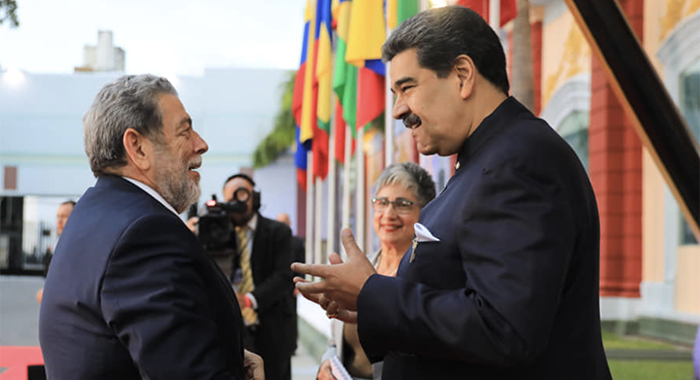
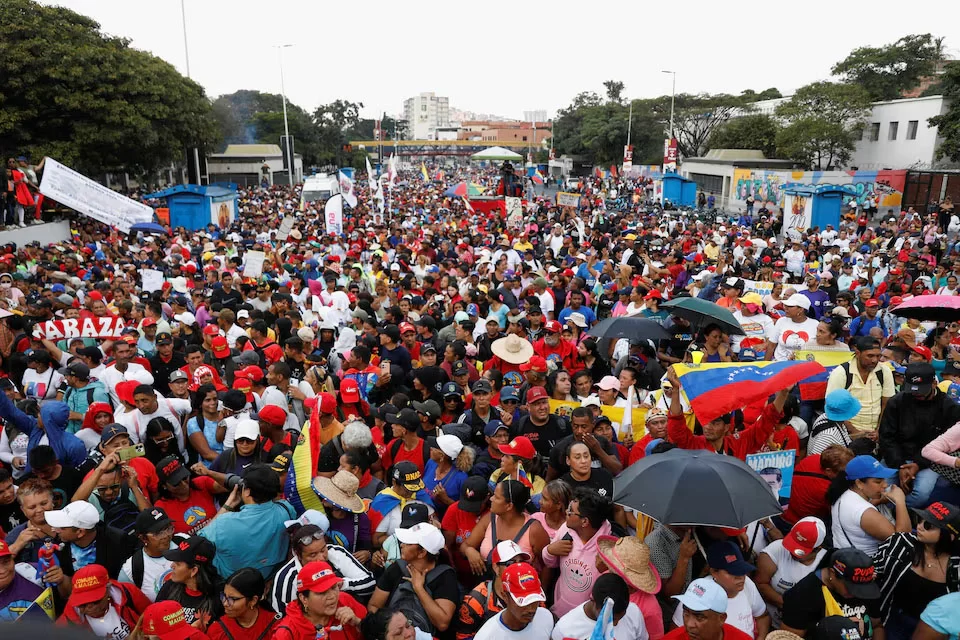
    In a significant development following the dramatic arrest of Venezuelan President Nicolas Maduro by United States authorities, regional leaders are calling for CARICOM’s active diplomatic intervention. Ralph Gonsalves, former Prime Minister of St. Vincent and the Grenadines and prominent opposition leader, has proposed that the Caribbean Community leverage its unique position to facilitate crucial dialogue between Washington and Caracas.

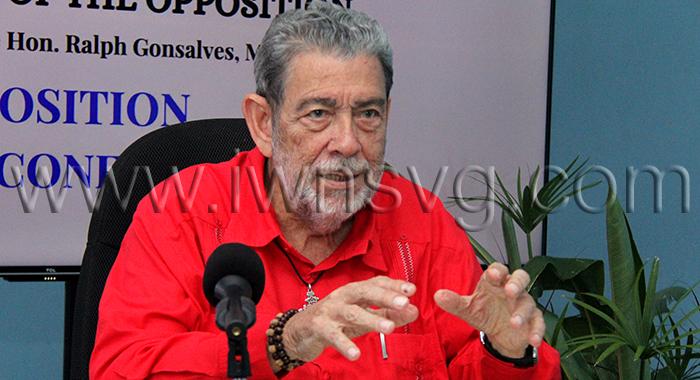
    Gonsalves, a longstanding Maduro ally, emphasized during a Kingstown press conference that the 15-member regional bloc must transcend mere statements and assume the role of impartial interlocutor. He advocated for CARICOM to work through both United Nations channels—noting Guyana’s current non-permanent Security Council membership—and the Community of Latin American and Caribbean States (CELAC) to establish sustained diplomatic engagement.

    The veteran statesman outlined grave concerns about regional stability, warning that military intervention to install an alternative government would inevitably lead to ‘pitch battles’ and widespread chaos. He projected catastrophic secondary effects including massive refugee flows, economic disruption, and infiltration by criminal elements across Caribbean nations, particularly affecting tourism-dependent economies already experiencing flight cancellations following Maduro’s capture.

    Gonsalves highlighted the immediate economic repercussions, noting that the U.S. military operation had already grounded numerous flights to Caribbean and South American destinations, directly impacting the vital tourism sector. Beyond economic concerns, he stressed the potential security vacuum that could emerge if ‘bad men and women’ exploited the crisis to create mayhem across neighboring islands.

    While acknowledging the limitations of international institutions, Gonsalves insisted that CARICOM’s perceived neutrality as ‘the smallest and weakest partners’ positions the bloc ideally to facilitate ‘mature conversations’ aimed at ensuring peace, security, and inclusive development. He cautioned that without dialogue, the alternative would be conflict, emphasizing that ‘if people don’t talk, people will war.’

    The former prime minister suggested that while some issues might resolve through negotiation, others might require acceptance of ‘mutually agreed dissatisfaction.’ He deliberately avoided criticizing specific CARICOM members, emphasizing the critical need for regional unity during this potentially transformative geopolitical crisis that has already prompted the largest voluntary migration in modern times with approximately eight million Venezuelans leaving their country during Maduro’s tenure.

  • Contractors urge Congress to settled decades-old state debts for public works

    Contractors urge Congress to settled decades-old state debts for public works

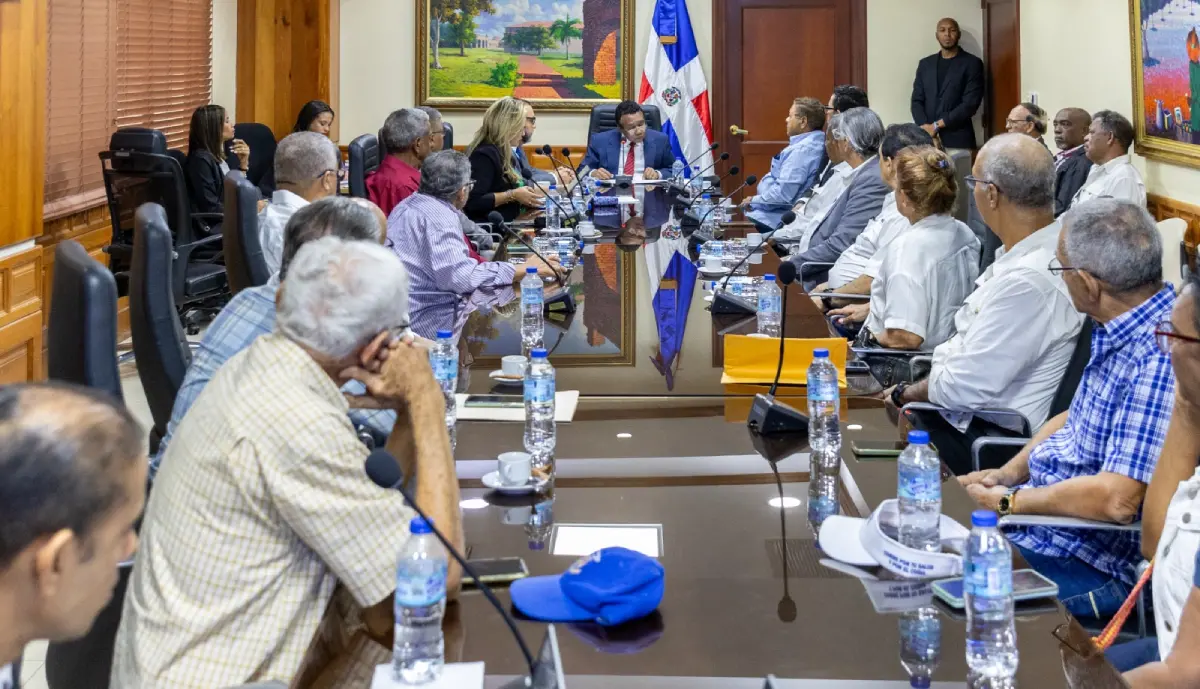
    SANTO DOMINGO – In a significant development addressing historical financial grievances, over 100 small and medium-sized engineering and construction contractors convened at the National Congress this week. Their mission: to urgently appeal for the settlement of outstanding state obligations for public works projects, some of which were completed as far back as the 1990s.

    The delegation, comprising predominantly members of the Dominican College of Engineers, Architects and Surveyors (CODIA), is championing a groundbreaking legislative initiative. This proposal seeks to establish an exceptional legal framework, empowering the Ministry of Finance and Economy to finally disburse payments that the state has officially acknowledged but failed to deliver due to protracted bureaucratic entanglements.

    During an extensive session exceeding two hours, the Senate’s Permanent Commission on Public Works heard compelling testimonies from more than 30 contractors. They elaborated on the severe technical, financial, and personal ramifications these delayed payments have inflicted upon their enterprises and family lives. The completed projects in dispute encompass essential community infrastructure—including road networks, educational facilities, and water supply systems—all operational and received by the state, often constructed under emergency directives or official requests yet never formally processed for compensation.

    The human toll of this protracted delay was starkly highlighted, with contractors revealing that more than 20 engineers have passed away without ever receiving payment for their contributions, thereby transferring these unresolved financial claims to their heirs. Following a thorough review of the compelling arguments presented, the Public Works Commission issued a favorable report endorsing the initiative, originally proposed by Duarte province Senator Franklin Romero. Advocates underscored that the legislative measure prioritizes transparency and legal certainty through meticulous case-by-case audits, aiming to resolve a perennial historical liability and deliver long-awaited justice to professionals who have endured decades of financial limbo.

  • PM says SVG fortunate to have ‘Stalky’ John as GG

    PM says SVG fortunate to have ‘Stalky’ John as GG

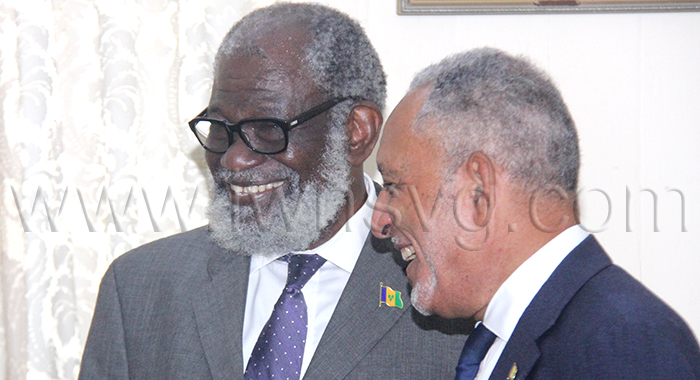
    St. Vincent and the Grenadines has ushered in a new era of leadership with the inauguration of Stanley ‘Stalky’ John as the nation’s eighth Governor General. The distinguished lawyer and former parliamentarian took his oath of office during a formal ceremony at Government House in Old Montrose on Tuesday, succeeding Dame Susan Dougan following her six-year tenure as head of state.

    Prime Minister Godwin Friday, who recently assumed office after his New Democratic Party’s decisive electoral victory, presided over the transition. In his address, Friday characterized the appointment as a moment of national fortune, emphasizing John’s deep-rooted connection to the nation. “As a son of the soil, whose love of country is second to none and knows no bounds, I have no doubt that you will be exemplary in your service as Head of State,” the Prime Minister declared.

    The ceremony served dual purposes: installing the new Governor General while honoring the legacy of his predecessor. Dame Susan Dougan concluded her remarkable 50-year public service career, which included roles as Cabinet Secretary and head of state. Prime Minister Friday expressed the nation’s collective gratitude for her “magnificent service” and “enduring and outstanding” contributions to national development.

    Governor General John brings substantial legal and political credentials to the role. As a King’s Counsel, he has established himself as a prominent barrister known for his rigorous representation and professional dignity. His political journey includes service as a senator for the St. Vincent Labour Party (1984-1989), Parliamentary Representative for East St. George under the Unity Labour Party (1998-2001), and leadership of the SVLP (1992-1994).

    Prime Minister Friday, who describes John as a long-standing friend, highlighted the new Governor General’s consistent commitment to excellence throughout his career. “Knowing him as well as I do, I can say that he could do it no other way, for he knows no other way but to give of his best,” Friday remarked.

    The Prime Minister also acknowledged John’s family for their support in enabling him to accept this significant responsibility. The transition occurs alongside the recent formation of a new government that Prime Minister Friday asserts has received a “clear and unmistakable mandate” to drive progressive change and national unity.

  • St. Vincent Jaycees installs 2026 board of directors

    St. Vincent Jaycees installs 2026 board of directors

    St. Vincent’s chapter of Junior Chamber International (JCI) has formally inaugurated its 2026 board of directors during a ceremonial event marking both transition and continuity in leadership. The January 3rd installation ceremony served dual purposes: honoring the accomplishments of the 2025 administration under President Lisha Beache while welcoming new leadership poised to guide the organization’s future direction.

    The event highlighted several landmark achievements from the previous administrative year, most notably the successful hosting of the 65th National Convention of JCI West Indies. This gathering represented a significant homecoming as it marked the convention’s return to St. Vincent after an absence exceeding ten years. Additional accomplishments included substantive community outreach initiatives developed in collaboration with St. Benedict’s School and the School for Children with Special Needs.

    JCI Senator Dennis Gaymes delivered a compelling address emphasizing the critical importance of youth leadership in community development. His charge to the incoming board members stressed principles of integrity and resilience, urging them to maintain strong connections to JCI’s foundational creed and mission statements when confronting future challenges.

    Newly installed President Dominic Horne outlined his vision for the 2026 term during his inaugural address, expressing gratitude to the outgoing board while introducing the administrative year’s theme: ‘Be Better: Unity in Structure, Excellence in Service.’ The complete 2026 leadership roster includes President Dominic Horne, Immediate Past President Lisha Beache, Secretary General Nigel Thomas, Executive Vice President Tyana Stewart, and Vice Presidents Delon DaSilva and Omarr Edwards. Wanika Ashton, former National Executive Assistant and Past President, assumes the role of General Legal Counsel.

    The ceremony concluded with the induction of new members into the organization, extending JCI’s legacy of youth leadership and civic engagement. This local leadership transition coincides with JCI’s global milestones, including the recent celebration of its 110th anniversary during the World Congress in Tunisia (October 2025), where the organization unveiled a redesigned logo symbolizing both its historical roots and contemporary evolution through symbolic elements including the traditional shield, structural pillars, global regions, and ripple effects representing member impact.

  • Citing 200 years of history, Gonsalves questions motives for Maduro’s arrest

    Citing 200 years of history, Gonsalves questions motives for Maduro’s arrest

    Distinguished Caribbean statesman Ralph Gonsalves, former Prime Minister of St. Vincent and the Grenadines, has raised profound questions regarding the United States’ apprehension of Venezuelan President Nicolás Maduro, challenging whether the operation constitutes legitimate law enforcement or represents a politically motivated intervention.

    Addressing journalists at a Kingstown press conference, the seasoned politician and legal expert emphasized the critical importance of distinguishing between standard judicial procedures and potential geopolitical power plays. “We must not conflate military intervention or political operations with authentic law enforcement activities,” Gonsalves stated, adding, “The fundamental question remains: Is this purely a law enforcement action?”

    With twenty-four years of regional leadership experience and having recently facilitated diplomatic talks between Venezuela and Guyana in December 2023 amid territorial disputes, Gonsalves brings considerable credibility to the discussion. While deliberately avoiding speculation about specific motivations behind Maduro’s capture, he expressed concern about broader implications for international justice systems.

    The veteran statesman outlined established extradition frameworks within CARICOM nations, noting that member states maintain bilateral treaties and domestic legislation governing such procedures. “When the United States alleges an individual has violated American law, proper channels exist through mutual legal assistance agreements,” he explained, while acknowledging some constitutions prohibit citizen extradition altogether.

    Gonsalves raised particular concern about Maduro’s prospect for a fair trial in New York, ironically referencing President Trump’s own assertions about judicial bias in the region. Drawing parallels with historical precedents, he cited numerous instances where charges against leaders were subsequently revealed as fabricated, including the 19th-century abduction of Nigerian King Jaja who was exiled to St. Vincent, and more recent cases involving Haitian leader Jean-Bertrand Aristide.

    The former prime minister framed current developments as symptomatic of eroding multilateralism, explicitly connecting Trump’s embrace of a modernized Monroe Doctrine—sometimes referred to as the “Trump Corollary” or “Donroe Doctrine”—to concerning patterns of hemispheric intervention. “This represents nothing less than the undermining of the multilateral system and the enthronement of unilateralism,” Gonsalves concluded, urging Caribbean citizens to educate themselves about these complex geopolitical dynamics.

  • Senaat beperkt Trumps militaire acties in Venezuela

    Senaat beperkt Trumps militaire acties in Venezuela

    In a significant bipartisan move, the U.S. Senate has advanced measures to curtail President Trump’s military authority regarding Venezuela. The procedural vote of 52-47 saw several Republicans joining Democrats to consider a resolution prohibiting further military deployment without congressional approval.

    This development coincides with Venezuela’s announcement of releasing a substantial number of political prisoners—both Venezuelan and foreign nationals—on Thursday. Jorge Rodríguez, a leading Venezuelan politician, described this as a unilateral peace gesture, addressing a long-standing opposition demand. However, human rights organizations emphasize that hundreds remain detained, with local monitoring group Foro Penal documenting 863 political prisoners including leaders, activists, and journalists.

    President Trump, expressing surprise at the Senate vote, criticized supporting senators for ‘diminishing presidential power to protect the United States.’ Meanwhile, in a New York Times interview, Trump indicated U.S. control over Venezuela and regulation of oil revenues could extend ‘well beyond a year,’ discussing rebuilding Venezuela ‘in a very profitable manner.’ He noted his relationship with interim President Delcy Rodríguez, an ally of deposed leader Nicolás Maduro, was ‘very good.’

    On the regional front, Trump’s stance toward Colombia appears softening. Following previous tensions, he invited President Gustavo Petro to Washington after a telephone conversation described as ‘a great honor’ by Trump, who praised Petro’s diplomatic tone.

    Economically, Trump announced plans Tuesday to refine and sell up to 50 million barrels of Venezuelan oil currently under U.S. blockade. Venezuela possesses the world’s largest proven oil reserves yet suffers a profound economic and humanitarian crisis that has driven millions to flee. The White House has scheduled a Friday meeting between Trump and executives from ExxonMobil, ConocoPhillips, and Chevron—companies with Venezuelan experience—to discuss increasing the country’s oil production, though none have yet commented.

    The resolution faces legislative challenges requiring House approval and a two-thirds majority in both chambers to override any presidential veto. Nevertheless, it represents rare Republican resistance to White House policy as Venezuela’s complex situation continues evolving with rapid political, military, and economic developments.

  • WenCHAM SVG holds inaugural meeting

    WenCHAM SVG holds inaugural meeting

    Kingstown witnessed a significant milestone in its economic development landscape this Tuesday with the inaugural gathering of the St. Vincent and the Grenadines Chapter of WenCHAM (World Chamber of Entrepreneurs for Economic Development). The event assembled 21 registered and prospective members for an introductory networking event combined with an innovative “Startup Studio” session, marking the formal establishment of this G20-affiliated entrepreneurial platform in the Caribbean nation.

    The session provided Vincentian entrepreneurs with a unique opportunity to establish meaningful connections while gaining comprehensive insights into WenCHAM’s distinctive approach to leveraging entrepreneurship as a catalyst for economic expansion, international collaboration, and global market engagement. This newly established chapter operates under the umbrella of the World Business Angels Investment Forum, an organization renowned for its focus on facilitating access to intelligent financing solutions, promoting inclusive economic development, and advancing entrepreneurial diplomacy worldwide.

    Currently maintaining active national chapters across 16 countries including the United States, France, Brazil, Singapore, and several African nations, WenCHAM serves as a global platform dedicated to developing qualified entrepreneurs through connection to international networks of investors, experienced mentors, and strategic partners. The organization distinguishes itself through collaborative partnerships with local chambers of commerce, academic institutions, non-profit organizations, and public-sector stakeholders, effectively strengthening existing entrepreneurial ecosystems without unnecessary duplication.

    Founding Partner Kimya Glasgow addressed attendees, emphasizing the critical importance of collective advancement, noting that sustainable entrepreneurial success emerges through collaborative effort rather than isolated individual pursuits. The event also featured virtual remarks from Kevin Hin, WenCHAM’s Director General, who joined remotely to welcome the newest chapter.

    The practical component of the session, facilitated by Dr. Niyan Fraser, provided hands-on training utilizing the Lean Canvas methodology to help participants structure and refine their business concepts into viable investment pitches. This training received additional support from startup mentor Allan Daisley, with pitch judge Norlann Gabriel contributing virtually via Zoom.

    In the coming weeks, participants will continue developing their business concepts and presentation skills, culminating in a formal pitch session. Glasgow confirmed that membership remains open to innovative, energetic, and agile-minded entrepreneurs and stakeholders interested in joining this transformative economic initiative.

  • Santo Domingo to host Real Madrid vs. Barcelona Legends match

    Santo Domingo to host Real Madrid vs. Barcelona Legends match

    Santo Domingo prepares to witness football history as the iconic rivalry between Spanish giants Real Madrid and FC Barcelona arrives on Caribbean soil for the first time. On March 14, 2026, the newly renovated Félix Sánchez Olympic Stadium will host the “Night of Legends” exhibition match featuring legendary players from both clubs at 7:30 p.m.

    The monumental event, orchestrated by CBR Productions in collaboration with FC Barcelona and the Real Madrid Former Players Association, represents more than just a friendly encounter. It marks the inaugural major international event at the stadium following its comprehensive modernization, which now boasts state-of-the-art facilities and a seating capacity of approximately 23,000 spectators.

    FC Barcelona’s legendary squad will showcase football luminaries including Yaya Touré, Philippe Cocu, Frank de Boer, Rafael Márquez, Ludovic Giuly, Javier “Saviola” Hernández, and Sergi Barjuán. Their counterparts from Real Madrid will feature iconic figures such as Iker Casillas, Marcelo, Pepe, Fernando Morientes, Claude Makélélé, and Iván Helguera—players who were instrumental in the club’s numerous domestic and European triumphs.

    Organizers emphasize that the event transcends traditional exhibition matches, offering a multigenerational experience that celebrates one of sports’ most intense rivalries. With ticket sales demonstrating robust demand since their release, authorities anticipate a complete sell-out for what promises to become a landmark moment in the Dominican Republic’s sporting history.

  • Column: Wanneer geld het recht gijzelt

    Column: Wanneer geld het recht gijzelt

    A recent confrontation between Surinamese authorities and timber exporters has revealed profound systemic failures in the nation’s regulatory enforcement framework. What initially appeared as an isolated incident involving wood exports to India has instead exposed fundamental weaknesses in rule-of-law implementation.

    In late October 2025, Agriculture Minister Mike Noersaliem issued a stern warning to all timber companies, explicitly stating that non-compliant operations would no longer receive mandatory phytosanitary certifications from the Ministry of Agriculture, Livestock and Fisheries (LVV). This action came after discoveries that several exporters had been shipping wood without meeting national and international standards.

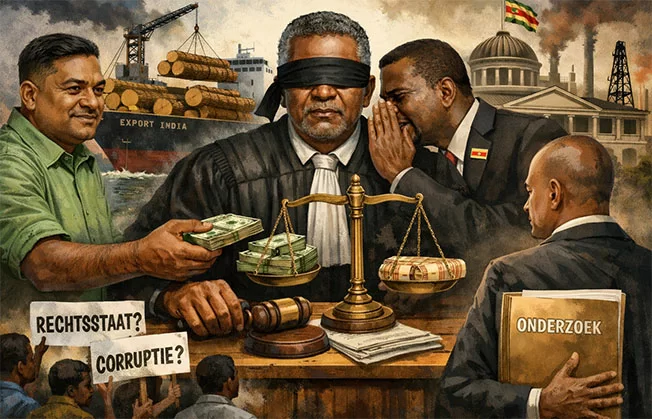
    Six timber enterprises have positioned themselves as victims of what they term ‘sudden government intervention,’ claiming the minister’s directive introduced unexpected new requirements. This argument proves both legally and factually untenable. Phytosanitary certification constitutes a legal obligation derived from national legislation and international treaties, not merely policy preferences of individual ministers. Established exporters have operated under these requirements for years.

    The ministry’s communication represented not the introduction of novel regulations but rather enforcement of existing mandates—a crucial distinction. In any rule-of-law society, businesses cannot legitimately appeal to ‘established practice’ when knowingly operating in violation of requirements, whether dealing with timber, fish, rice, gold or any other export commodity.

    The central inquiry therefore shifts from why Minister Noersaliem enforced regulations to why previous administrations apparently did not. If current timber shipments failed compliance standards while previous exports received certification, only two conclusions emerge: systematic regulatory neglect or active complicity in rule-breaking. Both scenarios indicate serious governance failures where systematic non-compliance creates fertile ground for corruption, conflicts of interest and political manipulation.

    Most alarmingly, judicial intervention has compounded these concerns. The cantonal judge avoided addressing the core issue of regulatory compliance, instead prioritizing arguments about irreversible financial damage. This establishes a dangerous legal precedent suggesting that those who act quickly, ignore regulations, and subsequently threaten financial claims can force the state into retroactive authorization.

    The implications extend far beyond timber. Rice exporters investing in certification, fisheries undergoing international audits, gold companies struggling with compliance, and vegetable exporters meeting strict European standards now face distorted incentives. Why maintain strict adherence when precedent demonstrates that violation pays?

    At the strategic level, Suriname’s credibility faces imminent jeopardy as the nation approaches large-scale oil and gas production. These industries fundamentally depend on certification, compliance and local content requirements. Surinamese businesses must demonstrate adherence to international standards regarding safety, environment, quality and governance—not as paper formalities but as verifiable practices.

    How credible appears Suriname’s commitment to compliance if certificates can be coerced under pressure? How convincing becomes our narrative to international partners and investors if regulations prove negotiable for the sufficiently powerful? In petroleum industries, reputation constitutes everything. A single perception of flexible regulations could cost millions in investments and exclude local companies from participation.

    This case transcends six timber companies versus the state. It represents societal injustice where economic power hijacks legal principles, where influential entities place themselves above the law and, worse, manipulate legal frameworks to their advantage. Unless the state establishes clear political and judicial boundaries, we risk legitimizing an economy where compliance becomes optional and integrity subordinate to pressure.

    Should the National Assembly refrain from launching parliamentary investigations and the Public Prosecutor’s Office neglect examining potential criminal offenses, they effectively confirm that capital outweighs justice in Suriname. Such outcome represents not governance but organized lawlessness.