
Almost 30 small and medium-sized enterprises (SMEs) across Barbados are currently completing a rigorous export preparation bootcamp, laying the groundwork for a landmark trade expedition to New York scheduled for mid-September. The initiative is tailored to support first-time trade mission attendees in converting global networking exposure into tangible, long-term business growth.
作者: admin
-

Mrs. Vernice “Debbie” Williams, widow of SPBS Founder & President, to be honored with 2026 Distinguished Service and Legacy Award at Dr. Stewart O. Williams Awards Gala in New York.
A decades-long legacy of selfless service across the military, healthcare, and community advocacy will be formally honored this fall, as Mrs. Vernice “Debbie” Williams, widow of Sandy Point Benevolent Society (SPBS) founder Dr. Stewart O. Williams, is set to receive the 2026 Distinguished Service and Legacy Award at the annual Dr. Stewart O. Williams Awards Gala in the Bronx, New York.
Williams, a 70-year-old Bronx native, closed out a more than 30-year career of public service when she retired in March 2026, leaving behind a trail of transformed lives shaped by her discipline, empathy, and consistent commitment to lifting up others. Her path of service began in uniform: Williams spent six years serving honorably in the United States Army, where she rose to the rank of Sergeant. That tour of duty instilled in her the core leadership skills, resilience, and sense of civic duty that would define every phase of her later career.
After concluding her military service, Williams turned her focus to caring for communities through nursing. She earned first an Associate of Science in Nursing from Montgomery County Community College, followed by a Bachelor of Science in Nursing from Immaculata University, launching a clinical career that spanned 26 years at Abington Hospital (now part of Jefferson Health). During her tenure there, she worked across high-need specialties including Medical-Surgical Nursing, Telemetry, and Stroke Care, earning a reputation among patients and colleagues alike for her calm demeanor, compassionate care, and unwavering professionalism. She also took on the critical role of clinical preceptor, mentoring hundreds of newly licensed nurses as they transitioned into their first roles in patient care.
Later in her career, Williams joined Aetna/CVS Health as a Nurse Case Manager, where she specialized in supporting patients navigating complex, fragmented U.S. healthcare systems. She coordinated cross-continuum care for vulnerable patients and connected countless families with life-sustaining social and medical resources, extending her commitment to patient advocacy beyond the hospital walls.
Beyond her professional career, Williams was a foundational leader of SPBS, the nonprofit organization her husband founded and led for decades. Working side-by-side with Dr. Williams for more than 40 years of marriage, the pair built their family on a shared foundation of faith, perseverance, love, and service. Williams helped advance SPBS’s core mission of expanding educational access for underserved youth and empowering the next generation of community leaders. She is also a proud mother of three daughters and grandmother of two grandchildren, and in retirement, she prioritizes spending time with family, building new memories with her grandchildren, traveling, and enjoying the fruits of a life spent in service.
The 2026 Dr. Stewart O. Williams Awards Gala will take place at Maestros Catering Hall, located at 1703 Bronxdale Ave in the Bronx, and carries the fitting theme “Rooted in Service, Grounded in Giving Back.” Early-bird tickets are available for $140 through August 25, 2026, and can be purchased from SPBS members or online via the organization’s Givebutter page at www.givebutter.com/spbsinc.
-

YEEP Records 96.5% Overall Pass Rate in CSEC and CAPE Examinations
The Youth Education and Empowerment Programme (YEEP), a leading education-focused initiative designed to support secondary and post-secondary learners, has announced strong results from the 2026 Caribbean Secondary Education Certificate (CSEC) and Caribbean Advanced Proficiency Examination (CAPE), posting an impressive 96.5% overall pass rate among its participating students.
A total of 196 candidates from the programme sat examinations across 13 different core and elective subject areas this year. Of these participants, nine students achieved a perfect 100% pass rate across all of the examinations they attempted, standing out as top performers in the YEEP cohort.
Breakdowns of results by subject show high pass rates across most tested areas: 91% of YEEP students earned passing grades in Mathematics, 93% passed Physical Education, and 85% secured passing marks in Social Studies. Other unlisted subjects posted even higher pass rates that contributed to the programme’s strong overall outcome.
This year’s result marks a significant milestone for the initiative, continuing a consistent pattern of year-on-year improvement in student performance. In 2025, YEEP reported an 85% overall pass rate across the same examinations, up from 80% recorded in 2024. The latest jump of more than 11 percentage points over the past two years signals growing effectiveness of YEEP’s support models for students preparing for these high-stakes regional credentialing examinations.
-

Antigua and Barbuda FA backs embattled FIFA President Gianni Infantino
The football governing body of Antigua and Barbuda has publicly thrown its weight behind Gianni Infantino, the president of the International Federation of Association Football (FIFA), who has faced growing scrutiny and controversy in recent months. In an official statement released by the Antigua and Barbuda Football Association (ABFA), the organization reaffirmed its confidence in Infantino’s leadership, citing his ongoing efforts to expand global football development, particularly in small island nations and emerging football markets across the Caribbean.
Infantino has been at the center of multiple ongoing controversies, including questions surrounding ethical governance practices and investigations into dealings related to FIFA-led event hosting contracts. Despite these challenges, ABFA officials note that under Infantino’s tenure, the region has seen increased investment in youth training programs, infrastructure upgrades for local football facilities, and greater representation for smaller member associations in FIFA decision-making processes.
This public endorsement comes ahead of key FIFA leadership proceedings, where the future of Infantino’s presidency has been the subject of widespread speculation across the global football community. The ABFA’s backing adds to a growing divide among FIFA member associations, with some groups continuing to call for greater transparency and accountability at the organization’s highest levels, while other smaller associations have stood by the incumbent president, pointing to tangible benefits they have received during his time in office. For Caribbean football nations in particular, many argue that Infantino’s administration has prioritized closing the resource gap between large, wealthy football associations and smaller developing programs, a commitment that ABFA says it recognizes and supports.
-

FM Greene Says Government Will Never Deport a Judge
A fresh controversy over potential executive overreach into the island nation’s judicial system has prompted a firm public reassurance from Antigua and Barbuda’s top diplomat that the government will never act to remove or deport a sitting judge. Foreign Affairs Minister E.P. Chet Greene delivered the administration’s formal clarification during a live interview on the popular WTP radio program *Beneath the Surface*, where he addressed widespread public debate sparked by recent comments from Prime Minister Gaston Browne regarding criminal sentencing practices.
In clear, unambiguous terms during the interview, Greene stated: “This administration never deported a member of the judiciary, and it will never happen.” He pushed back against growing public narrative that suggested friction between the country’s three branches of government — the executive, legislature, and judiciary — warning that any perception of institutional division only serves to undermine public safety and embolden criminal actors.
“The respect for the separation of powers and the independence of the judiciary is guaranteed. It’s protected,” Greene emphasized, noting that these core democratic principles are enshrined in the nation’s foundational law. During the interview, he also read out an official follow-up statement issued by Prime Minister Browne, designed to clear up any misinterpretation of Browne’s initial remarks that ignited the controversy.
The Prime Minister’s clarification read: “To remove all doubt, no judge will be removed, reassigned, deported or otherwise dealt with by executive fiat. Questions concerning the tenure, assignment or conduct of a judicial officer are governed by the Constitution and the law, and those arrangements will be respected.”
Greene offered context for Browne’s original comments, explaining that they were delivered in a moment of well-founded frustration over the sharp rise in gun-related violence across Antigua and Barbuda, and widespread public anxiety over lenient criminal sentencing. He stressed that the Prime Minister’s formal clarification should put an end to all unsubstantiated speculation that the executive branch planned to interfere with the independence of the judiciary.
Moving past the controversy, Greene called on the public and all political factions to refocus attention on the core national crisis of violent crime. He urged stakeholders to engage in calm, fact-based, nonpartisan dialogue aimed at solutions, rather than petty political conflict. He reaffirmed that all three branches of government share a common goal of curbing gun violence, and repeated that institutional disunity only creates conditions that allow criminal activity to flourish.
-

Dominican writer Zephrine Royer shortlisted for 2026 BCLF Elizabeth Nunez Award
The Brooklyn Caribbean Literary Festival (BCLF) has advanced two Dominican creative voices to the final shortlist stage of its prestigious annual short fiction prizes, shining a spotlight on emerging and established storytelling talent from across the Caribbean and its diaspora.
Dominican writer and documentary filmmaker Zephryn Royer earned a spot on the 2026 shortlist for the BCLF Elizabeth Nunez Award for Writers in the Caribbean, recognized for her evocative short story *River Mouth*. In a separate category, fellow Dominican Kwame Labassiere was shortlisted for the Elizabeth Nunez Caribbean-American Writer’s Prize for his work *What Cannot Be Done Alone*.
Per an official statement from Royer’s team, the shortlist was made public via BCLF’s official Instagram account on Sunday, August 16, 2026. The awards, part of the festival’s annual Short Fiction Contest, were created to honor the legacy of Dr. Elizabeth Nunez, a celebrated Trinidadian-American novelist and Distinguished Professor of English at Hunter College, City University of New York, who spent decades advocating for underrepresented Caribbean and African-American writers.
The regional Elizabeth Nunez Award is open exclusively to creators who were born, raised, or hold citizenship in a Caribbean nation and currently live and work within the region. Entrants submit original short stories capped at 3,000 words, which are evaluated anonymously by a panel of established Caribbean authors.
Founded in 2019, BCLF holds the unique distinction of being the only literary festival based in the United States focused entirely on elevating Caribbean literature. Its dual Elizabeth Nunez prizes are designed to recognize exceptional literary talent both based in the Caribbean and among the Caribbean diaspora community in North America. The longlist for this year’s contest was first revealed on August 4 by judges Kevin Jared Hosein and Carol Mitchell, featuring submissions from creators across a wide range of Caribbean territories including Barbados, Dominica, Guyana, Jamaica, and Trinidad and Tobago.
Hosein, an acclaimed Caribbean author himself, praised the 13-story longlist as a bold collection of work defined by creative risk-taking and singular, unforgettable narrative voices. He emphasized the central role of character-driven storytelling in short fiction, noting that “a memorable character is the best vehicle to carry the reader.”
For Royer, who currently resides in Martinique, the shortlist recognition carries deeply personal meaning, as it offers her the opportunity to represent Dominica, the island that shaped her artistic identity and inspires all her creative work. “I am absolutely honoured to be a part of the BCLF short fiction contest shortlist. I am even more thrilled to be able to not only represent Dominica but to also pay homage to the place that shaped who I am as a writer and that breathes life into all my stories,” Royer shared in a statement.
Royer already boasts an established career in nonfiction storytelling, with her documentary work earning recognition and support from leading industry programs including IF/Then, HotDocs Cross Currents, the Caribbean Film Academy, Brown Girls Doc Mafia, and the European Film Market. In fiction, this is not her first major accolade: her stories have twice been longlisted for the Commonwealth Short Story Prize, with *Alé-Viré* selected in 2024 and *Witness* earlier this year. *River Mouth* marks Royer’s first honor from BCLF.
She holds an Associate’s degree in Modern French Literature and a PhD in Bilingual Education from the Université des Antilles. The winners of both BCLF Elizabeth Nunez awards will be announced during the 2026 Brooklyn Caribbean Literary Festival, set to run from September 9 to 13 in Brooklyn, New York. This year’s gathering will explore the theme “One Hand Don’t Clap: Caribbean Worlds, Writing Towards the Future.”
-
Coach Albert Joseph on retirement, evolution, and passing the stopwatch
After more than three decades shaping the trajectory of track and field across Grenada, veteran sports administrator and coach Albert Joseph will formally retire from his public service role on October 14, capping a career that transformed grassroots athletic development and institutional modernization across the island nation.
A 58-year-old native of Gouyave, St John, Joseph’s influence extends far beyond his official government tenure. As the man who nurtured the early careers of some of the Caribbean’s most decorated track stars, modernized race officiating technology, and proved that world-class athletic excellence can be grown entirely from local roots, his footprint on Grenada’s sporting landscape is already permanent. In an interview, the outgoing coach confirmed he had received his formal retirement notice from the Public Service Commission, noting he would begin pre-retirement leave on July 1 before his official exit date in October. Contrary to what the formal retirement might suggest, this marks no end to his work with young sprinters: he will retain his position as Head Coach of the 473 MVP Track Club to continue nurturing grassroots talent.
Joseph’s journey into athletics coaching began by accident, sparked by a defining global sporting moment. A childhood cricket enthusiast who dabbled in high jump during his school years, his passion for track and field ignited after watching the iconic 1988 Seoul Olympics 100-meter showdown between Ben Johnson and Carl Lewis – the first live track event broadcast on local television. He started his professional career as a primary school teacher in 1985, and only stumbled into coaching seven years later, when he was assigned to lead St John’s Roman Catholic School’s athletic team.
“I started in 1992 with the school team, and I didn’t know what I was doing,” Joseph admitted. Three years later, Abrel Patrick, current Second Vice President of the Grenada Athletics Association, connected him to a Level 1 coaching certification course, and he committed to building his craft full-time. His work with youth in St John eventually led to the founding of the Speed Zone Track Club in 2005, where he served as a mentor and community leader for regional talent for 15 years.
That foundational work laid the groundwork for a career that would produce generations of elite athletes. Joseph is universally recognized as the early development coach for Kirani James, Grenada’s beloved triple champion (Olympic, World, and Commonwealth) in the 400 meters. He also guided the formative careers of Olympic sprinters Janelle Redhead and Joel Redhead, and continues to develop today’s rising young stars including Devonni Ferguson, Shantay Augustine, and Ethan Sam. His reputation as a 400-meter specialist drew talent from across the Caribbean: Trinidad and Tobago’s Olympic star Machel Cedenio, who placed fourth at the 2016 Rio Games and set a national record of 44.01 seconds, trained under Joseph’s cross-border program for three years early in his career, even living with Joseph and attending Presentation Brothers’ College in 2013 to access his coaching.
Reflecting on how local athletics has shifted between James’ era and today, Joseph offered a candid assessment of generational change. He noted that young athletes of past decades were mentally and physically tougher, capable of handling far higher training workloads without complaint, while today’s younger cohort is softer and less able to tolerate intense, high-volume workouts. Rather than dig in against this cultural shift, Joseph restructured his entire coaching approach. Today, he focuses primarily on foundational development for children ages 5 to 13, adapting his training to younger athletes – and highlighting a key strength of the new generation: they are far more consistent than their predecessors.
Athletes who have trained under Joseph praise his adaptive, pedagogical approach that blends technical skill with sports psychology. Shantay Augustine, a national junior sprint hurdles champion, said she had no idea of Joseph’s celebrity as Kirani James’ coach when she first joined his club, but was immediately struck by his commitment to explaining the purpose behind every drill. “His coaching style is mostly quiet and calculated, but sometimes it would be loud. It depends on the athlete or specific workout, and if we were doing what needed to be done or playing around,” Augustine explained. She credits Joseph with steering her to hurdles from sprints, and still uses the goal-setting framework he taught her for every season.
Ethan Sam, a multiple-time CARIFTA medallist and former 473 MVP standout, similarly traced his rapid improvement to Joseph’s guidance. When he joined the club as a first-form secondary student in 2019, Joseph cut his 100-meter time from 13 seconds to 11 seconds by age 13. “He is a good coach once you put in the effort and he sees effort, he pushes you more,” Sam said, noting that while Joseph can be stubborn and understated as a motivator, his technical expertise delivers tangible results.
Beyond his work on the track, Joseph’s colleagues in the Ministry of Youth and Sports highlight his quiet, selfless leadership as a public servant. “While the public knows Albert Joseph as one of Grenada’s most accomplished athletics coaches, those who work alongside him in the office see an entirely different dimension of the man,” said Kerlon Peters, Sports Coordinator at the Ministry of Sports. “Albert is not one who seeks recognition or attention. Instead, he quietly leads by example, always willing to share his knowledge, support colleagues, and offer guidance to younger officers and coaches.”
Within the public service, Joseph’s influence extended far beyond coaching elite athletes: he strengthened local coaching networks, guided national sports programming, and championed holistic athlete development across every parish. “In the office, he is respected for his professionalism, patience, and calm demeanour. He listens more than he speaks, values teamwork, and consistently puts the interests of athletes and the nation ahead of his own,” Peters said. “His decades of experience have made him a trusted advisor whose opinions are sought because they are grounded in wisdom, integrity, and practical experience.”
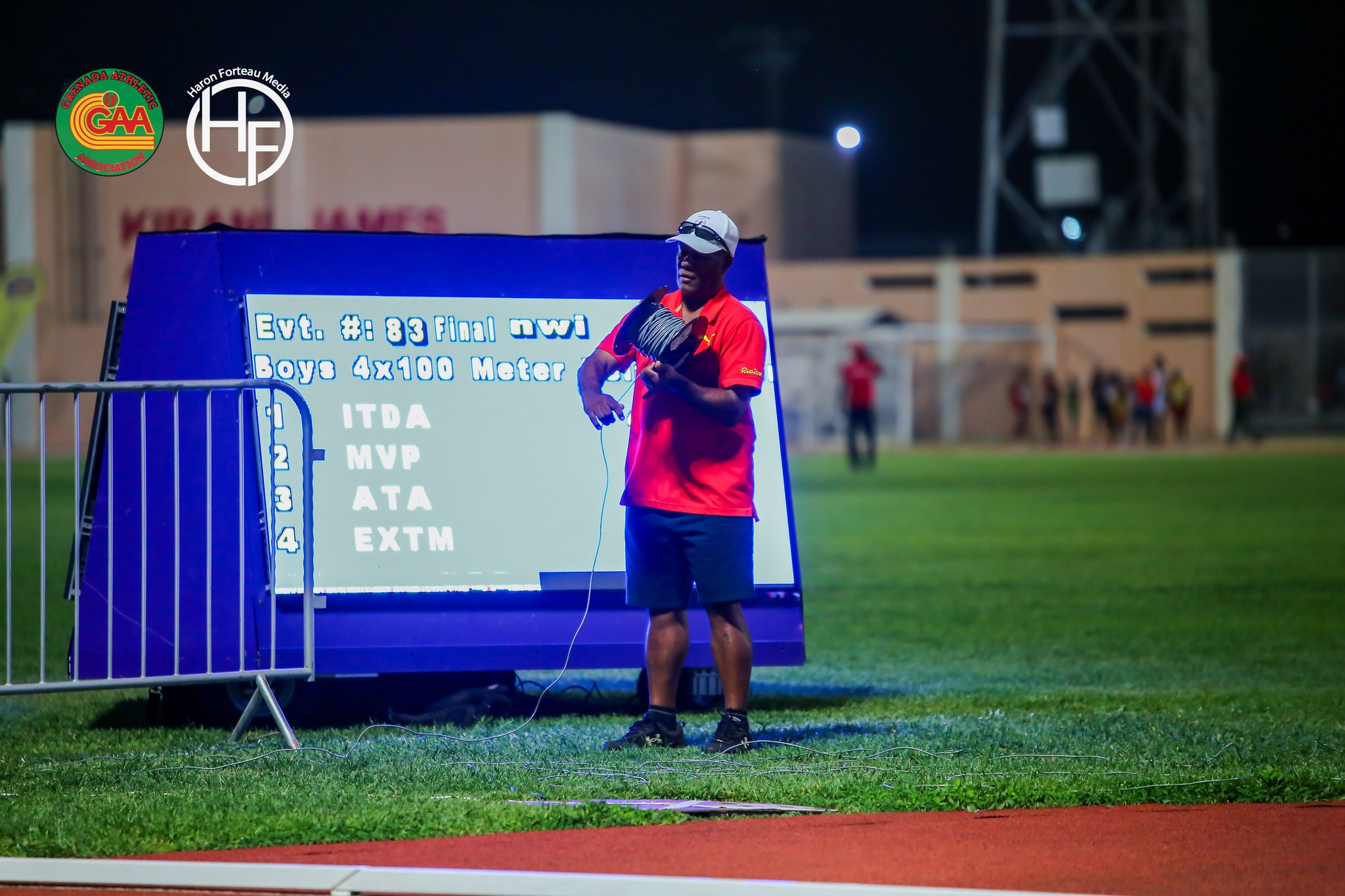
Joseph’s commitment to institutional improvement also led him to revolutionize race timing and officiating in Grenada. He first learned fully automatic photo finish timing at the 2000 CARIFTA Games hosted in Grenada, training under Finish Lynx agent Frank Monsalve. A 2004 hurricane destroyed the national stadium and the timing cameras, leaving the island without professional photo finish infrastructure for 12 years. When the technology returned for the 2016 CARIFTA Games, Joseph led its revival, serving as backup to veteran timing official Cleon Fowler before taking over as Chief Photo Finish Judge for Grenada that same year – a role he has held ever since.
In recent years, Joseph has prioritized passing the technical torch to the next generation, training his son Obadele (known as OBJ) to take over photo finish operations starting in 2022. At the most recent CARIFTA Games, the father-son team split responsibilities: Albert aligned cameras, troubleshooted technical issues, and oversaw team registration and Meet Manager software, while OBJ led photo finish operations. The transition to fully automatic timing required phasing out decades of manual hand-timing at the national stadium. While there was initial pushback from veteran officials, Joseph gradually integrated automatic timing as the standard, using hand-timing as a backup before it was fully retired at the national stadium to align with World Athletics elite standards. The shift has reduced the number of officials needed, sped up result processing, and cut down on timing errors, though hand-timing remains in use as a developmental tool at smaller rural meets.
Away from training blocks and timing software, Joseph remains a deeply committed local recreational athlete, who plays cricket in the over-40 Carriacou Masters tournament and plays volleyball weekly at local courts across the island. When asked to sum up his 30-plus year legacy, he identified three core contributions that have transformed Grenadian athletics. First, he paved the way for local coaches to prove they can develop world medal-winning athletes without relying on foreign expertise – a precedent set by Kirani James that has since been followed by other locally trained stars including Meleni Rodney (coached by Conrad Francis) and Anderson Peters (coached by Paul Phillip). Second, he introduced the Active Dynamic Warm-Up method developed by legendary sprint coach Loren Seagrave, which is now used by almost every athletic club on the island. Third, he brought professional photo finish timing to primary and secondary school competitions across all parishes, ensuring young rural athletes compete on the same professional standards as elite international contenders.
As Joseph prepares to close his formal public service career this October, colleagues say his legacy extends far beyond medals and championship titles. “Albert’s work ethic has always been defined by discipline, consistency, humility, and excellence,” Peters concluded. “As he prepares for his retirement this October, Albert leaves behind more than medals and championships. He leaves a lasting legacy of transformed lives, stronger sporting institutions, and a culture of excellence that will continue to inspire future generations of athletes, coaches, and public servants. His contribution to Grenada’s education system, athletics programme, and public service is immeasurable.”
-
Engineering Plan Submitted to Repair Potworks Dam Leak
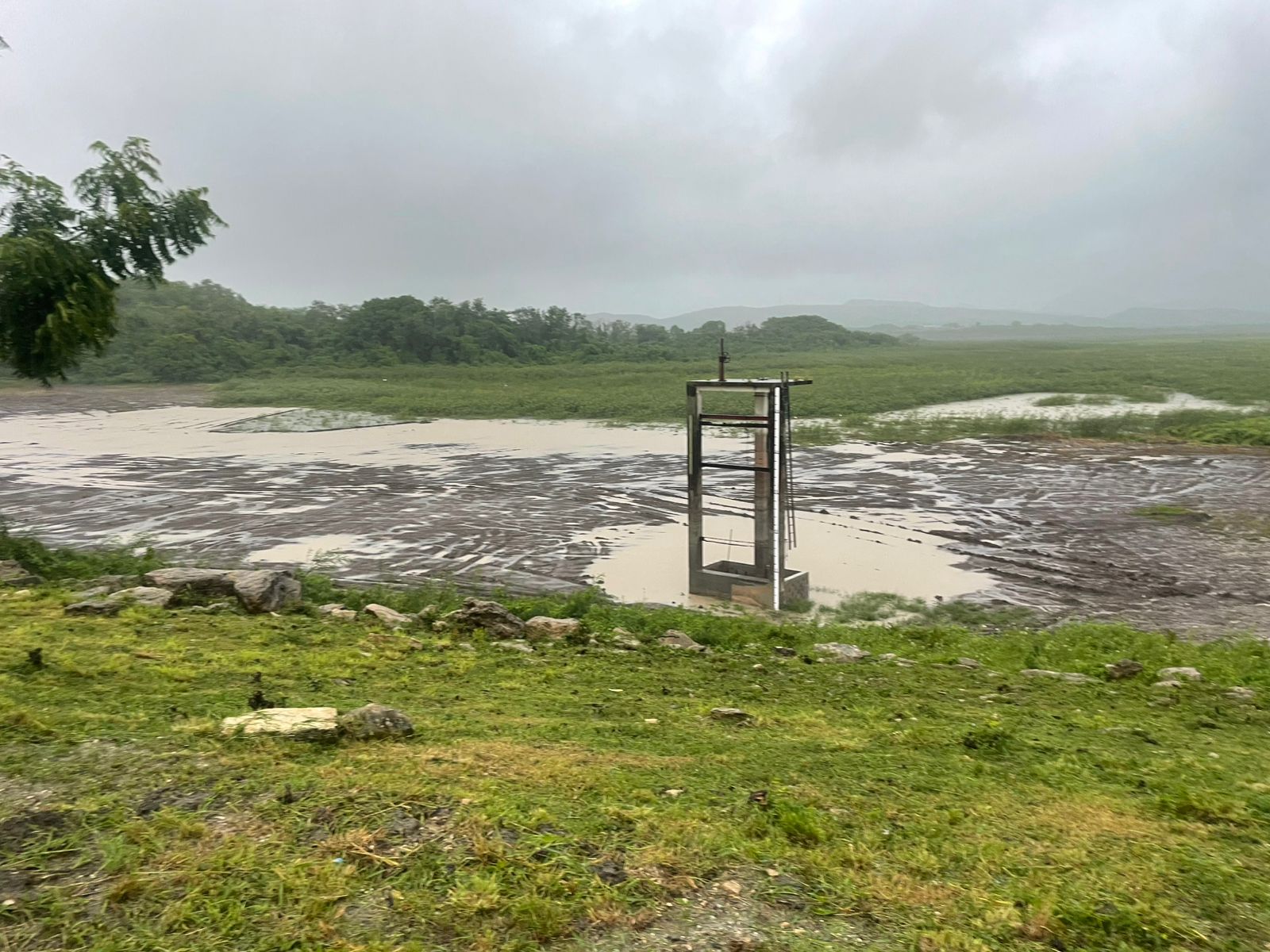
Antigua and Barbuda’s government has secured a detailed engineering proposal to fix a decades-long leakage issue at Potworks Dam, a critical water infrastructure project that stands to recover nearly 800 million gallons of lost storage capacity if the work moves forward.
Utilities Minister Melford Nicholas made the first public announcement of the completed assessment during the administration’s weekly “Taking Stock” radio broadcast on Tuesday evening, noting the disclosure qualified as breaking news because the final report had not yet been delivered to the national Cabinet for review.
According to Nicholas, the leakage problem has plagued the 320-acre dam for a quarter of a century, preventing the facility from ever reaching its maximum designed storage capacity of 2 billion gallons. The issue originates from undetected seepage under the dam’s southern spillway, which gradually eroded the supporting soil beneath the structure. Over time, this erosion weakened the secondary spillway construction built atop the foundation, leading to the persistent leak that has drained stored water for decades.
Technical specialists from Cuba carried out the full on-site assessment of the damage and submitted their final report, complete with detailed technical schematics and engineering recommendations, on August 17. Now that the assessment phase is complete, government officials will next calculate the full cost of executing the repair works to determine the project’s next steps.
Nicholas emphasized that the government intends to advance the project on an accelerated timeline, with the goal of completing all repairs before the region’s peak rainy season begins. Recovering the lost 800 million gallons of capacity would transform the dam’s ability to serve as a reliable water reserve for the country. At current daily depletion rates of roughly 1 million gallons, the additional storage would provide a substantial buffer against water shortages during prolonged dry spells, even after accounting for natural evaporation losses.
Beyond the recovered storage, Potworks Dam’s system is engineered to capture excess water that would otherwise be wasted. Of the dam’s two spillways, one routes overflow to a network of smaller dams in the Collins area, where the water is captured and retained for future use.
The Potworks Dam repair project is just one part of the government’s broader strategy to boost the country’s water security. Officials are also evaluating and developing additional new water catchment initiatives, all designed to strengthen Antigua and Barbuda’s resilience against extended drought conditions that increasingly threaten the nation’s water supply.
-
PM Browne Warns Public About AI Deepfake Scams Using Public Officials
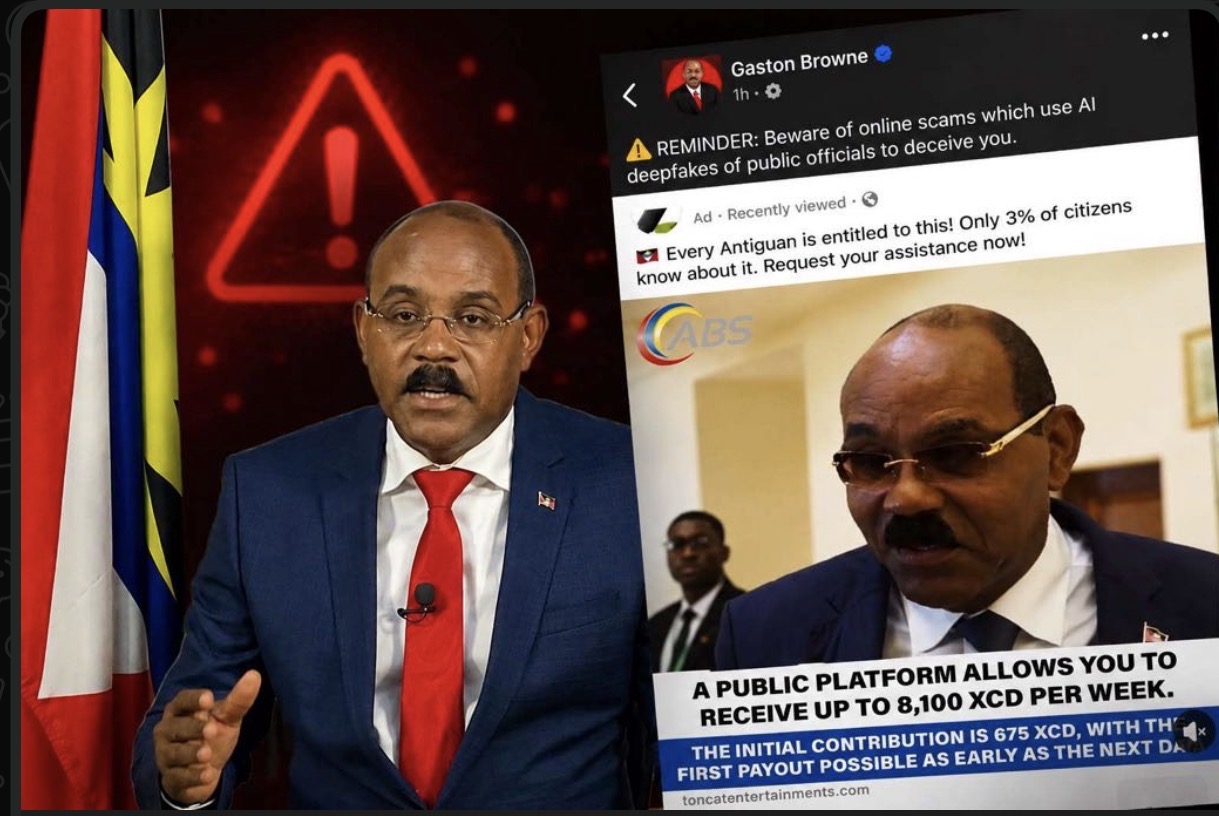
Prime Minister Gaston Browne of Antigua and Barbuda has sounded a urgent alarm for the nation’s public, cautioning residents against a rapidly spreading wave of fraudulent schemes that leverage artificial intelligence deepfake technology to impersonate high-ranking public officials. In an official address delivered this week, Browne laid out clear details of how bad actors are now using cutting-edge AI tools to create hyper-realistic fake audio recordings and manipulated video content that mimics the voices and likenesses of sitting government ministers and other senior public servants.
The schemes, which Browne confirmed have already targeted a small number of unsuspecting residents, follow a familiar but increasingly dangerous pattern: scammers reach out to individuals via phone calls, social media platforms, or email, using deepfake-generated content to convince victims that they are speaking directly with a trusted public official. Once they have built a false sense of credibility, the fraudsters pressure targets into handing over sensitive personal information, such as bank account details, national identification numbers, or make fraudulent demands for immediate cash transfers under false pretenses—often claiming the funds are needed for an emergency government service, a supposed official grant processing fee, or a private matter involving the official’s family.
Browne emphasized that this type of AI-powered fraud marks a troubling new evolution in criminal activity, one that is far more convincing to the average person than traditional scam tactics. Unlike generic phishing emails or simple phone impersonation, deepfakes can replicate facial expressions, vocal inflections, and mannerisms so accurately that even people who follow public officials closely can struggle to spot the forgery. The prime minister stressed that the Antiguan and Barbudan public must remain constantly vigilant when contacted by anyone claiming to be a government official, noting that no legitimate government representative will ever demand personal financial information or request direct cash payments via unsolicited communication.
He went on to outline steps that the public can take to protect themselves: if an unsolicited contact makes any request for money or personal data, residents should immediately end the communication and report the incident to local law enforcement and the country’s cybercrime unit. Browne also confirmed that government agencies are currently reviewing new regulatory frameworks and public awareness campaigns to address the growing threat of deepfake-enabled fraud, as officials work to stay ahead of criminals adapting new AI tools for illegal activity.
Local law enforcement officials have echoed the prime minister’s warning, noting that cross-border scam operations are increasingly turning to AI to lower their operational costs and increase their success rate. They added that anyone who has already fallen victim to one of these deepfake schemes should contact authorities immediately to limit potential financial damage and help investigators track down the responsible criminal networks.
-
New leadership on the horizon for Grenada Athletics Association
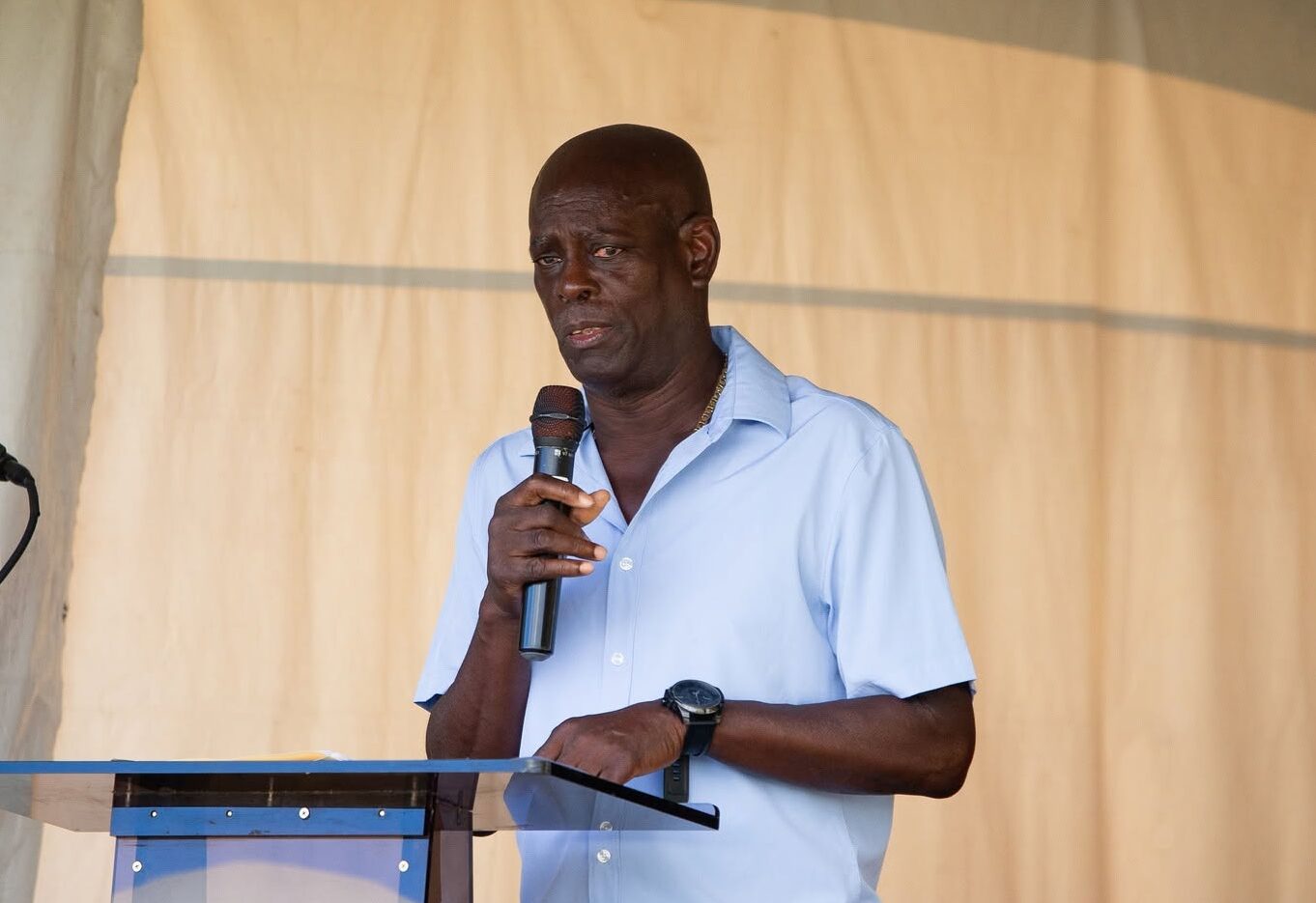
The Grenada Athletics Association (GAA), the governing body for track and field across Grenada’s tri-island territory, is gearing up for a landmark leadership change with its elective general meeting officially set for 22 August 2026. This transition will bring an end to the four-year tenure of incumbent President Conrad Francis, who has announced he will not seek re-election to the top post, clearing the way for a new leader to steer the national athletic community forward.
The election was originally constitutionally scheduled for January 2026, coinciding with the expiration of the current executive board’s four-year mandate. However, GAA member stakeholders voted to postpone the vote to prioritize administrative continuity and stability, allowing the organization to focus fully on Grenada’s high-profile hosting of the 51st CARIFTA Games, which will take place over the Easter weekend from 4 to 6 April 2026.
Francis, a lifelong fixture in Grenadian athletic circles, boasts a decades-long resume as an athlete, coach, educator, and senior sports administrator. He first claimed the GAA presidency at the association’s last elective meeting held on 22 January 2022, stepping into the role after a long career rooted in grassroots sports development. Before entering the top administrative post, Francis built his reputation as a physical education teacher and elite coach, most famously leading Boca Secondary School’s girls’ track and field team to the school’s only InterCol Championship title in 1987. He also founded the popular annual *InterCol Preview* publication, a staple resource for local competitive school sports, and later went on to serve as Grenada’s national Director of Sports, taking over the role from Tyrone Harbin.
Francis’ extensive track record in major event management includes serving as Competitions Director for Grenada’s successful hosting of the CARIFTA Games in both 2000 and 2016, as well as the 2003 Central American and Caribbean (CAC) Senior Championships. On the international stage, he has accompanied and coached Grenadian national teams at multiple editions of the World Athletics Championships and the Olympic Games, bringing invaluable experience to the country’s emerging elite talent. Even in his final year in office, Francis oversaw a historic milestone for the association: fielding the largest non-CARIFTA national team in GAA history to compete at the 2026 North American, Central American and Caribbean Athletics Association (NACAC) Under 18 and Under 23 Championships in Mexico.
Over the course of his presidential tenure, Francis prioritized expanding local competitive opportunities and nurturing young athletic talent through a strategic overhaul of the GAA’s annual event calendar. His signature achievement was the launch of three new named competitions that now form the core of the GAA Developmental Series: the December-hosted Neville Glean Classic, the Adrian Mitchell Open, and the January-held Charlie George Classic.
First Vice President Johnell Mitchell highlighted the breadth of progress the GAA achieved under Francis’ leadership, noting: “We have seen an increase in the number of local clubs, increase in representation in competitions at regional and international level including NACAC and World Athletics Competition, the exceptional growth in participation in the Whitsuntide Games and of course hosting 2 CARIFTA Games in 3 years.”
The outgoing GAA Executive Board, which formally took office on 30 January 2022, comprises a full leadership team tasked with overseeing administration, policy, and strategic development for the sport across the tri-island state. In addition to President Francis, the current board includes Johnell Mitchell (1st Vice President), Abrel Patrick (2nd Vice President), Desiree Stephen (General Secretary), Geraldine Thompson (Assistant General Secretary), and Claudia Francis (Treasurer). Rounding out the executive are Public Relations Officer Kwame Hypolite, Coaches’ Representative Denise Williams, Athletes’ Representative Jelani Franklyn, and Officials’ Representative Devon Layne.
When the GAA holds its vote in August, member clubs and key stakeholders will cast ballots to select the next executive cohort. The new leadership will inherit the responsibility of guiding Grenada’s world-class athletic talent through the remainder of the 2026 competitive season and setting the strategic direction for the sport in the country for the coming four years.