
A vehicle owner is turning to the public for urgent assistance after their dark-colored Honda Fit RS was stolen recently, in what comes as the latest report in a growing wave of automobile thefts across the region. The stolen compact car carries the registration plate number A 7090, marking the key identifying detail the public can use to spot the vehicle. Law enforcement and the owner have not released additional information about the specific conditions surrounding the theft, including when and where the vehicle was last parked before it went missing. The appeal comes at a time when local communities have seen a marked uptick in vehicle theft reports, a trend that has raised growing attention among local residents. Any individual who spots the matching vehicle, or has credible information about where it might be located, is requested to contact the hotline at 732-0640 to share their tips with relevant authorities.
作者: admin
-
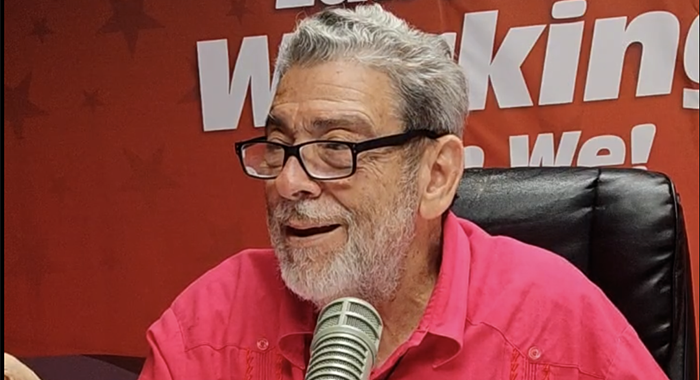
Gonsalves brands Friday’s Taiwan trip ‘pure hypocrisy’ and ‘underwhelming’
A sharp political debate has erupted in St. Vincent and the Grenadines (SVG) following Prime Minister Godwin Friday’s official visit to Taiwan last week, with opposition leader Ralph Gonsalves launching a scathing attack labeling the trip and the ruling New Democratic Party (NDP)’s diplomatic shift as nothing short of pure hypocrisy.
Speaking publicly on Wednesday, Gonsalves, who leads the Unity Labour Party (ULP), argued that the major policy and economic gains the NDP has touted from Friday’s first high-profile overseas trip since the party took power in November are severely underwhelming, particularly when measured against the Caribbean nation’s decades-long formal diplomatic relationship with Taipei. In Gonsalves’ framing, the visit is a calculated political maneuver: it is designed to rewrite the NDP’s long-standing public position on cross-Strait relations, while repackaging longstanding Taiwanese development assistance as newly secured breakthroughs for the new administration.
The roots of this partisan clash stretch back years to the NDP’s formal policy position on cross-Strait affairs. Gonsalves recalled that during the lead-up to the November 2024 general election, the ULP repeatedly warned voters that an NDP victory would result in SVG cutting its long-standing diplomatic ties with Taiwan. At the time, the NDP avoided direct public confirmation of the plan, instead only hinting that it would preserve the existing diplomatic relationship with Taipei. What many observers have overlooked, Gonsalves argues, is the NDP’s years of formal commitment to shifting recognition from Taipei to Beijing.
Gonsalves himself offers a complicated history on SVG-Taiwan ties: before he took office as prime minister, he publicly criticized the diplomatic relationship, but once in power, he maintained the tie for 25 years. During his tenure, his administration borrowed hundreds of millions of dollars in loans from Taiwan, and as recently as 2023, he publicly noted that SVG’s accumulated debt to Taipei acts as a lasting constraint on any future move to cut diplomatic relations, saying it had “put a hook in the gill of anybody” in SVG who sought to break ties. The NDP first formalized its support for a one-China policy, recognizing Beijing as the sole legitimate government of China, back in 2016 when the party was led by Arnhim Eustace. Gonsalves pointed out that both Eustace and later Friday, who succeeded him as party leader, repeatedly made clear that if elected, the NDP would sever ties with Taipei and establish formal diplomatic relations with Beijing. As evidence, Gonsalves cited Friday’s 2018 official visit to mainland China while he served as opposition leader, a trip Gonsalves says was intended to formalize the NDP’s relationship with Chinese authorities. He also referenced a 2019 report from local newspaper *The Searchlight*, which documented that Friday reaffirmed his support for the one-China policy even after attending a special parliamentary address delivered by Taiwan’s President Tsai Ing-wen.
This long public record makes Friday’s current rhetoric on the SVG-Taiwan relationship a stark and opportunistic reversal, Gonsalves argues. During the Taiwan visit, Friday publicly described bilateral ties as a deep “partnership” and publicly endorsed the further expansion of cooperation between Kingstown and Taipei. Gonsalves questioned whether this sudden shift is rooted in short-term political expediency rather than genuine policy conviction, asking: “Are they only saying this to get past the funding of the hospital?” He suggested the NDP is prioritizing securing completion of the Taiwan-funded acute care hospital in Arnos Vale and obtaining debt relief from Taipei, before renewing plans to switch diplomatic recognition to Beijing.
The debate also extends to the economic commitments Friday announced from the trip. Friday highlighted that his meetings in Taipei secured two key new pledges: US$2 million for the NDP’s proposed new National Development Bank, and an additional US$1.5 million for domestic social programs. Gonsalves pushed back heavily on the claim that these are new resources, arguing the funds are almost certainly just a repackaging of the annual US$4 million civic infrastructure grant SVG has received from Taiwan for years. If that is the case, he warned, the reallocation of existing funds to new priorities will have negative consequences for ongoing programs that currently rely on the annual grant, including the PRYME and PRYME Plus small business support initiatives, the YES and SET youth employment and training programs, and multiple social protection and community development projects.
Gonsalves also addressed widespread speculation that Friday’s talks opened the door for major debt relief on SVG’s outstanding loans from Taiwanese financial institutions, which fund major national infrastructure projects including Argyle International Airport, the new Arnos Vale acute care hospital, and other public works. He explained that any meaningful debt relief is far more structurally complex and politically sensitive than the NDP has implied. He noted that Taiwan’s loans to SVG typically carry interest rates pegged to the Secured Overnight Financing Rate (SOFR) plus additional margins, but his own administration negotiated interest caps to protect SVG’s public finances, including a 3.5% maximum rate on the US$120 million hospital loan secured during his tenure. Beyond domestic financial considerations, Gonsalves pointed out that Taipei faces a major political obstacle to granting widespread debt relief to SVG: if it offers concessions to Kingstown alone, it will almost certainly face identical demands from all of its other 11 remaining diplomatic allies around the world, creating a cascade of pressure it cannot easily accommodate.
In a striking closing point on the politics of cross-Strait relations, Gonsalves argued that both Taipei and Beijing, as rooted in the long history of Chinese civilization, have deep institutional memory and will not be fooled by short-term, opportunistic political maneuvers from SVG’s new government. “They thought they could have gone and fooled the Taiwanese,” he said of Friday’s delegation. “The Taiwanese are representatives of an ancient civilization… You can’t trick them. You can’t fool them. You can’t ‘mama guy’ them. You can’t blackmail them. Same thing with the mainland Chinese government … always remember these ancient civilizations. There are some fellers who just hurry come up … and they think they could hide their hypocritical past and mama guy people and trick people. No, no, no, no, no.”
Gonsalves positioned his own tenure as a model of consistent, principled diplomacy, noting that he maintained formal diplomatic relations with Taiwan throughout his 25 years in office, while still pursuing pragmatic engagement with Beijing in multilateral forums including the Caribbean Development Bank, the World Bank, the International Monetary Fund, the United Nations, and the G77. Instead of a formal one-China policy, he said he advanced what he calls a “one Chinese civilization” framework, which allows for multiple political entities within the broader shared cultural sphere to coexist peacefully.
The former prime minister also turned criticism toward local media coverage of Friday’s visit, calling out reporting from iWitness News in particular. The outlet’s founder, Kenton Chance, currently serves as SVG’s appointed ambassador to Taiwan. Gonsalves criticized that iWitness News headlines portrayed standard, routine diplomatic courtesies — including military honors and a state banquet — as historic, unprecedented triumphs, and framed all negotiations on debt, trade promotion, and technical vocational education and training (TVET) cooperation in exaggerated, glowing terms. He questioned how Chance can simultaneously fulfill his official diplomatic duties to the state and act as a public propagandist for the ruling NDP, and challenged Chance to publicly deny he wrote the favorable pieces in question. It is worth noting that Gonsalves did not address the fact that similar favorable coverage ran in multiple other local media outlets, nor did he provide concrete evidence that Chance personally authored the headlines in question. Gonsalves also noted that every head of government who makes an official visit to Taiwan receives the same level of ceremonial treatment Friday received, meaning the courtesies are not a unique win for the new administration.
Closing his remarks, Gonsalves emphasized that for small developing states like SVG, diplomatic credibility and policy consistency are critical assets, regardless of external pressure from larger global powers. “We’re small, but you can’t tell me who I must have relations with,” he said, pushing back against external interference in SVG’s diplomatic choices. “And you can’t hold it against me if I have relations with [Taiwan], just like America can’t hold it against me because we have relations with Cuba.”
-
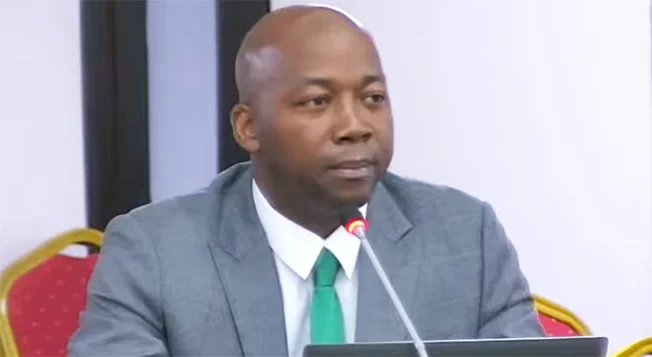
Abiamofo: SWM niet klaar voor olie- en gasontwikkeling
As Suriname prepares for rapid growth driven by its expanding oil and gas sector, the country’s national water provider remains woefully underprepared to handle surging demand for safe drinking water, Natural Resources Minister David Abiamofo has told the country’s National Assembly. The minister’s comments, delivered during a parliamentary debate on public utility services, laid out the urgent infrastructure gaps that threaten to undermine the country’s upcoming economic growth and leave thousands of citizens without consistent access to a basic public need.
Abiamofo emphasized that the growing energy sector will place unprecedented pressure on Suriname’s water supply chain. Expected economic expansion will bring new industrial activity, a growing population, increased housing construction, and higher demand for all public utilities, including water. Currently, more than a decade after the existing water infrastructure was put in place, the Greater Paramaribo region still relies on the same outdated water sources that have not kept pace with rising population and consumption. This mismatch between limited supply and growing demand has already left households across multiple regions struggling with chronic water shortages and low water pressure, while large swathes of the country still lack access to reliably safe drinking water even in 2026.
To address these gaps, the minister outlined that major investments are required across every part of the supply chain: developing new water sources, upgrading pumping infrastructure, building new production stations, expanding the existing distribution network, and cutting the high volume of non-revenue water lost through leaky pipes and outdated systems. Critically, Abiamofo confirmed that the Surinaamsche Waterleiding Maatschappij (SWM), the country’s national water utility, does not have the financial capacity to fund these critical upgrades independently.
The parliamentary debate also brought forward longstanding consumer concerns about SWM’s customer service and billing practices. Multiple assembly members from different political parties highlighted widespread confusion over water tariffs, billing calculations, and consumer billing processes. Opposition member Rabin Parmessar noted that consumers currently have no clear way to forecast how much they will be charged for their water usage, and called for the same level of tariff transparency that was previously implemented for the country’s electricity sector.
Abiamofo acknowledged these concerns, agreeing that public communication from the state-owned utility needs significant improvement. He confirmed that he shared the parliament’s concerns over customer service issues, and pledged to hold discussions with SWM leadership to improve clarity and accessibility of information for consumers around billing, service procedures and general customer support.
Lawmakers also raised questions about unmetered household connections, pointing out that consumers without individual water meters cannot be charged based on their actual consumption. Abiamofo pushed back on claims that these households avoid paying for water entirely, explaining that utility staff calculate a fair average bill based on multiple factors including household size and regional consumption data for comparable properties.
In closing, the minister stressed that the push to upgrade Suriname’s water infrastructure extends far beyond preparing for oil and gas development. At its core, the reform effort is rooted in a basic policy goal: ensuring every citizen of Suriname has access to consistent, safe drinking water, a standard that has not yet been achieved for communities across the country.
-
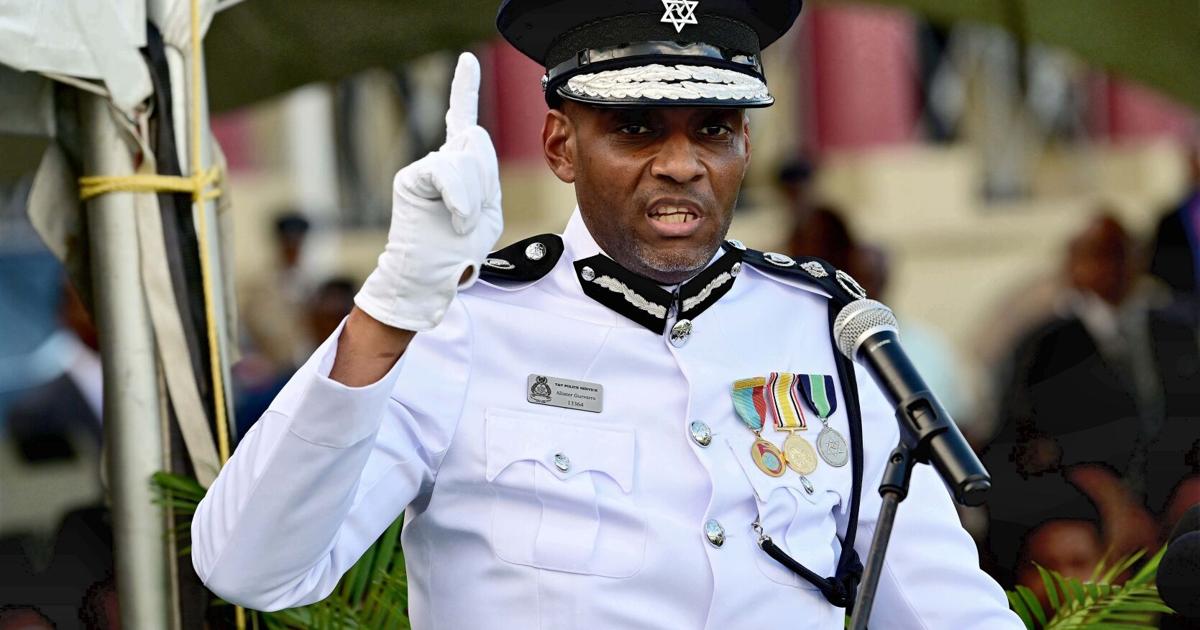
I breached no protocols or policies
Amid swirling public speculation and political scrutiny over his unannounced five-day overseas trip earlier this month, Trinidad and Tobago Police Commissioner Allister Guevarro has broken his silence, releasing a nearly three-minute audio recording to local media that defends his actions, rejects claims of institutional crisis, and pushes back against efforts to politicize his absence.
Guevarro explained that his decision to apply for emergency leave was prompted by sensitive intelligence received on August 10 from the director of the Strategic Services Agency (SSA) and the head of the Special Branch. Following formal protocol, he submitted his leave application to Homeland Security Minister Roger Alexander, who granted approval, with official correspondence then forwarded to the Police Service Commission (PolSC) as required by regulation.
“I followed the requirements of the established process and I breached no protocols or policies,” Guevarro stressed in the recording, pushing back on narrative that frame his unplanned absence as a violation of institutional rules. While he declined to disclose specific details of the intelligence that prompted his travel, he dismissed a string of circulating rumors that offered unconfirmed explanations for the trip, including claims that he was receiving urgent medical treatment, investigating unexplained foreign assets held by local figures, or traveling to revoke visas for a list of targeted individuals. Guevarro emphasized that upon his return to Trinidad and Tobago, he fully debriefed both the chair of the National Security Council (NSC) — which is led by Prime Minister Kamla Persad-Bissessar — and Homeland Security Minister Alexander, and directed all further inquiries on the purpose of his travel to those authorities.
Crucially, Guevarro rejected widespread claims that his temporary absence created a leadership vacuum or destabilized the Trinidad and Tobago Police Service (TTPS). He noted that the force is built on a hierarchical, contingency-ready framework designed to maintain operational continuity during temporary gaps in senior leadership, with trained executive officers prepared to step in to uphold stability.
“Leadership transitions, temporary or otherwise, are not a crisis. They are part of the organisation’s design,” Guevarro said. “As for those who felt that Rome was burning in my absence, I want to reassure you that the Trinidad and Tobago Police Service is an institution built on structure, continuity and contingency.” He also criticized actors who have sought to manufacture controversy and politicize the situation, adding a sharp rebuke: “To those who chose to politicise the matter and attempted to manufacture scandal and bacchanal, all I will say is this, your petticoat is showing.”
Asked for comment on Guevarro’s statement Wednesday, Minister Alexander offered only a brief, favorable response: “A responsible (Commissioner of Police) who is in charge of a responsible institution giving a very responsible response.”
During Guevarro’s absence, the most senior executive TTPS officer, Deputy Commissioner Junior Benjamin, has overseen day-to-day operations of the force. Speaking with local outlet *Express* earlier this week, Benjamin confirmed that there is no leadership or administrative breakdown within the service, noting that the force has operated successfully under similar temporary arrangements in the past.
Benjamin also explained why no formal acting commissioner had been appointed, clarifying that the legal process requires PolSC to submit a nominee to the President, who then forwards the nomination to Parliament for review before the appointment can be finalized. With Parliament currently in recess, the formal appointment process cannot move forward at this time, a situation that has occurred previously without disrupting TTPS operations. “There’s no problem in terms of proper administration and leadership at the TTPS at this time,” Benjamin affirmed. Benjamin is no stranger to stepping into the top role, having previously served as acting commissioner in October 2025, and already assumed acting duties during the tenures of past substantive commissioners Erla Harewood-Christopher and McDonald Jacob.
The controversy has drawn attention from Trinidad and Tobago’s opposition, with People’s National Movement (PNM) chairman Marvin Gonzales calling for full transparency from the ruling government. Speaking Saturday following the PNM General Council meeting in Port of Spain’s Balisier House, Gonzales demanded clear answers from both Alexander and Prime Minister Persad-Bissessar, pressing for details on Guevarro’s location, departure date, and the status of an acting appointment.
-

Minister: Some police posts here to stay
Trinidad and Tobago’s national crime-reduction strategy is set to retain a key new security infrastructure beyond the country’s current state of emergency (SoE), with Homeland Security Minister Roger Alexander confirming that a portion of the newly built joint army-police fortified posts will become permanent fixtures across the islands.
Alexander made this official announcement during an exclusive tour of a completed bullet-proof post at the Tarouba flyover in San Fernando, organized for local newspaper the Express on Tuesday. The fully enclosed, air-conditioned facility features a suite of functional amenities tailored for ongoing officer use: a dedicated front reception area, a compact kitchen space, a full washroom with toilet and shower, and two flexible interview rooms that can be reconfigured for alternate operational needs. Mounted surveillance cameras on the roof feed real-time footage of surrounding areas directly to on-site officers, enabling constant monitoring of nearby activity, including northbound and southbound traffic on the adjacent Sir Solomon Hochoy Highway.
Highlighting the strategic value of the Tarouba location, Alexander explained that the post’s elevated position allows for rapid intervention in developing situations, from high-speed vehicle chases to routine traffic incidents. “It’s in a strategic position that could be used for operational speed and support to other police officers,” he noted. “Take, for instance, if there is a high-speed chase. Officers can emerge from here and become part of that chase or do an interception at short notice.”
The initiative, first unveiled by Prime Minister Kamla Persad-Bissessar on August 3, calls for 30 of these specialized posts to be rolled out across communities across Trinidad and Tobago over a four-month period. Unlike temporary security deployments implemented during the current SoE, which is scheduled to expire on September 17, 2026, the permanent posts are designed as a sustained solution to rising community safety concerns.
Alexander emphasized that the project is not a hasty policy response, but the outcome of months of detailed strategic planning to improve law enforcement effectiveness. “We thought about the response. We thought about how best this could serve Trinidad and Tobago in the crime-fighting effort,” he said. Beyond crime prevention and rapid response, the posts are also intended to serve as community engagement hubs, bridging the gap between law enforcement and local residents to build public trust. Pointing to early activity at the already completed post at Eddie Hart Grounds in Tacarigua, Alexander noted that the accessible locations encourage foot traffic from community members, creating regular opportunities for interaction. “We want the public to have trust in the police, we want police officers to go in the communities, talk to the persons in the church, the schools, the businesspeople… neighbourhood… We want that kind of communication,” he added.
In line with the Prime Minister’s earlier announcement, Alexander reaffirmed that the initiative directly responds to longstanding community requests for increased visible security, empowering residents to reclaim public spaces that have been impacted by criminal activity. Operational details, including the full scope of CCTV coverage across the network of posts, remain undisclosed for national security reasons. “I can only tell you this much. We can see enough to respond, defend and protect,” Alexander said.
Staffing for each post will be determined jointly by the Commissioner of Police and the Chief of Defence Staff, with posts manned by combined teams of Trinidad and Tobago Police Service officers and Trinidad and Tobago Defence Force members. The government is currently working to assign dedicated patrol vehicles to each post to boost rapid response capabilities, and the National Operations Centre will provide intelligence support to the network, aligning the initiative with a broader data-driven security strategy. The timeline for rolling out the remaining uncompleted posts will be set by the Prime Minister, who chairs the National Security Council.
Addressing public criticism of the project and questions around construction costs and contracted vendors, Alexander pushed back against concerns, stating there is “nothing to hide” and full cost and procurement details will be released to the public at a later date. He dismissed critics as uninformed, noting that similar security infrastructure models have delivered successful crime reduction outcomes in other countries. “We are thinking advanced policing. And again, some persons will have issues with it. They don’t understand. They don’t read. They don’t look at the nations that are successful in some of the operations because of what they are implementing,” he said.
Confident that the permanent posts will deliver meaningful improvements to national safety, Alexander framed the initiative as a holistic, long-term approach to crime fighting that combines tactical deployment, rapid response capabilities and intentional community engagement. “The strategy used, as I said before, is one that is tactical, responsive, and communicative,” he said, adding that the permanent infrastructure will strengthen law enforcement capacity long after the current state of emergency expires.
-

We’re not in the Coalition, expect to suffer
A growing rift between Trinidad and Tobago’s Communication Workers’ Union (CWU) and state-owned Telecommunications Services of Trinidad and Tobago (TSTT) has escalated this week, with CWU Secretary General Joanne Ogeer issuing a stark warning of coming turmoil as long-stalled negotiations and unaddressed worker grievances remain unresolved.
Speaking at a press conference hosted at the union’s Port of Spain headquarters, Ogeer laid out the union’s core demands: workers are only seeking compensation and resolution that they are legally owed, she said, while placing direct blame for the impasse at the feet of Public Utilities Minister Barry Padarath, accusing him of refusing to meaningfully engage with the union’s concerns.
In comments that underscored the CWU’s political independence, Ogeer stressed that the union has no formal ties or loyalty to any of Trinidad and Tobago’s major political parties, including the ruling People’s National Movement (PNM) and the opposition United National Congress (UNC). As a non-member of the UNC-led Coalition of Interest – a 2025 general election political alliance that includes several major trade unions such as the Oilfields Workers’ Trade Union, Public Services Association (PSA), Transport and Industrial Workers Union, Trinidad and Tobago Postal Workers’ Union, and Fire Service Association – Ogeer said the CWU expected to be sidelined by the current administration.
Beyond the government, Ogeer directed sharp criticism at TSTT chairman Kern Dass, accusing him of launching unprovoked attacks on the union and its leadership. “We are not warring with the minister, we are warring against anybody that oppressing workers and we are going to be warring with Kern Dass,” she stated.
Ogeer contrasted the CWU’s deadlocked negotiations with the recent breakthrough in wage talks between the PSA and government at the Water and Sewerage Authority (WASA), where Padarath intervened to break the impasse and reaffirm the government’s commitment to reaching a fair agreement. For the CWU, Ogeer said, no such intervention is needed – the union only demands fair treatment from officials and TSTT management. “I don’t want a hug up; all I want you to do is to be fair,” she added.
The conflict comes after Padarath pushed back against the union over the weekend, saying the government would not be intimidated by CWU pressure and denying that any formal discussions of a 10% wage increase have taken place. Padarath also noted that any wage adjustment must account for TSTT’s long-term financial sustainability, even after the company posted recent profitable results.
Ogeer rejected the government’s claims, refuting assertions that the union is attempting to intimidate or bully officials, and challenging claims that the wage discussions lack a factual basis. She confirmed that the CWU has held two formal negotiating sessions with TSTT management, most recently on July 9 with six union representatives in attendance, where the union reviewed the company’s full financial data in detail.
Far from pushing for an unaffordable wage hike, Ogeer said the CWU deliberately structured its demands to align with the $60 million maximum figure TSTT management itself said the company could afford. “We crunched the numbers,” she explained. “It was at that juncture that the company and the union sat down, not just to give workers money but to ensure that when workers get that money that they worked so hard for it doesn’t break the company.”
She issued a public challenge to TSTT Corporate Services Vice-President Roshan Babwah to publicly deny the union’s account of negotiations, saying the union is now calling for a formal investigation into statements Babwah made that created a legitimate expectation of a breakthrough agreement. Ogeer also said she has lost confidence in Babwah, alleging he previously told her that TSTT leadership planned to undermine the CWU, dismissing it as a small organization with only 300 members.
Beyond wage negotiations, Ogeer raised serious questions about TSTT’s recruitment and hiring practices, specifically calling out the alleged improper appointment of a staff member to the company’s legal department and a new corporate secretary. She said the CWU filed a Freedom of Information request to obtain details of the hiring process, and alleged the appointee has close political ties, lacks sufficient relevant experience, and was hired outside the formal competitive interview process. Ogeer accused Padarath of being aware of the alleged irregularities but choosing to ignore them. She also raised concerns about long-term acting employees who have not received permanent confirmation of their positions years after taking on the roles.
Despite the escalating confrontation, Ogeer moved quickly to reassure TSTT customers that the union has no plans to disrupt public telecommunications services amid the dispute. “Customers, we value you, fear not, we are not going to disrupt your service, we will not do anything that will affect you…we are here to make sure you get good service,” she said.
As of press time, local media outlet the Express had attempted to contact Kern Dass for comment on the union’s allegations via WhatsApp, but had not received a response.
-
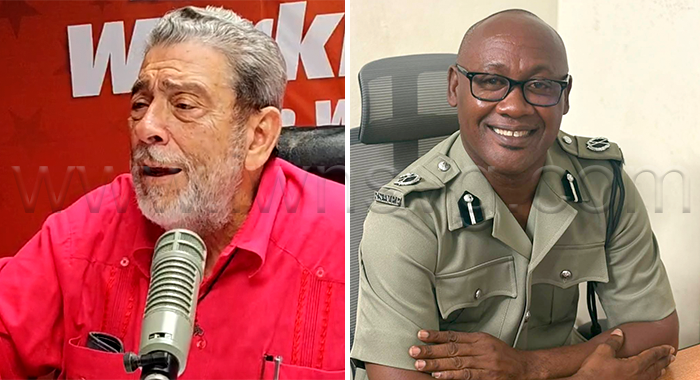
Smith is ‘a politician in police uniform’ – Gonsalves
A heated political controversy over police service appointments has erupted in the country, with Opposition Leader Ralph Gonsalves launching sharp criticism of the ruling New Democratic Party’s elevation of a partisan ally to a senior acting leadership role in the national police force. Gonsalves is pushing to escalate the dispute to regional and international bodies, arguing the appointment sets a dangerous precedent that undermines the integrity of national law enforcement.
The controversy stems from a recent round of senior leadership appointments announced earlier this week, which saw Trevor “Buju” Bailey named acting Commissioner of Police, Junior Simmons tapped for acting Deputy Commissioner, and Brenton Smith promoted to Acting Assistant Commissioner of Police. This is not the first time Gonsalves has objected to Smith’s pending promotion: he first raised red flags in May, when National Security Minister St. Clair Leacock first announced the career officer was in line for advancement. At that time, Gonsalves argued that other more qualified long-serving officers were overlooked for the role.
Smith’s path back to the police force is steeped in political history. In 2021, when Gonsalves’ Unity Labour Party (ULP) held power, Smith was fired from the service after refusing to comply with the government’s mandatory COVID-19 vaccination policy for all frontline public workers, which included police officers, educators and medical staff. Following his dismissal, Smith moved directly into partisan politics, winning election as General Secretary of the then-opposition New Democratic Party (NDP). When the NDP secured victory in the November 2025 general election, Smith was quickly reinstated to the police force just months before his surprise senior promotion.
In comments made during his weekly radio program on Wednesday, two days after the new appointments were formalized, Gonsalves argued the promotion is a clear case of politically motivated advancement that cuts across decades of institutional hierarchy. “If you want to demonstrate that you take the professionalism of the police force seriously, how can you elevate a figure like Smith?” Gonsalves asked. Five years ago, Smith held only the rank of station sergeant. After leaving the force in 2021, he did not work his way back through the institutional ranks; instead, he skipped the entire role of assistant superintendent to jump directly to Assistant Commissioner, a senior command position. Gonsalves stressed that Smith’s rapid advancement is solely the result of his political loyalty to the ruling NDP, not his professional experience or qualifications.
For Gonsalves, this appointment is not just an internal personnel dispute – it poses tangible risks to international security cooperation. He warned that regional security bodies within CARICOM and global law enforcement partners will face major complications working with a police leadership that includes politically aligned unvetted figures. “The DEA, the FBI, British intelligence services, French security agencies – they are all going to face serious difficulties working with loose-tongued politicians who don’t understand what information can be disclosed, who now hold senior police uniforms,” Gonsalves said.
To address what he called the “dangerous politicization” of the national police service, Gonsalves confirmed he plans to send formal letters raising the issue to both the Caribbean Community (CARICOM) and the Commonwealth, the two major regional and international bodies the country is affiliated with.
Gonsalves was careful to draw a clear distinction between Smith and the two other newly appointed senior police leaders. He acknowledged that Bailey is a skilled and professional police officer, and noted that he has no personal animosity toward Smith. In his role as Opposition Leader and a former National Security Minister, Gonsalves pledged he is willing to work collaboratively with Bailey and Simmons on all matters of public safety. The key difference, he argued, is that neither Bailey nor Simmons are partisan political figures embedded in the force’s leadership. “They are not politicians in police uniform, but Smith is,” Gonsalves said. “It is the equivalent of placing a partisan politician directly in judicial robes – it compromises the entire neutrality and integrity of the institution.”
Subordinates serving under Smith already see him first as a politician, not a professional commander, Gonsalves added, a perception that will erode trust and discipline within the rank and file of the police service.
-
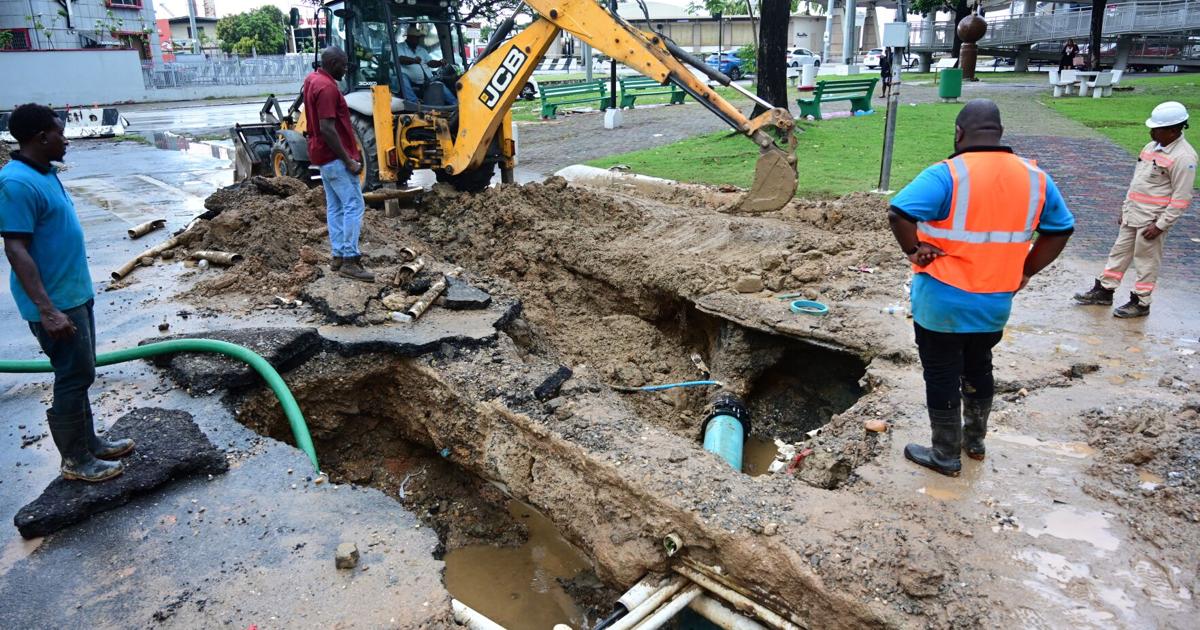
Pipeline leak leaves PoS without water
A sudden underground pipeline leak in downtown Port of Spain triggered widespread water outages across most of the central business district on Wednesday, forcing local businesses including popular fast-food chains to source emergency water from private trucked supplies while prompting fresh demands for long-overdue upgrades to the capital’s aging public utility network.
The leak was detected along Independence Square North, near the intersection of Richmond Street, prompting the Water and Sewerage Authority (WASA) to immediately shut off water flow to the entire affected district to allow excavation and repair work to proceed. In its initial public advisory shortly after the outage was reported, the Downtown Owners and Merchants Association (DOMA), which represents hundreds of local businesses including 30 food service outlets, confirmed that the full downtown area had been left completely without piped water. WASA initially told DOMA that it could not provide an estimated timeline for restoring service, leading the association to urge all commercial and residential property owners and occupants to implement immediate water conservation measures. Food businesses in particular were advised to arrange alternative water sources to top up their storage and keep operations running.
Repair work wrapped up faster than initially expected, with WASA confirming it completed fixes at the leak site by approximately 3:30 p.m. DOMA later updated its advisory to note that full water service began to be restored to the downtown area shortly after 4:50 p.m., with normal pressure returning just after 5 p.m. WASA did not release any further details about the cause of the leak or the scope of the damage beyond confirming completion of repairs.
In the wake of the incident, DOMA president Gregory Aboud emphasized that while unexpected equipment failures are unavoidable, the outage exposes a long-running, unaddressed problem: the critical state of disrepair of Port of Spain’s core public water infrastructure. Aboud noted that while downtown has historically had reasonably consistent water access compared to other parts of the country, frequent low-pressure events and multi-hour unplanned outages have become a regular drain on local business operations. He added that this latest disruption is just one example of a national-scale water management crisis, with widespread unaddressed leaks across the country leading to massive waste of treated potable water that could otherwise support communities during periods of dry weather.
Aboud’s call for proactive infrastructure upgrades comes as the region prepares for looming dry conditions. Earlier the same week, the Trinidad and Tobago Meteorological Service issued a drought watch for Trinidad set to take effect in September, and a more severe drought warning for Tobago scheduled for October. Aboud stressed that urgent, preventative upgrades and leak management are critical to avoid widespread panic and more severe service disruptions if drought conditions develop as forecast.
-
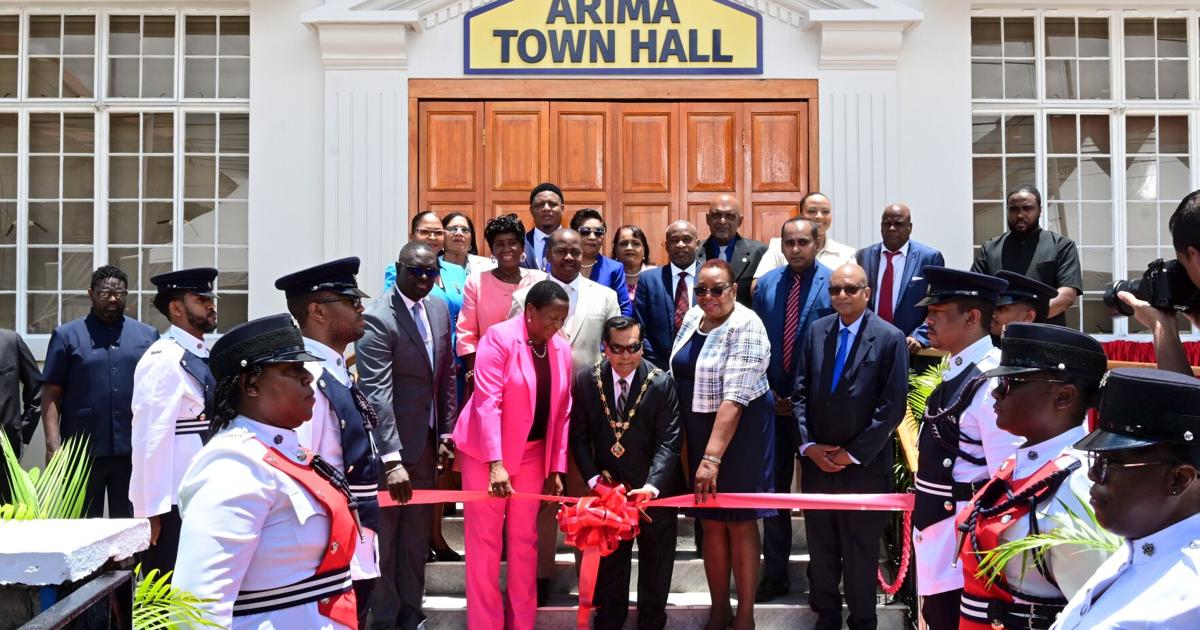
Arima Town Hall reopens on Morris-Julian’s birthday
After a seven-year renovation process that spanned the tenures of three successive mayors and three national local government ministers, Arima Town Hall officially reopened its doors to the public on Wednesday — a date that would have marked the 50th birthday of Lisa Morris-Julian, the former D’Abadie/O’Meara MP and Arima mayor who launched the reconstruction project before her tragic death in late 2024.
The iconic municipal building on Sorzano Street had sat stalled for months, wrapped in red caution tape, after its contracted construction team paused work over an unpaid $6 million fee that had put the entire project at an impasse. It took intervention from top leadership of the ruling People’s National Movement (PNM) in early 2024 to break the deadlock: then-PNM chairman and acting Prime Minister Stuart Young convened a high-level meeting at the party’s Port of Spain headquarters, Balisier House, bringing together senior PNM executive members Colm Imbert, Camille Robinson-Regis, Foster Cummings, and current Opposition Leader and Arima MP Pennelope Beckles, alongside representatives from the Arima Borough Corporation to resolve the outstanding funding dispute.
Speaking as the featured guest at Wednesday’s reopening ceremony, Beckles credited the collaborative effort of all three consecutive mayors who oversaw phases of the project, starting with Morris-Julian who initiated the reconstruction in 2019. Following Morris-Julian’s tenure, Cagney Casimire held the mayoral office from 2020 to 2023, and current mayor Balliram Maharaj has overseen the project’s final completion phase. Beckles also acknowledged contributions from three successive local government ministers — Kazim Hosein, Faris Al-Rawi SC, and current minister Khadijah Ameen — as well as former Arima MP Anthony Garcia, who played a key foundational role when reconstruction first launched.
Beckles explained that the multi-year delay stemmed from unforeseen cost overruns and procedural hurdles triggered largely by the COVID-19 pandemic. The original 2017 budget allocated just $1.5 million for the refurbishment, but shifting public health restrictions and unplanned additional scope of work forced the cabinet to scrap the original cost agreement and restart negotiations. “It ended up that the variations cost more than the original request to construct the building, and of course, once that is done, it means you have a whole procedure with procurement and many other things,” Beckles noted, adding that while some tasks could have advanced more quickly, bureaucratic protocols required for public spending extended the timeline. She declined to assign blame for the delay on Wednesday, stating that further details on the hold-up would be released to the public at a later date.
Beyond serving as a formal meeting chamber for the mayor and borough councillors, Beckles emphasized that the renovated town hall will fill a broader community role, acting as a public gathering space for local events and a central hub where residents can connect with their elected representatives.
Malabar/Mausica MP Dominic Romain, who succeeded Morris-Julian in office following her death, paid tribute to his predecessor at the ceremony, noting that regardless of whether the reopening date was intentionally scheduled to align with her birthday, it stands as a fitting legacy to her public service. The restoration project launched when Morris-Julian held the mayor’s office, making the completed building a lasting marker of her work for the Arima community.
Morris-Julian’s life was cut tragically short in December 2024, when a devastating house fire swept through her Arima residence on Farfan Street, killing her and two of her children: 25-year-old Xianne and six-year-old Jesiah. Post-mortem examinations confirmed all three deaths were caused by smoke inhalation.
-

Netball Association launches game changers programme
On a recent Saturday at the Fancy Hardcourt sports facility, the St. Vincent and the Grenadines Netball Association (SVGNA) officially kicked off its ambitious new Game Changers Netball Grassroots Development Programme — a multi-year initiative designed to grow the sport from the ground up across the island nation.
The opening event drew a diverse cross-section of local sports stakeholders, including young aspiring athletes between the ages of 4 and 14, both male and female, alongside sport administrators, community leaders, and local residents. For the young participants, the first session served as an accessible introduction to the core fundamentals of netball, with an early focus on building foundational movement skills and fostering collaborative teamwork from the very start of the programme.
Alongside training for young athletes, the launch included a dedicated educational workshop for sports administrators on up-to-date official netball rules. The session was led by Moeth Gaymes, who holds dual roles as Chair of the SVGNA Umpires and Technical Officials Committee and is an internationally recognized award-winning netball umpire, bringing expert-level knowledge to the training.
A core pillar of the entire Game Changers programme is its emphasis on safeguarding and safe sport principles. Organizers have integrated targeted training modules that reinforce the shared responsibility of all stakeholders to cultivate athletic spaces that are safe, respectful, and supportive for young athletes and every person involved in the sport. This focus aligns with growing global efforts to prioritize child protection and athlete well-being in grassroots sports development.
Several high-profile local sports and political figures attended the launch to mark the occasion. Attendees included Shevern John, Parliamentary Representative for North Windward; Shimano Bailey, who serves as both Vice President of the SVG Olympic Committee (SVGOC) and Chair of the SVGOC Safeguarding/Safe Sport Commission; Keith Joseph, General Secretary of the SVGOC; and multiple members of the SVGNA Executive Committee.
The ground-breaking initiative has been made possible through funding and strategic support from the Commonwealth Games Committee, with coordination and local facilitation handled by the SVG Olympic Committee. The programme will run through December 2026, holding scheduled Saturday sessions between 9:30 a.m. and 12:00 noon across two host venues: the Fancy Hardcourt and the Chilli Hardcourt in Georgetown.
The rotating venue schedule splits programming across the two sites: Fancy Hardcourt will host sessions from August 15 to September 12, and again from December 5 to 19, while Chilli Hardcourt will run sessions from September 19 to October 10, and from October 31 to November 28 each cycle.
Beyond just building on-court skills for young players, the Game Changers programme takes a holistic approach to netball development, targeting growth across all segments of the local sport ecosystem: athletes, new coaches, aspiring umpires, and local administrators. Alongside skill-building, the initiative promotes core life values including teamwork, personal discipline, leadership, and a deeper understanding of the sport’s structure and ethos.
In a statement following the launch, SVGNA representatives confirmed that the association will continue expanding grassroots netball development work through partnerships with local community groups. The long-term goal of the programme is to create broader accessible opportunities for young people across St. Vincent and the Grenadines to participate in netball, while strengthening the institutional capacity of administrators and stakeholders to grow the sport sustainably across the country for years to come.