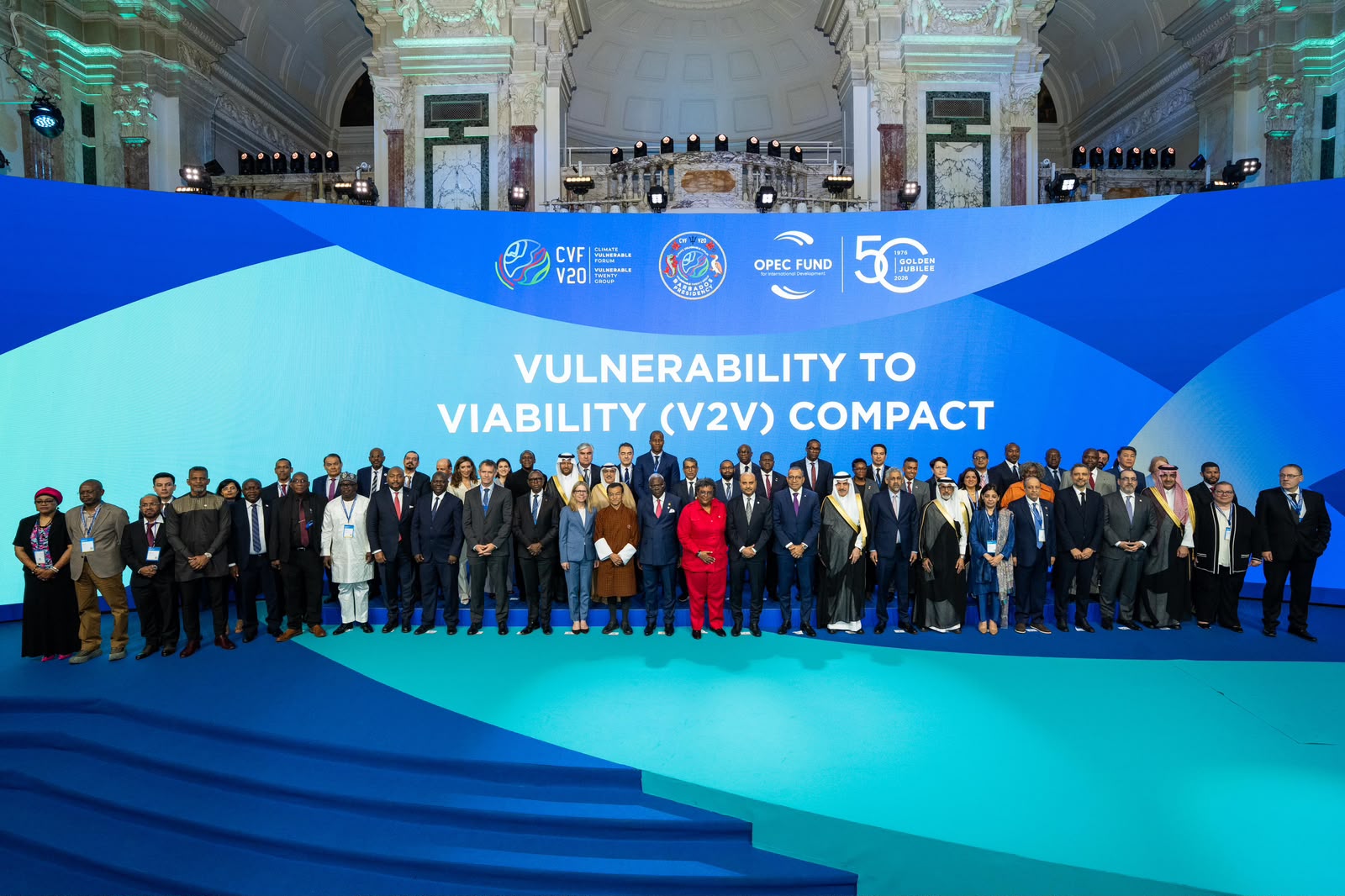
A groundbreaking new global partnership launched jointly by Barbados and the OPEC Fund for International Development is set to transform how climate-vulnerable nations access critical, low-cost financing for development and climate adaptation projects. The new multi-stakeholder framework, named the Vulnerability to Viability (V2V) Compact, was officially announced during an event in Vienna, assembling an unprecedented coalition that includes 78 climate-vulnerable economies and more than 15 leading global development finance institutions.
Unlike traditional financing models that often leave the most climate-exposed nations struggling with crippling short repayment windows and high interest rates, the V2V Compact is structured to address the unique barriers these countries face. Core reforms under the initiative include extending loan repayment terms to match the long lifecycle of climate resilience projects, aligning all financing packages with the individual national development priorities of participating countries, and rolling out customized financing mechanisms that directly support infrastructure upgrades, climate adaptation work, and the preservation of essential public services from healthcare to clean energy.
Speaking on the initiative, Barbados Prime Minister Mia Mottley emphasized that the compact marks a critical shift in global climate finance. For decades, Mottley noted, small and climate-vulnerable nations have been forced to focus solely on surviving climate disasters rather than building long-term prosperity. By unlocking affordable, accessible capital, the V2V Compact is designed to help these countries move beyond a constant state of crisis response, enabling them to build durable resilience and work toward sustainable economic viability and shared prosperity for their populations.
The launch comes as growing global consensus recognizes that the world’s most climate-vulnerable nations, which have contributed the least to greenhouse gas emissions, face the steepest costs of climate change and often lack access to the financing needed to adapt. The coalition built through the compact aims to fill a critical gap in the existing global climate finance architecture, creating a coordinated pathway for institutional investment to reach the communities that need it most.