作者: admin

  • Prime Minister Drew champions youth innovation and economic empowerment at Validation Workshop

    Prime Minister Drew champions youth innovation and economic empowerment at Validation Workshop

    BASSETERRE, Saint Kitts – On May 22, 2026, Prime Minister and Minister of Finance Dr. Terrance Drew used the opening of the national Youth Economic Empowerment Bureau Validation Workshop to shine a spotlight on the untapped potential of Saint Kitts and Nevis’ young population, while locking in the government’s pledge to build a supportive ecosystem for youth innovation and entrepreneurship.

    Addressing a room of stakeholders, youth leaders and workshop participants, Drew urged the federation’s young people to reject limitations imposed by the nation’s small geographic size and population, adopt a global outlook, and position themselves as active contributors to the fast-interconnected global economy. “The world is your stage, and you must see yourself as capable of competing and succeeding on that stage,” he told attendees, noting that widespread technological advancement and open access to information have opened unprecedented new pathways for young innovators to turn ideas into economic opportunity.

    Drew pointed to recent standout successes by local youth groups to illustrate just how much young people in the federation can achieve. The St. Kitts and Nevis Robotics Association, he noted, developed an electronic health record system that earned a top ranking among Caribbean innovations from the Pan American Health Organization (PAHO) – a recognition that has now translated into a major commercial contract valued at roughly 5 million Eastern Caribbean dollars. He also highlighted the Clarence Fitzroy Bryant College AI Association, which took top honors at a regional tech competition after building interactive stock market learning tools to upgrade the government’s ASPIRE Programme, expanding financial literacy access for young people across the country.

    “These accomplishments demonstrate that the youth of Saint Kitts and Nevis can compete with anyone in the region and beyond,” Drew said. “Our size does not define our potential.”

    The core focus of Friday’s workshop is refining the framework for the upcoming Youth Economic Empowerment Bureau, a new government entity designed to cut through red tape and deliver comprehensive support to young people with entrepreneurial ambitions. Once launched, the bureau will connect emerging youth business owners to critical resources: hands-on mentorship, accessible financing pathways, targeted skills training, and specialized technical support.

    The initiative is structured to help young founders meet growing demand for expanded services across Saint Kitts and Nevis, while integrating young people into fast-growing emerging sectors including sustainable tourism, modern agriculture, digital technology, and the creative orange economy. Drew emphasized that economic empowerment is not limited to scaling large enterprises, noting that small and micro-businesses are the unsung backbone of sustained national economic growth.

    “We cannot underestimate the power of small and micro businesses,” he said. “A small idea, properly supported, can transform a family, strengthen a community, and contribute to national development.”

    Friday’s validation workshop is a key part of the government’s collaborative consultative process, which will gather input from stakeholders to strengthen and fine-tune the bureau’s operating framework before it rolls out formally to the public.

  • A student’s plea — not to be ignored

    A student’s plea — not to be ignored

    This commentary is not a debate over the presence or absence of school police officers. Instead, it is an urgent appeal to policymakers, educators, and community leaders to center student voices when addressing the growing crisis of school violence. After all, it is students who live with this threat every single day — they understand its costs better than any outside expert. Just a few days ago, I had the privilege of sitting on the judging panel for a public speaking competition hosted by the dedicated English department at St. Vincent Grammar School. Six ambitious young finalists competed in front of their classmates and teachers, all vying for the chance to represent their campus at the national competition scheduled for the next academic year. What struck me most was the depth of their preparation and the raw passion they brought to the core topic of school violence. Every competitor delivered thoughtful, well-researched arguments that held the entire audience’s attention. Collectively, they made one critical point clear: school violence is no longer a rare, distant danger that only affects other communities. It is a frightening daily reality here, one that reveals deep, long-standing erosion in our society’s social, family, and educational structures — and it demands immediate, decisive intervention. The students outlined the many shapes school violence takes, from in-person bullying and physical assaults to verbal intimidation and the growing harm of cyberbullying. Rejecting surface-level solutions that only treat symptoms, they pushed for a root-cause approach, calling on stakeholders to examine the shared responsibility of key institutions: the family unit, schools, faith organizations like the church, and the broader community. It was 18-year-old student Mowani Latham’s address that moved the entire room to tears, striking a chord that no politician, psychologist, or veteran social commentator could match. When a student who lives with this reality speaks, the message hits differently than any expert analysis ever could. Latham walked listeners through the underlying causes of youth violence in schools, starting with the foundational role of family life. “To understand why violence happens, we have to go back to where children learn their first lessons,” Latham said. “How can we ignore the impact of family environment? The home is a child’s first classroom, and psychologists have long reminded us that children absorb what they live every day. If a child grows up in a home where anger is the only common language, where neglect is the standard, and where conflict never ends, they will grow up believing violence is an acceptable way to communicate. When they walk through the school gates, they don’t just bring their backpacks — they bring intergenerational trauma and harmful behavioral patterns they learned at home.” Latham also detailed how mainstream society and social media platforms glorify violent behavior, gradually desensitizing young minds to its harm. Turning to the responsibility of schools and faith communities, he pushed back against the narrative that all blame falls solely on families and street culture. “We can’t pin all the fault on the home and the streets,” he argued. “We have to look critically at our own educational institutions. Why are so many students disconnected from school life? We have to address the gap between what many of our current curricula teach and the actual needs of young people today. When a student leaves class every day convinced that what they’re learning has nothing to do with their survival or their future career, frustration builds. Boredom and a lack of sense of purpose become the perfect breeding ground for destructive mischief and violence.” The passionate speaker closed with a series of clear, pragmatic solutions, starting with a call to dramatically increase the number of trained, empathetic mental health counselors in every school. “Right now, we are starved for counselors who actually care about our well-being,” Latham said. “We have dozens of teachers who can walk us through solving for x in an algebra equation, but far too few professionals trained to help us understand our own self-worth. A student who is hurting internally doesn’t need a detention slip — they need someone willing to sit and listen.” He also called on local churches to step into a greater role, providing consistent moral guidance and positive adult role models, while partnering with schools to launch mentorship programs and create safe, supportive spaces where young people can learn core values like humility, forgiveness, and patience. Latham did not shy away from holding his own peers accountable, urging them to reject the dangerous myth that violence equals power and strength. “Let me speak directly to my fellow students,” he said. “We have to change the mindset that violence means you’re powerful. Violence isn’t strength. Noise isn’t power. Making people fear you isn’t respect. Real strength is having the courage to walk away from a conflict. Real power is being able to control your own emotions. As Nelson Mandela once said, ‘Education is the most powerful weapon which you can use to change the world.’ But if our schools remain battlegrounds, that weapon becomes dull and useless. Let us turn our schools back into what they were meant to be: places of growth and opportunity. We aren’t here to fight each other — we are here to fight for our futures. Every single student deserves to walk into school every morning feeling safe, not scared.” The question now is whether education stakeholders across the country will choose to listen to Latham’s appeal. He didn’t just speak for himself — he gave voice to the quiet, unheard plea of thousands of young people across St. Vincent who navigate this crisis daily. Unlike many commentators who only point out problems, Latham offered clear, actionable solutions that come from lived experience. It’s time to lend him and his fellow students your ear. This is an opinion piece written by Ann-Marie Ballantyne. The views expressed are the author’s own and do not necessarily reflect the editorial stance of iWitness News.

  • United States Announces $8 Million in New Support for Caribbean Forensic Capabilities

    United States Announces $8 Million in New Support for Caribbean Forensic Capabilities

    Against a backdrop of rising transnational synthetic drug trafficking threatening Caribbean security, the United States has announced an $8 million investment in new support for regional forensic capabilities, unveiled during the second Caribbean Regional Forensic Leadership Summit held in Saint Lucia from May 20 to 22, 2026.

    This new funding package will deliver cutting-edge synthetic drug detection technology to Caribbean forensic laboratories, alongside specialized technical training for local personnel and expanded operational collaboration with the U.S. Drug Enforcement Administration (DEA). The three-day summit, hosted jointly by the Saint Lucia Forensic Science Laboratory and the U.S. Department of State under the long-standing Caribbean Basin Security Initiative (CBSI), gathered forensic leadership and security stakeholders from 14 Caribbean nations, including a delegation from the Royal St. Christopher and Nevis Police Force Forensic Services Department.

    The core objectives of the funding and summit align with shared regional priorities: upgrading local capacity to detect fentanyl and other illicit synthetic drugs, cutting persistent backlogs in forensic laboratory processing, and strengthening the quality of forensic evidence that meets admissibility standards for criminal courts prosecuting transnational organized crime groups. Beyond technical upgrades, the summit brought together forensic scientists, senior prosecutors, security agency leaders, and representatives from two key regional bodies—the Regional Security System and CARICOM IMPACS—to align strategies for deeper cross-border cooperation against evolving criminal and drug threats.

    “This partnership between the United States and Caribbean nations reflects a shared, unwavering commitment to disrupting dangerous criminal networks and countering the rapidly shifting drug threats that impact communities across our region,” noted U.S. Chargé d’Affaires Sarah Nelson in remarks during the summit.

    The event also marked two landmark milestones for regional security cooperation. Attendees launched the Caribbean Forensic Scientific Working Group, the first region-wide coordinated platform that connects Caribbean forensic practitioners directly with U.S. forensic experts to harmonize operational standards, improve evidence reporting protocols, and streamline ongoing collaborative efforts. Separately, Saint Lucia and Guyana made history as the first Caribbean countries to roll out the DEA’s Global Uniform Reporting and Drug Seizure (GUARDS) program, a standardized system for analyzing and documenting seized drug-related substances.

    The new investment builds on 16 years of security partnership under the CBSI framework. Launched in 2010, the initiative has brought together the U.S. and Caribbean nations including Saint Kitts and Nevis to systematically strengthen regional security infrastructure, disrupt drug trafficking operations, and dismantle transnational criminal organizations operating throughout the Caribbean basin.

  • Health Minister meets with hospital bosses to look at concerns, needs and ways to improve healthcare

    Health Minister meets with hospital bosses to look at concerns, needs and ways to improve healthcare

    In a key step forward for a national evaluation of Antigua and Barbuda’s healthcare infrastructure, Health, Wellness, Environment and Civil Service Affairs Minister Michael Joseph held a working meeting with senior executive leaders from the Sir Lester Bird Medical Centre on Wednesday. The gathering marked the latest phase of the minister’s systematic assessment of how the country’s core healthcare institutions function, launched to lay the groundwork for long-term policy development. Minister Joseph clarified that this stakeholder engagement is not an isolated check-in, but a core component of a wider government push to build a complete, on-the-ground picture of the healthcare sector’s current strengths and gaps. As the Ministry of Health prepares to roll out new strategic frameworks and targeted improvement initiatives, these direct discussions with frontline facility leadership help ensure policy is rooted in real operational needs. The planned overhauls are focused on three core goals: upgrading the overall quality of healthcare delivery across the nation’s flagship medical facility, cutting bureaucratic and operational inefficiencies, and elevating the standard of care that patients receive. Conversations between Minister Joseph and the hospital’s executive team were characterized as open, honest, and centered on actionable problem-solving, rather than procedural formalities. Participants prioritized mapping out two tiers of need: pressing challenges that require immediate intervention to address service gaps, and long-term structural adjustments that will boost the hospital’s operational resilience and service quality over time. Attendees also collaborated to draft preliminary key strategies and aligned timelines for further governmental review, before full implementation begins. These preliminary plans focus specifically on streamlining internal administrative and clinical systems, reducing wait times for patients, and upgrading the overall standard of care available at the facility. Closing the meeting, Minister Joseph reaffirmed the national Ministry of Health’s unwavering commitment to collaborative partnership with the Sir Lester Bird Medical Centre’s leadership team and frontline clinical and administrative staff. He emphasized that the government’s goal is to deliver tangible, meaningful improvements to healthcare access and quality that directly benefit all residents of Antigua and Barbuda, and that ongoing engagement with facility-level stakeholders will remain a core part of the improvement process moving forward.

  • CWI Congratulates Trinidad & Tobago Red Force on 2026 West Indies Championship Triumph

    CWI Congratulates Trinidad & Tobago Red Force on 2026 West Indies Championship Triumph

    ST JOHN’S, Antigua – A new chapter of regional cricket history was written at the Sir Vivian Richards Stadium this week, as Trinidad & Tobago Red Force claimed the 2026 West Indies Championship title with a clinical victory over defending champions Guyana Harpy Eagles, capping off a dominant tournament run that has ended two decades of waiting for the side.

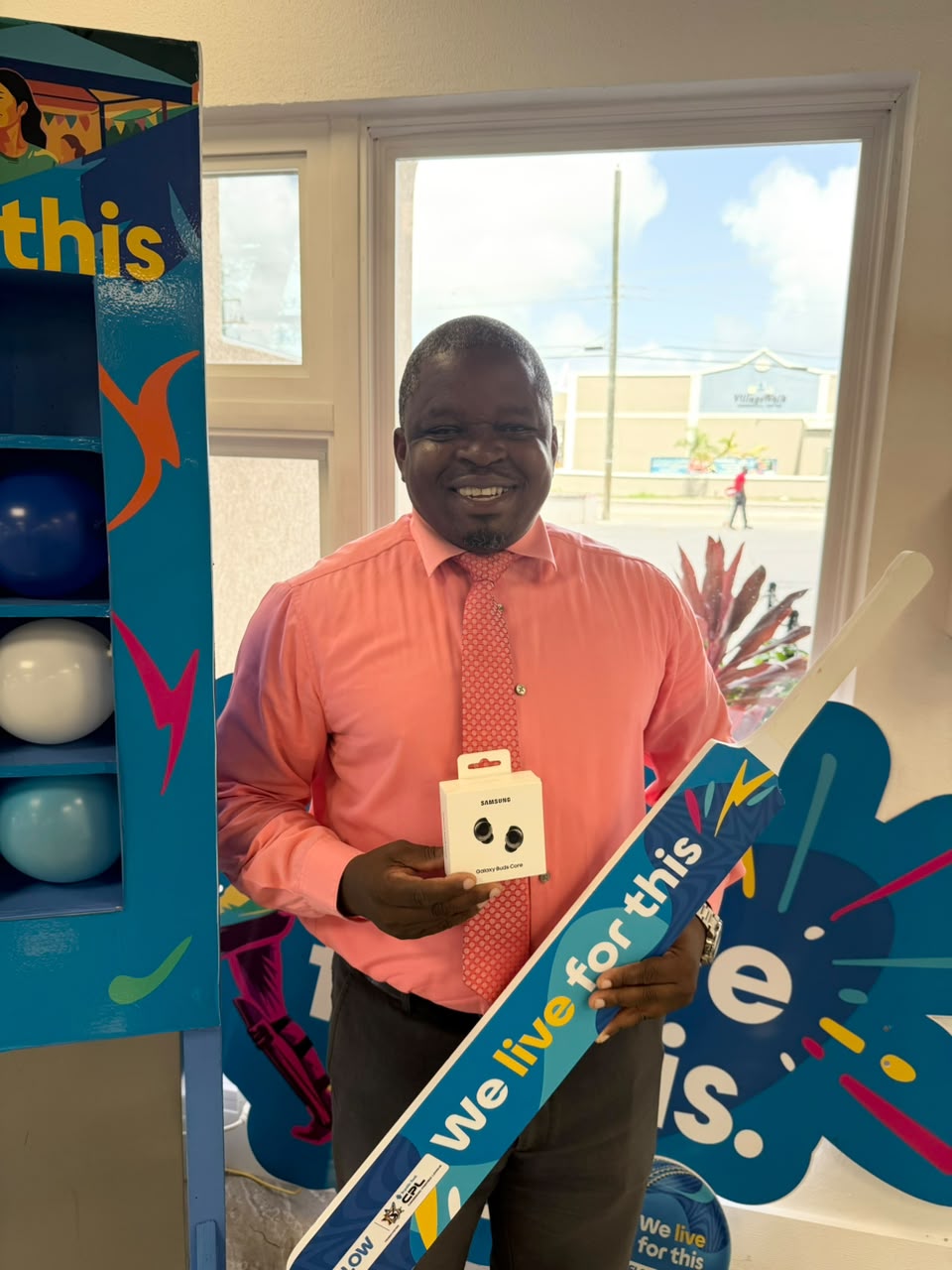
    In the wake of the historic four-day final win, Cricket West Indies (CWI) President Dr. The Hon. Kishore Shallow has issued a formal statement of congratulations to the Red Force, praising the team for their exceptional performance across the entire tournament.

    The Red Force’s composed, determined showing in the high-stakes final secured their first regional four-day championship crown since 2006, bringing a fitting close to a stellar season for the side. Facing off against a Guyana Harpy Eagles team that entered the match as defending title holders, Trinidad & Tobago rose to the occasion to deliver a memorable victory that has resonated across Caribbean cricket circles.

    In his public message, Dr. Shallow highlighted the core qualities that drove the Red Force to success: unwavering discipline, consistent form through every round of the tournament, and remarkable resilience when facing testing match situations. He also singled out for praise the strong leadership and relentless commitment demonstrated by the entire squad and coaching staff throughout their championship campaign.

    “On behalf of Cricket West Indies, I extend heartfelt congratulations to the Trinidad and Tobago Red Force on capturing the 2026 West Indies Championship title,” Dr. Shallow said in his statement. “This achievement is a testament to the team’s hard work, preparation, and consistency throughout the season.”

    He added, “The players and management demonstrated tremendous character and professionalism, particularly in a high-pressure final against a very strong Guyana Harpy Eagles side. Their success reflects the rich cricketing tradition of Trinidad and Tobago and the continued strength of first-class cricket within the region.”

    Beyond celebrating the Red Force’s win, the CWI president also emphasized the broader value of the annual West Indies Championship, noting that regional first-class competition remains a foundational pillar for nurturing emerging talent that will go on to represent the West Indies at the international level.

    “The West Indies Championship remains a vital pillar in our cricket development pathway and continues to provide an important platform for players to sharpen their skills and compete at the highest regional level,” Dr. Shallow explained. “The quality of cricket displayed throughout the tournament is encouraging for the future of West Indies cricket.”

    Dr. Shallow also extended recognition to the Guyana Harpy Eagles for their own outstanding 2026 season, which saw them advance to the final and defend their title through a tightly contested tournament. He additionally offered sincere thanks to every participating team, match officials, regional territorial cricket boards, tournament sponsors, and fan bases that contributed to the success of this year’s edition of the championship.

    Organized cricket body CWI also joined in the expression of gratitude, acknowledging the ongoing passion and support from fans and stakeholders across the Caribbean – a foundation that continues to drive the growth and long-term success of regional first-class cricket across the region.

    This report is compiled from official CWI press materials.

  • Minstens 16 doden bij twee gewelddadige aanvallen in Noord-Honduras

    Minstens 16 doden bij twee gewelddadige aanvallen in Noord-Honduras

    Two separate deadly violent attacks targeting civilians and law enforcement in northern Honduras have killed at least 16 people, sending fresh shockwaves through a region long grappling with rampant gang violence and land-related conflict. The incidents, which unfolded on the same day in two different departments, have renewed scrutiny of the Central American nation’s ongoing crackdown on organized crime.

    The first attack was reported Thursday on a remote palm oil plantation located in Rigores, a community within the municipality of Trujillo. Local law enforcement confirmed that at least 10 plantation workers were fatally shot in the assault, though officials have warned the death toll could climb as investigators continue processing the scene. Witness accounts indicate armed assailants opened fire indiscriminately on workers, including a group that had gathered at a nearby local church. Three sisters are among the identified victims, according to local reports. Graphic images from the crime scene show bodies, many still wearing their work boots, scattered across the plantation grounds.

    While authorities have not yet established a clear motive for the massacre, northern Honduras has faced decades of recurring, deadly agrarian conflict over fertile land. Human rights researchers have long warned that armed groups seeking control of productive agricultural territory regularly use violence to displace smallholder farmers and agricultural workers, a pattern that has spawned hundreds of unresolved killings in the region for years.

    In the wake of the Trujillo attack, Honduran military chief Hector Benjamin Valerio Ardon announced that the armed forces would deploy all necessary logistics support and personnel to track down the perpetrators and bring them to justice.

    The same day as the plantation massacre, a second deadly incident unfolded in the department of Cortes, just a short distance from Honduras’ border with Guatemala. A team of specialized anti-gang police officers had traveled from the national capital of Tegucigalpa to the border town of Omoa to carry out a targeted operation against local criminal organizations, but the unit was ambushed by armed suspects. Six officers, including deputy commissioner Lester Amador, were killed in the ambush. All of the fallen officers were members of Dipampco, Honduras’ elite special police unit tasked with combating gangs and transnational organized crime. Authorities have confirmed that several assailants are also believed to have been killed or wounded in the ensuing shootout, though full details have not yet been released.

    Following the back-to-back attacks, Honduras’ National Police issued a statement reaffirming that it would immediately deploy additional resources to the affected regions, adding that the state would take aggressive action to arrest all those responsible, protect vulnerable communities, and deliver legal justice for the families of all victims.

    The violence comes at a key moment for Honduran security policy. From 2022 until January 2026, the country operated under a national state of emergency designed to curb surging gang-related criminal violence. The policy drew widespread criticism from human rights groups and domestic opponents, who argued that the emergency measures granted excessive authority to police and military forces, restricted core civil liberties, and enabled systemic human rights abuses against vulnerable communities.

    The state of emergency was allowed to expire in January following the inauguration of right-wing president Nasry “Tito” Asfura, a close political ally of former U.S. President Donald Trump. Despite ending the formal emergency declaration, Asfura has maintained a hardline security agenda, doubling down on aggressive crackdowns against criminal groups. In March, Asfura took part in Trump’s “Shield of the Americas” security conference held in Florida, an event centered on coordinating regional security policy to counter transnational organized crime across Central America.

  • ABWU and International Transport Workers’ Federation Host Mental Health Workshop for Workers

    ABWU and International Transport Workers’ Federation Host Mental Health Workshop for Workers

    Workers’ mental health has taken center stage in Antigua and Barbuda, as two major labor organizations have launched a targeted capacity-building initiative to equip workplace representatives with the tools to tackle rising stress and end stigma around mental health discussions.

    The Antigua and Barbuda Workers’ Union (ABWU), in partnership with the International Transport Workers’ Federation (ITF), recently convened a two-day immersive workshop focused on stress management and mental health advocacy. The program, structured as a “train-the-trainer” initiative, brought together frontline workers and union leaders to build a network of wellness champions that can spread awareness across local workplaces.

    Leading the workshop sessions was Dr. Syed Asif Altaf, the ITF’s Global Well-being Programme Coordinator. Over the two days, participants explored a wide range of practical, actionable topics: from foundational understanding of how stress impacts physical and emotional health, to evidence-based coping strategies, to the specific roles and responsibilities of peer mental health first responders. The curriculum also centered underaddressed needs, with dedicated modules focused on stress vulnerability among young workers and women, two groups disproportionately impacted by unaddressed workplace mental health challenges.

    The workshop is just one part of a long-term collaborative commitment between ABWU and ITF to prioritize worker well-being and build more inclusive, supportive workplace cultures across the region. In opening remarks to attendees, ABWU General Secretary David Massiah emphasized that workplace stress is a universal issue that touches every sector and every community, calling on workers to lead demands for systemic change.
    “Stress does not discriminate – it affects every workplace and every family across our country,” Massiah said. “We cannot stop at individual coping strategies. We must keep pushing for policies and workplace cultures that put mental health at the top of the agenda, and ensure every worker has the support systems they need to not just work, but thrive.”
    For Dr. Altaf, the core mission of the training extends far beyond teaching stress management techniques. A central goal of the initiative is to dismantle the deep-seated stigma and cultural silence that have long prevented workers from seeking support for mental health challenges.
    “Across every region, there remains so much taboo and stigma around talking about mental health,” Dr. Altaf explained. “Most people struggle with stress or mental health challenges at some point, but too many suffer in silence because they fear judgment. We are here to change that narrative – break the stigma, break the silence, and build a community of open advocates for mental wellness.”
    ITF Regional Secretary Edgar Diaz echoed that commitment, outlining the multiplying impact the organizations hope to achieve through the train-the-trainer model. Rather than limiting learning to the small group of in-person attendees, the program is designed to turn participants into trainers who can bring this knowledge back to their own workplaces and peer groups.
    “Our goal over these two days was not just to share what the ITF has been doing to advance worker well-being globally, but to give shop stewards and local union representatives the expertise to lead this work themselves,” Diaz explained. “Participants leave here ready to train their coworkers, to pass on what they’ve learned, and expand this movement across every workplace in Antigua and Barbuda.”
    Diaz added that organizers were encouraged by the high level of engagement and enthusiasm from attendees throughout the workshop, a sign of the unmet demand for open conversation about mental health in the region. One participant, who attended the sessions, shared that the workshop filled a critical gap in local worker support, noting that public awareness of mental health remains low across Antigua.
    “This workshop is such an important step forward,” the attendee said. “People here just don’t have enough information about mental health, and workplaces have almost no support systems in place. It’s amazing that the union is taking this step to help us build that support for workers.”
    At the close of the two-day program, participants completed reflective evaluations to share feedback on the sessions and help organizers refine future trainings. All attendees received certificates recognizing their completion of the program, formalizing their new role as community mental health advocates ready to bring their skills and knowledge back to their workplaces.

  • Authorities Plan Remote Medical Booking System for Barbuda Residents

    Authorities Plan Remote Medical Booking System for Barbuda Residents

    Residents of Barbuda who have long endured the logistical and financial burden of repeated cross-island travel to schedule medical care in neighboring Antigua are set to receive long-awaited relief, following a cabinet-approved plan to roll out a remote digital appointment booking platform tailored to local healthcare needs.

    This digital initiative is just one core component of a sweeping overhaul of healthcare services across Barbuda, centered on upgrades to the island’s primary care facility, Hannah Thomas Hospital, and expanding the scope of local on-island medical offerings. Officials confirmed the details of the multi-part improvement plan during a post-Cabinet media briefing held this Thursday, shared by Director General of Communications Maurice Merchant.

    Per Merchant’s official announcement, the new platform will be developed through a cross-ministerial partnership between Antigua and Barbuda’s Ministry of Health and Ministry of Information Technology, combining healthcare expertise and digital innovation to solve a longstanding access gap.

    For decades, Barbudans seeking specialized diagnostic care available only in Antigua—including advanced imaging services such as MRIs and X-rays—have faced a grueling multi-trip routine. Under the current system, patients must first make the crossing to Antigua to secure an appointment slot in person, return to Barbuda to wait for their scheduled date, then travel back to Antigua a second time to attend their appointment. This cycle not only adds unnecessary travel costs but also creates dangerous delays for patients with urgent health concerns.

    The new remote booking system will eliminate this redundant travel, Merchant explained. Barbudan residents will be able to complete all required paperwork and reserve their preferred appointment slot entirely online from their homes on Barbuda, only making the single trip to Antigua once their scheduled appointment date arrives.

    Alongside the digital booking reform, the broader healthcare upgrade package brings two other impactful changes to Barbuda’s local care ecosystem: the restoration of on-site childbirth delivery services at Hannah Thomas Hospital, which were previously unavailable locally, and the launch of new in-island laboratory testing services. Both additions are designed to cut down on the need for routine, non-specialized medical travel to Antigua entirely, bringing essential care closer to home for Barbudan communities.

  • The Man Who Designed the Central Bank Logo in 1984 Dies

    The Man Who Designed the Central Bank Logo in 1984 Dies

    The Eastern Caribbean Central Bank (ECCB) is grieving the loss of Dennis Richards, the acclaimed regional artist who crafted the institution’s iconic logo nearly four decades ago. In an official statement released following Richards’ death, the ECCB paid tribute to the creative mind behind one of the Eastern Caribbean’s most recognizable institutional symbols, highlighting his far-reaching impact on both the bank and the broader regional community.

    Richards completed his original design for the ECCB logo on June 27, 1984, a work that has remained unchanged and deeply resonant through the decades. According to bank officials, the design is far more than a simple organizational marker: it distills the core aspirations of the Eastern Caribbean people, captures the unparalleled natural beauty of the island chain, and embodies the collective unity that defines the Eastern Caribbean Currency Union (ECCU). For 40 years, the logo has stood as a visual representation of regional collaboration and shared ambition, a legacy rooted entirely in Richards’ artistic vision.

    In 2023, as the ECCB kicked off a year of events marking its 40th anniversary, organizers made a point to honor Richards for his foundational contribution to the institution’s identity. The recognition cemented his status as a key figure in the bank’s history, shining a light on the artistic work that has shaped how the ECCB is perceived across the region and beyond.

    Beyond his commission for the ECCB, Richards was a beloved pillar of his local community. Those who knew him remember him as a committed public figure who consistently leveraged his artistic skills to lift up local cultural initiatives and strengthen civic engagement across the area. He dedicated much of his time and talent to nurturing regional arts, supporting emerging creators, and embedding creative expression into the daily life of Eastern Caribbean communities.

    In the statement, ECCB leadership offered its deepest sympathies to Richards’ family, close friends, and everyone who was influenced by his work and character. The bank emphasized that even as Richards is mourned across the region, his artistic legacy will live on through the logo that bears his creative mark, and his contribution to regional identity will continue to be acknowledged for generations to come.

  • Barbuda Caribana 2026 Officially Opens With Call for Cultural Pride and Unity

    Barbuda Caribana 2026 Officially Opens With Call for Cultural Pride and Unity

    One of the Antigua and Barbuda’s most anticipated annual cultural celebrations, Barbuda Caribana 2026, officially launched on Thursday evening, with event organizers and local government leaders calling on both native residents and visiting tourists to fully immerse themselves in the island’s distinct cultural heritage, back grassroots community events, and honor the unique identity of the Barbudan people across the weeks-long festival. The opening night ceremony blended solemn tradition and lively celebration, opening with formal blessings from local religious leaders, followed by a performance of the national anthem, public recognition of event sponsors, heartfelt tributes to the legacy of past Caribana queens, and energetic live musical sets from two popular local acts: New Gen Band and performing artist Empress. Deputy Chairlady Nadia Harris-George delivered the keynote address on behalf of Member of Parliament for Barbuda Trevor Walker, welcoming hundreds of gathered attendees under this year’s official festival theme, “A Cultural and Rhythmic Shift.” Harris-George explained that the 2026 theme was chosen to reflect the festival’s dual mission: elevating time-honored Barbudan cultural practices while making space for the evolution of the island’s cultural identity into a dynamic new era. “It’s about taking our rich Barbudian heritage — our soul-stirring calypso, our pulsing soca, our legendary hospitality, and our deep community bonds — and pushing them into a bold new era,” Harris-George told the crowd. In her remarks, she also outlined the full slate of major public events scheduled for this year’s festival, including the fan-favorite June Eclipse of Monarch competition, the popular Seafood Festival highlighting local coastal cuisine, the Caribbean Classic Horse Race, the iconic early-morning Jouvert street celebration, and the closing Last Lap street party that wraps up the festival each year. A senior representative from the Barbuda Caribana Organizing Committee used the opening ceremony to issue a call for broader, more consistent public support for local cultural initiatives, noting that the decades-old festival is far more than a tourist event: it encapsulates the island’s collective identity, centuries-long history, demonstrated resilience in the face of challenges, and unwavering national pride. “Caribana is ours. No one else can tell our story the way we can. No one can celebrate Barbuda the way Barbudan can,” the representative stated, urging locals to turn out for scheduled events, patronize local food and craft vendors participating in the festival, and actively pass down their cultural traditions to younger generations. As part of the opening ceremony, organizers also paid special homage to three past Caribana queens — Asha Frank, Kerrianne Walbrook, and Cynthia Harrigan — recognizing their lasting contributions to the festival’s iconic pageantry tradition and broader cultural legacy that has shaped the event for decades. Following the formal addresses and tributes, a local official officially declared the 2026 Barbuda Caribana open, and the evening shifted to a full night of live entertainment and celebration for attendees.