作者: admin

  • DNA-voorzitter opent commissievergadering met nadruk op transparantie en openbaarheid

    DNA-voorzitter opent commissievergadering met nadruk op transparantie en openbaarheid

    At the opening of a key parliamentary committee session on May 22, Ashwin Adhin, president of Suriname’s National Assembly (DNA), laid out clear foundational principles for parliamentary proceedings, emphasizing the non-negotiable importance of public access, transparency, and institutional integrity across all legislative work.

    Adhin’s opening address systematically clarified the legal and procedural frameworks that govern the nature of the ongoing committee hearings, which are scheduled to question several former ministers facing investigations. The first closed-door committee session is set to hear testimony from ex-minister Riad Nurmohamed, while a third session has been scheduled to question fugitive former minister Gillmore Hoefdraad. A second hearing, scheduled for 11 a.m. the same day, will be open to the public at the request of former minister Bronto Somohardjo, who is set to testify at that session. Somohardjo has stated that the public has a right to full transparency in his case, and that he has no information to hide from Suriname’s society.

    Adhin explained that Article 82 of Suriname’s Constitution establishes the default rule that all National Assembly meetings must be open to the public, and closed-door sessions can only be held if the Assembly explicitly votes to hold proceedings behind closed doors. This structure means that confidentiality is not a default policy choice, but rather a strictly limited exception that requires formal official approval to go into effect.

    He further detailed how the National Assembly’s Rules of Order (RvO) regulate committee operations, specifically pointing to Chapter III, which states that preliminary investigations conducted by parliamentary committees are in principle open to the public, unless confidentiality is formally mandated by the full Assembly or the national cabinet. Adhin also stressed that the confidentiality rules that apply to plenary Assembly sessions do not automatically extend to committee proceedings.

    The Assembly president also addressed the special procedural framework that applies to current and former public officials facing criminal allegations, as laid out in Article 140 of the Constitution and the country’s Act on the Status of Impeachment and Prosecution of Political Officeholders (WIPA). Under this framework, a special investigative committee carries out the inquiry process, sets its own working procedures, and may close specific segments of its work to the public when deemed necessary.

    Adhin also clarified rules on committee leadership: while most standing and ad hoc committees elect their own independent chairs, the president of the National Assembly automatically serves as chair for four specific committees, including the investigative committee formed under Article 8 of the WIPA.

    Adhin confirmed that the committee had formally approved the day’s hearing schedule: the first and third testimony sessions will be held behind closed doors, while the second session will proceed as an open hearing, following a formal request from the witness and a vote among committee members approving the public session.

    Through his opening address, Adhin set a clear tone for the entire inquiry process, stressing that the country’s highest legislative body must lead by example in upholding integrity, transparency, and orderly democratic debate. Following the opening remarks, the session continued under the leadership of committee chair Rabin Parmessar.

  • STATEMENT: H.E. Melvin Bouva, Chair of the Council for Foreign and Community Relations (COFCOR) closing session of the 29th meeting of COFCOR

    STATEMENT: H.E. Melvin Bouva, Chair of the Council for Foreign and Community Relations (COFCOR) closing session of the 29th meeting of COFCOR

    Against a backdrop of sweeping global geopolitical transformation, the 29th Meeting of the Council for Foreign and Community Relations (COFCOR) of the Caribbean Community (CARICOM) concluded its two-day deliberations in Paramaribo, Suriname on May 21, 2026. Chaired by Suriname’s Minister of Foreign Affairs, International Business and Cooperation, the gathering brought together foreign ministers from across CARICOM member states, alongside CARICOM Secretary-General Dr. Carla Barnett and outgoing COFCOR Chair Dr. Denzil Douglas, Foreign Minister of Saint Kitts and Nevis, to map a unified strategy for the bloc amid growing global uncertainty.

    The meeting opened with a clear recognition that small island and low-lying coastal developing states across the Caribbean face amplified vulnerabilities driven by intensifying great power competition, volatile energy markets, and stubbornly persistent inflation. In addition to formal plenary sessions, participants held closed-door, in-depth discussions on how CARICOM can navigate ongoing geopolitical headwinds, with a focus on strengthening coordinated foreign policy and advancing strategic expansion of the community.

    Participants reached a core consensus that unified action and the deliberate diversification of international partnerships remain the most effective tools for countering global instability and advancing inclusive sustainable development for Caribbean populations. To advance this goal, the gathering carried out a comprehensive review of CARICOM’s existing and emerging relationships with key global partners.

    Among the key developments in bilateral cooperation, delegates explored the establishment of a new CARICOM-Saudi Arabia Joint Collaboration Mechanism, called for deeper institutional engagement with the United Kingdom, and accepted an Austrian offer to host a joint CARICOM office in Vienna to boost the bloc’s multilateral presence. Productive talks with United Arab Emirates Special Envoy Omar Shehadeh advanced negotiations on a proposed Comprehensive Economic Partnership Agreement (CEPA), a deal that would dramatically expand CARICOM’s market access across the Middle East, Africa, and Asia.

    Delegates also held productive exchanges with Japanese Parliamentary Vice Minister for Foreign Affairs Eri Arfiya, acknowledging the strong momentum in ongoing technical cooperation focused on priority areas including disaster risk reduction, sargassum seaweed management, and industrial diversification. Participants reaffirmed the critical value of Japan’s longstanding support in addressing the unique structural vulnerabilities facing small island developing states. Talks with Singaporean Foreign Minister Dr. Vivian Balakrishnan centered on strengthening collaboration between small nations to amplify their collective voice in global governance and strengthen their negotiating positions in international forums.

    Beyond bilateral ties, COFCOR delegates examined a range of pressing issues in multilateral and hemispheric affairs. On United Nations reform efforts, the bloc issued a caution that plans to boost efficiency through a shift to centralized regional hubs must not weaken in-country technical expertise, reduce institutional responsiveness to regional needs, or marginalize core Caribbean priorities such as climate resilience and disaster response. The meeting also included deliberations on ongoing developments at the Organization of American States, including work on the Draft Inter-American Declaration on the Rights of Persons and Peoples of African Descent. Ministers received updated briefings on progress within the Association of Caribbean States and the expanding CARICOM-African Union strategic partnership.

    The ongoing crisis in Haiti remained a top regional priority for attendees. Delegates reaffirmed CARICOM’s unwavering commitment to supporting Haitian-led solutions to restore peace and stability in the neighboring country. Ministers emphasized the urgent need for scaled-up international humanitarian funding to address acute food insecurity and the displacement of more than 1.4 million Haitians. CARICOM will continue to coordinate closely with regional and global partners to advance long-term stability and sustainable progress for the Haitian people.

    On longstanding regional border disputes, the meeting reaffirmed CARICOM’s unshakable solidarity with Belize and Guyana amid their ongoing territorial disputes with Guatemala, Honduras, and Venezuela respectively. After receiving updated briefings from both governments on the status of their claims, delegates confirmed the community’s full support for the security, sovereignty, and territorial integrity of the two member states, and reaffirmed commitment to resolving all disputes through peaceful, judicial processes.

    In discussions of CARICOM’s strategic enlargement, delegates reviewed progress on membership applications from two prospective new members: Bermuda, which has applied for full membership, and French Guiana, which is seeking associate membership. Participants recognized that expansion offers significant opportunities to amplify CARICOM’s global voice and extend its geographic and economic reach, while committing to ensuring that any growth preserves the bloc’s core values and foundational integration goals.

    In closing remarks, chairing officials emphasized that the two days of deliberations delivered a clear, unambiguous conclusion: for CARICOM, unity and collective action are no longer optional policy choices — they are existential strategic imperatives. At a moment of rapid global power realignment, fragmented action would risk pushing the Caribbean bloc to the margins of the emerging global geopolitical order. Delegates departed the meeting with a renewed sense of collective purpose and a firm commitment to deepening policy coordination, ensuring that expanded partnerships and a stronger global voice deliver tangible improvements in security, prosperity, and well-being for every citizen across the CARICOM community.

  • DLP links rising violence to lack of youth engagement

    DLP links rising violence to lack of youth engagement

    As violent crime continues its upward trajectory across the Caribbean island nation of Barbados, the main opposition Democratic Labour Party (DLP) is pressing the ruling government to revive targeted youth engagement initiatives, warning that disenfranchised young men are increasingly vulnerable to recruitment by criminal gangs and drawn into violent activity. The urgent call comes in the wake of a recent assault on a foreign tourist near popular Carlisle Bay, carried out by a group of young males, that left the visitor hospitalized and raised fresh alarms about crime spreading to key tourism areas.

    Speaking at a DLP headquarters press briefing Thursday, Senator Ryan Walters, chair of the party’s shadow spokesperson cabinet, outlined growing risks as the academic year draws to a close. With no structured summer activities in place for thousands of out-of-school teens, Walters warned that idle time will leave many 16 to 18-year-old young men with little positive outlet for their energy. Left with no organized programming, many will gather on neighborhood blocks, where they face heightened exposure to recruitment by gangs and groups engaged in harmful, illegal activity, he argued. “Government intervention is critical to reverse this trend,” Walters stressed.

    He added that the dual gaps of eliminated national summer programs and restricted access to public community and recreational facilities have exacerbated the island’s crime crisis. The DLP has proposed reviving two proven successful initiatives: the Barbados Defence Force (BDF) sports program, which draws young men into structured athletic activity and keeps them engaged away from criminal circles, and a revamped Advanced Youth Corps that expands opportunities for positive community participation. Walters noted that the country has not hosted full-scale national summer programs for at least two years, a gap that stirred widespread public frustration last year, and remains unaddressed by the current administration.

    Beyond the absence of seasonal programming, Walters pointed to systemic barriers to recreational access that push young people toward idle activity. During a recent community visit two weeks prior to the press conference, local residents told him that public recreational courts shut off their outdoor lighting as early as 6 or 7 p.m. each evening. This means even young people who want to play basketball or road tennis — two extremely popular pastimes for Barbadian youth — are locked out of safe, structured activity after work or school, leaving them with no positive alternative to gathering on neighborhood streets.

    Walters emphasized that violent crime is no longer confined to a small set of high-risk neighborhoods, but has become a pervasive threat across the entire country. “This reality is closer to home than ever before, and our communities are under direct threat,” he said. The island has seen repeated shooting incidents in residential areas dense with young families, including Deacons Farm and The Pine, and even violent attacks within close proximity to local nursery schools, he added. Citing seven years of consistent crime data, Walters noted that the island has posted near-record high murder rates in recent years: 49 murders were recorded in 2024, followed by 48 in 2025. As of mid-2026, the country has already seen 22 homicides, putting the island on pace to average one murder per week for the full year. In total, more than 240 young men have been murdered across Barbados over the past seven years, Walters confirmed.

    DLP’s tourism and international transport spokesperson Rasheed Belgrave added a separate layer of concern, noting that violent crime is now spilling over into the island’s top tourism zones, threatening Barbados’ decades-long brand as a safe, welcoming tropical destination for international visitors. Belgrave pointed to a string of high-profile violent incidents in prime tourism and entertainment districts over recent months: a fatal stabbing on First Street in Holetown, St. James; a triple homicide at Thunder Bay, also in St. James; and a fatal shooting during the popular annual Oistins Fish Festival, a major draw for both tourists and local residents. “These tragic events have planted fear in spaces that are supposed to be safe and welcoming for everyone,” Belgrave said.

    Beyond the immediate damage to public safety, Belgrave warned that persistent violent crime in tourism hubs will have severe cascading impacts on Barbados’ economy, which relies heavily on tourism and hospitality as its primary source of employment and foreign revenue. “These incidents do not just harm our national reputation as a peaceful destination, they undermine the hard work of thousands of law-abiding Barbadians who depend on tourism for their livelihoods,” he explained. If the current wave of violence goes unaddressed, Belgrave warned, it will eventually lead to declining visitor arrivals, eroded public confidence in public safety, and reduced patronage for tourism-linked businesses from both international visitors and local residents. The economic ripple effect would hit every sector tied to tourism, from large hotels and fine dining restaurants to taxi providers, street vendors, local attractions and small hospitality businesses across the island.

    The opposition’s joint call puts new pressure on the ruling administration to respond to rising crime rates and address the underlying socioeconomic drivers of violent gang activity, particularly among unemployed and out-of-school youth.

  • Envoy urges diaspora to invest early as credit union roadshow continues

    Envoy urges diaspora to invest early as credit union roadshow continues

    A collaborative government and credit union outreach effort is tapping into the Barbadian diaspora’s potential to drive domestic economic growth, with the island nation’s top diplomat to the U.S. encouraging overseas-based Barbadians to adopt consistent small-scale investing instead of holding out for large lump sums to put into local opportunities.

    Speaking at a kickoff event for the five-city roadshow hosted at the Barbados Consulate in New York on Tuesday, Ambassador Vic Fernandes told attendees gathered with representatives of Barbados’ three leading credit union entities that the foundational principle of lasting wealth building is shifting from working to earn money to putting existing capital to work to generate passive returns.

    Organized under the framework of the Mobile Knowledge Hub, the roadshow brings together the Barbados Co-operative and Credit Union League Ltd, Barbados Public Workers’ Co-operative Credit Union Limited, and the City of Bridgetown Credit Union (COB). It will travel across multiple U.S. cities to connect with members of the large Barbadian diaspora, with two core goals: encouraging overseas residents to invest through local Barbadian credit unions, and showcasing affordable home ownership opportunities at COB’s Deantown development located in St Silas, St James.

    For prospective home buyers, the residential project offers entry-level properties priced starting just above $350,000, with COB providing up to 100 percent financing for qualified buyers. Beyond real estate, the roadshow also highlights a range of other investment products offered through the island’s credit union network.

    Drawing from his own decades-long experience as an investor, Fernandes shared how early guidance from a late mentor shaped his approach to wealth building. The former Caribbean Broadcasting Corporation broadcaster and manager recalled advice from Ethelred Knight, a long-time senior accountant at the public media outlet, who encouraged him to start investing with just $500 decades ago. Knight pushed back against the common mindset of waiting to accumulate $10,000 or $15,000 before starting to invest, urging that even small sums should be put to work in solid assets rather than sitting idle.

    “He never put me wrong, and most of those investments I made were solid investments,” Fernandes said of his late mentor. Sharing an example of a successful real estate holding in neighboring Saint Lucia, he noted that patience and small early sacrifices compounded over time to generate consistent passive income. “I just sat back over the years, and every quarter I hear ‘cha-ching, cha-ching’. And I look and I see, ‘Whoa, there’s money coming into the account’,” he explained.

    Beyond personal wealth generation, Fernandes challenged attendees to view their investments as a legacy for future generations of Barbadians. “If we can build and make it better for the next generation, I think we will do ourselves a great favour,” he added.

    Following the opening presentations at the New York consulate, ceremonial honors were presented to credit union leadership by Barbados’ Permanent Representative to the United Nations Ambassador Francois Jackman, Ambassador Fernandes, and Deputy Consul General Dr. Lisa Jaggernauth, who organized the cross-country outreach event.

  • Four Antiguan Cricketers to Join UK Clubs Through High Commission’s Cricket ExchangeProgramme

    Four Antiguan Cricketers to Join UK Clubs Through High Commission’s Cricket ExchangeProgramme

    LONDON, May 22, 2026 – Four promising young cricket players from Antigua and Barbuda have touched down in the United Kingdom, marking the launch of the seventh iteration of the groundbreaking Antigua Exchange programme, a collaborative youth sports initiative. The programme was co-developed through a partnership between Her Excellency Karen-Mae Hill, Antigua and Barbuda’s High Commissioner to the UK, Keith and Chloe Williams of Nottingham’s Keyworth Cricket Club, and the Honourable Daryll Matthew.

    Each of the four selected players will join a different UK club for their four-month placement. Michael Greaves and Hilroy Andrew will represent Grantham Cricket Club, while Mekaili Tonge has been assigned to Harrow St Mary’s Cricket Club. Rounding out the 2026 cohort, Jedidiah Martin will compete with Belvoir Cricket Club over the course of the exchange.

    More than just a playing opportunity, the programme is designed to catalyze the professional growth of emerging Antiguan and Barbudan cricket talent. During their four-month stay, participants will compete in high-level competitive club cricket, earn valuable international playing exposure, refine their technical skills, and immerse themselves in the professional norms and cultural context of the sport in the UK. The track record of the initiative speaks to its impact: a number of past participants have gone on to secure paid professional contracts with UK clubs, returning to compete in subsequent seasons as contracted overseas players.

    The 2026 cohort was handpicked by a panel of seasoned cricket experts: former professional players and veteran selectors Winston Benjamin, Hugh Smith, and Essan Warner. Their years of industry experience and ongoing commitment to nurturing local talent have been instrumental in identifying and elevating the next generation of cricket standouts from Antigua and Barbuda.

    The Antigua and Barbuda High Commission has also highlighted the critical role of philanthropic support in making the initiative possible. Principal donors Ophir and Ann Chapman-Daniel have provided generous funding that removes barriers and opens this life-changing opportunity up to young athletes each year.

    Before departing for the UK, all four players took part in a comprehensive pre-departure orientation organized by Sports Commissioner Dr Colin Greene and Aldo McCoy. The training session covered practical guidance on adapting to daily life and professional cricket in the UK, with targeted modules on preparation, on and off-field discipline, personal conduct, cross-cultural awareness, and the importance of upholding national pride while representing Antigua and Barbuda on an international stage.

    In remarks on the programme’s broader purpose, Her Excellency Karen-Mae Hill emphasized that the initiative extends far beyond the sport itself. “This is about opening doors for young Antiguans and Barbudans, exposing them to international standards, and helping them understand the responsibility that comes with representing their country overseas,” she explained. “We are proud to support their journey and grateful to all partners who continue to invest in the development of our young people.”

    The exchange programme aligns with the longstanding commitment of Antigua and Barbuda’s Ministry of Foreign Affairs to deepening people-to-people connections between the two nations. By leveraging sport as a platform, the initiative advances youth development, cross-cultural exchange, increased global visibility for Antigua and Barbuda, and strengthened international collaborative partnerships.

    Officials from the Antigua and Barbuda High Commission have extended formal well wishes to Greaves, Andrew, Tonge, and Martin as they embark on this key milestone in both their cricketing careers and their service as representatives of their home country.

  • VES: SZF als motor voor echte hervorming gezondheidszorg

    VES: SZF als motor voor echte hervorming gezondheidszorg

    Suriname’s government launched its administrative renewal initiative under the slogan “Wi o kenki a systeem” (We will change the system), promising transformation across public sectors including healthcare. But growing public and expert criticism argues that outdated power structures, entrenched special interests and systemic inefficiencies remain largely unaddressed, with little to no improvement in overall care quality for citizens. The Association of Economists in Suriname (VES) has now laid out a comprehensive analysis of these failures and a detailed reform proposal in its latest quarterly journal *Inzicht*.

    Between 2020 and 2025, the Surinamese government poured billions of dollars of investment into the healthcare sector, yet key outcomes remain deeply worrying according to independent experts. The sector continues to grapple with persistent staffing shortages, poor organizational coordination, limited critical resources, and rising frustration among both patients and frontline care workers. At the root of the crisis, observers note, is a misaligned funding model that incentivizes volume of care delivered rather than actual improvements in population health.

    VES confirms this is the core fundamental flaw of the current system. The existing financing framework rewards more consultations, diagnostic tests and medical procedures, as each service generates separate additional revenue for providers. As a result, preventive care, long-term health improvement and cross-institutional collaborative care receive far too little priority and resources.

    Against this backdrop, VES frames the ongoing crisis facing the Surinamese State Health Fund (SZF) not just as a pressing challenge, but as a rare window to implement systemic, root-and-branch reform of the entire healthcare system. The association is calling for a complete overhaul that centers prevention, care quality and measurable health outcomes, rather than service volume.

    Recent comments from Health Minister André Misiekaba have added critical momentum to this reform debate. Minister Misiekaba has publicly advocated for a more strongly centralized healthcare system and a potential shift to a single-payer model, where one central public agency takes full responsibility for all healthcare financing. VES endorses this core observation: the current fragmented, decentralized system can no longer deliver effective care for Suriname’s population.

    However, independent experts and VES both warn that full, unmodified centralization carries significant risks for Suriname. A fully centralized single-payer system relies on strong public institutions, stable government finances, modern digital health infrastructure and high-capacity public governance — all areas where Suriname currently faces well-documented vulnerabilities and gaps.

    To address this tradeoff, VES has put forward a balanced hybrid reform model that combines centralized strategic oversight with decentralized delivery autonomy. Under this proposal, the SZF would remain the central strategic actor in the system, but would transition away from its current role as a purely administrative payment processing body. Instead, the fund would evolve into a national healthcare regulator that monitors care quality, ties provider funding directly to measured health outcomes, and actively promotes coordinated care across different institutions.

    Actual direct care delivery would remain in the hands of independent public and private care providers, which would operate under clear national quality and financing rules. Major hospitals including the Paramaribo Academic Hospital, Lands Hospitaal, Wanica Hospital, Mungra Medical Center in Nickerie and Marwina Hospital would receive increased administrative and financial autonomy. This flexibility would allow these institutions to make faster operational decisions, work more efficiently, and develop into specialized regional and national expertise centers.

    VES emphasizes that deep administrative reform is a non-negotiable prerequisite for this devolution of autonomy. Without improved governance, the association warns, greater independence for providers would simply reproduce the same old inefficiencies rooted in the current system. The reform requires creating space for professional, technocratic management based on expertise, transparency and measurable performance outcomes, rather than political patronage or special interest influence.

    Beyond governance changes, VES argues that healthcare modernization should not rely exclusively on additional public government funding. The association calls for targeted use of external private investment, pension fund capital allocation and tax incentives to strengthen the long-term financial sustainability of the healthcare sector.

    Most critically, VES says the entire funding model must be fundamentally restructured. Where the current system rewards volume of services, the new model would be focused entirely on measurable medical outcomes. Instead of prioritizing more treatments, the system would prioritize better health: fewer preventable amputations, lower rates of kidney failure, fewer hospital readmissions, and more healthy life years for all Surinamese citizens.

    To deliver this shift, VES proposes adopting bundled payment models for care. Under this framework, providers do not receive payment for each individual service or procedure. Instead, they receive a single integrated payment for an entire patient care trajectory. For example, a patient with diabetes would receive one bundled payment covering screening, medication, dietary guidance and long-term monitoring. If the patient experiences fewer preventable complications, the patient, provider and funder all benefit from better outcomes and lower overall costs.

    VES also calls for the development of standardized specialized care pathways for high-burden conditions including diabetes, cardiovascular disease, cancer, mental health conditions, maternal and child health, and infectious diseases. These integrated pathways would encourage closer collaboration between general practitioners, specialists, laboratories and hospitals across the care continuum.

    Transparency must also play a far more central role in the reformed system, VES stresses. All care institutions would be required to publish regular public data on key performance metrics including wait times, complication rates, hospital-acquired infections, mortality rates and patient satisfaction. VES notes that only when care quality can be measured and compared can the system be effectively managed and continuously improved.

    In conclusion, the association frames the ongoing reform debate as a defining choice for Suriname: will the country continue pouring resources into a broken system that primarily serves to perpetuate its own existing structure, or will it finally adopt a healthcare model that truly centers the health and well-being of ordinary citizens? For VES, the government’s slogan “Wi o kenki a systeem” will only gain real meaning when the healthcare sector undergoes long-overdue structural reform.

  • Breaking: Caribbean Airlines to withdraw service to St Kitts and Dominica

    Breaking: Caribbean Airlines to withdraw service to St Kitts and Dominica

    In a major restructuring move to stem crippling financial losses, the government of Trinidad and Tobago has confirmed that state-owned Caribbean Airlines will end all commercial air service to St Kitts and Nevis and Dominica starting June 1, 2026. The announcement, delivered Friday to Trinidad and Tobago’s National Assembly by Transport and Civil Aviation Minister Eli Zakour, comes as the carrier refocuses its network exclusively on routes that deliver consistent economic viability.

    The route cuts are the direct outcome of a formal audit carried out by the airline’s internal Route Oversight Committee, which examined the performance of all routes launched under the carrier’s ambitious 2023 network expansion push. The review concluded that many of the new routes added in that expansion were rolled out without sufficient commercial due diligence, and have posted continuous losses from their launch. “That review has confirmed that several routes launched under the 2023 expansion programme were introduced without adequate commercial justification and have generated sustained financial losses for the company since inception,” Zakour told parliament.

    The St Kitts and Nevis route, which launched alongside the 2023 expansion, had accumulated losses of more than $1.65 million U.S. dollars by the end of April 2026. Dominica’s route, launched only one year ago, recorded roughly $730,000 U.S. in losses over the same period. These are not the only underperforming routes targeted by the restructuring: the nonstop service connecting Guyana and Suriname lost $1.24 million U.S., while already discontinued routes fared far worse. The Jamaica-Fort Lauderdale route, pulled from the schedule in November 2025, amassed $7.2 million U.S. in losses before its cancellation, and the Trinidad-Puerto Rico service, ended in January 2026, lost $4.92 million U.S.

    Beyond full cancellations, Caribbean Airlines will also scale back flight frequency to the French Caribbean overseas territories of Martinique and Guadeloupe to reduce ongoing losses on those routes. Collectively, all routes impacted by the restructuring have accumulated total losses exceeding $18.84 million U.S. as of April 2026, equal to more than TT$128 million, according to Minister Zakour.

    To mitigate disruption for travelers, Zakour confirmed that all passengers holding bookings on the canceled routes will be reached out to directly by the airline. Passengers will be offered options including full refunds, travel credits for future bookings, or re-accommodation on alternative itineraries through partner carriers.

  • PM promises financial support for vendors affected by Castries Vendor Arcade project

    PM promises financial support for vendors affected by Castries Vendor Arcade project

    A major redevelopment project on the Castries waterfront in Saint Lucia has left local vendors from the iconic Castries Vendor Arcade in limbo, prompting a pledge of targeted financial assistance from Prime Minister Philip J. Pierre following widespread vendor discontent over relocation arrangements.

    The demolition and renovation work, which kicked off just over a week ago, is being carried out by Global Ports Holdings (GPH) as part of a broader initiative to upgrade and modernize public vending infrastructure across the capital. Under the original transition plan, displaced vendors were instructed to move to a temporary site on Jeremie Street, repurposed from the area’s former fire station. However, the relocation has not gone smoothly: leaders of the vendor community have raised sharp objections to the incomplete state of the temporary facility, highlighting the complete absence of critical toilet infrastructure that vendors and their customers depend on.

    Peter Ras Ipa Isaac, president of the Craft and Dry Goods Vendors Association, was among the first to voice these concerns, also pushing for formal compensation to offset lost income that vendors will incur during the entire transition period. Many vendors report they have already lost significant trading days due to the sudden displacement, putting additional financial strain on small businesses that already operate on thin margins.

    During a briefing this week where Prime Minister Pierre received an official update on vendor transition progress, he acknowledged the frustrations of the affected small business owners. In an official statement released by the Office of the Prime Minister on Thursday, Pierre noted that he is overall pleased with the pace of the renovation and expansion works, and reaffirmed his commitment to seeing the project finished as quickly as possible to deliver long-term benefits to the capital.

    Addressing the vendors’ calls for support, Pierre confirmed that all eligible vendors will receive tailored financial assistance after a full formal assessment of individual and collective losses is completed. “Some form of financial support will be given to vendors who meet the requirements for that level of support,” Pierre stated, though he did not release specific details of eligibility criteria or funding caps at this time.

    The Prime Minister has ordered government officials to prepare a comprehensive report that documents each vendor’s individual financial circumstances, calculates relocation-related out-of-pocket costs, and estimates total lost earnings over the course of the transition. The finalized data from this assessment will be used to determine the exact amount of assistance each affected vendor will receive.

    Speaking directly to the vendor community, Pierre offered a public assurance that the government prioritizes the well-being of Saint Lucian citizens throughout the redevelopment process. “I want to assure the vendors that the government will always see about the benefit of the people. The government will maintain that the people of Saint Lucia must come first, and very shortly, an announcement will be made on the level of support that will be given to the vendors involved,” he added.

    When complete, the revamped Castries Vendor Arcade is expected to deliver improved, safer, and more modern trading conditions for vendors, supporting long-term growth of the local small business sector and boosting the capital’s appeal to both locals and tourists.

  • Matthew Miller Shines in England Under Bede’s Cricket Scholarship

    Matthew Miller Shines in England Under Bede’s Cricket Scholarship

    LONDON, 22 May 2026 – A new chapter of sporting opportunity between Antigua and Barbuda and the United Kingdom is already delivering early success, after 19-year-old Matthew Miller, the first ever beneficiary of the Antigua and Barbuda-Bede’s School Cricket Scholarship, has turned in a series of stunning performances in his opening 2026 season in English cricket.

    Miller, a promising young all-rounder from the twin-island Caribbean nation, has dominated school-level competitions through the first half of the season, posting remarkable statistics across both batting and bowling departments. Through 11 trips to the crease, he has accumulated 463 runs at an elite average of 66.14, anchored by an unbeaten century of 102 and three consistent half-centuries. His aggressive yet controlled strokeplay has produced 37 boundaries and 27 maximum sixes, and he has yet to be dismissed without scoring a run in any innings this season. With the ball, he has continued to impress, claiming 15 wickets from 50.4 overs at an average of 18.67, with a best bowling return of 3 wickets for just 6 runs and an economy rate holding steady at 5.53.

    On 21 May, Her Excellency Karen-Mae Hill, Antigua and Barbuda’s High Commissioner to the United Kingdom, accompanied by Third Secretary Caleb Gardiner, attended one of Miller’s recent matches to watch his performance firsthand. The pair got an up-close view of the discipline, raw talent and competitive drive that have already made Miller stand out at his new school.

    Speaking after the match, High Commissioner Hill emphasized that Miller’s rapid progress is a source of national pride for Antigua and Barbuda, and validates the vision behind the scholarship initiative. “Matthew’s success shows exactly why investing in pathways for young people through sport, education and cross-border partnership matters so much,” she said. “We are thrilled to see him seize this opportunity and represent our country with such distinction. I have no doubt he has all the ability to one day earn a place in the West Indies senior international lineup, and I look forward to watching that journey unfold.”

    The scholarship was developed through a collaborative partnership between the government of Antigua and Barbuda and Bede’s School, one of the United Kingdom’s leading independent boarding schools with campuses in Eastbourne and the Sussex countryside. The initiative grew out of the Antigua and Barbuda High Commission’s broader commitment to deepening ties between the two countries in the areas of education, sport, youth development and people-to-people cultural exchange. The link between the High Commission and Bede’s was first established by Calaum Jahraldo Martin, a former professional Antiguan footballer and Bede’s alumnus who connected Hill with school leadership.

    Since the initial connection, Bede’s has already completed one developmental cricket tour of Antigua in 2023, and a second tour is already scheduled for February 2027. That visit will mark the launch of the next phase of the scholarship program, with a second young talented Antiguan cricketer set to earn a partial scholarship to study and train at the school. Several key Antiguan sporting figures have already supported the growing partnership, including former Minister of Sport Daryll Matthew and legendary West Indian cricketer and Antiguan national hero Sir Vivian Richards, both of whom have visited Bede’s to strengthen the connection. Bede’s already has a proud history of nurturing Caribbean cricketing talent, with current West Indies ODI and T20 captain Shai Hope among its notable alumni.

    Miller’s breakthrough early success in England offers a powerful illustration of what young emerging athletes can achieve when raw talent is paired with structured access to opportunity and an international platform to grow. For the bilateral partnership between Antigua and Barbuda and the United Kingdom, his performance has already cemented the scholarship as a model for future youth-focused sports exchange programs.

  • GARD Holds Barbuda Consultations on Biodiversity and Gender Issues

    GARD Holds Barbuda Consultations on Biodiversity and Gender Issues

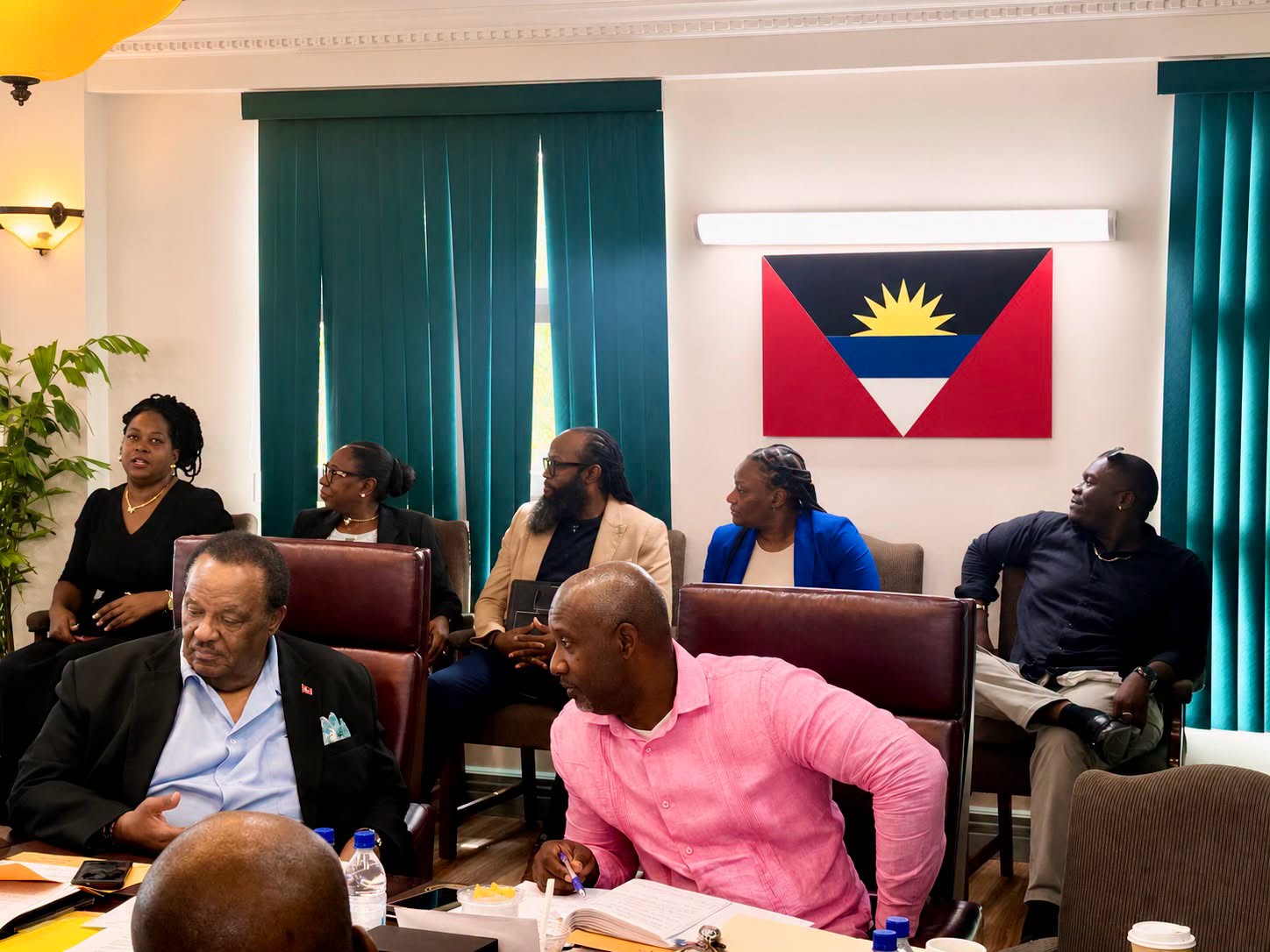
    In a push to build a more inclusive and sustainable national environmental strategy, stakeholders from across Barbuda gathered for a targeted consultation Tuesday, 19 May 2026, at the Barbuda Community Centre. The meeting’s core mission was to embed gender perspectives into the ongoing update of Antigua and Barbuda’s National Biodiversity Strategy and Action Plan (NBSAP), a process backed by the United Nations Development Programme (UNDP) and led locally by the Gilbert Agricultural and Rural Development Centre (GARD Centre).

    Unlike broad national discussions, this consultation was specifically tailored to center the distinct realities of Barbuda’s population. Organizers designed the session to capture the unique on-the-ground experiences, top priorities, and unaddressed challenges that Barbuda residents face in their interactions with local ecosystems. Over the course of the meeting, participants exchanged insights across four key thematic areas: biodiversity conservation, natural resource governance, community livelihoods, and climate resilience, with a deliberate focus on how environmental change and resource management impact women and men differently.

    National consultant Mellissa Johnson led the discussion, with technical input provided by specialist Refica Attwood. Among the most pressing issues raised by attendees was saltwater intrusion into Barbuda’s freshwater aquifers, a growing climate-linked threat that participants emphasized undermines daily access to clean water, strains local livelihoods, and blocks progress toward sustainable resource management on the island.

    All input collected during the consultation will be used to identify targeted, context-specific opportunities to integrate gender considerations into the revised NBSAP framework. Because of Barbuda’s unique environmental and social landscape—distinct from the larger island of Antigua—priority actions for the island will be evaluated and incorporated separately from those developed for Antigua.

    Event organizers extended gratitude to all attendees for their contributions to advancing a more equitable, people-centered biodiversity strategy for the twin-island nation. For residents who were unable to participate in the in-person consultation, organizers noted that public input remains open, and interested contributors can reach out directly to the GARD Centre to share their perspectives.