Against a backdrop of persistent economic and social challenges across Latin America and the Caribbean, a landmark new United Nations report has delivered a rare positive milestone: the region has recorded a fifth straight annual drop in hunger levels, with the Dominican Republic becoming the sixth nation in the area to reach the official “zero hunger” threshold.
Released in late July 2026 by multiple UN agencies, *The State of Food Security and Nutrition in the World 2026* documents that over the past five years alone, the share of the Latin American population facing chronic hunger has fallen by 4.8 percentage points. As of the report’s data cutoff, just over 30 million people across the region still live with undernourishment – a significant decline from years prior. The UN Food and Agriculture Organization (FAO) defines hunger, or chronic undernourishment, as a condition of insufficient calorie intake lasting at least one year, measured via the Prevalence of Undernourishment (PoU) indicator. Under FAO standards, a country qualifies for zero hunger when less than 2.5% of its population lives with chronic undernourishment.
Six countries in Latin America have now crossed this threshold, starting with Uruguay, which reached the mark in 2005, followed by Brazil in 2012, Costa Rica in 2013, Chile and Guyana both in 2021, and most recently the Dominican Republic in 2026. Brazil’s trajectory offers a key case study: the large nation first hit zero hunger more than a decade ago, saw undernourishment tick back up during the COVID-19 pandemic, and regained its zero hunger status in 2025. Its long-running integrated policies have become a regional model replicated by other nations working to end hunger.
FAO Chief Economist Máximo Torero told BBC Mundo that the policies of the six zero-hunger nations share a clear, replicable pattern. “Hunger decreases when agricultural, economic and social policies reinforce each other,” Torero explained. The core of successful strategy, experts agree, does not rely on untested, innovative frameworks. Instead, it hinges on consistent, long-term government commitment that combines targeted social protection for vulnerable groups with investments in sustainable agricultural production.
While the 2026 report highlights major progress, significant gaps remain across the region. Argentina currently comes closest to joining the zero hunger group with a 2.8% undernourishment rate, followed by Mexico at 3.1%. At the opposite end of the spectrum, Bolivia has the region’s highest hunger rate, with nearly 20% of its population facing chronic undernourishment. No recent official data was available for Nicaragua and Cuba for this report.
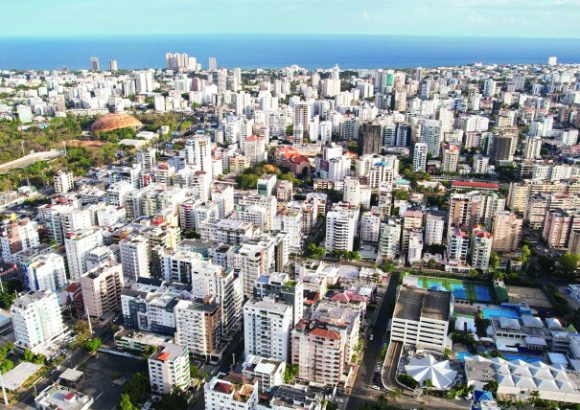
The Dominican Republic stands out as the most improved nation in the region, cutting its hunger rate from 21% of the population in 2004 to zero over just two decades. The journey to this milestone was a decades-long cross-administration effort, built after the country’s devastating 2003 banking collapse that sent inflation soaring and pushed unemployment to record highs. Following a 2004 macroeconomic stabilization program implemented with the International Monetary Fund, the Dominican economy entered a prolonged period of growth, driven by expanded tourism, construction, free-trade zones, and rising remittance flows. Two successive ruling parties – the Dominican Liberation Party, which governed from 2004 to 2020, and the Modern Revolutionary Party, which has held power since 2020 – sustained and expanded anti-hunger policies through changing political cycles.
The story of small-scale agricultural entrepreneur Dioris Rijo, a 50-year-old farmer from the eastern province of La Altagracia, illustrates how these policies have transformed lives on the ground. Two decades ago, Rijo and her young family faced hunger after the 2003 economic collapse. She left farming to work in hotels near Punta Cana, only to lose her job when the pandemic shut down tourism in 2020. Returning to her family’s land, Rijo received state support to launch a community agricultural business, where she and her neighbors grow leafy greens and raise tilapia for local sale. “Here I am earning my living, and I don’t have to go to work far away,” Rijo told BBC Mundo. “Even if I go little by little, the little is mine.”
Not all experts agree that the zero hunger designation fully reflects on-the-ground reality. Dominican economist Maribel Suero Castillo, secretary of Technical Affairs at the Dominican College of Economists, notes that the FAO’s PoU indicator measures national average calorie availability rather than actual income distribution or equitable access to food, meaning the aggregate figure can mask persistent hardship for vulnerable groups. Currently, 41% of the Dominican population still faces moderate or severe food insecurity, a condition defined by inconsistent access to sufficient, nutritious food – a far more challenging goal to address than meeting minimum calorie requirements.
To reach its zero hunger milestone, the Dominican Republic rolled out a multi-pronged long-term strategy that combined economic growth with targeted social investment. Key programs include the expanded School Feeding Program, which provides breakfast, lunch, and snacks to all public school students with extended school days; a national Food Program that serves 14% of the population via targeted electronic benefit cards for low-income households; a subsidized cooking gas program; free community dining halls in high-poverty areas; and widespread agricultural incentives including low-interest financing for smallholder farmers, production technification, land titling support, and government purchasing from local producers.
Manuel Robles, director of the Dominican government’s Technical Secretariat for Food and Nutritional Sovereignty and Security, called the achievement a cumulative, cross-generational effort, noting that zero hunger arrived earlier than official projections. “Without the economic growth that the country has experienced in its recent history, this goal would not have been possible,” Robles said, adding that the progress also required consistent political will to allocate fiscal resources to anti-hunger programs. Even as the region celebrates this major milestone, experts emphasize that the work to end all forms of food insecurity is far from over, with the successful model of integrated, long-term policy now available for other nations to adapt.