作者: admin

  • Belize Football Faces FIFA Reality Check

    Belize Football Faces FIFA Reality Check

    In a landmark step for football development in the small Central American nation of Belize, national governing body the Football Federation of Belize (FFB) has partnered with FIFA to conduct a landmark comparative analysis of the country’s amateur and grassroots football ecosystems. The review, which draws on 2023-2024 survey data collected across 106 countries worldwide, is designed to deliver a clear, data-backed assessment of Belize’s standing in global community football development, and lay the groundwork for future growth that supports all players, not just those on track for elite competition.

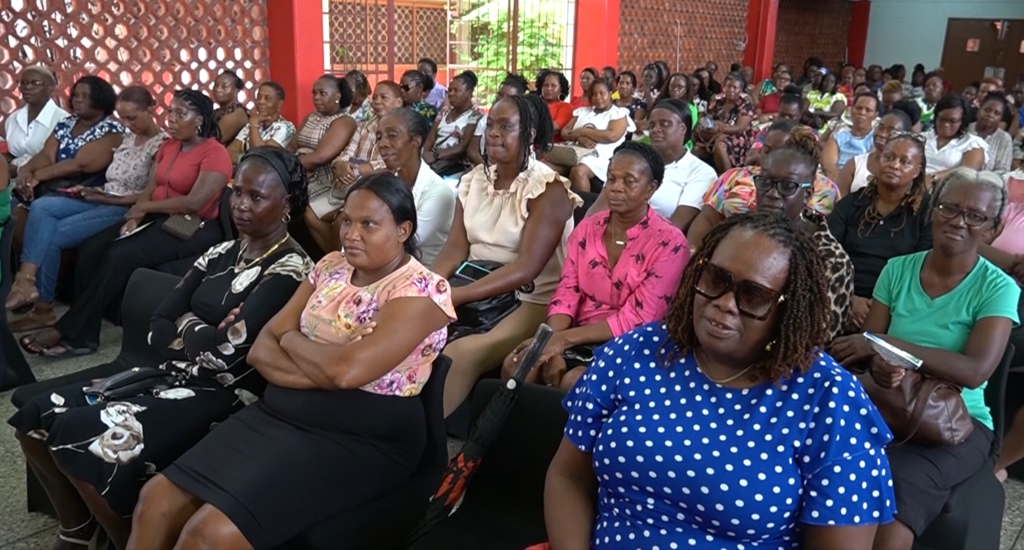
    The collaborative assessment was presented at a national workshop bringing together certified football coaches from every region of Belize, where stakeholders broke down key findings and actionable recommendations for expanding access to the sport. Speaking at the event, FFB President Sergio Chuc emphasized that the analysis has delivered tangible, documented insights into Belize’s current progress, allowing leaders to benchmark the country’s work against international peers. Early findings suggest Belize’s existing grassroots and amateur framework is well-organized and aligned with global best practices, though Chuc noted that consistent, ongoing work will be critical to driving further improvement.

    Javier Sanchez, FIFA’s Amateur Football Manager, outlined the dual global goals that guided the analysis: boosting broad-based participation in football across all demographics, and growing the sport to be inclusive of players of all skill levels and aspirations. Unlike elite-focused assessments that center only on top-tier professional and national team performance, this project prioritizes the massive segment of players who participate in football for community, recreation, and personal development rather than professional advancement.

    FFB Technical Development Director Phillip Marin echoed this priority, noting that globally, fewer than 1% of grassroots players ultimately advance to elite competitive levels. That reality makes targeted investment in amateur pathways not just a nicety, but a core responsibility for football governing bodies at every level – from the FFB to regional confederation CONCACAF and global governing body FIFA. Without structured, supported opportunities for the vast majority of players who will not go pro, Marin argued, the sport misses out on widespread community buy-in and the broad base of participation that ultimately nurtures the rare elite talent that does emerge.

    This collaborative review marks one of the most comprehensive third-party assessments of Belize’s national football structure in recent years, reflecting a growing global shift toward prioritizing inclusive grassroots development alongside high-performance elite programs. For Belize, the findings will shape future funding, coaching training, and infrastructure investment decisions as the country works to expand access to football and solidify its position on the global football landscape.

  • Bogotá : Haiti proposes a regional system for the recognition of professional skills

    Bogotá : Haiti proposes a regional system for the recognition of professional skills

    Against a backdrop of growing regional migration pressures and shifting labor market dynamics across Latin America and the Caribbean, Haiti has put forward a bold proposal for cross-border cooperation at the region’s highest-level gathering of labor ministers. The Conference of Ministers of Labor of Latin America and the Caribbean, hosted in Bogotá, Colombia from May 21 to 22, 2026, brought together top labor and social affairs officials to address shared challenges spanning migration, inclusive economic growth, and climate-linked labor disruption.

    Leading Haiti’s delegation to the conference, Marc-Elie Nelson, Minister of Haiti’s Ministry of Social Affairs and Labor (MAST), introduced a landmark initiative: the creation of a standardized regional system for the recognition of professional skills. Nelson argued that such a coordinated mechanism would unlock tangible benefits for the entire region, from encouraging cross-border entrepreneurship to expanding equitable access to public employment support services. Most critically, he emphasized, the framework would advance the financial and digital inclusion of migrant workers, a group that often faces systemic barriers to formal economic participation across the region.

    “Investing in these areas is investing directly in the stability, prosperity, and cohesion of our region,” Nelson told conference attendees. Alongside his call for the skills recognition system, Nelson urged regional partners to establish a dedicated regional innovation fund focused on expanding professional inclusion for marginalized and mobile worker populations.

    Beyond labor market reform, Nelson called for unified, coordinated action from regional governments to tackle two of the most pressing shared challenges: irregular migration patterns and climate change impacts on labor systems. He also made a forceful stand against exclusion in workplaces across the region, stating, “We must raise our voices together strongly against xenophobia, discrimination, and all forms of exclusion in the world of work.”

    By the close of the two-day conference, participating officials advanced regional cooperation through two key multilateral agreements: a memorandum of understanding and a joint policy statement titled the Bogota Declaration on Dignified Labor Migration and Rights-Based Mobility in Latin America and the Caribbean. Both documents were initialed by attending delegations, laying the groundwork for future coordinated action.

    For Haiti, signing onto the agreements reaffirms the country’s long-standing commitment to building a regional governance model that centers human dignity as a core priority of public policy, aligning with the nation’s proposal to center marginalized migrant workers in regional labor reform efforts.

  • Social : Launch of the first shelters for women victims of violence

    Social : Launch of the first shelters for women victims of violence

    In a landmark step forward for gender justice in Haiti, top government officials officially opened the nation’s first dedicated safe shelters for women and girls who have survived gender-based violence on Friday, May 22, 2026. The launch ceremony, led by Prime Minister Alix Didier Fils-Aimé alongside Pédrica Saint-Jean, Haiti’s Minister for the Status of Women and Women’s Rights, drew attendance from representatives of UN Women, international technical and financial partners, and members of the diplomatic corps based in Port-au-Prince.

    Across the country, four such shelters will be constructed across four key departments: West, Grand’Anse, Central, and Artibonite. The first completed facility, located in the West Department’s Vivy-Mitchell district, was the site of Friday’s inauguration. Purpose-built to prioritize survivor safety, dignity and holistic healing, the shelter comes equipped with modern amenities including eight private dormitories, dedicated reception zones, a communal cafeteria, an on-site infirmary, a recreation space, and segregated secured areas designed to protect residents. Unlike many temporary support projects in Haiti that rely on international donor funding, this entire initiative is financed directly by the Haitian national government.

    For countless Haitian women who have endured gender-based violence in silence for decades, the opening of these shelters represents more than just a new infrastructure project—it is a tangible demonstration of the state’s commitment to protecting its most vulnerable citizens. Marie Gorreti Nduway, UN Women’s country representative to Haiti, spoke emotionally at the ceremony, praising the launch as a transformative milestone for women’s rights in the country. She called the initiative a concrete victory for Haitian women, and reaffirmed UN Women’s long-term commitment to partnering with the Haitian government to sustain and expand the shelter program.

    Minister Saint-Jean also shared her moving reaction to the completion of the first facility, framing the shelters as an indispensable turning point in the national fight to defend women’s dignity and guarantee their protection. She highlighted that beyond physical safety, the shelters will provide survivors with confidential, individualized psychosocial support tailored to each person’s unique healing journey.

    In his address to attendees, Prime Minister Fils-Aimé framed the project as a powerful act of national solidarity, justice, and collective hope. “Faced with violence, we choose light,” he said. “These houses will be spaces for rebuilding, rebirth, and dignity. Women have the right to protection, to be heard, and to receive support.” To ensure the long-term stability of the program, the prime minister announced that sustained funding for all four shelters will be written into the upcoming national supplementary budget, locking in government support for years to come.

  • Consultations on modernising copyright and intellectual property laws to be held- Ali

    Consultations on modernising copyright and intellectual property laws to be held- Ali

    GEORGETOWN, Guyana – May 22, 2026 – For nearly 60 years after gaining independence from Britain, Guyana has relied on outdated 1956 colonial-era copyright legislation to govern intellectual property rights. Now, amid growing pressure from local creators, innovators, and international stakeholders, President Irfaan Ali has announced that broad public consultations on updating the country’s IP framework will launch in the near term. The announcement comes just one day after the administration identified creative and digital industries as priority growth areas for new public financing, spotlighting the gap between economic development ambitions and outdated legal protections.

    Speaking to reporters from Demerara Waves Online News on Friday, Ali confirmed that the government would prioritize stakeholder input to shape the future of copyright regulation in the South American nation. He specifically highlighted a desire to center perspectives from Guyana’s artistic community, and suggested initial discussions could open on social media platforms to expand accessibility. “Maybe, we should move this up on the agenda and start the consultation on that,” Ali stated.

    The president’s commitment follows remarks Tuesday from Government Efficiency Minister Zulfikar Ally, who named creative and digital sectors among the key industries that will access financing from the upcoming Guyana Development Bank during an address to the Guyana Manufacturing and Services Association (GMSA) business luncheon. When pressed for details on how the government would address widespread gaps in creative work IP protection, Ally only acknowledged the sector is under active review, offering no concrete timeline or policy details.

    Guyana’s failure to modernize intellectual property law stretches back decades. The country has never replaced the 1956 British Copyright Act it inherited at independence in 1966. Previous efforts to pass updated IP legislation in the 2000s collapsed due to lack of political will. While the ruling People’s Progressive Party Civic promised copyright reform as a core 2025 election pledge, no legislative action has been taken to date. The opposition coalition A Partnership for National Unity (APNU) has already tabled a motion calling for a bipartisan select committee to advance reform with a clear legislative timeline, but the National Assembly has yet to take up the proposal.

    International pressure for reform has also mounted in recent weeks. During an official visit to Guyana on May 13, 2026, U.S. Under Secretary of State for Economic Affairs Jacob Helberg emphasized that strong intellectual property protections, as a component of private property rights, are critical to unlocking private investment and realizing Guyana’s goal of becoming one of the Western Hemisphere’s most prosperous economies, driven in large part by its emerging oil sector.

    “In order to do that, certain conditions have to be met, including the right to private property, including respecting intellectual property, including different kinds of principles of governance that the private sector necessarily needs in order to have the confidence, the predictability, and the certainty to deploy and invest a lot of money. And so we focused on the goal. We agreed on the goal,” Helberg told reporters following meetings with Guyanese leadership.

    Local innovation leaders have echoed these calls, warning that weak IP protections are stifling homegrown creativity and technological development. Dr. Karen Abrams, founder and executive director of STEM Guyana, outlined the risks of the current legal framework during a U.S. Embassy-hosted panel on STEM education and innovation held at the University of Guyana.

    Abrams described Guyana’s current innovation ecosystem as a shallow market constrained by a small population, widespread poverty, and no legal guardrails to protect original literary, artistic, and technological creations. “For innovators, the minute you throw out an innovation, there’s no protection, no IP protection. It’s co-opted by the powerful entities,” she told attendees.

    To address gaps in the current system, Abrams proposed the creation of a national science foundation that would provide dedicated research funding for university faculty and students, while establishing clear IP frameworks for publicly supported work. She also advised local innovators to pursue IP protection in foreign jurisdictions in the near term, noting that “there’s not a whole lot of protection for ideas in Guyana but wherever you look overseas, those markets do offer protection for your ideas.”

    Beyond legal reform, Abrams emphasized that long-term innovation capacity depends on addressing foundational gaps in Guyana’s education system. She noted that half of Guyana’s children struggle with basic math and literacy, and 50 percent drop out of secondary school by the ninth grade. “You can’t develop an innovative ecosystem if you lose half of your children in a tiny country where you need them to not only develop the oil industry, you need them to be thinking in 2046, what are those industries?” she said.

    The opposition’s reform plan, tabled earlier this year by APNU parliamentarian Nima Flue-Bess, mirrors many of these stakeholder priorities. Flue-Bess’s motion calls for a special select committee to audit the existing 1956 copyright law, map gaps in digital rights and enforcement, and hold targeted consultations with creative industry stakeholders to ensure new legislation reflects on-the-ground needs. Under the opposition proposal, a draft updated copyright bill would be submitted to the 65-seat National Assembly for debate within six months of the committee’s work concluding.

  • Man found dead in Sunny Acres apartment

    Man found dead in Sunny Acres apartment

    Law enforcement agencies have opened a homicide investigation following the gruesome discovery of 31-year-old Darrion Roberts, a trained volleyball player and active tennis coach, at his residential apartment in the Sunny Acres neighborhood on Wednesday afternoon. First responder accounts and local law enforcement confirm Roberts was found with multiple stab wounds when his roommate returned to the shared accommodation around 2:00 p.m. local time.

    As of the latest update from investigative teams, no further details surrounding the circumstances of Roberts’ death — including potential motives, suspects, or the exact timeline of the incident — have been released to the public. Multiple official sources familiar with the case confirmed the basic details of the discovery to local St. Lucia-based publication St Lucia Times, but investigators have declined to comment on unconfirmed speculation while the case remains in its early active phase.

    Community members in the Sunny Acres area have already begun expressing shock over the violent death of the young sports coach, who worked with local athletic programs and emerging young tennis players in the region. Investigators have noted that they are processing evidence from the apartment scene and conducting interviews with witnesses and people who knew Roberts in the days leading up to his death, with updates expected as new information becomes available.

  • Dodental bendegewel Honduras stijgt tot minstens 25

    Dodental bendegewel Honduras stijgt tot minstens 25

    On a single deadly day that ranks among the bloodiest in Honduras in recent years, two separate coordinated attacks have killed at least 25 people, including six law enforcement officers, shattering fragile hopes that new government policies could curb the country’s long-running crisis of organized gang violence.

    The deadliest assault unfolded on a palm oil plantation in Trujillo, a city in northern Honduras, where 19 people were shot dead. A leader of one local armed faction claimed the victims were all affiliated with a rival group that controls the commercial plantation, but local media reports indicate the attackers opened fire indiscriminately on on-site workers. The oldest victim was identified as a 61-year-old laborer, and graphic photos from the attack scene show lifeless bodies scattered across the plantation grounds, many still wearing their work boots.

    Hundreds of kilometers away, in the western municipality of Omoa near the Honduras-Guatemala border, six police officers carrying out an anti-gang operation were ambushed and killed by heavily armed gunmen. In the immediate aftermath of both attacks, national law enforcement announced a swift intervention in the affected regions, vowing to track down all responsible parties, protect vulnerable local communities, and deliver justice to the families of the victims.

    Honduras has struggled with endemic gang-related violence for decades. Starting in 2022, a national state of emergency was imposed across most of the country to combat criminal groups, but the measure was lifted in January following the inauguration of right-wing president Nasry “Tito” Asfura, an ally of former U.S. President Donald Trump who has campaigned on an aggressive hardline security agenda for the region. Since taking office, Asfura’s administration has passed new legislation allowing authorities to classify gangs and drug trafficking organizations as terrorist groups, and launched a specialized new unit dedicated to dismantling organized criminal networks.

    The Trujillo attack took place in the Aguan River Valley, a region that has been plagued by inter-faction violence for decades, as competing armed groups fight for control over territory used for both illegal narcotics trafficking and commercial palm oil production. National police chief Carlos Rojas explained that armed gangs have seized and illegally operated large-scale palm oil plantations in the area, using revenue from the crop to fund weapons purchases and expand their criminal operations.

    Local small-scale farmers have long accused multinational agribusiness firms of colluding with criminal gangs to seize land, preventing indigenous and local communities from reclaiming their legally held property rights. Since the conflict over land in the valley began, more than 150 people have been killed or disappeared, with environmental and land rights activists consistently targeted as high-priority victims. Honduras is currently ranked one of the most dangerous countries in the world for environmental defenders; just earlier this month, multiple individuals including a local mayor were arrested over an alleged plot to assassinate a prominent high-profile environmental activist in the country.

  • Did You Know Worldwide Less Than 1% of Footballers Reach the Elite Level?

    Did You Know Worldwide Less Than 1% of Footballers Reach the Elite Level?

    In a collaborative workshop held this week, the Football Federation of Belize (FFB) and global governing body FIFA reviewed newly compiled data from a landmark cross-national study of amateur and grassroots football, revealing encouraging progress for Belize’s developing program while shining a long-overdue spotlight on the critical role of non-elite football systems worldwide.

    The study draws on survey data collected between 2023 and 2024 across 105 nations, creating one of the most comprehensive global snapshots of grassroots football ever assembled. This comparative dataset gives smaller footballing nations like Belize a unique opportunity to benchmark their development against global standards, and early assessments place Belize in a strong, competitive position.

    FFB President Sergio Chuc emphasized that the preliminary findings confirm the country’s strategic direction is on track. “We will be looking at how far the other countries are compared to Belize, and for us it is looking pretty good that we are on the right path, well organised, and the work must continue,” Chuc said.

    Javier Sanchez, FIFA’s manager for amateur football, who led the presentation of study findings, explained the initiative is part of a broader global push by the organization to expand access to the sport and boost overall participation. “We conducted the analysis to get a big picture of the amateur football worldwide and in Belize,” Sanchez noted, outlining the two core goals of the project: making the sport accessible to all people regardless of skill level, and growing total participation across all demographics.

    The most striking statistic to emerge from the workshop serves as a critical reminder of the sport’s broader purpose: across the globe, fewer than 1% of all people who play football will ever advance to the elite professional level of the sport, FFB technical development director Phillip Marin confirmed.

    This statistic underscores a simple but often overlooked reality: the overwhelming majority of football players will build their entire relationship with the sport within amateur and grassroots structures. As a result, these systems deserve the same level of investment, attention, and institutional support as elite player development pathways.

    “It is important for us as a federation and FIFA and CONCACAF to cater to the players that cannot reach the elite branch,” Marin said, highlighting the shared commitment across regional and global governing bodies to serving all football lovers, not just the small fraction that advance to top-tier competition.

  • Guilty of Murdering Wife and Brother!

    Guilty of Murdering Wife and Brother!

    In a landmark verdict delivered on May 22, 2026, a Belizean High Court judge has found Miguelito Encalada guilty of the brutal 2023 double murder of his wife and brother, a case that seized national attention after graphic evidence from the crime scene circulated widely on social media.

    Justice Candace Nanton, who presided over the high-stakes trial, weighed weeks of witness testimony and forensic evidence to conclude that Encalada was responsible for the fatal shooting of Desiree Elizabeth Gonzalez, his spouse, and George Vincent Rochester, his biological brother. The killings took place on April 20, 2023, inside Encalada’s own commercial property located on Scissors Tail Street in Ladyville’s New Site neighborhood.

    Throughout the proceedings, Encalada maintained his innocence, telling the court he had been asleep on the premises when a group of armed intruders forced their way in and executed the two victims before fleeing the scene. But his account was completely undermined by damning ballistic analysis presented by the prosecution. Forensic experts matched bullet fragments recovered from the crime scene to a 9mm handgun legally registered to Encalada, tying the weapon directly to the killings.

    The case became a viral national talking point shortly after the murders, when a selfie photograph showing Encalada alongside the bodies of his two dead victims was leaked and shared across social media platforms, sparking public outrage and calls for a swift investigation.

    With the guilty verdict now in place, Justice Nanton has ordered a series of pre-sentencing reports to guide her final sentencing decision. These include a full psychiatric evaluation of Encalada to assess his mental state at the time of the crimes, a formal social inquiry report, a background report from correctional authorities, and official victim impact statements from the families of the two deceased. Encalada’s sentencing is scheduled to be handed down on July 20, 2026, at which point he will learn the penalty for his conviction.

  • ‘Justice For Joy’: Women demand action during emotional vigil outside police station

    ‘Justice For Joy’: Women demand action during emotional vigil outside police station

    On a quiet Thursday evening in Gros Islet, Saint Lucia, the space outside the local police station became a sea of flickering candlelight, broken only by quiet tears and impassioned calls for systemic change. Hundreds of Saint Lucians, led by young mothers and survivors who have lived through intimate partner violence, gathered to hold a peaceful vigil for 24-year-old Joy St Omer, a mother of one killed just one day prior. What began as a solemn tribute to a lost life quickly transformed into a coordinated, powerful public demonstration against the growing crisis of gender-based violence, widespread institutional failures, and the urgent unmet demand for stronger legal and protective measures for women across the island.

    Multiple reports confirm St Omer had repeatedly reached out to law enforcement and legal authorities to report escalating threats from her estranged husband, the primary suspect in her killing. Days before her death, a valid active protection order was already on the books against the suspect, who later turned himself in to police. An ongoing court case was already pending over allegations he had violated the terms of that order multiple times. In an official statement released the day of the vigil, police confirmed St Omer filed an additional complaint against her estranged husband on Wednesday morning, but officers were unable to locate him before that same night, when she was fatally shot while sitting in a vehicle in the Marigot district.

    Angel Foster, the community organizer who spearheaded the vigil, said she could not stay silent after learning the full details of St Omer’s final days. “I organised this because I think I’m not the only woman that woke up yesterday irritated, angry and upset about what happened to Joy,” Foster shared in an interview on site. “She was a young mother, a young woman who actually reported this multiple times to the police and the justice system.” Foster added that the vast majority of attendees were fellow survivors of domestic abuse, who all share the experience of being failed by Saint Lucia’s current support and protection systems. She alleged St Omer’s repeated pleas for help were dismissed out of hand: “She was laughed at, ridiculed, belittled and put down. She’s not the only woman suffering silently.”

    As the sky darkened, attendees stood shoulder to shoulder, many openly weeping as they shared their own experiences of living in fear amid abusive relationships. One attendee, who spoke to reporters on condition of anonymity, argued authorities had every opportunity to prevent St Omer’s senseless killing. “She could have been given an escort. She could have been placed into emergency custody for a time until they found him. They could have done way more than they did,” she said. The survivor called for binding, mandatory enforcement protocols that would require law enforcement to treat all domestic violence reports with the urgency they deserve. “The way you change things is you compel people to comply through laws, protocols and guidelines,” she explained.

    She also issued a stark warning against the dangerous pattern that has played out after past acts of fatal violence against women: “There is outrage, there is discourse, but eventually it goes back into normalcy and inaction.” For the gathered crowd, the vigil was not just a chance to mourn St Omer, but a starting point for long-overdue reform that will save the lives of other women at risk across Saint Lucia.

  • Seven Charged After Police Seize Drugs and Illegal Guns in Multiple Raids

    Seven Charged After Police Seize Drugs and Illegal Guns in Multiple Raids

    Law enforcement agencies across Belize have concluded a coordinated multi-location crackdown on illegal weapon and narcotics activity, bringing charges against seven adults and one minor following a series of targeted raids conducted in late May 2026.

    The largest seizure of contraband took place in the capital city of Belmopan, where officers from the Gang Intelligence Investigation and Interdiction Unit executed a court-authorized search of a local residence on May 20. During the operation, investigators recovered 585 grams of material suspected to be crack cocaine. Three people—23-year-old Ayana Samuels, 19-year-old Taysha Young, and 20-year-old Akeem Myvette—were taken into custody and face joint charges of possession of a controlled substance with intent to distribute. Myvette has already entered a guilty plea and is scheduled to appear before the court on May 25 for formal sentencing.

    Across the country on the island resort of Caye Caulker, a separate residential search turned up 19 Ziploc packets containing just over 16 grams of suspected cocaine, plus an additional four bags of cannabis totaling more than 21 grams. Both 22-year-old Idan Pineda and a 15-year-old minor from the local community were arrested and hit with joint charges of drug trafficking and illegal drug possession. A subsequent pat-down of Pineda uncovered four more small bags of suspected cocaine on his person, leading to an additional trafficking charge added to his case file.

    In two separate operations run by Belize’s Special Patrol Unit in Belize City, two local men were taken into custody on unlicensed firearm charges. During a routine search, 31-year-old Kendale Carcamo of Ebony Street had a loaded 9-millimeter Beretta pistol fall from his waistband; the weapon was loaded with 14 live rounds, and officers also found a small quantity of suspected cocaine in his possession. A short distance away, 25-year-old Jermaine Anderson from the Conchshell Bay neighborhood was charged after investigators located a 9-millimeter Austrian-manufactured pistol during a search of his home.

    Belizean law enforcement has confirmed that firearm possession charges are only pursued when there is concrete evidence proving that an individual had knowing custody or control of the unregistered weapon. The coordinated raids mark part of an ongoing push by local police to disrupt cross-community organized criminal activity tied to drug trafficking and illegal weapons proliferation across the country.