作者: admin

  • Colombian Solidarity Movement decry US threats on Cuba

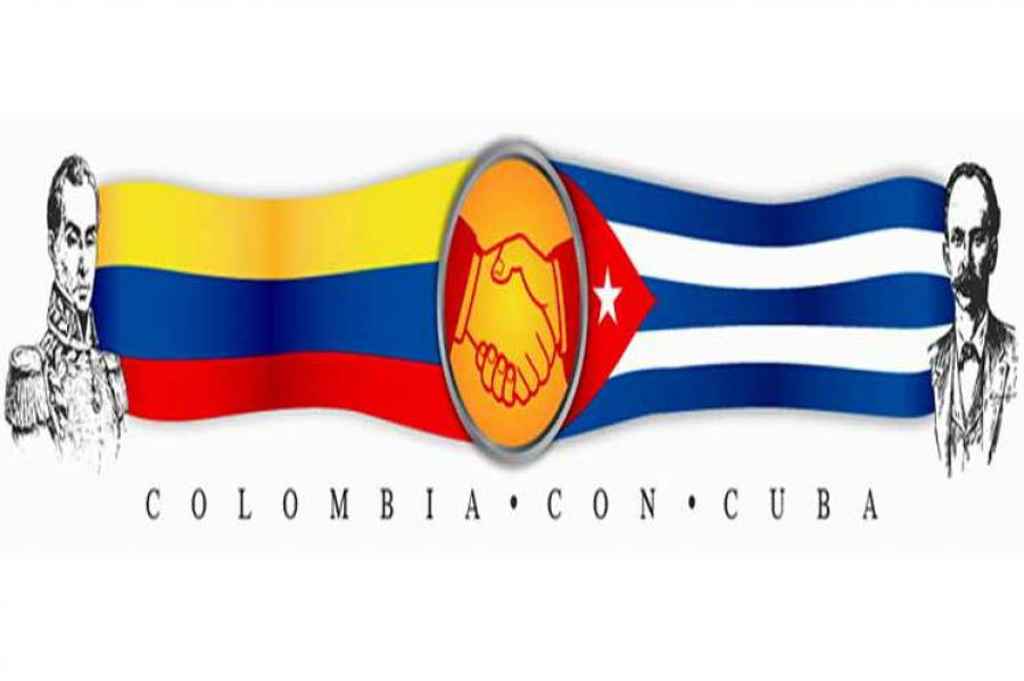
    Colombian Solidarity Movement decry US threats on Cuba

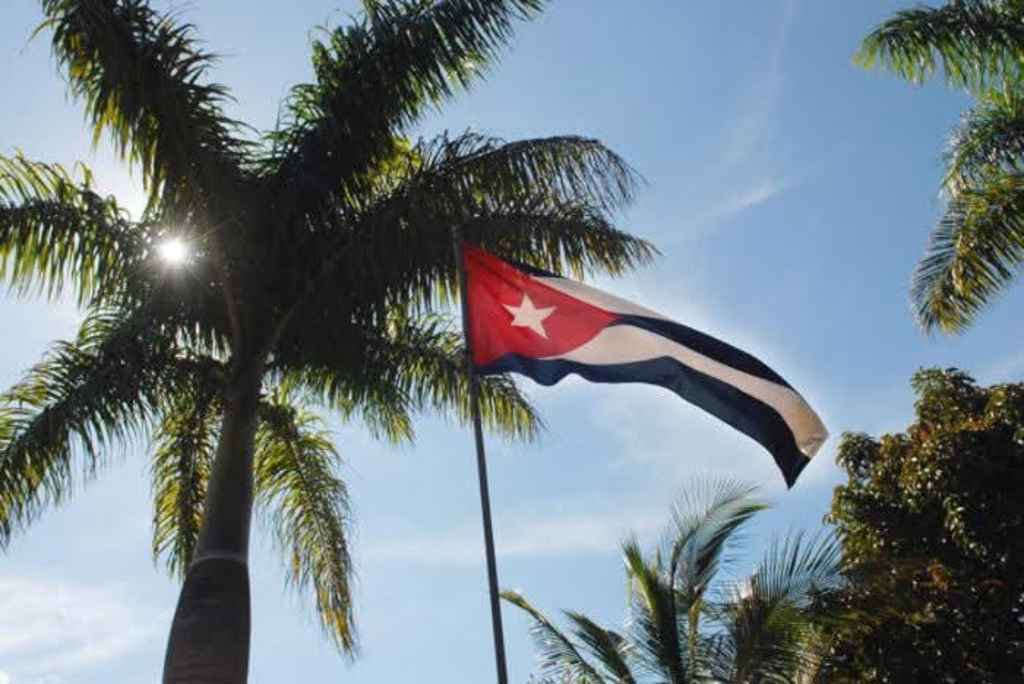
    A prominent international solidarity movement has issued a forceful condemnation of United States policies toward Cuba, characterizing recent US government declarations as “fascist” attempts to undermine Cuban self-determination. The organization expressed unwavering support for Cuba’s sovereignty and endorsed calls by Cuban intellectuals and artists to resist perceived threats from Washington.

    The movement specifically endorsed the Cuban Chapter of the Network of Intellectuals and Artists in Defense of Humanity’s position regarding escalating tensions between the two nations. In its comprehensive statement, the group reaffirmed its steadfast commitment to defending Cuba’s sovereign rights and national integrity.

    Beyond mere condemnation, the movement issued a broad mobilization appeal to Colombian civil society, urging social organizations, labor unions, artistic communities, student groups, and the general public to unite in defense of Cuba. The solidarity platform specifically acknowledged gratitude for Cuba’s “tireless struggle to achieve peace” in Colombia, highlighting the island nation’s historical role in regional conflict resolution.

    The statement concluded with a historical reference to Cuban revolutionary leader Fidel Castro, whose centennial year is currently being commemorated. Invoking Castro’s “absolute conviction and faith in victory,” the movement drew inspiration from Cuba’s 1961 victory at the Bay of Pigs (known as Giron in Cuba) as motivation to resist what it termed “the barbarity that surrounds us.”

    This development follows earlier condemnation from Cuban President Miguel Diaz-Canel, who characterized recent US government statements as immoral. Responding to remarks attributed to former US President Donald Trump, Diaz-Canel questioned America’s moral authority to criticize Cuba, asserting that “those who turn everything into a business, even human lives, have no moral authority to point the finger at Cuba in any way.” The Cuban leader reaffirmed his nation’s readiness to defend itself against external pressure.

  • Guyana’s President to Pay State Visit

    Guyana’s President to Pay State Visit

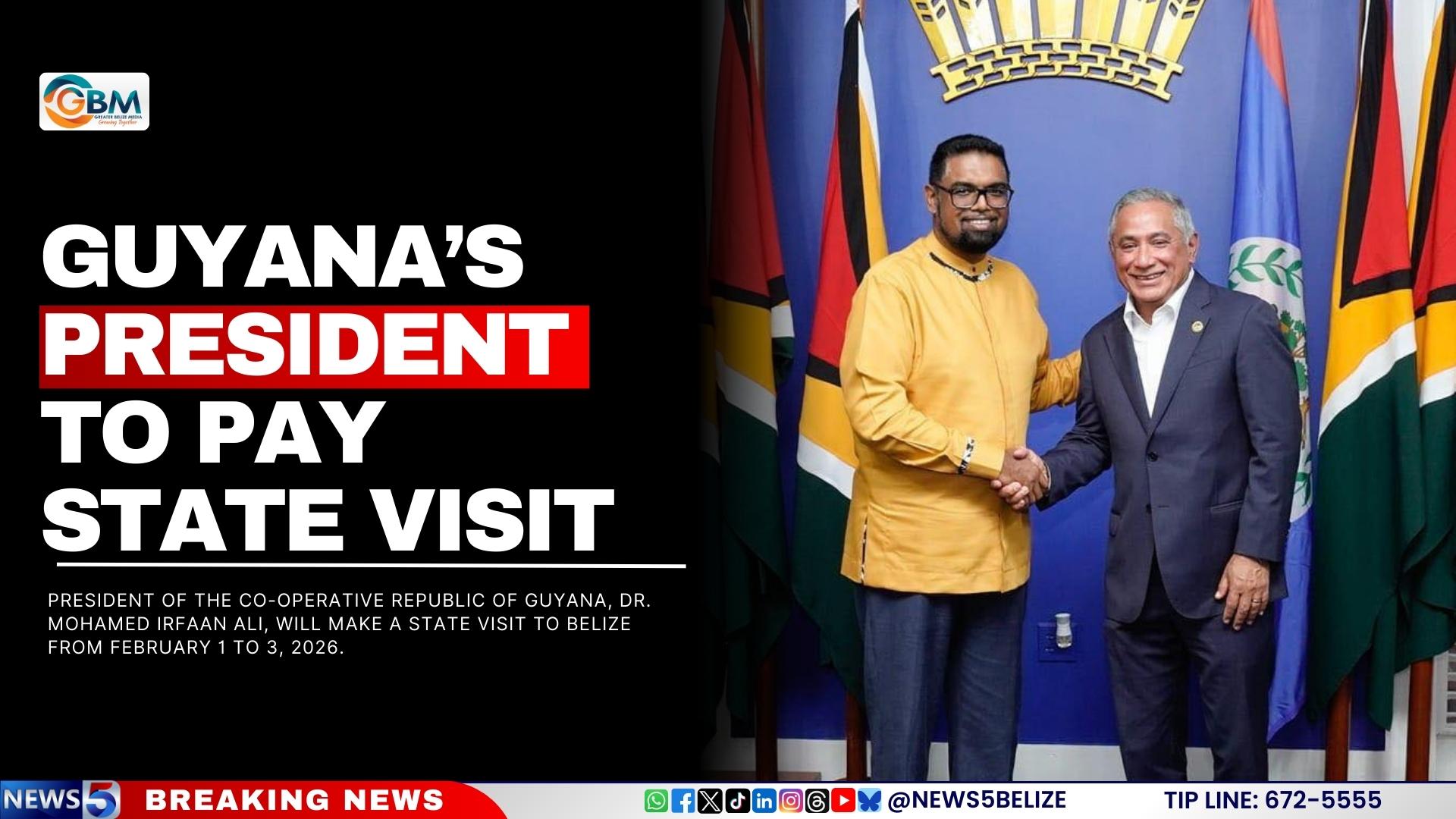
    In a significant diplomatic development for the Caribbean Community, Guyana’s President Dr. Mohamed Irfaan Ali will undertake an official state visit to Belize from February 1-3, 2026. The three-day visit marks a strategic effort to deepen bilateral relations between the two CARICOM member nations through high-level political engagement and economic cooperation.

    President Ali’s itinerary includes a prominent address to Belize’s parliamentary assembly during the opening of its new legislative session, where he is expected to outline shared regional priorities. As CARICOM’s designated Lead Head of Government for agricultural affairs, the Guyanese leader will conduct specialized meetings with Belize’s productive sectors to advance regional food security initiatives, cross-border investment opportunities, and trade expansion.

    The diplomatic agenda features bilateral discussions with Belize’s highest leadership, including Governor-General Dame Froyla T’zalam and Prime Minister John Briceño. These meetings are anticipated to yield multiple cooperation agreements spanning economic, agricultural, and developmental sectors, reflecting both nations’ commitment to enhanced integration.

    This visit builds upon longstanding friendly relations between Georgetown and Belmopan, rooted in mutual dedication to Caribbean solidarity and sustainable development. The carefully structured program underscores the growing strategic importance of South-South cooperation within the CARICOM framework as member states seek to address shared challenges through collaborative governance.

  • Man killed, brother injured in Region 7

    Man killed, brother injured in Region 7

    A violent altercation at Barakat Landing on the Cuyuni River has resulted in a tragic outcome, with one man deceased and his brother critically wounded. The incident, which transpired on the evening of Sunday, January 11, 2026, is now under active investigation by police from Regional Division #7.

    According to initial reports from the Guyana Police Force, the two victims, both employed as pork knockers in the local mining area, became engaged in a heated dispute with another male individual. The confrontation escalated dramatically when the alleged assailant reportedly seized a pair of scissors and launched a brutal attack, stabbing both brothers multiple times across their bodies.

    Following the violent assault, the suspect immediately fled the scene and has successfully evaded capture thus far. Law enforcement authorities have confirmed that intensive efforts are currently underway to locate and apprehend the individual responsible for this deadly attack.

    The remote location of Barakat Landing presents unique challenges for investigators operating in the Region #7 jurisdiction. The community, situated along the Cuyuni River, represents one of many mining areas where such violent incidents occasionally occur, highlighting ongoing security concerns in Guyana’s interior regions.

    Police have not yet released the identities of the victims pending notification of their families, nor have they disclosed potential motives behind the altercation that turned fatal. The investigation remains ongoing as authorities work to piece together the precise sequence of events that led to this tragic outcome.

  • CANU issues national early warning alert for ecstasy after seizure

    CANU issues national early warning alert for ecstasy after seizure

    Guyana’s Customs Anti-Narcotics Unit (CANU) has activated a nationwide emergency alert system following the successful prosecution of a significant ecstasy trafficking case. The alert targets public awareness, law enforcement agencies, and healthcare providers in response to the confirmed presence of high-risk MDMA tablets in circulation.

    The agency confirmed the conviction of Devon Grant, who received a 12-month prison sentence and a GY$300,000 fine after pleading guilty to trafficking 164 grams of ecstasy. Co-defendant Lily Wills maintained her innocence and was released on GY$100,000 bail pending her February 2 court appearance. A third suspect was released due to insufficient evidence.

    According to CANU’s operational report, the arrests resulted from intelligence-driven surveillance that led to the interception of a vehicle at Movietowne, Turkeyen in Greater Georgetown. Officers discovered multiple ziplock bags containing brightly colored pills that were subsequently confirmed by the Guyana Forensic Science Laboratory to contain MDMA.

    Health authorities have been instructed to monitor for ecstasy-related medical emergencies, particularly symptoms including severe dehydration, hyperthermia, tachycardia, confusion, agitation, and collapse. CANU emphasized that seized tablets showed significant variation in potency and likely contained dangerous adulterants.

    The agency specifically warned young adults about the elevated risks of combining MDMA with alcohol or other substances, noting that most emergencies occur in nightlife environments. CANU has implemented enhanced monitoring of entertainment districts, improved surveillance of micro-distribution networks, and strengthened collaboration with venue security teams.

    Public cooperation is actively sought, with CANU urging parents, nightlife operators, and community leaders to report any suspicious activities or unfamiliar pills circulating among youth populations.

  • Network in Defense of Humanity calls for defense of Cuban sovereignty

    Network in Defense of Humanity calls for defense of Cuban sovereignty

    A Cuban publication has issued a stark warning against what it characterizes as imperialist and fascist tendencies within the United States government, asserting that these developments represent a grave threat rather than isolated extremist rhetoric. The analysis presents a comprehensive indictment of current U.S. foreign policy under the Trump administration, drawing direct historical parallels to fascist regimes.

    The publication contends that recent evidence demonstrates the American government, facing multiple domestic crises including the Epstein scandal, Immigration and Customs Enforcement (ICE) controversies, and declining international credibility, is adopting Hitler-like tactics to divert attention from internal problems. This strategic shift occurs against the backdrop of what the article identifies as the irreversible emergence of a multipolar world order.

    Emphasizing Cuba’s sovereign rights, the text accuses the Trump administration and Senator Marco Rubio of consistently disregarding established international legal frameworks. The article further develops its critique through an extended metaphor, comparing U.S. imperialism to a ‘predatory dog’ that attacks with ‘brutal rage’ at the slightest perception of weakness in other nations.

    From this perspective, the publication argues that American foreign policy treats populations in developing nations and economically disadvantaged communities as expendable assets in geopolitical calculations. In response to what it terms the current administration’s ‘genocidal and aggressive course,’ the Cuban chapter of the Network in Defense of Humanity (REDH) has issued a mobilization call. The organization urges intellectuals, artists, and social movements worldwide to unite in solidarity and strengthen defensive alliances to protect national sovereignty against perceived American aggression.

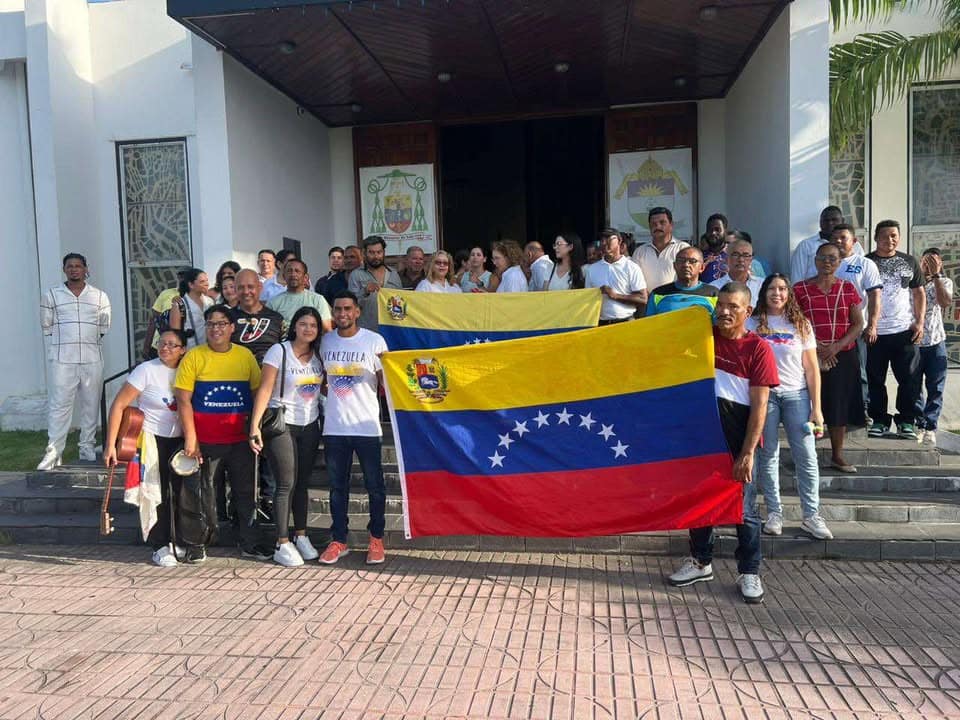
  • Venezuela thanks international solidarity from the Culture sector

    Venezuela thanks international solidarity from the Culture sector

    The international literary community has rallied behind Venezuela following what prominent writers describe as an unlawful U.S. intervention resulting in the abduction of President Nicolás Maduro and First Lady Cilia Flores. A powerful declaration endorsed by Venezuelan intellectuals condemns the operation that precipitated significant human casualties and material devastation.

    This coordinated statement, backed by the World Poetry Movement, emphasizes the global poetry community’s firsthand experience with Venezuela’s peaceful and democratic character. The document celebrates Venezuela’s participatory democracy framework, anchored by a constitution ratified through overwhelming popular mandate in 1999. It highlights the nation’s robust electoral systems and recently revitalized community participation mechanisms as evidence of its democratic legitimacy.

    The author categorically refutes ideological justifications for foreign aggression, identifying economic motives—specifically Venezuela’s substantial natural resource wealth—as the true driver behind international stigmatization. The statement contextualizes current hostilities within a historical pattern of external interference affecting Venezuelan leaders across the political spectrum.

    Despite ongoing threats to national sovereignty, the writer affirms the constitutional continuity of the Venezuelan state through the establishment of an interim presidency, presenting this as a testament to the nation’s resilience against external pressures.

  • Fingerprint and Facial Scanners Arrive in Belize

    Fingerprint and Facial Scanners Arrive in Belize

    Belize has entered a new era of border security with the formal inauguration of an advanced biometric screening system at its airports and key border checkpoints. This strategic initiative, developed in collaboration with the United States, represents a significant technological upgrade to the nation’s immigration infrastructure.

    The newly deployed Biometric Data Sharing Programme incorporates state-of-the-art fingerprint scanners and facial recognition technology to enhance border protection mechanisms. The system is designed to simultaneously strengthen national security protocols while streamlining the travel experience for both Belizean citizens and international visitors.

    Home Affairs Minister Oscar Mira emphasized the dual benefits of the program during the launch ceremony. “These advanced technological tools will empower our law enforcement agencies to identify potential threats with unprecedented efficiency,” Minister Mira stated. “We are creating an environment where those with malicious intent find diminishing opportunities to exploit our systems.”

    The minister further highlighted that the initiative reflects the mutual commitment of both nations to principles of transparency, accountability, and legal governance. The program also signifies the deepening partnership between Belize and the United States in matters of security and technological advancement.

    Implementation of the sophisticated biometric system will be managed by the Department of Border Management and Immigration Services in coordination with the Ministry of Immigration, Governance and Labour. Officials anticipate that the professionalism of these agencies will ensure the technology operates at optimal effectiveness while maintaining civil liberties.

    This technological deployment positions Belize among the growing number of nations adopting biometric solutions for enhanced border security and more efficient migration management systems.

  • Mexico on alert for adverse weather conditions

    Mexico on alert for adverse weather conditions

    Mexican authorities have escalated emergency preparedness measures as two formidable winter systems converge to create severe weather conditions across multiple regions. The National Meteorological Service confirms Cold Front 27 has established stationary positioning over the Yucatan Peninsula and southeastern territories, triggering intense precipitation patterns with isolated torrential downpours particularly impacting Veracruz’s Los Tuxtlas and Olmeca regions.

    Simultaneously, an associated polar air mass continues to drive temperatures to frigid levels throughout central, eastern, and southeastern Mexico. This atmospheric combination has generated powerful ‘Norte’ wind events along the Gulf of Mexico coastline and through the Isthmus and Gulf of Tehuantepec, with wind intensities ranging from strong to severe.

    Compounding the situation, the season’s second winter storm—active since the weekend—continues to batter northern Mexico with freezing temperatures, gale-force winds, and sustained precipitation. Meteorological experts warn of probable snow and sleet accumulation across Chihuahua, Durango, Sinaloa’s mountainous terrain, Coahuila, Nuevo Leon, and Zacatecas. Additionally, dangerous freezing rain events are anticipated in Chihuahua, Durango, Zacatecas, and Nuevo Leon.

    Civil protection agencies have issued urgent advisories regarding potential river swelling and flash flooding in vulnerable watersheds. The compounded risks include heightened landslide susceptibility, urban waterlogging in low-lying areas, and wind-related hazards including tree uprooting and structural damage to signage and infrastructure. Officials emphasize continuous monitoring of official channels for emergency updates.

  • Aantal verkeersdoden in 2025 fors gedaald, jonge weggebruikers grootste risicogroep

    Aantal verkeersdoden in 2025 fors gedaald, jonge weggebruikers grootste risicogroep

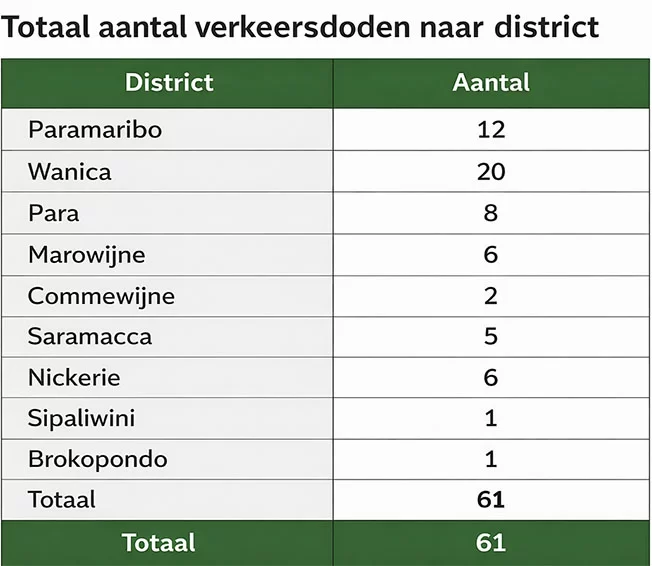
    Suriname has witnessed a significant reduction in traffic-related fatalities during 2025, with official statistics revealing a 22% decrease compared to the previous year. According to data released by Purcy Landveld, Deputy Director of the Traffic Safety Institute (VVI), the nation recorded 61 traffic deaths versus 78 in 2024.

    Despite this positive trend, road safety remains a critical concern, particularly for vulnerable commuters. Motorcyclists continue to represent the highest-risk demographic, accounting for 19 of the total fatalities. Other casualties included 12 car drivers, 1 bus operator, 3 truck drivers, 6 passengers, 13 pedestrians, 1 cyclist, 4 motorcyclists, 1 ATV rider, and 1 tractor operator.

    A disturbing pattern emerged in age distribution, with economically active adults between 21 and 40 years bearing the brunt of fatalities. The 21-30 age group suffered 16 deaths, while 31-40 year-olds accounted for 15 fatalities. Eight young people aged 11-20 also lost their lives in traffic incidents.

    Geographical shifts in accident hotspots were noted, with Wanica district reporting the highest fatalities (20), followed by Paramaribo (12) and Para (8). This represents a notable change from 2024, when Paramaribo led with 28 deaths.

    The healthcare system continues to shoulder substantial burden from traffic accidents, with the Academic Hospital Paramaribo’s emergency department treating 3,491 traffic victims—averaging 8-9 daily cases. This constant influx strains medical resources, elongates waiting times, and diverts significant healthcare budgets from other critical needs.

    In response to 39 fatalities occurring in the first half of 2025, authorities implemented stringent traffic measures including enhanced police surveillance, stricter speed and alcohol controls, and targeted awareness campaigns. These interventions yielded dramatic results, with only 8 deaths recorded in the second half—particularly remarkable during traditionally high-risk holiday periods.

    The VVI emphasizes that sustained enforcement combined with improved infrastructure, specialized education for young riders and drivers, and continuous data analysis are essential for maintaining this progress toward safer roads.

  • Venezuelans in Antigua Condemn Article Portraying Narco-Dictator Maduro Positively

    Venezuelans in Antigua Condemn Article Portraying Narco-Dictator Maduro Positively

    Venezuelan nationals residing in Antigua and Barbuda have launched a formal condemnation against a recently published article which they allege presents a grossly distorted and favorable image of President Nicolás Maduro’s administration. In a publicly circulated statement, the expatriate community expressed profound dismay at the characterization of Maduro as a ‘good man’ portrayed through an anti-imperialist lens and as a victim of circumstance—a narrative they assert starkly contradicts the actual suffering endured by millions of Venezuelans both domestically and internationally.

    The group emphasized that credible journalism must be rooted in truth, stating unequivocally that the article’s perspective ‘does not represent us as Venezuelans.’ They referenced the widespread protests that erupted across Venezuela mere months ago, where citizens demanded international assistance to overthrow what they label a dictatorial and repressive regime. Similar gatherings of despair were observed in Antigua, with Venezuelans congregating in local churches to pray for the removal of their leader.

    Furthermore, the statement challenged the article’s credibility by citing extensively documented human rights abuses under Maduro’s government. These include the systematic imprisonment of dissidents, the operation of notorious detention and torture facilities like El Helicoide, and the catastrophic failure of public infrastructure and essential services. The authors highlighted the tragic exodus of over nine million Venezuelans fleeing economic collapse and political persecution, questioning how such well-established evidence could be overlooked.

    Written from a position of exile, the communique described the original article as ‘deeply painful’ and accused it of whitewashing a regime responsible for widespread persecution, forced displacement, and the dismantling of democratic frameworks. The group concluded by dismissing the piece as not journalism, but rather outright disinformation.