作者: admin

  • Antigua and Barbuda confirms two imported malaria cases; one traveller dies

    Antigua and Barbuda confirms two imported malaria cases; one traveller dies

    The twin-island Caribbean nation of Antigua and Barbuda is on high public health alert after health authorities confirmed two imported cases of malaria, one of which has ended in the death of an international traveler. In an official public statement released Friday, the country’s Ministry of Health, Wellness, Environment and Civil Service Affairs moved quickly to reassure residents that no evidence of local malaria transmission has been detected to date, keeping overall population risk at a low level.

    According to ministry documentation, the first confirmed case involved an adult male traveler coming from a country where malaria is considered endemic. The man sought medical care almost immediately after his arrival in Antigua and Barbuda, and was promptly hospitalized to start malaria treatment. Health officials report that he responded well to clinical interventions, and departed the country roughly five days after his initial arrival.

    The second case, which resulted in the fatality, involved another adult male traveler who also journeyed to the islands from a malaria-endemic region. This traveler became ill shortly after crossing into Antigua and Barbuda, and was admitted to the Sir Lester Bird Medical Centre in critical condition. Despite aggressive medical intervention and round-the-clock supportive care, the patient could not be saved.

    Public health officials confirmed that both travelers either displayed active malaria symptoms upon arrival or developed symptoms within just a few hours of entering the country. A full review of their travel history and the timeline of symptom onset has led investigators to classify both infections as clearly imported, meaning they were contracted outside of Antigua and Barbuda’s borders.

    Immediately after the cases were identified, national public health surveillance and response protocols were activated. Epidemiological teams have launched full investigations into the cases, conducted widespread vector surveillance to track local mosquito populations, completed contact tracing for any individuals who may have had exposure, and implemented ongoing monitoring to catch any potential secondary spread early.

    For context, malaria is a life-threatening mosquito-borne disease caused by Plasmodium parasites, which is primarily spread through bites from infected female Anopheles mosquitoes. Common symptomatic presentations include high fever, chills, severe headaches, body aches, nausea, vomiting, and general muscular weakness.

    While local entomological surveys have confirmed that Anopheles mosquitoes do exist in Antigua and Barbuda, ongoing surveillance shows that the species remains limited in range and is only present in very small populations across the islands. As part of the targeted public health response, authorities have ramped up mosquito control operations in all areas linked to the two confirmed cases. Current measures include comprehensive environmental inspections, source reduction efforts to eliminate mosquito breeding grounds, targeted larvicide treatment, focused fogging in high-risk areas, and continuous monitoring of local mosquito population levels.

    Beyond direct control operations, the Ministry of Health is issuing a public advisory urging all local residents to take proactive steps to reduce mosquito breeding sites around their homes and places of business. Recommended actions include draining all standing water from containers, covering all stored water vessels, cleaning clogged drains on a regular schedule, and seeking immediate medical care if anyone develops fever or flu-like symptoms, particularly after returning from international travel.

    Officials emphasized that the evolving situation is under constant close monitoring, and reassured the public that the country’s established public health infrastructure remains fully activated and prepared to address any further developments.

  • Restoring vision and hope

    Restoring vision and hope

    A recent four-day humanitarian cataract surgery mission in Trinidad and Tobago has thrown a sharp spotlight on a growing public health crisis: thousands of elderly citizens across the twin-island nation are living with preventable blindness, trapped by financial barriers and limited access to timely care. Leading the mission organized by disaster and medical humanitarian group HANDS International at the Community Hospital of Seventh-day Adventists in Cocorite, Trinidad-born US-based physician Dr. Reynold Agard detailed the scale of unmet need that his team encountered during their work.

    According to Agard, the vast majority of patients affected are elderly people living with age-related cataracts, a condition whose progression is significantly accelerated by common regional health issues including high diabetes rates, poor dietary habits, and chronic overexposure to strong Caribbean sunlight. Cataracts develop when the eye’s natural lens becomes clouded, essentially leaving sufferers to view the world through frosted glass, and surgery is the only effective treatment to restore vision. Across the entire Caribbean, Agard noted, cataracts have emerged as a leading cause of preventable blindness, driven by overlapping demographic and public health trends: populations across the region are aging, rates of lifestyle-related conditions such as diabetes and heart disease are rising rapidly, and many low-income patients cannot access or afford the care they need.

    When the mission launched, organizers initially set a goal of completing 3,000 free or subsidized cataract surgeries. But the overwhelming flood of demand pushed the team to raise their target to 4,000 procedures. Despite this adjustment, multiple logistical and financial barriers prevented the team from hitting the expanded goal. Pre-surgery screenings and lens measurements, required to prepare for successful procedures, normally cost patients between TT$300 and TT$500 — a sum that was out of reach for most patients seeking care through the mission. As a result, the surgical team had to divert significant time and resources away from procedures to conduct these essential screenings on-site for free. Additional delays came from supply chain holdups and broken air conditioning at the hospital, further slowing the pace of work.

    Agard emphasized that the issue is not a lack of local medical skill: Trinidad already has highly trained surgeons capable of performing cataract procedures. To address the gap in access, Agard and his team, which included world-renowned high-volume cataract surgeon Dr. Jacobs — one of the pioneers of the four-minute rapid cataract procedure — have offered to train local clinicians in this efficient, high-throughput surgical technique that allows more patients to be treated in less time.

    For the patients who did receive surgery, the results have been life-changing. Agard shared moving accounts of the emotional reactions many had when their bandages were removed and vision was restored. One elderly woman, who had only been able to see the faint shadows of her grandchildren for three years, trembled and cried when she was able to view clear photos of her family on her mobile phone for the first time. “Everyone cries when they realize blue is really blue again, and they can finally see red clearly,” Agard said.

    For Agard, the mission was far more than a humanitarian project — it was a personal homecoming. A graduate of Roxborough Secondary School and the Polytechnic Institute, Agard migrated to the US, where he completed medical training at Penn State College of Medicine, now runs a private practice in Delaware, and teaches at hospitals across the Philadelphia-Delaware region. He has been part of HANDS International since the organization was founded 18 years ago, in the wake of devastating hurricanes that struck the eastern Caribbean. Since its launch, the group has deployed to respond to humanitarian crises and medical needs across the globe, including disaster response in Haiti, Dominica, Nepal, Ukraine, and multiple African nations, as well as post-hurricane relief in Jamaica, the Bahamas, Louisiana, and New York after Hurricane Sandy.

    Preliminary discussions are already underway for HANDS International to return to Trinidad next year, with plans to expand services to Tobago and South Trinidad, with the goal of making these cataract mission an annual event. Agard praised the support the mission received from the Trinidadian government, Minister of Health Dr. Lackram Bodoe, and the South Caribbean Conference of Seventh-day Adventists, which was instrumental in hosting the project. All medications used during the mission were provided free of charge, with only one unregistered drug held up at customs — an issue organizers are working to resolve ahead of the next trip. The team is also encouraging all patients who received surgery to complete their required follow-up care at the host hospital.

    Beyond the immediate surgical work, the mission highlights broader public health priorities for the region. Agard emphasized that simple lifestyle adjustments can significantly slow the progression of cataracts and reduce risk, especially for people with diabetes. He encouraged Caribbean residents to adopt a diet centered on whole, plant-based foods, rich in vitamins A, C, and E, limit consumption of red meat and ultra-processed foods, and avoid smoking and excessive alcohol consumption — two major modifiable risk factors for early cataract development.

    “Some people literally go to their graves blind with a procedure that could have given them sight and improved their quality of life,” Agard said. For thousands of underserved Trinbagonians, this mission has already changed that outcome — and future trips hope to bring clear vision to thousands more.

  • ‘We followed the OPR list’

    ‘We followed the OPR list’

    A major public housing initiative launched by Trinidad’s Housing Development Corporation (HDC) has emerged as a subject of political scrutiny, after years of procedural silence from the country’s top procurement oversight body prompted an opposition-led call for investigation. The core of the controversy centers on a 3,000-unit affordable housing development project valued at $3.4 billion, which HDC plans to deliver through a longstanding state agency procurement approach: limited bidding.

    Limited bidding is a restricted procurement framework that differs from open, public competitive bidding. Rather than advertising project contracts to all interested firms globally or domestically, government entities using this method only solicit bids from a pre-vetted pool of pre-qualified contractors that meet pre-set eligibility criteria. For this particular project, HDC drew its shortlist of 11 private contractors exclusively from the existing pre-qualified depository maintained by the Office of the Procurement Regulator (OPR), Trinidad’s national procurement oversight agency.

    Internal procurement records obtained by the *Sunday Express* detail the step-by-step approval process HDC completed for the project, which was first formalized in December 2025. On December 9 that year, both the National Procurement Officer and Accounting Officer signed off on the project’s board proposal, and the HDC board, led by chairman Feeroz Khan, gave final approval to the full Annual Procurement Plan (APP) via a round robin voting process the same day. The following day, December 10, HDC uploaded the finalized APP schedule to three public platforms: ProcureTT, the OPR’s official website, and HDC’s own corporate website. Records confirm OPR official Hafzah Sooknanan sent an acknowledgment email confirming receipt of the plan, to verify HDC’s compliance with regulatory requirements.

    Regulatory rules mandate that state agencies submit their annual procurement plans within six weeks of national budget approval, and HDC’s documentation confirms the agency met this deadline. The project is structured as a public-private partnership (PPP), with the majority of the $3.4 billion in project funding coming from the 11 selected private contractors, rather than public coffers.

    The APP breaks the construction timeline into two fiscal periods. For the 2025/2026 fiscal year, $750 million is allocated to single-family and multi-unit construction, with a target of 625 completed units after an initial three-month design phase. During that design period, 23 units including model homes for pre-sale and staging are scheduled to be completed, followed by a production ramp-up that will see 200 to 250 units delivered per month for the remainder of the fiscal year. For the 2026/2027 fiscal period, the APP allocates a further $2.731 billion to complete the full 3,000-unit portfolio across 11 development sites across Trinidad.

    Per the project timeline, the formal Request for Proposals (RFP) is scheduled to be released on January 29, 2026, with all model homes across the 11 development sites targeted for completion by September 2026.

    A formal signed extract of the HDC board’s unconfirmed decision, dated December 10, 2025 and signed by corporate secretary Viveka Pargass, confirms the board approved the APP by majority vote during the December 9 round robin process.

    For months after HDC submitted the plan, the OPR raised no objections to the limited bidding approach or the project structure. That changed in April of this year, after the Opposition submitted a formal request for a full investigation into the procurement process, following HDC’s public announcement of the housing initiative.

    In responses to questions from the *Sunday Express*, HDC Chairman Khan defended the agency’s process and pushed back against suggestions of impropriety. He confirmed the plan was submitted to OPR in December 2025, noting that the limited bidding methodology used for the project is the same framework HDC has utilized for past projects as a state enterprise.

    Khan emphasized that the shortlist of contractors was not arbitrarily selected: “We didn’t go to all the world and say you are invited to bid for these houses; we went to the OPR depository for persons who are registered with the OPR and who are qualified to build houses, who have experience doing civil works, sewer systems and electrical power systems. We went to the OPR and would have extracted from the OPR depository a list of all of the contractors who met those requirements. We did not just get up one morning and pulled names from a hat.”

    Khan also highlighted key benefits of the PPP structure and limited bidding approach, noting that the private-sector led funding model will deliver 3,000+ units at an average cost of just $900,000 per unit, a lower per-unit cost than past public housing projects delivered through alternative procurement methods. He added that HDC is currently providing all additional documentation requested by the OPR as part of the ongoing review.

  • Kaia supporters to stage ‘standstill’ protest today

    Kaia supporters to stage ‘standstill’ protest today

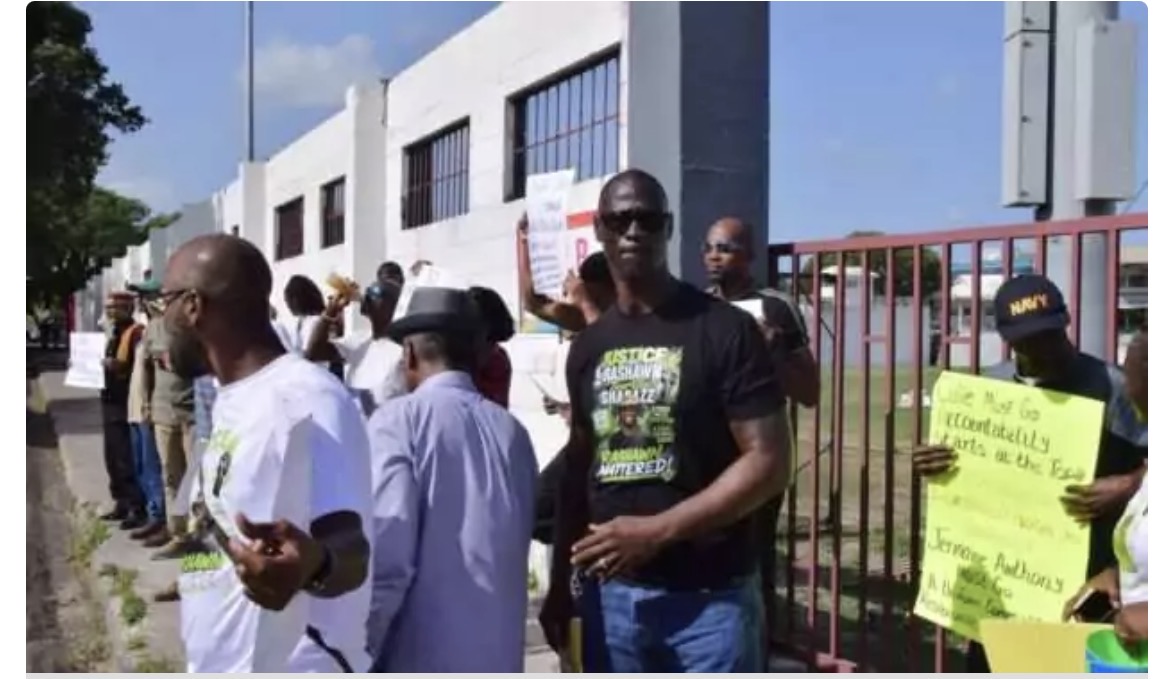
    A planned ‘standstill protest’ will kick off this afternoon at 3 p.m. outside the Police Administration Building in Port of Spain, as friends and supporters rally around Kaia Sealy, a widow facing criminal charges connected to the January police shooting that killed her husband Joshua Sealy. The demonstration marks a dramatic turning point in a high-profile case that has already roiled discussions over police accountability and institutional transparency in Trinidad and Tobago.

  • Luxury lives, corrupt deals

    Luxury lives, corrupt deals

    A sprawling, transnational corruption scheme that has penetrated every layer of Trinidad and Tobago’s Immigration Division has been uncovered, revealing that dozens of immigration officers have used their public positions to amass illicit wealth far beyond their legitimate earning capacity, senior government and law enforcement officials have confirmed.

    For years, many implicated officers have flaunted their unexplained wealth openly: they drive high-end luxury SUVs and sports cars, purchase multi-million-dollar residential properties, fund lavish home renovations, and take frequent international vacations—all on public service salaries that rarely exceed $12,000 Trinidadian dollars per month. One mid-ranking officer, for example, earns just $7,000 to $10,000 monthly but has built multiple apartment complexes and owns a luxury sports car, while another suspended officer built a $3 million mansion on a salary of less than $9,000 a month, according to multiple insider sources.

    Homeland Security Minister Roger Alexander confirmed the exposed racket last week, detailing how corrupt officers collect hundreds of thousands of dollars in illicit bribes to speed up or approve high-stakes immigration applications, including citizenship status, residency permits, work permits, and priority passport appointments. Alexander described the entire division as “rotten to the core” and announced an immediate organizational shake-up that has already placed multiple senior officials on administrative leave pending investigation.

    Alexander outlined the brazen tactics used by the corrupt ring: officers often deliberately withhold already approved application documents, telling applicants they must wait for his signature before extorting cash payments to release the paperwork. Some transactions are conducted openly in plain sight, including outside a private car park in Port of Spain, the nation’s capital. The minister also confirmed credible allegations that some Chinese nationals have built residential properties for immigration officials in exchange for being granted permanent residency.

    But insiders within the Immigration Division say the minister’s disclosures have only scratched the surface of the systemic corruption. Senior officers familiar with the racket told the *Sunday Express* that the bribes collected are far larger than the $90,000 maximum figure cited by Alexander, with full residency approvals fetching as much as $150,000 per applicant and work permits commanding up to $50,000 apiece. Foreign nationals from China, India, Bangladesh, and Middle Eastern countries, who rely on third-party immigration consultants to navigate the system, are the primary targets of the extortion scheme.

    The corruption extends to Piarco International Airport, where arriving foreign nationals from the targeted regions are routinely stigmatized, falsely flagged as security risks, and wrongfully refused entry. After being denied entry, their local hosts are forced to negotiate with senior immigration officials to reverse the decision, with bribes for entry reaching as high as $25,000 per person. One senior officer was even reported to have bragged about collecting US$65 for every detained foreign national held in local hotels while waiting for entry decisions, netting thousands of dollars in illicit income when hotels hold more than 100 detainees at a time. Alexander confirmed authorities are currently investigating who issued the unofficial orders to block these entries.

    Insiders also revealed additional unreported schemes: in 2019, two senior immigration officials allegedly accepted a $350,000 bribe to release a detained Bangladeshi national, who continues to operate an unlicensed business in North Trinidad under the officials’ protection today. The racket is facilitated by a network of well-connected external agents, including one woman reportedly related to a senior government official who operates out of her car and charges up to $50,000 per work permit approval. These agents regularly access immigration offices to broker deals directly with corrupt officials on behalf of their foreign clients.

    Multiple insiders confirmed that the vast majority of the corruption involving Chinese nationals is conducted through informal backdoor meetings at local restaurants and businesses, where bribes are passed in plain brown envelopes to secure approvals for work permits, residency, and smooth entry through the airport. One senior immigration officer based in Central Trinidad even operates an informal illicit processing center out of his home, where he interviews Chinese applicants, keeps their confidential files, and charges $25,000 for work permits and up to $150,000 for residency approvals.

    Law enforcement and immigration sources confirm that all the illicit proceeds from these schemes have allowed corrupt officers to acquire luxury assets that are completely out of reach on their official salaries. One officer currently on administrative leave, who works closely with Chinese business associates, is renovating his mother’s West Trinidad home for more than $1.4 million, purchased a $2.4 million condominium in the same area, owns additional property in Arima, and has a collection of multiple high-end SUVs. Multiple other implicated officers own three or more high-value properties and luxury vehicles despite earning less than $12,000 per month.

    Crucially, insiders note that the rank-and-file officers collecting bribes do not have the final authority to approve most high-level immigration applications, meaning the large-scale corruption could not operate without collusion from senior officials within the Ministry of National Security who hold the power to approve or expedite applications. Multiple current immigration officials are calling for a full investigation of all ministry personnel who may have aided the racket, noting that many officers already under investigation remain on active duty, while others will return from administrative leave in the coming months.

    The investigation into the racket is now being led by regular police and the national Cyber Crime Unit, with authorities working to trace illicit assets and identify all co-conspirators at every level of the system.

  • ‘I’m no gangster!’

    ‘I’m no gangster!’

    Four months after a fatal police operation left her common-law husband dead and her with life-altering injuries, Kaia Sealy has publicly and vehemently proclaimed her innocence, hours after the Trinidad and Tobago Police Service (TTPS) announced arrest warrants charging her with manslaughter and three counts of shooting with intent to cause grievous bodily harm. Sealy, who is currently receiving medical rehabilitation abroad, says she first learned of the outstanding warrants against her through media reports — not through formal legal notification to her or her legal counsel — and has launched a scathing critique of the investigation’s handling from the day of the January 20, 2026 incident.

    In a detailed written statement released through her attorney Fayola Sandy, Sealy described the encounter that shattered her life as a surreal, traumatic nightmare that cannot be overstated. On that day, police initially reported the incident as a shootout between officers and the couple, but publicly circulated video footage showed Joshua Samaroo, Sealy’s partner and father of their five-year-old daughter, with his hands raised outside the vehicle moments before he was shot and killed by officers. The footage sparked widespread public debate over the official narrative of the encounter.

    In the immediate aftermath of the shooting, Sealy was hospitalized at the Eric Williams Medical Sciences Complex with severe injuries that left her unable to walk. For weeks, she was held under armed police guard at the hospital, with family members blocked from consistent access. Her attorney was forced to repeatedly intervene to confirm Sealy’s legal status, eventually filing a habeas corpus application to challenge her potential unlawful detention. Shortly before the court could hear the application, police abruptly lifted the guard and released Sealy, with the Deputy Commissioner of Police personally escorting her home and promising ongoing support.

    In the months that followed, Sealy and her legal team cooperated fully with investigators to pursue what they said was a search for justice for Samaroo. When TTPS seized and retained Sealy’s electronic devices removed from the vehicle for weeks without explanation, her team filed a judicial review challenge to the retention — and once again, police backed down shortly before the court proceeding, returning the devices and giving formal undertakings about their handling. Through all this cooperation, Sealy says her legal team received almost no meaningful updates about the direction of the investigation.

    Now, months later, as Sealy recovers from life-altering injuries that included a punctured lung that collapsed twice, development of life-disrupting bedsores from being immobilized for weeks, and permanent physical changes, she says the announcement of charges via media was another slap in the face. Even after her attorney sent a formal letter to TTPS requesting clarification on the warrants, the service has not responded.

    Sealy pushed back forcefully against attempts to frame her as a violent criminal or gang affiliate, outlining her background as a hardworking, licensed cosmetologist with no prior run-ins with the law. “I am not a gangster. I have never been in trouble with the law. I have only ever seen a gun on an armed security or police officer,” she reiterated in her statement. “I have never held a gun in my life, much less fired one at police officers. I have never had a friend, family member or partner introduce a gun into my environment.”

    She detailed the unspeakable trauma of the incident and its aftermath, describing the terror of being trapped in the vehicle as bullets flew, hearing Samaroo choke on his own blood as he died, being thrown into the trunk of a police vehicle alongside her dying partner while still injured and being interrogated before reaching the hospital, and waking up from emergency treatment to an armed guard standing over her hospital bed — leaving her terrified the officer would kill her before she could see her daughter again.

    Sealy’s mother Avanel Hendricks previously confirmed her daughter’s consistent denial of any weapons being in the couple’s possession, telling local outlet *Express* shortly after the shooting that Sealy repeatedly screamed “They’re lying! They’re lying! There was no gun” while recovering in the hospital.

    Sealy emphasized that the case is not a public spectacle or political talking point, but the permanent destruction of her family and the life she built. She ended her statement affirming her faith remains unshaken, and that the full truth of what occurred on January 20 will eventually come to light.

  • Angelo’s stepdad charged with murder

    Angelo’s stepdad charged with murder

    In a major development in the high-profile disappearance case of two-year-old Angelo Tobias-Plaza, 24-year-old Shannon Miller, the toddler’s stepfather and a resident of Goodwood, Tobago, has been formally charged with murder by local law enforcement. The charging announcement was made public on Thursday by the Trinidad and Tobago Police Service (TTPS) through an official media statement.

    Per the TTPS release, law enforcement officials convened a formal review meeting with a specialist legal advisor from the Office of the Director of Public Prosecutions (DPP) to thoroughly assess all circumstances tied to the young child’s disappearance before moving forward with charges.

    Angelo was first reported missing to authorities on May 11, 2026. Immediately after the missing person report was filed, a large-scale, coordinated investigation spanning multiple law enforcement and government agencies was launched to locate the toddler. As of the latest update in the case, however, investigators have not recovered Angelo’s remains.

    After a comprehensive forensic and evidential review of all materials collected throughout the investigation, the DPP’s office provided formal legal guidance confirming that sufficient evidence exists to pursue criminal prosecution against Miller. Of the seven other suspects previously taken into custody in connection with Angelo’s disappearance, five were released from detention this past Friday, leaving Miller as the primary defendant in the ongoing murder case.

  • Agriculture Minister urges Vincies to focus on ‘food sovereignty’

    Agriculture Minister urges Vincies to focus on ‘food sovereignty’

    Against a backdrop of growing global market volatility and climate uncertainty, St. Vincent and the Grenadines (SVG) has launched a transformative three-year agricultural initiative aimed at addressing long-standing vulnerabilities in the nation’s food system. The Agricultural Productivity Recovery and Young Farmers Training Project, a $3.1 million collaboration between SVG and Taiwan, was formally introduced at the Orange Hill Agricultural Biotechnology Centre by Agriculture Minister Israel Bruce, who opened the event by sounding a clear alarm over the Caribbean nation’s overreliance on imported food.

    Bruce emphasized that decades of heavy reliance on foreign food supplies have left SVG dangerously exposed to cascading global shocks, from geopolitical tensions to commodity price spikes. He specifically noted that ongoing conflicts involving the United States and Iran have driven sharp increases in fertilizer and fuel costs, pressures that other Caribbean nations have already passed to consumers. In SVG, Prime Minister Godwin Friday’s administration has absorbed these extra costs to protect local households from immediate price hikes, but Bruce warned this temporary relief can not mask the urgent need for systemic change.

    Beyond geopolitical volatility, the initiative also directly confronts four interconnected challenges: rising production costs, the accelerating impacts of climate change, an ageing national farming population, and fragmented, inefficient market structures. Bruce clarified that the project is far more than a post-disaster recovery measure; it is a deliberate effort to drive intergenerational renewal for SVG’s agricultural sector, framing the initiative as centered on three core pillars: partnership, purpose, and possibility.

    A key focus of Bruce’s speech was drawing a clear distinction between two critical concepts for SVG: food security and food sovereignty. He explained that true food security requires the nation to produce enough staple food to feed its population without excessive reliance on imports, pointing to current unhealthy dependencies: SVG imports Irish potatoes, onions, and garlic from Trinidad and Tobago, while lettuce and tomatoes arrive from the United States. This supply chain model, he argued, is inherently unstable, leaving the nation’s food access dependent on shipping schedules and cross-border trade dynamics that are completely outside SVG’s control. Food sovereignty, by contrast, centers on growing and celebrating food products unique to SVG’s identity as a sovereign nation, he added.

    To demonstrate that local innovation already points the way forward, Bruce highlighted ongoing agro-processing work by students at SVG’s community college, where young people are developing value-added local products ranging from cheese and barbecue-flavored dasheen chips to breadfruit tacos. He challenged local consumers, particularly secondary school students, to choose these homegrown alternatives over imported global products, swapping Mexican tacos sold in supermarkets for SVG’s own breadfruit version to build demand for local agriculture.

    The new project backs both goals: strengthening national food security while advancing SVG’s food sovereignty, with a strategic priority on core staples and high-nutrition crops grown for domestic consumption. A total of 75 young farmers will receive advanced targeted training through the initiative, while hundreds of additional smallholder farmers and agricultural extension officers will gain access to new agricultural technologies and business development support. Taiwan is contributing $2.5 million to the total project budget, with SVG’s government providing the remaining $630,000.

    Bruce pushed back against outdated perceptions of farming as an old-fashioned industry, stressing that the initiative is inviting young people into a dynamic, future-facing sector rather than asking them to step back in time. Modern Vincentian agriculture, he explained, leverages cutting-edge tools including drones, data sensors, farm management software, and climate-smart growing practices. It blends rigorous agronomic science with entrepreneurial creativity, training young producers to fill multiple roles: farm manager, technologist, digital marketer, and community leader. The training curriculum covers practical hands-on farming skills, business planning, digital farm management, value-added processing, and market access strategy, all designed to create a clear growth pathway for young agri-entrepreneurs, from small startup operations to scalable, profitable enterprises.

    Closing his remarks, Bruce framed the project as an investment in both literal and figurative seeds that will shape the nation’s future. The outcomes of this work, he said, will determine not only the food on Vincentian tables, but the long-term strength of rural communities and local economies, and the overall resilience of St. Vincent and the Grenadines for generations to come.

  • Calypso Association seeking more control over results

    Calypso Association seeking more control over results

    The St. Vincent and the Grenadines Calypsonians Association has advanced major structural reforms for the upcoming 2026 Vincymas carnival, locking in internal agreement on a revamped judging framework for the national calypso monarch competition and pushing forward with a revised approach to compiling contest results, association president Earl “Cabba” Bennett announced during a formal press briefing. Bennett confirmed that the updated scoring criteria, crafted by a dedicated internal review committee, has already been forwarded to the Carnival Development Corporation (CDC) for final institutional approval, kicking off the next phase of pre-carnival preparations.

    As a cultural art form deeply rooted in Caribbean storytelling and social commentary, calypso competitions rely on transparent, consistent judging to uphold the integrity of the contest. Bennett explained that the updated criteria were developed to address longstanding concerns about ambiguity in the original judging guidelines, rather than introducing a radical overhaul of how performances are scored. “As an association, we made the collective decision to revisit and revise this year’s scoring criteria to bring far greater clarity to the process,” Bennett told reporters. “The framework does not deviate dramatically from the old standards, but it eliminates confusion by breaking the core judging categories into clear, defined sub-elements. This restructuring is specifically designed to make the process much more straightforward for adjudicators tasked with scoring performances.”

    The cross-functional review team tasked with drafting the new criteria included a roster of seasoned calypso community figures: Janelle Allen, Marlon Nanton-James, Andrea Gaymes-Mohess, Cleve Scott, Willis Williams and Lennox Bowman. After months of internal consultations and revisions, the full association voted to approve the final draft, which is now pending CDC sign-off. “I’m proud to confirm that the entire association has reached consensus on the new scoring criteria, and we have formally submitted the proposal to the CDC for approval,” Bennett added.

    Beyond changes to judging guidelines, the association has also approved a sweeping overhaul of the results tabulation process used across all three stages of the national calypso monarch competition: preliminaries, semi-finals, and finals. Under the long-standing existing protocol, a CDC liaison officer is responsible for collecting completed score sheets from judges and transporting the documents to an independent auditor, who then enters the scores into digital systems to generate final rankings. The new process shifts the initial tallying responsibility directly to competition judges, who will calculate preliminary totals on-site before passing the scores to the auditor. Auditors will then conduct a formal verification audit to confirm the accuracy of the preliminary totals before final results are announced.

    Bennett framed this procedural shift as a positive step toward greater transparency and accountability for the competition, even as he acknowledged that some stakeholders may hold differing views on the change. “This year, the association and the individual calypso tents have agreed to the new model: judges will handle the initial tallying of scores, and the independent auditor will then complete their formal audit work to confirm or verify that the totals are correct. This is another change that, in my view, moves the process in the right direction. While some may have different perspectives on the reform, this is the formal decision of the Calypsonians Association.”

    In addition to competition reforms, Bennett addressed the operational structure of the association’s member calypso tents, clarifying that while tents fall under the overarching governance of the SVG Calypsonians Association, each tent retains full operational autonomy. “Yes, they operate under the governance of the St. Vincent and the Grenadines Calypsonians Association, but they have the autonomy to run their individual events according to their own vision, as long as all activities stay within the broader rules and regulations set by the association,” Bennett explained.

    Bennett also noted that tent leaders have been proactive this year in advocating for enhanced promotional support from the CDC, pushing for earlier advertising and better access to marketing resources to boost attendance and public engagement. “Tent leaders got an early start this year, and they have been pushing the CDC for stronger promotion of calypso events,” he said. “They have been requesting dedicated marketing tools and have approached the CDC to ask for early ad placements. It’s important to note that both sides already recognize the clear distinction between generic advertising and strategic, targeted marketing, as we work to align on promotional goals.”

    For the calypso association, these reforms and the push for expanded promotion are part of a broader, long-term strategy to safeguard the iconic cultural art form and strengthen its central role in St. Vincent and the Grenadines’ national identity. “We recognize that we need to connect more deeply with the public,” Bennett said. “Calypso has always been the voice of the people, and they are the audience we exist to please. Their support is what sustains this art form, so meeting their expectations is our top priority.”

  • Taiwan project trains pioneers of new generations of agriculture in SVG

    Taiwan project trains pioneers of new generations of agriculture in SVG

    On Tuesday, at the Orange Hill Agricultural Biotechnology Centre in St. Vincent and the Grenadines (SVG), a landmark new agricultural initiative officially kicked off, tying together investment in youth development, cutting-edge farming innovation, and 45 years of formal diplomatic relations between SVG and Taiwan. Fiona Huei-Chun Fan, Taiwan’s ambassador to SVG, opened the event by framing the Agricultural Productivity Recovery and Young Farmers Training Project against a shifting global agricultural landscape, where traditional farming practices are increasingly being augmented by science, technology and entrepreneurship.\n\nRecognizing that agriculture remains a foundational pillar of global food security and national economic resilience, Fan emphasized that the $2.5 million, three-year initiative is far more than an infrastructure investment — it is a targeted investment in human capital. Backed by funding from the Taiwanese government, the project will introduce SVG to advanced smart agriculture systems, including vertical farming setups and Internet of Things-powered environmental controls that enable hydroponic crop growth in regulated, climate-controlled environments.\n\nAt the core of the initiative, however, is support for the next generation of SVG farmers. Over the course of the program, 75 young farmers will participate in structured training, with the first cohort of 15 trainees already selected for an intensive five-month program that includes living stipends to support their participation. Beyond technical training, outstanding participants will gain access to personalized entrepreneurship coaching and partial seed funding to help turn their agricultural ideas into sustainable, profitable local businesses.\n\nFan stressed that the program was designed to integrate with SVG’s existing private sector, particularly the country’s key tourism and hospitality industries, to unlock new market opportunities for local producers. She pointed to the high-quality lettuce already produced by program participants as a proof of concept, noting that event attendees had overwhelmingly expressed interest in purchasing the crop. This demand, she explained, underscores a key lesson for emerging young farmers: modern agriculture is not just about growing crops, but about creating market-aligned value and building collaborative connections between producers, businesses and consumers.\n\nSpeaking directly to the first cohort of trainees, Fan framed them as trailblazers for a new generation of agriculture in SVG, entering a sector brimming with untapped economic opportunity. The launch of the project also came on the same day that SVG reaffirmed its public support for Taiwan’s inclusion in global health governance at the World Health Assembly (WHA) in Geneva. SVG’s Health Minister Daniel Cummings called on the World Health Organization to formally recognize Taiwan’s public health capabilities and contributions to global health, and to grant Taiwan observer or full membership status in the organization.\n\nFan called this act of support a clear demonstration of the deep, longstanding bonds between the two nations, aligning with the principle that global cooperation must include all actors, leaving no community behind. She extended deep gratitude to the government and people of SVG, and particularly to Prime Minister Godwin Friday, for his consistent, principled support. As 2024 marks the 45th anniversary of formal diplomatic relations between Taiwan and SVG, Fan noted that SVG’s stance at the WHA comes amid longstanding challenges Taiwan faces in securing meaningful participation in international intergovernmental bodies, and represents a powerful example of enduring friendship and principled global leadership.