作者: admin

  • Pope Leo XIV Apologises for Church’s Historic Role in Slavery

    Pope Leo XIV Apologises for Church’s Historic Role in Slavery

    In a groundbreaking step that marks the clearest acknowledgment of institutional wrongdoing to date, Pope Leo XIV, the global leader of the Roman Catholic Church, has delivered the strongest papal apology in history for the Church’s centuries-long entanglement with the transatlantic slave trade and systems of human enslavement.

    The unprecedented apology was included as a core passage in the pope’s first-ever encyclical, *Magnifica Humanitas* (translated as “Magnificent Humanity”), a major teaching document released publicly on May 25, 2026. In the text, Leo XIV openly admits the Vatican and global Church leadership failed morally on the issue of slavery, acknowledging that for hundreds of years, Church authorities did not just remain silent but often actively legitimized systems of subjugation that targeted and enslaved non-Christian populations across the globe.

    “For this moral failure, and for the centuries of unspeakable suffering that this practice inflicted on millions of people, I sincerely ask for pardon in the name of the entire Church,” the pope wrote, adding that the legacy of enslavement remains “an open wound in Christian memory that we can no longer ignore or minimize.”

    The encyclical also lays out a detailed historical accounting of the Church’s complicated relationship with slavery, confirming that medieval ecclesiastical institutions themselves owned enslaved people, and noting that the Church only issued a “formal, absolute, and universal condemnation” of the practice in the 19th century under Pope Leo XIII.

    While previous popes including John Paul II and Francis had publicly condemned slavery and offered apologies for historical complicity in injustice, analysts and religious scholars note that Pope Leo XIV’s statement is unprecedented in its explicit acceptance of institutional responsibility by the Vatican as a governing body. Many observers view the apology as a landmark step toward reckoning with one of the darkest chapters in Christian history.

    Beyond its address of historical injustice, *Magnifica Humanitas* also turns to contemporary ethical challenges, including the unregulated growth of artificial intelligence and emerging forms of economic exploitation embedded in today’s global supply chains. The pope issued a warning that these modern systems risk repeating the dehumanizing harms of historical slavery if global leaders and institutions do not put human dignity at the center of policy and innovation.

  • Chiney K has sights set on film career

    Chiney K has sights set on film career

    KINGSTON, Jamaica — From viral social media clips to the red carpets of the world’s most prestigious film festivals, Jamaican content creator Kerry-Ann Collins, known professionally as Chiney K, is putting the final pieces in place ahead of the June 27 world premiere of her first feature-length film, *Stew Peas*.

    For Collins, the upcoming premiere is far more than a one-night celebratory event—it is the starting line of a deliberate, long-term push to transition from a successful social media influencer to a established, lasting presence in the global film industry. In conversations about her upcoming debut, she emphasized that the most intense work does not end when the credits roll on opening night; instead, it will only ramp up as she works to parlay this first project into future acting and production opportunities.

    “I’m equal parts excited and bracing for the work that comes next,” Collins shared in an interview. “Of course I’m thrilled to have audiences finally see the film, but I’m also eager to hear what critics and industry insiders think. I’m hoping the work I put in on screen resonates enough to open doors for more roles beyond *Stew Peas*.”

    She also opened up about the grueling reality of independent film promotion, noting that the behind-the-scenes marketing work has proven far more demanding than the acting process itself. The core goal of the outreach, she explained, is not just to boost her own career, but to shine a spotlight on the untapped potential of Jamaica’s local film scene, both for domestic audiences and the millions of Jamaican diaspora viewers around the world.

    To build connections and credibility ahead of her debut, Collins recently made a high-profile appearance on the red carpet at the Cannes International Film Festival, a trip arranged through a strategic partnership with renowned Jamaican designer Marshall, founder of Lepremier Miami. Marshall has designed custom wardrobes for A-list Hollywood figures including Anthony Anderson and Swizz Beatz, and the collaboration allowed Collins to position herself as a serious contender on the global film stage, marking a clear pivot from digital content creation to professional filmmaking.

    For Collins, the Cannes trip was also a meaningful full-circle moment that tied back to her long-standing academic roots in film. Long before she built a following as a social media creator, she studied film in depth during her college years, and originally dreamed of studying film in France and interning at the Cannes Film Festival itself. Though her path ultimately led her to earn a degree from California State University, Northridge, standing on the Croisette this year felt like a realization of a goal she’d held for decades.

    “I’ve been building this slowly for years, and with *Stew Peas* premiering next month, my whole focus right now is breaking into the international industry,” she said. “Cannes is where every corner of the global film industry converges—you have everyone from small boutique agents to top casting directors walking that promenade. As a new actress, there was no better place for me to be. I’m grateful for the opportunity, because I’m not just here to build my own career—I want to bring what I learn back to grow the industry at home in Jamaica.”

    During her time at the festival, Collins gained key insight into gaps holding back Jamaica’s film sector, most notably the absence of a formal support ecosystem that can connect local creators with international film financiers. She noted that the glitz and red carpet glamour that draws public attention is only the surface of what Cannes offers; behind the scenes, industry development programs like the Cannes impACT Lab provide emerging creators with critical training on the legal, financial, and technical frameworks global investors require to back new projects.

    “Those structures are make-or-break for growing our local industry,” she explained.

    Collins also pointed to Nollywood’s exponential growth as a blueprint she finds inspiring for Jamaica’s sector. The Nigerian film industry built its global reputation starting from a grassroots, direct-to-consumer model, and has grown into a $6.4 billion industry that attracts major international investment. At this year’s Cannes, she celebrated Nigerian twin directors Arie and Chuko Esiri, whose new film *Clarissa* earned a rapturous standing ovation from festival audiences, a milestone she called a win for emerging global cinema everywhere.

  • A proactive and urgent regional strategy to address the threat of El Niño

    A proactive and urgent regional strategy to address the threat of El Niño

    As international climate projections warn of an extreme El Niño event unfolding this year, Latin America and the Caribbean—an engine of global food production—now face a dual crisis that puts rural livelihoods, regional stability, and global food supplies at severe risk. When paired with the ongoing global fertilizer shortage, this climate event could create an unprecedented perfect storm that upends agricultural output and endangers food access for millions across the region.

    Individually, each challenge already places enormous strain on the region’s farming systems. But their simultaneous arrival amplifies risk to catastrophic levels for small and medium-sized producers, who form the backbone of local food production across much of Latin America and the Caribbean.

    Current climate models show a strong likelihood that a high-intensity El Niño will develop in 2024, with highly uneven impacts across the region. Some areas will face catastrophic flooding and extreme rainfall, while others will struggle with prolonged drought and crippling water scarcity. The biggest source of uncertainty for producers and policymakers alike is just how intense this event will ultimately become.

    Not all regions will face equal harm: parts of the Southern Cone, including major grain-producing areas of Argentina and Brazil, may see a boost in output from increased rainfall that helps reverse recent yield declines. But for Central America, the Caribbean, and northern South America, the forecast paints a far grimmer picture.

    In these vulnerable zones, the risk of widespread crop failure, sharp drops in livestock productivity, broken agricultural supply chains, and skyrocketing food prices is already acute. These threats are not hypothetical: past extreme El Niño events have left communities facing hundreds of millions of dollars in costs, collapsed food security, and widespread economic disruption. Too often, the damage lingers long after the climate event passes, leaving rural households trapped in debt, pushing families to migrate in search of more stable work, and driving widespread nutritional decline across vulnerable communities.

    For producers, the volatility created by this dual crisis makes even basic planning nearly impossible. Uncertainty around climate conditions makes it hard to choose which crops to plant, how much capital to invest, or what level of fertilizer application makes economic sense. When fertilizer prices surge or supplies run short, many producers have no choice but to cut application rates, reduce the amount of land they cultivate, or shift to less productive, lower-input crops—all of which immediately drag down overall output and yields.

    Unlike past eras when communities had no way to prepare for extreme climate events, modern forecasting now gives stakeholders the ability to anticipate El Niño and La Niña events, map their likely impacts, and plan for consequences in advance. Waiting for drought to take hold, for floods to destroy crops, or for food prices to spike before taking action is no longer acceptable. Proactive, early intervention is the only way to cut down on avoidable damage and protect vulnerable communities.

    That reality makes a clear case for a coordinated, regional proactive strategy to build resilience. Leaders across the hemisphere must convene a broad dialogue on agri-food resilience that brings together governments, multilateral organizations, producer groups, the financial sector, academic institutions, and private industry around a shared goal: building robust anticipatory capacity that protects both agricultural output and rural livelihoods across the region.

    International technical cooperation is uniquely positioned to drive this work forward, thanks to its ability to coordinate political and technical action, connect stakeholders across national borders, and build partnerships between governments, producers, private companies, and global financial institutions. These organizations can help facilitate regional cooperation agreements, support proactive preparedness measures, and coordinate emergency aid and solidarity responses when crises do hit.

    Key collaborative mechanisms that can be scaled immediately include regional climate and agricultural coordination platforms, pre-negotiated agreements with fertilizer producers and logistics companies to guarantee supply to vulnerable regions, innovative financial tools developed in partnership with public and private banks, expanded access to climate-linked agricultural insurance, and joint technical adaptation programs tailored specifically to the needs of small and medium-sized producers.

    Private sector participation is non-negotiable for these strategies to become viable and scalable. Fertilizer manufacturers, agribusiness firms, financial institutions, technology providers, and agricultural export chains all play foundational roles in building shared agricultural resilience across the region.

    Upgrading early warning systems and turning raw climate data into actionable decision-making tools for producers must be a top regional priority. While Latin America and the Caribbean generate vast amounts of high-value meteorological and agricultural data, that information rarely reaches small producers in a timely, usable format—a gap that must be closed immediately to reduce avoidable losses.

    Other core priorities for regional coordination include widespread adoption of drought-resistant crop varieties, investment in efficient water management infrastructure, and the scaling of advanced agronomic management tools including GPS mapping, agricultural drones, and soil moisture sensors that help producers adapt to volatile conditions.

    Leaders note that this dual crisis also presents an unexpected opening: it creates an opportunity to build a new system of agri-food governance rooted in regional cooperation, technological innovation, and proactive foresight that can address future climate challenges.

    As a region that feeds billions of people across the globe, protecting Latin America and the Caribbean’s agricultural productive capacity is far more than an economic issue. It is a strategic priority for global development, rural stability, and the long-term security of the global food system. The time to act is now, before the perfect storm hits.

  • Salada posts stronger half-year profit as sales recover after Hurricane Melissa

    Salada posts stronger half-year profit as sales recover after Hurricane Melissa

    KINGSTON, Jamaica — Jamaican food manufacturer Salada Foods Jamaica Limited has delivered a robust set of half-year financial results for the 2025/26 fiscal period, logging double-digit profit gains and steady revenue growth as the company solidifies its recovery from Hurricane Melissa’s disruptions and capitalizes on strengthening demand across both domestic and international export markets.

    For the six-month window closing on March 31, 2026, the firm recorded gross revenue totaling JMD 838.8 million, marking a 9.2% uptick from the JMD 767.9 million reported in the same half-year period a year earlier. Company chairman Patrick Williams noted that the strong financial performance mirrors consistent consumer demand across the company’s product lines, as Salada steadily rebuilds operational momentum after the severe supply and production disruptions triggered by the hurricane last year.

    The single quarter ending March 2026 saw an even more dramatic acceleration in growth, with total revenue surging 29.4% year-over-year to hit JMD 478.4 million, up from JMD 369.7 million in the comparable quarter of 2025.

    Against a backdrop of persistent volatility in global raw material pricing and ongoing uncertainty in cross-border supply chains, Salada still managed to outpace last year’s profitability metrics by significant margins. The company’s gross margin edged up slightly to 31.1% from 30.8% in the prior year’s half-year period, an improvement Williams credited to targeted, stringent cost management strategies implemented across all operational segments.

    Aggregate operating profit for the first half of the fiscal year climbed 19.2% year-over-year to reach JMD 127.7 million. For the March quarter alone, operating profit more than doubled, jumping 102.9% to JMD 88.2 million compared to the same quarter last year.

    Throughout the reporting period, Salada maintained its strategic focus on boosting operational efficiency. Selling and promotional expenses held steady at 5.5% of total revenue, matching the prior year’s share even as the company scaled up marketing efforts to capture growing demand. Administrative costs also fell as a share of revenue, dropping to 10.4% from 11.6% year-over-year, a shift that reflects the company’s targeted cost containment measures amid a broader inflationary environment impacting the Caribbean region.

    Net profit for the half-year period rose 12.8% to JMD 100.2 million, up from JMD 88.8 million in the prior year. Earnings per share also improved, rising to JMD 0.10 from JMD 0.09 a year earlier. By the end of the reporting period, Salada held total assets of JMD 1.53 billion, representing a 2.5% expansion in total asset value compared to the end of the prior fiscal year.

    Beyond its core financial results, Salada has continued to advance corporate social responsibility commitments, supporting employees and local farming communities that sustained damage from Hurricane Melissa through targeted relief and long-term recovery programs.

    Company leadership emphasized that the strong half-year performance puts Salada in a solid position to pursue planned expansion and product innovation initiatives through the remainder of the 2025/26 fiscal year.

  • World Athletics announces qualification system for 2027 Champs

    World Athletics announces qualification system for 2027 Champs

    KINGSTON, Jamaica — World Athletics has opened up multiple avenues for athletes to secure their spots at the 2027 World Athletics Championships, scheduled to take place in Beijing, China this coming September, the governing body confirmed in an official announcement released Tuesday.

    In laying out the full qualifying framework for every discipline competing at the nine-day global tournament, the organization detailed four distinct routes that athletes can use to qualify. The first option is hitting the mandated entry performance standard within the official qualification window. Second, athletes can earn a spot by hitting a designated finishing position at pre-approved qualifying competitions. Third, select competitors will receive entry via wild card allocations, and the final pathway is securing a high enough position in the official World Athletics world rankings by the close of the ranking cut-off period.

    World Athletics further clarified that the majority of track and field disciplines will operate on a qualification window running from August 23, 2026, through midnight on August 22, 2027. Separate, adjusted qualification timelines will be applied for road running events, race walking, and combined multi-events, the body added.

    Consistent with the qualification structure used for recent editions of the World Athletics global championships, the 2027 system builds on a hybrid model that combines performance standards and ranking-based selection. For the upcoming Beijing tournament, governing body officials have structured the system to target an approximate split: 40 percent of all competing athletes will earn their place by hitting entry standards, while the remaining 60 percent will qualify via their world ranking position.

    “This tailored approach is intentionally designed to guarantee that the World Championships continue to assemble the very best athletes from every single track and field discipline around the globe,” World Athletics noted in its statement. At the same time, the framework acknowledges and rewards both standout one-off performances and sustained, consistent high-level results across the entire qualification cycle, the organization added.

  • OUR Soap expands into Fontana Pharmacy stores through Aventa partnership

    OUR Soap expands into Fontana Pharmacy stores through Aventa partnership

    KINGSTON, Jamaica — Homegrown Jamaican plant-based skincare label OUR Soap has announced a major expansion of its retail presence across the island, locking in a new distribution partnership with leading local pharmacy chain Fontana Pharmacy. Through the brand’s official pharmacy channel distributor Aventa Jamaica, the company’s full line of gentle, natural soap collections is now available on shelves at Fontana locations nationwide.

    This retail expansion aligns with a rapidly shifting consumer landscape in Jamaica, where local buyers are increasingly prioritizing holistic wellness, clear ingredient labeling, and domestically produced personal care goods over imported alternatives. As customer demand for transparent, sustainably made skincare continues to climb, domestic brands like OUR Soap have stepped forward to meet that unmet need in the premium retail space.

    OUR Soap’s premium product range includes three core formulations: Aloe Hydrate & Soothe, Coconut Afterglow, and Olive Nourish & Restore. All of the brand’s products are intentionally formulated without parabens, sulfates, or harsh abrasive chemicals, a key selling point for consumers seeking gentler options for everyday skincare. The brand frames its offerings not just as basic cleansing products, but as an accessible, foundational component of regular self-care practice.

    The new partnership marks the latest milestone in OUR Soap’s strategic growth strategy, which centers on expanding access to its products in high-quality retail locations across Jamaica. To celebrate the official launch of the collaboration, leadership teams from OUR Soap, Fontana Pharmacy, and Aventa Jamaica hosted a kickoff event on May 19 at Fontana’s Waterloo Square outlet. The gathering welcomed key stakeholders including OUR Soap Marketing Officer Brianna Burke, Fontana Pharmacy Waterloo Supervisor Dainty Walters, Aventa Jamaica Sales Supervisor Nicola Nelson Pollack, and digital content creator and OUR brand partner Sara Hazel.

    For Aventa Jamaica, the collaboration is more than a new distribution deal: it is part of a broader push to increase the visibility and accessibility of Jamaican-made wellness and personal care products within the country’s retail pharmacy sector, creating more space for local brands to compete alongside international labels.

  • JEP Group returns to KPH for Labour Day project

    JEP Group returns to KPH for Labour Day project

    On Jamaica’s annual Labour Day, the energy sector firm JEP Group extended its long-running corporate social responsibility commitments by returning to Kingston Public Hospital (KPH) for a second straight year, mobilizing nearly 200 volunteers to upgrade the hospital’s high-traffic Outpatient Department.

    Under the project theme “The Work Continues”, the volunteer effort united a diverse cross-section of stakeholders: JEP Group employees, beneficiaries of the company’s scholarship program, key strategic business partners, and uniformed officers from the Jamaica Constabulary Force. Together, the team carried out a full slate of improvement works, including interior and exterior painting, deep cleaning, and minor structural restoration across the department.

    As one of Jamaica’s busiest public healthcare facilities, KPH’s Outpatient Department caters to an average of 3,500 patients every single day, placing constant strain on the department’s aging infrastructure. This year’s project builds on JEP Group’s 2023 Labour Day intervention, which delivered comprehensive renovations to the hospital’s critical Renal Unit.

    In an interview on site, JEP Group President and Chief Executive Officer Dr. Wayne McKenzie framed the initiative as more than just a one-off community gesture, positioning it as part of the company’s core commitment to bolstering Jamaica’s public institutions and upgrading care environments for both patients and healthcare staff.

    “This effort is about far more than simply making the space look nicer,” Dr. McKenzie explained. “Kingston Public Hospital serves thousands of Jamaicans from across the country every day, and the clinical and support teams here work nonstop under extremely challenging conditions to provide life-saving care. We wanted to give back to a facility that gives so much to our community.”

    Dr. McKenzie emphasized that the deliberate decision to return to KPH, rather than shifting resources to a new community project, was intentional. “Last year, we delivered major upgrades to the Renal Unit, but we quickly saw there was no shortage of critical work still needed across the hospital. This year’s theme, ‘The Work Continues’, captures our core belief that lasting, meaningful change in public services does not come from one-off projects—it depends on consistent investment, long-term commitment, and sustained collaboration between all sectors,” he said.

    KPH Chief Executive Officer Dwayne Francis welcomed the private sector partnership, noting that the Outpatient Department upgrades came at a critical time and would deliver tangible benefits to both care teams and the patients they serve.

    “For a private organization to choose to return year after year, and invest their time and resources into improving our public care spaces, that means more to our team than we can say,” Francis noted. “Upgrading our physical environment doesn’t just make patients more comfortable and uphold their dignity—it also boosts staff morale and directly improves the quality of care we are able to deliver every day.”

    Moya Mullings, JEP Group’s Senior Marketing Officer and the lead coordinator for the project, added that the overwhelming turnout of nearly 200 volunteers highlights the transformative power of cross-sector collaboration between private businesses, public institutions and local communities. “When different groups come together behind a shared national goal, there is no limit to the positive change we can deliver for Jamaican people,” Mullings said.

    The Labour Day hospital project is one component of JEP Group’s broader corporate social responsibility framework, which centers four core focus areas: accessible healthcare, quality education, youth economic empowerment, and inclusive community development across Jamaica.

  • 65 Jamaicans qualify for NCAA Division 1 track and field regionals

    65 Jamaicans qualify for NCAA Division 1 track and field regionals

    KINGSTON, Jamaica — A cohort of 65 talented Jamaican track and field student-athletes is gearing up to compete across individual and relay events at the NCAA Division 1 Outdoor Regional Championships, kicking off Wednesday and wrapping up this Saturday. The meet serves as the critical qualifying round for the national championships, scheduled to take place June 10 through 13 at Eugene, Oregon’s iconic Hayward Field.

    The Jamaican contingent has been split between the two regional host sites: 41 athletes will compete at the East Regional, hosted at the University of Kentucky’s state-of-the-art track and field complex in Lexington, while the remaining 24 will travel to Fayetteville, Arkansas, to compete at the University of Arkansas’ McDonnell Park for the West Regional.

    To advance to the national finals in Oregon, athletes must hit strict qualifying benchmarks out of their respective regionals. For individual events, the top 48 finishers across each region earn a spot at the national championships, while the top 24 relay teams from each regional also punch their tickets. The competition structure varies by discipline: runners competing in events from 100 meters through 1500 meters will navigate two qualifying rounds to earn one of 12 spots per heat in the final round of regional competition, while field events and relay contests only require one round of competition to determine qualifiers. Unlike other disciplines, multi-event competitions the heptathlon and decathlon skip the regional preliminary round entirely, with the top 24 ranked combined-event athletes across the country advancing directly to the national finals.

    In the East Regional, Jamaican athletes are set to compete across a wide range of women’s events. Gabrielle Mathews of the University of Florida qualified for two events: the women’s 100m and 200m, and she will be joined in the 100m by Florida State University’s Shenese Walker. University of Georgia’s Dejanae Oakley, currently the world’s top-ranked athlete in the women’s 400m, leads the event’s qualifying rankings alongside her Bulldogs teammate Shaquena Foote; they will be joined at the regional by Northwestern State’s Rushana Dwyer and Clemson University’s Shanque Williams. West Virginia University’s Kishay Rowe earned a spot in the women’s 800m, while five Jamaican hurdlers will line up for the 100m hurdles: LSU’s Salieci Myles, Auburn University’s Danae Nembhard, Clemson’s pairing of Oneka Wilson and Briana Campbell, and the University of Memphis’ Gizel Clayton.

    In women’s field events at the East Regional, West Virginia’s Annishka McDonald, Clemson’s Daneille Noble and Villanova University’s Malaika Cunningham all qualified for the high jump. Clemson’s Shantae Foreman earned the top qualifying spot in the triple jump and will also compete in the long jump. Purdue University’s Johnson twins – Britannie Johnson – will compete in the shot put alongside Memphis’ Jazmyn James. James also qualified for the discus throw, where she will join the University of Tennessee’s Cedricka Williams, Britannie Johnson, the University of Louisiana’s Kimola Hines and Hampton University’s Rochele Solmon.

    On the men’s side of the East Regional, Louisiana’s Mark Daley is the lone Jamaican competitor in the 200m. The University of South Carolina’s Jasauna Dennis will compete in the 400m, while Dartmouth College’s J’Voughnn Blake earned a spot in the 800m. Northwestern State’s Dishaun Lamb will contest the 110m hurdles, while the 400m hurdles will feature three Jamaican athletes: Southern Missouri’s Javel Fullerton, Florida’s Daniel Wright and the University of South Florida’s Devontie Archer. In men’s jumps, Clemson’s Brandon Pottinger will compete in the high jump, and LSU’s Jordan Turner qualified for the long jump. The men’s discus throw boasts the largest Jamaican contingent at the East Regional, with seven athletes competing: Florida State’s Shamar Reid, the University of Alabama’s Trevor Gunzel and Virginia Tech’s Yekini Bowen enter the competition as the top three ranked athletes. They will be joined by LSU’s Chad Hendricks, Alabama’s Christopher Young, East Carolina’s Shakiel Dacres and Hampton’s Delano Lawrence. Young also qualified for the shot put, alongside Florida State’s Despiro Wray and Southeastern Louisiana’s Josh-Ty Brown.

    Over at the West Regional in Arkansas, a smaller group of Jamaican athletes is also chasing national championship spots. In women’s events, the University of Texas’ pairing of Abigail Wolfe and Carleta Bernard qualified for the 100m, while the University of Texas at San Antonio’s Shadae Findley will compete in the 400m. Texas Tech University’s Toni-Ann Forbes will contest the 100m hurdles. Texas A&M’s Machaeda Linton qualified for both the long jump and triple jump; she will be joined in the long jump by the University of Kansas’ Richelle Stanley, while Nebraska’s Rhianna Phipps and Kansas State’s Aaliyah Lindsay will also compete in the triple jump. Texas A&M’s Abigail Martin and the University of Nevada, Las Vegas’ Roxene Simpson will line up for the women’s discus throw.

    In men’s events at the West Regional, Texas Tech’s Shamar Uter qualified for the 200m, while Texas A&M’s Kimar Farquharson is the sole Jamaican competitor in the 400m. Host university Arkansas will have two Jamaican runners in the 800m: Rivaldo Marshall, the reigning SEC Indoor champion, and Tyrice Taylor. Baylor University’s Demario Prince, Arkansas’ Jerome Campbell and Northern Colorado’s Daniel Beckford all earned spots in the 110m hurdles. Kansas State’s pairing of Apalos Edwards and Jhavor Bennett will compete in the triple jump, while the University of Texas’ Shaiquan Dunn qualified for both the shot put and discus throw. The University of Oregon’s Kobe Lawrence will also compete in the shot put, while defending national champion Ralford Mullings of the University of Oklahoma, USC’s Racquil Broderick and Kansas State’s Ricardo Hayles will line up for the discus throw.

  • Paulwell urges gov’t to cap fuel prices amid rising oil costs

    Paulwell urges gov’t to cap fuel prices amid rising oil costs

    KINGSTON, Jamaica — At a recent regional political conference held on Sunday, the country’s opposition spokesperson on energy, Phillip Paulwell, has publicly urged the ruling administration to implement a regulatory price ceiling on petroleum products. He emphasized that ordinary Jamaican households urgently need policy protection against the steady upward trajectory of fuel costs, a trend driven by escalating geopolitical tensions across global energy markets.

    Paulwell delivered these remarks during the Springfield Annual Divisional Conference, hosted at Vauxhall High School by Lorraine Dobson, a sitting councillor and deputy mayor of the Kingston and St. Andrew Municipal Corporation (KSAMC). The event also featured guest presentations from general surgeon Dr Alfred Dawes and community advocate Andrew Swaby, drawing local political stakeholders and community members from across the region.

    In his address, Paulwell zeroed in on the knock-on effects of heightened geopolitical friction between the United States and Iran, which has sent global crude prices climbing in recent months. He noted that Jamaican consumers face consistent weekly fuel price hikes, asking pointedly whether the current government is willing to allow these increases to become an unmanageable long-term financial strain for working and middle-class households.

    Going further, the opposition leader levelled sharp criticism at the government’s approach to the global oil market disruption, accusing the administration of prioritizing revenue generation over public welfare by allowing prices to rise unchecked. He argued that rather than shielding citizens from the volatility of international energy markets, the government is effectively profiting from the crisis at the expense of consumers.

    A large portion of Paulwell’s critique focused on the government’s stewardship of Petrojam, Jamaica’s state-owned national oil refinery. He claimed that years of mismanagement and stalled modernization efforts have left the facility grappling with massive recurring losses, amounting to roughly 4 billion Jamaican dollars in the 2023/24 fiscal year, with an identical loss projected for the following period, and more red ink expected this fiscal year. Paulwell attributed these ongoing losses directly to administrative inefficiency and ineffective leadership from the ruling party.

    Despite these challenges, Paulwell reaffirmed that Petrojam remains a cornerstone of Jamaica’s national energy security. The refinery’s ability to process imported crude oil into finished petroleum products domestically cuts the country’s reliance on more expensive imported fuel, keeping overall energy costs lower than they would otherwise be. He added that previous administrations had laid out comprehensive plans to expand and upgrade the refinery’s outdated infrastructure, but the current government has failed to move these projects forward. The result, he said, is growing operational inefficiency and a sharp increase in costly finished fuel imports.

    Paulwell also recalled a prior bilateral energy proposal with Venezuela, which would have seen the South American nation invest in Petrojam’s expansion and modernization in exchange for a 49% minority stake in the refinery. He argued that the current government’s decision to downgrade diplomatic ties with Caracas has scuttled this transformative long-term energy deal, leaving Jamaica without a viable path to upgrade its domestic refining capacity.

    In response to the government’s recent announcement of a USD 15 million capital injection into Petrojam, Paulwell dismissed the investment as woefully insufficient to address the facility’s deep-rooted challenges. He called for a far larger, sustained investment program to bring the refinery up to global standards, ensure its long-term competitiveness, and secure Jamaica’s energy independence for coming decades.

    Following his extensive critique of the government’s energy policy, Paulwell shifted the remainder of his address to priorities in public health, telling attendees that healthcare access and affordability remain top concerns for Jamaican voters.

  • Capex brings government and business leaders Together in Santiago

    Capex brings government and business leaders Together in Santiago

    SANTIAGO, Dominican Republic — A high-profile business gathering focused on long-term national economic strategy brought together top government officials and private sector leaders this Tuesday, with Dominican Republic Vice President Raquel Peña headlining the guest list for the industry luncheon “Building the Future from a Business Vision.” Organized by business association Capex and hosted at the UTESA Dominican Convention and Culture Center, the event centered on a keynote address from legendary Dominican tourism entrepreneur Frank Rainieri, drawing cross-sector attendance from executives, public policymakers, and representatives of the country’s key productive industries.

    In her opening remarks at the summit, Vice President Peña underscored the critical value of collaborative public-private dialogue to shape the Dominican Republic’s long-term economic trajectory. She paid public tribute to Rainieri, crediting his decades of work as a foundational driver of the Dominican tourism sector’s transformation and broader national economic expansion.

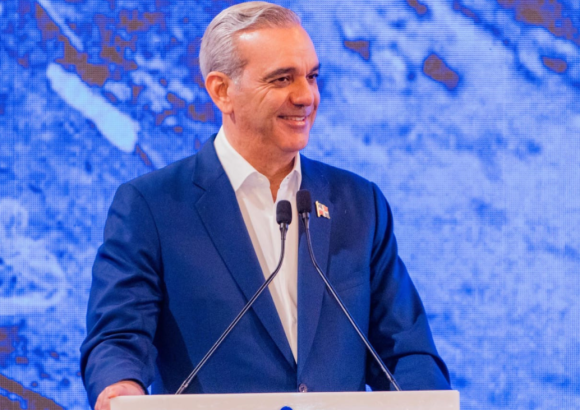
    Speaking to reporters on the sidelines of the event, Peña framed Rainieri as a pioneering visionary whose decades of on-the-ground experience offer invaluable lessons for the country’s next chapter of growth. She also addressed ongoing volatility in the global economic landscape, confirming that the administration of President Luis Abinader remains proactive in monitoring shifting international conditions. The government, she noted, is rolling out targeted policy measures designed to safeguard broad-based economic stability and protect vulnerable industries and communities from external headwinds.

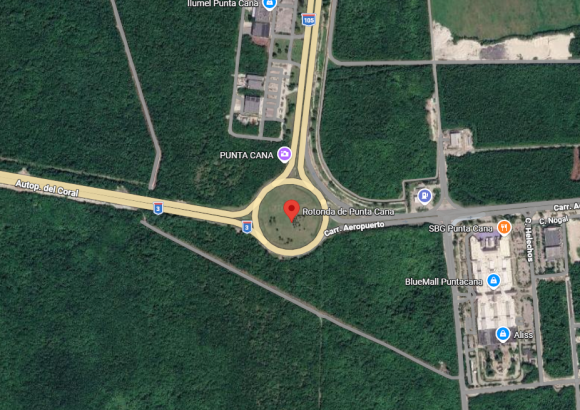
    During his keynote presentation, Rainieri walked attendees through the humble, challenging origins of Punta Cana, one of the Caribbean’s most iconic tourism destinations. He recalled the steep obstacles development teams faced decades ago, when the region was marked by sparse basic infrastructure and limited connectivity to the rest of the country. Reflecting on the project’s eventual success, Rainieri pushed back on common framing of the achievement as mere luck or coincidence. “Some call it opportunity, others call it luck; I call it vision,” he stated, emphasizing that Punta Cana’s steady growth was the product of intentional, decades-long strategic planning.

    Beyond his own tourism legacy, Rainieri outlined core principles he said are required to deliver lasting, sustainable progress across the Dominican economy. He argued that enduring growth depends on three key pillars: building intentional strategic alliances between public and private stakeholders, maintaining flexibility to adapt to shifting market conditions, and sustaining consistent investment in high-gloom sectors outside of tourism. Key sectors he highlighted for future investment included manufacturing, pharmaceuticals, agro-industry, and domestic production with enhanced value-add, all of which he said can drive diversified, inclusive growth for the nation.

    The closed-door luncheon and discussion created a rare space for cross-sector exchange, with attendees focusing on three core themes for national development: strong, forward-looking leadership, widespread innovation across industries, and unlocking untapped opportunities for expanded economic growth across the Dominican Republic.