作者: admin

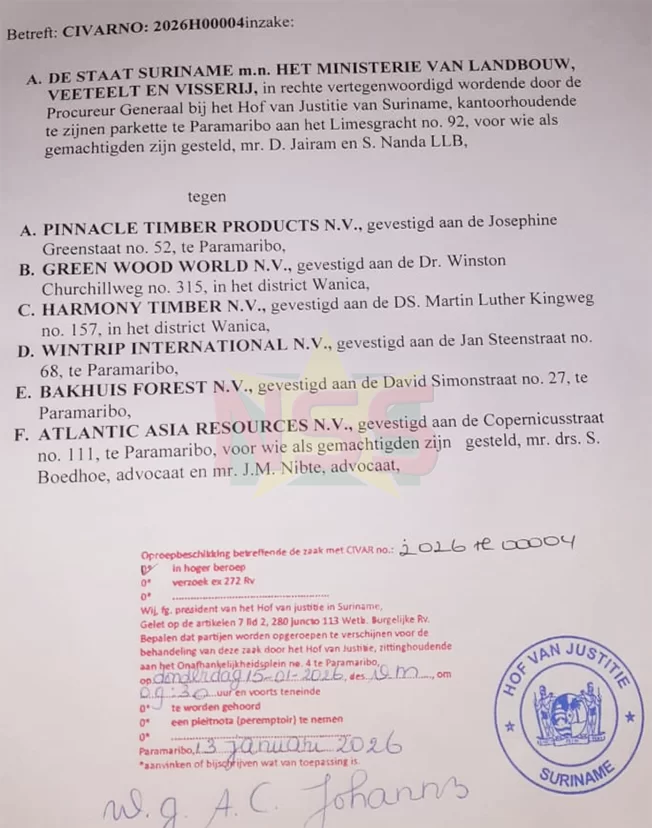
  • Dossier houtexport 10: Hoger beroep donderdag bij Hof van Justitie

    Dossier houtexport 10: Hoger beroep donderdag bij Hof van Justitie

    The Court of Justice of Suriname convened on Thursday to hear a significant appellate case pitting the Surinamese government against multiple timber exporting corporations. This legal confrontation centers on the state’s imposition of restrictive measures on wood exports, invoking both national statutes and international regulatory commitments.

    Represented by the Ministry of Agriculture, Animal Husbandry, and Fisheries (LVV), the state initiated actions against six prominent timber firms: Pinnacle Timber Products N.V., Green Wood World N.V., Harmony Timber N.V., Wintrip International N.V., Bakhuis Forest N.V., and Atlantic Asia Resources N.V. These companies had previously challenged government interventions that either curtailed or completely suspended their export operations, primarily concerning disputes over export documentation accuracy.

    The government’s enforcement measures stemmed from identified risks that authentic phytosanitary certificates might contain misrepresented timber species. Such discrepancies, authorities argued, could expose Suriname to severe international repercussions, including potential export bans from importing nations.

    Although proceeding through civil judicial channels, the case intersects with a parallel criminal investigation. The LVV ministry has formally requested the Attorney General’s office to initiate criminal proceedings regarding potential offenses in timber processing and certification practices. This development includes the announced intention to file charges against Anand Ramkisoensing, a former LVV director recently removed from position.

    The appellate court’s deliberation focuses on determining whether the state’s measures remained both lawful and proportionate given Suriname’s international obligations. The impending verdict carries substantial implications for the nation’s timber export industry and future regulatory approaches to natural resource management.
  • LETTER: Viral Trumpism Cannot Infect the Cuban Internationalism

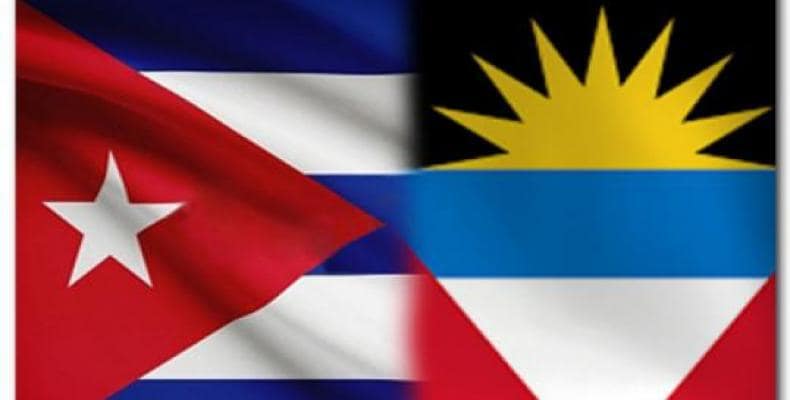
    LETTER: Viral Trumpism Cannot Infect the Cuban Internationalism

    The enduring legacy of Cuban internationalism, rooted in the revolutionary principles of 1959, continues to shape global healthcare diplomacy despite unprecedented economic challenges. Following the revolution that overthrew the Batista regime, Cuba confronted severe healthcare disparities and mass emigration of medical professionals reluctant to serve under a socialized system. This crisis prompted the revolutionary government to initiate massive medical training programs, transforming the nation into an unexpected medical powerhouse.

    The internationalist vision, championed by revolutionary figures like Argentinian physician Ernesto ‘Che’ Guevara, evolved into systematic policy through decades of consistent implementation. Guevara’s sacrifice in Bolivia and medical missions across Africa exemplified Cuba’s commitment to global liberation struggles beyond mere symbolic solidarity. Today, this tradition manifests through extensive medical education programs hosting thousands of international students—particularly from developing nations—and the deployment of Cuban healthcare professionals to over 60 countries worldwide.

    Remarkably, these achievements occur despite the continuous economic and financial blockade that has constrained Cuba’s resources for generations. The nation’s ability to maintain both domestic healthcare excellence and international medical assistance represents a extraordinary case study in resilience and ideological commitment.

    Recent criticisms from the Trump administration regarding Cuba’s medical missions have been met with strong rebuttals from beneficiaries of Cuban medical internationalism. The contrast between Cuba’s COVID-19 response—including the deployment of medical brigades to pandemic hotspots—and the struggles of wealthier nations has highlighted the continuing relevance of Cuba’s alternative model of international cooperation. This ongoing commitment to medical solidarity continues to define Cuba’s unique position in global health diplomacy, challenging conventional paradigms of international development assistance.

  • Copa Airlines expands operations in the Dominican Republic with Puerto Plata and Santiago flights

    Copa Airlines expands operations in the Dominican Republic with Puerto Plata and Santiago flights

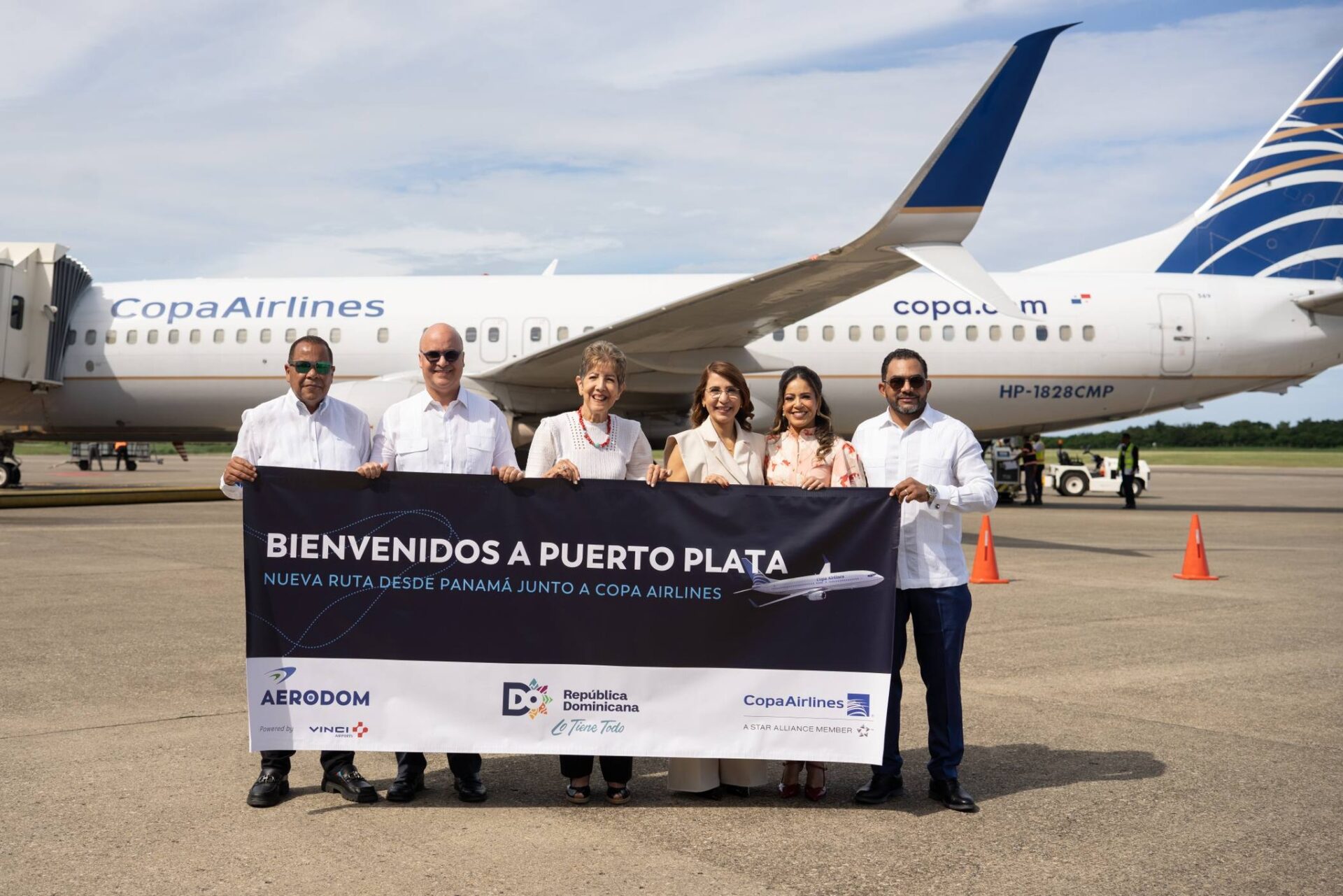
    In a significant move to enhance regional air connectivity, Copa Airlines has substantially expanded its operational footprint in the Dominican Republic. The Panamanian carrier has officially inaugurated new service to Puerto Plata while simultaneously reactivating its route to Santiago de los Caballeros, effectively doubling its presence in the country’s northern territories.

    The inaugural flight to Puerto Plata’s Gregorio Luperón International Airport commenced operations on January 13, marking the airline’s third destination in the Caribbean nation. This was followed by the resumed service to Santiago’s Cibao International Airport on January 15, restoring vital air links between the agricultural heartland and Copa’s extensive hemispheric network. These developments bring Copa’s Dominican portfolio to four key destinations, including existing services to Santo Domingo and Punta Cana.

    Pedro Heilbron, Chief Executive Officer of Copa Airlines, emphasized the strategic importance of this expansion: ‘Our new Puerto Plata route significantly strengthens our Caribbean network while creating substantial opportunities for tourism development, commercial exchange, and regional economic growth. This enhanced connectivity will provide northern Dominican communities with improved access to international markets across the Americas.’

    The Puerto Plata service will operate tri-weekly with flights scheduled on Tuesdays, Fridays, and Sundays utilizing the airline’s modern Boeing 737 fleet. Similarly, the reinstated Santiago route will maintain three weekly frequencies on Mondays, Thursdays, and Saturdays, facilitating both business and leisure travel to the Cibao region.

    This network expansion introduces additional benefits for travelers through Copa’s innovative Panama Stopover program. Passengers can now incorporate an extended visit to Panama City at no extra airfare cost, creating new tourism synergies between Central America and the Dominican Republic. As a Star Alliance member operating one of the industry’s most modern fleets—featuring Boeing 737-800 NG and 737 MAX aircraft—Copa reinforces its reputation for operational excellence and punctuality, consistently ranking among global leaders in on-time performance.

  • FBI agent injured during search for Brianna Genao in Puerto Plata

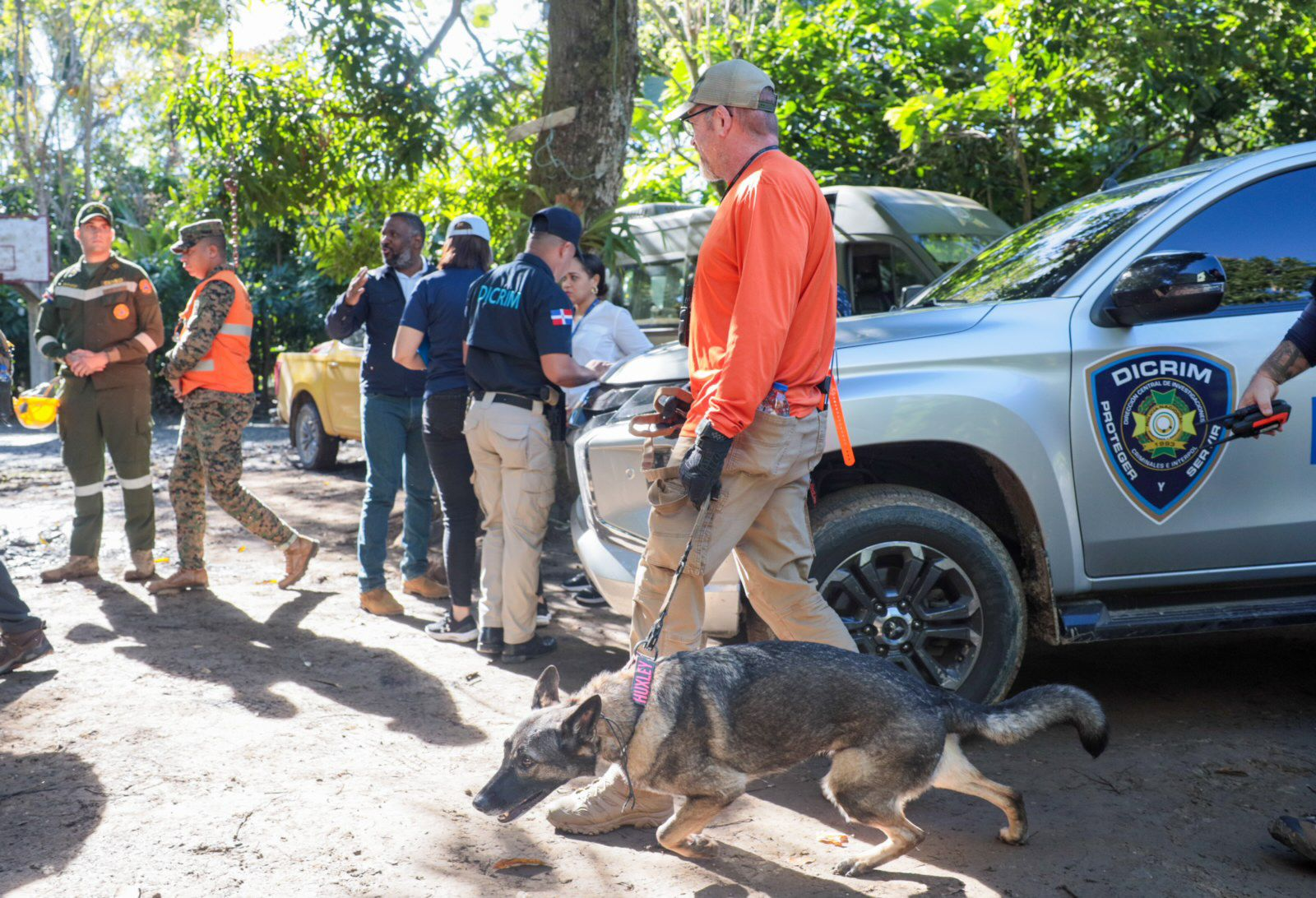
    FBI agent injured during search for Brianna Genao in Puerto Plata

    Search operations for Brianna Genao in Puerto Plata’s challenging Imbert region experienced a significant setback when an FBI agent sustained injuries during the mission. The incident occurred as the agent lost footing and fell into a ravine while navigating the area’s notoriously difficult terrain, characterized by steep inclines and complex geographical features.

    Emergency personnel transported the injured agent to a local medical facility for treatment, though authorities have maintained confidentiality regarding the specific nature and severity of his condition. This development prompted an immediate suspension of search activities as officials prioritized both the agent’s welfare and operational safety reassessments.

    Local media outlet De Último Minuto reported that the suspension reflects the inherent dangers presented by the search zone’s topography, which has complicated rescue efforts from the outset. Law enforcement coordinators are now reevaluating their approach, implementing additional safety protocols, and reorganizing team structures before continuing the operation. The temporary pause underscores the physical challenges that search teams confront in remote, geographically complex environments during missing person cases.

  • Santiago unprepared for earthquake stronger than magnitude 7, study finds

    Santiago unprepared for earthquake stronger than magnitude 7, study finds

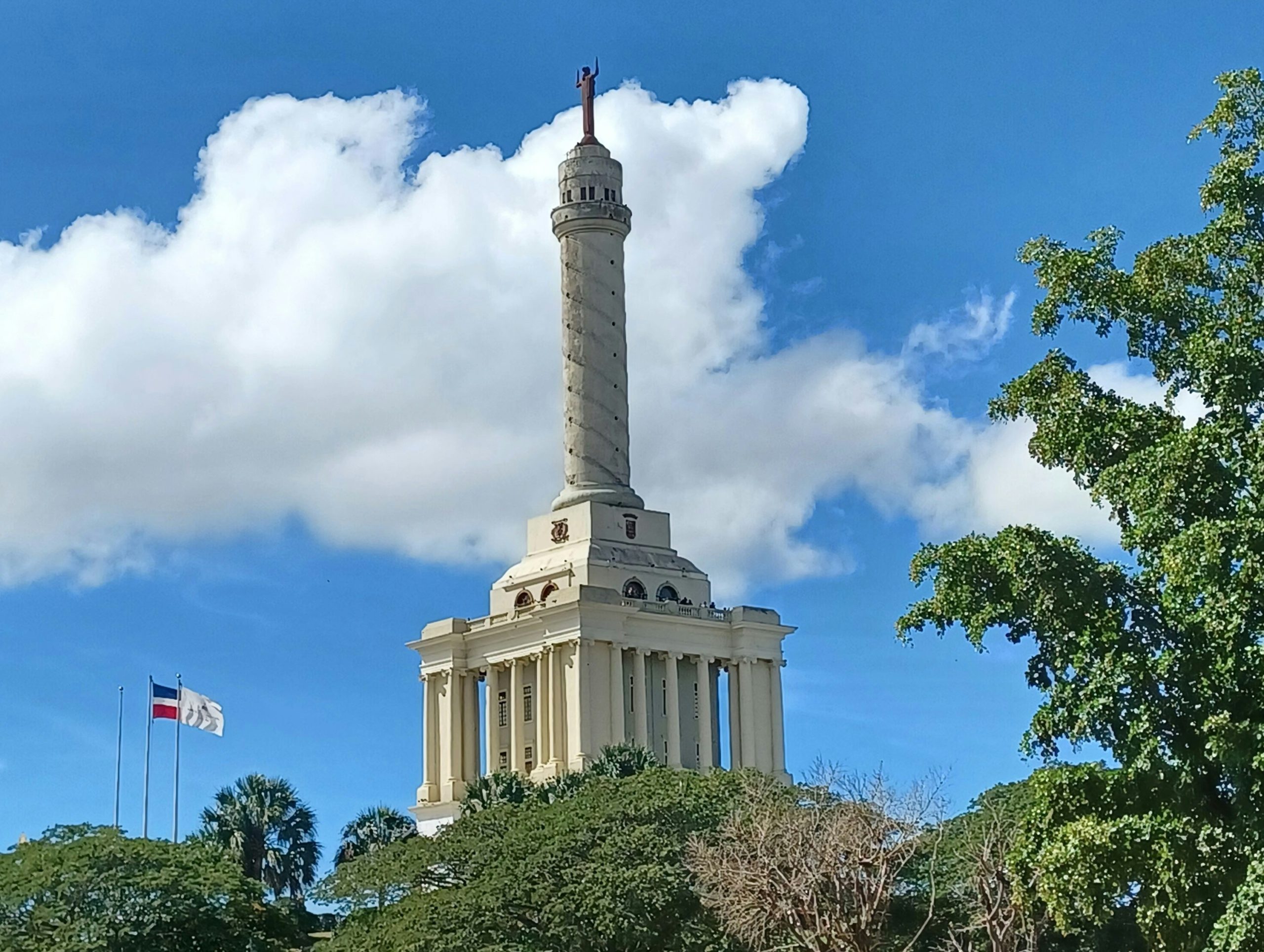
    A comprehensive seismic vulnerability assessment conducted by engineering experts has revealed that Santiago de los Caballeros, a Dominican city with over one million residents, remains critically unprepared for a major earthquake exceeding magnitude 7. The study projects devastating consequences including massive structural failures, substantial casualties, and severe economic repercussions should such a seismic event occur.

    According to the detailed analysis, a 7.5-magnitude earthquake could result in approximately 2,600 fatalities, over 97,000 injuries, and the complete collapse or necessary demolition of at least 6,200 residential and commercial structures. The projected material damages are estimated to surpass US$10 billion. The report further identifies critical emergency response limitations, including inadequate cemetery capacity, insufficient forensic pathology resources, compromised access to potable water, and major communication system failures.

    The engineering team, led by former CODIA Northern Regional president Ervin Vargas along with colleagues Luis Peña, Erick Mercedes, Arcadio Rodríguez, and Ashley Morales, emphasizes the city’s current inability to effectively manage a disaster of this scale. The experts urgently call for comprehensive disaster preparedness initiatives and the implementation of rapid-response mechanisms to mitigate potential human and material losses.

    While preliminary work has begun to catalog available resources from both public and private institutions—including personnel, equipment, and facilities—the commission stresses that successful implementation of a national preparedness plan requires substantial funding from the central government. The engineers advocate for adopting earthquake preparedness as a permanent state policy, particularly given the region’s historical susceptibility to destructive seismic activity, including past earthquakes that devastated areas of La Vega province.

  • Dominican mangoes and avocados gain direct access to European market

    Dominican mangoes and avocados gain direct access to European market

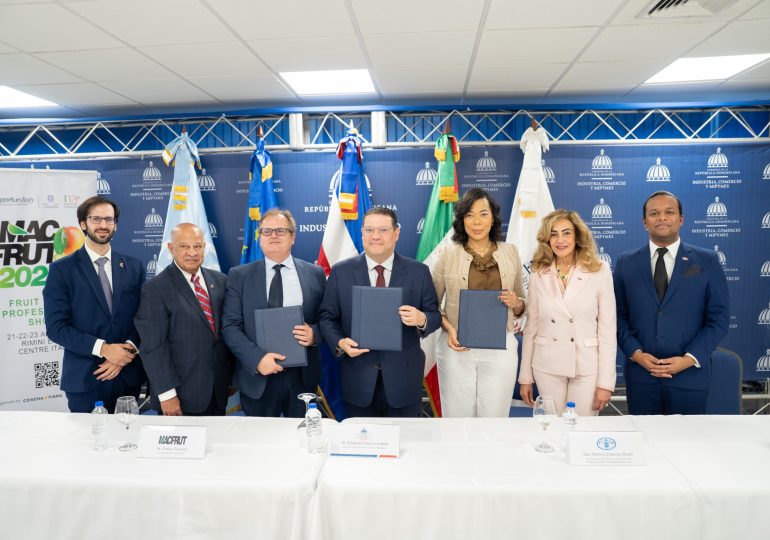
    The Dominican Republic has launched a transformative agricultural export initiative through a tripartite agreement involving its Ministry of Industry, Commerce and MSMEs, the United Nations Food and Agriculture Organization (FAO), and Italy’s prestigious MACFRUT agribusiness trade fair. This strategic partnership, spearheaded by Minister Yayo Sanz Lovatón, establishes a permanent trade corridor specifically designed to position Dominican mangoes and avocados within Italy’s lucrative market while creating gateway access to broader European distribution networks.

    The collaborative framework extends beyond market access to encompass comprehensive value chain development. The alliance will facilitate foreign investment attraction, advanced technology transfer across agricultural sectors, and direct engagement between Dominican producers and international buyers. By capitalizing on the global reputation of Dominican fruit quality, the initiative aims to modernize agribusiness operations, enhance competitive positioning, generate sustainable employment opportunities, and significantly increase foreign exchange earnings through expanded export volumes.

    The signing ceremony demonstrated substantial diplomatic support with attendance from Italian Vice-Ambassador Rodolfo Colaci, Dominican Ambassador to Italy Rafael Lantigua, and Ada Hernández, Dominican Ambassador to FAO in Rome. Minister Sanz Lovatón emphasized the alignment with national economic strategy to transform agriculture into a primary engine for job creation and currency generation through technical assistance, investment growth, and productive credit access.

    FAO coordinator Patricia Jiménez Beato highlighted MACFRUT’s inclusion as a catalyst for innovation acceleration and strengthened agro-industry connections with gastronomy sectors, translating international opportunities into tangible rural development. MACFRUT Vice President Enrico Turroni confirmed the organization’s commitment to providing Dominican producers with platform access not merely to Italian markets but to extensive European and global distribution channels, formally inviting participation in their April trade fair edition.

  • Trump roept Iraniërs op tot aanhoudende protesten: ‘Hulp is onderweg’

    Trump roept Iraniërs op tot aanhoudende protesten: ‘Hulp is onderweg’

    Amid Iran’s most significant civil unrest in years, former U.S. President Donald Trump has issued a provocative call for Iranians to sustain their demonstrations against the government. Through his Truth Social platform, Trump declared “help is on the way” while urging citizens to document the identities of security forces committing violence against protesters, warning that perpetrators would “pay a heavy price.”

    The escalating crisis has reached alarming proportions, with Iranian officials acknowledging approximately 2,000 fatalities since protests began in late December—the first official death toll assessment. Human rights organizations present even grimmer statistics, reporting over 1,800 demonstrator deaths and more than 16,700 arrests, representing a substantial increase from previous estimates. Independent verification remains challenging due to widespread internet disruptions throughout the country.

    When pressed by journalists to specify the nature of promised assistance, Trump declined to provide concrete details. His administration has already implemented stringent economic measures, including 25% import tariffs on nations trading with Iran—a significant oil exporter. Additionally, Trump confirmed considering military options in response to the government’s violent suppression of dissent.

    The U.S. State Department has urgently advised American citizens to evacuate Iran immediately, including through land borders with Turkey and Armenia. Trump further cautioned during a CBS News interview that “very powerful measures” would follow if Iran proceeded with executing detained protesters. Reports from Kurdish organizations indicate a 26-year-old protester in Karaj faces imminent execution, though independent confirmation remains unavailable.

    Communications infrastructure in Iran continues to be severely compromised, with partial restoration of telephone services while internet access remains largely blocked. In response, Elon Musk’s Starlink satellite internet service has been made available gratis to facilitate information exchange.

    Initially sparked by economic grievances and currency devaluation, the protests have evolved into broader demands for systemic change. Iranian leadership has accused the United States and Israel of instigating unrest, labeling Trump and Israeli Prime Minister Netanyahu as “primary murderers” of the Iranian people.

    China, a major consumer of Iranian oil, has joined Turkey, Iraq, the United Arab Emirates, and India in condemning U.S. tariff policies. Despite intense repression, no significant fractures have emerged within Iran’s ruling elite that has maintained power since the 1979 Islamic Revolution.

    European nations including the United Kingdom, France, Germany, and Italy have summoned ambassadors to protest the violence. European Commission President Ursula von der Leyen described the rising death toll as “horrific,” while German Chancellor Friedrich Merz suggested the regime approaches its demise if reliant solely on violence to maintain power.

    The coming weeks present critical challenges for Iran’s future as international scrutiny and pressure intensify.

  • Breaking: More Caribbean countries expected to face U.S. immigrant visa restrictions

    Breaking: More Caribbean countries expected to face U.S. immigrant visa restrictions

    WASHINGTON, DC — The Trump administration is preparing to implement significant immigration restrictions targeting 75 countries worldwide, with numerous Caribbean nations expected to be included in the expanded list. According to sources familiar with the matter, the new policy will temporarily suspend immigrant visa processing for affected countries beginning January 21, 2026.

    The measure specifically targets individuals seeking permanent residency in the United States and stems from concerns regarding migrants’ utilization of public welfare programs. State Department officials have expressed particular apprehension about the ‘public charge’ rule, which refers to foreign nationals who access public benefits.

    In an official statement released via the State Department’s X account, the administration clarified: ‘The State Department will pause immigrant visa processing from 75 countries whose migrants take welfare from the American people at unacceptable rates. The freeze will remain active until the U.S. can ensure that new immigrants will not extract wealth from the American people.’

    While the complete list of affected countries remains unconfirmed, multiple media outlets report that several Caribbean territories are under consideration for inclusion. Potential candidates include Antigua and Barbuda, The Bahamas, Barbados, Belize, Cuba, Dominica, Grenada, Haiti, Jamaica, Saint Kitts and Nevis, Saint Lucia, and Saint Vincent and the Grenadines.

    The U.S. Embassy in Barbados has acknowledged the impending implementation of the visa pause but indicated that official confirmation regarding the specific countries affected is still pending. This development represents the latest in a series of hardline immigration measures pursued by the Trump administration since taking office, continuing its focus on restricting both illegal migration and visa overstays while enforcing immigration law violations more strictly.

  • President Abinader receives first Dominican electronic passport

    President Abinader receives first Dominican electronic passport

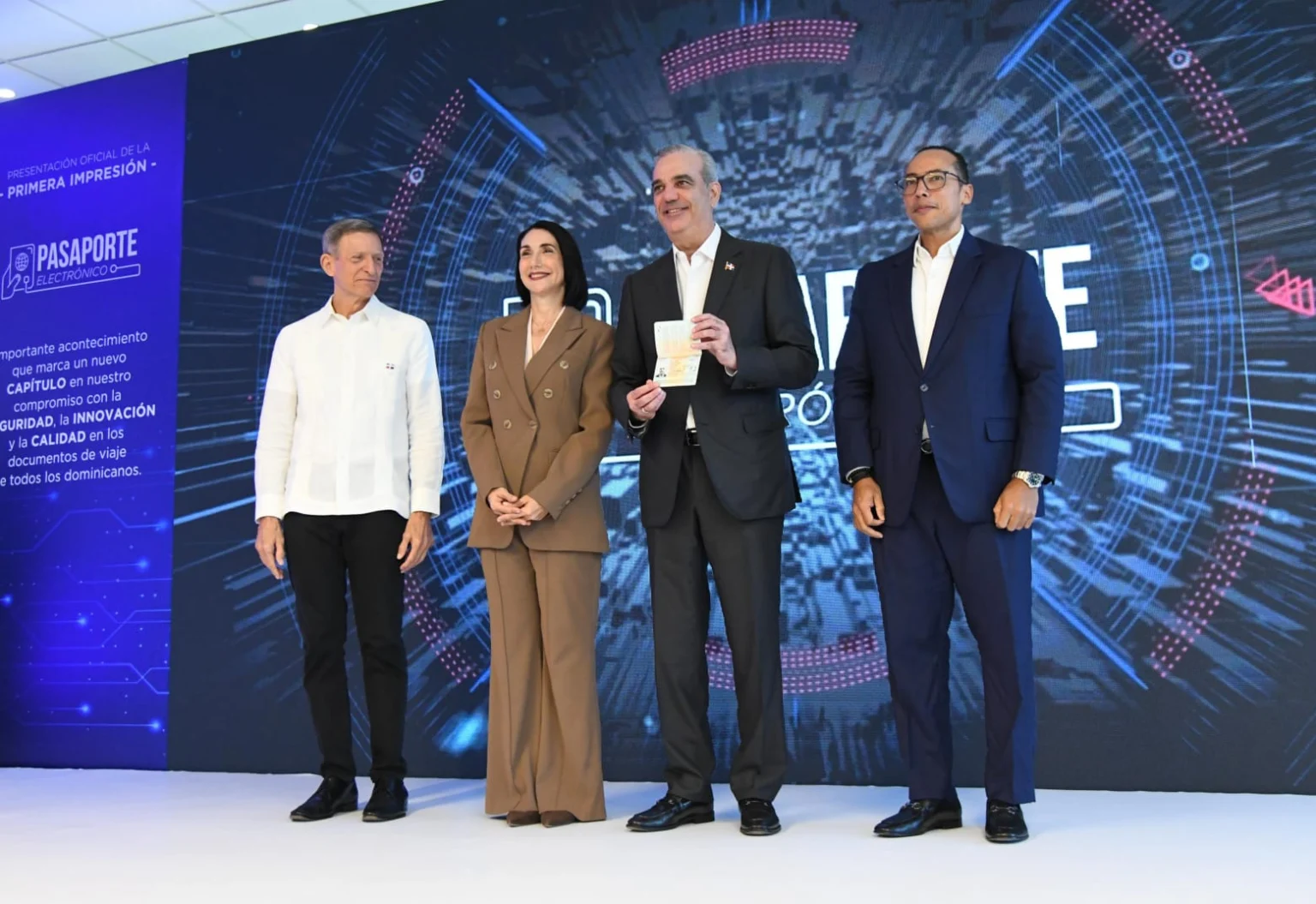
    In a landmark ceremony at its new headquarters, the Dominican Republic’s General Directorate of Passports (DGP) has officially unveiled the nation’s next-generation electronic passport. President Luis Abinader presided over the event, personally receiving the first biometric travel document issued in the country, signaling a transformative upgrade to the nation’s identity and border security infrastructure.

    The implementation will follow a carefully structured phased approach to ensure system integrity and operational efficiency. Initial stages focus on enrolling government officials and diplomats, with citizen appointments opening gradually beginning January 15. DGP Director General Lorenzo Ramírez emphasized that this measured rollout allows for comprehensive system validation, staff training, and user experience optimization before full-scale national implementation.

    Full public enrollment is scheduled to commence on February 19, starting with high-demand offices in Santo Domingo and northern regions before expanding nationwide. The sophisticated e-passport incorporates cutting-edge biometric technology, exceeds 130 security elements, and features an encrypted chip fully compliant with International Civil Aviation Organization (ICAO) standards. The documents will carry 10-year validity for adults and 5-year validity for minors.

    Complementing the technological upgrade, the DGP announced enhanced services including domestic delivery options and a specialized repatriation benefit for Dominican citizens abroad. During the transition period, current mechanical passports will remain legally valid alongside the new electronic versions.

  • Column: RIP Arnie Breeveld

    Column: RIP Arnie Breeveld

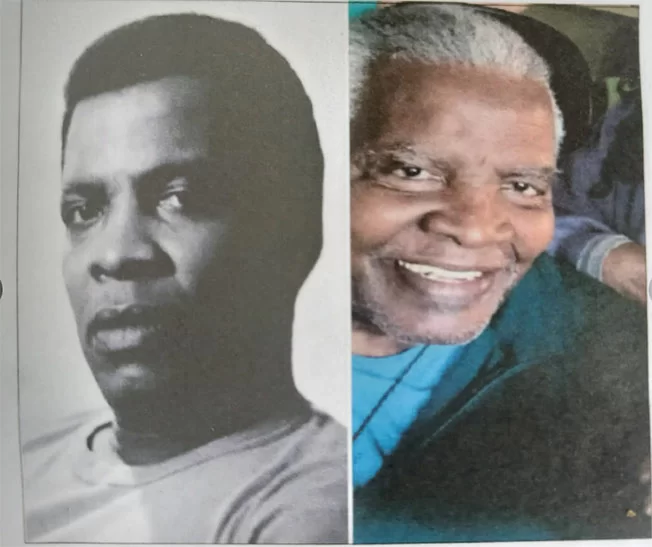
    Suriname has lost one of its most distinguished cultural ambassadors with the passing of Arnie Breeveld on December 30, 2025, during his holiday in the South American nation. The multi-talented performer, who died at 87, represented a crucial bridge between generations within the renowned Breeveld family dynasty that has profoundly influenced Surinamese-Dutch cultural landscapes for decades.

    Arnie emerged from an extraordinary artistic lineage. His father Frits Breeveld gained acclaim in 1954 portraying God in the production ‘Green Pastures,’ while uncle Reyer performed supporting roles during Sranan Neti theatrical events. The family’s theatrical legacy continued with aunts Muddi and Roda Breeveld, the latter achieving cinematic immortality through her poignant performance as the dying mother in the landmark film ‘Wan Pipel.’

    Before establishing himself as a cultural icon, Breeveld first excelled as an elite athlete, competing nationally in track and field (100m sprint, high jump, and long jump) while simultaneously representing Suriname’s basketball team in 1962.

    Breeveld’s cultural impact became particularly significant through his pioneering role in Suriname’s media evolution. In 1958, he and cousin Borger participated in experimental television broadcasts that drew massive crowds to storefront displays on Steenbakkerijstraat. His artistic repertoire included regular performances at Paramaribo’s prestigious Palace Hotel and the Jaarbeurspaviljoen, with his interpretation of ‘Portrait of My Love’ earning particular acclaim.

    The artist’s migration to the Netherlands in 1969 marked a new chapter of professional achievement. He secured roles in controversial theater productions like ‘Oh! Calcutta!’ (where performers appeared nude) and the 1974 film ‘De vijf van de vierdaagse.’ His television presence expanded through appearances in series including ‘Kon hesi baka,’ adapted from Henk Barnard’s Golden Griffel-winning children’s book.

    Breeveld reached his career zenith in 1973 by winning the special edition of popular game show ‘Een van de Acht’ commemorating Queen Juliana’s 25th anniversary, defeating seven competitors before the monarch herself. This victory propelled him to nationwide fame throughout the Netherlands, where single-channel television broadcasting ensured massive viewership.

    Beyond performing, Breeveld developed as a visual artist whose realistic depictions of Surinamese still lifes resonated deeply with the Dutch Surinamese diaspora. Those who knew him personally remember his captivating a capella renditions of spirituals and classics like ‘Ol’ Man River,’ delivered with such profound bass vocals that listeners debated whether his interpretation surpassed Paul Robeson’s original.

    Though remembered as having ‘specific user instructions’ rather than being an ‘everyman’s friend,’ Breeveld maintained strong family connections throughout his life. His passing marks the conclusion of an extraordinary cultural journey that spanned sports, music, theater, television, and visual arts across two continents.