
Rising javelin throw talent Maliek Francis has capped off a historic 2026 competitive season with a string of record-breaking performances, earning high praise and formal recognition from the Antigua and Barbuda Athletic Association for cementing his status as one of the nation’s most promising young track and field athletes. In an official statement released following Francis’ standout season, the national governing body highlighted the 18-year-old’s relentless work ethic, unwavering discipline, and fierce determination as core drivers of his success, noting that his recent achievements have already secured him a permanent place in Antigua and Barbuda’s athletics history books. The season’s most notable milestone came in July, when Francis competed at the Organization of Eastern Caribbean States (OECS) Track and Field Championships hosted in St. Kitts. There, he delivered the winning throw of 66.11 meters, a mark that broke both the long-standing Antigua and Barbuda national javelin record and the existing stadium record at the Kim Collins Athletic Stadium. Before his landmark performance at the OECS event, Francis had already turned heads on the regional stage earlier in 2026 at the CARIFTA Games in Grenada. Representing his home nation in the Under-20 boys’ javelin competition, he claimed the bronze medal with a 60.14-meter throw, adding another regional medal to his growing collection of accolades. This is not the first time Francis has made history at the CARIFTA Games, as he already holds a former CARIFTA record from his 2024 campaign, when he threw 68.84 meters to claim the Under-17 boys’ javelin national title. The Antigua and Barbuda Athletic Association emphasized that Francis’ latest string of wins and records confirms his consistent development as an athlete, pointing to clear evidence that he has the potential to deliver even stronger results at elite levels of competition in coming years. In closing, the association encouraged the young athlete to stay focused on his long-term goals and continue pushing past his personal limits, adding that the entire national athletics community is proud of his outstanding 2026 season and eagerly anticipates celebrating many more groundbreaking milestones and career successes with Francis in the future.
作者: admin
-

Rain Forces Abandonment of Falcons-Patriots CPL Match
BASSETERRE, St. Kitts — Wet weather put a premature end to one of the most anticipated Caribbean Premier League (CPL) fixtures of the 2026 season Sunday, as steady, unrelenting rain forced organizers to scrap the matchup between the Antigua and Barbuda Falcons and the St. Kitts and Nevis Patriots at Warner Park.
Pre-match preparations had proceeded as planned: event officials completed the traditional coin toss to determine batting order hours ahead of the scheduled start, leaving fans poised for an evening of competitive T20 cricket. But the steady downpour that descended on the venue refused to let up, turning the outfield into a waterlogged surface unfit for play and ruling out any chance of a delayed start.
The 21st fixture of the 2026 CPL campaign was slated to get underway at 7 p.m. local time, with hundreds of spectators already gathered at the stadium and thousands more tuning into live broadcasts across the Caribbean and beyond. After repeated inspections by ground staff and match officials, the call was made to abandon the contest entirely. As things stand, no official match result will be added to the season’s standings, leaving both teams waiting for updates on a potential rescheduling that has not yet been announced.
Rainouts are a recurring challenge for Caribbean cricket tournaments held during the wet season, and this washout marks the second weather-disrupted CPL fixture at Warner Park in the last three seasons. Fans who had traveled from across Antigua and Barbuda and host St. Kitts and Nevis to attend the game expressed disappointment, though many acknowledged the decision was necessary to protect player safety and preserve the pitch for future fixtures.
-
Booby Alley Residents to Be Briefed on Community Rules Before Moving In
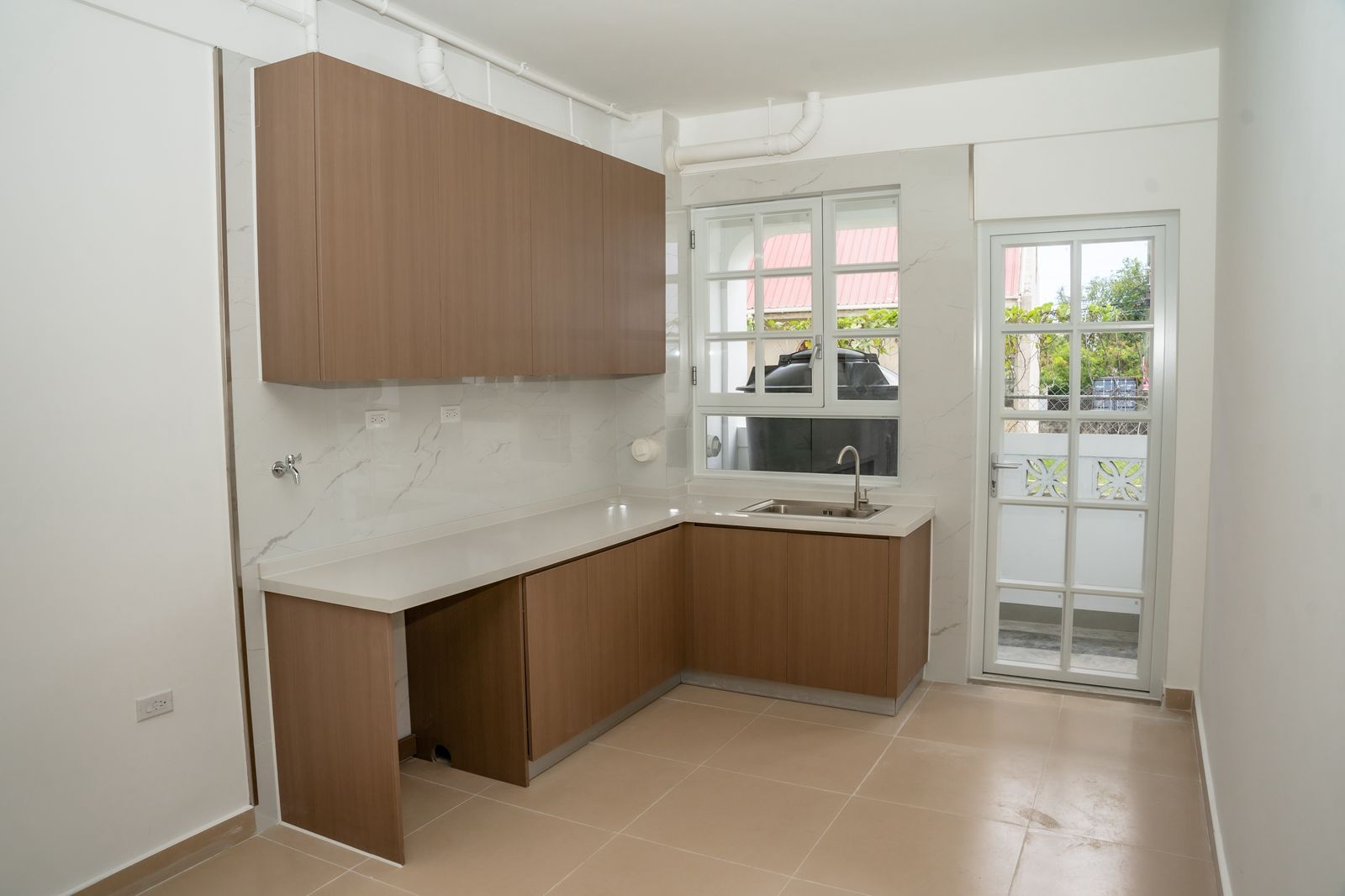
A new policy requiring incoming residents of the redeveloped Booby Alley neighborhood to complete a pre-move-in briefing on community standards is moving forward after receiving official approval from the government of Antigua and Barbuda. Prime Minister Gaston Browne confirmed the initiative during a live appearance Saturday on the Browne and Browne Show, broadcast by local radio station Pointe FM. The idea originated from a public submission, where a member of the community proposed that all returning residents should take part in a neighbor-focused orientation session before taking up residency in the upgraded development. The prime minister confirmed that the administration has formally accepted the public suggestion and will implement the requirement ahead of move-in day. The core purpose of the orientation sessions is to familiarize new residents with all formal regulations that govern the newly built community, while also encouraging collective stewardship of the space. Attendees will be guided on expectations for maintaining shared and private property cleanliness, adhering to local safety protocols, and embracing active neighborhood responsibility that builds civic pride. The sessions will also emphasize the value of mutual support among neighbors, urging residents to look out for one another to keep the area secure. Beyond preserving the condition of new residential units and shared communal spaces, the program is designed to nurture stronger social connections between neighbors who will live in the redeveloped area. The Booby Alley redevelopment project is a key component of the Antigua and Barbuda government’s national urban renewal initiative, which replaced outdated, substandard housing with brand-new modern residential units. While construction work was carried out, former Booby Alley residents were temporarily relocated to alternative housing in the nearby Villa neighborhood. To accommodate diverse resident preferences, Prime Minister Browne has confirmed that any former resident who wishes to remain in their current single-family home in Villa will not be forced to relocate back to the redeveloped Booby Alley. Flexible housing arrangements are also being offered to meet different residency statuses: renters from the original neighborhood may be eligible for mortgage support to own a new unit, while former property owners have the option to trade their original Booby Alley land holding for a permanent home in Villa. At the time of his Saturday announcement, Browne did not share a specific timeline for when the first orientation sessions will be held, nor did he name which government agency will be tasked with organizing and leading the briefings for incoming residents.
-
Govt stands by pro‑investment strategy amid criticism over Chatham Bay sale
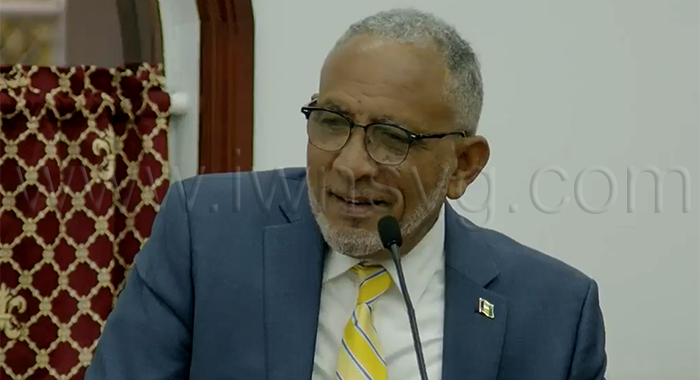
A sharp political clash has erupted in St. Vincent and the Grenadines over the ruling New Democratic Party government’s market-focused economic strategy, with opposition leaders slamming the administration for allegedly offloading a prized coastal tourism asset at a steep discount to patch gaping public budget holes. The confrontation unfolded during a heated August 27 parliamentary sitting centered on debate of the 2026 Companies (Amendment) Bill, a core piece of the NDP’s regulatory reform package designed to attract foreign investment and shrink the nation’s crippling public debt burden.
Prime Minister Godwin Friday used the debate to outline his government’s overarching economic vision, framing the proposed company law changes and broader policy agenda around two central pillars: “opening the country for business” and unlocking private sector growth to pull the nation out of its debt crisis. With public finances under significant strain, Friday argued that state-led development is no longer feasible, and the government must instead create a welcoming regulatory environment to draw domestic and international private capital that will drive long-term economic expansion.
At the heart of the proposed reforms are sweeping changes to outdated 2016 Companies Act rules that the government describes as unnecessarily punitive and anti-competitive. Friday told lawmakers the current regulatory framework, which includes a EC$350 daily fine for non-compliance and rigid registration requirements for all shareholder entities in a corporate chain, has made SVG uncompetitive compared to neighboring regional economies, driving foreign investors away from registering property and assets through local corporate structures. Industry professionals now routinely advise clients against using SVG external companies for land ownership, pushing foreign buyers to hold assets in their personal names instead, the prime minister added.
To reverse this trend, the amendment bill cuts excessive penalties, simplifies multi-layered registration rules, and offers a time-limited 50% amnesty on unpaid historic fees. Friday said the reforms will cut red tape, encourage non-compliant companies to regularize their status at the Commercial and Intellectual Property Office, generate immediate near-term revenue from partial payment of outstanding obligations, and send a clear, confidence-building message that SVG is open for foreign investment. “This bill seeks to remove onerous penalties that have become a disincentive, especially for foreign investors,” Friday said. “Fixing this problem will deliver shared benefits and help the whole country grow.”
In a sharp rebuke, Opposition Leader Ralph Gonsalves tied the government’s push for regulatory concessions directly to what he calls a pattern of fiscally desperate fire sales of public assets, centered on the recent sale of 100 acres of prime land at Chatham Bay, a high-value tourism site on Union Island. Gonsalves pointed to troubling fiscal indicators to back up his claim that the government is starved for cash: government revenue between April 1 and July 31 of this year dropped 10.6% compared to previous projections, and the administration currently owes more than EC$17 million to major fuel suppliers Rubis and Sol.
Gonsalves alleged that the Chatham Bay land was sold for less than half its valuation from 15 years prior, with the roughly US$20 million in proceeds from the sale and an OFID grant being diverted to cover routine recurring government spending rather than long-term development projects. “You had to sell the crown jewel down in Chatham Bay for half, less than half the price it was valued for nearly 15 years ago, and to spend the US$20 million from OFID to put it largely on recurrent spending, not for development,” Gonsalves told parliament. The opposition leader did not provide independent evidence to back up his claims about the asset’s valuation, and the government has not issued a formal response to his specific allegations about the sale price and use of proceeds.
The ruling NDP later broke its silence on the Chatham Bay sale over the weekend, confirming the transaction for approximately EC$54 million and defending the deal as consistent with the party’s pro-growth economic strategy. The party, which won office in November last year, emphasized that the sale agreement includes strict binding covenants that require the new owner to protect Chatham Bay’s unique biodiversity and natural ecosystems, balancing fiscal and environmental priorities. The sale strengthens the nation’s fiscal position while preserving the area’s ecological value, the party added.
While the government has not directly addressed Gonsalves’ specific claims about the Chatham Bay transaction, Friday and other ruling party lawmakers have repeatedly defended their broader approach to debt management, regulatory reform and investment attraction, arguing the strategy is a necessary step to stabilize SVG’s struggling economy and unlock the private sector growth needed to reduce the national debt burden.
-
EU-funded $3.2m Bequia fish market rebuild launched
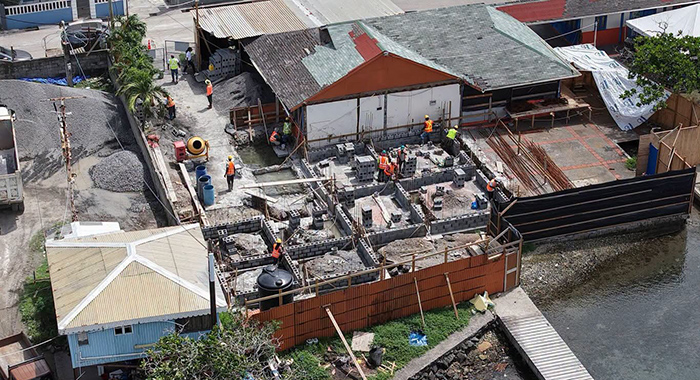
The Caribbean island nation of Saint Vincent and the Grenadines has broken ground on a transformative EC$3.285 million (approximately €600,000) infrastructure project that aims to replace the aging 30-year-old Bequia Fish Market with a modern, climate-resilient facility. Positioned as a cornerstone of the country’s growing blue economy strategy, the redevelopment is being fully financed by a grant from the European Union under the Biodiversity Support Programme for ACP and Coastal Environments (known as the Biospace Project), with the Organization of Eastern Caribbean States (OECS) Commission overseeing implementation. Local Vincentian firm Hutchinson Construction Company Ltd. has been tapped as the lead contractor for the works, which are already progressing at the Port Elizabeth waterfront site.
Speaking at the project’s official launch ceremony, Prime Minister Godwin Friday — who also serves as the Member of Parliament for the Northern Grenadines constituency that includes Bequia — emphasized that the initiative represents far more than a simple infrastructure replacement. It signals the current administration’s unwavering commitment to elevating fisheries and the blue economy to a central role in the country’s long-term economic growth plan. “If the fishing sector, the blue economy, does not succeed, it makes it difficult for us as an administration to succeed,” Friday stated, noting that the EU grant was secured by the previous government but is being accelerated under his administration, with a target completion timeline of seven to eight months and a planned public opening by mid-2025.
In a post-ceremony media interview, the prime minister highlighted the unique value of the grant funding, reminding stakeholders in the local Vincentian dialect that “a grant means you doh ha’ to pay it back.” He added that large-scale EU development projects have become increasingly rare across the Caribbean region, making it critical that this new facility is “built to last” and supported by consistent long-term maintenance.
Lorenzo George, the country’s lead Fisheries Officer, laid out the detailed technical scope of the new development. The project will deliver a two-storey, 2,856-square-foot facility purpose-built to support modern fish handling, processing and administrative operations. The ground floor will be dedicated to core industry needs, housing a dedicated fish processing and cleaning zone, commercial freezer and chiller capacity, an industrial ice machine, a fish supply retail shop and primary on-site office space. The first floor will accommodate a full administrative office, a multi-purpose conference room and gender-segregated public restrooms.
To meet the project’s climate resilience goals, the new structure will be built with reinforced concrete for all foundations, columns, beams, roof slabs and structural elements, paired with corrosion-resistant stainless steel windows and marine-grade exterior doors built to withstand harsh coastal conditions. The facility will also feature upgraded plumbing and electrical systems, as well as integrated on-site water storage and rainwater harvesting infrastructure to boost self-sufficiency. George noted that the final design was developed following extensive consultations with local Bequia fishers and other industry stakeholders to ensure the facility meets all their practical needs.
Richard Hutchinson, Managing Director of lead contractor Hutchinson Construction, reported that works commenced on 18 June, and the project is already roughly 70% complete on foundational works, despite significant on-site challenges. The waterfront location was historically used as an informal garbage dump, requiring crews to excavate and remove large volumes of compacted waste, abandoned old machinery, electrical debris and decomposed organic material before importing and compacting engineered fill to create a stable base for the new structure. A second major challenge has been regular seawater intrusion during high tide, which forces crews to pump out the work site two to three times daily — including overnight shifts in the early morning — to prevent saltwater contamination of the structural concrete.
To boost long-term durability, the project uses high-strength C30 concrete for all foundational elements, and structurally sound portions of the original 12-inch thick concrete slab have been integrated into the new design to improve base stability and extend the facility’s overall lifespan. “That alone can tell you that down the road from 30 or 40 or 50 years, our construction footing should remain steady and strong,” Hutchinson said, adding that the team’s goal is to deliver a facility that will serve both the local fishing community and the broader coastal environment for generations.
Conroy Huggins, Minister of Fisheries, Marine and Land Conservation and Climate Resilience, framed the Bequia project as part of a broader government policy shift to reposition fisheries as a standalone core economic pillar, rather than a secondary adjunct to the agriculture sector. Huggins explained that while the fishing industry was a well-established economic driver 30 to 35 years ago, it has fallen into neglect in recent decades. One of the first actions of the current administration was to create an independent Ministry of Fisheries, a change he said reflects the sector’s outsize importance to the national economy.
The ministry’s recent national assessment found that all nine existing fisheries centres across Saint Vincent and the Grenadines are in need of major restoration or rehabilitation work. The Bequia redevelopment is the flagship of a nationwide upgrade program that also includes active works at three other key facilities: rehabilitation at the Chateaubelair Fisheries Centre, which began in June and is on track for completion by late 2026 or early 2027; refurbishment of the administrative complex and replacement of outdated equipment at the Kingstown Fish Market; and ongoing planning to reactivate the large, long-underutilised fisheries facility at Owia, which the prime minister has named a top priority.
Huggins confirmed that structural works on the Bequia Fish Market are expected to be finished by the first quarter of 2025, with full operational launch targeted for June 2025. “What is taking place here today is just in line with the government’s vision for the development and the expansion of the fishery sector and the development of the blue economy as an economic pillar,” he said. The current administration has formally outlined four core economic pillars for national development: agriculture; fisheries and the blue economy; tourism; and a “new economy” encompassing sports, culture, creative industries and information and communications technology.
-
LETTER: Abused Mother Appeals to PM Browne for Housing Programme for Women Fleeing Abuse
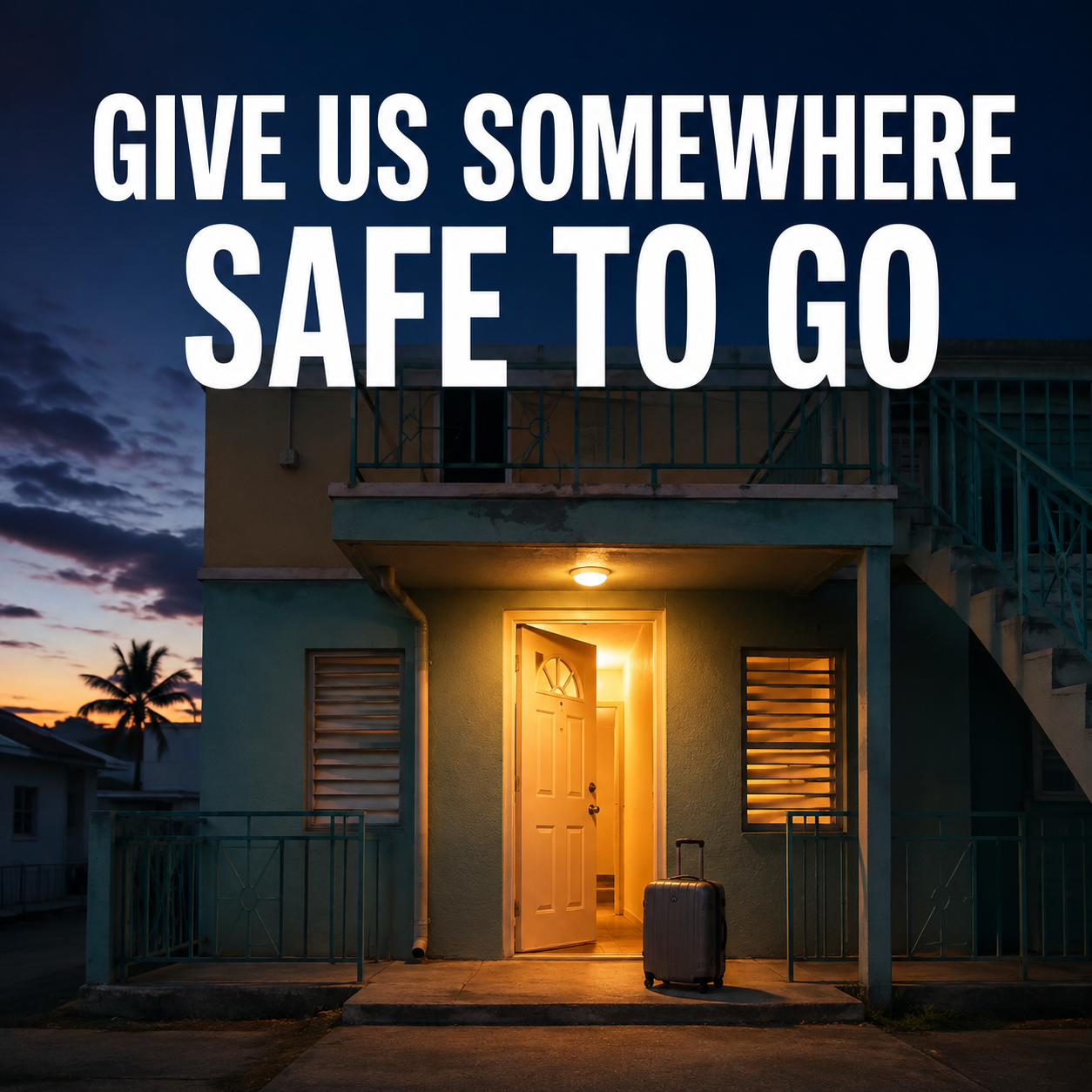
Dated August 30, 2026, an open, anonymous letter addressed to Prime Minister Gaston Browne of Antigua and Barbuda has thrown a harsh spotlight on the hidden crisis facing domestic violence survivors across the nation: a crippling lack of affordable, safe housing options for women and children escaping abusive relationships.
Writing under anonymity to protect herself and her young daughter from further harm, the author, a mother who marks one year of marriage this August, shares the agonizing reality that has become her daily life. She entered her partnership with the quiet hope of building a stable home and future, only to find herself trapped in an unsafe relationship with no clear path out. Leaving abuse, she explains, is rarely as simple as packing a bag and walking away. For many women, systemic barriers turn escape into an impossible choice: stay in a dangerous home, or face homelessness.
After taking the difficult legal step of securing a restraining order against her abuser, the author was forced out of the family home. Instead of receiving support, she has been publicly maligned as a villain and a liar for speaking out about her experiences. What haunts her most is the inability to give her young daughter the safe upbringing she deserves. She refuses to let her daughter grow up believing that safety is a secondary privilege to having a roof over one’s head, or that women are meant to endure mistreatment when they have nowhere else to turn. Right now, she cannot afford the cost of starting over, leaving her at risk of being forced back into the violent situation she worked so hard to escape.
The author stresses that her experience is not unique. Across Antigua and Barbuda, hundreds of women are stuck in the same impossible trap: they have packed their bags, coordinated their children’s belongings, reached out to contacts for temporary shelter, only to stare down sky-high rental prices they cannot afford. With no other options, they return to their abusers—not because the abuse has gotten better, but because they have nowhere else to go.
While the author commends the Antigua and Barbuda government for already moving forward with plans to establish a national safe haven shelter for survivors of domestic violence, she is calling for urgent additional action: the creation of a comprehensive, government-backed emergency and transitional housing program. Current shelter infrastructure, she argues, only solves part of the problem. What happens when a woman’s time in emergency shelter ends, but she still cannot afford private market rent? What happens to mothers with no family home to return to, or survivors who have secured legal protection but remain trapped by financial instability?
There must be a middle ground between an abusive home and homelessness, the author argues. She outlines a clear vision for the program: it would provide safe, subsidized transitional apartments or rooms for survivors and their children, cover rental deposits, and offer a clear pathway to permanent, independent housing. Even a small, modest program would be life-changing for countless women, she notes. Survivors do not need to be rescued—they just need a safe door to walk through to build their new lives.
The author shares that she has struggled with overwhelming emotional despair, to the point of questioning whether life is worth continuing. But she emphasizes that she does not want to die—she wants to live, to raise her daughter, to work and provide for her child, and to build a life free of fear. She refuses to become another statistic of domestic violence, and dreams of one day telling her daughter that even when life was terrifying, she found the courage to escape and build something better.
She is not asking for special treatment or luxury housing, only a modest, affordable, safe space where she can breathe, rebuild, and work toward independence. Closing her letter, she urges Prime Minister Browne to act urgently for all women currently trapped in her position: women with children, little to no savings, no family to turn to, and no safe place to sleep if they leave their abusers.
“That sentence could save a life,” she writes of the message a transitional housing program would send: You do not have to go back. There is somewhere safe for you and your children. A program like this would not just save the lives of adult survivors—it would save childhoods, give women the courage to leave, and teach the next generation that home is supposed to be a place of safety, not fear.
Even if she cannot escape her own situation, the author writes, she hopes her plea will create change for the next woman facing this crisis. “Don’t let a lack of affordable housing become the reason another woman stays somewhere that is destroying her,” she writes. “Give us somewhere to go. Give us a chance to start again.”
-
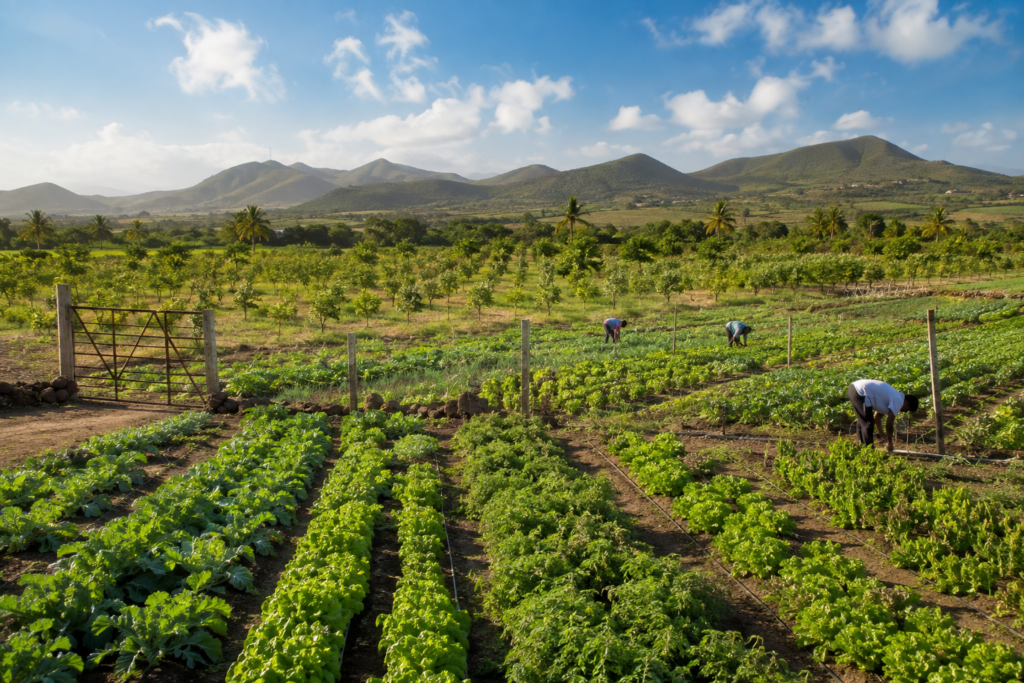
Antigua and Barbuda to Protect Agricultural Lands Through Farm Trust
The twin-island nation of Antigua and Barbuda has announced a landmark initiative to preserve its limited but ecologically and economically critical agricultural territory through the establishment of a dedicated farm trust. Facing growing pressure from coastal development, climate-driven coastal erosion, and unregulated land conversion that has steadily reduced available farmland over the past two decades, government officials have framed the trust as a long-term solution to protect the country’s food security and support small-scale local producers.
Under the new framework, the trust will acquire at-risk agricultural parcels, hold them in permanent public ownership, and lease them to qualified local farmers at below-market rates. This model is designed to prevent speculative land buying that drives up prices and pushes working farmers off their land, while also ensuring that greenfield agricultural spaces are never converted to non-farming uses such as luxury resort development or residential construction.
Agriculture ministry representatives note that Antigua and Barbuda currently imports more than 70% of its food supply, a dependency that leaves the nation vulnerable to global supply chain disruptions and volatile international commodity prices. By protecting existing farmland and expanding access for new and emerging farmers, the government aims to boost domestic food production, cut import bills, and create new livelihood opportunities in rural communities.
The initiative also incorporates environmental protections: the trust will require participating farmers to adopt climate-smart agricultural practices, including soil conservation, rainwater harvesting, and reduced synthetic pesticide use, to help mitigate the impact of droughts and hurricanes that are increasingly frequent in the Caribbean region. Funding for the initial phase of the project is being supported by a regional climate adaptation grant from the Caribbean Development Bank, with plans to expand the trust’s land holdings through public-private partnerships in coming years.
-

PM Browne Calls for Workplace Childcare Support for Single Parents
Against a backdrop of growing public concern over the accessibility and affordability of childcare across Antigua and Barbuda, Prime Minister Gaston Browne has publicly urged the national government and large private sector employers to prioritize the development of on-site childcare services. The proposal, aimed at easing the disproportionate burden carried by single parents and workers without access to reliable family care, was shared during the June 15 broadcast of the *Browne and Browne Show* on local outlet Pointe FM, where Browne responded to a listener-submitted complaint about a working parent facing disciplinary action.
According to the complaint shared during the program, a female employee at a state-run statutory corporation, based in eastern Antigua, has repeatedly brought her children into the workplace during school vacation periods. With no affordable or trusted alternative childcare arrangements available, the employee brings her children to work where they remain quiet and do not disrupt daily operations. Even so, the employee’s supervisor has threatened to issue formal verbal and written warnings for the violation of workplace policy, sparking public debate over employer support for working parents.
Browne pushed back against the supervisor’s approach in his comments, questioning why a working parent should face professional penalties when their children are properly supervised and create no disruption for other team members. He argued that systemic gaps in local childcare infrastructure have left many parents between a rock and a hard place, forcing them to choose between keeping their job and ensuring their children are safe.
“Large employers who can afford a little crèche — and even the government itself — we have to do something to help parents,” Browne stated during the interview.
The prime minister went on to outline the shifting demographic context that has eroded the traditional informal childcare systems many Antigua and Barbuda residents once relied on. Today, a large share of the country’s population is made up of immigrants who have settled in the nation, many of whom do not have extended family members such as grandparents or adult siblings living locally to help with childcare. Even immigrant workers who have lived in the country for decades and obtained citizenship still lack this informal family safety net, leaving many working parents, especially single parents, with no affordable care options during school breaks or after regular school hours.
“You have single parents; some of them have no support,” he added.
Browne’s proposal calls on large private businesses, statutory corporations, and government agencies to explore two pathways to support working parents: creating dedicated on-site crèche facilities for employees’ children, and adopting flexible policies that allow parents to bring children to work in appropriate circumstances when no other care is available. He emphasized that allowing children to stay with a parent at work in these scenarios is far safer than forcing parents to leave children home alone or in the care of unvetted, unsuitable caregivers.
“If the children are not a hindrance to anyone, what’s the issue?” Browne asked.
While the prime minister’s remarks have been welcomed by advocacy groups supporting working parents, he stopped short of announcing a binding formal government policy, naming specific workplaces that will introduce on-site crèches, or releasing a timeline for rolling out new childcare support services. Instead, his comments frame a broad public call for both public and large private sector employers to examine practical, targeted solutions that help workers balance professional responsibilities and childcare needs amid ongoing national conversations about working parent support.
-
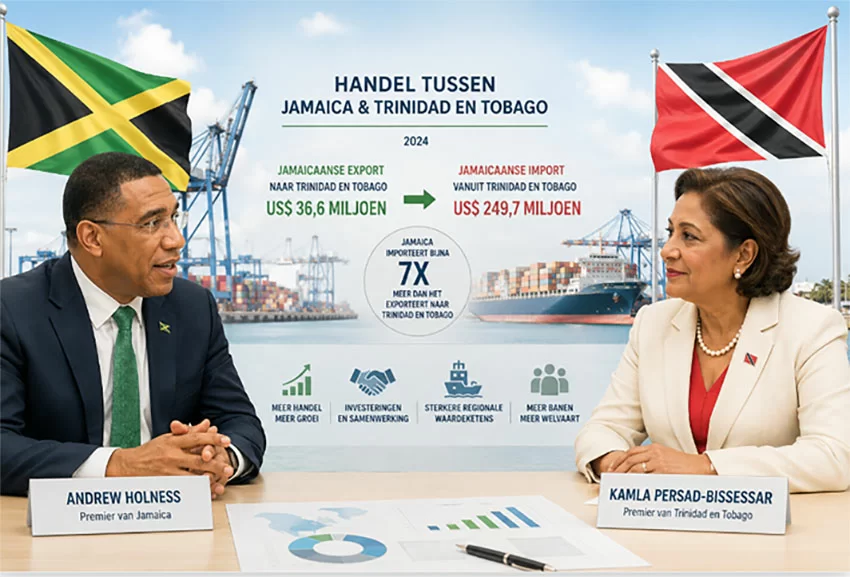
Trinidad en Jamaica willen onderlinge handel en investeringen opvoeren
Two of the Caribbean Community (Caricom)’s largest economies, Trinidad and Tobago and Jamaica, have announced plans to deepen bilateral economic cooperation and encourage greater cross-regional business activity, aligning with longstanding regional calls to boost intra-Caribbean trade.
Deborah Thomas-Felix, Trinidad and Tobago’s High Commissioner to Jamaica, has outlined a roadmap for closer ties centered on increasing targeted trade missions, attracting mutual investment, and facilitating direct connections between entrepreneurs from both nations. The push for collaboration builds on tangible progress in bilateral trade relations in recent years, after decades of recurring disputes centered on market access for Jamaican goods in Trinidad and Tobago. In 2022, the two countries implemented a streamlined dispute resolution mechanism designed to accelerate the handling of trade complaints, laying the groundwork for improved relations.
Despite this progress, official trade data for 2024 reveals a significant imbalance in bilateral goods exchange. Jamaica exported just US$36.6 million worth of goods to Trinidad and Tobago last year, while importing roughly US$249.7 million in Trinidadian and Tobagonian goods – meaning Jamaica’s imports from its neighbor are nearly seven times the value of its exports to the country.
Thomas-Felix argues that this imbalance is not an inherently negative issue, but rather a reflection of the two economies’ complementary structural strengths. Trinidad and Tobago has long held a robust competitive advantage in manufacturing and energy production, which has positioned it as a leading goods exporter across the Caribbean. Jamaica, by contrast, has built strong market positions in high-value sectors including tourism, financial services, professional services, and digital services.
The diplomat also noted that Jamaica has already made significant gains in expanding its presence in the Trinidadian and Tobagonian market, with official projections showing Jamaican exports to the country growing by roughly 170% between 2019 and 2025. To sustain this momentum, both sides have already organized a series of reciprocal trade missions in recent years. In May 2025, a delegation from the Trinidad and Tobago Manufacturers’ Association traveled to Jamaica to explore new distribution and investment opportunities, while Jamaican business groups have conducted reciprocal visits to Trinidad and Tobago.
This bilateral push for deeper integration fits into a broader ongoing policy debate across Caricom, which created the Caricom Single Market and Economy (CSME) decades ago to facilitate the free movement of goods, services, capital and labor across member states. Despite this framework, most Caricom economies remain heavily reliant on trade with countries outside the Caribbean region.
Trinidad and Tobago has long advocated for deeper regional integration, arguing that expanded intra-Caricom trade will give small and medium-sized enterprises from across the bloc access to a larger combined market. For Jamaica, expanding goods exports remains a core national economic priority: 2024 data shows Jamaica’s total goods imports reached US$7.29 billion, while total goods exports hit only US$1.91 billion, with Trinidad and Tobago accounting for 3.4% of Jamaica’s total goods imports last year.
Thomas-Felix emphasized that Caribbean nations should shift their focus away from fixating on bilateral trade deficits and surpluses, and instead prioritize collaborative efforts to strengthen the region’s collective economic position and open up larger markets for all domestic businesses. She stressed that complementary strengths across different sectors – from Jamaica’s world-class services to Trinidad and Tobago’s energy and manufacturing capacity – create unique opportunities for mutual growth.
The High Commissioner called for trade missions to move beyond symbolic visits and discussions, and work toward building long-term sustainable partnerships between entrepreneurs, investors, and private sector organizations across both countries. The ultimate goal of this cooperation is to grow the overall volume of economic activity generated within the Caribbean region. This remains a persistent challenge for Caricom: after decades of integration efforts, most of the bloc’s total trade still consists of imports from outside the region, even as member states work to expand domestic production, strengthen food security, and build out robust regional value chains.
-
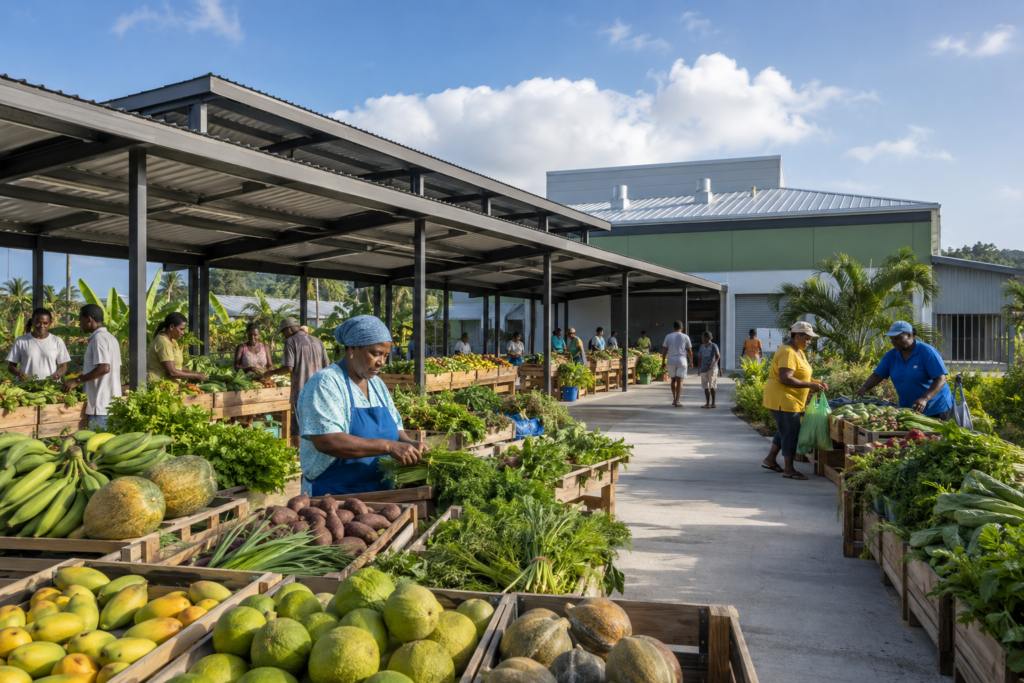
Antigua and Barbuda Government Plans Food Emporium and Two Abattoirs
The government of Antigua and Barbuda has formally announced a strategic infrastructure initiative aimed at strengthening the nation’s domestic food production network and reducing long-standing reliance on imported food products. At the core of this project are two key components: a centralized, modern food emporium designed to connect local farmers, processors, and vendors directly to consumers, and two purpose-built abattoirs that will be constructed to serve the country’s northern and southern agricultural regions.
According to government officials, the new facilities are intended to address multiple longstanding challenges facing the twin-island nation’s food sector. For years, small-scale livestock farmers have lacked access to regulated, sanitary slaughtering infrastructure, forcing many to either operate outside formal safety standards or pay exorbitant fees for private processing. The two new abattoirs will bring operations into compliance with international food safety guidelines, opening new opportunities for local producers to sell their products both domestically and potentially in regional export markets.
The centralized food emporium, meanwhile, will function as a one-stop hub for fresh, locally sourced produce, meat, and processed food goods. It will cut out middleman markup that has driven up food costs for consumers, while giving local producers a dedicated, high-traffic space to showcase their goods. Government planners note that the project aligns with the administration’s broader national food security agenda, which was accelerated after global supply chain disruptions during the COVID-19 pandemic exposed the vulnerability of the nation’s heavy dependence on imported food.
Pre-construction feasibility studies and site assessments are already underway, with government representatives indicating that construction on the facilities is expected to begin within the next 12 months. Funding for the project is being drawn from a combination of national development budgets and targeted regional agricultural development grants. Once completed, the initiative is projected to create dozens of full-time jobs in the agricultural, processing, and retail sectors, while lowering average food costs for households across Antigua and Barbuda.