作者: admin

  • Grand Resort VIP Prices Add Fuel to Ruta Maya Finish Line Fury

    Grand Resort VIP Prices Add Fuel to Ruta Maya Finish Line Fury

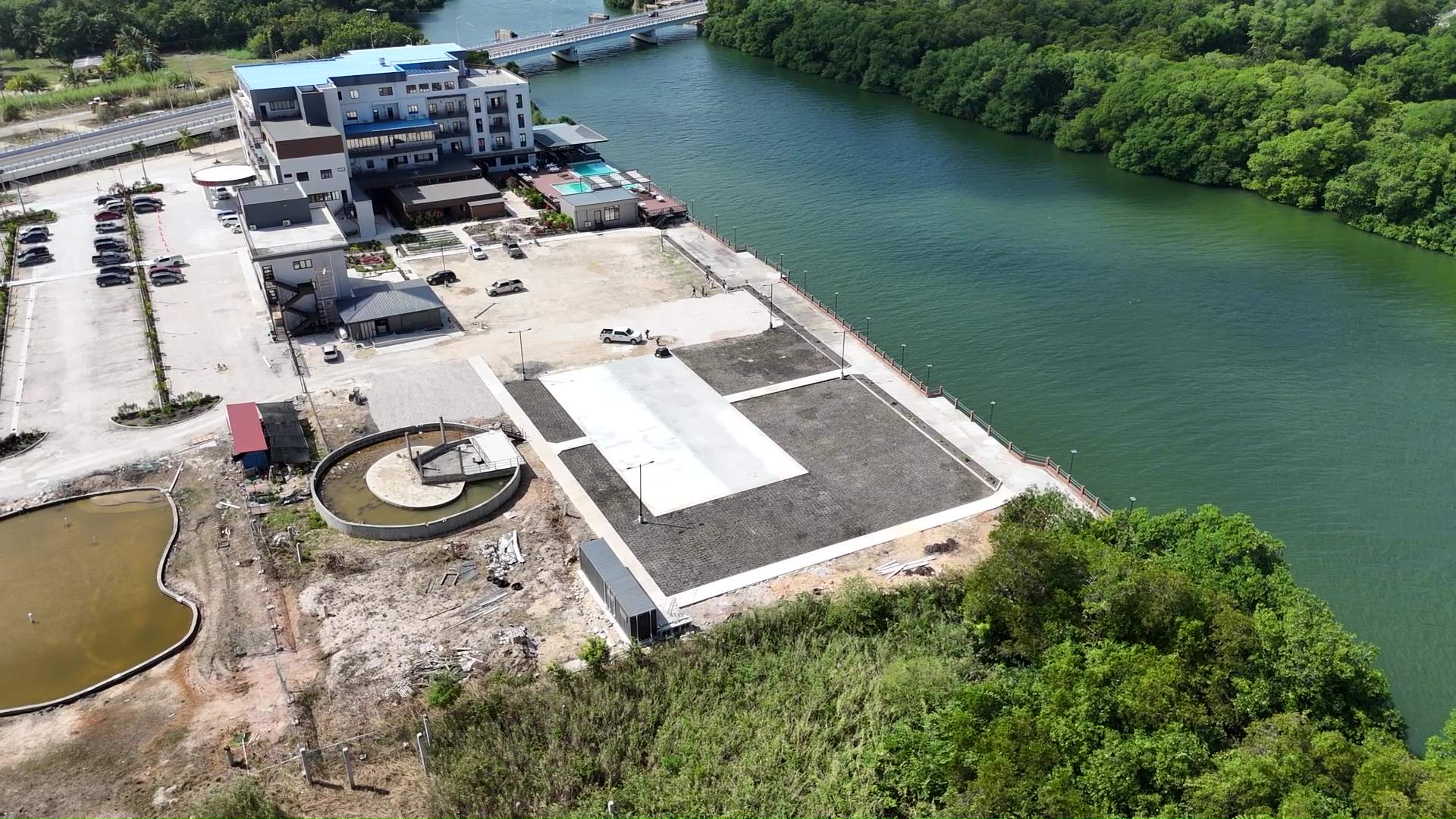
    The traditional celebration atmosphere surrounding the La Ruta Maya canoe race finale has been replaced by mounting controversy following a controversial decision to relocate the finish line. The Grand Resort and Residence now finds itself at the center of a heated debate involving paddlers, spectators, and organizers regarding commercialization, accessibility, and safety concerns.

    Event organizers recently announced the shift from the customary BelCan Bridge finish line to the resort property, triggering immediate backlash from participants and fans. The resort subsequently released pricing details showing a $75 VIP package and $600 tables seating seven people, though management emphasized these fees are fully redeemable for food and beverages.

    General Manager Kenneth Williams clarified the arrangement, explaining that the La Ruta Maya Committee will host the main event at the adjacent Haulover Square with a $10 admission fee for adults, while children under twelve enter free. Williams stated the resort initially hesitated due to capacity limitations and safety concerns about their deck area accommodating only approximately 400 people.

    Infrastructure authorities confirmed the Haulover Bridge will remain open throughout the event, with newly installed sidewalks providing pedestrian access and viewing opportunities. Chief Engineer Evondale Moody announced additional enhancements to riverbank areas to create safe viewing platforms for spectators.

    Despite these accommodations, the Belize Canoe Association has joined paddlers in opposing the changes. Vice President Elvin Penner expressed concerns that the move confirms suspicions about profit motives overshadowing tradition. Safety issues have also been raised regarding strong currents near the estuary where the new finish line position has been established.

    In a significant show of defiance, one paddler has organized a movement on social media encouraging teams to cross the official finish line at the resort property before continuing to the traditional BelCan Bridge location. The canoe association has publicly endorsed this symbolic protest, highlighting the deepening divide between event organizers and participants.

    The controversy continues to develop as race day approaches, with all parties awaiting to see how the situation will ultimately resolve amid growing tensions between commercial interests and sporting traditions.


  • Domninica’s geothermal plant on track to be commissioned by end of month, says PM Skerrit

    Domninica’s geothermal plant on track to be commissioned by end of month, says PM Skerrit

    The Commonwealth of Dominica is poised to achieve a significant renewable energy milestone with the imminent commissioning of its state-of-the-art geothermal power plant in Laudat. Prime Minister Roosevelt Skerrit confirmed during a recent press conference that the facility has successfully completed testing phases and is expected to become operational by the end of March.

    The 10-megawatt facility, representing a substantial investment of US$34.8 million, will establish Dominica as the first Caribbean Community (CARICOM) nation to harness geothermal energy at this scale. Situated in the volcanic-rich Roseau Valley, the plant utilizes the island’s natural geothermal resources to provide clean, reliable electricity to approximately 23,000 households.

    This groundbreaking project, developed through a public-private partnership under the Dominica Geothermal Development Company (DGDC), marks a strategic shift from fossil fuel dependency toward sustainable energy solutions. The plant’s commissioning aligns with the broader OECS Decade of Action for Sustainable Energy Development initiative, which aims to source at least 30% of the region’s electricity from renewables by 2035.

    As part of the OECS GEOBUILD Programme supported by the Caribbean Development Bank, Dominica joins four other member states in pioneering geothermal exploration and development across the Eastern Caribbean. This project not only enhances Dominica’s energy security but also establishes a replicable model for neighboring islands seeking to utilize their volcanic potential for sustainable development.

  • Sargassum Skimmers Deteriorating Early

    Sargassum Skimmers Deteriorating Early

    Belize’s coastal regions, particularly Ambergris Caye, are preparing for another challenging sargassum season as concerning questions emerge regarding the condition of the government’s seaweed harvesting equipment. Two specialized skimmers, acquired in 2025 as a cornerstone of the Ministry of Blue Economy’s strategy against the invasive seaweed, are already exhibiting significant signs of exterior deterioration despite minimal operational use.

    The harvesting machines, initially celebrated as a critical advancement when deployed during the peak of the 2025 sargassum influx, require extensive servicing ahead of the anticipated 2026 season. Minister of Blue Economy Andre Perez has assured the public that both units are undergoing preparation and maintenance operations. However, photographic evidence obtained by News Five reveals substantial weathering and structural wear on the equipment, raising questions about their durability and long-term viability.

    Minister Perez maintains that the harvesters will be fully operational and integrated with additional machinery provided by the national Sargassum Task Force. The deteriorating condition of these expensive assets within just one year highlights potential challenges in Belize’s ongoing battle against the environmental and economic threat posed by massive sargassum blooms affecting Caribbean coastlines.

    The early degradation of this specialized equipment underscores the harsh marine conditions that government assets must endure while addressing the recurring sargassum phenomenon that impacts tourism, fisheries, and local ecosystems across Belize’s precious coastal communities.

  • Caye Caulker Man Sues Over Illegal Detention

    Caye Caulker Man Sues Over Illegal Detention

    A legal battle has been initiated against Belizean authorities by Evan Hynes, a 29-year-old resident of Caye Caulker, who endured nearly four months of imprisonment under circumstances his legal team describes as fundamentally unlawful. The lawsuit names the Commissioner of Police and the Attorney General as defendants, centering on a detention that occurred during a State of Emergency declared for specific crime-prone zones—none of which included the island of Caye Caulker where Hynes resides.

    The incident began on June 25, 2024, when Hynes was apprehended by police on allegations of producing a video that allegedly promoted gang activity. Critics note the alleged incident predated the official declaration of the State of Emergency by approximately two weeks. Following his arrest, Hynes was formally charged, systematically denied bail, and remanded to the Belize Central Prison.

    He remained incarcerated for 91 days before legal intervention, spearheaded by his mother, prompted a review. In September 2024, an Emergency Powers Review Tribunal concluded that his detention was unjustified and recommended the immediate revocation of his detention order. Despite this recommendation, bureaucratic delays meant Hynes was not released until October 23, after finally being granted bail. The criminal case against him was ultimately dismissed on January 23, 2026.

    Hynes is now seeking substantial damages for emotional distress and significant loss of income during his unlawful imprisonment. This case echoes a precedent from 2025, where the Belizean government was ordered to pay over $300,000 in compensation to sixteen individuals wrongfully detained under a similar State of Emergency in July 2020. That ruling found clear violations of fundamental rights and prompted a swift, though unsuccessful, legislative response. The government attempted to pass the Thirteenth Amendment Bill, which sought to constitutionally empower authorities to declare high-crime zones and, critically, to retroactively validate past states of emergency. The bill ultimately failed to pass into law.

  • Invoice Controversy Clouds Senator Dennison’s Role

    Invoice Controversy Clouds Senator Dennison’s Role

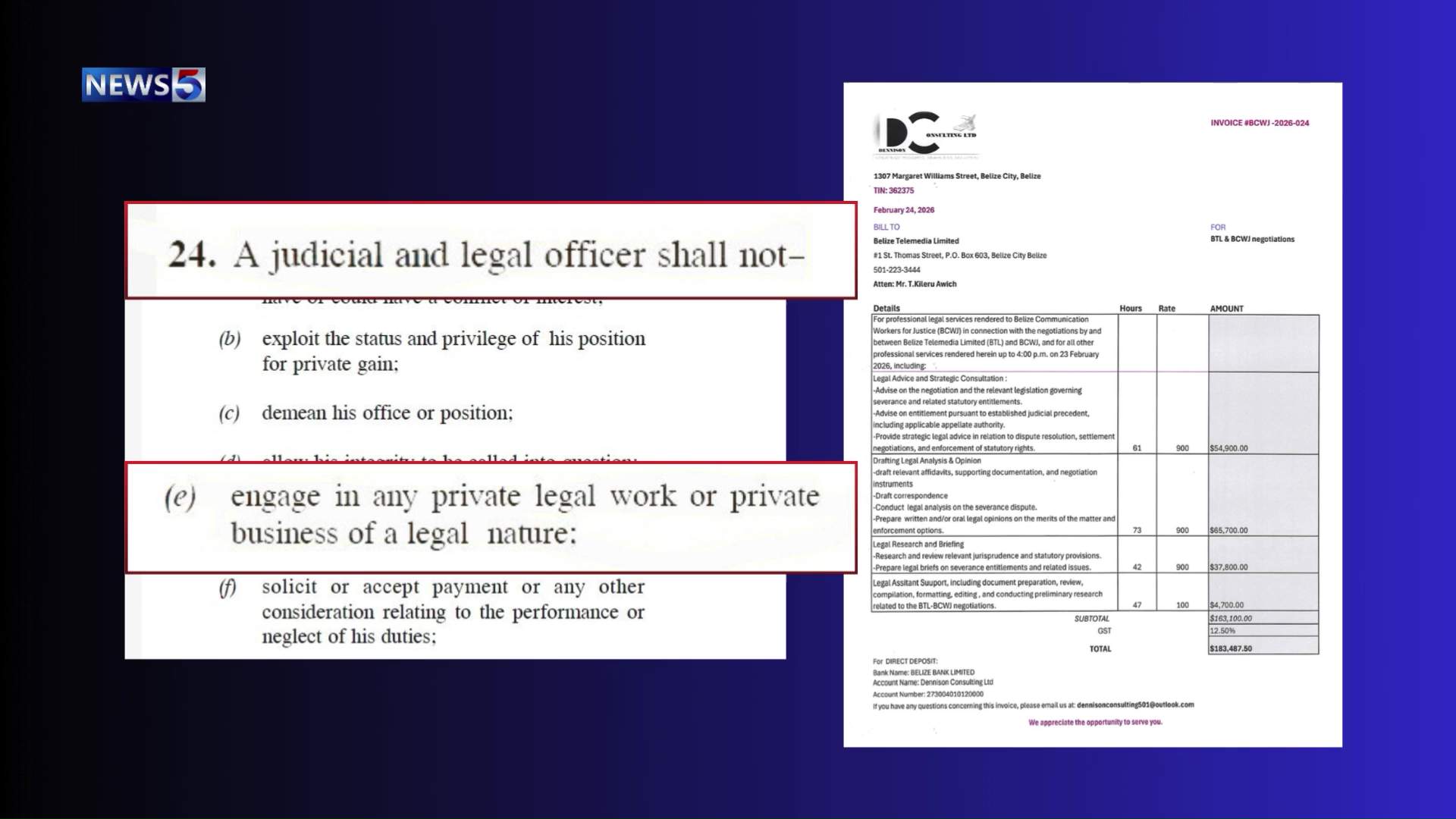
    BELIZE CITY – Senator Glenfield Dennison’s political career hangs in the balance as he confronts allegations of professional misconduct related to a substantial legal services invoice. The controversy centers on a reported $183,000 billing for legal work performed for the Belize Communication Workers for Justice during their dispute with telecommunications company BTL.

    According to Belize’s Judicial and Legal Services Regulations, Crown Counsels are expressly prohibited from engaging in private legal practice or accepting payments for services that could create conflicts of interest. The regulations mandate that judicial and legal officers must avoid any situation where their professional duties and private interests might intersect.

    Though Senator Dennison serves as a union representative and has publicly acted as legal advisor to the Communication Workers for Justice, the submission of a significant legal invoice suggests potential violation of these strict conduct rules. While his advisory role might initially have been perceived as part of his senatorial responsibilities, the financial transaction fundamentally alters this perception.

    The Judicial and Legal Services Commission holds authority to investigate potential breaches and recommend disciplinary measures. Senior officials including the Attorney General, Solicitor General, or Department Head may initiate proceedings that could result in consequences ranging from formal warnings to termination of Dennison’s Crown Counsel position.

    The central question remains whether the invoiced amount constitutes prohibited private legal practice. Should the Commission determine that regulations were violated, Senator Dennison faces potentially severe professional repercussions that could end his governmental career.

  • Belize Misses Championship, Earns Respect

    Belize Misses Championship, Earns Respect

    MANAGUA, NICARAGUA – March 4, 2026 – Belize’s Under-20 national football team concluded their 2026 Concacaf Qualifiers campaign with an extraordinary display of talent and determination, finishing in third place overall. Although the squad fell short of championship advancement, their performance throughout the tournament in Nicaragua has ignited nationwide celebration and optimism for the future of Belizean football.

    The young athletes demonstrated remarkable skill and sportsmanship throughout the competition, capturing the admiration of football enthusiasts across the nation. Their impressive showing has prompted calls from supporters and analysts to maintain the current squad structure, envisioning them as the future core of Belize’s Senior Men’s National Team.

    Sixteen-year-old standout performer Marlon Meza Junior reflected on the team’s journey: ‘The tournament presented significant challenges, but our collective effort was exceptional. We fought with complete dedication and left everything on the pitch.’

    Meza attributes his development to international experience gained through previous competitions and his current training at Mount Pleasant Academy in Jamaica. ‘The professional environment at the academy has substantially boosted my confidence and technical abilities,’ he noted.

    Describing key moments from the qualifiers, Meza detailed the team’s coordinated gameplay: ‘We executed practiced strategies effectively. My focus was creating opportunities within the box and connecting with supporting teammates.’ His account of a critical counter-attack goal revealed the squad’s instinctive determination: ‘In that moment, only one objective occupied my mind – scoring for my team.’

    Football commentators and fans alike are hailing the U-20 team’s tenacity and progression as foundational for Belize’s football development. Their performance has established new standards for future generations while demonstrating the potential for international success through sustained investment in youth athletics.

  • Pink Boutique: Bigger Store, Best Quality, Better You

    Pink Boutique: Bigger Store, Best Quality, Better You

    BELIZE CITY – In a significant development for Belize’s retail sector, prominent fashion retailer Pink Boutique has unveiled its newly expanded flagship location along the Philip Goldson Highway following an intensive two-month renovation period. The strategic expansion represents a substantial investment by the established brand to accommodate its rapidly growing customer base and evolving market demands.

    The revitalized retail space now offers an enhanced shopping environment characterized by increased floor space, improved lighting, and a comprehensive inventory featuring the latest trends in women’s and children’s apparel, footwear, and cosmetic products. Owner Shelly Perera celebrated the reopening with a special inaugural event featuring live piano music, complimentary refreshments, and store-wide promotional discounts.

    “Our primary objective remains delivering fashionable clothing options for women while expanding our offerings to include children’s wear and select menswear categories,” Perera stated during the opening ceremonies. The boutique chain currently maintains four physical locations across Belize, including establishments in San Ignacio, downtown Belize City, the Northern Highway, and San Pedro.

    Beyond physical expansion, Perera revealed ambitious plans for digital transformation and nationwide growth. “We intend to strengthen our online presence through social media platforms and are evaluating additional retail expansions in response to requests from various districts,” she confirmed.

    Customer response to the reopening has been overwhelmingly positive, with longstanding patrons expressing enthusiasm for the upgraded shopping experience. The boutique has committed to maintaining its elevated service standards and quality product offerings beyond the inaugural celebrations, ensuring consistent retail excellence throughout the year.

  • FLASH : The FAA extends the flight ban for Port-au-Prince and expands the no-fly zones

    FLASH : The FAA extends the flight ban for Port-au-Prince and expands the no-fly zones

    The United States Federal Aviation Administration (FAA) has prolonged its prohibition on commercial flights to Haiti through September 30, 2026, citing severe and persistent security threats. This extension solidifies Haiti’s status of aerial isolation, which has been in effect since November 2024.

    In a significant escalation of precautions, the FAA has broadened the restricted airspace beyond Port-au-Prince to include regions within the Central and Artibonite departments. This decision is driven by intelligence indicating gang factions are advancing northward from the capital, substantially elevating the risk of small arms fire targeting aircraft operating below 10,000 feet. The official advisory underscores the critical inability of Haitian security forces to safeguard airport approach paths and the perimeter of Toussaint Louverture International Airport.

    The aviation blockade is not an isolated U.S. policy. Key international allies, including France, the United Kingdom, and Canada, have issued stringent advisories urging avoidance of the capital’s airport and low-altitude flight operations. Compounding the isolation, the Dominican Republic has sustained the closure of its aerial border with Haiti, suspending all passenger and cargo flights until at least March 28, 2026.

    The genesis of this extensive ban traces back to a dramatic surge in violence commencing in late 2024, when three commercial aircraft—operated by Spirit Airlines, JetBlue, and American Airlines—were struck by gunfire on approach to Port-au-Prince. The crisis intensified in January 2026 when two ZED Airlines planes were similarly attacked, prompting the carrier to immediately cease all operations. This suspension marked the termination of the final scheduled international service to the Haitian capital.

    Despite efforts to mitigate risks, including the demolition of structures near the airport to eliminate cover for shooters, the threat landscape has deteriorated. Intelligence confirms that armed coalitions, such as ‘Viv Ansanm,’ now deploy advanced Barrett M-50 precision rifles, capable of accurately engaging targets at distances up to 4,000 meters. The FAA explicitly states that prevailing security conditions remain fundamentally ‘incompatible with the normal continuation of operations.’

    The protracted flight embargo is triggering severe economic and humanitarian repercussions. Logistical expenses have skyrocketed, air freight capacity has plummeted, and the ensuing economic strangulation is acutely suffocating Port-au-Prince, with dire consequences rippling across the entire nation.

  • Attorney General calls for economic approach to fighting crime

    Attorney General calls for economic approach to fighting crime

    SANTO DOMINGO – In a significant policy address, Attorney General Yeni Berenice Reynoso has advocated for a fundamental strategic shift in combating organized crime, proposing that law enforcement agencies analyze criminal operations through the framework of market economics rather than pursuing individual cases in isolation.

    Speaking at the First International Symposium on Criminal Investigation—a cornerstone event within the nation’s comprehensive Police Reform initiative—Reynoso articulated her vision before an audience including President Luis Abinader, Interior and Police Minister Faride Raful, and National Police Director Andrés Modesto Cruz Cruz.

    The Attorney General criticized the conventional investigative approach prevalent in many jurisdictions, where crimes are addressed singularly without examining the broader ecosystem they inhabit. She contended that this fragmented methodology persistently fails to dismantle criminal infrastructures effectively. Instead, Reynoso championed the concept of conducting holistic ‘criminal market analyses’ to develop more impactful and sustainable security outcomes.

    Elaborating on her thesis, Reynoso delineated how illicit activities operate within a sophisticated ‘criminal economy’ that mirrors the principles of its legal counterpart, particularly the fundamental law of supply and demand. Criminal enterprises, she explained, dynamically calibrate their operations according to market fluctuations: escalating production to meet rising demand, reducing prices in response to oversupply, and capitalizing on scarcity to inflate costs.

    Reynoso identified a critical vulnerability in contemporary security strategy: the widespread failure of investigative bodies to comprehend the functional mechanics of specific illicit markets. This analytical gap, she asserted, fundamentally undermines the efficacy of efforts to disrupt and permanently eradicate organized crime networks, necessitating a paradigm shift towards economic behavior analysis in criminal investigations.

  • Former T&T PM among 5 foreign lawyers in SVG’s election cases

    Former T&T PM among 5 foreign lawyers in SVG’s election cases

    In a significant political development, former Trinidad and Tobago Prime Minister Stuart Richard Young will be among five international attorneys called to the Bar in St. Vincent and the Grenadines this Thursday. The High Court hearing marks the commencement of legal proceedings challenging the eligibility of Prime Minister Godwin Friday and Foreign Minister Dwight Fitzgerald Bramble to hold parliamentary seats due to their Canadian citizenship status.

    Young, who served as Trinidad’s eighth prime minister for a brief period from March to April 2025 before his party’s electoral defeat, will represent members of the opposition Unity Labour Party (ULP). The plaintiffs contend that Friday and Bramble’s dual citizenship violates constitutional requirements for elected officials.

    The legal challenges involve two separate petitions. Agustus Carlos Williams contests Prime Minister Friday’s nomination in the Northern Grenadines constituency, alleging improper handling by returning officer Devon Ollivierre and Supervisor of Elections Dora James. Simultaneously, Luke Browne challenges Foreign Minister Bramble’s eligibility in East Kingstown, citing similar concerns regarding electoral officials’ conduct.

    Representing the government defendants are legal teams comprising both local and international counsel, including England-based Kate Quincy Temple-Mabe and Trinidadian attorneys Anand Ramlogan S.C., Vishal Siewsaran, and Ganesh Saroop. The Attorney General’s office is also named as a respondent in both cases, as standard procedure in constitutional matters.

    The controversy stems from pre-election assertions by the ULP that votes cast for Friday and Bramble would be invalid due to their foreign citizenship status. Both officials maintain their eligibility, arguing that St. Vincent’s Constitution contains distinct provisions permitting parliamentary service while holding Canadian citizenship.

    Historical context reveals Friday’s extensive parliamentary tenure since 2001, while Bramble is serving his second term after initial election in 2020. Electoral results show decisive victories for both officials despite the citizenship concerns, with Friday securing 2,185 votes against Williams’ 339 in Northern Grenadines, and Bramble defeating Browne by 1,001 votes in East Kingstown.

    The case management hearing will be presided over by Acting High Court Judge Justice Gertel Thom, setting the stage for what promises to be a landmark constitutional interpretation case with significant implications for future electoral eligibility standards in the Caribbean region.