作者: admin

  • Menke: Suriname vast in ‘mamio-politiek’, tijd voor overgangskabinet

    Menke: Suriname vast in ‘mamio-politiek’, tijd voor overgangskabinet

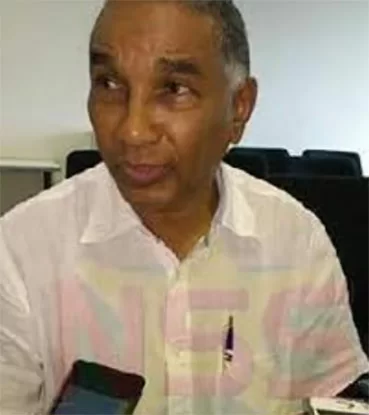
    Five decades after gaining independence, Suriname’s political system remains trapped in a self-perpetuating cycle of coalition governments lacking developmental vision, according to sociologist Jack Menke. His analysis reveals how the intricate entanglement of political power, state-owned enterprises, and economic interests has structurally hindered national progress.

    The country’s political democracy has sunk into what market vendors describe as a deep quagmire. As one vendor from Leiding 11A market noted: ‘The current NDP+ government consists of 7 governments: 6 coalition parties plus 1 opposition party. The previous VHP+ government consisted of 6 governments: 4 coalition parties and 2 opposition parties… It’s all the same pot with no difference between government and opposition who maintain each other.’ Since 1975, through 10 elections and 2 military regimes, no administration has successfully positioned Suriname on a sustainable development path.

    Unlike Western Europe where economic power historically served as the means to acquire state power, Suriname experienced the reverse phenomenon. Political figures utilized state power to accumulate wealth through three primary channels: Dutch development aid, revenues from foreign mining operations (particularly bauxite, gold, and oil), and state-owned enterprises. The number of state companies has exploded from approximately 90 in 1988 to over 150 mostly loss-making entities in 2026, with recent corruption scandals at SLM, Melkcentrale, SZF, and Grassalco representing merely the tip of the iceberg within a bankrupt political system.

    The concept of ‘mamio governments’—party-political coalitions without developmental vision—emerged even before independence in 1975. These arrangements created tension regarding the distribution of natural resources among party-political elites. An outdated short-term economic growth perspective managed through a cumbersome bureaucracy became the formula for political parties to win voter favor within a corrupted system of musical chairs.

    The redemocratization process during and after the military period led to unprecedented concentration of power within political parties and erosion of democratic institutions. This began with three legislative products that established political parties as dominant power factors in governance: the 1987 Constitution, the 1988 Law on Political Organizations, and the 2005 Law on Recall Rights. The 1987 Constitution formally granted political organizations exclusive rights to participate in elections, enabling major parties and their financial interest groups to gain increased control over state structures and profitable mineral resources.

    Public trust in democratic institutions has dramatically declined. In 2004, religious organizations enjoyed the highest trust at 41%, while the National Assembly (2%) and political parties (0.1%) scored lowest. A 2023 Americas Barometer study shows unchanged conditions. Meanwhile, the self-cleaning function of democracy through checks and balances within the three constitutional powers and other state institutions has reached critically low levels by 2026.

    Menke proposes a moral-technical transitional cabinet comprising independent experts as a potential solution to break this cycle of democratic decline. This administration would develop a political system with ‘development by design,’ requiring diplomatic tact to engage integrity-conscious elements from politics and society. With public goodwill typically lasting no more than one year, the current administration—now seated for 230 days—faces diminishing public support amid its first major crisis, making cooperation with transitional arrangements increasingly imperative.
  • Prime Minister Drew signs MOU establishing Political Consultation Mechanism with the Republic of Ghana

    Prime Minister Drew signs MOU establishing Political Consultation Mechanism with the Republic of Ghana

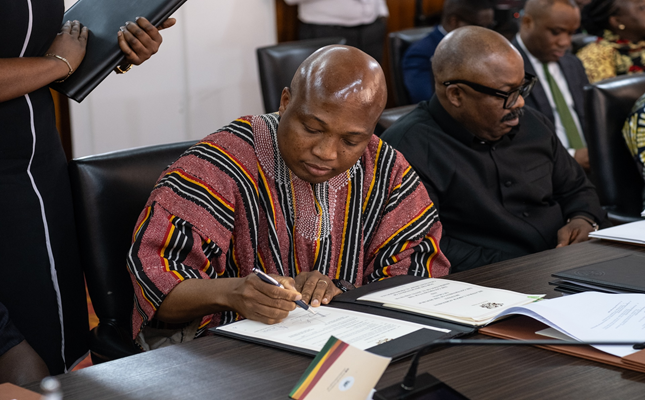
    ACCRA, GHANA – March 04, 2026 – In a significant diplomatic advancement, Prime Minister Dr. Terrance Drew of Saint Kitts and Nevis and Ghana’s Foreign Minister Honourable Samuel Okudzeto Ablakwa formalized a Memorandum of Understanding (MOU) to establish a structured Political Consultation Mechanism. The signing ceremony, held during Prime Minister Drew’s Official State Visit, marks a transformative step in bilateral relations between the two nations.

    The newly ratified agreement creates an institutional framework designed to facilitate regular high-level dialogues and enhance multilateral cooperation. This mechanism will serve as a foundational platform for sustained engagement across critical sectors including political affairs, economic development, commercial exchanges, scientific innovation, technical assistance, and cultural programs.

    Prime Minister Drew emphasized the strategic importance of this partnership, stating, “This mechanism ensures that our engagement with Ghana is structured, strategic, and sustained. It creates the platform for meaningful cooperation across multiple sectors that matter to our people.” The agreement reflects both nations’ commitment to mutual development objectives and strengthened diplomatic ties.

    The establishment of this consultation framework represents a new era of institutionalized cooperation, moving beyond ad-hoc diplomatic exchanges toward systematic collaboration. This development is particularly noteworthy as it demonstrates small island nations’ active pursuit of strategic international partnerships that can drive comprehensive national development.

  • Arajet unveils 14th aircraft honoring “Salto de Jimenoa”

    Arajet unveils 14th aircraft honoring “Salto de Jimenoa”

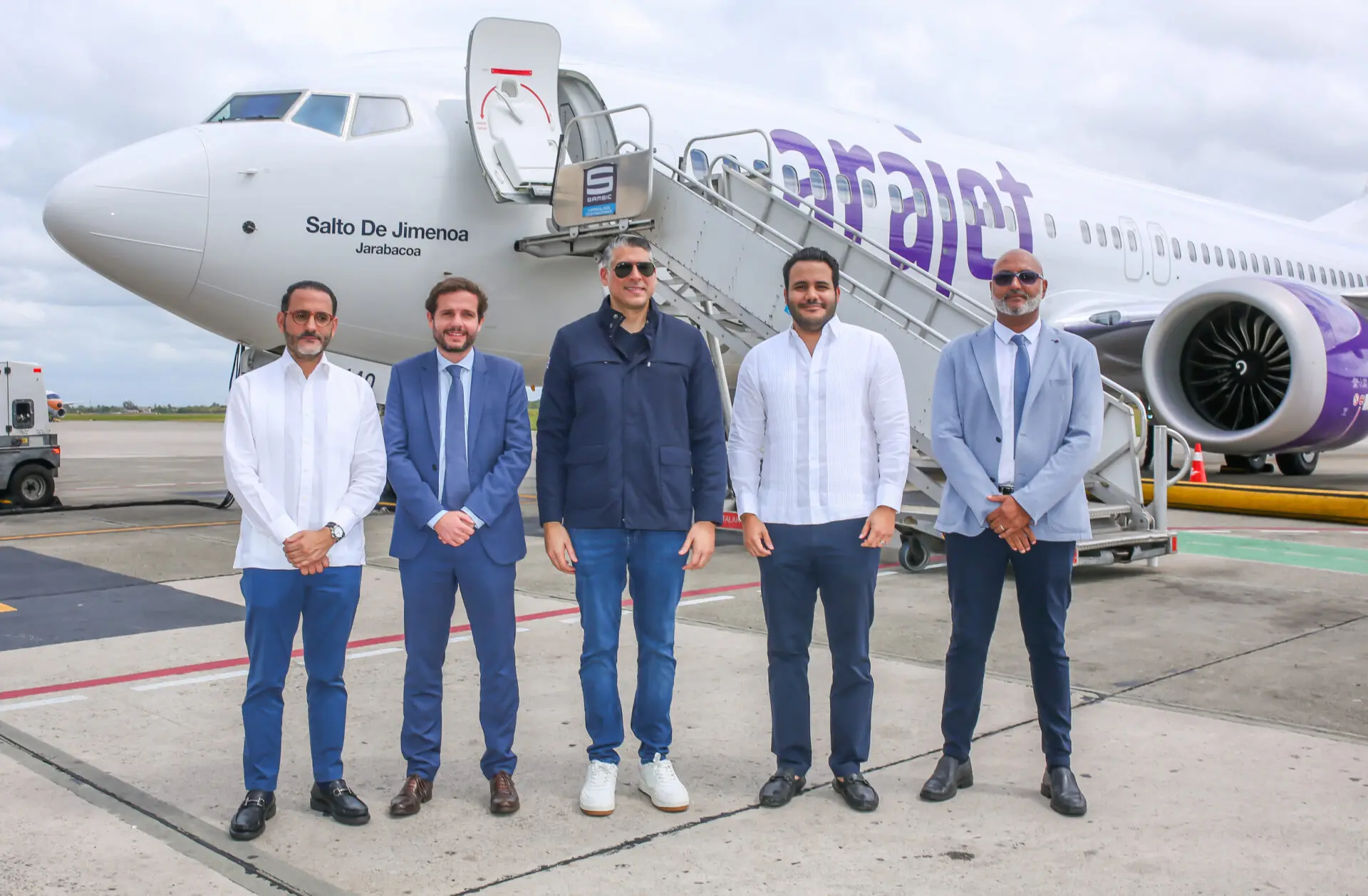
    Santo Domingo-based airline Arajet has welcomed its 14th Boeing 737 MAX 8 aircraft into service, marking another milestone in its ongoing expansion strategy. The newly arrived aircraft has been ceremoniously named “Salto de Jimenoa” after one of the Dominican Republic’s most spectacular waterfalls located in Jarabacoa, La Vega province. This naming convention reflects Arajet’s distinctive approach to branding its fleet after the nation’s protected ecological areas and natural reserves, effectively transforming each aircraft into an airborne ambassador for Dominican biodiversity.

    The Salto de Jimenoa waterfall, renowned for its breathtaking beauty and significance in Dominican ecotourism, represents the country’s growing adventure tourism sector. Arajet’s CEO and founder Víctor Pacheco Méndez emphasized that this acquisition significantly enhances the airline’s operational capabilities while reinforcing its commitment to sustainable aviation practices. “Each aircraft that bears the name of our natural heritage serves as a flying testament to our dedication to responsible tourism and environmental stewardship,” Pacheco stated.

    The expansion has garnered support from public officials, with La Vega Senator Rogelio Genao highlighting the vital collaboration between government and private enterprise in promoting sustainable tourism development. Since commencing operations in 2022, Arajet has substantially grown its route network from its Santo Domingo and Punta Cana hubs, simultaneously driving tourism growth, creating employment opportunities, and supporting environmental initiatives including reforestation and conservation programs.

    The airline’s strategic focus on operating a modern, fuel-efficient fleet aligns with its broader objectives of reducing carbon emissions and minimizing operational costs. This approach positions Arajet as both an economic contributor and an environmentally conscious player in the competitive Caribbean aviation market.

  • Prime Minister Drew engages University of Ghana leadership to advance education and research cooperation

    Prime Minister Drew engages University of Ghana leadership to advance education and research cooperation

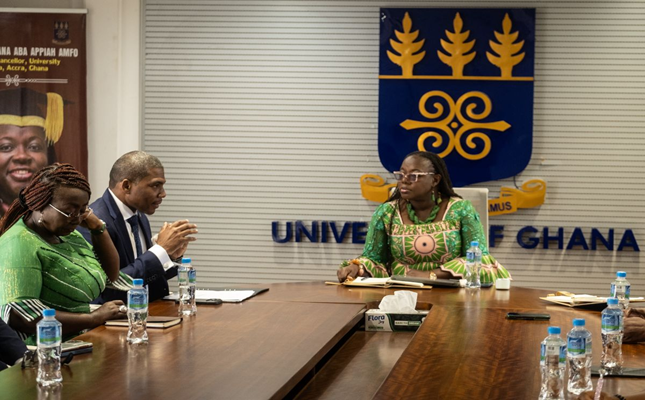
    ACCRA, GHANA – March 4, 2026 marked a significant advancement in cross-continental educational collaboration as Saint Kitts and Nevis Prime Minister Honourable Dr. Terrance Drew convened with University of Ghana leadership during his official state visit. The high-level discussion, attended by Vice-Chancellor Professor Nana Aba Appiah Amfo and Ghana’s Minister of Tourism, Culture and Creative Arts Honourable Abla Dzifa Gomashie, focused on implementing a recently signed Memorandum of Understanding between the Caribbean nation and the prestigious West African institution.

    Prime Minister Drew articulated education’s pivotal role in national development, emphasizing that “our greatest resource has always been our people—their intellect, creativity, and determination to build a better future.” The dialogue explored multifaceted cooperation in climate resilience, public health, agricultural innovation, digital transformation, and creative economy sectors. Notably, the partnership will facilitate academic exchanges, joint research initiatives, and cultural studies programs that acknowledge the profound historical connections between African and Caribbean civilizations.

    Professor Amfo characterized the University of Ghana as a vital conduit between Africa and its diaspora communities, committing to transform the agreement into actionable programs benefiting students and researchers from both regions. The establishment of a joint committee was proposed to oversee the transition from conceptual frameworks to practical implementation.

    The Prime Minister further highlighted ongoing regional negotiations to establish direct air connectivity between West Africa and the Caribbean, which would substantially enhance people-to-people exchanges, commercial activities, and cultural interflow. This educational partnership forms part of broader diplomatic efforts to strengthen ties between Saint Kitts and Nevis and the African continent, recognizing shared heritage while building forward-looking collaborations.

  • Canadian family seeks consular help after deadly accident in La Romana

    Canadian family seeks consular help after deadly accident in La Romana

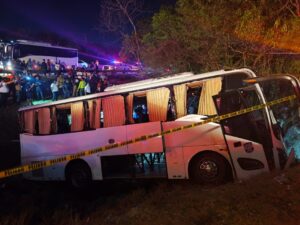
    A tragic traffic accident in the Dominican Republic has claimed the life of 67-year-old Canadian baker Colleen Fullerton and left her husband John with severe spinal injuries. The incident occurred Sunday at the notorious Cumayasa 10 curve along the Autovía del Este highway near Villa Hermosa in La Romana province.

    The couple’s daughter, Amanda Fullerton of Lockport, learned of her mother’s death through media reports after receiving a distressing call from her uncle, who was also aboard the vehicle during the collision. In a heartbreaking development, the family has been unable to obtain official information about John Fullerton’s medical condition, prompting Amanda to urgently appeal to Canadian consular officials for intervention and hospital representation.

    The Fullertons, who operate a mechanic’s workshop, now face additional uncertainty as John’s injuries may prevent him from returning to work. Their original travel plans to Cuba were altered following a Global Affairs Canada advisory warning citizens against non-essential travel to the island, leading them to choose the Dominican Republic instead.

    Tour operator Sunwing Vacations, which organized both the trip and bus transportation, has committed to covering all costs associated with repatriating Colleen’s remains to Canada and John’s extensive medical expenses. The family has retained legal counsel as they seek comprehensive answers regarding the accident’s cause and circumstances.

  • Column: Harde realiteit

    Column: Harde realiteit

    Amid growing social media debates about national football team selection policies, columnist Mireille Hoepel has articulated a robust defense of opinion journalism’s role in stimulating meaningful public discourse. Hoepel emphasizes that columns inherently represent personal perspectives designed to provoke critical thinking rather than universal truths.

    The controversy centers on whether locally-trained footballers should receive preferential selection over foreign-developed players. Hoepel questions the logic of social media commentators who advocate for local players based on presumed rather than demonstrated capabilities, noting that multiple professional coaches—from Gorré to Menzo, Winter, and currently Ten Cate—have consistently identified quality deficiencies in domestically-developed talent.

    Historical exceptions like Emilio Limon and Sergio Aroepa demonstrate that exceptional local players have always earned selection through proven merit rather than geographical origin. Hoepel argues that current selection debates often overlook crucial performance details that determine match outcomes, prioritizing sentimental local preferences over objective quality assessments.

    The columnist expresses concern that national pride might prevent constructive learning from international expertise, emphasizing that professional scouts evaluate players based on demonstrated abilities rather than assumptions. Hoepel concludes that while diverse opinions enrich democratic discussion, social media frequently devolves into unproductive criticism rather than substantive solution-oriented dialogue.

  • Jones: Strafrecht geen middel om critici het zwijgen op te leggen

    Jones: Strafrecht geen middel om critici het zwijgen op te leggen

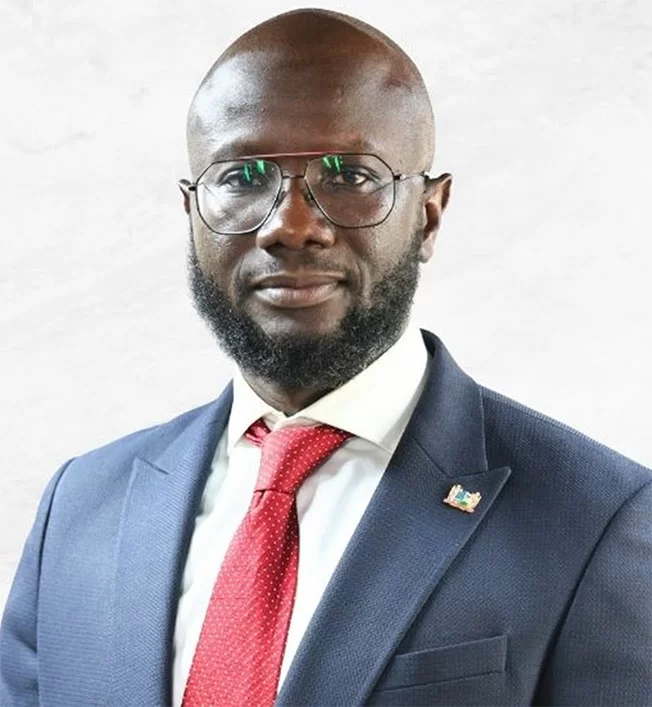
    A renewed debate over freedom of expression has emerged in Suriname following the recent arrests of Rishano Santokhi, son of former President Chan Santokhi, and citizen Stefanus Gerson. The detentions have drawn sharp criticism from National Assembly member Ebu Jones of the opposition NDP party, who argues that criminal law is being misused to suppress dissent.

    The arrests stem from provisions in Suriname’s Penal Code—commonly referred to as ‘gag laws’—that criminalize defamation, libel, and insult. Santokhi was detained following a November 2024 complaint by the Public Prosecutor’s Office regarding statements allegedly directed at Attorney General Garcia Paragsingh. Gerson faced similar charges for comments made on Facebook criticizing police authorities.

    Assemblyman Jones contends that the most troubling aspect of these arrests is the procedural pattern: citizens are frequently detained for their expressions, with substantive judicial review occurring days after incarceration or not at all. ‘Individuals are first arrested and sometimes held for several days before being released. Judicial review only comes afterward,’ Jones stated, emphasizing that independent assessment should precede any deprivation of liberty.

    Jones maintains that criminal law should serve as ‘ultimum remedium’—a last resort—rather than the primary instrument for addressing reputation-related conflicts. He advocates for civil litigation as the appropriate avenue for reputation disputes, allowing courts to determine whether unlawful expression occurred and whether damages are warranted.

    The opposition lawmaker warns that criminal provisions risk being weaponized as tools of intimidation. ‘Criminal law must not be used to silence people,’ he emphasized, noting that freedom of expression constitutes a fundamental pillar of constitutional democracy.

    Within the National Assembly, legislative proposals are underway to eliminate or revise the controversial gag laws. Jones, among the initiative’s sponsors, aims to strike a better balance between reputation protection and free speech rights. He simultaneously acknowledges that emerging technologies—including artificial intelligence and manipulated media—require new legal safeguards. ‘Mechanisms will need to be developed for these challenges,’ he conceded.

    The recent arrests have underscored the urgent need for clear boundaries regarding criminal law’s application to public discourse. As Jones concluded: ‘Freedom of expression is a foundation of the rule of law. Criminal law should not be the first instrument for words, but the last.’

  • Indomet warns of intensifying showers and rough seas

    Indomet warns of intensifying showers and rough seas

    Meteorological authorities in the Dominican Republic have issued significant weather advisories as a complex atmospheric system approaches the Caribbean nation. The Dominican Institute of Meteorology (Indomet) has identified a developing trough system that will interact with prevailing east-northeast winds and local topography to generate substantial precipitation across multiple regions.

    According to senior meteorologist Heriberto Fabián, the precipitation pattern will commence with scattered morning showers primarily affecting Atlantic coastal areas. Meteorological models indicate a substantial intensification of rainfall activity following midday, potentially evolving into sustained periods of moderate to heavy downpours. The forecast includes probable thunderstorm development and isolated wind gusts that may exceed seasonal averages.

    The extensive list of provinces anticipated to experience these conditions encompasses La Altagracia, Samaná, María Trinidad Sánchez, San Pedro de Macorís, Hato Mayor, Monte Plata, La Vega, San Cristóbal, Santiago, Puerto Plata, Espaillat, La Romana, El Seibo, and the Greater Santo Domingo metropolitan area.

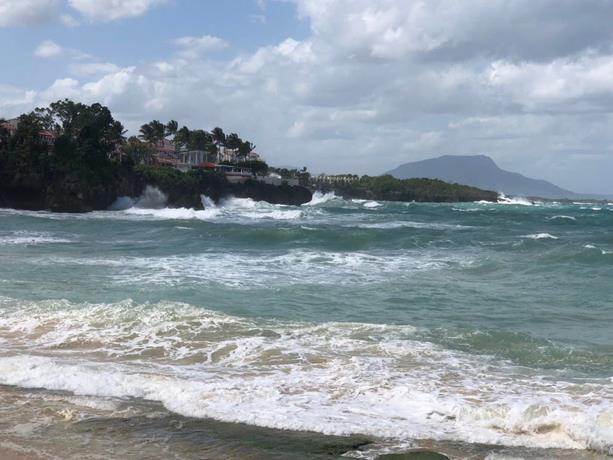
    Concurrent with terrestrial weather developments, maritime conditions are expected to deteriorate significantly along both Atlantic and Caribbean coastlines. Naval authorities have issued explicit recommendations for operators of small, fragile, and medium-sized vessels to remain in port due to anticipated strong winds and dangerously rough sea conditions. The public has been strongly urged to consult with official maritime agencies before initiating any water-based activities, with particular emphasis on recreational boaters and fishing enterprises.

  • Leisure : Did you know ? #4

    Leisure : Did you know ? #4

    The Kármán Line represents one of the most significant boundaries in aerospace exploration, serving as the internationally recognized threshold where Earth’s atmosphere ends and outer space begins. Established at precisely 100 kilometers (62 miles) above sea level, this demarcation carries both scientific and symbolic importance for the global space community.

    The line derives its name from pioneering Hungarian-American physicist Theodore von Kármán, who first calculated that at this altitude, atmospheric density becomes so negligible that conventional aircraft can no longer achieve flight through aerodynamic lift alone. Instead, vehicles must reach orbital velocity to maintain altitude, fundamentally changing the principles governing their movement.

    While the United States occasionally employs an 80-kilometer benchmark for certain military and recognition purposes—such as awarding astronaut wings—the 100-kilometer standard remains universally accepted by the Fédération Aéronautique Internationale and most international space agencies. This altitude marks the critical transition where atmospheric forces yield to orbital mechanics, and where the blue sky gives way to the black void of space.

    The recognition of this boundary represents more than mere technicality; it signifies humanity’s passage from aerial navigation to space exploration, framing our understanding of where our planetary environment ends and the cosmos begins. This definition has practical implications for space law, satellite operations, and our fundamental classification of what constitutes space travel.

    This information originates from educational materials developed by HaitiLibre’s quiz platform, which offers multilingual knowledge resources covering diverse topics from Haitian culture to global scientific concepts. The platform provides free access to interactive learning tools without registration requirements, featuring multiple difficulty levels in both French and English.

  • News : Zapping…

    News : Zapping…

    Haiti’s Provisional Electoral Council (CEP) has formally presented its operational budget to the national government, featuring a significant technological enhancement for the forthcoming electoral process. The Council plans to interconnect a minimum of ten departmental tabulation centers, establishing a robust network designed to deliver verified election outcomes within 72 hours after polling stations conclude voting.

    Concurrently, international aviation restrictions persist as the U.S. Federal Aviation Administration (FAA) extended its flight prohibition for specific Haitian airspace sectors. Issued on March 2, 2026, NOTAM KICZ A0024/26 maintains restrictions for U.S. airlines, certified pilots, and registered aircraft operating below 10,000 feet around Port-au-Prince until September 3rd, 2026, reflecting ongoing security concerns.

    Municipal authorities in Pétion-ville have implemented stringent transportation regulations, banning six-wheeled heavy goods vehicles from utilizing Black Mountain Road for material transport. Violations now carry substantial penalties of 250,000 gourdes per incident.

    In educational developments, the Ministry of National Education and Civil Protection Directorate have initiated a comprehensive workshop focused on school risk management. This program coincides with the official reactivation of the Education and Public Awareness Thematic Committee (CTESP), emphasizing student and staff protection through improved coordination and national priority alignment.

    The Ministry of Economy and Finance witnessed the formal installation of Jocelyn Jean as Director General of the Office of Third-Party Vehicle Insurance (OAVCT) on March 4th, 2026. Meanwhile, Haiti’s diplomatic corps extended congratulations to Ms. Raina Forbin upon her appointment as Minister of Foreign Affairs, with the Embassy in the Bahamas expressing strong support for her diplomatic mission.