作者: admin

  • New U.S. Ambassador Defends Controversial 2010 Remarks on Government Aid

    New U.S. Ambassador Defends Controversial 2010 Remarks on Government Aid

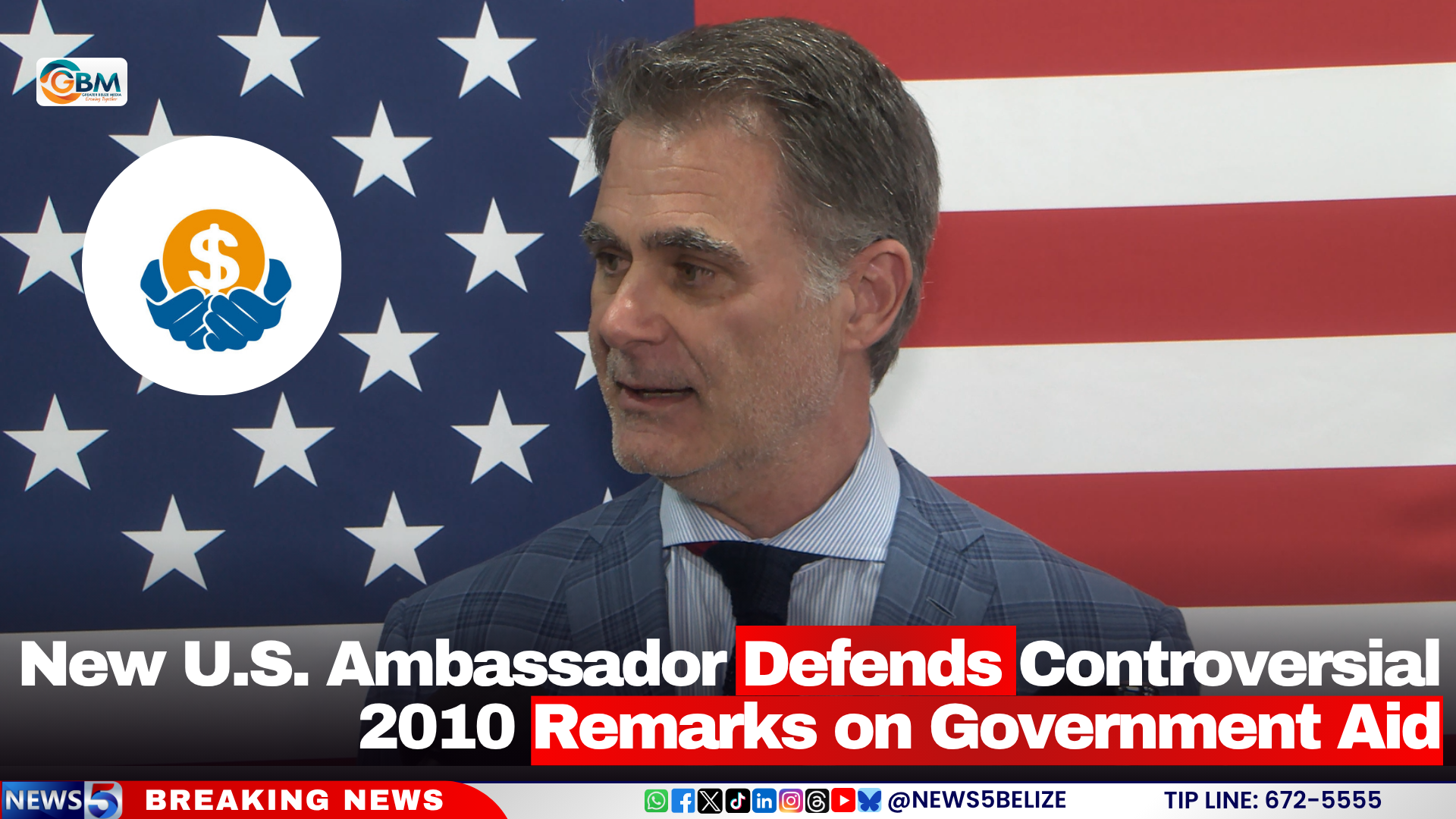
    More than 15 years after igniting public backlash with inflammatory remarks about government aid for low-income communities, newly confirmed U.S. Ambassador to Belize Andre Bauer is pushing back against criticism, arguing his words were taken out of context and misrepresented by political opponents.

    The controversy dates back to 2010, when Bauer, then serving as an elected official in the U.S., made a now-infamous comparison during a public town hall meeting focused on federal and state assistance programs. During the discussion, he equated ongoing cash aid for unhoused and low-income people to feeding stray animals, a comparison that immediately drew fierce condemnation from across the political spectrum and cemented a reputation for harsh rhetoric around social policy that has followed him to his new diplomatic post.

    In his first public comments addressing the issue since taking up his ambassadorial role, Bauer pushed to reframe the conversation around what he says was the core point of his 2010 remarks. He claims the commentary was never intended to demonize people living in poverty, but rather to critique the structure of long-standing government aid programs that he argues fail to address intergenerational cycles of economic dependency.

    “It was about a generational problem where we don’t lift people up,” Bauer explained in a recent interview. “If you just give someone enough dollars to get by but you show them no vehicle to lift themselves up, America is about opportunity. It’s about giving people a vehicle, pathway to better themselves and their family.”

    Adding personal context to his perspective on social assistance, Bauer also opened up about his own experience growing up in economic instability. He shared that he qualified for free school lunch programs throughout his childhood, raised in a broken home facing significant financial hardship. This personal experience, he says, has shaped his belief that aid programs should be structured to create upward mobility, not just temporary financial relief.

    Instead of direct, unconditional cash assistance, Bauer argues that government support should focus on wrapping around services that remove barriers to economic self-sufficiency. He points to three key investment areas: affordable healthcare, reliable transportation, and accessible childcare, all of which he says remove common obstacles that prevent low-income people from accessing stable employment or continuing education to boost their long-term earning potential.

    At the core of his policy stance is a consistent belief that government should prioritize expanding access to opportunity and creating onramps for economic advancement, rather than enabling permanent reliance on public assistance. As he settles into his role as the top U.S. diplomatic representative to Belize, this framing makes clear his approach to development and aid policy will likely focus on sustainable, self-directed economic progress for recipient communities.

  • Coach Penny: Tridents still in good form

    Coach Penny: Tridents still in good form

    Amid a turbulent three-match losing streak that has left the franchise at the foot of the 2024 Republic Bank Caribbean Premier League (CPL) table, Barbados Tridents head coach Trevor Penney has maintained unshakable optimism that his side can still secure a spot in the tournament’s knockout stage.

    After opening their 2024 campaign with back-to-back victories that gave the side an early promising start, the Tridents have dropped three consecutive matches, leaving them with four points from five outings and sitting last among the seven competing teams. Speaking exclusively to Barbados TODAY at a welcome reception hosted by the team’s official franchise partner, Guardian Life of The Caribbean Limited, Penney emphasized that team morale remains high even after a contentious late defeat to the St Kitts-Nevis Patriots in Basseterre on Tuesday night.

    “We posted a competitive total that I truly believed would be enough to win the contest. Of course, some controversial calls unfolded during that match, but at the end of the day, we failed to deliver the level of bowling performance we know we are capable of. Even with everything that happened out there, we should have closed out that win,” Penney explained.

    Despite the recent run of poor results, the head coach stressed that the side’s early two wins give them a solid foundation to build from as they return to home soil for their upcoming fixtures. The Tridents’ home leg of the tournament kicks off this Saturday at Bridgetown’s iconic Kensington Oval, and Penney says the entire squad is laser-focused on securing critical wins in front of their home crowd.

    “One of the core principles I instill in this team is that results, whether good or bad, shouldn’t shake our focus. We understand that cricket is a game of wins and losses, and I have always held the belief that tournament success is determined by how you finish the competition, not how you start it. We’ve hit a few small bumps in the road recently, but we still have two wins under our belt heading into the home stretch, and that’s something I’m really pleased with,” Penney said.

    Beyond his own team’s performance, Penney also praised the overall quality of this year’s CPL competition, highlighting the high number of tightly contested, down-to-the-wire matches that have entertained fans across the Caribbean. “With seven teams in the mix this year, there are a few small gaps in the overall depth, which makes it a slightly different setup than previous editions. That said, the quality of cricket we’ve seen has been really outstanding. This is one of the most competitive CPL seasons I’ve seen, and as anyone watching can see, we’ve had no shortage of close, thrilling finishes,” he added.

    Looking ahead to Saturday’s opening home match against defending champions Trinbago Knight Riders, Penney pushed back on calls for the Tridents to make sweeping, wholesale changes to their lineup and game plan in search of a much-needed win. The coach argues that the side is already playing strong, competitive cricket, and only small adjustments are needed to turn their current form around.

    “We are so much closer to putting together consistent winning performances than the results sheet shows. This group is playing some really good cricket, and I truly believe our best performances are still ahead of us. We don’t need to tear everything up and start over; we just need to make a few small tweaks and execute our skills a little more consistently under pressure,” Penney noted.

    Penney closed by issuing a public call to Barbadian cricket fans to turn out in force at Kensington Oval this weekend, framing the home crowd as a critical 12th man that can push the Tridents over the line. “I know how passionate Barbadian fans are, and I have no doubt they will come out to support us. When we had that great tournament run a few years back, they packed the Oval every match and lifted the team when we needed it most. Having that kind of home support is just like having an extra player on the field for us, and we can’t wait to feel that energy on Saturday,” he said.

  • Afobakaweg na rehabilitatie binnen vijf dagen weer open

    Afobakaweg na rehabilitatie binnen vijf dagen weer open

    After weeks of construction work to address critical structural damage, the full rehabilitation of the Afobaka roadway near Paranam has been finalized, but the key thoroughfare will remain closed to all vehicle and pedestrian traffic for at least several more days, Suriname’s Roads Authority announced this week.

    According to the official statement released on September 4, the infrastructure agency projects that the vital regional traffic connection will reopen to public use no later than five days from the announcement, and urged travelers to plan alternate routes and respect the ongoing closure order through this period.

    The comprehensive rehabilitation project was launched after large sections of the road’s asphalt surface developed dangerous deformations and sinkages. Roads Authority officials noted that the structural damage was partially caused by years of sustained heavy traffic loads that far exceeded the road’s original design capacity, gradually wearing down the pavement and subbase.

    Unlike traditional road reconstruction that removes and discards all existing materials, the project used an innovative upcycling approach to rebuild the roadway. This method reprocessed and reused nearly all of the existing road material to reinforce the overall road structure, cutting down on construction waste and extending the new roadway’s projected service life significantly.

    Officials emphasized that the overhaul was not only intended to improve the smoothness and drivability of the road. The project also aims to boost overall traffic safety for all users and strengthen consistent access to communities and commercial hubs across the region.

    Even though all physical construction work has been wrapped up, the Roads Authority stressed that the route remains unsafe for public use ahead of its official opening. The agency issued a clear warning to all road users: comply with posted traffic restrictions and on-site guidance from construction personnel, and do not enter the Afobakaweg until it has been formally cleared for public access.

  • Nine injured in Millennium Highway collision

    Nine injured in Millennium Highway collision

    A collision between two passenger vehicles on Saint Lucia’s Millennium Highway on Friday afternoon left nine people with injuries, prompting a rapid emergency response that saw all casualties transported to local medical facilities for ongoing care.

    According to a statement from Sherise John, a representative of the Saint Lucia Fire Service, first responder teams were dispatched to the accident site shortly after 1:50 p.m. once the incident was reported to local authorities.

    Rescue teams faced an unexpected complication when they arrived: the single occupant of the first vehicle was trapped inside the wreckage following the impact. First responders had to carry out a controlled extrication operation to remove the driver from the damaged vehicle before medical assessment could begin. Once freed, medics confirmed the driver had suffered only superficial cuts and scrapes across his lower legs and feet, with no life-threatening damage detected.

    The second vehicle involved in the crash was carrying a total of eight people, all of whom were able to exit the vehicle on their own following the collision. All eight members of this group walked away with mild, minor injuries to different parts of their bodies, with no critical harm reported among the group.

    Emergency medical personnel administered initial first aid and triage to all nine injured people directly at the crash site before arranging coordinated transport to a nearby medical center. The decision to move all casualties to a formal facility was made to allow for more comprehensive evaluations and rule out any undetected internal injuries that may have resulted from the collision. As of the initial statement, no updates have been released regarding the cause of the crash or the current condition of the injured individuals following their admission to the medical facility.

  • ‘Society Has Failed Persons With Disabilities’, But Belize Moves to Change That

    ‘Society Has Failed Persons With Disabilities’, But Belize Moves to Change That

    On September 4, 2026, Belize took a landmark step toward advancing disability rights with the official launch of the new National Commission for Persons with Disabilities, an initiative designed to turn the legal framework of the 2024 Disabilities Act into tangible, everyday change for disabled communities across the country.

    Hosted by the Ministry of Human Development, Family Support and Gender Affairs under the unifying theme “Together Towards Inclusion,” the launch event drew a diverse cross-section of stakeholders: disabled people themselves, senior government leaders, civil society organization representatives, and delegates from key national institutions. The establishment of the commission marks the start of a critical new implementation phase for the 2024 Disabilities Act, which laid the legal groundwork for disability rights but lacked a coordinated body to drive cross-sector action.

    The commission’s core mandate centers on pushing for equal rights and access for disabled people across five critical life domains: education, employment, healthcare, public space accessibility, and protection against systemic discrimination. Immediately following its official unveiling, the newly appointed commissioners convened their first working session to review the text of the 2024 Disabilities Act, formalize the body’s internal terms of reference, and open discussions on short and long-term strategic priorities. During the launch ceremony, all commissioners received their formal Instruments of Appointment, officially entrusting them with their responsibilities under the law.

    Minister of Human Development Thea Garcia-Ramirez framed the commission as one of the most significant milestones in Belize’s journey to uphold disability rights. She emphasized that while the 2024 Act established a clear legal framework for protecting disabled people’s rights, meaningful change can only come through coordinated, collective action across all sectors of Belizean society. Without dedicated implementation and coordination, she noted, legal protections remain abstract principles rather than lived realities for disabled Belizeans.

    Special Envoy for the Development of Families and Children Rossana Briceño, who opened the event with a powerful reminder that disability impacts not just individuals but entire families and the nation as a whole, called out the systemic failures that have long excluded disabled Belizean. “When persons with disabilities are excluded, the problem is not that they have failed to fit into society, the problem is that society has failed to remove the barriers that prevent them from participating fully,” Briceño said, challenging the common misconception that frames exclusion as a failure of disabled people rather than a failure of community and policy.

    For disabled advocates on the ground, the launch represents a long-awaited shift toward tangible inclusion. Alison Fisher, a young blind Belizean activist, shared her vision for the commission’s work: moving beyond formal legal recognition to build a country where inclusion is experienced, not just written into policy. “Yes, I am blind, but blindness is only one part of who I am,” Fisher said. “I hope that this commission will help create a Belize where every child and young person with disability can confidently say I belong, I have a voice, I have opportunities, and I can achieve.”

    Moving forward, the commission will serve as a central coordinating body for cross-government and cross-sector efforts to embed inclusion in all areas of Belizean public life, from primary schools and private workplaces to local communities and national public services.

  • 50-Plus Pageant hits the stage this weekend

    50-Plus Pageant hits the stage this weekend

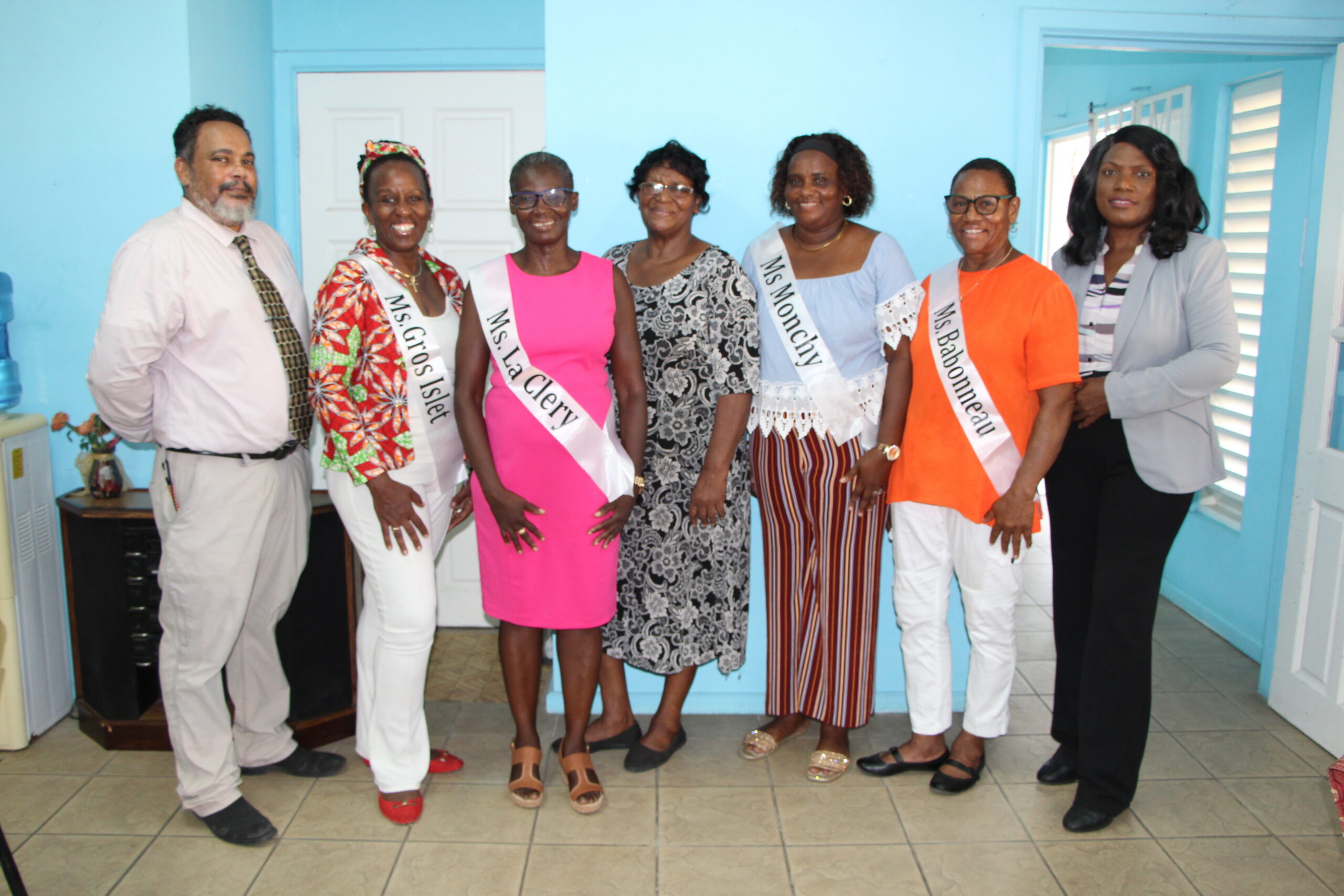
    This Sunday, September 6, a groundbreaking event centered on celebrating the talents and value of adults over 50 will take place at the National Cultural Centre in Saint Lucia: the first-ever Helpage 50 Plus Pageant. With five contestants set to take the stage, the pageant was created to shine a spotlight on three core themes: untapped older adult talent, collective empowerment, and the growing movement for healthy, active ageing.

    Backed by the country’s Department of Equity, Social Justice, Gender and Older Persons, the event aligns directly with the government department’s core mission: to expand opportunities for older Saint Lucians to remain active, visible, and engaged members of society as they age. In the lead-up to the pageant, Permanent Secretary Esther Rigobert held a meeting with all five contestants at HelpAge Saint Lucia’s headquarters in La Clery, where final preparations for the event are underway.

    Rigobert emphasized that cross-sector collaboration with established community organizations already serving older populations is the most effective strategy to expand empowerment opportunities for this demographic. “We are delighted to be part of this effort and to collaborate with private stakeholders who are already doing tremendous work,” she noted during the meeting. “They are engaging older persons, addressing their needs, providing opportunities to develop new skills and helping them feel more empowered, while reinforcing the message that they can continue to make valuable contributions to society.”

    Speaking directly to the contestants, Rigobert encouraged each participant to step into the spotlight with confidence, urging them to make the most of the unique platform. “I want to encourage all participants to dress up, show up and give their best, whether through their talent presentations or oratory skills. Put your best foot forward and show Saint Lucia what you are capable of achieving,” she said.

    Beyond being a one-day performance event, the pageant is designed to redefine public perceptions of ageing. It gives participants a space to showcase their creativity, confidence, diverse skills, and ongoing contributions to Saint Lucia’s families, local communities, and national life. Robert Huggins, Director of the Division of Older Persons, explained that events like this pageant directly challenge harmful stereotypes about what older adults can achieve, by centering their abilities rather than their age.

    “The whole idea is to create as many opportunities as possible for older persons to showcase their talents, skills and abilities,” Huggins said.

    Host organization HelpAge Saint Lucia has a long-standing track record of centering the welfare and empowerment of older adults across the country. Its core programming covers policy advocacy, targeted social inclusion initiatives, skills training workshops, and expanded opportunities for older adults to participate meaningfully in community life. This weekend’s pageant marks one of the organization’s most visible public efforts to shift cultural narratives around ageing in Saint Lucia.

  • PSU: ‘Hit Pause on Revenue Authority Bill’, GOB Responds

    PSU: ‘Hit Pause on Revenue Authority Bill’, GOB Responds

    A simmering policy dispute between Belize’s Public Service Union (PSU) and the national government has reached a new turning point, as the administration has turned aside nearly all of the union’s core demands tied to the controversial 2026 Revenue Authority Bill, making only limited concessions to address labor concerns. The conflict, which has unfolded over the past month, centers on the proposed restructuring of Belize’s tax administration system into an independent revenue authority, a change the government frames as a critical modernization effort, but one the PSU argues leaves current tax workers without adequate protections for their employment, retirement and labor rights.

    Last month, the PSU formally called on the government to hit a pause on the legislative progress of the bill, demanding 16 substantive amendments to the legislation and answers to 22 outstanding questions before any parliamentary movement. The union’s core sticking point was a demand for a legally binding guarantee that all transitioning tax officers would retain employment under terms no less favorable than their current public service positions. That request was among the majority of demands rejected by the government in its detailed, point-by-point response dated August 31, released publicly this week.

    Financial Secretary Joseph Waight, who authored the response, laid out the government’s vision for the new body: the Belize Revenue Authority will operate under a fully restructured organizational model, with updated job descriptions and an independent compensation framework designed to compete for top talent in the field. Unlike the existing public service system, Waight explained, current posts will not automatically transfer over to the new authority. Instead, all sitting tax officers will be required to participate in a new recruitment process, although the government has committed that current staff will receive first preference for open roles.

    Waight emphasized that the core goal of the transition is to build a more effective revenue body that can attract and hold skilled professional workers. To meet that goal, he argued, the authority’s compensation and benefits structure must be competitive and, on the whole, more attractive than the terms offered through the traditional public service system.

    Beyond the employment guarantee, the government also declined to meet the union’s demands for a mandated pension fund and fixed implementation timeline, noting that actuarial assessments required to structure the retirement system are still ongoing. The administration also rejected the push to formally write a collective bargaining mandate into the new legislation, pointing out that this right is already protected under existing national labor law, regardless of explicit inclusion in the bill.

    For tax officers who are not successful in securing a role at the new authority, the government has committed that they will not be left without employment. These workers will remain part of the public service, and will be placed in roles commensurate with their current positions — a wording the government has agreed to formally define in regulation, one of the few small compromises made to the union.

    Waight did concede on two key points to ease the PSU’s concerns. The government has agreed to add an explicit provision to the bill that protects the accrued pension rights of all current officers, a critical win for workers nearing retirement. Additionally, the administration will formally require that the Auditor General’s annual oversight report be submitted alongside the revenue authority’s own annual report to the National Assembly, strengthening legislative transparency.

    In a separate press statement released September 4, the Ministry of Finance pushed back against criticism that the reform is nothing more than a superficial rebranding of the existing tax system. The ministry reiterated that the restructuring is a deliberate effort to modernize Belize’s tax administration, improve efficiency, and bring the country’s revenue collection systems in line with international best practices. Officials also emphasized that the new authority will remain fully subject to the national Constitution and all existing independent oversight mechanisms, addressing concerns that the body would operate outside of standard government accountability frameworks.

  • Fear of the ‘Other’: Reflections on third-country nationals in Saint Lucia

    Fear of the ‘Other’: Reflections on third-country nationals in Saint Lucia

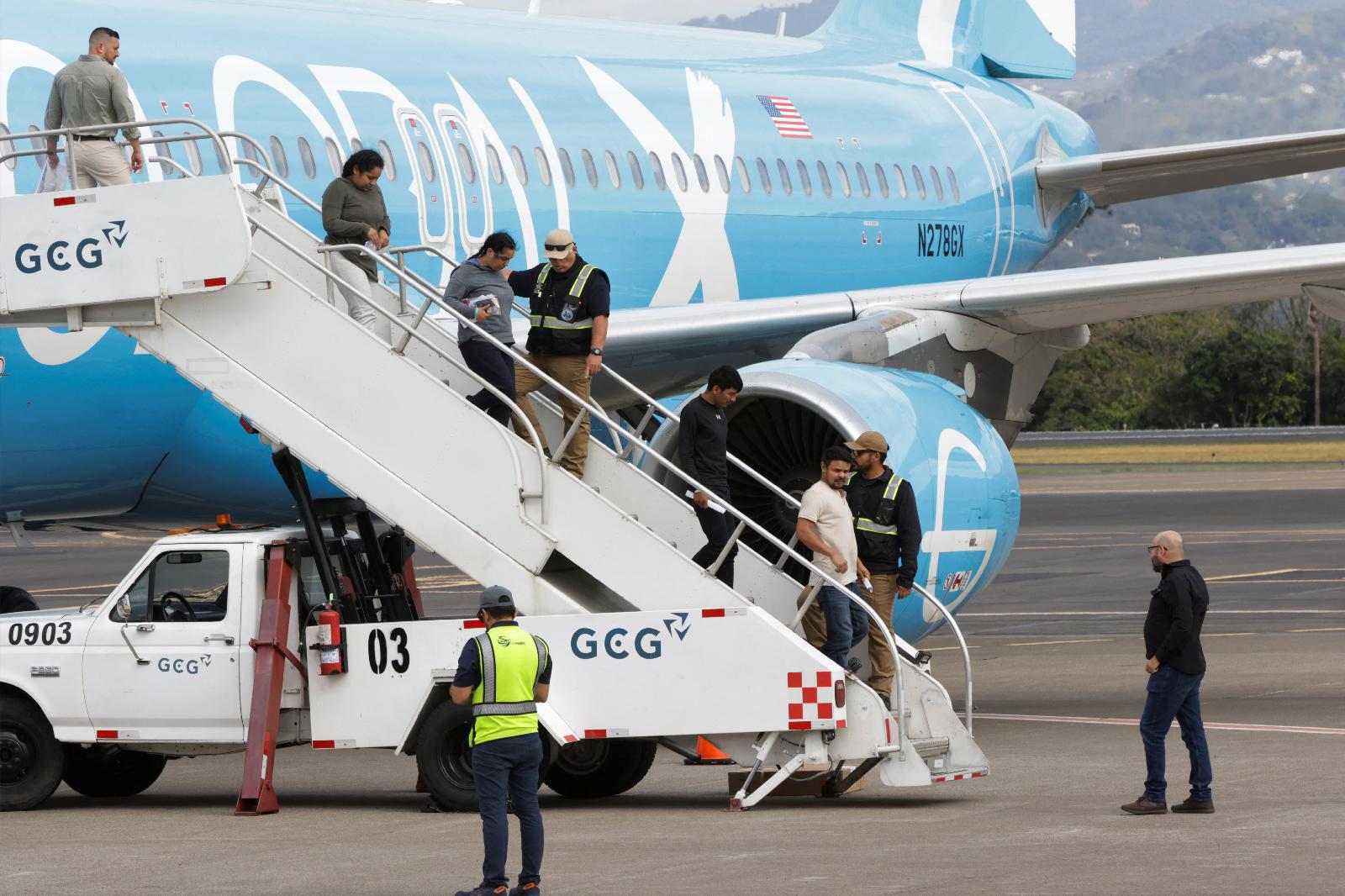
    In recent days, Saint Lucia has been roiled by widespread public debate following Foreign Minister Alva Baptiste’s formal announcement that the island nation will accept third-country nationals deported from the United States. Much of the public discourse has centered on fierce opposition to the government’s decision, with critics arguing that Saint Lucia has caved to pressure from Washington, failed to release sufficient justifying information for the policy, and submitted to coercive demands from the U.S. government. What this heated public conversation lacks, however, is a nuanced, thoughtful examination of the complex web of issues surrounding the deportation agreement – the policy is far from a black-and-white issue that can be reduced to simple for-or-against stances.

    One of the most pressing and legitimate public concerns centers on resource allocation: will Saint Lucia be forced to cover all costs related to supporting deportees with its own public funds, or will the U.S. provide adequate financial backing during their stay in the country? Polling of public opinion suggests broad support for the program would likely be possible if full U.S. funding is guaranteed, while the proposal garners almost no backing when the public is asked to shoulder the cost. To address these valid concerns about how taxpayer money will be used – if at all – the Saint Lucian government must proactively release detailed information to the public. Key transparency measures include, but are not limited to: full intergovernmental disclosure of each deportee’s background; acceptance only of individuals with no criminal history beyond minor immigration violations or unresolved asylum claims; ongoing parliamentary oversight with regular public reporting; and a binding commitment that the U.S. will provide a full financial package to cover deportees’ transition into Saint Lucian society.

    Anti-immigration, isolationist and nationalist sentiment is not limited to far-right political parties; it also resonates with many ordinary Saint Lucians who worry that supporting deportees will come at the expense of domestic social support for citizens. A common refrain echoes across public discourse: “How can outsiders receive government support when I, a citizen, struggle to get the help I need?” Even when this fear does not align with factual reality, perception shapes political outcomes, and government officials must acknowledge this widespread anxiety and work to clarify what the agreement actually entails – and what it does not.

    More troubling, however, is the growing narrative framing all deportees from third countries as violent, dangerous criminals who will drive up Saint Lucia’s already high crime rate, positioning them as an existential threat to public safety. While the government’s lack of transparent information about incoming deportees has undeniably fueled this anxiety, it raises a deeper, more critical question: Why is the default assumption that any non-Saint Lucian arriving from abroad must be a violent criminal, when no evidence supports this broad generalization?

    This line of thinking leads to uncomfortable truths about implicit bias: Are we linking criminality to specific nationalities or groups of people? Where do these harmful stereotypes originate? Do they stem from Western media narratives that reinforce global hierarchies of people and nations, which frame entire regions as inherently criminal and their residents as nothing more than dangerous outsiders? Why do we only welcome foreigners as short-term tourists spending money in our economy, while refusing to acknowledge that many deportees have valuable skills, ambitions, and can make meaningful, productive contributions to Saint Lucia’s national development just as previous generations of immigrants have? Is a deportation order from the U.S., with no context about the individual’s actual offense, an automatic mark of permanent undesirability? Where is the regional Caribbean identity that reminds us we are all vulnerable to being labeled undesirable by powerful foreign nations at any moment? Would we want other countries to reject all Saint Lucian deportees based on the same unproven stereotypes?

    Ironically, by embracing these harmful generalizations, we are replicating the same colonial, racist ideologies that once labeled all Caribbean people as useless, lazy criminals and primitives who needed to be “civilized” by European powers, solely because of our skin color and our fight for political independence. When we brand all deportees as “others” and “undesirables” without knowing their backgrounds, skills or personal stories, we are using the exact same dehumanizing language that has been used against Caribbean people for centuries. This is the same rhetoric that has labeled our people “from shithole countries”, spread false stereotypes about our cultural practices, and even argued that European slavery benefited Caribbean nations by bringing them democracy and the rule of law – claims that demand we reject calls for reparations for colonial harm.

    Critics often point to U.S. Secretary of State Marco Rubio’s claim that the deportees accepted by Saint Lucia are “the worst of the worst” to justify opposition. But a closer look at U.S. deportation operations run by Immigration and Customs Enforcement (ICE) reveals that not all detained and deported individuals are violent criminals who threaten U.S. national security. Like the UK’s Sunak administration’s blocked plan to offload asylum seekers to Rwanda, the U.S. has abdicated its own responsibility to address its domestic immigration crisis by shifting the burden onto smaller, poorer nations, rather than doing the hard work of crafting humane, dignified, responsible policy solutions.

    In fact, a large share of deportees being sent to Caribbean nations are only guilty of overstaying their visas, after fleeing violence or poverty in their home countries to pursue the “American Dream” that the U.S. has long promoted globally. We also need to interrogate the unspoken assumption that the U.S. has an inherent right to decide an individual’s moral worth, and that every other nation must automatically accept its labeling of people as criminals. This is the core logic behind the common argument: “If the U.S. doesn’t want these people, why should we?” This line of thinking grants the U.S. sole authority to judge who is valuable and who is not, erasing the right of other nations to make their own independent assessments. In embracing U.S. labels uncritically, we fail to recognize that under current U.S. policy, almost any non-American can be categorized as an undesirable, and we are blindly replicating harmful hierarchies that have no basis in fact. We do not need to demonize and dehumanize people simply because we lack full information; we can demand greater transparency without resorting to discrimination.

    This dehumanizing rhetoric is often a deliberate political tool to justify mass deportation. It stokes fear, anger and anxiety among right-wing voters and ordinary citizens by blaming “foreign criminals” for rising crime, rather than acknowledging that most crime in any country is committed by citizens, and requires long-term solutions like economic growth and social development. When domestic political elites have no new ideas to reduce crime or invest in human development to address the root causes of violence, scapegoating immigrants is an easy distraction that wins public support for harsh immigration policies. Similarly, elites often blame immigrants for domestic unemployment, claiming outsiders take all the good jobs from native-born citizens, rather than acknowledging that high unemployment stems from the failure of political and business leaders to create new jobs. As the age-old saying warns: When you’ve expelled all the immigrants and all your problems still remain, who will you blame then?

    This is not to claim that there are no criminals among deportees – every community in the world has people who break the law, and that fact does not make an entire group of people inherently criminal. Making broad, evidence-free generalizations about an entire heterogeneous group of people is not just intellectually lazy, it is anti-intellectual. It also does not mean that known, convicted violent criminals should be allowed entry into Saint Lucia. If an individual has a proven record of violent offending, they have every right to be excluded.

    As Saint Lucian academic Professor Justin Robinson argued in a recent op-ed, the dehumanizing language framing deportees as the worst of the worst was created for a U.S. domestic political audience that has been trained to see migrants as a threat. “We do not consume US political theatre; we assess facts,” Robinson wrote. “This is the vocabulary of a great power making human beings sound disposable before a receiving country has examined a single file. It may serve US domestic politics, but it must not become our vocabulary. The deportees are not abstractions; they are parents, siblings, neighbours, people who made mistakes, people who sought better lives. That does not erase the rule of law, but it should erase the language of disposal.”

    Instead of devolving into partisan point-scoring, the public conversation needs to shift to a more profound examination of the unequal, asymmetrical relationship between the Caribbean and the United States, in which the U.S. dictates terms and small nations are pressured to accept them. The core of this imbalance is clear: the U.S. asks Caribbean nations to help resolve its immigration crisis by accepting its deportees, while U.S. policy continues to discriminate against Caribbean migrants, impose strict visa restrictions and bans, and label Caribbean deportees from the U.S. as undesirables.

    Compounding this power imbalance is the reality that rejecting the U.S.’s request often carries severe economic and social consequences for small island nations like Saint Lucia. Because of Saint Lucia’s geographic proximity to the U.S. and deep economic dependence on American trade, tourism and investment, successive governments of all political stripes have been forced to accept agreements like this, as the country cannot bear the cost of retaliatory measures such as new visa and travel restrictions for Saint Lucian citizens.

    Robinson summarized this regional predicament perfectly: “Our geography only compounds our predicaments, such that some of our islands lie closer to Miami than Miami lies to Atlanta, American tourists fill our hotels, American dollars flow through our banks, American visas determine whether our citizens can visit family, American deportation flights return our nationals after decades of residence, and there is no aspect of Caribbean life untouched by American proximity, and our agony of the 15 [Caribbean nations] is poorly suited to bilateral coercion, and Washington can apply pressure sequentially, and extract concessions from the weakest, and use those to pressure the others, and we are being picked off one by one.”

    For this reason, a far more constructive national conversation – one that has been drowned out by partisan grandstanding – should focus on building long-term national self-sufficiency, strengthening regional solidarity across the Caribbean, and expanding partnerships with other global powers to reduce dependence on and vulnerability to asymmetrical U.S. influence. If the government ultimately moves forward with the agreement, political leaders also have a responsibility to be honest with the public about the coercive geopolitical context that shaped the decision, and the necessary trade-offs that come with it, rather than hiding details behind closed doors.

    Empty partisan posturing serves no public good. Opposition politicians often claim they would reject the agreement if they were in power, but this claim is misleading and purely political. The structural pressure from the U.S. affects all governing parties equally, especially when all major parties continue to frame the U.S. as a valued friend and partner. The Opposition Leader’s criticism of the ruling party’s alignment with U.S.-backed groups like the Lima Group also misses the mark: even governments openly friendly to the U.S., such as Prime Minister Andrew Holness’ administration in Jamaica, have also agreed to accept third-country deportees from the U.S. If the U.S. only offloaded deportees on politically unfriendly governments, it would not be asking ideologically aligned Caribbean nations to take them, which directly contradicts this narrative.

    Instead of political point-scoring, the national focus should shift to the concrete measures needed to implement the agreement responsibly – if it moves forward – and to asking hard questions about double standards, such as why Haitian migrants are routinely denied entry to Saint Lucia while the country considers accepting deportees from other third nations.

  • Bail denied to police constable and girlfriend in Jerbiah Paul investigation

    Bail denied to police constable and girlfriend in Jerbiah Paul investigation

    A high-profile criminal investigation into the death of a missing Portsmouth teenager took another key turn this week, when a serving police constable and his girlfriend were refused bail by a Dominican court.

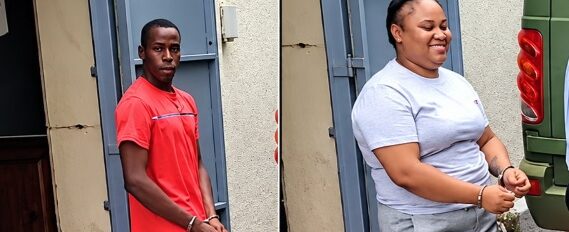
    Twenty-three-year-old Constable Patrick Bethelmie Jr., a resident of Bense, and Jolie-Ana Naomi James, his girlfriend from Portsmouth’s Lagoon neighborhood, appeared before the Roseau Magistrate’s Court on Friday, September 4 to hear rulings on their bail applications. Both suspects currently face two joint charges: perverting the course of justice, and illegal possession of ammunition, charges that are directly tied to the probe into 19-year-old Jerbiah Paul’s death.

    James was first taken into custody and formally charged on August 31. She has entered a formal not guilty plea to the ammunition possession charge, while no plea was required from her for the more serious indictable charge of perverting the course of justice. Her bail hearing was automatically scheduled to be held alongside Bethelmie’s on September 4.

    The investigation traces back to late July, when Paul was first reported missing by family members on July 24. Nearly three weeks later, on August 12, search teams discovered severely decomposed human remains in a steep precipice in the Capuchin region of Dominica. Investigative teams have drawn an initial link between the remains and the missing teenager, though they note that formal DNA testing is still required to provide definitive confirmation of identity.

    To date, the ongoing probe has resulted in criminal charges being brought against six individuals. Of the six suspects in custody, four are serving police officers including Bethelmie, and the other two are civilian women including James. All six defendants are currently being held on remand at the Dominica State Prison as investigators continue to collect evidence and build their case.

    The legal process remains active before the Dominican courts, and official investigations are still ongoing as authorities work to uncover the full circumstances surrounding Paul’s death.

  • World Sexual Health Day: 4 September

    World Sexual Health Day: 4 September

    It has been more than 14 months since the government of Grenada first tabled a landmark piece of legislation that would reshape adolescent access to sexual and reproductive health care in the small Caribbean nation. On July 17, 2025, the administration introduced the Age of Civil Legal Responsibility (Amendment) Bill, commonly shortened to the ACR Bill, which proposed lowering the minimum age for independent, confidential access to reproductive health services without parental consent from 18 to 16. The bill also included a provision that would allow access for minors as young as 12 in cases deemed to meet a “good cause” standard.