作者: admin

  • New Party: Reform Barbados enters political arena

    New Party: Reform Barbados enters political arena

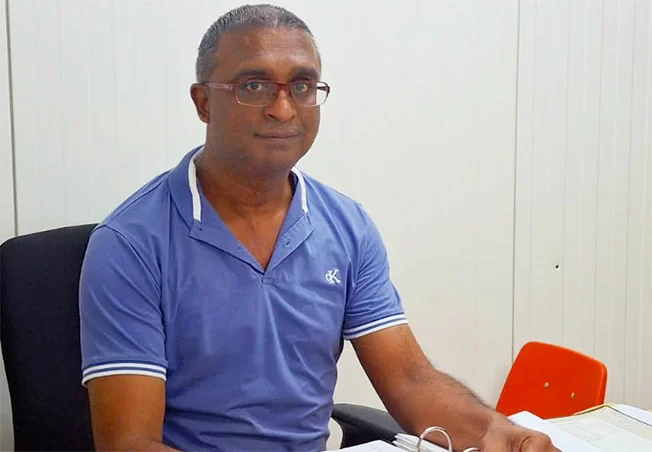
    Barbados’ political arena witnesses a significant development with the establishment of Reform Barbados, a new political entity aiming to disrupt the longstanding dominance of the two major parties. Founded by Steve Prescott, a British-Barbadian employment rights attorney, the party positions itself as a viable alternative to the ruling Barbados Labour Party (BLP) and opposition Democratic Labour Party (DLP).

    Prescott, who holds Barbadian citizenship, revealed his strategy to contest all 30 parliamentary seats in upcoming elections, potentially running solo initially if necessary. While his specific constituency remains undecided, he indicated a likely candidacy in Christ Church’s Parish Land area, his late father’s former residence before emigrating to the UK in the 1960s.

    The party leader demonstrates unwavering confidence despite historical challenges faced by third parties in Barbadian politics. “I will face that by having a message and real policy change that Barbadians have been crying out for,” Prescott stated in an exclusive interview with Barbados TODAY. He attributes previous third-party failures to inadequate messaging and lack of longevity rather than voter receptiveness.

    Reform Barbados distinguishes itself through methodical policy development. Prescott emphasized that all proposed policies, developed over two years, will undergo rigorous economic validation before implementation. “Policy execution is the big number one,” he contended. “You can have all the ideas in the world, and if you don’t know how to execute properly, you’re not going to make any change.”

    The party’s formation stems from Prescott’s profound concern about Barbados’ socioeconomic stagnation. After examining the island’s development since independence and observing minimal progress in living standards and infrastructure over four decades, he concluded that “as a country, we need to do better.” This conviction inspired the party’s dual slogan: “We’ve got to do better at being better… we’ve got to be better at doing better.”

    Symbolism plays a crucial role in the party’s identity, with its logo featuring a broken trident above a crown—a design inspired by stained-glass artwork created by Prescott’s father in a UK church. While already engaging voters through social media and personal interactions, Reform Barbados plans official public launch events alongside the publication of its economically-vetted manifesto in the near future.

  • WATCH: PM Says One Nation Concert Generated Millions in Economic Activity

    WATCH: PM Says One Nation Concert Generated Millions in Economic Activity

    The Prime Minister has publicly celebrated the substantial economic impact generated by the recent ‘One Nation’ concert, citing figures that reach into the millions. In a public address, the nation’s leader highlighted the event as a significant catalyst for local commerce, underscoring its role in stimulating widespread financial activity across multiple sectors.

    Official estimates indicate the large-scale musical gathering provided a powerful boost to the hospitality industry, with hotels and short-term rentals experiencing near-total occupancy. Surrounding businesses, including restaurants, bars, retail stores, and transportation services, reported a dramatic surge in patronage throughout the event’s duration. This influx of attendees translated directly into elevated revenue streams for countless local enterprises and independent contractors.

    The government’s analysis frames the concert not merely as an entertainment spectacle but as a strategic economic initiative. The Prime Minister emphasized that events of this caliber are instrumental in job creation, from temporary security and logistics roles to sustained demand in vendor and service provision. The financial benefits are portrayed as a testament to the value of public-facing events in driving post-pandemic recovery and fostering national morale.

    Furthermore, the address suggested that the positive fiscal outcomes extend beyond immediate cash flow. The international media coverage and tourism draw are projected to yield long-term dividends by enhancing the nation’s profile as a premier destination for major cultural events. The administration positions this success as a model for future publicly-supported entertainment projects aimed at achieving dual cultural and economic objectives.

  • Reshaping confidence with Michelle Baptiste this Carnival season

    Reshaping confidence with Michelle Baptiste this Carnival season

    Amidst the vibrant celebrations of Caribbean Carnival season—a period characterized by rhythmic expression, cultural pride, and dazzling displays of individuality—a deeper narrative around body confidence and self-acceptance is emerging. While the festival encourages liberation and self-expression, it also amplifies unspoken pressures on women concerning body image, appearance comparisons, and societal expectations.

    Michelle Baptiste, founder of Trinidad & Tobago-based Selecfit Shapewear, offers a transformative perspective on Carnival. To her, the event symbolizes not the pursuit of perfection, but the celebration of inner strength and personal authenticity. Her rapidly growing shapewear and wellness enterprise was born from a journey marked by profound adversity, resilience, and unwavering faith.

    Baptiste’s entrepreneurial path has been anything but smooth. A single mother of three, she endured the tragic loss of both a brother and sister to cancer, faced a serious health scare leading to a hysterectomy in 2013, survived a minor heart attack at just 28, and experienced periods of homelessness. Juggling multiple management roles while attending night classes, she often made product deliveries on weekends with her children beside her. During the COVID-19 pandemic, she pursued a master’s degree while selling items from her car, dedicating nighttime hours to research and product development.

    Today, Selecfit operates several retail outlets and offers an extensive range of premium shapewear, bras, and natural slimming solutions—many designed and formulated personally by Baptiste. Yet her mission extends beyond apparel: she aims to rebuild confidence from within, providing not just products but trust, care, and personalized guidance.

    “Confidence is a woman’s most powerful accessory,” Baptiste asserts. She emphasizes that self-assurance is not vanity—it is a strategy for survival and a form of leadership.

    As Carnival unfolds across the region, Baptiste encourages women to shift their focus from outward appearance to internal well-being. “Inner strength is essential before the costume,” she notes. “When confidence stems from self-love, the celebration becomes liberating rather than burdensome.”

    Her practical advice for cultivating confidence includes prioritizing physical comfort, rejecting comparisons, nurturing a positive self-dialogue, honoring one’s unique body journey, and embracing self-acceptance as the foundation of genuine empowerment.

    Through Selecfit, Baptiste aims to redefine beauty standards for Caribbean women and establish her brand as the region’s most trusted name in wellness and shapewear. Her story stands as a powerful testament to resilience, faith, and the transformative belief that it is never too late to fall in love with oneself again.

  • Trumps grillige handelspolitiek drijft Amerikaanse bondgenoten naar China

    Trumps grillige handelspolitiek drijft Amerikaanse bondgenoten naar China

    In a significant departure from US trade policy, Canada has strategically reduced import tariffs on Chinese electric vehicles in exchange for improved market access for its agricultural exports, particularly canola. This move represents Canada’s latest effort to diversify economic partnerships amid growing concerns over the unpredictable and confrontational trade approach of the Trump administration.

    Prime Minister Mark Carney’s government announced the tariff reduction, which lowers the previous 100% duty on Chinese EVs, as part of a broader bilateral agreement with China. The arrangement includes quota limitations, capping Chinese EV imports under the reduced tariff at approximately 49,000 vehicles initially, with gradual increases to around 70,000 over a five-year period.

    The decision reflects Canada’s calculated response to what trade experts identify as increasingly volatile US trade relations under President Trump. Since taking office, Trump has overturned seven decades of US trade policy favoring freer commerce, imposing substantial tariffs on imports from virtually every trading nation while specifically targeting sectors including steel and automobiles.

    Canada has frequently been subject to Trump’s trade threats, including an October announcement of planned tariff increases on Canadian imports—retaliation for a critical advertisement from Ontario province—though these were ultimately not implemented. Existing tariffs on Canadian steel and aluminum remain in effect.

    This strategic shift carries considerable political risk for Carney, potentially creating friction with the Trump administration ahead of crucial negotiations to renew the USMCA trade agreement with the United States and Mexico. The trilateral pact remains vital to Canadian economic interests, with 75% of Canadian exports destined for US markets.

    Carney has defended the arrangement by emphasizing China’s technological advantages in electric vehicle production and the necessity of international cooperation to develop a competitive Canadian EV sector. However, critics including Ontario’s premier have raised concerns about potential impacts on Canadian auto workers and warned that the agreement could provide China with excessive market influence.

    The development occurs alongside similar diversification efforts by other US trading partners. The European Union has pursued new trade agreements with Mercosur nations, while China has successfully expanded export markets across Europe and Southeast Asia—achieving a record $1.2 trillion trade surplus in 2025 despite US tariffs.

    Trump maintains that his tariff policies strengthen US treasury reserves, protect domestic industries, and attract investment. However, his application of tariffs has frequently appeared arbitrary and unpredictable, including recent threats against Brazil over its treatment of political ally Jair Bolsonaro and new tariffs targeting countries that declined to support US interests regarding Greenland.

    Canada’s economic repositioning demonstrates how Trump’s trade policies are reshaping traditional alliance dynamics, driving US partners toward strengthened economic ties with China—America’s primary economic competitor—while complicating future negotiations on critical agreements like USMCA.

  • 40e viering Wereld Religie Dag

    40e viering Wereld Religie Dag

    Suriname commemorated a significant milestone on Sunday, January 18th, celebrating the 40th anniversary of World Religion Day—four decades of sustained interreligious dialogue, cooperation, and community engagement. Organized by the Suriname World Religion Day Foundation, this year’s event embraced the theme ‘Together We Form the Whole – Wi Na Wan,’ emphasizing that every religious tradition and citizen constitutes an essential component of Surinamese society.

    The gathering took place at the Arya Dewaker Multipurpose Hall in Paramaribo, attracting representatives from diverse faith communities, non-governmental organizations, civil society groups, and government officials. Multiple speakers addressed the audience, exploring the theme from various religious perspectives with the shared objective of highlighting common values and strengthening national unity.

    World Religion Day, established in 1986, has evolved into a global initiative promoting religious harmony and mutual understanding. In Suriname—a nation renowned for its rich religious and cultural diversity—the observance holds particular significance as a symbol of peaceful coexistence amid differences.

    This 40th edition underscores the Foundation’s ongoing commitment to fostering dialogue, respect, and collaboration across religious boundaries. The organization extended an open invitation for collective reflection on the unifying values that define Suriname, further solidifying the country’s exemplary role in regional religious harmony.

  • The Punta Cana Carnival returns with two days of celebration in its 17th edition

    The Punta Cana Carnival returns with two days of celebration in its 17th edition

    Grupo Puntacana has officially unveiled plans for the seventeenth iteration of the renowned Punta Cana Carnival, scheduled to take place on February 20-21, 2026. The vibrant festivities will transform Boulevard 1ro de Noviembre in The Village Puntacana into a massive celebration of Dominican cultural heritage.

    The carnival inauguration commences on Friday, February 20th with an exclusive Carnival Gala along the parade route. This preliminary event will offer the Punta Cana community their first opportunity to witness the spectacular flagship troupes – Las Musas de Punta Cana and Los Tres Caras – accompanied by dynamic live musical performances.

    Saturday, February 21st marks the main celebration with gates opening at 2:30 PM. The grand parade will commence at 4:00 PM, showcasing an impressive assembly of over 20 professionally choreographed dance troupes and more than 1,500 national and international performers. These participants will bring Dominican folklore and cultural traditions to life through dazzling displays of color, music, and dance. Event organizers anticipate welcoming exceeding 15,000 attendees to this cultural extravaganza.

    A highlight of the carnival will be the ceremonial coronation of King or Queen Momo, an honor bestowed upon nationally prominent figures whose exemplary work inspires Dominican society. The selection remains carefully guarded until the event, creating significant anticipation among participants. The 2025 edition saw two-time Olympic champion and world athletics champion Félix Sánchez receive this distinguished recognition.

    The carnival maintains its tradition of honoring Dominican excellence, with previous recipients including fashion icon Oscar de La Renta, merengue superstar Eddy Herrera, endurance swimmer Marcos Díaz, jazz virtuoso Michel Camilo, conductor José Antonio Molina, cultural advocate Freddy Ginebra, baseball legend George Bell, and the first Queen Momo, merengue royalty Milly Quezada.

    Admission to the Punta Cana Carnival remains free to the general public, with optional ticket purchases available through digital platforms for enhanced access. The 2026 event will feature diverse culinary offerings through food trucks, dedicated family-friendly entertainment zones, and specially designed children’s activities available near the Grupo Puntacana corporate building starting at 3:00 PM on Saturday.

    Demonstrating environmental leadership, the carnival continues its sustainability initiatives through comprehensive waste management systems featuring recycling stations, implementation of reusable servingware, and utilization of biodegradable materials throughout the event grounds.

  • Prime Minister: Wealth Management Must Empower Ordinary Citizens, Not Only the Affluent

    Prime Minister: Wealth Management Must Empower Ordinary Citizens, Not Only the Affluent

    Prime Minister Gaston Browne has articulated a transformative vision for wealth management, positioning it not as an exclusive service for affluent individuals but as a critical tool for national economic empowerment. Speaking at the launch of a strategic financial initiative, Browne emphasized that true financial planning enables ordinary citizens to protect earnings, build economic security, and develop resilience against unforeseen economic disruptions.

    The Prime Minister challenged conventional perceptions by framing personal financial decisions as fundamental contributions to national progress. He argued that when citizens transition from passive observers to active participants in economic growth through informed investing, they simultaneously strengthen both individual prosperity and collective national development.

    A central theme of Browne’s address focused on intergenerational responsibility. He asserted that authentic national advancement requires current generations to build sustainable systems that provide future citizens with opportunities rather than burdens. The Prime Minister characterized strategic investments—whether in financial markets, entrepreneurial endeavors, or personal assets—as essential components of a long-term vision for enduring family legacies marked by stability and prosperity.

    Browne specifically endorsed the ACB Invest Programme, developed by Antigua Commercial Bank, as a strategic alignment with government efforts to broaden economic participation. He expressed confidence that this initiative would enable more citizens to transform savings into investments, convert investments into sustainable growth, and ultimately translate that growth into widely shared prosperity across Antigua and Barbuda.

  • EU en Mercosur tekenen handelsakkoord na 25 jaar onderhandelingen

    EU en Mercosur tekenen handelsakkoord na 25 jaar onderhandelingen

    In a landmark development for global trade, European Union and Mercosur bloc officials finalized a comprehensive free trade agreement on Saturday in Paraguay, concluding negotiations spanning more than a quarter-century. This monumental pact represents the most extensive trade deal ever negotiated by the EU, though it still requires ratification by the European Parliament and national legislatures of Mercosur member nations Argentina, Brazil, Paraguay, and Uruguay.

    The agreement aims to dismantle longstanding trade barriers between the economic blocs, promising unprecedented opportunities for cross-continental commerce and investment. However, the accord faces significant opposition within Europe due to environmental concerns, agricultural competition worries, and labor rights considerations.

    Simultaneously, international tensions escalated as U.S. President Donald Trump intensified his campaign to acquire Greenland, announcing substantial tariff increases on eight European nations via his Truth Social platform. Effective February 1st, a 10% tariff will be imposed on goods from Denmark, Finland, France, Germany, Norway, Sweden, Netherlands, and the United Kingdom, with plans to increase to 25% by June 1st. Trump declared these punitive measures would remain until the United States secures an agreement for Greenland’s purchase.

    European governments have yet to formally respond to these economic threats, while thousands of Danish citizens took to the streets in protest. Copenhagen witnessed demonstrators waving national and city flags while chanting “Kalaallit Nunaat” – Greenland’s indigenous name – in rejection of American expansionism.

    These public demonstrations occurred shortly after a bipartisan U.S. congressional delegation reaffirmed American support for Denmark and Greenland during meetings in Copenhagen. Senator Chris Coons expressed hope that Denmark would maintain confidence in the American people while emphasizing respect for Danish sovereignty and NATO alliances.

    Since taking office, President Trump has repeatedly asserted that Greenland should fall under American control, recently declaring any alternative outcome “unacceptable.” This stance contradicts overwhelming Greenlandic public opinion, with a January poll revealing 85% opposition to U.S. annexation and only 6% in favor.

    Both Greenlandic and Danish authorities have consistently rejected American ownership proposals, with recent diplomatic efforts by foreign ministers from both governments failing to alter the U.S. position during Washington meetings. Danish Foreign Minister Lars Løkke Rasmussen characterized Trump’s approach as attempting to “conquer” Greenland rather than negotiate.

    These parallel developments highlight the intricate interplay between trade diplomacy and geopolitical ambitions in contemporary international relations, where economic agreements and territorial aspirations create complex global dynamics.

  • Today is the deadline to renew your vehicle registration sticker digitally.

    Today is the deadline to renew your vehicle registration sticker digitally.

    Santo Domingo – The Dominican Republic’s General Directorate of Internal Taxes (DGII) has implemented a dual deadline system for vehicle circulation tax renewals, creating distinct timelines for online versus in-person processing. Digital renewals through the DGII 360 platform must be completed by Sunday, January 18, while physical renewals at authorized locations remain available until January 31, 2026.

    The agency has streamlined the digital process, requiring only national identification numbers (RNC) and vehicle plate information through either the official DGII mobile application or the website www.dgii.gov.do. This convenience comes with a delivery trade-off: online applicants receive their physical stickers within approximately four business days in the capital region and eight days elsewhere, while in-person renewals provide immediate issuance.

    Current compliance statistics reveal significant collection numbers alongside substantial outstanding renewals. As of last Friday, approximately 800,000 vehicle owners had yet to renew their permits, despite collections already exceeding 2 billion pesos from compliant citizens. Digital adoption has been notable with over 150,000 vehicles processed online.

    The 2025-2026 fiscal period sees expanded eligibility with 2,086,756 vehicles requiring renewal—an increase of 193,732 units from the previous cycle. The DGII projects total collections will reach RD$3,433,806,000 during this annual mobilization of vehicle owners nationwide.

    Fee structures remain unchanged from the previous period: RD$1,500 for vehicles manufactured through 2020 and RD$3,000 for those from 2021 onward. Renewal services are available at 47 financial institutions with 856 branches nationwide, plus DGII offices in Montecristi and Samaná.

    The agency has established a graduated penalty system for non-compliance: RD$2,000 for missing the January 31, 2026 deadline; RD$2,100 for those who also missed the 2024-2025 period; and RD$3,100 for vehicles outstanding since 2023-2024 or earlier, incorporating administrative fees atop base penalties.

  • The vulgarity of urban music worries churches

    The vulgarity of urban music worries churches

    Religious leaders and mental health experts in the Dominican Republic are raising urgent concerns about the deteriorating moral landscape in digital content and its profound effects on younger generations. The Catholic Church, represented by Monsignor José Amable Durán and Father José Luis Cruz, identifies the normalization of explicit lyrics in urban music and unfiltered vulgar content on social platforms as a primary catalyst for behavioral and emotional disorders among children and adolescents.

    Monsignor Durán, auxiliary bishop of Santo Domingo, emphasized that this issue transcends religious doctrine, touching upon fundamental aspects of social morality. He articulated that music and language were originally conceived for positive expression but are now being weaponized to promote moral disorder, irresponsible behavior, and explicit sexuality. The prelate directly linked the current epidemic of teenage pregnancies to early exposure to morally damaging musical content consumed even within family environments.

    The debate extends beyond mere content criticism to address the technological paradigm shift that has enabled this crisis. Father Cruz, rector of the Catholic University of Santo Domingo, highlighted the contrast with previous decades when regulatory mechanisms in traditional media prevented mass dissemination of harmful content. The internet’s borderless nature has created an essentially ungovernable digital ecosystem where children access explicit material without restrictions.

    Psychological perspectives from family therapist Yesmín Meyer corroborate these concerns, noting that negative role models from urban music and influencers promote violence, sexism, and damaging gender stereotypes. These influences fundamentally shape the behavioral patterns and social roles that young people adopt during their formative years.

    All experts converge on the irreplaceable role of parental guidance and digital literacy rather than advocating for absolute censorship. They stress that parents must implement conscious content filters and foster critical thinking skills, acknowledging that social media is permanently embedded in modern life. The solution requires a multifaceted approach combining responsible parenting, ethical content creation, platform accountability, and educated consumption.