作者: admin

  • COMMENTARY: How to vote in the Upcoming General Election

    COMMENTARY: How to vote in the Upcoming General Election

    With national elections approaching in Antigua and Barbuda, a critical examination of governance patterns reveals compelling arguments for political rotation. Drawing parallels between financial cooperatives and national governance, this analysis presents a framework for strategic voting centered on accountability rather than personal allegiance.

    Credit unions serve as a powerful metaphor for effective collective action. These member-owned financial cooperatives demonstrate how ordinary citizens can achieve remarkable progress through resource pooling, term-limited leadership, and continuous innovation. Over four decades, these institutions have evolved from offering modest personal loans to providing substantial mortgages and business capital—a testament to what structured collaboration can accomplish.

    This cooperative success story contrasts sharply with national governance outcomes. Despite a national budget exceeding two billion dollars—the highest in the country’s history—Antigua and Barbuda continues struggling with fundamental infrastructure and services. The water distribution system remains unreliable, road networks deteriorate, and judicial processes face significant delays.

    A striking political imbalance emerges from historical analysis: since gaining independence 44 years ago, a single party has governed for 34 years (approximately 78% of the time). This extended dominance has created what analysts might describe as a democratic deficit, where regular leadership rotation—proven beneficial in successful nations like the United States and Barbados—has been notably absent.

    The foundational pillars of effective governance provide a measurable framework for assessment:

    1. Judicial System: The current judiciary lacks sufficient resources to adjudicate cases efficiently, creating a backlog that undermines justice.
    2. Law Enforcement: Police capabilities appear disproportionately focused on managing protests rather than solving crimes affecting ordinary citizens.
    3. Border Security: Documented security lapses include unauthorized aircraft arrivals and uncontrolled border transitions.
    4. Infrastructure: Reactive crisis management replaces systematic maintenance, with deteriorating public facilities and controversial land sales reducing public assets.

    These systemic shortcomings have tangible consequences: reduced tourist confidence due to security concerns, increased vehicle maintenance costs from poor roads, and bureaucratic hurdles that discourage legitimate business formation.

    The electoral recommendation presented here advocates for dispassionate, strategic voting. Rather than supporting individuals based on personal relationships, voters should evaluate which alternative has the greatest likelihood of replacing underperforming incumbents. This approach mirrors successful democratic models worldwide where regular political rotation prevents entrenched interests and stimulates fresh solutions.

    As the nation stands at a crossroads, the electoral decision transcends party loyalty and enters the realm of national interest. The choice ultimately revolves around whether citizens prefer continued stagnation or potential progress through renewed leadership and accountability mechanisms.


  • 21 provinces affected: There will be moderate to heavy rain.

    21 provinces affected: There will be moderate to heavy rain.

    The Dominican Institute of Meteorology (Indomet) has issued a comprehensive weather forecast predicting scattered to moderate rainfall across multiple provinces today. Affected regions include Puerto Plata, Espaillat, María Trinidad Sánchez, Samaná, La Altagracia, El Seibo, Hato Mayor, Monte Plata, Duarte, San Pedro de Macorís, Sánchez Ramírez, Monseñor Nouel, San Cristóbal, Hermanas Mirabal, San José de Ocoa, La Vega, Santiago, and Santo Domingo.

    Precipitation is expected to commence during morning hours and persist throughout the afternoon, with additional showers anticipated in municipalities within Elías Piña, San Juan, and Santiago Rodríguez. Meteorological analysts indicate that temperatures will register notably lower readings, particularly in elevated mountainous zones and interior valleys throughout the national territory.

    The weather pattern suggests a significant moisture front influencing atmospheric conditions across the Caribbean nation. Residents in affected areas are advised to prepare for potentially disrupted outdoor activities and consider appropriate attire for the forecasted precipitation and cooler conditions. The institute continues to monitor atmospheric developments and will provide updated advisories as conditions evolve.

  • News Five Addresses January 19th Story on PC Pou

    News Five Addresses January 19th Story on PC Pou

    In a significant development regarding journalistic accountability, News Five has issued a formal retraction and apology for inaccurate reporting concerning Police Constable Gabriel Pou. The correction addresses a January 19th, 2026 report on the Joseph Budna case that contained serious factual errors regarding the officer’s conduct.

    The broadcaster acknowledged that their original report falsely claimed PC Pou had been “pressured into giving a false statement” regarding the case. After review, News Five confirmed that no such statement was ever made by the constable, nor was any coercion attempted to secure one.

    “We made an error in our reporting and fully retract the statement erroneously attributed to PC Pou,” the organization stated in their correction notice. The media outlet has taken corrective measures by updating all digital versions of the story to reflect the accurate information.

    The public apology specifically addresses the potential damage caused to the officer’s professional reputation and personal well-being. “We apologize to PC Pou for this error and for any distress and reputational harm it may have caused him,” the statement continued, emphasizing their commitment to journalistic integrity.

    This incident highlights the ongoing challenges media organizations face in maintaining accuracy while reporting on sensitive legal matters and the importance of prompt correction when errors are identified.

  • Groeiende vraag naar Chinese EV’s zet druk op Tesla; BYD lanceert innovatieve Blade Battery

    Groeiende vraag naar Chinese EV’s zet druk op Tesla; BYD lanceert innovatieve Blade Battery

    Chinese automotive giant BYD has unveiled its revolutionary second-generation Blade Battery, marking a significant technological leap that strengthens China’s position in the increasingly competitive electric vehicle market. The announcement, made by Chairman Wang Chuanfu during a Shenzhen launch event, introduces battery technology capable of charging from 20% to 97% in under 12 minutes even at extreme temperatures of -20° Celsius.

    The advanced battery system delivers an impressive 777-kilometer range on a single charge while featuring higher energy density that extends the range of BYD’s luxury models—Denza Z9GT and Yangwang U7—to over 1,000 kilometers. Wang emphasized that the new batteries exceed China’s recently enhanced safety standards, addressing critical consumer concerns about EV reliability.

    Complementing its technological advancements, BYD is aggressively expanding its charging infrastructure with plans to deploy 20,000 Flash Charging stations by late 2026, including 2,000 strategically positioned along highways. The network already surpassed 4,000 stations in early March, demonstrating the company’s commitment to supporting its technological innovations with robust infrastructure.

    China’s EV manufacturers are experiencing unprecedented global growth, with exports surging over 70% in 2025 according to China Association of Automobile Manufacturers data. European and Southeast Asian markets have emerged as primary growth drivers, with Chinese brands rapidly gaining market share through competitive pricing, extended ranges, and technological innovations.

    The technological developments present substantial challenges for Tesla, which faces intensifying competition both in China—the world’s largest EV market—and internationally. Industry analysts suggest BYD’s focus on charging speed, range, and safety addresses key consumer pain points that could reshape competitive dynamics across global markets.

    This battery technology breakthrough signals a new phase in the global EV race where technological superiority and infrastructure development will determine market leadership in the accelerating transition to electric transportation.

  • Gov’t moving to clean up former Mobil refinery site

    Gov’t moving to clean up former Mobil refinery site

    The Barbadian government has initiated a comprehensive environmental assessment of the long-abandoned Mobil Oil Refinery site at Aquatic Gap, St Michael, marking a significant breakthrough after nearly thirty years of public concern and environmental uncertainty. Officials confirmed to parliamentary members that modern characterization of the contaminated coastal property is now actively underway, representing a crucial advancement toward eventual remediation and restoration.

    The former refinery, which operated for several decades in the Needhams Point area before ceasing operations in the late 1990s, left behind substantial industrial contamination when Mobil departed the island. For generations, the derelict facility has stood as both a symbol of industrial mismanagement and a potential environmental hazard, particularly concerning given its proximity to popular beaches and vital tourism infrastructure.

    During recent parliamentary estimates, government authorities acknowledged the unreasonably prolonged delay in addressing the site’s contamination, issuing strong criticism regarding the absence of proper decommissioning protocols when the refinery originally closed. Jamar White, Director of Natural Resources at the Ministry of Energy, Business Development and Consumer Affairs, emphasized that previous environmental studies—including one conducted as early as 1998—have become entirely obsolete for contemporary remediation planning.

    “Understanding the current contamination levels and their potential impact on surrounding areas became absolutely essential,” White explained. Consequently, the government has engaged an international environmental firm to conduct state-of-the-art site characterization beginning November 2025. The sophisticated process has involved extensive stakeholder consultations alongside the installation of specialized monitoring wells and soil borings to collect precise groundwater and soil samples mapping contamination concentration and distribution.

    The government anticipates completion of the comprehensive characterization report between June and July 2026, which will establish a definitive roadmap for remediation by identifying contamination hotspots and recommending internationally recognized cleanup standards. Beyond environmental restoration, officials have begun outlining redevelopment visions for the prime coastal property, noting significant interest from tourism and hospitality investors.

    Energy Minister Kerri Symmonds characterized the project as a pivotal governance lesson, pledging that historical mistakes would not be repeated. The ministry is now embedding stringent decommissioning requirements into all new investment agreements, as demonstrated by recent licenses granted to the Barbados Light and Power Company for battery storage initiatives.

    Symmonds reflected: “It is a crying shame that between the 1980s and today, we have been forced to endure that situation. The principle of having decommissioning written into all our agreements is something this ministry will be enforcing moving forward.” As technical analysis continues through 2026, the public remains hopeful that the Aquatic Gap site will transition from persistent environmental liability to safe, sustainable space for future generations.

  • Security : 10 million euros for the construction of 5 anti-gang operational bases

    Security : 10 million euros for the construction of 5 anti-gang operational bases

    In a significant move to address Haiti’s escalating security crisis, the European Union has committed €10 million ($10.7 million) to establish a network of anti-gang operational bases throughout the country’s West Department. The project was formally presented on March 5, 2026, during a high-level working meeting between Haitian National Police (PNH) leadership and a joint delegation from the European Union and Organization of American States (OAS).

    This comprehensive security initiative involves the construction and rehabilitation of five Forward Operational Bases (FOBs) complemented by multiple combat outposts. The Haitian National Police, serving as the primary implementing agency, will identify strategic locations based on current security assessments and recently liberated territories. Construction is scheduled to commence in March 2026 with an anticipated completion timeline of 18 months.

    The FOB project represents an integrated approach to law enforcement infrastructure rather than mere construction. These facilities will function as centralized hubs operational efficiency, jointly housing personnel from the Haitian National Police and the specialized Gang Repression Force (FRG). Each base will feature complete logistical support systems including supply chains, mobile maintenance units, centralized kitchen facilities, and critical medical trauma centers for immediate battlefield treatment.

    This strategic investment enables decentralized deployment of security forces, ensuring continuous deterrent presence throughout metropolitan areas. The primary objective focuses on consolidating government control over territories recently reclaimed from gang dominance through enhanced operational capabilities and rapid response coordination.

  • 177 deaths in 2025: Two women die every day in the Dominican Republic during childbirth or pregnancy.

    177 deaths in 2025: Two women die every day in the Dominican Republic during childbirth or pregnancy.

    A stark investigation conducted by the Center for Gender Studies at the Technological Institute of Santo Domingo (INTEC) has exposed a severe maternal health emergency in the Dominican Republic. The findings, published in a report titled “Safe and Respectful Motherhood of Human Rights: Debts, Arrears and Institutional Violence towards Women,” reveal a tragic pattern of one pregnant woman dying every two days from largely preventable complications related to childbirth.

    The data, drawn from the most recent official figures in the 2025 Epidemiological Bulletin, shows that 177 women lost their lives during childbirth that year—a death toll identical to the previous year’s count. This places the nation’s maternal mortality rate at a staggering 124.8 deaths per 100,000 live births, according to preliminary statistics from the National Epidemiological Surveillance System (SINAVE) for 2024. This figure dramatically exceeds regional averages for Latin America and the Caribbean, standing at more than 90 deaths per 100,000 live births.

    Researchers Dalul Ordehi, Dean of Social Sciences and Humanities, and Desiree del Rosario Sosa, coordinator of CEG-INTEC, presented these alarming findings to the media. They emphasized that approximately 90% of these maternal deaths could be prevented through the implementation of proven effective measures. These crucial interventions include ensuring quality maternal healthcare services, guaranteeing universal access to contraceptive methods, and actively addressing systemic inequalities that limit women’s access to essential health services.

    The report, released to coincide with International Women’s Day observances on March 8, serves as a powerful indictment of institutional failures. It documents how systemic violence and institutional neglect toward women have contributed to this ongoing public health crisis, where preventable tragedies continue to claim lives at an alarming rate.

  • OP-ED: The Shield and the Silence – What the Doral Summit reveals about the Caribbean’s position  in a changing hemisphere

    OP-ED: The Shield and the Silence – What the Doral Summit reveals about the Caribbean’s position in a changing hemisphere

    At a recent gathering of Caribbean leaders in St. Kitts and Nevis, Trinidad and Tobago’s Prime Minister Kamla Persad-Bissessar deployed a local proverb that encapsulates a growing geopolitical schism: “Who vex loss.” This phrase, meaning “If you’re upset by my choices, that’s your problem,” preceded a significant development in hemispheric relations—the Shield of the Americas Summit in Doral, Florida.

    The White House-organized event, focused on security, counter-narcotics, and containing Chinese influence, has drawn a selective roster of hemispheric partners. Notably absent were Mexico, Brazil, and Colombia—the three largest Latin American economies—while only two Caribbean Community (CARICOM) leaders received invitations: Guyana’s President Irfaan Ali and Prime Minister Persad-Bissessar.

    This selective invitation strategy emerged immediately after US Secretary of State Marco Rubio attended CARICOM’s 50th Heads of Government Meeting in Basseterre, where regional priorities included climate finance, food security, reparatory justice, and the Guyana-Venezuela border controversy. None of these issues appear on the Doral summit agenda, which instead emphasizes Washington’s strategic priorities.

    The divergence highlights a fundamental asymmetry between American interests and Caribbean development needs. While Trinidad faces urgent security concerns evidenced by rising murder rates, and Guyana confronts territorial pressures, their participation in Washington’s framework comes at the cost of sidelining collective regional priorities.

    CARICOM Chairman Drew maintains the bloc remains unified, but the reality suggests fragmentation. The organization’s strength has historically derived from its collective voice, particularly evident in climate finance advocacy through the Bridgetown Initiative. Washington, however, benefits from engaging individual states rather than confronting a unified regional position.

    Historical precedents offer cautionary tales. Venezuelan opposition leader María Corina Machado, once celebrated by the Trump administration, was swiftly sidelined after offering her Nobel medal to the former president. Similarly, a former Homeland Security secretary who implemented controversial immigration policies was eventually dismissed to a ceremonial role.

    The central question for Caribbean nations remains whether bilateral engagement with superpowers ultimately serves long-term interests. While immediate security and economic concerns drive some leaders to accept Washington’s terms, the region must consider whether this approach sacrifices the leverage needed to address existential threats like climate change and economic vulnerability.

    The true cost of participation in hemispheric power dynamics may be measured in silence—the inability to advocate for issues that will determine whether future generations inherit viable nations.

  • Turner Slams BTL’s ‘Unprofessional’ Claim That Negotiations Are Over

    Turner Slams BTL’s ‘Unprofessional’ Claim That Negotiations Are Over

    BELIZE CITY – A significant labor dispute between Belize Communication Workers for Justice (BCWJ) and Belize Telemedia Limited (BTL) has escalated dramatically, with union representatives vehemently rejecting the telecommunications company’s assertion that negotiations have concluded.

    Emily Turner, a prominent organizer with BCWJ, characterized BTL’s position as fundamentally “unprofessional” during a press conference, asserting that the union will not accept the company’s declaration that discussions are finished. “If they believe that because they came on a press conference and acted unprofessionally to tell us that negotiations was finished… that we will take that like that’s it? No, it’s not,” Turner stated emphatically.

    The conflict centers on severance payments for dozens of former employees, which Turner revealed had been completely removed from consideration until union intervention successfully reopened dialogue. “The door had shut on them,” she explained. “We brought back the severance on the table. We brought back the interest on the table.”

    Turner highlighted what she described as a “staggering” disparity between what workers are legitimately owed and BTL’s current settlement offers. Illustrating the magnitude of the discrepancy, she cited one specific case where a former employee entitled to approximately $7,000 in interest payments would receive a mere $158 under the company’s proposed terms.

    The union leader further criticized BTL’s allocation of financial resources, noting that the company has expended over $20 million in legal fees to contest worker claims rather than resolving the debt through settlement. “Why would you want to spend that amount of money instead of settling this debt with us?” she questioned.

    In response to the impasse, BCWJ has announced plans to stage protests outside the National Assembly during next Tuesday’s legislative session. Turner indicated that the union believes ultimate resolution authority may lie beyond BTL’s board, expressing encouragement that Prime Minister John Briceño had previously indicated the board’s willingness to offer a three percent settlement.

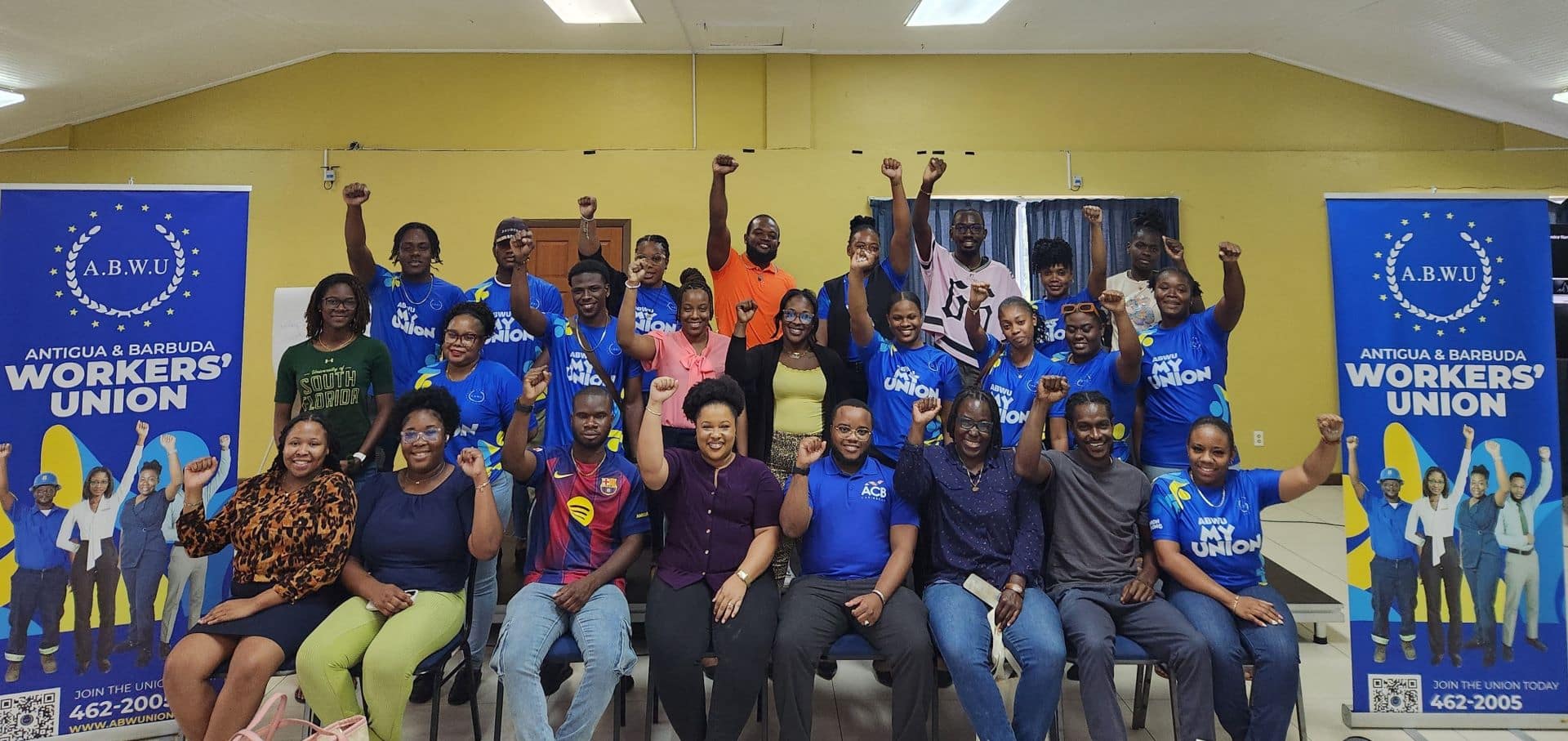
  • ABWU Empowers the Next Generation of Workers through Training Seminar

    ABWU Empowers the Next Generation of Workers through Training Seminar

    The Antigua and Barbuda Workers’ Union (ABWU) has reinforced its dedication to nurturing tomorrow’s labor leaders through a transformative Young Workers Seminar held recently. This intensive two-day program equipped emerging professionals with essential tools for workplace success and union advocacy.

    General Secretary David Massiah inaugurated the event by emphasizing historical continuity within the labor movement. ‘The privileges and safeguards contemporary workers enjoy represent hard-won victories from past generations’ struggles,’ Massiah asserted. He challenged attendees to actively enhance working conditions, thereby perpetuating the trade union movement’s legacy for future beneficiaries.

    The curriculum blended theoretical knowledge with practical application, featuring multidisciplinary expert presentations. Joy-Ann Harrigan facilitated an immersive workshop on Emotional Intelligence, employing collaborative group activities that prompted profound self-reflection and provided actionable techniques for emotional regulation in professional environments.

    Academic Coach Ashanti O’Keefe addressed career progression strategies, urging participants to deliberately align vocational choices with individual aspirations and core values. Supplementary sessions covered effective communication methodologies and life skill development frameworks, creating holistic professional growth opportunities.

    A cornerstone presentation demystified Fundamental Rights and Union Principles, enhancing comprehension of worker protections mechanisms. Participants universally praised the initiative, with one describing the experience as ‘exceptionally educational and informative,’ while another acknowledged the union’s commitment: ‘This workshop empowered us to operate confidently and collaborate effectively with colleagues.’

    This seminar constitutes a strategic component of ABWU’s broader initiative to develop cognizant, self-assured young leaders capable of serving subsequent generations of workers through informed advocacy and principled leadership.