作者: admin

  • Reid warns gangster life leads to prison or death

    Reid warns gangster life leads to prison or death

    The Bahamas has faced a years-long, devastating public safety crisis driven by intergang conflict, retaliatory bloodshed, and rising gun-related homicides that have claimed the lives of both gang members and innocent bystanders. Now, a seasoned crime consultant with personal experience in street life is sounding a urgent alarm to young people who may be drawn into violent criminal activity: the cost of a gang lifestyle is far too high, and even the most powerful gang leaders are not beyond reach of violence or justice.

    Speaking exclusively to The Tribune, Carlos Reid, a trusted advisor on gang intervention and community safety, emphasized that the life expectancy of those involved in gang activity is drastically shortened, and few who build their lives around violent crime escape either a prison sentence or an early death. “No one involved in this life is untouchable,” Reid explained. “Even those who have built reputations as unassailable kingpins are now being targeted and killed. If you serve time in prison, you may get temporary protection inside, but once you are released, the cycle of violence almost always catches up to you.”

    For those who have already walked this path and want to leave their criminal lives behind, Reid laid out a clear non-negotiable condition: cutting all ties to the networks, locations, and habits that kept them tied to violence. While Reid confirmed that many former gang members have successfully transitioned to become law-abiding, contributing members of society, he also stressed that the road to redemption is far from easy, and former offenders do not escape the lasting consequences of their past actions.

    One of the most underrecognized risks for those leaving gangs, Reid noted, is retaliation not from fellow gang members, but from grieving families who have lost loved ones to gang violence. “If you took someone’s brother, what explanation could you give that would ease that pain?” Reid said. “People hold personal vendettas, and even if you’ve changed your life, you can still become a target for the harm you caused in the past.”

    Reid also warned that even people with loose ties to gang activity can become targets of violence, noting that attackers who cannot reach the person they want to harm will often target their family members or close associates instead. Drawing from his own personal history of living in street life, Reid shared that he made the choice to leave because he knew he could not survive in that world forever. He closed with an urgent plea to young people who are currently involved in criminal activity: turn away from the lifestyle now, before it is too late to change your path.

    The ongoing wave of violence aligns with longstanding warnings from Bahamian law enforcement and government officials, who have repeatedly urged the public to be mindful of their social circles, especially when associating with individuals out on bail for murder or attempted murder charges.
  • Abinader joins National Earthquake Drill as Dominican Republic tests emergency response

    Abinader joins National Earthquake Drill as Dominican Republic tests emergency response

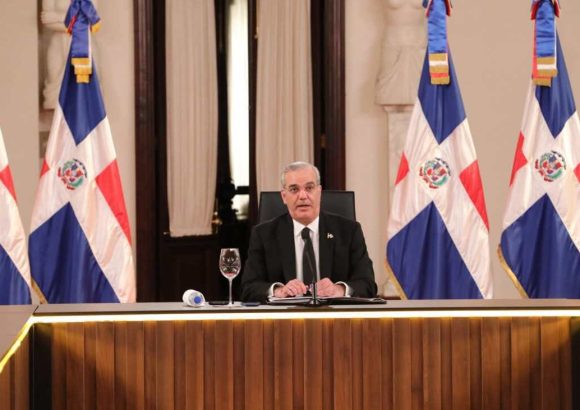
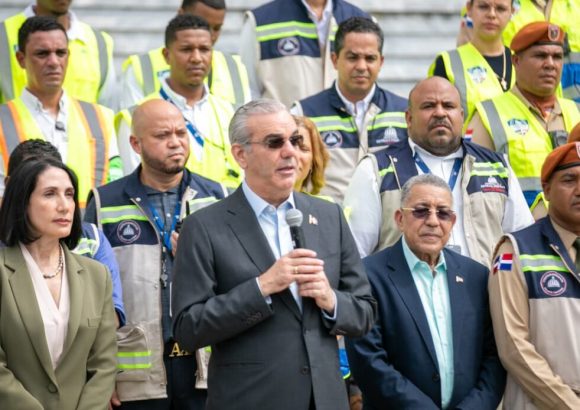
    On Tuesday, the Dominican Republic carried out its annual National Earthquake Evacuation Drill, an event that drew direct participation from President Luis Abinader and thousands of stakeholders across the public and private sectors. In opening remarks following his own participation in the exercise, the head of state stressed that sustained preparation is the only effective defense against catastrophic natural disasters, underscoring the government’s commitment to building robust emergency response capacity for the Caribbean nation.

    Abinader extended public gratitude to all participating groups, ranging from private corporations and non-governmental institutions to individual citizens across every province of the country. The drill, which has become a core annual preparedness activity, was developed specifically to test the functionality of the country’s existing emergency response frameworks and reinforce public awareness of earthquake safety protocols. The president himself followed all official safety procedures alongside National Palace staff: the group walked down the building’s designated evacuation stairwells, after which Abinader was escorted by members of the Presidential Security Corps (Cusep) to the preassigned rally point near the National Palace heliport, in full alignment with formal emergency protocol.

    A key component of this year’s drill was the nationwide test of the country’s emergency mobile alert system. At exactly 10:00 a.m. local time, mobile devices across the Dominican Republic received the standardized drill alert. To avoid unnecessary public panic, the notification explicitly stated that the alert was part of a scheduled exercise and no actual emergency was underway, while also guiding recipients to locate nearest designated evacuation routes and proceed to pre-planned assembly points.

    Officials from the Emergency Operations Center (COE), the lead agency coordinating the September 8 drill, issued clear safety guidance for all participants ahead of the exercise. The agency reminded the public to remain calm during evacuations, steer clear of unsecured infrastructure and falling objects, avoid rushing or pushing in crowds, and refrain from using elevators during any earthquake evacuation. According to COE, the drill was designed to replicate the conditions of a major real-world seismic event as closely as possible, allowing officials to measure the response speed and effectiveness of citizens, government departments, commercial operations, schools and community groups across the country. The ultimate goal of the annual exercise, COE noted, is to embed standardized evacuation procedures into public habit and ensure the country can respond rapidly and effectively if a major earthquake strikes in the future.

  • Sands pushes for early FNM convention

    Sands pushes for early FNM convention

    Following the Free National Movement’s (FNM) disappointing defeat in the May general election, the party’s chairman Dr. Duane Sands has publicly broken with the initial plan to delay a leadership convention until October 2027, arguing that the multi-year timeline is unreasonable and counterproductive to the party’s rebuilding efforts. In a televised interview on Our TV’s *On the Record* program last week, Sands laid out his vision for the party’s path forward, while stopping short of issuing a direct call for current leader Michael Pintard to step down.

    Sands, who serves as the FNM’s administrative chief, argued that waiting until 2027 to hold a leadership convention is far too long for a party still reeling from an electoral loss that required deep internal reflection. The party’s Central Council, the second-highest governing body behind the convention itself, has already begun moving to adjust the timeline, according to Sands, with the first step being a transparent, objective post-mortem of the election defeat.

    A core part of the planned evaluation, Sands emphasized, will be reaching outside the party’s inner circle to gather unfiltered feedback from voters who opted not to support the FNM in the recent vote. “If you only have FNMs talking, then you have an echo chamber,” he explained, noting that the goal is to collect honest input from non-supporters and abstaining voters on why the party failed to win their support, rather than reinforcing existing internal narratives. When asked to name a target timeline for the long-awaited convention, Sands said he believed the gathering should be held within the next several months, while clarifying that his personal position does not override the authority of the FNM’s governing bodies. “When you have the privilege of leading, as I do, my personal views are subject to the directives of the Council of the Free National Movement. But once a decision is made by Council, that is what I speak,” he noted.

    Sands’ comments come amid mounting internal tension within the FNM, triggered by recent public remarks from former Prime Minister Hubert Ingraham, who urged the party to “find someone who could win” ahead of a recent Leadership Council meeting held at the home of ex-party leader Tommy Turnquest. Ingraham’s call drew a sharp rebuke from Pintard, who argued the former prime minister chose the wrong forum to question his leadership, while maintaining that he remains the best candidate to lead the party. But Sands pushed back against the interpretation that Ingraham’s comments were a direct attack on Pintard’s leadership.

    “I don’t believe it was directed specifically — that this was a Pintard-specific message,” Sands said. “I think it is a message that says, whomever you choose to lead, make sure that they bring whatever it is to the table that can get FNM supporters, disaffected PLPs, independents to vote in large numbers.” He also noted that Ingraham’s recent comments do not contradict his public endorsement of Pintard issued four months before the election, explaining that the former prime minister likely expected the party to perform far better at the polls than it ultimately did.

    When asked directly whether Pintard should resign in the wake of the election defeat, Sands noted that the FNM leader had already placed his political fate in the hands of the party membership. “It was very clear that he felt that his fate was not predetermined; that he thought it only appropriate, given the circumstances, that the party determined whether or not they would wish him to carry on or not,” he said. Pressed on whether Pintard should lead the FNM into the next general election, Sands gave a nuanced answer: while he confirmed Pintard is capable of holding the leadership role, he stopped short of saying it was the right choice for the party. “Can he? Yes, he can. That’s a different question,” he said.

    Sands acknowledged that ongoing uncertainty around the party’s leadership has made Pintard’s day-to-day work more challenging, but praised the current leader for continuing to fulfill his duties. “He carries on because he’s a soldier. He carries on because he has a phenomenal and abiding love for this country,” Sands said.

    Outlining his own analysis of the FNM’s May election defeat, Sands pointed to a range of contributing factors, singling out the party’s poor voter turnout operation as a key issue. “I think a number of persons did not feel inclined to come out and vote, and you know when you have an inability to get out the vote, you suffer,” he explained. In a final update on the party’s leadership structure, Sands confirmed that Deputy Leader Shanendon Cartwright remains an active and integral member of the FNM’s senior leadership team, with full access to platforms to address national issues, even though he was not appointed to the Senate following the election.

  • Go Samaná guide highlights Dominican Republic’s tourism attractions

    Go Samaná guide highlights Dominican Republic’s tourism attractions

    Two leading regional tourism organizations in the Dominican Republic’s Samaná peninsula have unveiled the seventh iteration of their flagship promotional resource, the Go Samaná tourist guide, designed to showcase the region’s expanding array of attractions and experiences to travelers from the Dominican Republic and across the globe.

    The 2026-2027 edition of the guide delivers fully updated insight into this picturesque northeastern Dominican destination, covering everything from its postcard-perfect white-sand beaches and world-famous annual humpback whale migrations to its vibrant local cuisine, deep-rooted history and cultural traditions, lively nightlife, diverse cruise offerings and expanding nautical tourism options.

    At 52 pages, the bilingual print publication spotlights can’t-miss attractions and one-of-a-kind experiences across six key Samaná locales: Santa Bárbara de Samaná, Las Terrenas, Sánchez, El Limón, Las Galeras and Arroyo Barril. Beyond highlighting existing draws, the guide frames Samaná as a premier multi-purpose destination ideal for nature-focused getaways, luxury destination weddings and international film production shoots, while shining a light on the region’s latest tourism infrastructure developments and ongoing efforts to diversify its travel offerings.

    A core priority woven throughout the new guide is a commitment to advancing sustainable tourism practices across the region. Javier Lara, president of the Samaná Tourism Cluster (CTS), emphasized that the publication represents a collaborative effort across local tourism stakeholders to elevate the diversity and quality of Samaná’s travel products, while simultaneously pushing for responsible stewardship of the region’s rich natural resources and advancing economic and social well-being for local resident communities.

    Abelardo Melgen, leader of the Association of Hotels and Tourism Companies of Samaná (Ahetsa), added that the updated guide forms a key pillar of a coordinated regional strategy to cement Samaná’s standing as a globally competitive travel destination. The initiative seeks to highlight not only the region’s stunning natural geography and cultural heritage, but also the warmth of its local residents and its untapped long-term tourism growth potential.

    In addition to curated attraction listings, the guide includes a fully updated directory of local accommodation options and organized excursions, a detailed map marking the region’s most significant natural sites, and useful information about educational opportunities for individuals considering relocating to Samaná long-term.

    Printed in both English and Spanish to serve a broad global audience, the Go Samaná 2026-2027 guide will be distributed across local points of interest throughout Samaná, as well as featured at major international tourism trade fairs where the Dominican Republic participates as an exhibitor.

  • AERODOM confirms Amazon Prime Air suspended Dominican Republic operations in January

    AERODOM confirms Amazon Prime Air suspended Dominican Republic operations in January

    Just eight months after celebrating the launch of its first Caribbean cargo hub at the Dominican Republic’s Las Américas International Airport, Amazon Prime Air has suspended all cargo flights to the nation over underwhelming consumer and commercial demand, airport operator Aeropuertos Dominicanos Siglo XXI (AERODOM) has officially confirmed.

    The termination of service, which came to light in the wake of a high-profile accident involving an Amazon Prime Air-branded cargo jet in Miami, marks an unexpected end to a project once billed as a transformative step for regional logistics connectivity. When the Dominican Republic was first named the base for Amazon’s Caribbean operations in September 2025, national leaders including President Luis Abinader and Customs Director Eduardo Sanz Lovatón heralded the announcement as a major economic win, positioning the country as the second Amazon Air hub across all of Latin America.

    The inaugural Amazon Air cargo flight touched down at Las Américas International Airport just two days after the 2025 announcement, and the operation was initially mapped out to include seven weekly rotations between Miami and Santo Domingo, with a projected annual cargo capacity of roughly 770 metric tons. Unlike traditional Amazon infrastructure expansions, this project was designed exclusively as an air cargo transit hub, not to add a local fulfillment warehouse or last-mile delivery network for the Dominican market.

    Luis José López Mena, a spokesperson for AERODOM, which manages all major commercial airports across the Dominican Republic, confirmed this week that no Prime Air flights have operated at AERODOM-managed facilities since the final service touched down in January 2026. When asked directly whether operations had been paused permanently for the time being, López Mena confirmed: “No, because there wasn’t enough demand. They aren’t flying here right now.”

    The official confirmation of the suspension came in the aftermath of an incident involving Prime Air Flight 7598, a Boeing 767-300 cargo aircraft operated by partner 21 Air on Amazon’s behalf. The flight, which had departed from San Juan, Puerto Rico’s Luis Muñoz Marín International Airport, veered off the runway during landing at Miami International Airport this past Sunday. AERODOM emphasized that the Dominican suspension was unrelated to the Miami accident, noting that the last Amazon Prime Air flight to the country had already taken place roughly eight months prior to the incident. To date, Amazon has not released any timeline for when or if service to the Dominican Republic might resume.

  • New gambling bill seeks to block minors from betting in Dominican Republic

    New gambling bill seeks to block minors from betting in Dominican Republic

    In a significant move to protect underage individuals from the harms of unregulated gambling, the Chamber of Deputies of the Dominican Republic has greenlit a comprehensive new bill that enforces sweeping stricter controls across all forms of betting and gambling activity, with a particular focus on the fast-growing online gambling sector.

    The centerpiece of the new regulatory framework is Article 82, a mandate that upends the current lax age verification system for digital gambling platforms. For years, online operators have allowed users to start depositing funds and placing bets based solely on a self-declaration that the user is of legal age. Under the new rule, operators will be legally required to cross-check every user’s identity and age directly against the official database managed by the Central Electoral Board (known locally as JCE) before granting access to any gambling services.

    The bill does not limit strengthened protections to the digital space. It also puts in place new safeguards for physical gambling locations and public commercial spaces across the country. Article 27 codifies a total ban on entry for anyone under the age of 18 to all licensed gambling establishments, while Article 28 mandates that on-site operators must check official government-issued identification for every visitor at the point of entry. Additionally, the legislation bans the placement of slot machines in any minor-accessible venue that sells food or beverages, ranging from local neighborhood corner stores to family-focused entertainment centers.

    New advertising rules add another layer of protection for young people. Article 37 prohibits any gambling marketing campaign that targets minors, as well as any advertisements that use imagery, language or storytelling crafted specifically to appeal to underage audiences.

    One of the most impactful provisions of the bill is the strict penalty for non-compliance. Unlike the current regime that relies primarily on financial fines for violations, Article 44 establishes that any operator that fails to put in place effective controls to block minor participation can face permanent cancellation or full revocation of their operating license. This means regulators have the authority to shut down non-compliant gambling operations entirely, sending a strong signal about the government’s commitment to enforcing minor protection standards.

  • Dominican Republic hopes for fair and reciprocal U.S. tariff treatment

    Dominican Republic hopes for fair and reciprocal U.S. tariff treatment

    Santo Domingo — For the Dominican Republic, the United States holds an unshakable position as the nation’s primary strategic partner, according to President Luis Abinader, who has outlined the country’s core priorities in ongoing bilateral trade negotiations centered on the longstanding DR-CAFTA free trade agreement.

    Speaking during his regular weekly address to the public, Abinader confirmed that Dominican officials have already formally flagged concerns about recent shifts in tariff rules applied to Dominican goods entering the U.S. market, raising the issue directly with both the U.S. Department of State and the U.S. Embassy based in Santo Domingo.

    While the president stressed that broader diplomatic and cooperative ties between the two nations remain robust across a range of policy areas, he acknowledged that the current tariff framework has not delivered the level of fair, reciprocal treatment that the Dominican government expected when the agreement was implemented.

    At the heart of the country’s negotiation demands is the preservation of the zero-tariff market access that Dominican exporters have relied on since DR-CAFTA entered into force. Abinader made clear that full adherence to the terms of the existing free trade deal is the non-negotiable top expectation for his administration as discussions with Washington progress.

    The Dominican Republic is currently engaged in active negotiations with the U.S. to update and refine the bilateral tariff agreement, with the explicit goal of securing and expanding favorable market access for the country’s export-focused sectors. President Abinader has repeatedly classified these talks as one of his administration’s top economic and diplomatic priorities.

    As the Dominican Republic’s single largest trading partner, the U.S. market shapes the trajectory of much of the country’s economy. Changes to tariff rules therefore carry outsized importance for key Dominican industries, from export-oriented manufacturing free zones to agricultural producers and the broader manufacturing sector, whose competitiveness depends heavily on preferential access to American consumers.

  • Trump posts map depicting Dominican Republic under U.S. flag

    Trump posts map depicting Dominican Republic under U.S. flag

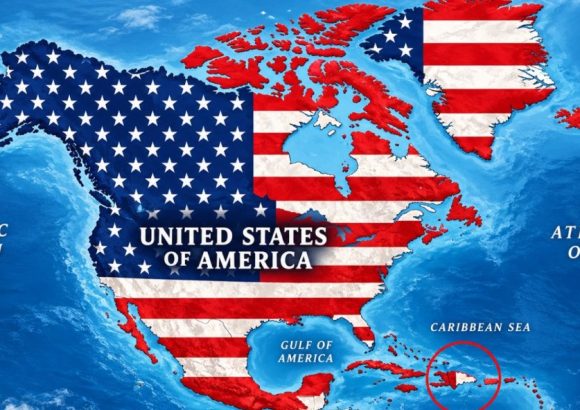
    Former U.S. President Donald Trump has reignited debate over his expansionist political rhetoric after posting an uncaptioned map to his Truth Social platform that depicts multiple North American and Caribbean nations, including the Dominican Republic, Mexico, Canada, Greenland, and Iceland, as falling under the coverage of the U.S. flag. The cryptic post, shared on Monday, comes as Trump has spent months rolling out a series of provocative proposals to redraw geographic boundaries and rename key North American waterways and land masses, fueling concerns about his territorial ambitions if he wins a second presidential term. The map was published just hours after Trump floated another controversial renaming suggestion on the same platform, arguing that the U.S. state of New Mexico should be rechristened “New America.” This proposal follows a string of similar renaming pushes, from rebranding the Gulf of Mexico as the “Gulf of America” to a recently signed executive order that would rename Lake Ontario — a transboundary body of water shared by the U.S. and Canada — as “Lake America.” The provenance of the map shared this week remains unconfirmed. Trump regularly reposts user-generated memes, fan-created graphics, and AI-generated content from his supporters, and there is no evidence to frame the image as an official U.S. government policy proposal or formal territorial claim. Even so, the post aligns with a pattern of aggressive territorial rhetoric Trump has deployed in recent months. He has repeatedly made public comments about U.S. interests in Greenland, pushed for closer integration of Canada into the U.S., and refused to rule out the use of military force to achieve political goals in Cuba. This pattern of commentary has already drawn formal and informal pushback from regional governments. On Monday, Mexican President Claudia Sheinbaum issued a sharp public statement that, while not referencing Trump’s map directly, made clear Mexico’s position on territorial sovereignty. “Mexican territory is not and will not a colony or protectorate of any foreign country,” she asserted. Though analysts and the public have focused particular attention on the unprompted inclusion of the Dominican Republic and other smaller Caribbean nations in the map, Trump has so far offered no context to explain why the countries were marked as falling under the U.S. flag, nor has he unveiled any formal policy proposal seeking to absorb those nations into the United States.

  • PM Browne Orders Clean-Up of Point Fisheries Complex, Warns Against Illegal Dumping

    PM Browne Orders Clean-Up of Point Fisheries Complex, Warns Against Illegal Dumping

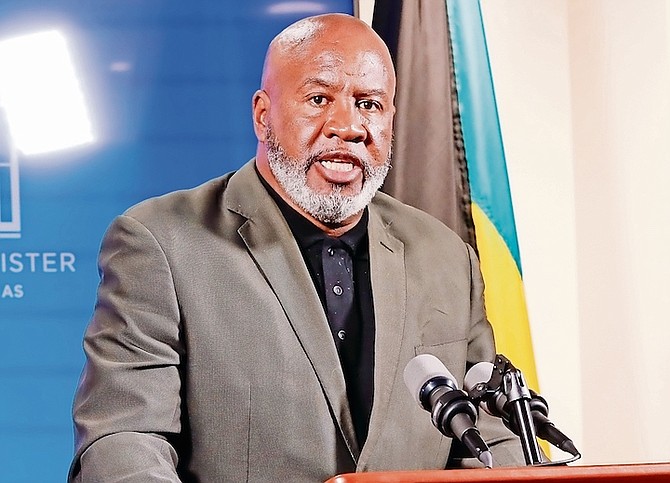
    Antigua and Barbuda’s Prime Minister Gaston Browne has ordered an immediate clean-up and full structural reorganization of the Point Fisheries Complex, announcing that the long-troubled facility cannot continue operating in its current state of persistent waste accumulation and poor public hygiene. Browne first publicly raised alarms about the government-owned complex’s condition during his weekly “Browne and Browne Show” on Saturday, after unflinching photographs exposing the site’s squalor were brought to his attention by members of the public. In his address, the Prime Minister voiced clear frustration over the pervasive buildup of general garbage, discarded building materials, and rotting fish waste at the site, confirming that years of neglect have left the facility failing to meet even basic public maintenance standards. The complex was originally developed with grant and infrastructure support from the Government of Japan, with a core mission to deliver safe, functional working infrastructure for thousands of local workers across Antigua and Barbuda’s fishing sector. Today, however, Browne emphasized that the site’s degraded, unsanitary condition directly undermines that original mission, and has created significant negative externalities for the surrounding residential Point community. Browne issued a stark warning to facility operators: any party unwilling to adhere to strict new hygiene and maintenance standards will be barred from continuing to use the public infrastructure. As a core component of the planned reorganization, the Prime Minister confirmed that formal orders have already been issued to relocate a portion of the complex’s current operations to the nearby Cooks area, a temporary shift to facilitate deep cleaning and infrastructure repairs. The scope of the clean-up effort will not be limited to the fisheries complex; crews will also extend remediation work to clean blighted public spaces across the entire wider Point community. Browne used the urgent intervention at the Point complex as a platform to renew scathing criticism of rampant illegal dumping across the entire country of Antigua and Barbuda, calling out the widespread practice of abandoning derelict vehicles and large unwanted items along public roadways. Moving forward, Browne confirmed that abandoned vehicles will be classified as a form of indiscriminate illegal littering, as the national government prepares to roll out significantly stricter enforcement measures to crack down on the practice. Relevant national authorities have been actively reviewing policy changes that would impose much heavier financial and legal penalties for illegal dumping, an effort designed to deter both private individuals and commercial operations from converting roadsides and other public green spaces into informal waste disposal sites. During his address, the Prime Minister stressed that maintaining clean, healthy communities cannot be the sole responsibility of the national government. He called on local residents to take greater personal and collective responsibility for the condition of their shared public spaces, noting that repeated unaddressed dumping does more than lower quality of life for local communities. It also erodes the scenic appeal of Antigua and Barbuda, one of the Caribbean’s most popular tourism-dependent economies, threatening a core pillar of the nation’s economic livelihood.

  • Tekort aan co-schapsplaatsen zet artsenopleiding onder druk

    Tekort aan co-schapsplaatsen zet artsenopleiding onder druk

    A new joint analysis from Suriname’s Faculty of Social and Health Sciences (FMeW) has sounded the alarm over a rapidly worsening bottleneck in the clinical training stage of the country’s medical education programs, a gap that threatens training quality and student outcomes if left unaddressed.

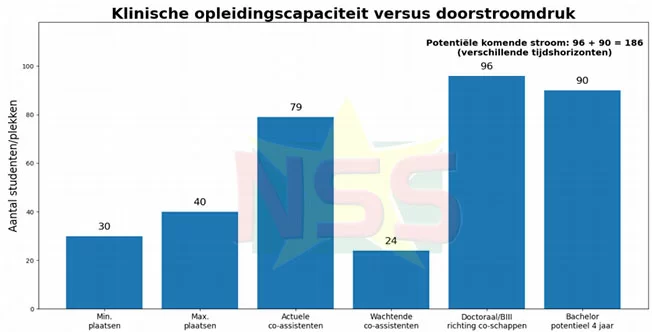
    Currently, data shows the faculty only has between 30 and 40 available clinical placement (co-schap) spots for trainee doctors. To make matters worse, 79 trainees are already active in placements across the system, with an additional 24 candidates still waiting for an open position to become available. This existing backlog is only the start of the challenge: a far larger cohort of undergraduate medical students is currently progressing through their pre-clinical coursework and will soon require clinical placements of their own.

    FMeW officials warn that expanding overall admission numbers for medical degrees without simultaneously expanding the available capacity for clinical training will only create cascading problems down the line. These risks include extended waiting periods for aspiring trainee doctors, measurable declines in training quality that put patient care at risk, and growing demotivation among students stuck in prolonged backlogs.

    A breakdown of future demand makes the scale of the gap clear. Around 96 students from the existing doctoral/BIII training pathway are still waiting to move into clinical placements. Over the coming years, an estimated 90 additional students from the new bachelor-master curriculum track will also reach the point where they need clinical training. This adds up to a potential total of 186 future students requiring placements, even if the full cohort does not need spots at the exact same time.

    Unlike pre-clinical coursework that can be expanded through online learning or larger lecture halls, clinical placement capacity cannot grow indefinitely without targeted investment and systemic change. During the clinical phase, trainees must gain hands-on experience delivering direct patient care under the close supervision of experienced medical professionals. This requires sufficient access to hospital departments, qualified supervisor time, steady patient volumes, and structured learning spaces that are already stretched thin across the current system.

    To address the growing crisis, FMeW has put forward a series of targeted policy recommendations. The core proposal is to expand the national clinical training network beyond the existing hub at the Academic Hospital Paramaribo, by formally integrating other hospitals and independent care institutions into the training system. Additional recommendations include increased public and institutional investment in hiring and training more clinical supervisors, expanding access to simulation-based medical education to supplement hands-on training, and implementing digital planning tools to streamline placement allocation and reduce administrative backlogs.

    The landmark analysis was compiled by a cross-institutional team led by FMeW Dean Fitzgerald Gopie, Vincent Lumsden, chair of the national Specialists Registration Committee, and former Director of the Suriname Health Fund Rick Kromodihardjo. The study emphasizes that any public debate about appropriate medical student admission numbers cannot be separated from discussions of clinical training capacity. Allowing more students into medical programs at the entry level without creating additional space for clinical training, the authors conclude, does not solve the country’s need for more qualified doctors — it simply shifts the crisis to a later stage of training, where it will create more harmful consequences for students and patients alike.