作者: admin

  • Column: De lente die niet wijkt

    Column: De lente die niet wijkt

    Across conflict-ravaged regions from Gaza to Afghanistan, an extraordinary juxtaposition unfolds as communities simultaneously observe Nowruz celebrations and Ramadan fasting rituals amidst unimaginable devastation. While international observers document the destruction, local residents continue centuries-old traditions with profound determination.

    In Tehran’s Tajrish Bazaar, women smile while holding flower bouquets in preparation for Nowruz, the Persian New Year that coincides with Ramadan this year. This visual symbolism contrasts sharply with scenes from Afghanistan where families clean homes surrounded by unrecovered rubble, plant flowers in pots while the earth thirsts for blood, and prepare feasts despite countless empty tables.

    The convergence of these observances creates powerful philosophical contradictions: Muslims worldwide engage in soul purification through fasting and prayer while in Gaza, Iran, Afghanistan, Syria, Yemen, and Sudan, bodies are prepared for burial with nothing but silence. Children are extracted from rubble rather than breaking their fast with dates at sunset. Mothers are buried by daughters who should be fitting new dresses for Eid celebrations.

    This persistent adherence to tradition represents what analysts term the ‘Mahdi concept’ – not a messianic figure descending from heaven, but a collective spiritual resilience that refuses to surrender to imposed circumstances. The act of cleaning homes, laying new carpets, watering flowers, and extending invitations becomes revolutionary resistance against destruction.

    Historical parallels emerge from Islamic teachings, notably Prophet Mohammed’s saying: “If the Day of Judgment arrives while one of you holds a seedling, let him plant it.” This ethos of planting despite impending doom, celebrating life within death’s shadow, forms the indestructible core of human spirit currently manifesting across conflict zones.

    The profound wisdom underlying these traditions suggests that as long as communities maintain cultural practices – cleaning, planting, inviting, fasting, praying, hoping – victory does not belong to those who believe violence holds the final word. This dual observance of Nowruz and Ramadan transcends cultural ritual to become what anthropologists identify as the most subversive resistance: refusing to stop living.

    The immense irony between what these holy days represent and what they have become creates nearly unbearable tension. Yet within this tension germinates the unbreakable seed of human resilience, demonstrating that true spring is not a season but a conscious decision to embody renewal despite surrounding destruction.

  • Raúl congratulates our exemplary women

    Raúl congratulates our exemplary women

    In a special commemorative message marking International Women’s Day, Army General Raúl Castro Ruz extended heartfelt congratulations to Cuba’s exemplary women, acknowledging their profound dedication and sustained contributions to the nation’s revolutionary endeavors. The statement, released from Havana on March 8th, 2026, emphasized the critical role women have played in shaping Cuba’s social and political landscape.

    Castro’s tribute highlighted the multifaceted participation of Cuban women across various sectors of society, recognizing their ongoing commitment to revolutionary principles. The message conveyed both admiration and affection, concluding with a symbolic embrace and kiss—gestures representing the nation’s appreciation for women’s past achievements and future potential.

    This public acknowledgment from one of Cuba’s most prominent revolutionary leaders underscores the official recognition of women’s integral role in the country’s development. The statement serves as both a celebration of International Women’s Day and a reaffirmation of women’s central position within Cuba’s revolutionary narrative, reflecting the government’s continued emphasis on gender equality as a fundamental component of socialist ideology.

  • In food production, turning challenges into opportunities

    In food production, turning challenges into opportunities

    Despite facing significant economic constraints, Cuba is demonstrating remarkable innovation in renewable energy adoption, particularly in photovoltaic solar technology. The Caribbean nation is leveraging solar power to transform its industrial operations, achieving substantial energy savings while reducing environmental impact.

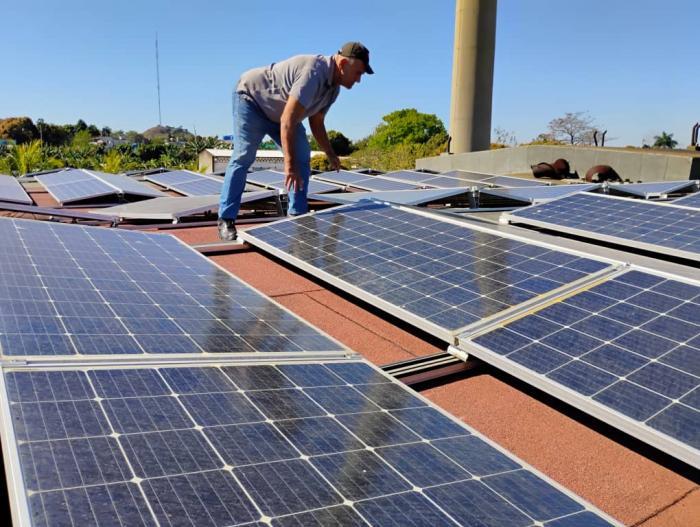
    In Villa Clara province, the local dairy industry has emerged as a pioneering example of this sustainable transition. The Villa Clara Dairy Company has implemented a comprehensive solar energy system featuring 400 photovoltaic panels installed across its facility rooftops. This strategic investment has yielded impressive results: the company eliminated its previous daily consumption of 2,200 liters of diesel for milk collection operations, reducing fuel requirements to just 259 liters through optimized transportation logistics.

    The technological transformation extends beyond mere fuel conservation. The Santa Clara dairy plant now conducts all milk pasteurization processes using exclusively solar-generated electricity. This shift produced dramatic environmental benefits in 2025 alone, saving 47 tons of diesel fuel while preventing approximately 131 tons of carbon dioxide emissions from entering the atmosphere.

    Engineer Gilberto León Gonzalez, Transportation and Energy Director at the dairy company, revealed ambitious expansion plans: “We aim to install 1,364 additional panels this year, which would guarantee 10% of the complex’s total energy consumption for various production processes.” The operation further enhances sustainability through using traditional cooking methods (firewood or charcoal) for employee meals and planning to acquire 18 electric tricycles for internal transportation.

    The renewable revolution extends across multiple industries. The “La Purísima” food processing factory, known for its popular mayonnaise and dressings, has installed solar panels to ensure continuous production despite energy challenges. According to Gustavo Benítez Fumero, regional director for the Food and Fishing Industry sector, this represents “the first major investment in the sector’s energy transition,” with additional facilities in Remedios and other locations preparing similar implementations.

    Other significant adopters include the UEB Matadero «Chichi Padrón» slaughterhouse, which is installing 272 solar panels to generate approximately 300 kilowatts for its operations, and the “Agustín Rodríguez Mena” Central Rum Distillery in Santo Domingo, which has operated since 2016 using 2,752 panels that generate surplus energy for the national grid.

    These developments demonstrate how necessity-driven innovation is enabling Cuban industries to overcome external economic pressures while building more sustainable operational models. The widespread adoption of photovoltaic technology across diverse sectors highlights both the viability and economic benefits of renewable energy solutions in challenging circumstances.

  • Directeur SBB krijgt ontslag aangezegd en kondigt juridisch verweer aan

    Directeur SBB krijgt ontslag aangezegd en kondigt juridisch verweer aan

    Suriname’s forest management authority faces leadership turmoil as Ruben Ravenberg, Director-General of the Foundation for Forest Management and Production Control (SBB), has been issued a dismissal notice. The controversy centers on conflicting employment contracts discovered during an internal investigation.

    An oversight committee review revealed two distinct employment agreements in Ravenberg’s personnel file. The initial contract, dated December 22, 2023, established a five-year term from January 1, 2024, through December 31, 2028, based on official government authorization.

    However, investigators uncovered a second agreement signed June 13, 2025, that allegedly appointed Ravenberg as indefinite-term director with enhanced compensation. This subsequent contract referenced the same governmental approval that originally authorized only a fixed-term arrangement.

    The supervisory board determined the indefinite contract was executed without proper nomination or involvement from the foundation’s board of directors, violating organizational statutes that mandate board recommendation for director appointments. The report further noted absence of formal performance evaluation or official resolution authorizing the transition to permanent status.

    Citing these procedural irregularities, the board advised Lands Policy and Forest Management Minister Stanley Soeropawiro to negotiate voluntary termination with Ravenberg to avoid potential litigation and maintain organizational stability.

    The dismissed director has vigorously contested these findings, maintaining he acted in good faith throughout the process. Ravenberg asserts the permanent appointment resulted from direct initiative by the former minister following positive performance assessment. He argues that administrative errors in supervisory decision-making cannot justify consequences for an employee who fulfilled duties appropriately.

    Ravenberg highlights his academic credentials—including advanced degrees in biodiversity and nature conservation—and emphasizes his successful implementation of organizational reforms during his tenure. He has retained legal counsel to formally challenge the dismissal, with potential court action pending ministerial response.

    This leadership crisis emerges during a critical period for Suriname’s forestry sector, where SBB plays vital regulatory roles in forest conservation and timber industry oversight.

  • Culture : Support for artistic creation, Call for Projects

    Culture : Support for artistic creation, Call for Projects

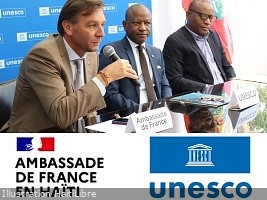
    In response to Haiti’s escalating security crisis, UNESCO’s Port-au-Prince office has initiated a comprehensive support program for the nation’s cultural sector. The project, titled “Support for Artistic Creation, the Resumption of Cultural Events, and Access to Cultural Life in Haiti in the Face of the Security Crisis,” leverages resources from UNESCO’s Emergency Fund for Cultural Heritage to assist cultural professionals severely impacted by ongoing instability.

    The initiative specifically targets creative individuals and organizations operating in security-compromised regions, with particular focus on the capital region. Eligible beneficiaries include musicians, visual artists, writers, actors, creative collectives, cultural operators, performing arts technicians, and cultural mediators from areas most affected by violence.

    This cultural stabilization program operates through two distinct mechanisms. The first component provides financial backing for cultural projects that address community expression, resilience, and social mobilization in crisis-affected zones. The second component delivers specialized training in crisis management, offering participants strategic modules on risk assessment, emergency resource mobilization, strategic planning, and effective communication during turbulent periods.

    UNESCO has announced substantial support opportunities, with grants of up to $8,000 available for qualifying artistic creation projects and cultural events. The application portal is currently active through an online submission system, with a strict deadline of March 20, 2026. This intervention underscores UNESCO’s continued commitment to cultural resilience in Haiti and its support for the creators and institutions essential to preserving the nation’s vibrant cultural identity during challenging times.

  • Deadly crash on Duarte Highway leaves four victims

    Deadly crash on Duarte Highway leaves four victims

    A devastating head-on collision on the Duarte Highway Sunday night resulted in four fatalities and left one minor injured, according to official reports from the General Directorate of Traffic Safety and Land Transportation (DIGESETT). The tragic incident occurred on the stretch of road between Bonao and Santo Domingo, specifically past the Falconbridge entrance near La Minita in the Ingenio community.

    Preliminary investigation indicates that the driver of a Lexus SUV, traveling from Santo Domingo toward the Cibao region, suddenly lost control of the vehicle. The SUV veered into the oncoming lane, resulting in a catastrophic frontal impact with a passenger car carrying five occupants from Cotuí. The car carried three adults and two minors, all residents of the Cotuí area.

    The immediate aftermath of the collision proved fatal for four of the five occupants in the passenger vehicle. Emergency responders confirmed that one child survived the crash with injuries but has been reported to be out of immediate danger. The three individuals traveling in the Lexus SUV emerged from the incident without physical harm.

    A multi-agency response was swiftly coordinated following the accident. Units from the National Emergency and Security System 9-1-1, DIGESETT traffic agents, and local firefighters arrived at the scene to provide emergency medical assistance, manage traffic flow, and conduct preliminary on-site investigations. The crash has sent shockwaves through the close-knit community of Cotuí, where the deceased victims resided.

    Authorities have launched a comprehensive investigation to determine the precise factors that contributed to the loss of vehicle control and the subsequent collision. Investigators are examining all potential causes, including road conditions, vehicle mechanical failure, and driver error.

  • Corruption : Results of the 2025 Diagnostic Survey (Report)

    Corruption : Results of the 2025 Diagnostic Survey (Report)

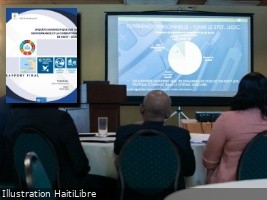
    A groundbreaking diagnostic survey on governance and corruption in Haiti, jointly presented by the United Nations Development Programme (UNDP-Haiti) and the nation’s Anti-Corruption Unit (ULCC), has revealed staggering levels of institutional corruption severely impacting the Caribbean nation.

    The comprehensive assessment, conducted throughout 2025, demonstrates that corruption in Haiti transcends abstract conceptuality, manifesting as a concrete barrier to development that imposes substantial hidden costs on households, undermines business competitiveness, and systematically erodes public trust in governing institutions.

    The empirical data presents a damning indictment of Haiti’s governance landscape: an overwhelming 92% of surveyed respondents characterize corruption levels as critically high; 71% of Haitian households report observable deterioration in public service delivery; 90% of businesses identify corruption as their primary obstacle to market competitiveness; and 67% attribute the phenomenon’s persistence to deep-rooted institutional failures within public sector frameworks.

    A particularly significant finding emerges regarding corruption’s gendered dimensions, with 52% of respondents indicating women experience disproportionately severe impacts from systemic corruption. This gender-differentiated effect highlights previously underrecognized vulnerabilities within Haiti’s socioeconomic fabric.

    The UNDP emphasizes that these documented realities necessitate immediate implementation of robust protective mechanisms, enhanced alert systems, and strengthened enforcement protocols. The organization further stresses that integrating gender-responsive approaches into governance policy frameworks constitutes an essential requirement rather than optional consideration.

    This diagnostic survey represents not a conclusion but a foundational starting point for Haiti’s renewed anti-corruption efforts. The empirical findings will directly inform development of the new National Anti-Corruption Strategy currently being formulated under ULCC leadership, marking a critical step toward addressing one of Haiti’s most persistent governance challenges.

  • Abinader meets Bolivian president at Shield of the Americas Summit

    Abinader meets Bolivian president at Shield of the Americas Summit

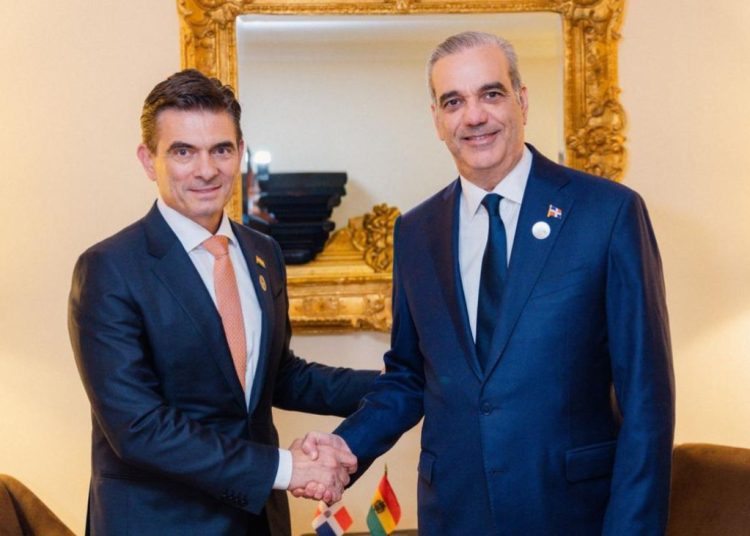
    MIAMI, FL – In a significant diplomatic engagement at the Shield of the Americas Summit, Dominican Republic President Luis Abinader and Bolivian President Rodrigo Paz Pereira convened for substantive bilateral discussions aimed at enhancing their nations’ diplomatic and economic partnership. The high-level meeting served as a platform for both leaders to explore concrete measures for deepening regional cooperation and fostering initiatives that would contribute to continental development and stability.

    The presidential dialogue focused on identifying specific areas for expanded collaboration, with particular emphasis on strengthening trade relations and diplomatic coordination. Both administrations expressed strong interest in developing mutually beneficial partnerships across multiple sectors that would bring tangible benefits to their respective populations.

    This strategic engagement formed part of President Abinader’s comprehensive bilateral agenda during the Miami-based summit, which gathers hemispheric leaders to address common challenges and advance cooperative solutions. The meeting was attended by Dominican Foreign Minister Roberto Álvarez and other senior officials from both governments, underscoring the importance placed on this diplomatic exchange.

    The Shield of the Americas Summit continues to serve as a critical forum for Western Hemisphere nations to strengthen inter-American relations and develop coordinated approaches to regional issues, with this particular bilateral discussion representing the ongoing commitment of both nations to multilateral engagement and partnership building.

  • Camillo says he regretted pledging not to sue while in politics

    Camillo says he regretted pledging not to sue while in politics

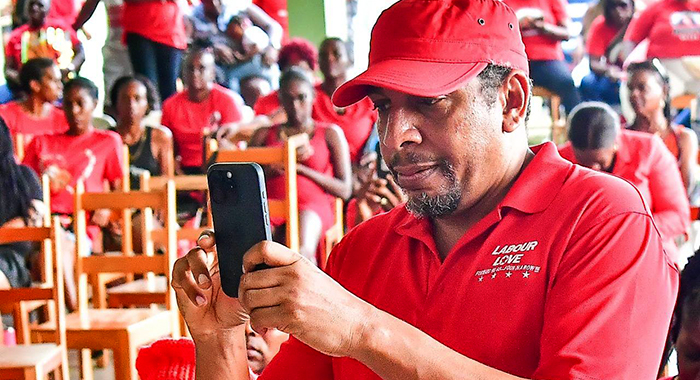
    Camillo Gonsalves, former Member of Parliament for East St. George and ex-Finance Minister, has publicly expressed regret over his self-imposed prohibition against filing defamation lawsuits during his political career. The revelation came during his guest appearance on “Morning Comrade,” a program broadcast by the Unity Labour Party’s Star Radio, where he substituted for his father, Opposition Leader Ralph Gonsalves.

    Gonsalves disclosed that before entering politics, he had committed in writing to never pursue legal action against individuals for defamatory statements, a principle rooted in his journalistic training and belief in press freedom. Having earned his first degree in journalism in the United States, he explained how educators “hammer into your head the freedom of the press and that you mustn’t have a chilling effect on people, on the freedom of expression.”

    Despite maintaining this commitment throughout his tenure, Gonsalves acknowledged numerous instances of being defamed, stating: “Many times, I wish I hadn’t made that promise to myself, because I was defamed many, many, many times, and continue to be defamed.” He notably added, “Watch me, I ain’t in office now ah nuh. I go sue yo,” indicating a potential shift in his legal approach post-office.

    The context for these remarks emerged from his criticism of the ruling New Democratic Party’s decision to withdraw state advertising from Star Radio, which has been operational since 2008. While expressing confidence in the station’s resilience, Gonsalves condemned the move as “grounded in spite” rather than fiscal responsibility, emphasizing that “you’re not going to balance the budget on the little $2 that you used to send to Star Radio.”

    Gonsalves further articulated his philosophical stance on media ecosystems, advocating for diverse viewpoints to compete freely unless actors demonstrate malicious intent. During his broadcast, he reinforced his position by reading statements from hemispheric organizations that condemn using state advertising as punishment against government-critical media outlets.

  • Dominican government honors women with Medal of Merit on International Women’s Day

    Dominican government honors women with Medal of Merit on International Women’s Day

    SANTO DOMINGO – In a significant national ceremony commemorating International Women’s Day, President Luis Abinader presided over the 41st awarding of the Medal of Merit for Dominican Women, the state’s highest honor recognizing female contributions to national development. The event, hosted at the National Theater Eduardo Brito, served a dual purpose: celebrating contemporary achievements and paying historical tribute.

    The gathering held profound historical significance as it simultaneously marked the centenary of the birth of Minerva Mirabal, an iconic figure in the resistance against the dictatorship of Rafael Leónidas Trujillo. Her enduring legacy was underscored as a foundational inspiration for modern generations of Dominican women excelling across public, social, and economic spheres.

    Gloria Reyes, addressing attendees, presented a data-driven assessment of the nation’s gender landscape. She reported substantial progress in political representation, revealing that 9,167 women (constituting 43% of all candidates) contested the 2024 elections, with 1,226 achieving electoral success, securing approximately 49% of available positions. However, Reyes provided a balanced perspective by acknowledging persistent systemic challenges, including gender-based violence, economic disparities, and the inequitable distribution of domestic responsibilities.

    The ceremony served as a panoramic showcase of female excellence, honoring dozens of distinguished women from diverse professional fields such as scientific research, journalism, athletic achievement, education, business leadership, diplomatic service, healthcare, and public administration. In a moving segment, a posthumous recognition was conferred upon Zobeyda Alejandrina Cepeda Peña, a revered feminist and human rights defender. The tribute to Minerva Mirabal was formally received by her daughter, Minou Tavárez Mirabal, connecting the nation’s past struggles to its present advancements.