作者: admin

  • Police removal of anti-mining signs at Deux Branches points to cover-up, suppression of right to protest, says Jerry Brisbane

    Police removal of anti-mining signs at Deux Branches points to cover-up, suppression of right to protest, says Jerry Brisbane

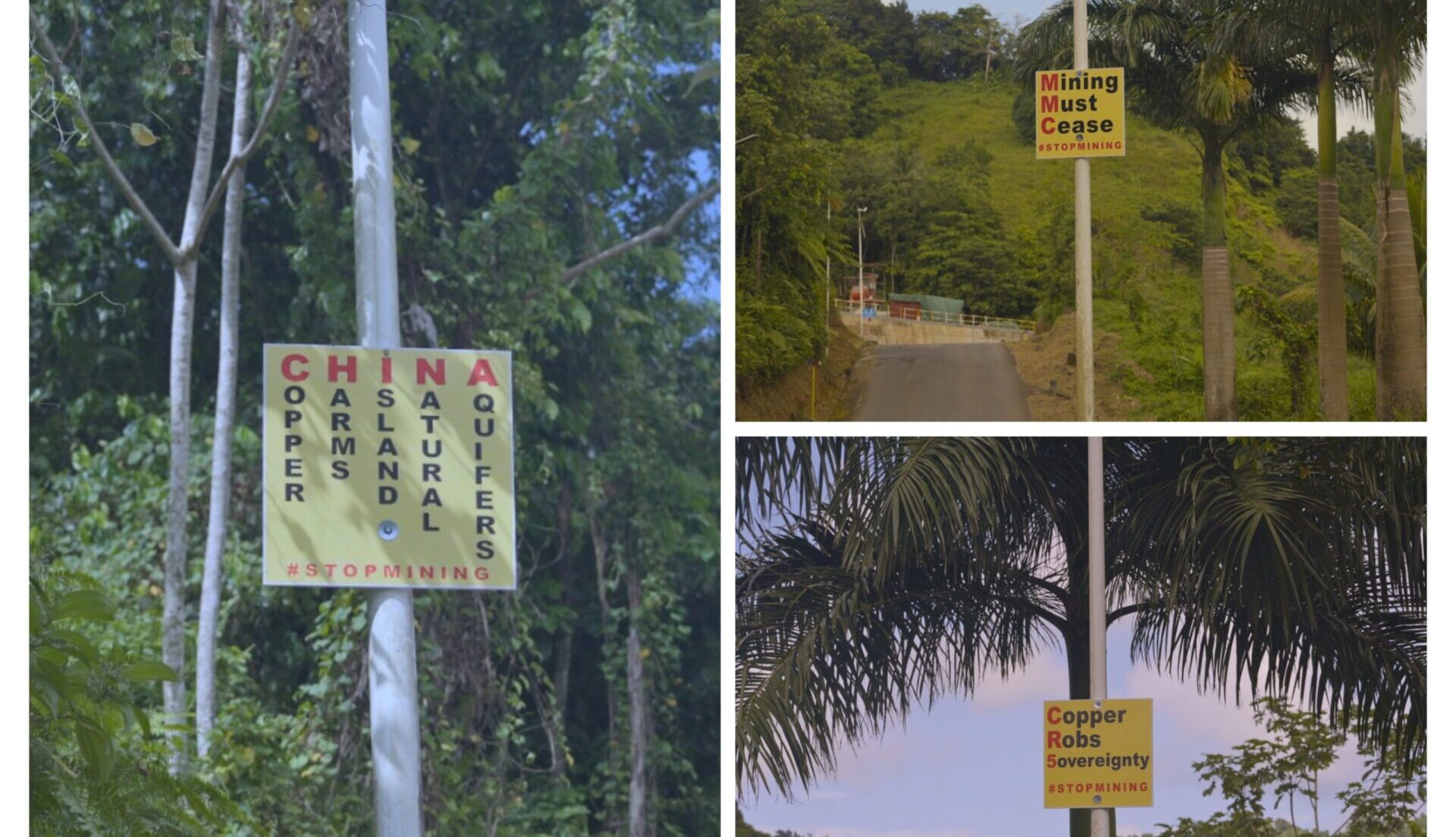
    Environmental campaigner Jerry Brisbane has leveled serious accusations against Dominican authorities, claiming systematic suppression of protests against alleged clandestine mining operations in the Deaux Branches region. In a revealing interview with Matt Peltier, Brisbane detailed what he describes as a coordinated campaign to silence environmental advocates through police intimidation and destruction of protest materials.

    The controversy centers on disputed quarrying activities that Brisbane maintains serve as camouflage for illegal copper extraction. According to the activist, the pattern of interference began when police initially responded to protest sign installations but took no action. Subsequently, upon returning to their protest site approximately one hour later, Brisbane’s team witnessed three individuals—including an Asian woman documented filming through a vehicle window—methodically removing their signage.

    Brisbane reported this surveillance and interference pattern repeated each time activists attempted to replace approximately six damaged signs. Most alarmingly, he claims to possess footage showing officers from Wesley Police Station subsequently arriving with a van and ladder to complete the removal operation themselves—actions he characterizes as environmentally destructive since signs were allegedly discarded into nearby rivers.

    The activist questioned both the jurisdictional appropriateness of Wesley police operating outside their constituency and the prioritization of sign removal over addressing environmental crimes. He highlighted the irony of police having ‘idle time’ for such operations after 6 PM while allegedly ignoring substantial environmental violations.

    Brisbane emphasized his movement opposes not development itself but environmentally destructive practices driven by hidden agendas. He warned unchecked extraction could cause catastrophic, irreversible damage to the region’s ecosystem.

    Despite acknowledging intimidation attempts, Brisbane reaffirmed his commitment to exposing these issues, framing his activism as patriotic defense of Dominica’s natural heritage. He expressed particular concern about public distraction during Carnival celebrations, noting ironically that ‘while Dominicans are sewo-ing, their rights have been stolen.’

    The activist concluded with a defiant statement regarding potential arrest, declaring it would be ‘the greatest honor’ to be detained for defending his country’s environment against illegal destruction.
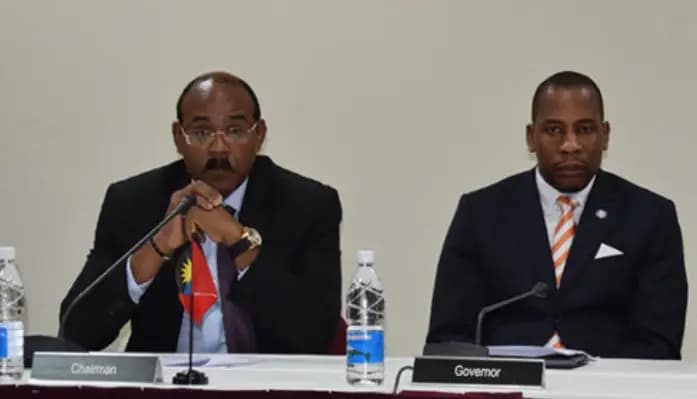
  • Prime Minister Gaston Browne Chairs 112th Monetary Council Meeting of the Eastern Caribbean Central Bank

    Prime Minister Gaston Browne Chairs 112th Monetary Council Meeting of the Eastern Caribbean Central Bank

    The Eastern Caribbean Central Bank’s Monetary Council convened its 112th meeting on February 13, 2026, under the remote chairmanship of Prime Minister Gaston Browne. The high-level gathering at the ECCB Campus in Saint Kitts and Nevis addressed pressing economic challenges and strategic responses to evolving global conditions.

    Amid geopolitical tensions and structural hurdles within the Eastern Caribbean Currency Union, council members prioritized maintaining monetary stability while accelerating regional transformation initiatives. The session yielded several significant outcomes, beginning with the unanimous reappointment of Timothy N.J. Antoine as ECCB Governor for an additional five-year term starting February 1, 2026. This decision reflects the council’s emphasis on leadership continuity during critical economic restructuring.

    The council extensively reviewed the Governor’s comprehensive report titled ‘ECCU 2026 and Beyond: Bold Policies for Bigger and More Resilient Economies,’ which reinforced monetary stability as the foundation of regional development strategy. The Eastern Caribbean dollar demonstrated remarkable strength with a 99.5% backing ratio—significantly exceeding the statutory 60% requirement—and foreign reserves totaling EC$5.83 billion. July 2026 will commemorate five decades of the currency’s fixed exchange rate at EC$2.70 to US$1.00.

    Considering stable domestic conditions and moderating global inflation, policymakers maintained current interest rates: the Minimum Savings Rate at 2.0%, Discount Rate at 3.0% for short-term credit, and 4.5% for long-term credit. These measures aim to preserve currency union stability and sustain investor confidence.

    The banking sector assessment revealed robust health with substantial liquidity (EC$1.41 billion in excess reserves as of January 2026), strengthened capital buffers, improved adequacy ratios, and declining non-performing loans. The ECCU Credit Bureau expansion continues, with five member states now fully operational, facilitating improved credit access.

    While projecting 3.3% growth for 2026, the council acknowledged the necessity to accelerate expansion to approximately 7% annually to double regional output within ten years. Members committed to advancing the ‘Big Push’ strategy focusing on productivity enhancement, economic diversification, food and energy security, financial market development, and climate resilience. Strategic priorities include infrastructure modernization, renewable energy expansion, human capital development, and increased financial inclusion.

    Significant regulatory advancements include progress toward establishing the Eastern Caribbean Citizenship by Investment Regulatory Authority (ECCIRA) and implementing a Regional Biometrics Programme, both expected to enhance governance and investor confidence.

    Financial modernization efforts featured the suspension of DCash 2.0 development to prioritize a Fast Payment System and participation in the CARICOM Payments and Settlement System pilot. The successful 2025 ECCU Retail Bond Programme pilot was recognized as instrumental in broadening capital market access, while plans for a 2026 Office of Financial Conduct aim to strengthen consumer protection.

    Fiscal sustainability concerns emerged as some member states risk missing the 2035 debt-to-GDP target of 60%, underscoring the need for disciplined fiscal management. Tourism remained the economic cornerstone with 3.3 million visitor arrivals and EC$6.4 billion in expenditures by Q3 2025, though long-term prosperity requires deeper economic diversification.

    The upcoming 10th Annual Growth and Resilience Dialogue (April 22-24, 2026) will further develop these initiatives under the theme ‘Big Push: Resilient Leadership in a Dynamic World.’ Leadership transition will occur on July 9, 2026, in Dominica, with Irving McIntyre expected to assume chairmanship before the 113th Monetary Council meeting on July 10, 2026.

    Prime Minister Browne reiterated Antigua and Barbuda’s steadfast commitment to regional cooperation, financial innovation, macroeconomic stability, and sustainable growth throughout the Eastern Caribbean.

  • Schools receive thousands of basketballs through diaspora tie-up

    Schools receive thousands of basketballs through diaspora tie-up

    In a significant development for Caribbean sports infrastructure, Saint Lucia has received a substantial donation of 1,200 basketballs valued at approximately CAD$24,000 (EC$47,600) through a collaborative initiative between government agencies and diaspora representatives.

    The equipment distribution to local institutions and athletic programs was orchestrated by the Ministry of External Affairs and Diaspora Affairs, highlighting the growing importance of transnational partnerships in sports development. The donation materialized through the diplomatic efforts of Henry Mangal, Saint Lucia’s Consul General in Toronto, who established a strategic connection with Tracy Archie Alexander, a compatriot working at Canada’s Wonderland amusement park.

    Ambassador Julian Dubois, responsible for Diaspora Affairs, characterized the contribution as part of a comprehensive strategy to systematize basketball development across the island nation. The initiative specifically targets youth basketball programs, with structured support planned for various age categories including under-12, under-15, and under-17 divisions. Distribution plans include allocating 25 balls to each secondary school and providing 100 balls to the Saint Lucia Basketball Federation to bolster organizational capacity.

    Glen Guiste, President of the Saint Lucia Basketball Federation, expressed profound appreciation for the equipment infusion, noting that the donation arrives at a critical juncture in the sport’s expansion across the island. Federation officials confirmed the equipment would be immediately deployed to support both school programs and competitive league development, addressing previous equipment shortages that had hampered training capabilities.

  • Antigua Carnival Has Been Promoted in Dominica and Trinidad

    Antigua Carnival Has Been Promoted in Dominica and Trinidad

    In a strategic move to capture post-Carnival tourism traffic, Antigua and Barbuda officials launched an aggressive promotional campaign during Trinidad’s iconic Carnival celebrations. A high-level delegation comprising representatives from both the Antigua and Barbuda Tourism Authority and the Antigua and Barbuda Festivals Commission engaged directly with attendees, media outlets, and event promoters throughout the festivities.

    The initiative specifically targets maintaining regional travel momentum immediately following Trinidad’s final parade, positioning Antigua’s Carnival as the natural continuation for dedicated soca enthusiasts and festival participants. This calculated approach aims to channel the energy of Trinidad’s celebrations directly into Antigua’s tourism ecosystem.

    Beyond the obvious musical and parade attractions, representatives highlighted the dual-island nation’s diverse appeal, showcasing pristine beaches, world-class sailing facilities, gourmet culinary experiences, and rich cultural heritage. This comprehensive presentation forms part of a broader strategy to transform short-term carnival visitors into extended-stay tourists, thereby increasing tourism revenue and visitor engagement.

    The campaign represents a concerted effort to strengthen Antigua and Barbuda’s competitive position within the Caribbean’s crowded festival market. By targeting both first-time visitors and returning guests from across the Caribbean region, the tourism authority aims to create sustainable growth in its tourism sector while establishing the nation as a premier destination for cultural and recreational tourism.

  • Nobel Winner Machado Could Make Political Comeback in Venezuela

    Nobel Winner Machado Could Make Political Comeback in Venezuela

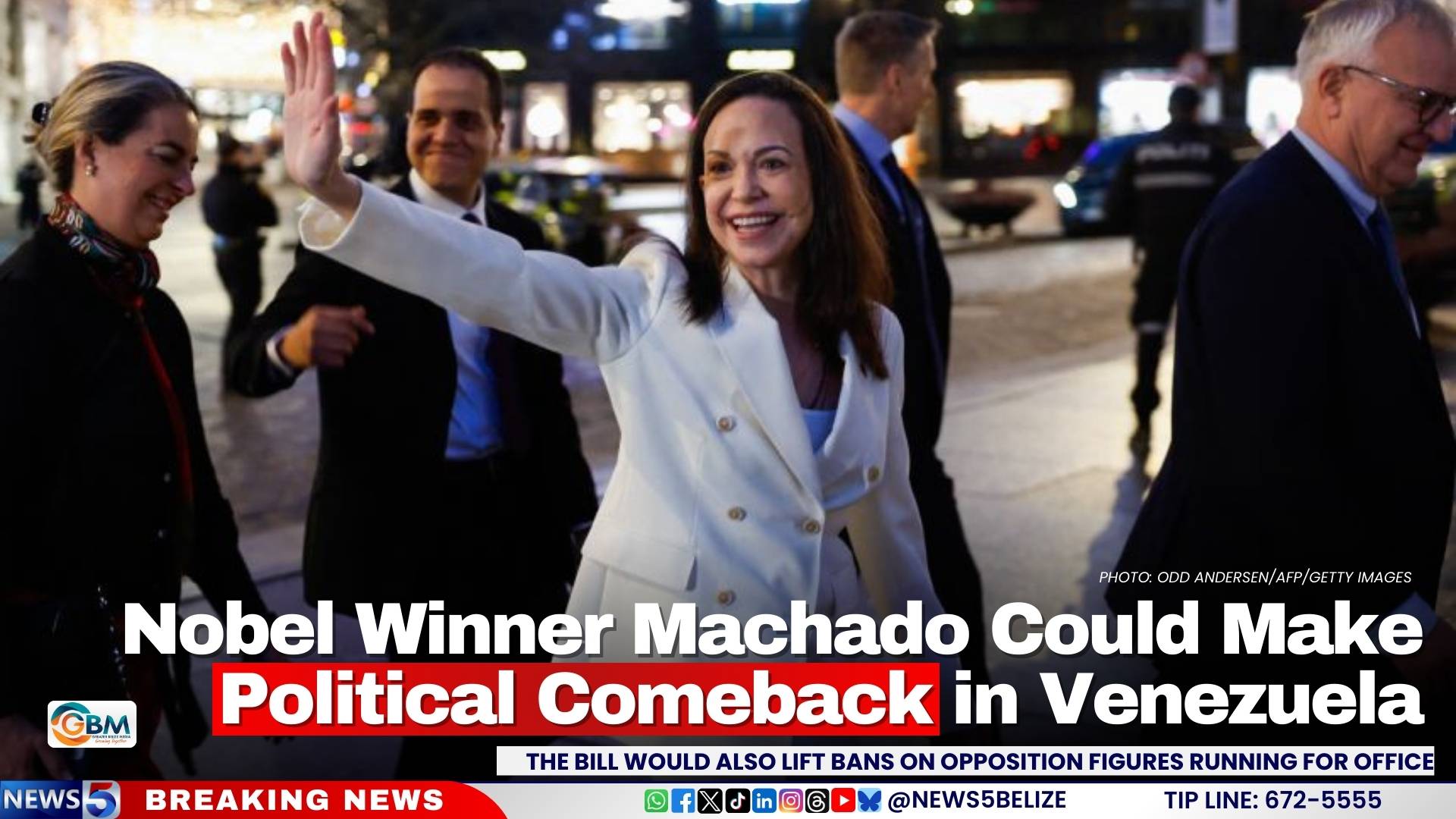
    Caracas witnessed massive parallel demonstrations on Thursday as Venezuela’s National Assembly engaged in heated debates over groundbreaking amnesty legislation that could reshape the country’s political landscape. The proposed bill, which represents the most significant political reform initiative since interim President Delcy Rodriguez assumed power following Nicolas Maduro’s controversial extradition in January, has ignited both hope and controversy across the nation.

    The opposing rallies, each drawing substantial crowds, highlighted the deep political divisions that continue to characterize Venezuelan society. Rodriguez’s administration mobilized supporters to stage counterprotests against opposition demonstrators, marking the first major public confrontation since the leadership transition.

    The comprehensive amnesty proposal seeks to nullify charges historically used to imprison government critics since 1999, including allegations of treason, terrorism, and hate speech propagation. However, the legislation maintains specific exclusions for individuals convicted of murder, corruption, drug trafficking, or human rights violations.

    President Rodriguez characterized the bill as a necessary reconciliation measure designed to ‘heal the wounds left by the political confrontation fuelled by violence and extremism.’ Despite this overture toward political normalization, over 600 individuals categorized as political prisoners remain detained pending the legislation’s outcome.

    Most notably, the proposed amnesty would remove electoral disqualifications against opposition figures, potentially clearing the path for Nobel Peace Prize recipient Maria Corina Machado to reenter Venezuela’s political arena. This development could significantly alter the country’s political dynamics and open possibilities for Machado’s potential political resurgence.

  • Mexican Help Reaches Cuba, ‘More to Come’

    Mexican Help Reaches Cuba, ‘More to Come’

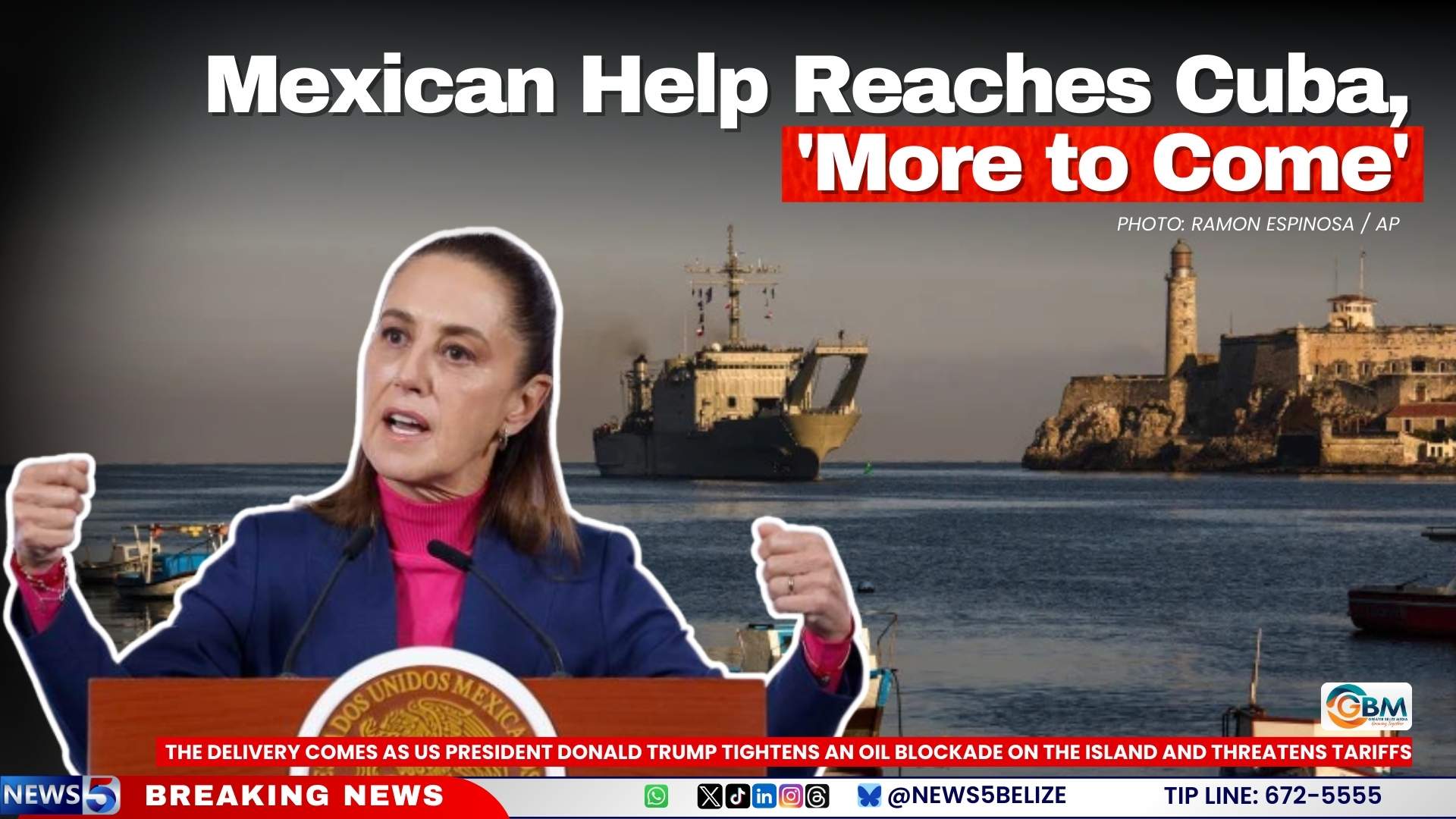
    In a significant show of regional solidarity, two Mexican naval vessels carrying over 800 tonnes of essential food and supplies docked in Havana on Thursday. Mexican President Claudia Sheinbaum announced this initial delivery marks just the beginning of a sustained aid initiative, with additional support missions already in planning stages.

    President Sheinbaum, during her regular morning news briefing, explicitly stated, “We are dispatching various forms of assistance and support. Upon their return, we intend to send further support of a different nature,” indicating a phased and multifaceted aid strategy.

    This humanitarian mission unfolds against the backdrop of escalating tensions between Cuba and the United States. The Trump administration has intensified its oil embargo against the island nation while threatening punitive tariffs on any country attempting to circumvent these restrictions. Sheinbaum condemned these measures as “profoundly unjust,” asserting that “One cannot suffocate an entire nation in this manner by imposing sanctions on countries supplying fuel to Cuba.”

    The comprehensive US restrictions have triggered severe disruptions across Cuban society, critically impacting hospital operations, educational institutions, transportation systems, telecommunications networks, and the vital tourism industry. Cuban authorities have characterized the situation as an effective “energy blockade.” United Nations officials have issued warnings of potential humanitarian catastrophe unless oil supplies are promptly restored.

    Meanwhile, international concerns are broadening as Belizean parents express growing apprehension for their medical students residing in Cuba during the escalating crisis. Belize’s Ministry of Foreign Affairs has confirmed it maintains continuous communication with affected students, closely monitoring their welfare status while evaluating potential support measures or emergency repatriation procedures if conditions deteriorate further.

  • Resurfacing of West Indies Oil Road Commences

    Resurfacing of West Indies Oil Road Commences

    The Ministry of Works has initiated preliminary operations for the comprehensive resurfacing of West Indies Oil Road, a critical thoroughfare connecting Friars Hill Road and Marble Hill Road. This infrastructure enhancement project commenced with preparatory work this weekend, necessitating the implementation of a designated detour route throughout Saturday and Sunday. Despite the ongoing construction activities, all commercial establishments along the affected corridor continue normal operations without interruption. Transportation authorities have advised motorists to anticipate minor delays and consider alternative routes where possible. The resurfacing initiative represents part of the government’s broader commitment to maintaining and upgrading key transportation networks across the region. Officials emphasize that the temporary inconvenience will result in significantly improved road conditions and enhanced driving safety upon project completion. Further updates regarding project timelines and additional traffic management measures will be communicated through official channels as work progresses.

  • Salarisstrook SRD 1 miljoen pg duikt op na kritiek Van der San

    Salarisstrook SRD 1 miljoen pg duikt op na kritiek Van der San

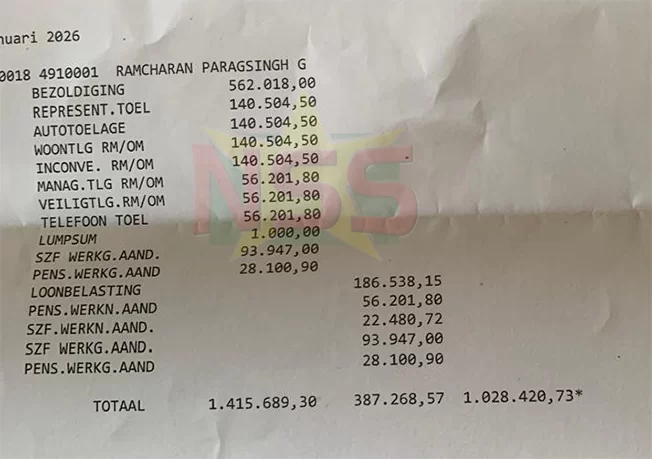
    A significant development has emerged in Suriname’s ongoing judicial compensation controversy as former Cabinet Director Eugène van der San has obtained and publicly revealed the official pay stub of Attorney General Garcia Paragsingh. The document, reportedly delivered to Van der San’s mailbox, provides concrete evidence of the substantial compensation package that has ignited political debate.

    The salary breakdown reveals a gross monthly income exceeding SRD 1.4 million, with net earnings amounting to over SRD 1 million after deductions. The compensation structure includes a base salary of SRD 562,018 supplemented by numerous allowances for representation, vehicle, housing, and management responsibilities. Employer contributions for pension and social security benefits are also detailed, alongside standard deductions for income tax and social fund contributions.

    This disclosure follows intense political scrutiny initiated by National Assembly member Poetini Atompai (NPS), who recently demanded full transparency regarding judicial branch compensation during parliamentary proceedings. Atompai raised concerns about proportionality and reasonableness, suggesting some judicial salaries might exceed the President’s compensation by three to five times. The lawmaker urgently called for immediate government transparency regarding salary structures, entry dates, monthly state burdens, and cumulative budgetary impacts.

    The controversy intensified when both Van der San’s calculations and Starnieuws news outlet, which conducted independent verification, faced substantial criticism from various quarters. The emerging debate highlights growing concerns about income disparity within Suriname’s public sector and calls for comprehensive reform of judicial compensation transparency.

  • Your Package Will Cost $1 More to Ship to the U.S.

    Your Package Will Cost $1 More to Ship to the U.S.

    The Belize Postal Service has announced a significant policy change that will increase shipping costs for packages destined for the United States. Effective immediately, all international shipments to the U.S. will incur an additional one-dollar fee, a measure formally approved by the nation’s Cabinet.

    This strategic adjustment directly responds to sweeping changes in U.S. trade regulations initiated by an executive order from President Donald Trump in July 2025. The American policy overhaul eliminated the longstanding duty-free threshold that previously allowed goods valued up to $800 to enter the United States without taxation. Under the updated framework, all dutiable international postal items are now subject to U.S. import taxes.

    Belizean officials have characterized the surcharge as an essential operational measure rather than a revenue-generating initiative. The additional dollar per package will enable the postal service to offset increased administrative costs and compliance burdens associated with the revised American regulatory requirements. These include enhanced customs documentation, processing procedures, and potential liability for undeclared goods.

    The financial impact is expected to affect both commercial enterprises and private citizens who regularly utilize postal services for transboundary shipments. Small to medium-sized businesses engaged in e-commerce and export activities may face compounded operational expenses, while individuals sending gifts or personal items to family members in the U.S. will encounter higher mailing costs.

    The policy implementation reflects broader global adjustments to the U.S. trade policy shift, with multiple nations reconsidering their postal agreements and fee structures. Belize’s approach demonstrates how smaller economies are adapting their administrative frameworks to maintain functional postal relationships with the United States while managing increased regulatory complexity.

  • A World Cup, a coach and a legacy: Why the 2026 T20 World Cup is vital for Sammy

    A World Cup, a coach and a legacy: Why the 2026 T20 World Cup is vital for Sammy

    The role of West Indies head coach stands as one of cricket’s most intensely scrutinized positions, drawing commentary from a global fanbase of diverse sporting knowledge and nationalities. Since 2023, Daren Sammy has carried this responsibility for the white-ball formats, with his expanded role as full-format head coach commencing in April 2025.

    Sammy brings exceptional credentials to the position: a three-time ICC Trophy winner, two-time T20 World Cup champion captain, and accomplished coach with titles in the Pakistan Super League and Caribbean Premier League. His appointment across all formats in December 2024 signaled Cricket West Indies’ confidence in his leadership.

    Yet this impressive resume faces its ultimate test during the ongoing T20 World Cup, where tournament performance may ultimately define his coaching legacy. Under Sammy’s guidance, the West Indies avoided the qualification embarrassment that plagued previous campaigns, successfully securing their place as co-hosts after missing both the 2023 ICC World Cup and 2025 Champions Trophy.

    Sammy’s return to West Indies cricket carries particular significance given his historic departure. His emotionally charged 2016 post-victory interview, where he criticized the Dave Cameron-led board’s ‘disappointing’ reception, effectively ended his international playing career. That he returned under new leadership demonstrates his profound commitment to Caribbean cricket development.

    Recent results, however, have drawn legitimate criticism. Since the 2024 T20 World Cup, the West Indies have lost nine bilateral series while winning only two, including a shocking defeat to Nepal with a weakened squad. These performances prompted Cricket West Indies president Kishore Shallow to publicly characterize results as ‘below par’ while acknowledging Sammy’s shared responsibility for disappointing 2025 outcomes.

    Cricket legend Ian Bishop emphasizes that World Cup performance will heavily influence Sammy’s evaluation. While acknowledging challenging pre-tournament series against top teams like Australia, India, and New Zealand, Bishop stated: ‘From a white-ball point of view, the real proof is going to be the T20 World Cup. That team has tremendous batting potential, and his assessment will rest heavily on this tournament.’

    Sammy himself draws parallels to his 2016 championship campaign, noting similar underdog circumstances. In pre-tournament comments, he expressed confidence in his squad: ‘I’m looking at the caliber of talent in that dressing room. If we execute with bat, ball, and in the field, we’re in it to win it.’

    The Saint Lucian coach now battles not only tournament opponents but also the weight of West Indies cricket legacy. With a talented squad capable of ending the region’s decade-long ICC trophy drought, Sammy must inspire the greatness that has eluded Caribbean cricket in recent years.