作者: admin

  • Starting Tuesday, the RD$1000 banknotes dated 2025 will be in circulation.

    Starting Tuesday, the RD$1000 banknotes dated 2025 will be in circulation.

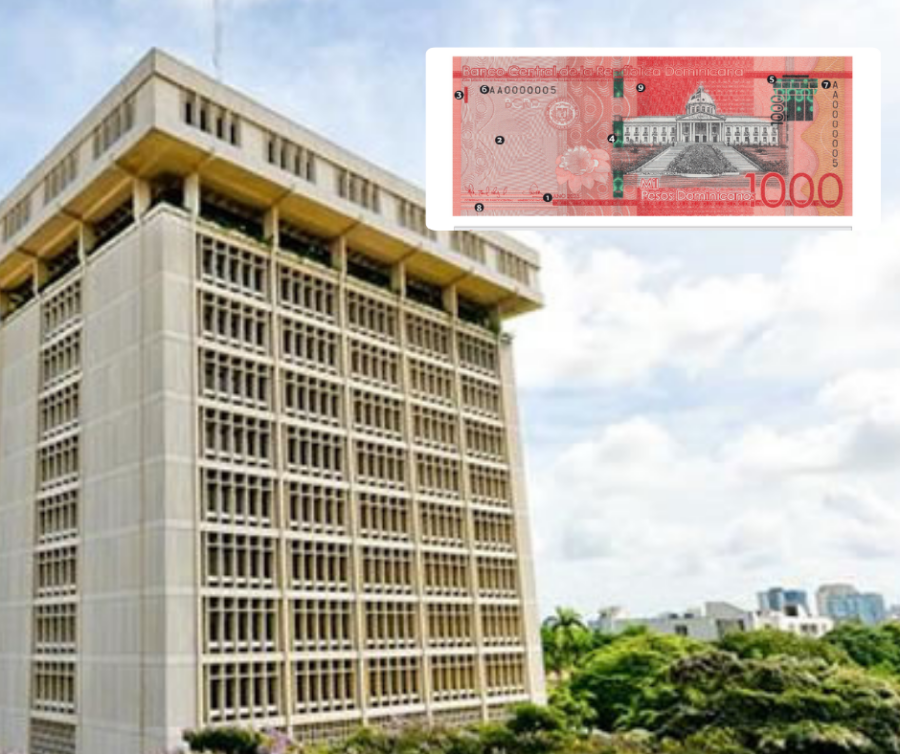
    The Central Bank of the Dominican Republic (BCRD) has officially declared that newly minted RD$1,000.00 banknotes will enter active circulation beginning Tuesday, February 17, 2026. These currency notes, bearing the 2025 date, were produced following an international public tender process initiated in May 2025.

    The updated banknotes maintain identical security specifications to the currently circulating RD$1,000.00 notes, ensuring consistency in anti-counterfeiting measures. Importantly, both existing and new versions will retain full legal tender status for settling all public and private financial obligations without distinction.

    This monetary issuance operates under the constitutional authority granted by Articles 228, 229, and 230 of the Dominican Republic’s Constitution, supplemented by the provisions outlined in Article 25, paragraphs a) and c) of Monetary and Financial Law No. 183-02.

    The BCRD has proactively encouraged public engagement with official information channels regarding these changes. Citizens seeking clarification about the new banknotes or other currency-related matters are advised to consult authoritative resources provided by the Central Bank to ensure smooth transition and verification processes.

  • Institutionele zelfverrijking onder het mom van ‘synchronisatie’

    Institutionele zelfverrijking onder het mom van ‘synchronisatie’

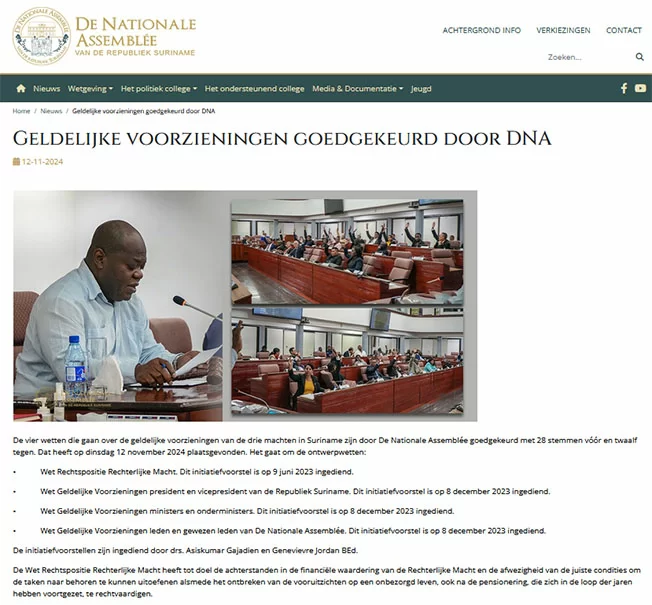
    A legislative package hailed in November 2024 as a historic correction of constitutional omissions since 1975 has been revealed as a fundamental restructuring of state income distribution that systematically benefits top officials. Under the misleading label of ‘synchronization,’ four laws governing remuneration for judiciary, presidential, vice-presidential, ministerial, and parliamentary positions created a system that disproportionately favors elite ranks while increasing state fiscal burdens and undermining public trust.

    The legislation, promoted by initiators Asis Gajadien (VHP) and Geneviévre Jordan (ABOP) with coalition support, was morally justified as eliminating double salaries, reducing privileges, raising retirement ages, promoting transparency, and improving state finances. However, instead of harmonization or savings, the laws engineered a dynamic income explosion at the top while leaving the rest of the state apparatus behind.

    Critical flaws emerged during parliamentary scrutiny. Opposition parties (NDP, BEP, NPS) repeatedly requested comprehensive financial impact assessments, multi-year projections, and scenario analyses incorporating periodic increments, service years, pension accruals, and tax exemptions. No independent financial evaluation or objective HRM valuation study comparing international benchmarks was presented before the vote, which passed with support from VHP, ABOP, PL, and BEP.

    The judicial compensation structure reveals the systemic bias: judges receive annual 5% increments, full credit for prior service years, pension structures reaching 100% of baseline salary, and tax exemptions on high allowances—benefits entirely absent from presidential compensation. This creates an asymmetrical growth mechanism where senior judicial officials with decades of service rapidly outpace their theoretical reference point (presidential salary), with some exceeding 500,000 SRD—multiple times the head of state’s remuneration.

    When public administrator Eugène van der San published calculations revealing these disparities, his analysis was initially dismissed as exaggerated. Subsequent official publications of salary scales and pay stubs confirmed net incomes far exceeded amounts suggested during parliamentary debates. Rather than acknowledging underestimation, initiators denied the discrepancies, exacerbating the credibility crisis.

    The laws were adopted while civil servants received minimal raises, teachers faced shortages and backlogs, healthcare workers operated under extreme pressure, and parliamentary support staff earned fractions of top-tier compensation. The state income structure has transformed from balanced hierarchy to disproportionate tower, with completely skewed ratios between national leadership and public workers.

    Unanswered questions demand immediate resolution: total budgetary impact over ten years including increments and pension obligations; cumulative salary increases across government branches; ratio between top incomes and average civil service wages; and why no independent financial simulation was presented before voting. Without transparent answers, suspicion remains that legislation was manipulated to structurally benefit elites.

    Presented as historic ordering before Suriname’s fiftieth independence anniversary, these laws risk becoming a historic error without correction. While judiciary deserves dignified legal status, the current consequences are morally unacceptable and socially unsustainable. If parliament fails to address this, society will correct parliament—typically through less friendly means. Trust in politics has drastically declined through this ‘synchronization’ process, awaiting concrete steps to rectify what many perceive as institutionalized self-enrichment.
  • NCD-afdeling krijgt groen licht voor uitvoering jaarplan 2026

    NCD-afdeling krijgt groen licht voor uitvoering jaarplan 2026

    Suriname’s Ministry of Health has formally approved an ambitious national strategy to address the growing burden of non-communicable diseases (NCDs) through a structured five-pillar approach for 2026. Health Minister André Misiekaba officially endorsed the comprehensive plan presented by the NCD Department focal point Cheshta Sewtahal and her team, signaling strong governmental commitment to tackling cardiovascular diseases, diabetes, cancer, and chronic respiratory conditions.

    The strategic framework centers on five critical domains: development of public policy and advocacy initiatives; health promotion and preventive measures; integrated care for both NCDs and mental health; enhanced surveillance, monitoring and evaluation systems; and strengthened cross-sectoral collaboration. Each priority area has been developed into specific core activities with measurable implementation targets for the coming year.

    Despite the comprehensive planning, officials acknowledged significant structural challenges including the absence of a national NCD policy coordination mechanism, constrained financial and human resources, and inadequate regulatory frameworks. The department emphasized that effective NCD management requires an integrated approach combining prevention, early detection, and quality care delivery.

    Key expected outcomes for 2026 include quality improvement in NCD care through HEARTS initiative implementation, accelerated execution of national prevention plans, establishment of a functional NCD and mental health surveillance system, integration of mental health services into primary care, and reinforcement of legal frameworks and intersectoral cooperation.

    With ministerial authorization now secured, the NCD department is positioned to execute a coordinated, evidence-based approach aimed at reducing disease prevalence and improving national health outcomes across Suriname.

  • Investigation” What charges does Meliton Cordero, the DEA agent arrested in the Dominican Republic, face?

    Investigation” What charges does Meliton Cordero, the DEA agent arrested in the Dominican Republic, face?

    In a significant development highlighting the U.S. government’s internal anti-corruption drive, federal authorities have announced the arrest of a Drug Enforcement Administration (DEA) operative. Meliton Cordero was taken into custody in the Dominican Republic following an investigation that uncovered alleged involvement in bribery conspiracy and visa fraud schemes.

    The case, prosecuted by District of Columbia attorney Jeanine Ferris Pirro, represents a concerted effort by federal agencies to root out misconduct within their own ranks. The Justice Department emphasized that this arrest aligns with broader national security objectives and the administration’s commitment to integrity in law enforcement.

    Pirro issued a stern warning to other government personnel, stating, ‘To any individual wearing a badge who believes they can circumvent our President’s directives: we will identify you and hold you accountable.’ This statement underscores the administration’s zero-tolerance approach toward corruption within federal agencies.

    The arrest occurs against the backdrop of intensified immigration enforcement and enhanced security coordination throughout the Caribbean region. U.S. officials have repeatedly stressed that unlawful activities by government personnel—particularly those exploiting their official positions—will face severe consequences regardless of their agency affiliation.

    This case demonstrates the Department of Justice’s ongoing initiative to maintain accountability within federal law enforcement agencies while protecting the integrity of immigration and national security systems.

  • Illegal greenhouse Neither coffee nor bananas: what they were growing in these mountains was marijuana

    Illegal greenhouse Neither coffee nor bananas: what they were growing in these mountains was marijuana

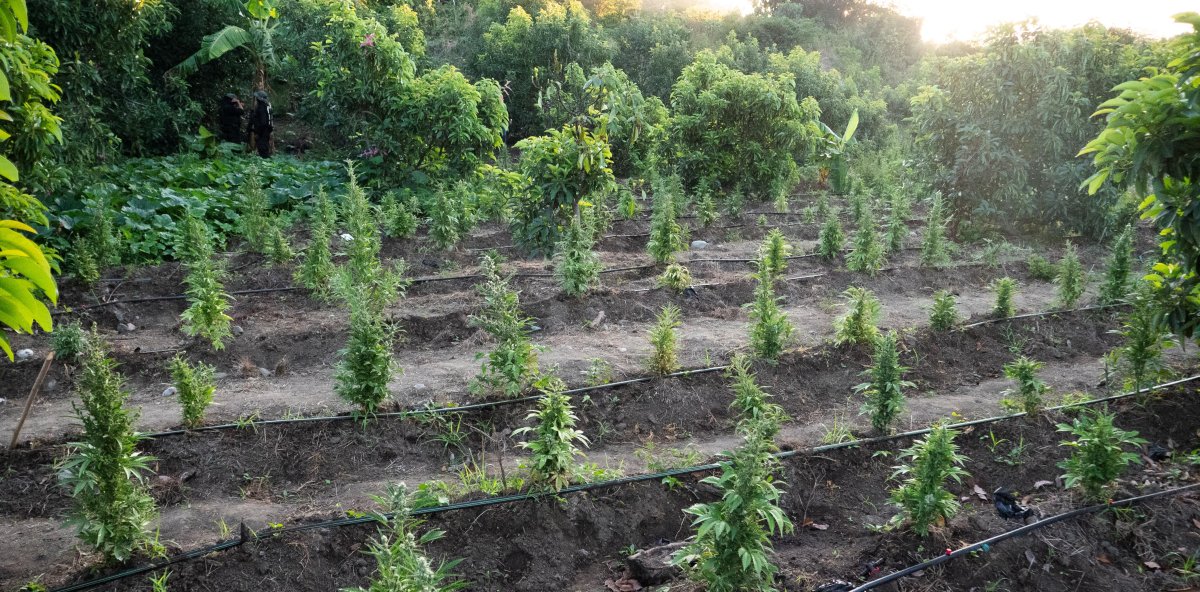
    In a significant counter-narcotics operation, Dominican authorities have uncovered and dismantled a major marijuana cultivation site in the mountainous terrain of Baní, Peravia province. The joint operation involved prosecutors from the Public Ministry and agents from the National Drug Control Directorate (DNCD), supported by state intelligence services and aerial surveillance from Dominican Republic Air Force helicopters.

    Intelligence gathering revealed multiple individuals were engaged in systematic cultivation and distribution operations, prompting an extensive air and ground assault in the Montería sector. During the raid, law enforcement officials discovered 1,835 marijuana plants standing approximately two meters tall, indicating an advanced stage of cultivation.

    The seizure included substantial evidence: two buckets filled with processed plant material, five industrial exhaust fans, four extension cords, an irrigation pump, agricultural tools, water storage tanks, multiple fuel containers, and hundreds of bags containing soil and seeds prepared for future planting. Authorities also confiscated living quarter items including foam mattresses found within a makeshift shelter at the site.

    Investigators are currently pursuing three suspects, including two Haitian nationals and a Dominican landowner identified through intelligence reports as the property owner. The Public Prosecutor’s Office has issued calls for the identified individuals to surrender voluntarily to face justice under Law 50-88 on Drugs and Controlled Substances.

    All confiscated plants and materials have been transferred to the National Institute of Forensic Sciences (INACIF) for analysis and legal processing. This operation represents one of the largest recent marijuana plantation dismantlements in the region, demonstrating enhanced inter-agency cooperation in combating drug trafficking operations.

  • After the passage of the cold front Will it rain today? Here’s the forecast for several provinces

    After the passage of the cold front Will it rain today? Here’s the forecast for several provinces

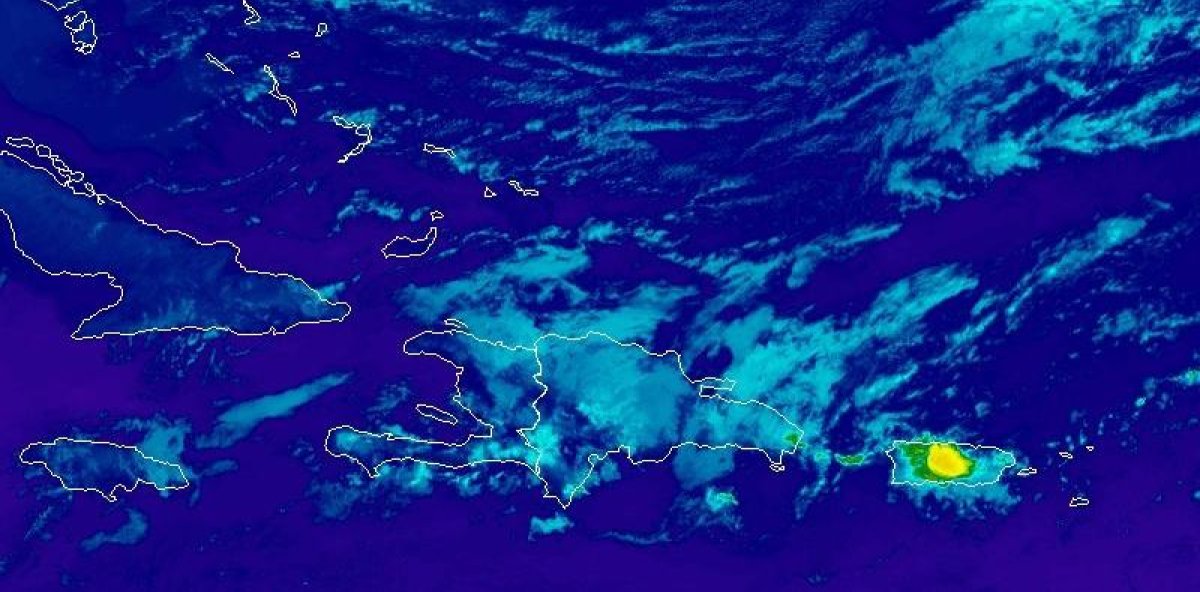
    The Dominican Republic is experiencing a significant shift in meteorological conditions this Sunday as the frontal system previously affecting the nation weakens substantially. According to the Dominican Institute of Meteorology (Indomet), this transition brings markedly reduced precipitation and the cancellation of all weather alerts that had been in effect during recent days.

    Meteorological analysis indicates that a drier, more stable air mass linked to an approaching high-pressure system is now dominating the region’s weather patterns. This atmospheric change will substantially limit rainfall across most territories, though isolated morning showers of light to moderate intensity are anticipated in several northern provinces including Duarte, Hermanas Mirabal, María Trinidad Sánchez, Espaillat, Puerto Plata, Monte Cristi, and La Altagracia’s coastal zone.

    During afternoon hours, meteorological models suggest precipitation may extend to Monseñor Nouel, La Vega, and Santiago regions, plus southwestern mountain ranges, driven by localized effects and cool northeasterly wind patterns. Evening conditions will see easterly and northeasterly winds transporting cloud cover that may generate isolated showers in El Seibo, Hato Mayor, Monte Plata, Santo Domingo, and other northeastern locations.

    The forecast indicates increasing atmospheric instability by Monday, with scattered showers expected from early morning across eastern, northeastern and central provinces including La Romana, San Pedro de Macorís, Sánchez Ramírez, Samaná, and San José de Ocoa. Meteorological analysis suggests precipitation could intensify during afternoon hours, particularly throughout the Cibao region where localized downpours may occur, potentially accompanied by electrical storms and gusty winds.

    Temperature projections indicate a continuing decline over the next 24-48 hours, consistent with seasonal patterns and the recent frontal system’s passage. The resulting thermal conditions will create noticeably pleasant cooling sensations, especially in mountainous areas during nighttime and early morning hours.

  • PRM marks 11th anniversary today: a massive show of force in Santiago amid internal friction

    PRM marks 11th anniversary today: a massive show of force in Santiago amid internal friction

    SANTIAGO, DOMINICAN REPUBLIC – The Modern Revolutionary Party (PRM), the nation’s governing political force, marked its 11th anniversary with a massive demonstration of political strength at the Gran Arena del Cibao on Sunday. President Luis Abinader headlined the capacity event, which served as both a celebration of the party’s decade-long ascent to power and a strategic display of organizational might in the electorally crucial Cibao region.

    The arena reached full capacity as delegations from all 14 provinces of the northern region gathered to hear party leaders including José Ignacio Paliza and Carolina Mejía. The event projected an image of political dominance and continuity while simultaneously functioning as an unofficial launch for the 2028 electoral cycle.

    Strategic Significance and Electoral Positioning

    Today’s gathering represents a critical juncture for the PRM, which has transformed from a 2014 splinter movement into the country’s predominant political institution. The selection of Santiago as the celebration’s epicenter reinforces the party’s stronghold in the North, considered the decisive electoral battleground in Dominican politics.

    With President Abinader constitutionally barred from seeking reelection, political observers closely monitored the rally’s dynamics for clues about potential successors. Party leadership also used the platform to promote what they characterize as a purified, digitized voter registry system, claiming it eliminates historical duplication issues that have compromised electoral integrity.

    Internal Challenges Beneath Unified Surface

    Despite the jubilant atmosphere and sea of party colors, the PRM confronts significant internal tensions as it enters its second decade. While official rhetoric emphasized unity and cohesion, a substantive divide exists between the party’s grassroots foundation and its technocratic administration.

    A central point of contention involves the integration of longtime militants into government positions. Many activists instrumental to the party’s 2020 and 2024 electoral victories express mounting frustration over perceived exclusion from political appointments, creating friction between the party base and bureaucratic leadership that threatens organizational cohesion.

    As the celebration continued, the PRM faced the dual challenge of commemorating its unprecedented political ascent while addressing internal demands for greater inclusion. Simultaneously, opposition forces conducted activities elsewhere in the country, signaling that the next electoral contest has effectively commenced.

  • Economy : James Monazard visits the Caracol Industrial Park

    Economy : James Monazard visits the Caracol Industrial Park

    Haiti’s Commerce and Industry Minister James Monazard conducted a strategic inspection of the Caracol Industrial Park (PIC) on January 13, 2026, marking a significant step in implementing the recently renewed HELP/HOPE Act by the U.S. Congress. This legislative framework serves as a cornerstone for Haiti’s economic advancement, granting duty-free access to the U.S. market for Haitian textile and apparel products—a sector accounting for approximately 90% of the nation’s exports and sustaining thousands of jobs.

    During his comprehensive assessment, Minister Monazard evaluated the park’s operational infrastructure and engaged with local administrators and stakeholders to refine development initiatives. The discussions focused on maximizing the economic impact of the trade preferences afforded by the HELP/HOPE Act, identifying actionable strategies to enhance national economic benefits.

    The PIC stands as a pivotal asset in Haiti’s industrial landscape, currently providing 2,500 direct employment opportunities. With 69,304 square meters of readily available industrial space and an additional 23,552 square meters under development, the park is positioned to accelerate industrial expansion and restore its peak employment capacity.

    A transformative addition to the park’s infrastructure is the ongoing installation of a 13.4 MW photovoltaic solar facility, complemented by battery storage technology. This green energy project promises uninterrupted power supply to the industrial complex and adjacent communities, reinforcing energy security, operational sustainability, and investor appeal. The solar initiative represents a critical advancement in reducing operational dependencies and enhancing the park’s competitive edge in attracting international investments.

  • 2026 Winter Olympics : Franco

    2026 Winter Olympics : Franco

    In a landmark moment for Caribbean winter sports, Franco-Haitian skier Richardson Viano secured 44th position in the men’s giant slalom at the Milan-Cortina 2026 Winter Olympics. The 23-year-old athlete, born in Croix-des-Missions, Tabarre, delivered a respectable performance on the challenging Stelvio slope in Bormio on February 14, 2026.

    Viano completed his first run in 1:24.55, placing 47th among 81 competitors. He demonstrated significant improvement in his second attempt, clocking 1:18.28. His combined time of 2:42.83 ultimately earned him the 44th spot in the final standings—a notable achievement given the elite field of competitors.

    The Olympic podium was dominated by established skiing nations, with Brazilian champion L. Pinheiro Braathen capturing gold in 1:11:08, while Swiss athletes M. Odermatt (1:10:71) and L. Meillard (1:10:68) claimed silver and bronze respectively.

    Haitian Prime Minister Alix Didier Fils-Aimé issued an official statement celebrating Viano’s accomplishment as a national triumph. The Prime Minister emphasized how Viano’s participation “honors the blue and red flag and brings glory to our nation far beyond its borders.” He particularly praised the athlete’s demonstration of “precision, control, speed, and composure” in one of alpine skiing’s most technically demanding disciplines.

    The government statement framed Viano’s Olympic appearance as transcending athletic achievement, calling it “a powerful message of hope and resilience for all the Haitian people.” Officials drew parallels between the discipline required for elite sports and the qualities needed for national progress, highlighting how Viano’s journey “inspires our youth and reminds the world that Haitian talent knows no borders or limits.”

    The Prime Minister extended official congratulations to Viano on behalf of both the government and the Haitian people, affirming that “the entire nation stands proud and united behind him.”

  • Honden paraderen tijdens carnaval in Rio; protest tegen dierenmishandeling

    Honden paraderen tijdens carnaval in Rio; protest tegen dierenmishandeling

    In a vibrant display of solidarity against animal abuse, hundreds of costumed dogs and their owners gathered Saturday for Rio de Janeiro’s annual Blocao carnival celebration. The event, now in its third decade, transformed Barra da Tijuca district into a colorful spectacle where canines dressed as alligators, fairies, and superheroes enjoyed a specially adapted street festival.

    The gathering served dual purposes: celebrating the joy of human-animal bonds while raising awareness about pet protection. Organizers implemented special measures to ensure canine comfort in Rio’s 30°C heat, including shaded rest areas, water stations, and paw protection from hot asphalt. The two-hour celebration featured samba music, breakfast buffets for four-legged participants, and opportunities for socializing.

    Marco Antonio Marinho, 72, the event’s chief organizer, emphasized the familial bond: ‘Dogs are part of our families. When we’re sad at home, they stay with us and share our sadness. Now that we’re happy, they should be happy too.’

    The event took on poignant significance as attendees paid tribute to Orelha, a dog whose brutal killing in southern Brazil in January sparked national outrage. Participants waved white ribbons and sang memorial songs while calling for justice in the ongoing case, where a 15-year-old suspect faces juvenile court proceedings despite police recommendations for prosecution.

    First-time attendee Natalia Reis, 28, arrived with her 11-year-old dog Theo, visibly emotional during speeches about animal protection. ‘This tragedy could have happened to any of us,’ she stated, echoing widespread calls for increased awareness and stricter penalties for animal cruelty.