作者: admin

  • PM eyes meeting with Delcy

    PM eyes meeting with Delcy

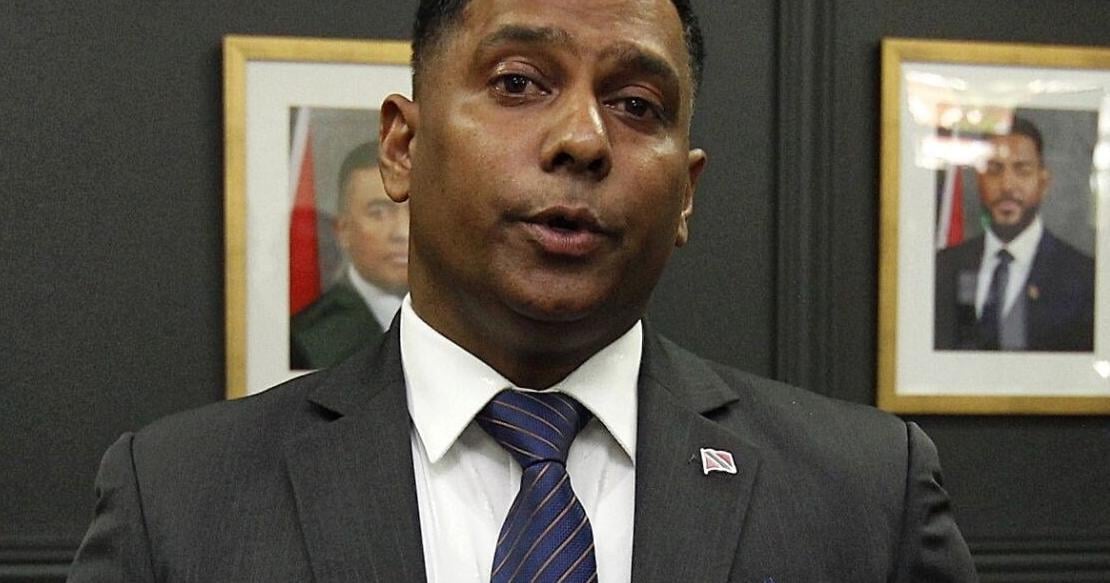
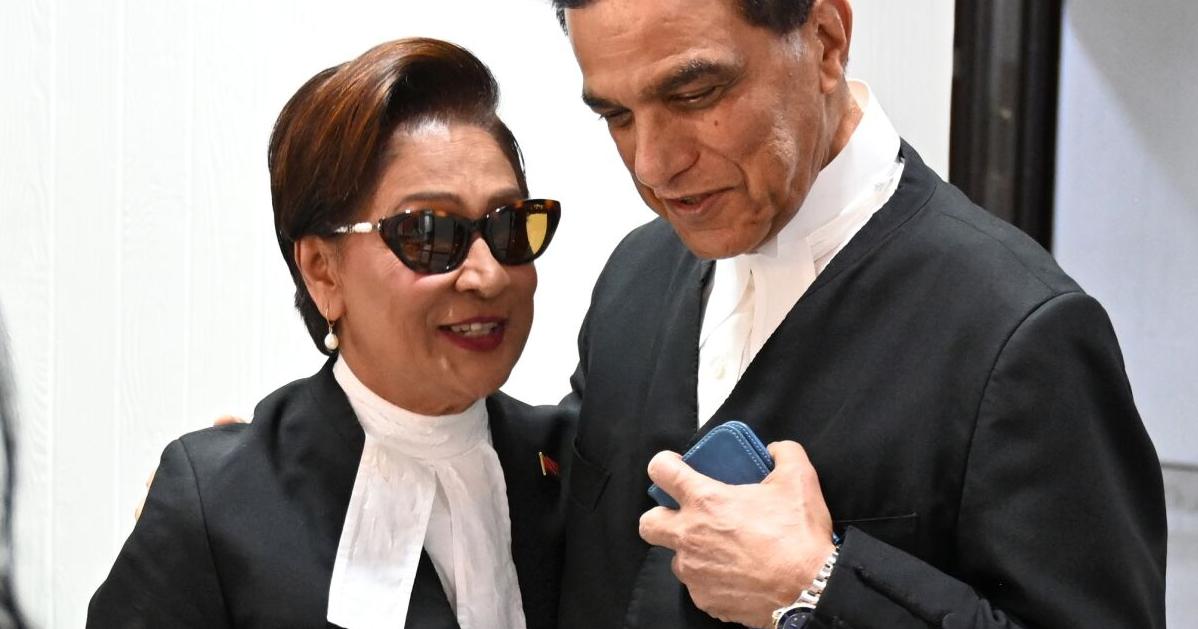
    Following the ceremonial opening of the 2026-2027 judicial law term on the steps of Port of Spain’s Hall of Justice, Trinidad and Tobago Prime Minister Kamla Persad-Bissessar shared new updates on warming bilateral ties with neighboring Venezuela in an address to reporters Tuesday.

    Persad-Bissessar opened up about ongoing behind-the-scenes planning for a potential bilateral meeting between herself and Venezuelan Interim President Delcy Rodríguez on the sidelines of the upcoming United Nations General Assembly (UNGA) in New York, currently scheduled for late September. The Prime Minister also publicly shared warm personal feelings toward Rodríguez, expressing clear enthusiasm for the prospective encounter.

    “I love her. I look forward to meeting her,” Persad-Bissessar told reporters, noting that cabinet minister Sean Sobers is currently coordinating logistics for the meeting, which is being targeted for September 25. When asked about her willingness to hold the summit, she emphasized that her priority will always be advancing the interests of Trinidad and Tobago’s citizens: “I will meet with anyone who wishes to meet me for the benefit of the people of Trinidad and Tobago. I will do whatever I have to do always.” She added that if the logistics cannot be finalized in time, the public will be updated promptly on the change of plans.

    The comments come amid a fresh push to reactivate diplomatic cooperation between the two neighboring Caribbean and South American nations after years of stalled relations. Earlier this month, on September 3, Trinidad and Tobago’s Minister of Foreign and Caricom Affairs Sean Sobers completed a working visit to Caracas, where he held talks with top Venezuelan government officials including Foreign Minister Felix Plasencia. After the trip, Sobers announced that the two sides had reached an agreement to form a bilateral joint commission, designed to break through years of diplomatic and technical stagnation and move forward collaboration on cross-cutting issues that impact both nations. The technical working group formed under the commission will help both governments identify shared priority areas and deliver tangible outcomes for their populations. Persad-Bissessar publicly backed the trip, confirming it had been a success.

    Addressing past tensions, the Prime Minister pushed back on discussions about her being labeled persona non grata under the previous Nicolás Maduro regime, instead centering the deep, longstanding ties that bind the two countries and their people. She highlighted her own personal familial connections to Venezuela, noting “my mother-in-law is Venezuelan. My two grand-nephews are Venezuelan. Trinidad and Tobago and Venezuela, we have very, very close ties. We are family.”

    Beyond diplomatic engagement, Persad-Bissessar delivered a clear, optimistic update on the long-discussed plan to import natural gas from Venezuela, saying she is fully confident cross-border gas supplies will reach Trinidad and Tobago within the next 12 months. She cited the countries’ extreme geographic proximity – just seven miles separate the two nations – and pre-existing agreements with major international energy firms as evidence the project will come to fruition. “I have absolutely no doubt that gas from Venezuela will come to Trinidad and Tobago. It is the only funnel, the only place it can pass. We are seven miles away, and it will come,” she said. The Prime Minister added that her administration has already finalized cooperation agreements with energy giant bp, and is working to conclude similar deals with Shell, XRG and other major energy players.

    Securing additional Venezuelan natural gas imports is considered a critical strategic priority for Trinidad and Tobago’s energy sector, as the country looks to boost incoming supply to support its existing downstream petrochemical and liquefied natural gas industries, which form a core pillar of the national economy. Persad-Bissessar concluded by reaffirming that all bilateral efforts with Venezuela will advance the shared interests of both nations, saying “whatever has to be done, we will do in the best interest of Trinidad and Tobago and Venezuela” and that the public can “expect the best” as relations continue to deepen.
  • Bhatia keeps Knight Riders unbeaten

    Bhatia keeps Knight Riders unbeaten

    The 2026 Limacol Women’s Caribbean Premier League continued its early-season action at Bridgetown’s Kensington Oval on Thursday, September 10, with expansion franchise Jamaica Empress falling to a dominant nine-wicket defeat at the hands of two-time defending champions Trinbago Knight Riders. The result keeps TKR’s unbeaten start to the tournament intact, with the side cruising to victory with more than eight overs left in their 101-run chase.

    The game’s foundation for victory was laid long before TKR stepped into bat, after the Knight Riders won the toss and elected to insert the debutante franchise into bat. From the first ball, TKR’s bowling unit set a relentless tone, breaking open the Empress batting lineup early: the side lost two wickets on consecutive deliveries in just the second over, with one of those scalps being star former Australian captain Meg Lanning, one of the most high-profile signings of the new franchise.

    While middle-order batter Rashada Williams offered steady resistance, compiling a patient 40 runs off 47 deliveries, she received little consistent support from her batting partners as the Empress struggled to build any meaningful momentum throughout their 20 overs. The side finished their allotted innings at 100 for 9, with Chinelle Henry – who had starred in the Empress’s opening match victory – finishing on an unbeaten 22 to close out the innings.

    Leading TKR’s bowling attack was Player of the Match Karishma Ramharack, who delivered a masterclass in controlled spin bowling. Ramharack finished with figures of 3 wickets for just 11 runs across her four full overs, leading a disciplined collective bowling effort that kept the Empress’s run total far below par.

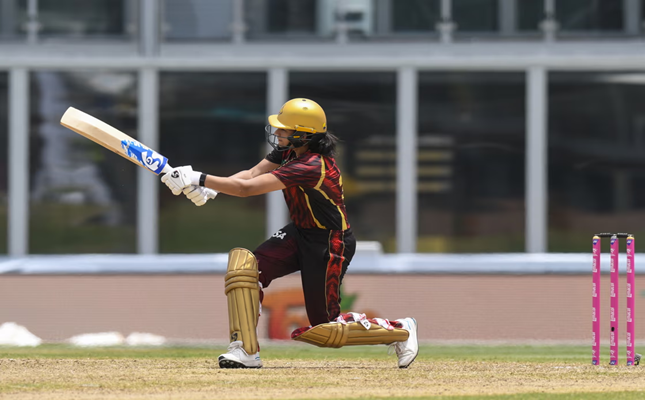
    In response, TKR’s run chase was calmly and expertly led by opening batter Yastika Bhatia, who produced a dynamic innings that kept the required run rate well under control from the first over. The side lost only one wicket throughout the chase: Laura Harris was stumped after being beaten by a sharply turning delivery from spinner Nonkululeko Mlaba, with the score at 35 for 1 at the end of the fifth over.

    By the time Harris departed, TKR was already well positioned to secure a second consecutive win. Captain Deandra Dottin joined Bhatia at the crease, and the pair put together an unbeaten 69-run second-wicket partnership to seal the win. Dottin contributed a quickfire 22 runs off 15 deliveries, while Bhatia remained unbeaten at the crease on an impressive 57 runs off 34 balls, steering the side across the finish line with 53 balls still left to spare.

    Looking ahead to the next round of fixtures, TKR will next take on the Guyana Amazon Warriors, while the Jamaica Empress – who hold a game in hand over most of the competition – will look to bounce back from their first defeat of the season with a match against the Barbados Tridents.

  • CJ moves to tackle court backlog

    CJ moves to tackle court backlog

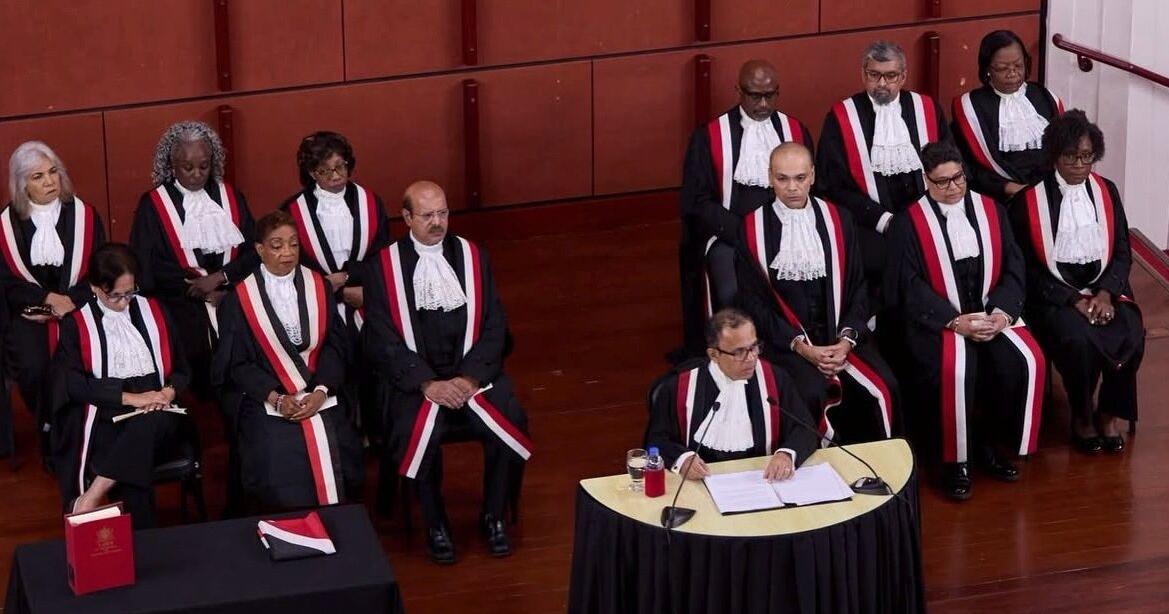
    In his inaugural address marking the opening of the 2026-2027 judicial law term at Port of Spain’s Hall of Justice Convocation Hall, newly appointed Chief Justice Ronnie Boodoosingh has announced a comprehensive set of systemic reforms aimed at dismantling the long-standing criminal case backlog that has plagued the country’s judiciary and expanding overall court capacity.

    Boodoosingh, who assumed the top judicial role in October 2025, used his first public opening address to lay out the findings of a months-long institutional assessment he conducted after taking office, which uncovered systemic failures across infrastructure, staffing, and case management that have eroded public access to timely justice.

    Physical court infrastructure emerged as a top critical concern: the San Fernando Supreme Court Building has remained fully shuttered since the COVID-19 pandemic, stripping the judicial system of 16 functional courtrooms and dedicated staff housing. Meanwhile, the main Hall of Justice and Tobago’s Hall of Justice operate far below their intended capacity, and nearly every regional Magistrates’ Court building across the country is in urgent need of maintenance, major renovations, or structural repairs.

    Unlike most other public sector institutions and school systems that returned to full in-person operations after pandemic restrictions lifted, the judiciary has remained almost entirely virtual, Boodoosingh noted. This shift has left many members of the public without consistent in-person access to court staff and critical services, deepening public frustration with the judicial process.

    The most pressing challenge identified by the assessment is the growing backlog of pending cases, particularly in the Criminal Court and Family Court divisions. Even after post-pandemic adjustments to preliminary inquiry protocols and traffic case processing, the backlog in Magistrates’ Courts has continued to climb at an alarming rate. Boodoosingh emphasized that reform efforts must center on the core needs of the public, who seek a straightforward, expedited process regardless of whether their case involves a traffic violation, family dispute, criminal charge, or civil claim.

    “While the judiciary does not intentionally create delays or place unnecessary obstacles in the path of people seeking justice, resource constraints have undeniably limited our ability to deliver timely outcomes,” Boodoosingh acknowledged. “But that is not an excuse for failing to take every reasonable action to build a more effective justice system. When our systems are not working as well as they should, our job is to fix them.”

    To anchor accountability, Boodoosingh is moving to enforce the existing six-month target for most judicial judgments — a standard first established decades ago and reaffirmed by former Chief Justice Ivor Archie in 2025. All judicial officers are now required to submit monthly reports to the Chief Justice’s office detailing sitting hours, completed cases, and pending judgments, creating transparent data to track institutional performance.

    A new, cross-stakeholder Criminal Justice Board has already been convened, holding monthly meetings since April 2026 to diagnose bottlenecks and coordinate targeted solutions. A focused backlog clearance initiative is prioritizing the oldest cases in the system for accelerated processing or dismissal. Boodoosingh noted that some cases have lingered in the system for decades, and many are effectively “dead cases” with no path to a trial. The administration aims to resolve and remove all of these legacy cases from the system by the end of the current 2026-2027 law term.

    One of the most impactful immediate changes is a near doubling of available criminal jury court space: 15 dedicated Criminal Jury High Court rooms have been operational since the start of September 2026, up from just eight available under the previous system. The judiciary has also scrapped its outdated docket assignment system, instead assigning individual judges to permanent courtrooms with full responsibility for managing and trying their assigned caseloads.

    Top judicial officials have already secured commitments from key partners to support the expanded court capacity: Director of Public Prosecutions Roger Gaspard, SC, has pledged to continuously assign prosecutors to all 15 new courtrooms, and the judiciary is collaborating with the Public Defender’s Department to ensure consistent defense counsel coverage for each court. Boodoosingh has publicly backed the Public Defender’s Department’s call for additional staffing to meet this expanded demand, noting that the Judicial and Legal Service Commission is currently working with the DPP’s office to fill long-standing vacant positions across the legal system.

    The reforms also include plans to extend sitting hours and cut down on avoidable downtime in the criminal justice system, a change Boodoosingh said is critical to moving cases through the pipeline faster.

    In a major pivot away from the pandemic-era virtual model, Boodoosingh announced a gradual phased plan to restore full in-person hearings at all Magistrates’ Courts nationwide by the end of 2027. Official data makes clear that virtual hearings have drastically underperformed in-person proceedings when it comes to case completion rates, he said.

    Between 2006 and 2016, when in-person operations were standard, annual case completion rates ranged from 65% to 120% of new annual filings. That rate dropped to just 44% in the most recent completed judicial year. While the number of completed cases has ticked up slightly from 10,746 in 2023/2024 to 15,994 in 2025/2026, that number remains a small fraction of pre-pandemic completion volumes: 115,491 cases were disposed of in 2016/2017, and 82,841 in 2017/2018. A comparative analysis found that virtual hearings dispose of less than 20% of the number of cases completed through in-person proceedings.

    “Virtual hearings offer convenience for many stakeholders, including lawyers, magistrates, and law enforcement officers,” Boodoosingh said. “But for the Magistrates’ Court system, they have not delivered the same effectiveness as in-person hearings when it comes to completing cases in a timely manner. That is a gap we must address.”

  • Govt to support Judiciary’s swifter justice push, says PM

    Govt to support Judiciary’s swifter justice push, says PM

    At the ceremonial opening of the 2026-2027 judicial law term held in Port of Spain, Prime Minister Kamla Persad-Bissessar has publicly reaffirmed her administration’s unwavering commitment to backing the Judiciary in its mission to deliver faster, more equitable access to justice for all Trinidad and Tobago citizens.

    Taking the stage alongside Chief Justice Ronnie Boodoosingh and Attorney General John Jeremie at the Hall of Justice event, Persad-Bissessar said she had carefully reviewed the Chief Justice’s vision for judicial administration, and emphasized that accessible, fair justice is a non-negotiable right for ordinary people. “Justice must never be distant from the people. It must never be beyond the reach of the ordinary citizen. It must be accessible, efficient and fair, and our citizens must have confidence that the institutions established to protect their rights will work for them,” she stated.

    Persad-Bissessar took office in April 2025, and immediately launched a sweeping overhaul of what her administration identified as stagnant, outdated public systems that failed to meet citizens’ expectations. Her government moved quickly to collaborate with cross-sector justice stakeholders to map bottlenecks to efficiency, then rolled out an aggressive modernization agenda covering both legal affairs and civil and criminal justice frameworks. Just over a year into the program, she says tangible, meaningful change is already underway.

    One of the flagship achievements highlighted by the Prime Minister is newly enacted legislation to digitize Trinidad and Tobago’s entire body of national laws, which will eventually give citizens free centralized access to all legal statutes through a single public online portal. Far from just a technological upgrade, Persad-Bissessar framed the reform as a critical step toward democratizing access to the law. “This is more than technological progress. It is the democratization of the law,” she said, adding that expanded public access will narrow the gap between communities and the judicial system, while strengthening public trust in the rule of law.

    Another key legislative win is the 2026 Civil Division Act, which answers decades of requests from the Judiciary for a formal legal framework to restructure civil justice through a standalone, specialized division. Persad-Bissessar explained the act addresses longstanding systemic gaps including understaffing and administrative disorganization, cuts down on crippling case delays and backlogs, creates targeted specialized subdivisions, and boosts overall operational efficiency.

    Turning to criminal justice reforms, the Prime Minister pointed to the 2026 Bail (Amendment) Act, which introduced a new formal process of Bail Source Hearings. This new regulation gives courts the power to verify that cash or real property used to secure bail comes from legitimate, legal sources. “The justice system must never become an avenue through which the proceeds of criminal activity can be legitimised,” she noted, adding that enhanced transparency and judicial oversight of bail will strengthen national efforts to combat organized crime, money laundering, and other high-level offenses.

    Her administration also updated the decades-old Probation of Offenders Act, first written in 1947, to expand judicial access to split sentencing. Under the new framework, sentences can combine terms of incarceration with supervised community probation, including provisions for electronic monitoring, curfews, mandatory community service, and vocational training. Persad-Bissessar said the model balances accountability for criminal acts with a focus on rehabilitation and successful reintegration. “Justice must protect society and punish wrongdoing, but a modern justice system must also recognise that where rehabilitation is possible, people should have a meaningful opportunity to rebuild their lives and become productive members of society,” she said.

    Beyond legislative changes, the Prime Minister confirmed the government has allocated full funding to support the Judiciary’s initiative to reopen shuttered magistrates’ courts across the country, a move designed to eliminate geographic barriers to justice. “A citizen in Mayaro deserves the same access to justice and essential court services as a citizen in Port of Spain, San Fernando, Tobago, or anywhere else in our Republic,” she said. She highlighted that prior to the reform, residents of rural areas like Mayaro faced unnecessary burdens: for example, those requiring probation officer services were forced to travel long distances to San Fernando, after local probation staff lost dedicated workspace in regional magistrates’ courts. With court reopenings, probation officers will once again be based in local courthouses across all jurisdictions. “That is what meaningful reform is about—not simply changing laws on paper, but improving the everyday experience of citizens who depend upon the State,” she said.

    Looking ahead, Persad-Bissessar pledged the executive branch will continue to provide all necessary funding and resources to the Judiciary to advance its efficiency goals, and confirmed the justice reform program will continue with additional legislative and administrative updates in the coming term.

  • FINAL OFFER

    FINAL OFFER

    After eight years of protracted negotiations that have outlasted two national administrations, three union presidents and three chief personnel officers, the Trinidad and Tobago government has issued a firm deadline to the Public Services Association (PSA): the union has 14 days to respond to the state’s final offer for resolving long-outstanding salary backpay claims covering 2014 to 2019.

    The details of the final proposal were outlined in an official statement released by the Office of Chief Personnel Officer Commander Dr Daryl Dindial, following a new round of talks held Wednesday with PSA president Felisha Thomas and the union’s executive leadership team. The meeting was convened to review the PSA’s counterproposal to the government’s original backpay framework, which was first tabled in May.

    At the core of the decade-long dispute is a 2023 December Memorandum of Agreement that secured a 10% salary increase for public sector workers, but deferred negotiations on the structural breakdown of the $3.8 billion total backpay package. In May, the CPO tabled the government’s first final position: a mixed package structured as 40% cash and 60% non-cash benefits, giving the PSA four weeks to respond. The union formally rejected that offer days later, submitting a counterproposal calling for a reverse split of 60% cash and 40% non-cash or deferred benefits.

    Following the rejection, PSA president Thomas publicly voiced frustration in a late July Facebook post, noting that nearly two months had passed without a formal meeting to discuss the union’s counteroffer. At the time, Thomas told public sector members that the CPO’s office had stated it was still reviewing the proposal and could not schedule a sit-down. As of Thursday, efforts by media to secure additional comment from Thomas on the latest round of talks were unsuccessful.

    In his official statement on the new meeting, Dindial reaffirmed that the 40% cash / 60% non-cash structure remains the government’s non-negotiable final offer. He emphasized that the administration has structured the proposal to balance the needs of public workers with long-term fiscal responsibility, arguing that the framework is designed to protect public sector jobs amid economic pressures.

    Dindial explained that the non-cash components of the package carry tangible value for workers, and in many cases require the government to forgo projected revenue to offset workers’ outstanding obligations. The only adjustment the government has made to the original May offer is a new flexible payment option: workers can choose to receive their cash portion of backpay in monthly installments spread across a three-year period, rather than a lump sum.

    The CPO added that all other public sector bargaining units have already finalized negotiations for the 2014–2019 salary periods, leaving the PSA as the only major public service association yet to resolve the backpay issue. “This process must now move towards finalization,” Dindial said, noting that the government’s position has been clearly articulated after eight years of talks, and the latest framework is intended to deliver a resolution that is both fiscally responsible and sustainable for the country.

    He urged the PSA leadership to seriously consider the offer in order to bring the long-running dispute to a close and deliver long-awaited certainty to thousands of public sector workers across the country. Beyond the two-week deadline for a formal response, Dindial thanked Thomas and the PSA executive for their continued engagement throughout the years of negotiations, and reiterated the government’s commitment to reaching a resolution that is fair, responsible and sustainable for all parties.

    The non-cash benefits included in the government’s offer cover a wide range of worker needs: offsets for mortgage and rental obligations owed to the Housing Development Corporation and Trinidad and Tobago Mortgage Bank, settlement of outstanding personal tax liabilities, $3,500 in executive-level medical coverage, tuition fee offsets for students attending state-owned tertiary institutions, tax exemptions for purchases of new and roll-on/roll-off vehicles, plus food cards and fuel assistance.

  • Nieuwe escalatie: VS bombardeert Iraanse olietankers na aanvallen op Amerikaanse schepen

    Nieuwe escalatie: VS bombardeert Iraanse olietankers na aanvallen op Amerikaanse schepen

    Six months after the outbreak of open conflict between the US, Israel and Iran, tensions in the strategic Gulf region have surged to a new critical peak following a series of tit-for-tat military strikes that began in early September. The latest round of escalation started when the Islamic Revolutionary Guard Corps (IRGC), Iran’s elite military force, launched two separate attacks on a US Navy vessel within a 48-hour window, according to US Central Command (CENTCOM). The warship successfully evaded both attempts, and no US personnel were injured or killed in the strikes. The IRGC also carried out a separate attack on US troops stationed at a base in Jordan, setting the stage for a rapid US retaliation.

    In response to the IRGC actions, US military forces carried out targeted airstrikes against five Iranian-owned oil tankers operating in the Gulf of Oman and near Iran’s Kharg Island. CENTCOM confirmed that advance warnings were issued to the crews of the targeted vessels — identified as the M/T Kaviz, M/T Charminer, M/T Horizon 1, M/T Riesco and M/T Derya — before the strikes to allow them to evacuate. Footage circulating from the strike zone confirms that the M/T Riesco has sunk following the attack.

    Iran quickly confirmed the strikes on its oil tankers and launched an immediate counteroffensive. The IRGC announced it had carried out “intense rocket attacks” against the US Al-Azraq Air Base in Jordan, claiming it destroyed hangars housing US fighter jets in the strike. Iranian military officials also added that it carried out missile strikes against two US destroyers, inflicting substantial damage on the vessels, and expanded its offensive to target 10 vessels in the broader region, two of which it claims are US-owned.

    Jordanian military authorities offered a separate account of the Al-Azraq base attacks, confirming that their air defense systems intercepted 20 ballistic missiles launched toward the base, destroying 18 of the projectiles mid-flight. No casualties were reported from the incident, with the two remaining missiles that evaded interception landing in unpopulated desert areas.

    Beyond the direct military exchanges, the escalating conflict has already had tangible global economic impacts. On Wednesday, international benchmark oil prices climbed above $100 per barrel amid fears of disrupted shipping through the region, which handles roughly a fifth of the world’s daily oil trade. Iran has already closed the Strait of Hormuz, the world’s most critical chokepoint for oil shipments, while the US has maintained a strict maritime blockade of Iranian port facilities. Following the US tanker strikes, Iran’s foreign ministry labeled the attack a “war crime” and announced a new restricted maritime zone stretching from Iran’s Chabahar port across large swathes of the Arabian Sea, with exact coordinates of the zone set to be released in the coming days.

    Separately, the UK Maritime Trade Operations, which monitors global shipping security, reported Wednesday that an additional attack was carried out against a cargo vessel off the coast of Iraq, approximately 52 kilometers south of the al-Faw peninsula.

    In a confirmation of US policy during a diplomatic visit to Colombia, US Secretary of State Marco Rubio defended the strikes on the Iranian tankers. Rubio stated that Iran has continued to target American commercial and military vessels in the region, and that every hostile attempt from Tehran will result in further losses for Iran’s maritime and oil sectors.

    In a separate development that adds to regional tensions, the IRGC also announced that it seized an American unmanned submarine near the entrance to the Strait of Hormuz. US officials confirmed that a drone submarine suffered a technical malfunction during a routine surveillance mission in the area, but denied that the vessel was collecting sensitive intelligence at the time of its loss.

  • Column: Evalueren en bijsturen!

    Column: Evalueren en bijsturen!

    Suriname has long been recognized as a breeding ground for elite athletic talent. For decades, both male and female athletes from the South American nation have delivered standout individual performances that have left a lasting mark on regional and global sports, while Suriname’s national and club teams have also notched remarkable achievements in team competition over the years. In recent years, however, a clear downward trend has emerged: with only a handful of exceptions, locally trained Surinamese athletes have failed to secure competitive victories at regional and international sporting stages, leaving the sports community grappling with a pressing question: why have performances fallen so far short of expectations despite the country’s deep pool of natural talent?

    This question cannot be resolved from behind a desk, argues Surinamese sports analyst Mireille Hoepel. A comprehensive, multi-faceted investigation into the entire athlete development pipeline is urgently needed to pinpoint where the system is failing. Hoepel emphasizes the importance of assessing whether Suriname’s approach to nurturing athletes has stagnated, holding to outdated methods that worked in the past but have not adapted to evolving global sports standards. If training and development strategies have been updated in recent years, she adds, a rigorous evaluation is required to confirm whether these changes have been effective—and policymakers and sports leaders must be willing to make mid-course corrections if current approaches are not delivering results.

    To fully unpack the causes of widespread performance decline across Suriname’s sports sector, all key stakeholders and contributing factors must be examined. Hoepel notes that potential weaknesses could lie anywhere in the system: from athletes’ immediate training environments and personal support networks to access to high-quality medical and scientific backup, or even structural flaws at the level of governing sports organizations. Once the root causes of underperformance are identified, Hoepel stresses that the sports community must be prepared to implement sweeping changes to reverse the trend. Urgent reform is required to lift Surinamese sport back to a competitive, acceptable standard, and early intervention is critical: young athletes must be introduced to proper training pathways and professional expectations from the start of their careers to build the mental and technical foundation needed to compete at the highest level.

    Targeted, strategic action is particularly critical for Suriname’s most popular sport: football. Hoepel argues that the country must first identify a clear, proven formula for sustainable success before committing resources and investments to improve the sport. Without this foundational analysis, wealthier Surinamese football clubs often fall back on impulsive, ad-hoc player transfer policies. While clubs are entitled to manage their own budgets, Hoepale notes that a far more effective approach is to first map gaps in a club’s player development and squad before signing new talent.

    A recurring issue across Suriname’s local football scene, Hoepel observes, is poor finishing accuracy among domestic players, a problem that plagues nearly all of the country’s clubs. To address this widespread gap, Hoepel proposes that the Suriname Football Federation (SVB) reach out to Surinamese football professionals based in the diaspora to leverage their specialized expertise. By sharing their knowledge and experience with local clubs, these experienced professionals could deliver a much-needed quality boost to the goal-scoring ability of Suriname’s homegrown footballers, helping to lift the overall standard of the sport across the country.

  • Waarnemend president Venezuela donderdag in Suriname voor besprekingen

    Waarnemend president Venezuela donderdag in Suriname voor besprekingen

    Venezuela’s acting president Delcy Rodríguez will touch down in Suriname Thursday evening at the head of a high-level governmental delegation, bringing a long-postponed diplomatic visit back on track after months of delays. Multiple working discussions are scheduled for Friday, and bilateral agreements between the two South American nations are widely expected to be signed during the event, according to local reporting.

    As of press time, the Surinamese government has not released any official public statement detailing the visit or its full agenda. Local outlet Starnieuws has confirmed that logistical preparations for the visit are already well underway, with Venezuelan security officials having already arrived in Suriname to coordinate safety arrangements for Rodríguez and her delegation.

    Key details surrounding the trip remain under wraps: officials have not yet disclosed what specific agreements will be signed, what core topics will take center stage during bilateral talks, or even the full composition of the Venezuelan visiting delegation.

    Rodríguez assumed leadership of Venezuela’s executive branch in January this year, after a dramatic shift in the country’s political landscape. A former vice president under long-time leader Nicolás Maduro, she stepped into the acting presidency after Maduro and his wife were detained during a U.S. military operation inside Venezuelan territory on January 3, and subsequently transferred to the United States to face criminal prosecution.

    Since taking office, Rodríguez has overseen a significant warming of diplomatic and economic ties between Caracas and Washington. Her administration has already signed a landmark broad energy agreement with the United States, and has made active efforts to court foreign direct investment into Venezuela’s critical oil sector. Earlier this month, Rodríguez was present for the signing of new cooperation deals between the Venezuelan government and major international energy firms, including U.S.-based Chevron and Italy’s Eni.

    This upcoming visit to Suriname was first scheduled earlier this year. Back in June, the Surinamese Cabinet of the President announced that Rodríguez would carry out a courtesy visit to Surinamese President Jennifer Simons on June 23, with a joint press briefing at the Presidential Palace also on the public schedule. However, just days after the announcement, the cabinet confirmed the visit would be postponed without explanation.

    Now, Rodríguez’s trip is finally going ahead this week, with a broader scope than the original courtesy visit. Beyond the scheduled working meetings, the diplomatic agenda now explicitly includes the signing of new bilateral agreements between the two neighboring countries.

  • FOLLOW THE MONEY: Campaign Finance Reform Back on the Table

    FOLLOW THE MONEY: Campaign Finance Reform Back on the Table

    After six years of repeated failed attempts to pass comprehensive campaign finance regulation in Belize, cross-sector civil society and business leaders have reignited the push for reform with a concrete, detailed draft bill that outlines a full regulatory architecture for political campaign financing.

    Leading the renewed initiative is the Belize Chamber of Commerce and Industry (BCCI), which has partnered with major national stakeholders including the National Trade Union Congress of Belize, the Belize Network of NGOs, and national faith organizations to circulate the updated 2026 draft of the Representation of the People (Amendment) Bill, a copy of which has been obtained by local outlet The Reporter. Unlike prior efforts that only called for broad reform, this draft lays out specific, actionable provisions to address longstanding gaps in Belize’s campaign finance rules.

    The 20-page draft bill proposes amending Belize’s existing Representation of the People Act to build a binding legal framework for campaign financing, establish a dedicated National Election Campaign Fund, and mandate full public accounting of all contributions and expenditures by both political parties and individual election candidates.

    One of the draft’s most transformative provisions is the introduction of binding spending caps. Under the proposed rules, registered national political parties would be limited to $4 million in total campaign spending per election cycle, while individual candidates would face a ceiling of $215,000. The Elections and Boundaries Commission would retain authority to adjust these amounts in the future, pending formal affirmative approval from relevant governing bodies.

    To curb the outsized influence of large individual donors, the draft also sets proportional contribution caps. No single contributor can provide more than 10% of an individual candidate’s total allowed spending, while contributions to a national party are capped at 5% of the party’s total permitted expenditure.

    Addressing widespread transparency concerns around unreported political funding, the draft mandates timely public disclosure of all large contributions. Any donation of $10,000 or more must be reported to the Elections and Boundaries Commission within seven days, including full details of the contribution amount, date, and donor identity. The commission is then required to publish this information promptly for public access. For corporate or other organizational donors, additional disclosure of ultimate beneficial owners, controlling stakeholders, and any shareholders holding 10% or more of the entity is required.

    Cash donations would face strict new limits as well: no cash contribution over $1000 can be accepted, and all larger donations must be made via traceable financial channels including bank transfers, checks, or electronic funds transfers. A full ban on donations from prohibited sources is also written into the draft, including foreign governments, public foreign bodies, anonymous donors, and contributors using intermediaries or false identities. Any funds received from prohibited sources must be returned, and any untraceable unidentifiable contributions must be transferred to Belize’s national Consolidated Fund.

    The draft also creates new reporting requirements to link political donations and government contracting. Any individual or company that makes a political donation must disclose the contribution if they held a government contract worth more than $7,000 in the two years prior to the donation, or if they enter into such a contract within two years after making the contribution.

    Political parties would be required to submit annual financial statements under the new framework, and independent audits would be mandated for parties meeting a size threshold to be set by the Elections and Boundaries Commission. All campaign finance reports, declarations, and disclosures would ultimately be published online in a searchable, machine-readable format to simplify public oversight.

    Third-party groups that spend money to influence election outcomes would also be brought under regulation for the first time. Any organization spending over $10,000 on election-related activities would be required to register with the Elections and Boundaries Commission, maintain detailed financial records, and comply with the same donor disclosure and campaign finance rules that apply to parties and candidates.

    The draft includes strong enforceable penalties for deliberate serious violations. If the High Court finds that a candidate knowingly committed a major breach of campaign finance rules, sanctions can include forfeiture or repayment of illegal funds, and in the most severe cases, nullification of the candidate’s election victory or a ban from running for public office for up to five years.

    At this stage, the document remains a working draft rather than formal legislation introduced to Belize’s National Assembly, and multiple provisions are marked for further stakeholder review and debate. Observers note that the most important contribution of the current draft is not the specific monetary thresholds it proposes, but the fact that it puts a complete, workable regulatory model—including spending limits, donor identification, public disclosure, and enforceable penalties—back onto Belize’s national policy agenda after years of inaction.

  • Second fire in more than 15 years ravages Regent House Household Plus

    Second fire in more than 15 years ravages Regent House Household Plus

    Seventeen years after an out-of-control fire first gutted Regent Household Plus, the beloved downtown Guyana department store has been struck by disaster again: a fast-spreading inferno tore through the multi-story concrete building on September 9, 2026, leaving millions in inventory destroyed and putting dozens of workers at risk of sudden unemployment.

    Shaheed Hamid, owner of the long-standing Regent Street business, confirmed to reporters on the scene that the previous destructive blaze at the property dates back to 2009. In a rare stroke of luck amid the devastation, Hamid confirmed all employees made it out of the burning structure safely, with no injuries reported in connection to the incident.

    While fire crews managed to contain the majority of the blaze within the bounds of Regent Household Plus, neighboring DM’s Beauty World—an adjacent retail outlet located to the west of the affected building—suffered extensive secondary damage. The beauty retailer’s stock suffered widespread water damage from firefighting efforts, and its exterior facade was heavily scorched by intense heat from the main fire.

    As of Wednesday evening, officials had not yet confirmed the root cause of the ignition. Dwayne Scotland, Deputy Chief Fire Officer of the Guyana Fire Service, shared key timeline details with reporters on the ground: the department received the first emergency call about the fire at 1:03 PM local time. By the time crews gained some control of the blaze, the western end of the building had already collapsed under the intense heat.

    Even after the fire was officially classified as under control after 5 PM, hotspots continued to flare up at the rear of the gutted store, and local residents voiced urgent fears that the blaze could spread to nearby wooden residential structures in the backyards off Charlotte Street. Fanned by a mild north-easterly wind, the residual fire kept crews working late into the afternoon; by 5:15 PM, firefighters had extended hose lines into the residential backyard area to prevent the blaze from jumping to neighboring properties.

    Firefighters drew water for their operations from two primary sources: fire hydrants maintained by Guyana Water Incorporated (GWI) and the nearby South Road canal. City Mayor Alfred Mentore later publicly praised the response efforts of the firefighting team, noting their quick work prevented the fire from spreading to adjacent structures and limiting the overall scale of the damage.

    For the local community and Regent Household Plus’ owner, the disaster marks a devastating second blow, decades after the business first rebuilt following the 2009 fire.