作者: admin

  • PUC: BTL Holds Market Dominance

    PUC: BTL Holds Market Dominance

    In a landmark regulatory decision, Belize’s Public Utilities Commission (PUC) has formally determined that Belize Telemedia Limited (BTL) maintains dominant market positions across virtually all telecommunications sectors. The final determination, published March 10, 2026, concludes an extensive investigation launched over a year ago.

    The comprehensive assessment examined both retail and wholesale telecommunications markets, with BTL found to hold dominance in eleven distinct market segments. These include retail fixed voice services, mobile telecommunications, broadband internet access, enterprise messaging services, international roaming, and multiple wholesale infrastructure services.

    The ruling emerges amid ongoing controversy surrounding BTL’s proposed $80 million acquisition of Speednet Communications Limited, a transaction that would effectively consolidate Belize’s telecommunications landscape under a single provider. Notably, BTL declined to participate in the consultation process that began February 2, though the Commission emphasized that this absence did not impede its statutory obligation to conduct an evidence-based assessment.

    Critical to the finding was BTL’s extensive control over national telecommunications infrastructure, including fiber optic networks and submarine cable landing stations. Competitors highlighted the economic impracticality of replicating such infrastructure in Belize’s small market economy, creating significant barriers to market entry and expansion.

    As a consequence of this dominance designation, the PUC has imposed stringent regulatory obligations on BTL. These include cost orientation requirements, price regulation mechanisms, non-discrimination mandates, accounting separation protocols, and infrastructure access provisions. An interim tariff freeze takes immediate effect while permanent regulations are developed.

    The Commission will maintain ongoing monitoring of compliance and may revisit market conditions as the telecommunications landscape evolves, particularly in light of the proposed Speednet acquisition that could further reshape competitive dynamics in Belize.

  • First ever CERT Exhibition and the annual Caribe Wave Tsunami Exercise

    First ever CERT Exhibition and the annual Caribe Wave Tsunami Exercise

    The Caribbean region marked a significant milestone in disaster management by simultaneously hosting two major emergency preparedness initiatives: the inaugural Community Emergency Response Team (CERT) Exhibition and the annual Caribe Wave tsunami exercise. This coordinated effort represents a comprehensive approach to regional resilience, combining public education with practical disaster response training.

    The groundbreaking CERT Exhibition showcased innovative emergency response technologies, community preparedness strategies, and cutting-edge rescue equipment from across the Caribbean basin. This first-of-its-kind event provided a platform for emergency management professionals, volunteers, and policymakers to exchange best practices and demonstrate advancements in disaster response capabilities.

    Running concurrently, the Caribe Wave exercise simulated tsunami scenarios across multiple Caribbean territories, testing emergency warning systems, evacuation procedures, and inter-agency coordination. This year’s drill incorporated lessons from previous natural disasters and integrated new protocols developed through regional cooperation agreements. Participants ranged from government agencies and military units to school children and coastal communities, ensuring widespread preparedness across all societal sectors.

    Meteorological organizations, disaster management agencies, and regional security partners collaborated extensively in both initiatives, emphasizing the Caribbean’s commitment to developing multi-hazard preparedness frameworks. The events particularly focused on vulnerable coastal communities and tourism-dependent economies that face disproportionate risks from tsunami threats and other climate-related disasters.

    The dual initiatives reflect the Caribbean’s proactive stance in addressing increasing climate volatility and seismic risks, serving as a model for other disaster-prone regions worldwide. This comprehensive approach to disaster readiness demonstrates how exhibitions of emergency technology can effectively complement practical training exercises to create more resilient communities.

  • Elderly Man Dies at Sea After Heart Attack: Police Report

    Elderly Man Dies at Sea After Heart Attack: Police Report

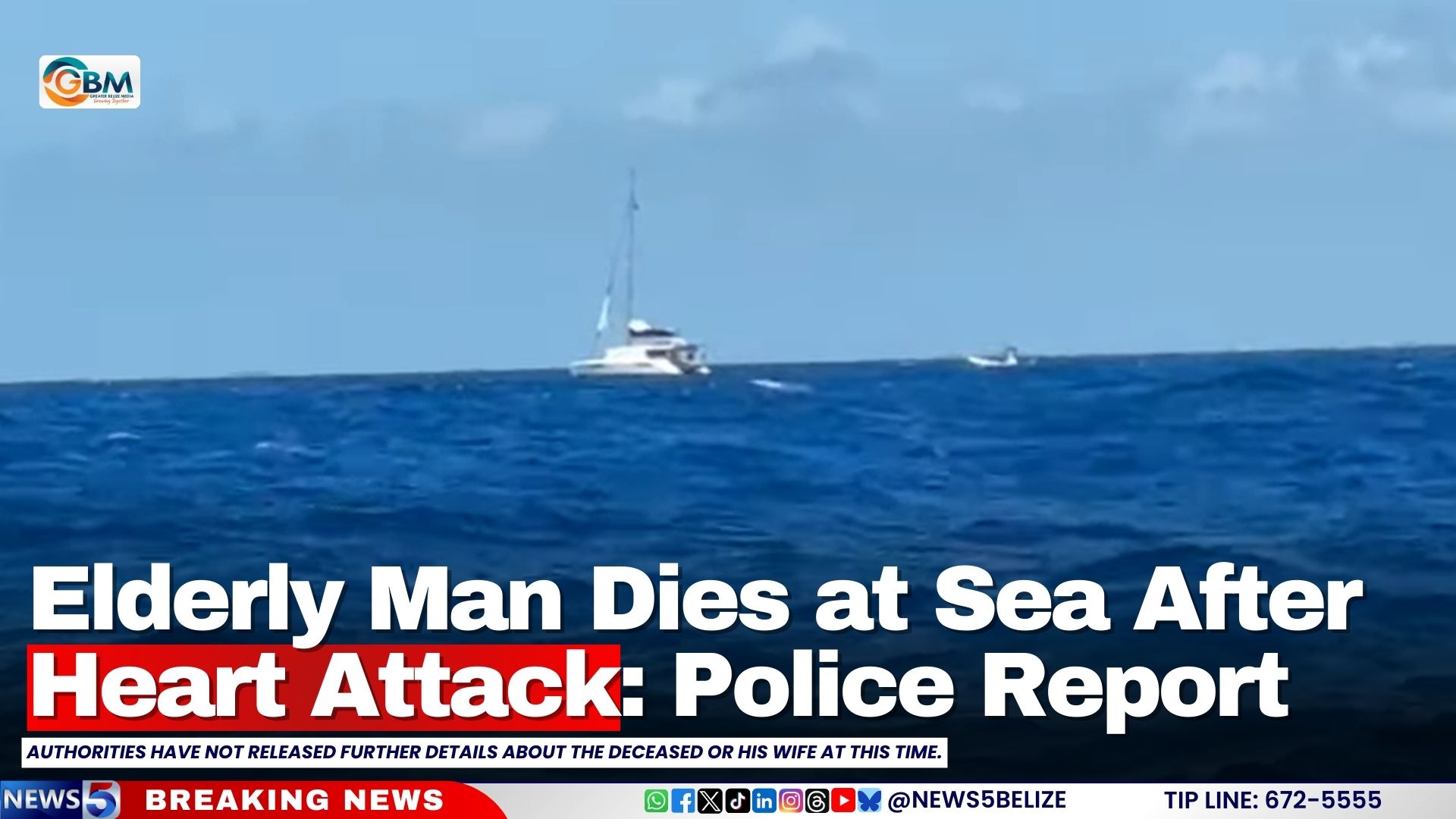
    A maritime emergency turned tragic early Wednesday morning when an elderly American citizen died aboard a catamaran approximately 60 miles off the coast of Belize. According to official police reports, the victim suffered a fatal cardiac incident while at sea.

    The sequence of events began when the Belize Rescue Team (BRT) received an emergency alert regarding a drifting vessel. The initial notification came from a passing cruise ship whose crew had provided preliminary assistance to the deceased man’s wife after she reported her husband’s collapse and subsequent passing.

    BRT personnel dispatched to the location located the catamaran slowly drifting toward Belizean territorial waters. Upon boarding the vessel, rescue teams discovered the elderly man deceased with visible signs of blood within the cabin area, though authorities have not specified the source or significance of this evidence.

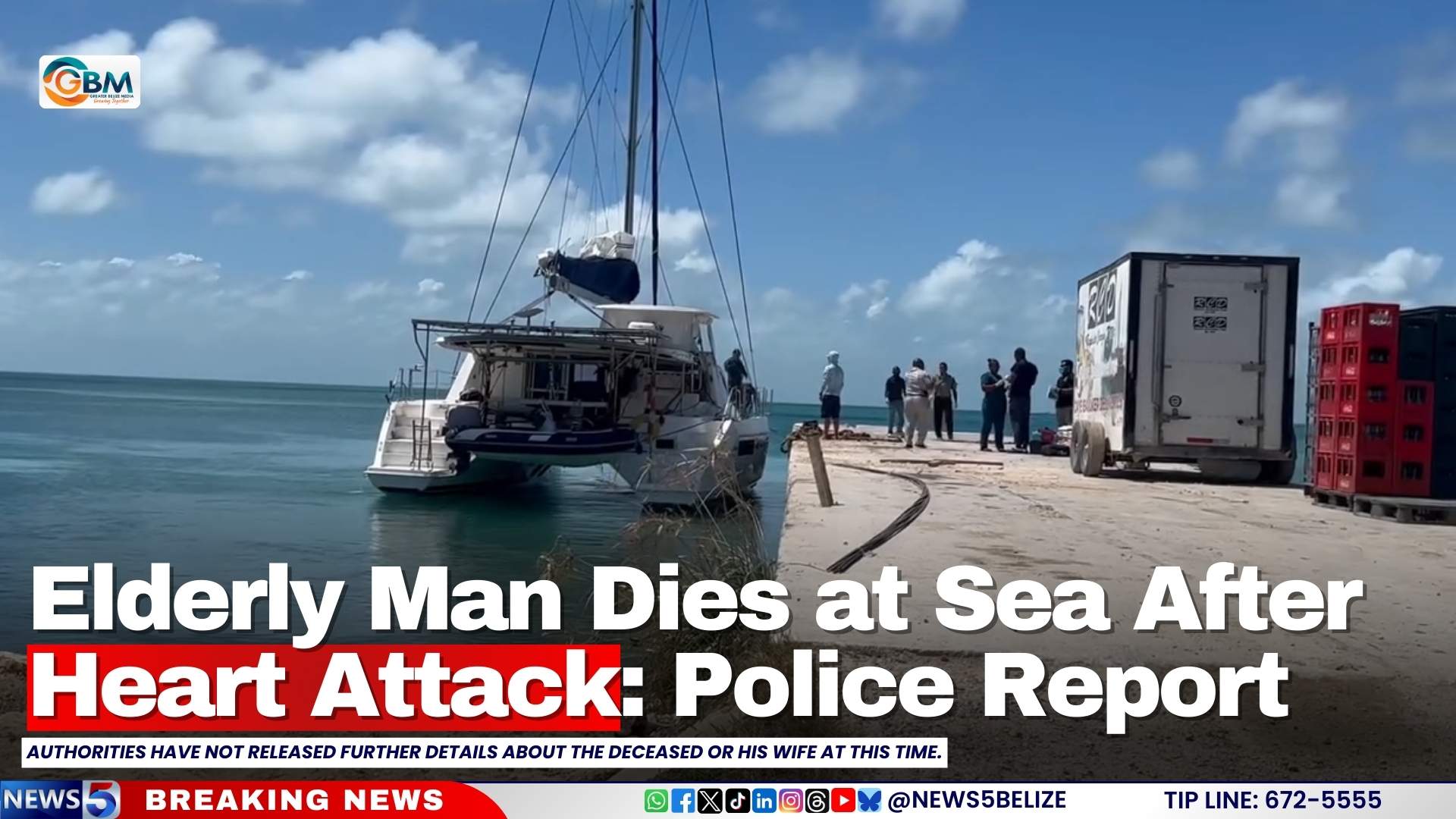
    The Belize Coast Guard has now joined the operation, facilitating the towing of the catamaran to Caye Caulker Village for further investigation. Standard procedures for unexpected deaths at sea are being followed, though authorities emphasize that the initial assessment points to natural causes.

    At this time, officials have declined to release identifying information about the deceased individual or his surviving spouse pending family notifications and complete investigation protocols. The incident highlights the challenges of maritime emergency response in remote oceanic locations.

  • Elderly Man Dies at Sea After Heart Attack: Police Report

    Elderly Man Dies at Sea After Heart Attack: Police Report

    A maritime tragedy unfolded off the coast of Belize on Wednesday morning when an elderly American citizen succumbed to an apparent heart attack aboard a private catamaran. According to official police reports, the incident occurred approximately 60 nautical miles from shore in international waters.

    The Belize Rescue Team (BRT) initiated emergency operations after receiving a distress relay from a passing cruise vessel. The cruise ship crew had previously rendered assistance to the deceased’s wife, who reported her husband had collapsed and showed no signs of life. Maritime tracking systems indicated the catamaran was drifting unmanned toward Belizean territorial waters.

    Upon reaching the coordinates, BRT personnel discovered the vessel with the elderly man deceased onboard. Preliminary investigations revealed traces of blood within the cabin area, though authorities have not yet determined the exact cause or sequence of medical events. The Belize Coast Guard has been deployed to secure the scene and coordinate the vessel’s transport to Caye Caulker Village for further investigation.

    While formal identification remains pending, authorities confirmed the deceased and his spouse were United States nationals engaged in recreational sailing. Standard protocols for international incidents have been activated, with notifications made to both Belizean and U.S. diplomatic channels. Forensic specialists and medical examiners are expected to conduct full autopsies to establish the precise cause of death.

    The incident highlights the challenges of emergency medical response in remote maritime environments and the critical role of international cooperation in maritime rescue operations.

  • Belizean Family Confronted in Chetumal Over Car Ownership

    Belizean Family Confronted in Chetumal Over Car Ownership

    A routine cross-border trip to Mexico took an alarming turn for a Belizean family during the recent long weekend, prompting diplomatic intervention and raising concerns about vehicle documentation protocols. According to Belize’s Ambassador to Mexico Oscar Arnold, approximately 2,600 Belizeans entered Mexico during this period, primarily for tourism and medical purposes.

    The incident occurred when a Belizean woman and her daughters were confronted by several plainclothes individuals identifying themselves as police authorities after leaving a store in Chetumal. The officers alleged irregularities with the family’s vehicle and requested their accompaniment to the public prosecutor’s office. Despite presenting official identification, the authenticity of their credentials was questioned by the concerned Belizean national.

    Demonstrating presence of mind, the woman immediately contacted the Belizean Honorary Consul in Chetumal, who promptly arrived at the scene and accompanied the family to official authorities. Subsequent investigation by Mexican officials revealed an anomaly with the vehicle’s VIN number, triggering involvement from the specialized vehicle theft unit.

    After thorough examination, authorities determined the vehicle—originally imported from Mexico years ago and subsequently sold within Belize—was properly documented and legally possessed. No charges were filed against the family, and the consul ultimately concluded the incident did not constitute an attempted theft or extortion scheme.

    Ambassador Arnold utilized the occasion to issue a travel advisory, cautioning Belizean citizens purchasing Mexican-sourced vehicles about potential documentation complications and emphasizing the importance of immediately contacting embassy or consular officials when encountering suspicious circumstances abroad.

  • Recent report by IICA and collaborators examines necessary public policies to reshape agrifood systems and foster economic and social progress

    Recent report by IICA and collaborators examines necessary public policies to reshape agrifood systems and foster economic and social progress

    A groundbreaking report co-authored by the Inter-American Institute for Agriculture (IICA) and multiple international organizations calls for a revolutionary overhaul of agricultural policy-making across Latin America and the Caribbean. The comprehensive analysis identifies increasingly complex agrifood systems, set against a backdrop of geopolitical realignments and technological transformation, as requiring innovative governance approaches.

    The 60-page study, titled ‘Transition to a New Generation of Public Policies for Agrifood Systems,’ emerged from collaboration between IICA’s Public Policy Observatory for Agrifood Systems (OPSAa) and prestigious institutions including the World Bank, Inter-American Development Bank, and International Food Policy Research Institute. It presents a compelling case for policies that simultaneously address sustainability, social inclusion, and institutional robustness.

    Joaquín Arias, leading IICA’s policy observatory, emphasized that overcoming structural challenges—stagnant economic growth, pervasive inequality, and governance deficiencies—demands integrated solutions. The digital OPSAa platform serves as a knowledge hub facilitating dialogue among policymakers, researchers, and stakeholders across the Americas to support evidence-based decision-making.

    The publication traces the historical development of agricultural policies in the region while highlighting how modern agrifood systems now encompass vast networks from production to consumption. This complexity introduces unprecedented challenges requiring policies with long-term vision, consensus-building mechanisms, and adaptability to emerging threats including climate disruptions, sanitary crises, and cross-border pests.

    Critical findings reveal that interconnected production chains spanning diverse territories expand policy objectives while complicating implementation. Both biophysical elements (water, soil, biodiversity) and socioeconomic factors (income distribution, nutritional health) face growing vulnerability to transnational threats necessitating coordinated responses.

    The report acknowledges technological innovations potentially boosting rural productivity but cautions that global fragmentation could impede technology transfer, underscoring the importance of regional cooperation and national investments in research and development.

    Amid geopolitical tensions, market volatility, evolving consumer preferences, and environmental pressures, agriculture’s role has transformed with elevated societal expectations. While productivity gains have reduced global hunger, they’ve simultaneously created new nutritional challenges including rising obesity rates, shifting focus toward healthier diets and food safety.

    The study showcases successful national policies promoting sustainability and resilience, demonstrating that evidence-based, inclusive policies built on broad consensus are essential for food security. Effective implementation requires strengthened governance institutions with coordination extending beyond agricultural ministries to multiple sectors and stakeholders.

    A fundamental transition challenge involves moving from traditional subsidy schemes toward results-oriented incentives that deliver tangible public goods and measurable impacts on agrifood system development.

  • Mexican Scammers Threaten Elderly Belizean Woman

    Mexican Scammers Threaten Elderly Belizean Woman

    Belize’s Ambassador to Mexico, Oscar Arnold, has issued an urgent public warning regarding sophisticated virtual kidnapping schemes targeting Belizean citizens in Mexico. These criminal operations utilize threatening WhatsApp communications to extort payments through psychological intimidation tactics.

    Speaking from the Mexican capital, Ambassador Arnold detailed a specific incident involving an elderly Belizean woman who became a victim after visiting a dental clinic in Chetumal. Following her appointment, she received menacing calls through the messaging platform containing explicit threats against her life unless immediate ransom payments were made.

    Criminal organizations typically harvest potential victims’ contact information through seemingly legitimate channels such as medical intake forms, retail purchase records, or online service registrations. According to Arnold, perpetrators then initiate contact and demand relatively modest ransom amounts, recognizing that even small payments represent pure profit with minimal operational risk.

    Mexican law enforcement agencies maintain specialized cybercrime divisions equipped with technical capabilities to trace financial transactions associated with these extortion attempts. However, Arnold emphasized that investigative action requires formal victim complaints to trigger official responses. Without documented reports, authorities possess limited capacity to intervene effectively.

    The ambassador specifically cautioned against answering unrecognized numbers while traveling, particularly when using locally purchased SIM cards. Perpetrators frequently employ fear-based manipulation strategies, sometimes falsely claiming affiliations with cartel organizations to enhance their coercive impact.

    Arnold compared these evolving tactics to previous phishing operations in Belize that used fraudulent lottery announcements to harvest banking credentials. The critical distinction lies in the current implementation of physical harm threats rather than mere financial deception, representing a dangerous escalation in criminal methodology.

  • Cuba Pulls Doctors from Another Caribbean Country

    Cuba Pulls Doctors from Another Caribbean Country

    A significant shift is underway in Caribbean healthcare partnerships as Guyana becomes the latest nation to see the withdrawal of Cuban medical personnel. Health Minister Frank Anthony confirmed on Monday that Cuba unilaterally decided to terminate this four-decade-old collaboration, not the Guyanese government.

    Anthony emphasized that Cuban medical professionals remain welcome in Guyana provided they meet standard local licensing requirements through the country’s medical and nursing councils. This development reflects broader regional reassessments of long-standing medical cooperation agreements with Cuba, largely prompted by intensified scrutiny from the Trump administration.

    US Secretary of State Marco Rubio has characterized these medical missions as ‘forced labor,’ accelerating regional reviews of compensation structures and employment terms. Jamaica recently ended its 50-year medical cooperation program after proposed reforms—including direct salary payments to doctors rather than through the Cuban government—were rejected by Havana.

    Multiple Caribbean nations including The Bahamas, Antigua, Dominica, and St. Lucia are now reconsidering their agreement terms. In Belize, where 105 Cuban medical professionals currently serve (including 45 specialized doctors), Health Minister Kevin Bernard acknowledged ongoing inter-ministerial discussions regarding the program’s future. The 30-year medical partnership between Belize and Cuba now faces uncertainty amid growing diplomatic pressure from Washington.

  • Nasio Fontaine and fellow activists block heavy equipment at Deux Branches quarry; demand transparency in Deux Branches quarry dispute

    Nasio Fontaine and fellow activists block heavy equipment at Deux Branches quarry; demand transparency in Deux Branches quarry dispute

    A tense confrontation unfolded at Dominica’s Deux Branches quarry on Tuesday as environmental activists physically blocked heavy machinery from entering the contested site. The dramatic standoff, which persisted for several hours before police intervention, represents the latest escalation in an ongoing battle over quarry operations linked to the island’s international airport project.

    Prominent reggae artist and environmental advocate Nasio Fontaine emerged as a central figure in the protest, standing alongside his wife and fellow campaigners to prevent a carrier truck from delivering excavation equipment. Despite a prime ministerial stop order issued in December 2025, developers MMC and CR5 have reportedly resumed operations, prompting allegations of governmental transparency violations and environmental disregard.

    The conflict centers on scientific claims regarding the quarry’s suitability for construction purposes. An independent geological study conducted by Professor Simon Mitchell of the University of the West Indies concluded that the site’s material is “unsuitable for high-quality construction,” directly contradicting government assertions about the stone’s quality. Activists warn that continued quarrying threatens severe ecological damage to the Kalinago Territory and surrounding watersheds.

    Fontaine praised police for their professional conduct during the confrontation but sharply criticized government officials for their silence. “We would like planning to tell us in very simple terms what really happened to the terms of the stop order,” he demanded, highlighting the communication gap between authorities and concerned citizens.

    The movement has garnered substantial support, with over 3,000 signatures collected through an international petition demanding quarrying suspension. Opposition parties including the United Workers Party, United Progressive Party, and Dominica Freedom Party have united in condemning the project, citing violations of indigenous rights and environmental safeguards.

    As the Save Deux Branches Campaign pledges continued monitoring and mobilization, the dispute has evolved into a national symbol of the tension between developmental ambitions and environmental preservation. Activists vow to maintain pressure for full disclosure of permits and environmental impact assessments, framing the struggle as a fundamental test of governmental accountability and environmental stewardship.

  • SLBMC Announces 2026 Semester II Staff Scholarship Recipients

    SLBMC Announces 2026 Semester II Staff Scholarship Recipients

    The Sir Lester Bird Medical Centre has unveiled its scholarship awardees for the second semester of 2026, selecting numerous staff members for specialized professional development programs. This initiative represents the hospital’s strategic investment in human capital enhancement across diverse operational domains.

    The institution’s Learning and Development Unit confirmed these scholarships constitute a fundamental component of their continuous strategy to bolster employee capabilities and elevate service quality for patients and community stakeholders. This educational investment underscores the medical center’s dedication to workforce empowerment through targeted skill acquisition.

    Among the distinguished recipients, Davontee Joseph will undergo comprehensive training in HVAC Systems operation and theory. Adahlia James, Carla Massicott, and Raheem Williams collectively secured placements in Office Management studies, while Andy Lawrence advances to Advanced Supervisory Management training.

    The scholarship roster further includes Shaqeola Kennedy pursuing Supervisory Management, Oshima Thomas specializing in Customer Service Management, and Shawn Bailey focusing on Occupational Health and Safety Fundamentals. Akilah Looby-Barton gains opportunity for CT and MRI Cross-Sectional Anatomy certification.

    Notably, Nicole Antoine was selected for Effective Management and Leadership development, with Shani Watts advancing to Project Management studies. Belinda Benjamin enters Medical Billing and Coding Certification training, while Carol Scholar will specialize in Managing Public Relations Communication.

    Hospital administration emphasizes that this educational initiative reflects their institutional commitment to fostering professional growth and expanding the collective expertise of their workforce. Officials highlighted that sustained employee development directly contributes to enhanced healthcare quality and service delivery standards throughout Antigua and Barbuda’s medical ecosystem.