作者: admin

  • After a Dip in Arrivals, Belize Tourism Banks on Holiday Surge

    After a Dip in Arrivals, Belize Tourism Banks on Holiday Surge

    BELIZE CITY – Following a period of market volatility, Belize’s tourism industry is demonstrating remarkable resilience as it enters its peak season with strong forward momentum. The recent conclusion of the U.S. federal government shutdown has provided timely relief to the sector, coinciding perfectly with Belize’s traditional high tourism period from December through March.

    Industry data revealed a concerning 8.6% decline in overnight arrivals during September, marking the beginning of a downward trend that persisted through recent months. Evan Tillett, Director of the Belize Tourism Board, characterized 2025 as “a very volatile year” that included both record-breaking months and significant dips in visitor numbers.

    Despite these challenges, multiple positive factors are converging to create favorable conditions for recovery. The devastation caused by Hurricane Melissa in Jamaica and ongoing cartel violence in Mexico have redirected tourist traffic toward Belize’s more stable environment. Simultaneously, U.S. federal workers receiving back pay after the government shutdown now possess additional discretionary income for vacation spending.

    The Belize Hotel Association reports exceptionally strong booking patterns for the upcoming high season, with some properties approaching full capacity. Reynaldo Malik, President of the association, emphasized that the current three-and-a-half-week period typically generates approximately 60% of the following year’s revenue.

    Beyond these temporary market shifts, strategic diversification efforts are yielding significant results. Nicole Usher, CEO of the Ministry of Tourism, highlighted successful expansion into non-traditional markets including Italy, Spain, and Switzerland. The ministry has additionally strengthened regional partnerships through a new cooperation agreement with El Salvador and enhanced collaboration with the Mundo Maya organization, signaling a deliberate shift toward reducing dependency on North American markets.

    While U.S. visitor numbers have experienced a 1.7% decrease overall, the combination of redirected tourism from neighboring destinations, increased consumer spending capacity, and successful market diversification initiatives positions Belize’s tourism sector for a potentially record-breaking high season that could firmly reestablish its upward trajectory.


  • Victoria Street Transformation Turns Heads Downtown

    Victoria Street Transformation Turns Heads Downtown

    Downtown Belize City is undergoing a significant transformation with the establishment of an innovative fish market and restaurant complex on Victoria Street, a previously overlooked area now at the forefront of urban renewal. Spearheaded by the Belize Tourism Board, this development represents a strategic effort to boost economic activity through tourism-driven initiatives.

    The project, located at the intersection of Victoria and North Front Streets in the Pickstock constituency, features vibrant structures that have already become local landmarks. Tourism Minister Anthony Mahler’s constituency is set to benefit from this culinary tourism concept, which draws inspiration from successful Caribbean models.

    Evan Tillett, Director of Tourism, explained the vision behind the development: “This facility will allow visitors to purchase fresh fish and have it prepared immediately at adjacent restaurants. While inspired by Barbados’ famous Oistins fish market, our implementation will operate at an elevated standard, enhancing the overall Belize City tourism product and aligning with our sustainable tourism masterplan.”

    Reynaldo Malik, President of the Belize Hotel Association, emphasized the broader economic implications: “Such projects create opportunities for small entrepreneurs to access markets while simultaneously improving quality of life. This holistic approach uses tourism as an economic catalyst to empower local businesses, their families, and employees through sustainable development.”

    The Victoria Street revitalization forms part of a comprehensive strategy to position Belize City as a competitive Caribbean destination while addressing urban economic disparities through targeted infrastructure investment.

  • Captain America Anchors Briefly in Belizean Waters

    Captain America Anchors Briefly in Belizean Waters

    In a routine maritime procedure, the Mexican-flagged offshore supply vessel ‘Captain America’ has entered Belizean waters for a brief regulatory stopover. According to the Belize Port Authority, the unusual visit stems from Mexican maritime regulations requiring vessels to depart national waters and register at a foreign port before returning home.

    The distinctive vessel, whose name references the popular Marvel superhero, anchored temporarily in Belize on November 27, 2025. Belizean authorities confirmed they would conduct standard boarding procedures for inspection before granting clearance for the ship’s return journey to Mexico.

    This operation represents standard international maritime practice rather than commercial activity. The Belize Port Authority emphasized that the visit poses no concerns, serving purely as a legal formality under maritime regulations. Such administrative stops are common in global shipping operations, though rarely attract public attention unless vessels bear distinctive names like ‘Captain America.’

    The incident highlights how international maritime regulations occasionally bring foreign vessels to unexpected locations for brief technical stops, demonstrating the complex administrative framework governing modern shipping operations.

  • Modern Tools Power Agriculture’s Next Chapter

    Modern Tools Power Agriculture’s Next Chapter

    Belize’s agricultural landscape is undergoing a technological transformation following the successful implementation of a groundbreaking statistical modernization initiative. The Ministry of Agriculture has officially launched an advanced data collection system through a strategic partnership with the Korea International Cooperation Agency (KOICA) and the United Nations Food and Agriculture Organization (FAO).

    The innovative program, formally designated as “The Enabling of Belize’s Statistical System,” represents a significant leap forward in agricultural monitoring capabilities. The recently concluded handover ceremony showcased an impressive array of technological assets, including sophisticated drone systems for aerial crop surveillance, state-of-the-art surveying equipment, and real-time data processing software.

    Field demonstrations conducted during official visits revealed the practical application of these technologies, featuring computer-assisted personal interviewing systems and unmanned aerial vehicles conducting precision crop assessments. The newly acquired Utility Task Vehicle with specialized trailer will enable ministry teams to access remote agricultural regions previously difficult to monitor, facilitating on-site data collection in challenging terrain.

    This technological enhancement addresses critical gaps in agricultural data accuracy and timeliness. By transitioning from traditional manual methods to automated, precision-based systems, Belize establishes a framework for evidence-based policy formulation. The comprehensive data ecosystem will support informed decision-making regarding food security initiatives, rural community development programs, and sustainable agricultural practices.

    The modernization effort directly contributes to Belize’s progress toward achieving multiple Sustainable Development Goals, particularly those targeting zero hunger, sustainable communities, and climate action. This represents a paradigm shift in how developing nations can leverage international partnerships and cutting-edge technology to transform essential agricultural infrastructure.

  • Caribbean Organic Foodstuff Promises Cheaper, Better Flour

    Caribbean Organic Foodstuff Promises Cheaper, Better Flour

    In a strategic expansion beyond its brewing origins, Caribbean International Brewery has launched a significant venture into the food production sector through its subsidiary, Caribbean Organic Foodstuff. The company unveiled its newest product, Mana Flour, on November 27, 2025, marking a substantial shift from its initial bottled water business established merely six years prior.

    The flour product enters a market long dominated by established brands, with Caribbean Organic Foodstuff positioning Mana Flour as both more affordable and higher quality than existing alternatives. According to Communications Director Fortunato Noble, the pricing strategy represents approximately an 11% reduction compared to government-mandated control prices for hundred-pound sacks, ranging between seventy-nine to eighty-five dollars.

    This initiative aligns with broader national economic objectives, receiving strong governmental endorsement evidenced by Prime Minister John Briceño’s personal attendance at the ribbon-cutting ceremony directly upon his return from international travels. The Prime Minister emphasized the project’s significance in job creation, foreign exchange conservation, and enhanced food security for Belize.

    The company’s vision extends beyond domestic market disruption. With a state-of-the-art milling facility capable of processing 150 metric tons daily, Caribbean Organic Foodstuff possesses sufficient capacity to supply the entire Belizean market while pursuing export opportunities. The company is actively engaged in negotiations with potential partners across the Caribbean region, exploring distribution channels not only for flour but also for complementary products including noodles, cooking oil, biscuits, and snacks.

    The manufacturing operation currently employs over one hundred workers, predominantly women, contributing to local economic development. This expansion represents part of a continuous strategic planning process initiated in 2023 to identify and locally produce goods that Belize traditionally imports, thereby strengthening national economic resilience and self-sufficiency.

  • MIVED reopens Chinese-owned business Dulce Hogar

    MIVED reopens Chinese-owned business Dulce Hogar

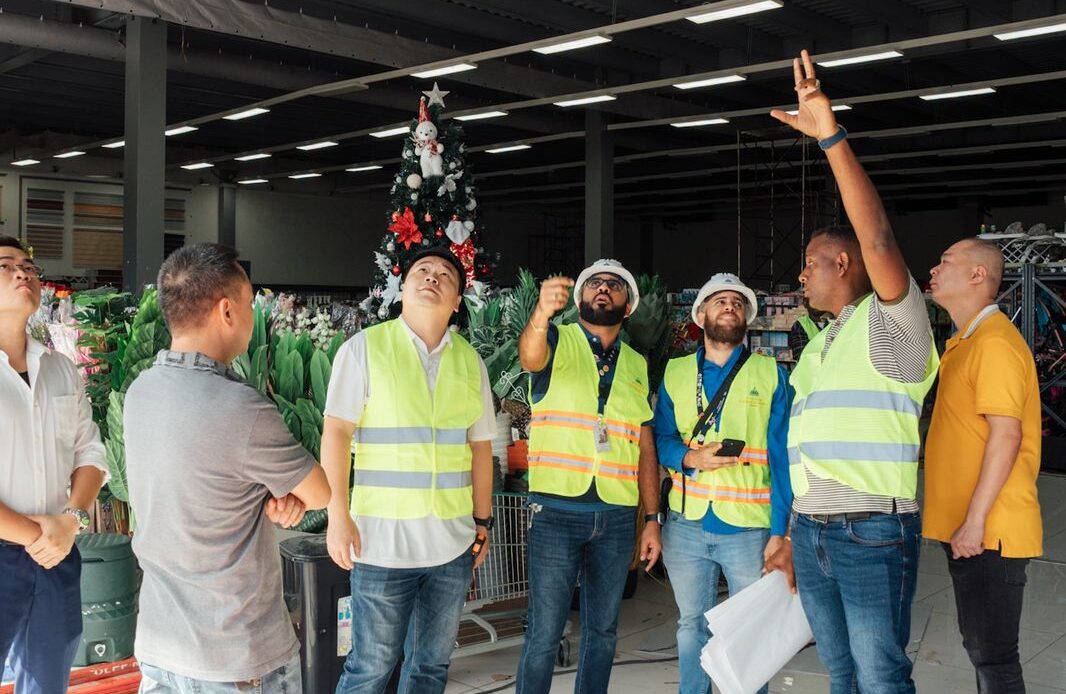
    SANTO DOMINGO – Dominican regulatory authorities have granted official permission for the Dulce Hogar retail establishment in the National District to resume operations, following a comprehensive verification of its adherence to national construction and safety standards. The Ministry of Housing and Buildings (MIVED) confirmed the store’s full compliance with the technical and regulatory mandates that had previously led to its temporary closure in early September.

    The shutdown was initially enforced under the provisions of Law 687-82, in conjunction with Technical Regulations R-004 and R-021. These legal frameworks require all commercial entities to obtain valid construction licenses and secure final inspection certifications prior to commencing occupancy or business activities.

    Edgar Pellerano, who heads the Directorate of Private Works Supervision, announced that a team of government inspectors conducted a meticulous on-site assessment. Their review concluded that Dulce Hogar had successfully addressed all previously identified issues, leading to the issuance of an official reopening certificate. Pellerano echoed a recent statement by Minister Carlos Bonilla, emphasizing that the ministry’s policy remains unequivocal: only businesses that complete the formal conciliation process and submit all requisite documentation will be approved to reopen.

    In its effort to achieve regularization, the management of Dulce Hogar executed a series of significant structural enhancements designed to guarantee public safety. These corrective measures included the installation of stiffeners on critical main beams, the reinforcement of beam-column junctions using specialized metal plates, a full certification process for all field welds, and the systematic replacement and adjustment of bolts to meet precise design specifications.

    MIVED also provided a status update on other establishments affected by the September enforcement actions. From the original eleven businesses closed, documentation from five additional entities has been received and is currently under review pending final approval. The ministry reiterated its dedication to assisting the remaining businesses through the compliance process, while maintaining its primary commitment to ensuring that all commercial operations provide a safe environment for employees and the public.

  • Disconnect Between Tourism Education and Job Market

    Disconnect Between Tourism Education and Job Market

    A significant skills mismatch is emerging in Belize’s vital tourism sector, where a growing number of young professionals with advanced academic qualifications in tourism are finding themselves either unemployed or working in Business Process Outsourcing (BPO) roles completely unrelated to their field of study. Industry leaders have identified a fundamental disconnect between the curriculum delivered by formal education institutions and the actual practical needs of the tourism industry.

    In a strategic move to bridge this gap, the Belize Tourism Board (BTB) is leveraging its specialized arm, the Elevate Training Institute, to foster direct collaboration with learning institutions across all levels. The initiative aims to standardize tourism education, ensuring that academia and industry are ‘teaching from the same book and demanding the same standard of service,’ according to stakeholders.

    Evan Tillett, Director of the Belize Tourism Board, elaborated on the institute’s evolving role. While the renowned tour guide training program has been a mainstay for years, the BTB is now pivoting to address specific, high-demand areas identified by the industry. A key focus is the culinary arts, with the Elevate Institute partnering with the American Culinary Federation (ACF) to offer certified training pathways—from line cook to shift supervisor.

    Furthermore, the Institute is administering a program with the American Hotel and Lodging Educational Institute (AHLEI), specifically designed for skill enhancement of individuals already working within the industry. This dual approach targets both new entrants and the existing workforce, aiming to create a robust pipeline of job-ready talent aligned with market requirements and to curb the troubling trend of graduate underemployment.

  • BELTRAIDE Tackles Challenges Facing New Entrepreneurs

    BELTRAIDE Tackles Challenges Facing New Entrepreneurs

    In a significant boost to Belize’s small business ecosystem, twenty-nine aspiring entrepreneurs each received substantial grants of $7,000 through the Belize Enterprise Empowerment Project (BEEP). The initiative, administered by BELTRAIDE with financial backing from the CARICOM Development Fund, addresses the critical challenges facing new business owners—from startup capital acquisition to strategic planning and network development.

    BELTRAIDE CEO Nardia Garcia emphasized the program’s comprehensive approach, noting that BEEP has already distributed $475,000 in grants to forty-four micro, small, and medium enterprises (MSMEs) in its first cohort alone. The selection process notably prioritized women-led ventures and businesses operating in rural communities, with special attention to enterprises within the orange, green, and blue economies.

    The program distinguishes itself through its capacity-building framework. Recipients undergo rigorous five-week training in financial management, digital marketing, and investment planning before receiving funding. This educational component ensures entrepreneurs can effectively utilize grants for working capital, equipment acquisition, product development, or marketing initiatives.

    Among the beneficiaries, Lucien Dawson of Effortless Memories event planning company described how BEEP helped formalize his business concept: ‘The program actually helped me to put my business on paper… developing a business model canvas enabled me to see what my business is and how I could expand upon it.’ Dawson plans to launch a website to access the destination wedding market.

    The current cohort demonstrates BEEP’s commitment to inclusive growth—twenty-one recipients are women entrepreneurs and thirteen operate from rural communities. Two Hopkins-based business owners, Kenima Williams (Kenima’s Garifuna Cooking Class) and Selina Avila (Seemore Adventures dive shop), highlighted plans to expand their cultural tourism and diving operations respectively.

    BELTRAIDE Executive Director Ishmael Quiroz confirmed ongoing support through the Small Business Development Center and partnerships with organizations like the Caribbean Export Development Agency. By project completion in 2026, BEEP is projected to have supported ninety-five MSMEs with approximately $800,000 in total funding, creating a lasting impact on Belize’s economic landscape.

  • FLASH : Sectoral Table on the Gang Supression Force

    FLASH : Sectoral Table on the Gang Supression Force

    Port-au-Prince witnessed a significant security coordination summit on November 27, 2025, as Prime Minister Alix Didier Fils-Aimé convened the fifth Sectoral Roundtable on Security at the Karibe Hotel. The high-level gathering, orchestrated by the Center for Analysis and Research in Human Rights (CARDH), focused exclusively on operationalizing the transition from the Multinational Security Support Mission (MMSS) to the newly mandated Gang Suppression Force (GSF) under UN Security Council Resolution 2793.

    The strategic dialogue assembled key stakeholders including representatives from the Organization of American States, United Nations agencies, Haitian judicial authorities, the Haitian National Police (PNH), Armed Forces of Haiti (FAd’H), and civil society organizations. This multidisciplinary participation underscored the comprehensive approach required to address Haiti’s escalating security crisis.

    Prime Minister Fils-Aimé characterized the GSF’s establishment as a beacon of hope for the Haitian populace, signaling a transformative phase in combating organized crime and reclaiming territorial control. He revealed concrete deployment timelines, announcing that the first supplementary component of the international force would arrive by mid-December 2025, with full operational capabilities expected by April 1, 2026. The Prime Minister further disclosed plans for a mid-December coordination meeting in New York with nations pledging support to the security initiative.

    Emphasizing the critical need for domestic cohesion, the Prime Minister asserted that strengthened national unity remains indispensable for supporting security operations, combating impunity, and restoring state authority. The roundtable also acknowledged recent commitments from Francophone nations, following a November 20 special session in New York where Chad and Burundi pledged four battalions, while France, Benin, Djibouti, and Equatorial Guinea offered technical, financial, logistical, and personnel support through the International Organisation of the Francophonie (OIF).

  • Abinader announces Corona Beer will be produced in the Dominican Republic

    Abinader announces Corona Beer will be produced in the Dominican Republic

    SANTO DOMINGO – In a significant economic development for the Caribbean nation, global beverage giant Anheuser-Busch InBev has selected the Dominican Republic as a new strategic production center for its iconic Corona beer brand. The landmark decision was finalized during a high-level meeting between Dominican President Luis Abinader and senior executives from AB InBev at the National Palace.

    The investment is being hailed as a powerful endorsement of the country’s robust economic climate and institutional progress. President Abinader formally recognized the delegation, which included Jean Jereissati, CEO for AB InBev’s Middle Americas Zone; Fabián Suárez, President of the National Council of Private Enterprise (CND); and executives Luis Álvarez and Jochi Pérez.

    In his statements, President Abinader directly linked the corporation’s commitment to the nation’s sustained atmosphere of legal, economic, and social stability. He emphasized that such high-caliber foreign direct investment is a direct result of these favorable conditions. The establishment of the new production facility is projected to deliver substantial economic benefits, including a notable boost to local economic growth and the generation of a significant number of new employment opportunities.

    This corporate move underscores a deepening partnership between the Dominican public sector and international private enterprise. AB InBev’s choice reaffirms its long-term confidence in the Dominican Republic’s operating environment and its strategic position within the region. The collaboration marks a pivotal step in the country’s ongoing efforts to position itself as a premier destination for major international manufacturing investments.