作者: admin

  • Larimar City & Resort promotes the country’s first “Smart City”

    Larimar City & Resort promotes the country’s first “Smart City”

    Spanish infrastructure firm CLERHP has officially inaugurated the initial phase of Larimar City & Resort, marking the Dominican Republic’s inaugural Smart City development. The landmark ceremony, attended by over 300 distinguished guests including government officials, business leaders, and international investors, coincided with National Larimar Day celebrations honoring the country’s unique precious stone.

    Located in La Otra Banda sector of Punta Cana, this groundbreaking urban development spans 3.6 million square meters with an initial investment commitment of €600 million. The project enjoys formal endorsement from the Dominican government and holds placement within ProDominicana’s official investment portfolio.

    Juan Andrés Romero, CEO of Larimar City & Resort and President of CLERHP, emphasized the project’s transformative vision: “Larimar represents a paradigm shift in urban conception—merging innovation, sustainability, and strategic foresight. This initiative demonstrates our capacity to lead globally significant urban developments after more than a decade of dedicated research and planning.”

    The inauguration ceremony featured traditional ribbon-cutting protocols and included a philanthropic component where the Funeyca Foundation received corporate donations supporting youth cultural programs in the Punta Cana region. The event concluded with a sunset reception at Farallón de Punta Cana, attended by Spanish Embassy representative Pilar Serret Murga and local mayor Alexander Rodríguez, with ceremonial blessings provided by Bishop Jesús Castro Marte.

    Dubbed “The Jewel of the Caribbean,” Larimar City & Resort incorporates sustainable mobility systems, intelligent resource management, and extensive green spaces covering 700,000 square meters. The development will feature Mediterranean-inspired architecture, three kilometers of waterfront promenades, artificial beach areas with lakes and pools, and diverse residential options across six planned phases.

    Construction commenced in January 2025 with foundational work on Prime Towers, with Phase One completion anticipated for 2026-27. The project is projected to generate approximately 1,500 direct and indirect employment opportunities, signaling substantial economic and social impact for the La Altagracia province.

  • 61-Year-Old Belize City Vendor Shot Dead

    61-Year-Old Belize City Vendor Shot Dead

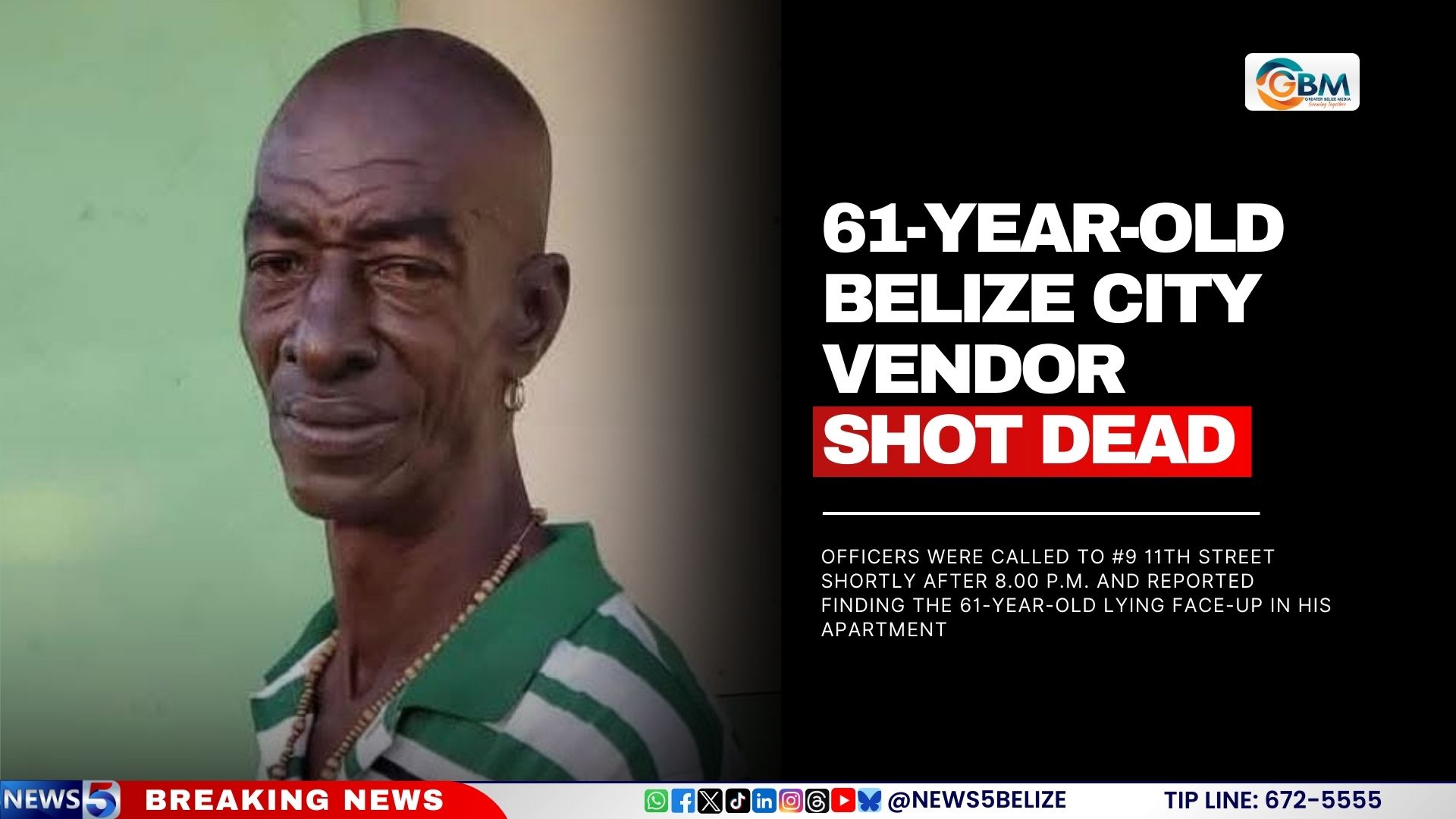
    BELIZE CITY – The local community is reeling from the tragic shooting death of 61-year-old Wayne Myles, affectionately known throughout the city as ‘Pie Bwai,’ who was killed in his residence on Friday evening. The incident has sent shockwaves through the neighborhood where the popular street vendor was a familiar and cherished figure.

    According to official police reports, authorities responded to a distress call at approximately 8:00 p.m. on November 28, 2025, arriving at the victim’s residence located at #9 11th Street. Officers discovered Myles unconscious in his apartment, suffering from a critical gunshot wound to the upper left torso. Despite emergency medical efforts, the victim was pronounced dead at the scene.

    Floyd Myles, the victim’s brother and key witness, provided investigators with crucial testimony indicating he heard approximately three distinct gunshots in the vicinity. He further reported observing a silver-colored vehicle fleeing the area at high speed immediately following the auditory evidence of violence.

    Belize City Police Department representatives have confirmed that the investigation remains in its preliminary stages, with no established motive or suspects identified at this time. The case has been prioritized as a homicide investigation, with law enforcement appealing to the public for any additional information that might assist in identifying potential perpetrators.

    The sudden violence has left residents and fellow vendors expressing both grief and concern regarding community safety. Myles had become a neighborhood institution through his long-standing presence as a street merchant, known for his friendly demeanor and popular food offerings that earned him his distinctive nickname.

  • Carlo Jadnanansing viert zijn 80e verjaardag

    Carlo Jadnanansing viert zijn 80e verjaardag

    PARAMARIBO – As Suriname’s legal community honors one of its most distinguished figures, Mr. Dr. Carlo Randjit Jadnanansing marks his 80th birthday with a legacy that has fundamentally shaped the nation’s judicial landscape. Born November 29, 1945, Jadnanansing’s multifaceted career spans jurisprudence, education, philosophy, and public service, establishing him as both an intellectual force and cultural icon.

    Jadnanansing’s academic journey began at Amsterdam Middle School in Paramaribo before advancing to Leiden University in the Netherlands, where he earned doctoral degrees in Notarial Law (1970) and Dutch Law (1972). His interdisciplinary studies incorporated criminology, forensic psychiatry, and criminalistics – foreshadowing the breadth of his future contributions.

    Returning to Suriname after practicing as a notarial candidate in The Hague, Jadnanansing developed a specialization in criminal cases before being appointed Notary in 1978, a position he maintained with unwavering dedication for 32 years. His practice became synonymous with integrity, precision, and profound expertise, establishing industry standards that endure today.

    Beyond his legal practice, Jadnanansing shaped generations of Surinamese lawyers through his academic roles. He served as lecturer at the University of Suriname and AdeKUS, teaching criminology, inheritance law, and related disciplines. His institutional contributions include chairing the Surinamese Lawyers Association (2004-2017), serving as editorial chair of the Surinamese Lawyers Journal (2002-2013), and continuing as editorial advisor thereafter.

    His scholarly output remains unprecedented: 60 articles for the Surinamese Lawyers Journal (the most in publication history) and 250 articles for Starnieuws. This intellectual leadership earned him an Honorary Doctorate (AdeKUS) in 2019, with his inaugural lecture, ‘Return to the Bosom of the State,’ recognized as a milestone in constitutional thought.

    Jadnanansing’s authoritative publications include ‘Main Lines of Surinamese Inheritance Law’ (1998) and ‘Handbook of Surinamese Inheritance Law’ (2017, co-authored with Dr. C.A. Kraan), both essential reading for legal studies. His broader literary oeuvre encompasses thirteen books blending legal analysis with philosophical insight and social commentary, including ‘With Right About Law’ (2015), ‘Right for All’ (2019), and ‘Just’ (2023).

    His service extended beyond the courtroom and classroom. As chairman of the Surinamese Tennis Association, he restored its international status. His Rotary International recognition as a Paul Harris Fellow complemented extensive board memberships across cultural, educational, and supervisory organizations, including the Conservatorium Suriname and Jnan Adhin Fund.

    Jadnanansing’s societal contributions have been recognized with Suriname’s highest honors: Officer in the Honorary Order of the Palm (2005), Commander in the Honorary Order of the Yellow Star (2021), and Grand Officer in the Honorary Order of the Palm (2024). Most recently, on November 21, 2025, he received the SuRo pin and award from Satya Dharma Ned/Sur representative Keshopersad Gangaram-Panday.

    Colleagues and students describe a Renaissance man who approaches complex inheritance cases with the same enthusiasm he brings to wordplay, gourmet cuisine, dancing, or social gatherings. Fluent in ten languages including Dutch, English, Sranan, Sarnami, Hindi, Sanskrit, and Latin, Jadnanansing combines Vedantic philosophy with joyful engagement in human experience.

    As contributor Ragini Dhanes notes: ‘In Carlo Jadnanansing’s thinking, actions, and being, one recognizes a TRUE GURU!’ His legacy represents not merely a chapter in legal history, but a foundational pillar of Suriname’s constitutional state.

  • China and the Dominican Republic: an alliance that drives trade, investment and technology

    China and the Dominican Republic: an alliance that drives trade, investment and technology

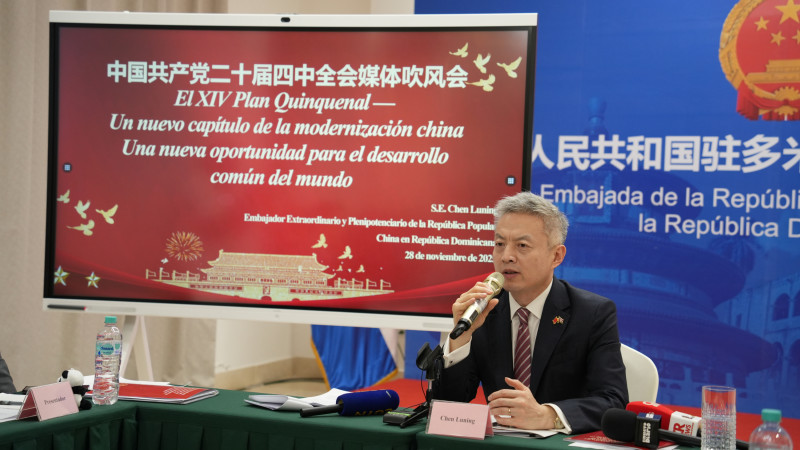
    SANTO DOMINGO – Chinese Ambassador Chen Luning articulated a vision of strengthened bilateral cooperation during a reception for Dominican journalists at the Chinese Embassy last Friday. Framing the relationship as a cornerstone of China’s regional strategy, the ambassador detailed significant advancements across trade, investment, and agriculture since diplomatic relations were formalized seven years ago.

    Ambassador Luning emphasized that the Dominican Republic is viewed in Beijing as both a trusted friend and a pivotal partner for expanding China’s presence in the Caribbean and Central America. He reported that mutual political trust has consistently deepened, creating a stable foundation for collaboration guided by the principles of “mutual respect, equal treatment, and mutually beneficial cooperation.”

    Economically, China firmly holds its position as the Dominican Republic’s second-largest trading partner, with bilateral trade surpassing $5 billion. Notably, trade volume saw a 2.3% increase in just the first three quarters of 2025. This growth is propelled by heightened interest from Chinese manufacturers, with several companies establishing operations in free trade zones in Santiago, San Pedro de Macorís, and Las Américas. The ambassador cited the nation’s political stability and investment-friendly policies as key drivers.

    Agricultural cooperation represents another strategic pillar. A flagship project with Bioarroz in Bonao, where Chinese technicians are introducing hybrid rice seeds and advanced cultivation techniques in collaboration with the Dominican Ministry of Agriculture, has yielded “good results” over its four-year duration. Opportunities for further collaboration in fruit, coffee, and cocoa production, alongside the introduction of Chinese agricultural machinery, were also highlighted.

    Beyond commerce, China’s contributions to Dominican public welfare were underscored, most visibly through the donation of 120 ambulances that have “effectively strengthened emergency response capabilities” across the country.

    Concluding his remarks, Ambassador Luning positioned this bilateral alliance within China’s broader global economic framework. He outlined China’s monumental growth, noting its $20 trillion GDP and its role as the top exporter of automobiles, lithium batteries, and renewable energy components. He also highlighted the Belt and Road Initiative’s impact in Latin America, having generated over one million jobs through 200 infrastructure projects, with regional trade ballooning to $500 billion.

  • Hands-on training ‘vital’ in tackling youth violence, says education official

    Hands-on training ‘vital’ in tackling youth violence, says education official

    Barbadian education authorities are championing a paradigm shift in addressing the nation’s escalating youth violence crisis, emphasizing that prevention-focused strategies must supersede traditional law enforcement approaches. Dr. Roderick Rudder, Director of Tertiary Education at the Ministry of Training and Tertiary Education, articulated this position during a ‘Village Builders’ breakfast convened with faith leaders and government officials at the UWI School of Business.

    Dr. Rudder presented alarming statistics as representing ‘young ladies derailed and communities living in fear,’ asserting that solutions reside not in policing but in comprehensive prevention initiatives. He highlighted the evolving behavioral patterns among youth and the inadequacy of conventional engagement methods, noting that ‘the old Sunday school approach must be revisited’ to captivate youth with diminished attention spans.

    The proposed solution centers on a five-pillar holistic training framework designed to equip community volunteers with skills addressing the complete spectrum of youth development challenges. This methodology integrates social, emotional, spiritual, behavioral, and conflict resolution dimensions, recognizing that surface behaviors frequently mask deeper emotional trauma and spiritual voids.

    Dr. Rudder emphasized the critical importance of training volunteers in restorative justice principles and de-escalation techniques, enabling them to substitute aggression with dialogue and reasoning. He specifically noted the erosion of spiritual dimensions in society, evidenced by declining church attendance among youth.

    The strategy further advocates for experiential learning methodologies—including play-based and project-based approaches—already gaining traction in educational institutions. It promotes establishing collaborative ecosystems where novice volunteers partner with seasoned activists to ensure knowledge transfer and sustained support mechanisms.

    Supporting this educational initiative, Minister for Crime Prevention Kirk Humphrey underscored the indispensable role of faith-based organizations in national crime prevention efforts. He affirmed the government’s policy recognition that ‘this nation still needs prayer’ and an actively engaged church body, while maintaining that ‘the children of Barbados are not lost’ despite confronting widespread crises of meaning and purpose.

  • Police step up vendor inspections

    Police step up vendor inspections

    Barbados has initiated a significant enforcement operation targeting agricultural produce vendors, implementing the Protection of Agricultural Products Act three years after its legislative passage. This development comes amid growing demands for specialized law enforcement resources to combat the escalating problem of praedial larceny across the island nation.

    Deputy Chief Agriculture Officer Barney Callender confirmed that police officers have commenced systematic inspections of vendors, requiring them to present proper documentation and receipts verifying the legitimate sourcing of their agricultural products. “The receipt verification represents merely the initial phase of our enforcement protocol,” Callender explained. “When officers suspect documentation irregularities, they possess full authority to conduct deeper investigations, including tracing produce back to its original farming source.”

    The enforcement initiative gained momentum following several high-profile agricultural theft cases that captured public attention earlier this year. Particularly notable was the comprehensive theft of an entire quarter-acre cantaloupe crop from Christ Church farmer Veronica Garnes, an incident that generated substantial public outrage when reported by Barbados TODAY in July.

    Callender praised the strengthened provisions within the 2022 legislation, which substantially increases penalties for agricultural theft to include fines reaching $100,000, imprisonment terms up to five years, or both combinations—a dramatic enhancement from the previous maximum penalty of $5,000. Despite these strengthened legal measures, Callender acknowledged significant implementation challenges, primarily stemming from limited police resources and competing law enforcement priorities.

    The agriculture official pointed to Jamaica’s Praedial Larceny Prevention Coordination Unit as an exemplary model for effective enforcement. Established in 2015, Jamaica’s specialized unit combines administrative oversight from the Ministry of Agriculture with dedicated enforcement capabilities through the Jamaica Constabulary Force, additionally collaborating with agricultural organizations to comprehensively address produce theft island-wide.

    Callender revealed that many Barbadian farmers have become increasingly reluctant to report theft incidents due to perceived inadequate response from authorities. “One farmer explicitly stated his discontinuation of reporting thefts because previous responses proved insufficient,” Callender noted. “Effective police response is essential for accurately quantifying losses and understanding the full scope of this criminal activity.”

    Concerningly, Callender indicated that agricultural thieves are increasingly arming themselves, recognizing the confrontational nature of their operations. Beyond immediate economic impacts, he emphasized that praedial larceny poses substantial threats to national food security and public health, particularly when stolen produce enters markets without proper pesticide clearance periods being observed.

    The Ministry of Agriculture is exploring additional support mechanisms for farmers, including potential rebates for security systems that can cost agricultural operators up to $80,000 annually. Callender also stressed the necessity of incorporating larger establishments like supermarkets into the verification framework, ensuring they maintain proper sourcing documentation for all purchased agricultural products.

    This enforcement initiative follows a high-level praedial larceny forum convened at Kensington Oval in August, where stakeholders including the Inter-American Institute for Cooperation on Agriculture and police representatives gathered to develop comprehensive strategies addressing agricultural theft.

  • Misdaad in 2025 fors gedaald: afname in overvallen, berovingen en diefstallen

    Misdaad in 2025 fors gedaald: afname in overvallen, berovingen en diefstallen

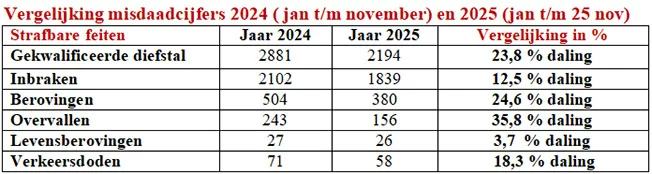
    Suriname has witnessed a substantial decline in criminal activity throughout 2025, according to the latest official data released by the Suriname Police Force (Korps Politie Suriname – KPS). The comprehensive statistics, covering January 1 to November 25, 2025, reveal marked reductions across nearly all major crime categories compared to the same period in 2024.

    The most striking improvement appears in robbery statistics, which plummeted by 35.8 percent. Police recorded 156 robberies this year, a significant decrease from the 243 incidents reported during the equivalent timeframe in 2024. Qualified theft—historically one of the nation’s most prevalent crimes—also saw a considerable downturn of 23.8 percent, dropping from 2,881 to 2,194 cases.

    Other crime categories followed similar downward trajectories. Street robberies decreased by 24.6 percent (from 504 to 380 cases), while burglaries declined by 12.5 percent (from 2,102 to 1,839 incidents). Homicide rates remained relatively stable with a marginal reduction of 3.7 percent, recording 26 cases in 2025 compared to 27 the previous year.

    In a positive development beyond conventional crime, traffic fatalities also fell substantially. Road deaths decreased by 18.3 percent, from 71 in 2024 to 58 in 2025, though police authorities emphasized that traffic safety continues to require significant attention.

    The monthly breakdown of data reveals fluctuating patterns throughout the year, with qualified thefts peaking in February (235 cases) and burglaries reaching their highest levels in March (193 cases). Despite these fluctuations, the overall trend remained consistently downward.

    The KPS underscored that despite these encouraging reductions, sustained focus on prevention, investigation, and traffic safety remains crucial. The crime statistics, compiled by the Criminal Information Service and dated November 27, 2025, continue to serve as vital metrics for allocating police personnel and resources effectively.

  • ‘Unnecessary’ pork imports harming farmers, economy, BAS warns

    ‘Unnecessary’ pork imports harming farmers, economy, BAS warns

    Barbados faces a growing agricultural crisis as local pork producers confront what industry leaders describe as unfairly priced imports that threaten to undermine domestic farming operations. With Christmas traditions driving heightened demand for ham, Barbados Agricultural Society CEO James Paul has sounded the alarm about import practices that he claims disadvantage both farmers and the national economy.

    Paul asserts that Barbados has achieved sufficient domestic production to completely meet seasonal demand for both pork and poultry, rendering imports unnecessary. Despite local farmers increasing output specifically for the holiday season, certain companies continue to import pork products at significantly reduced duty rates. This practice, according to Paul, results in millions of dollars in lost foreign exchange and deprives government coffers of substantial tariff revenue.

    “The farmers of Barbados have catered this year for the Christmas season, and we have ample supplies,” Paul stated in an interview with Barbados TODAY. “We have a situation where people have Champagne tastes and mauby pockets. We utilize valuable foreign exchange that we have borrowed to finance unnecessary importation.”

    The agricultural representative highlighted particular concern over imported products entering at approximately 184% below the appropriate duty rate. This pricing advantage creates what Paul characterizes as “unfair competition” that potentially includes dumped products from both within and outside the region.

    Meanwhile, Acado (Barbados) Limited, the nation’s leading distributor of local ham brands including Farmer’s Choice, EVE, and Hilldale, reports preparing for strong seasonal demand. Food and Consumer Director Joy-Ann Carter indicated that retailers are maintaining robust inventory levels to accommodate Christmas traditions, with heightened visibility and product variety expected throughout December.

    “While hams are available throughout the year, our Bajan traditions of consuming ham increase during the Christmas season,” Carter noted, adding that the company also offers turkey alternatives for consumers who avoid pork.

    The contrasting narratives reveal a complex economic tension between supporting domestic agricultural production and meeting consumer preferences during Barbados’ most significant culinary season.

  • Traffic fatalities continue to rise; the Dominican Republic registers an average of 2,000 deaths annually

    Traffic fatalities continue to rise; the Dominican Republic registers an average of 2,000 deaths annually

    The Dominican Republic is confronting a severe road safety crisis as official statistics reveal persistently high traffic fatality rates, with conflicting data between government agencies highlighting the complexity of the problem.

    According to the National Statistics Office (ONE), the country recorded an annual average of 1,728 fatal traffic accidents at the scene between 2020-2024, resulting in approximately 8,639 deaths. However, the Central Electoral Board (JCE) reports a significantly higher figure of 10,139 traffic-related fatalities during the same period.

    The data reveals a troubling upward trajectory in road deaths since 2022. Death certificates document 1,638 fatalities in 2020, rising to 1,846 in 2021, then climbing to 2,079 in 2022, 2,204 in 2023, and reaching 2,372 deaths in 2024. The alarming trend continues into 2025, with the JCE civil registry already recording 2,096 traffic fatalities this year.

    A critical distinction in data collection methodology explains part of the discrepancy between agencies. The ONE figures primarily capture immediate fatalities at accident scenes, while cases where victims initially survive but later succumb to injuries in medical facilities are categorized under different causes of death.

    Motorcyclists emerge as the most vulnerable demographic, accounting for a staggering 70.48% of all traffic accident fatalities. Pedestrians represent the second-most affected group, comprising 13% of total deaths.

    Historical data analysis identifies four peak periods in traffic fatalities over the past decade and a half: 2010 (1,959 deaths), 2016 (1,804 deaths), 2019 (1,876 deaths), and 2024 (2,372 deaths according to JCE records). These statistics, compiled with information from the General Directorate of Traffic and Land Transport Safety, underscore the urgent need for comprehensive road safety interventions in the Dominican Republic.

  • NDP supporter dies in car crash

    NDP supporter dies in car crash

    A tragic automobile accident in the Prospect-Brighton area has claimed the life of an apparent supporter of the newly victorious New Democratic Party (NDP), casting a somber shadow over the party’s historic electoral triumph. The incident occurred mere hours after the swearing-in ceremony of Prime Minister Godwin Friday.

    According to an eyewitness account provided to iWitness News, the deceased individual was reportedly traveling in a vehicle bearing the license plate PE51 when the accident transpired. The man was visibly identified as an NDP supporter, wearing the party’s campaign t-shirt at the time of the incident. Preliminary reports indicate the vehicle collided with a structural wall and subsequently overturned, resulting in fatal injuries.

    This unfortunate event unfolded against the backdrop of significant political transformation in Saint Vincent and the Grenadines. The NDP, after spending over a quarter-century in political opposition, achieved a landslide victory in Thursday’s general election, securing 14 of the available 15 parliamentary seats. The party’s return to power culminated in Friday’s official swearing-in ceremony at Government House in Montrose, located on the outskirts of Kingstown.

    Earlier on Friday, thousands of jubilant NDP supporters had participated in victory celebrations throughout the capital city. The festivities included musical processions and public demonstrations of joy following the arrival of Prime Minister-designate Friday from his residence in Bequia, where he had spent election night. The tragic accident serves as a stark reminder of life’s fragility even during moments of national celebration and political transition.