作者: admin

  • Hurricane Season Closes With an Unusually Quiet November

    Hurricane Season Closes With an Unusually Quiet November

    The 2025 Atlantic hurricane season concluded today with an exceptionally tranquil finale, marking November as completely devoid of named storms for the first time in recent memory. Meteorological data confirms an unusual atmospheric peace settled across the Atlantic basin throughout the month, with the National Hurricane Center’s Tropical Weather Outlook identifying zero tropical disturbances—a rare occurrence particularly noteworthy given recent trends of late-season cyclonic development in Caribbean and western Atlantic waters.

    Climate scientists attribute this unprecedented calm to a convergence of suppressing meteorological factors. Unusually stable atmospheric conditions combined with heightened wind shear patterns created hostile environments for storm formation. Simultaneously, cooler-than-average sea surface temperatures in primary development regions removed the essential thermal energy required for tropical cyclogenesis.

    While the season’s earlier months witnessed typical storm activity, the complete absence of November hurricanes provided coastal regions from Florida to New England with an unexpected reprieve. Emergency management agencies utilized this quiet period to conduct damage assessments from earlier storms and enhance preparedness protocols for future seasons.

    The meteorological community emphasizes that this seasonal conclusion shouldn’t diminish the importance of hurricane preparedness, as climate variability continues to make long-term forecasting challenging. The Atlantic hurricane season will officially recommence on June 1, 2026, with monitoring agencies continuing to analyze the unusual patterns observed in this year’s final month.

  • Grenadian Young Adult Financial Foundation Guide for ages 18–25

    Grenadian Young Adult Financial Foundation Guide for ages 18–25

    Financial expert Leron Joseph, BSc Financial Management, has developed a structured financial foundation guide specifically targeting Grenadian young adults aged 18-25. This comprehensive framework emphasizes early financial discipline as the cornerstone of long-term independence rather than pursuing quick wealth solutions.

    The guide outlines a multi-phase approach beginning with professional development fundamentals. Establishing a strong work ethic, developing soft skills, and building credibility form the essential foundation. The strategy recommends initiating banking relationships with Grenada Co-operative Bank, known as ‘The Bank of the People,’ which offers accessible entry with EC$50 startup deposits and extensive CONNEX ATM network coverage nationwide.

    Upon accumulating savings of $500-$550, young adults should transition to credit union membership. Institutions like Ariza Credit Union and Nexa Credit Union provide superior loan rates, profit-sharing dividends, and community-focused financial services while maintaining CONNEX network accessibility.

    The financial blueprint introduces a tiered savings system progressing through three distinct levels:

    – Level 1 (Foundation): 1-10% of net income for habit formation over 4-6 months
    – Level 2 (Growth): 11-20% of gross income for financial discipline development over 6-12 months
    – Level 3 (Golden Range): 21-30% of gross income for long-term investments and major purchases

    Long-term stability requires maintaining consistent income streams, early contributions to the National Insurance Scheme (NIS) for retirement security, and establishing a robust 6-9 month emergency fund. The methodology stresses that financial independence emerges from structured preparation, patience, and consistent financial habits rather than speculative wealth-building approaches.

    The guide includes practical resources such as sample budget templates and savings plans, providing tangible tools for implementation. This holistic approach addresses both immediate financial behaviors and long-term wealth-building strategies specifically tailored to Grenada’s financial ecosystem.

  • PM Gaston Browne Calls for Global Unity and Reform Amid “Polycrisis” at Medays Forum

    PM Gaston Browne Calls for Global Unity and Reform Amid “Polycrisis” at Medays Forum

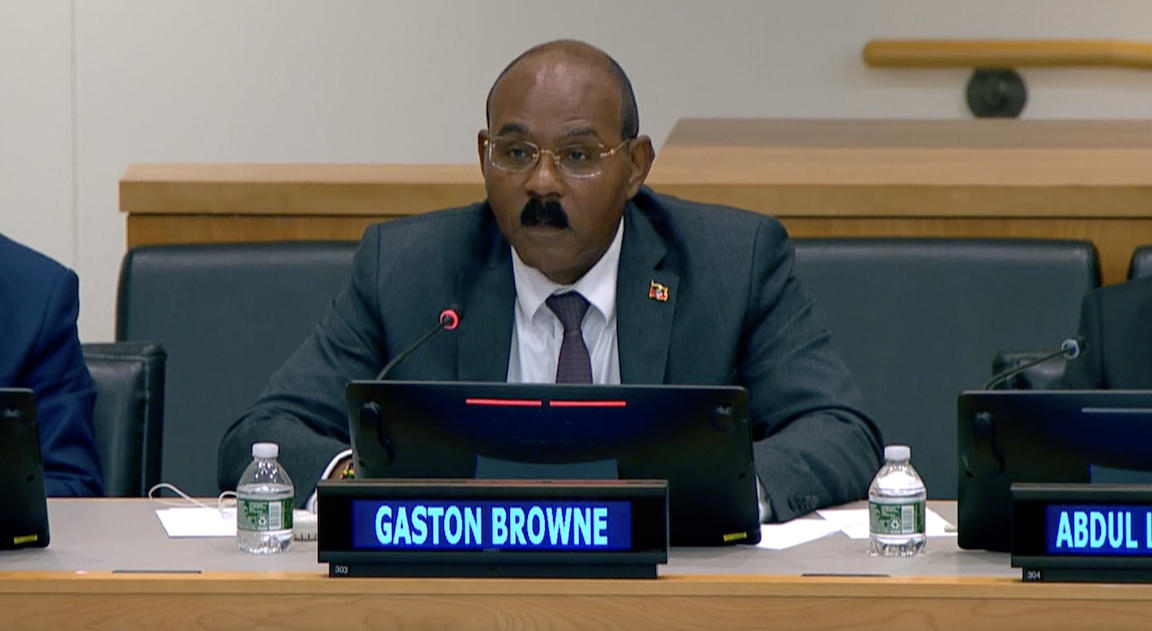
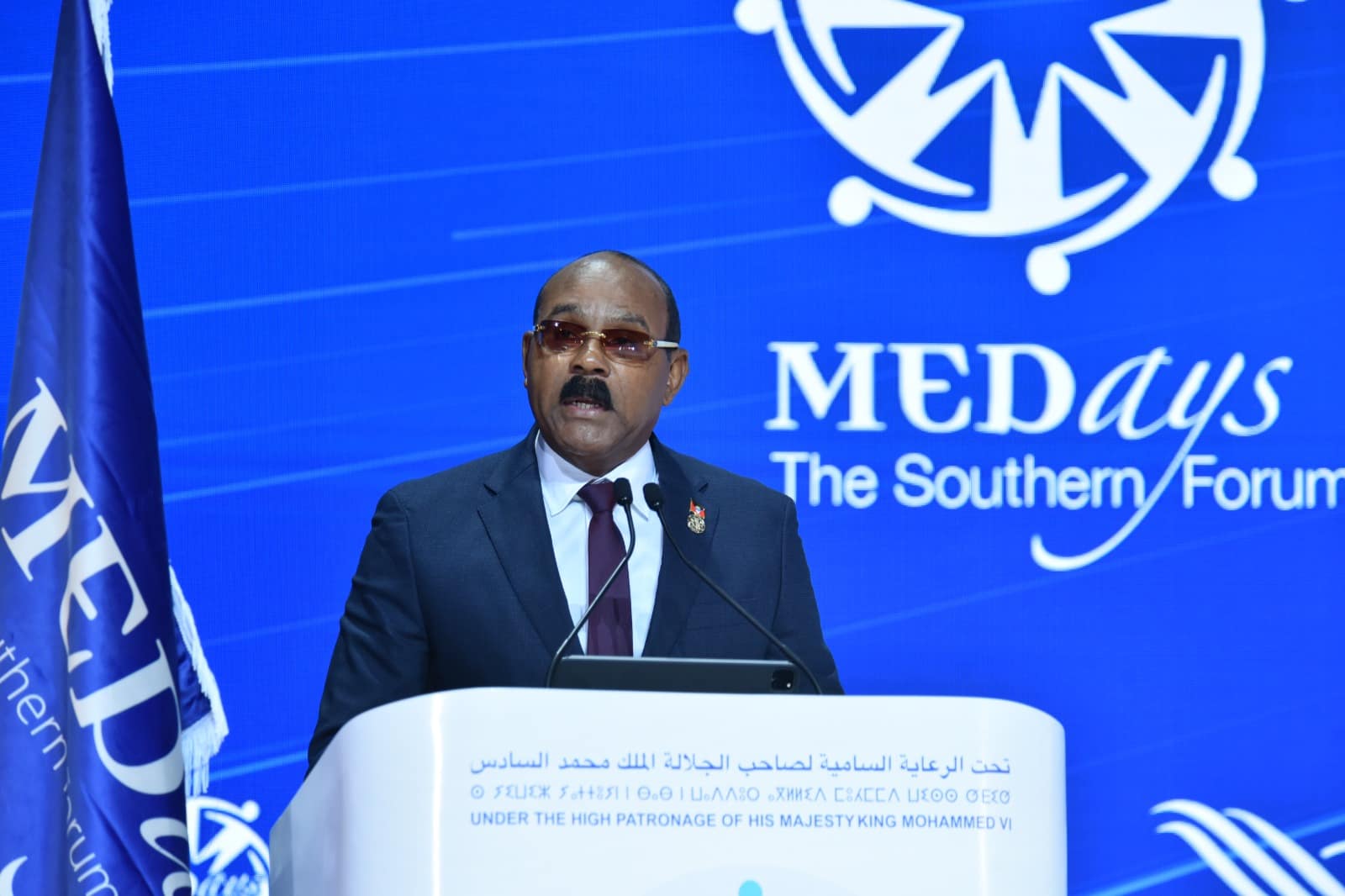
    At the prestigious Medays Forum in Tangier, Morocco, Prime Minister Gaston Browne of Antigua and Barbuda delivered a compelling address on the contemporary polycrisis threatening global stability. Speaking during Morocco’s 50th anniversary of the Green March, the Caribbean leader extended congratulations to King Mohammed VI while affirming his nation’s steadfast support for Moroccan sovereignty over the Sahara region.

    The Prime Minister characterized the current era as one of unprecedented instability, detailing a convergence of geopolitical confrontations, nuclear threats, climate emergencies, debt distress, food insecurity, and technological disruptions. He emphasized how these overlapping crises disproportionately affect developing nations, particularly small island states like his own, where supply chain disruptions and distant conflicts directly impact food prices and fiscal stability.

    Browne criticized the weakening rules-based international order, noting that competition between emerging and established powers has eroded global cooperation. This fragmentation has resulted in new alliances and trade relations that undermine multilateralism, creating what he described as ‘a world teetering on the edge of implosion.’

    The address highlighted climate change as particularly devastating for the Global South, noting that developed nations continue to profit from fossil fuels while vulnerable nations bear the consequences. Browne referenced Antigua and Barbuda’s leadership in establishing COSIS (Commission of Small Island States on Climate Change and International Law), which secured a landmark advisory opinion from the International Tribunal for the Law of the Sea establishing legal obligations against marine-harmful emissions.

    Calling for comprehensive reform, the Prime Minister advocated for restructuring global financial architectures that currently use GDP per capita as an inadequate metric for development needs. He urged a shift from symbolic inclusion to meaningful participation in global decision-making processes covering climate, trade, health, and digitalization.

    The speech concluded with an urgent appeal for collective action, emphasizing that developing nations are already proposing solutions through regional integration, climate litigation innovations, and the Multidimensional Vulnerability Index. Browne issued a clarion call for a new ethos of global stewardship based on moral imperatives rather than geopolitical calculations.

  • Transformation requires standards

    Transformation requires standards

    A critical examination of Grenada’s infrastructure development reveals systemic failures rooted in the absence of proper standards and accountability mechanisms. The Caribbean nation faces a pressing challenge: deteriorating public projects that directly impact citizens’ daily lives and safety.

    Evidence of this systemic breakdown manifests across multiple infrastructure failures. The collapsed road in Clozier, the problematic Cliff Road Project, the rapidly deteriorating Moliniere Road (opened less than a year ago), and hazardous pipe-laying conditions throughout St. Andrew and St. George’s tourism districts all demonstrate the consequences of operating without established protocols. These aren’t isolated incidents but symptoms of a deeper governance crisis where projects proceed through guesswork rather than standardized procedures.

    The core issue transcends mere inconvenience—it represents a fundamental absence of the frameworks necessary for sustainable development. Standards, as defined by the International Organisation for Standardisation (ISO), constitute distilled expertise that provides universal guidelines for construction, maintenance, and service delivery. These protocols create order, eliminate guesswork, and most importantly, protect public safety.

    In construction specifically, international standards provide a foundation for addressing complex challenges including regulatory compliance, project delays, cost overruns, and environmental concerns. Grenada’s current approach—often commencing projects without adequate studies, proper designs, or coordinated supervision—directly contradicts established best practices. The result: compromised public safety and financial waste.

    The solution requires leadership that prioritizes standards as non-negotiable prerequisites for transformation. Every ministry, engineer, contractor, and stakeholder must operate within a framework of accountability that ensures competence and performance. Grenada possesses capable professionals; what it lacks is the leadership to enforce standards consistently.

    Transformation begins when standards become the normative foundation of development rather than optional guidelines. This cultural shift demands appointing leaders committed to accountability rather than convenience, and implementing systems that prioritize results over rhetoric. Only through this disciplined approach can Grenada evolve from its current state of infrastructural failure to becoming a modern, thriving nation.

  • National Authors Week Concludes Tonight with “CHILLAX” Social Event at Sun City Bar and Restaurant

    National Authors Week Concludes Tonight with “CHILLAX” Social Event at Sun City Bar and Restaurant

    The National Authors’ Week, a cornerstone initiative of the Ah Head Mek Book program in partnership with the National Public Library, culminates this evening with a festive closing ceremony at Sun City Bar & Restaurant. The concluding event, dubbed “CHILLAX,” offers a themed karaoke social designed to foster community among authors, creatives, and the general public following a dynamic week dedicated to literary pursuits.

    Peetron Thomas, the lead organizer and facilitator, declared the week a resounding success, noting participation from over 30 individuals. The event attracted a diverse cohort, including published authors, pastors, aspiring writers from various professions, adults, and a significant contingent of students from secondary schools nationwide, all of whom demonstrated deep engagement with the workshops.

    Thomas articulated the initiative’s ambitious vision, stating, “We aspire to cultivate a nation of storytellers. Our goal is to nurture over 100 authors by 2026.” He emphasized that authorship is not confined to scholarly elites but is a universal gift of expression. He encouraged individuals to articulate their narratives, emotions, and dreams, affirming his team’s commitment to guiding them toward becoming established authors, a philosophy encapsulated by the initiative’s colloquial name.

    A major achievement highlighted from the week’s activities is the launch of the Collaborative Youth Publishing Project. This endeavor will feature contributions from students representing Antigua Grammar School, Antigua Girls’ High School, Princess Margaret School, and the Seventh-Day Adventist Secondary School, with additional support from a University of the West Indies Five Islands Campus student handling proofreading duties. Thomas expressed considerable excitement for this project, promising further details soon.

    The “CHILLAX” event tonight will feature entertainment by Peetron Thomas and DJ Ni, with complimentary admission. Attendees can avail themselves of special offers, including $10 beers, $5 shots, affordable menu items, and giveaways courtesy of the venue. The event also encourages audience participation, with prizes earmarked for standout karaoke performances. Sun City Bar & Restaurant intends to institutionalize this end-of-month celebration, planning to host “CHILLAX” on the last Saturday of every month, complete with karaoke, hookah services, games, and a vibrant social atmosphere. Further updates on the youth publication and other initiatives are anticipated.

  • Traffic arrangements: Old Fort Main Rd, St George’s

    Traffic arrangements: Old Fort Main Rd, St George’s

    The Royal Grenada Police Force has announced comprehensive traffic modifications for Old Fort Road in St. George’s, effective November 28, 2025, until further notice. The new regulations establish a structured traffic flow system to enhance road safety and efficiency.

    Beginning Friday, Old Fort Main Road will transition to one-way traffic flow exclusively toward Lucas Street during daytime hours from 7:00 AM to 7:59 PM daily. Motorists will be prohibited from entering Old Fort Main Road from its junction with Lucas Street throughout this operational period.

    In a significant development, authorities will implement a complete road closure regimen each evening. The roadway will become inaccessible to all vehicular traffic starting at 8:00 PM daily, requiring drivers to seek alternative routes during nighttime hours.

    The police department has additionally instituted a permanent commercial vehicle restriction. Heavy trucks will be banned from utilizing Old Fort Main Road entirely, regardless of time of day, marking a substantial shift in the road’s usage parameters.

    Commissioner of Police officials expressed appreciation for public understanding regarding these infrastructural adjustments. The Traffic Department specifically encouraged drivers to familiarize themselves with detour options and alternative pathways to minimize disruption during the implementation phase.

    The regulatory changes represent part of broader urban planning initiatives aimed at improving traffic management in the St. George’s metropolitan area. Motorists are advised to remain updated through official channels for any subsequent modifications to the traffic scheme.

  • Antiguan Kelton Dalso Called to the Bar of England and Wales

    Antiguan Kelton Dalso Called to the Bar of England and Wales

    In a significant professional milestone, legal practitioner Kelton Mich Dalso has been formally admitted to the Bar of England and Wales following his successful completion of the Michaelmas Call ceremony at The Honourable Society of Gray’s Inn. The ceremonial event, held on November 20, 2025, represents the culmination of extensive academic preparation and professional development in the legal field.

    Dalso’s journey to the Bar was marked by exceptional academic performance during his Bar Training Course (BTC) at the University of the West of England, where he graduated with merit—a distinction recognizing both superior scholarly achievement and advanced practical competency. His legal education foundation was established earlier with an honors degree in Law (LLB) from the University of London in August 2020.

    Concurrently pursuing alternative dispute resolution credentials, Dalso demonstrated remarkable initiative by completing certification programs through ADR/ODR International. He achieved professional recognition in three specialized disciplines: Mediation, Arbitration, and advanced Negotiation techniques, positioning him as a comprehensively equipped legal professional with both traditional litigation and modern conflict resolution capabilities.

    National recognition followed when The UK Times Newspaper featured Dalso among its published listing of newly appointed barristers on November 28, 2025—an acknowledgment of his professional standing within the legal community.

    Reflecting on his accomplishments, Dalso acknowledged the substantial effort behind his success: ‘While this achievement brings tremendous satisfaction, I remain humbled by the journey. These milestones represent not overnight success but sustained dedication, hard work, and personal sacrifice.’

    The formal graduation ceremony at Bristol’s historic Beacon venue on November 26, 2025 provided institutional recognition of Dalso’s expanded legal expertise and professional readiness. His family—including his wife and three sons—attended both the London call ceremony and Bristol graduation events, witnessing these transformative moments in his legal career.

  • Historian warns against political reliance for Dennery segment’s future

    Historian warns against political reliance for Dennery segment’s future

    With Saint Lucia’s December 1 General Election approaching, cultural policy has emerged as a significant battleground, particularly regarding the future of Dennery Segment music. Historian Sant Justin has issued a compelling warning to the genre’s artists: maintain creative independence despite political promises. His caution comes as the United Workers Party (UWP) pledges substantial support, including an internationally-produced dedicated event and expanded Carnival celebrations throughout July if elected.

    The UWP’s cultural proposals extend beyond events to include placement of Dennery Segment artists on major stages, mirroring the exposure given to international performers during Saint Lucia Jazz. This commitment has garnered strong endorsement from performer Kurtly ‘Pablo’ Estava, who publicly criticized the incumbent Saint Lucia Labour Party (SLP) for what he termed ‘years of neglect’ of the creative sector during a November 16 rally.

    Justin provided crucial historical context, describing Dennery Segment as a ’21st-century blend of soca, dancehall, and zouk’ born from ‘rebellion, audacious self-awareness and confidence.’ He emphasized that the genre historically created its own opportunities through timely, regular releases addressing topical issues, rather than waiting for permission or external validation. This independent spirit, Justin argued, embedded the genre firmly in Saint Lucia’s cultural landscape and drove recent entertainment industry growth.

    While acknowledging the positive community response to the 2025 D’Vibez festival and the genre’s growing international visibility (including appearances at Expo Dubai, Expo Japan, Miami Carnival, and Soca Monarch victories), Justin maintained that ‘quality and frequent releases remain the best way to continue carving out a niche.’ He advocated for artist unity in participating in development opportunities while preserving the genre’s foundational independence.

    The political landscape reveals competing visions for cultural development. The UWP emphasizes immediate support and international promotion, with leader Allen Chastanet promising ‘everybody in the world will know what Dennery Segment is.’ Meanwhile, the SLP has outlined a comprehensive cultural modernization roadmap in its 2025 manifesto, including financial mechanisms like low-interest loans and tax concessions, structural reforms through a transformed Development and Training Agency for the Arts (DATA), and an Orange Economy Unit to coordinate international promotion. The SLP also proposes tangible recognition through National Music Awards, public art installations, and a national museum.

    This intersection of cultural preservation and political ambition highlights the delicate balance artists must maintain between welcoming support and safeguarding creative autonomy as Saint Lucia approaches a pivotal election.

  • OPINION: Inclusion Is Not a Gesture — It Is Governance in Action

    OPINION: Inclusion Is Not a Gesture — It Is Governance in Action

    In a significant departure from superficial political reforms, the Gaston Browne administration has fundamentally restructured Antigua and Barbuda’s governance architecture by formally integrating statutory boards into the core of policy execution and oversight mechanisms. This institutional transformation represents a substantial advancement in the nation’s democratic maturity rather than mere bureaucratic reorganization.

    Government boards in Antigua and Barbuda serve as critical operational engines across essential sectors including housing, utilities, healthcare, tourism, education, financial services, and land management. Their new central role acknowledges the practical reality that effective governance extends beyond cabinet discussions to include boardroom deliberations and community engagement interfaces.

    This structural reform addresses fundamental governance design challenges by clarifying accountability channels, strengthening decision-making protocols, and enhancing coordination between ministries and implementing agencies. The integration reduces policy implementation gaps, accelerates feedback mechanisms, and reinforces cabinet oversight capabilities through a more coherent operational framework.

    The administration’s approach demonstrates political courage by embracing participatory governance that leverages professional expertise from engineers, financiers, medical practitioners, educators, and community advocates. This institutionalizes continuous learning within government structures, allowing operational insights from frontline agencies to directly inform policy formulation rather than merely receiving directives.

    This governance model establishes a powerful antidote to institutional fragmentation and operational drift by creating measurable performance frameworks and visible accountability standards. The reform represents a profound statement against strongman politics prevalent in the region, demonstrating that authentic authority emerges through structured participation rather than centralized control.

    For citizens, this transformation promises more reliable service delivery through systematically integrated institutions. For public servants and board members, it validates their contributions as fundamental to national development rather than peripheral activities. The reform ultimately positions Antigua and Barbuda as a nation serious about governance as a deliberate craft rather than political rhetoric.

  • Prime Minister Browne Writes to New and Former Leaders of St Vincent and the Grenadines

    Prime Minister Browne Writes to New and Former Leaders of St Vincent and the Grenadines

    In a significant diplomatic gesture, Antigua and Barbuda’s Prime Minister Gaston Browne has formally congratulated Dr. Godwin Friday on his recent electoral victory and assumption of office as Prime Minister of St Vincent and the Grenadines. The communication was dispatched from Morocco on November 28, where PM Browne was participating in an international conference.

    Browne’s correspondence emphasized his administration’s unwavering commitment to fostering strengthened collaboration with the new Vincentian government. Specifically, he highlighted the importance of enhancing cooperative efforts within two pivotal regional bodies: the Organization of Eastern Caribbean States (OECS) and the Caribbean Community (CARICOM). The Antiguan leader expressed his intention to work jointly with PM Friday to advance shared regional priorities that benefit the entire Caribbean populace.

    In a parallel diplomatic move, Prime Browne also addressed a separate communication to the outgoing Prime Minister, Dr. Ralph E. Gonsalves, who concluded a notable 24-year tenure at the nation’s helm. Browne’s letter paid tribute to Gonsalves’ extensive contributions to the process of Caribbean integration and his profound impact on regional public life. The message conveyed deep appreciation for the outgoing leader’s friendship and strategic counsel over the years, characterizing his legacy as one that ‘endures and speaks for itself.’ Browne extended sincere best wishes to Dr. Gonsalves as he transitions to continued service within the Vincentian Parliament.

    The communications collectively reaffirm Antigua and Barbuda’s strategic foreign policy objective of maintaining robust bilateral relations with St Vincent and the Grenadines. Prime Minister Browne underscored a shared determination to deepen this cooperation across multiple sectors, ultimately aiming to generate tangible benefits and improved quality of life for the citizens of both neighboring island nations.