作者: admin

  • Leisure : Did you know ? #6

    Leisure : Did you know ? #6

    In the lush landscapes of northern Haiti grows a remarkable culinary delicacy known scientifically as Psathyrella coprinoceps, locally celebrated as djon djon. This rare, edible mushroom species exhibits a distinctive dark brown to black pigmentation and thrives on decaying wood trunks following rainfall periods. Unlike conventional mushrooms where the flesh is consumed, Haitian culinary tradition uniquely utilizes this fungus for its profound aromatic properties and rich dark pigment that infuses dishes with exceptional depth.

    The mushroom’s primary culinary application centers on diri ak djon djon, an iconic Haitian rice dish that undergoes transformation through mushroom infusion. The preparation involves steeping the mushrooms to extract their distinctive dark hue and complex woody essence, subsequently discarding the physical mushroom while retaining the flavored liquid for cooking rice. This technique results in a visually striking black rice dish with layered flavor profiles that sophisticated palates may identify as containing notes of forest undergrowth, humus, and pronounced umami characteristics.

    Contemporary Haitian chefs are innovatively incorporating this traditional ingredient into modern gastronomic creations, including risotto variations and emulsion-based dishes. The mushroom’s versatility and unique properties have positioned it as a cornerstone of Caribbean fine dining, often complemented with traditional accompaniments like dried shrimp or land crabs. Culinary experts emphasize the critical importance of precise dosing during preparation to balance the mushroom’s potent characteristics and prevent undesirable bitterness.

    This culinary treasure represents more than mere sustenance—it embodies a significant cultural heritage that combines ecological rarity, technical preparation mastery, and deep historical roots within Haitian society. The ongoing evolution of djon djon utilization in haute cuisine demonstrates how traditional ingredients can achieve international gastronomic recognition while preserving cultural authenticity.


  • Vincy launches ‘Hero’ fabric design honouring Chatoyer

    Vincy launches ‘Hero’ fabric design honouring Chatoyer

    In a significant cultural tribute, Vincentian artist Nisha Hope is set to unveil a groundbreaking heritage textile collection titled “HERO,” created to honor Joseph Chatoyer—the first and only National Hero of St. Vincent and the Grenadines. The official launch coincides with National Heroes Day on Saturday in the Garifuna community of Greiggs, organized under the auspices of the Greiggs Garifuna Council. The event will gather cultural practitioners, community members, and heritage advocates for a celebration of Vincentian identity.

    The HERO collection draws profound inspiration from the life and legacy of Joseph Chatoyer, who served as Paramount Chief of the Garifuna people and led resistance against colonial forces in the late 18th century. Hope emphasized the cultural and historical intentionality behind the project, stating the fabric incorporates imagery evocative of Chatoyer’s historic likeness, including his iconic pipe—a symbol traditionally associated with leadership, reflection, and defiance.

    Collaborating with local designer Ossie Small, Hope has transformed the heritage textile into a contemporary fashion line and accessories. This partnership illustrates how traditional cultural motifs can be innovatively adapted into modern Caribbean fashion, bridging historical reverence with present-day creative expression.

    The initiative represents a broader movement within the Caribbean to utilize artistic and design-led approaches for historical preservation. By integrating Chatoyer’s symbolism into wearable art, the designers aim to ensure his legacy remains both visible and impactful in modern cultural discourse.

    The launch event will feature the inaugural presentation of the HERO textile, a fashion showcase of the resulting garments, and a cultural gathering highlighting the enduring significance of Garifuna heritage in St. Vincent and the Grenadines. The program begins at 2:00 PM in Greiggs, offering a platform for reflection and community engagement.

  • Politic : PM meets with the Chilean diaspora

    Politic : PM meets with the Chilean diaspora

    During an official state visit to Chile, Haitian Prime Minister Alix Didier Fils-Aimé conducted a significant meeting with the Haitian diaspora community in Santiago. Accompanied by newly appointed Foreign Minister Raina Forbin, the delegation received an enthusiastic reception from a substantial gathering of expatriates.

    The Prime Minister delivered a comprehensive address detailing the current administration’s multifaceted approach to national stabilization. He highlighted substantial advancements in security restoration efforts across Haitian territory and provided updates on electoral preparations being undertaken by the Provisional Electoral Council (CEP), noting that political party registration processes are currently underway.

    Fils-Aimé articulated the government’s three primary objectives: establishing nationwide security, stimulating economic recovery, and creating conditions conducive to transparent democratic elections. He specifically addressed diaspora concerns regarding safe return opportunities, pledging to utilize his authority to foster stability enabling overseas Haitians to visit homeland relatives without security apprehensions.

    A significant portion of the dialogue focused on bureaucratic challenges faced by expatriates. The Prime Minister announced forthcoming administrative reforms, particularly through the Central Directorate of the Judicial Police (DCPJ), to streamline the acquisition of critical documents like criminal records that have historically posed difficulties for diaspora members.

    Foreign Minister Forbin reinforced the government’s commitment to diaspora engagement, emphasizing that Haitian diplomatic missions worldwide are mandated to provide enhanced consular services and support structures. She advocated for increased organizational development within overseas Haitian communities, asserting that coordinated diaspora groups possess greater capacity to protect their interests while contributing to Haiti’s developmental trajectory.

    Both officials consistently emphasized that despite geographical separation, the diaspora remains an integral component of Haiti’s national identity and recovery strategy, with the government actively seeking their involvement in overcoming current crises and building sustainable national infrastructure.

  • City gears up for Colourmania 5K

    City gears up for Colourmania 5K

    The streets of Bridgetown will transform into a vibrant spectacle of color and community spirit this Sunday as Harrison College hosts its fifth annual Colourmania 5K Run and Walk. This unique event combines physical activity with carnival-style festivities while generating crucial funding for educational enhancements.

    Organizers describe the occasion as a ‘FUN-raising’ initiative designed to merge health consciousness with charitable giving. The projected participation of 900 attendees will directly support technological upgrades at the historic institution, particularly the modernization of computer laboratory facilities. Event coordinator and alumnus Patrick Salt Bellamy detailed an immersive route through the city culminating in Harrison College’s main field, where participants will encounter an array of entertainment stations including obstacle courses, inflatable attractions, and traditional games like hopscotch.

    Principal Kaylene Kellman-Holder emphasized the event’s significance in building bridges between generations of students, noting: ‘This helps deepen connections between our alumni and current scholars. I want to dispel the notion that Harrison College is solely focused on academics—we are an institution of holistic excellence.’

    The administration identifies technology infrastructure as a pressing priority, with the Old Harrisonian Society spearheading efforts to refurbish IT labs that form the ‘bedrock of contemporary learning.’ Beyond fundraising objectives, the event promotes community wellness by encouraging physical activity to combat non-communicable diseases prevalent throughout Barbados. Organizers explicitly welcome participants from all backgrounds, positioning the colorful happening as an inclusive celebration benefiting broader societal health and educational advancement.

  • U-17 Qualifier 2026 World Cup Morocco : «D-5» Our Grenadières in training

    U-17 Qualifier 2026 World Cup Morocco : «D-5» Our Grenadières in training

    The Haitian Under-17 women’s national football team has commenced its final preparatory phase in Costa Rica ahead of the crucial CONCACAF qualifiers for the 2026 FIFA U-17 Women’s World Cup in Morocco. An advance contingent of the squad has established its training base in San José under the guidance of French coach Frenoy Baptiste.

    Following their arrival, players immediately initiated acclimatization procedures with recovery sessions and light physical exercises to counteract travel fatigue. The team is scheduled to conduct its first comprehensive training session at a private sports facility adjacent to their accommodation complex.

    The Grenadières will utilize a six-day intensive training window to enhance tactical coordination, team chemistry, and strategic execution. As part of their final preparations, Haiti has arranged a preparatory friendly match against Costa Rica’s U-17 team on March 14, 2026, providing crucial match practice before competitive fixtures commence.

    Haiti’s qualification campaign begins March 17 against Puerto Rico, followed by encounters with the United States (March 19) and Bermuda (March 22). The team occupies Group B alongside these nations in the twelve-team final qualifying round that includes Canada, Mexico, Jamaica, and other CONCACAF representatives.

    The Haitian squad aims to achieve historic qualification for Morocco 2026, building upon previous successes including their dominant 3-0 victory against Guatemala that secured their place in these final qualifiers.

  • Infrastructure, Education Lead PM Briceno’s New Spending Plan

    Infrastructure, Education Lead PM Briceno’s New Spending Plan

    The Government of Belize, under Prime Minister Briceño’s leadership, has presented a comprehensive fiscal blueprint for the 2026/2027 period, outlining a strategic allocation of public funds totaling $1.9 billion. This financial plan signals continued economic expansion with targeted investments in national development priorities.

    The budgetary framework allocates $1.3 billion for recurrent expenditures, covering operational costs including public sector salaries and debt servicing, while $606 million is designated for capital investments. The Ministry of Finance emerges as the primary beneficiary with a $575 million allocation, of which $153 million will fund capital projects, notably supporting the expansion of the National Health Insurance program.

    Education and foreign affairs secure the second-largest allocation at $365 million, combining operational funding with a $51 million investment component. The Ministry of Health and Wellness follows with $199 million, featuring a substantial $97 million capital budget for healthcare infrastructure improvements.

    Conversely, oversight institutions receive comparatively modest funding. The Auditor General’s Office is allocated $3 million, while the Integrity Commission ($325,000), Ombudsman’s Office ($461,000), and Contractor General’s Office ($404,000) operate with limited resources despite their critical governance roles.

    Revenue generation will predominantly rely on taxation, with projections estimating $1.58 billion from various tax streams. This includes $843 million from goods and services taxes, $466 million from income and business taxes, and $260 million from international trade tariffs.

    The budgetary proposal now undergoes legislative scrutiny, with citizens anticipating tangible improvements in public services, economic opportunities, and infrastructure development as the administration implements its spending priorities.

  • Opposition Leader: Budget Speech Doesn’t Match Belizean Reality

    Opposition Leader: Budget Speech Doesn’t Match Belizean Reality

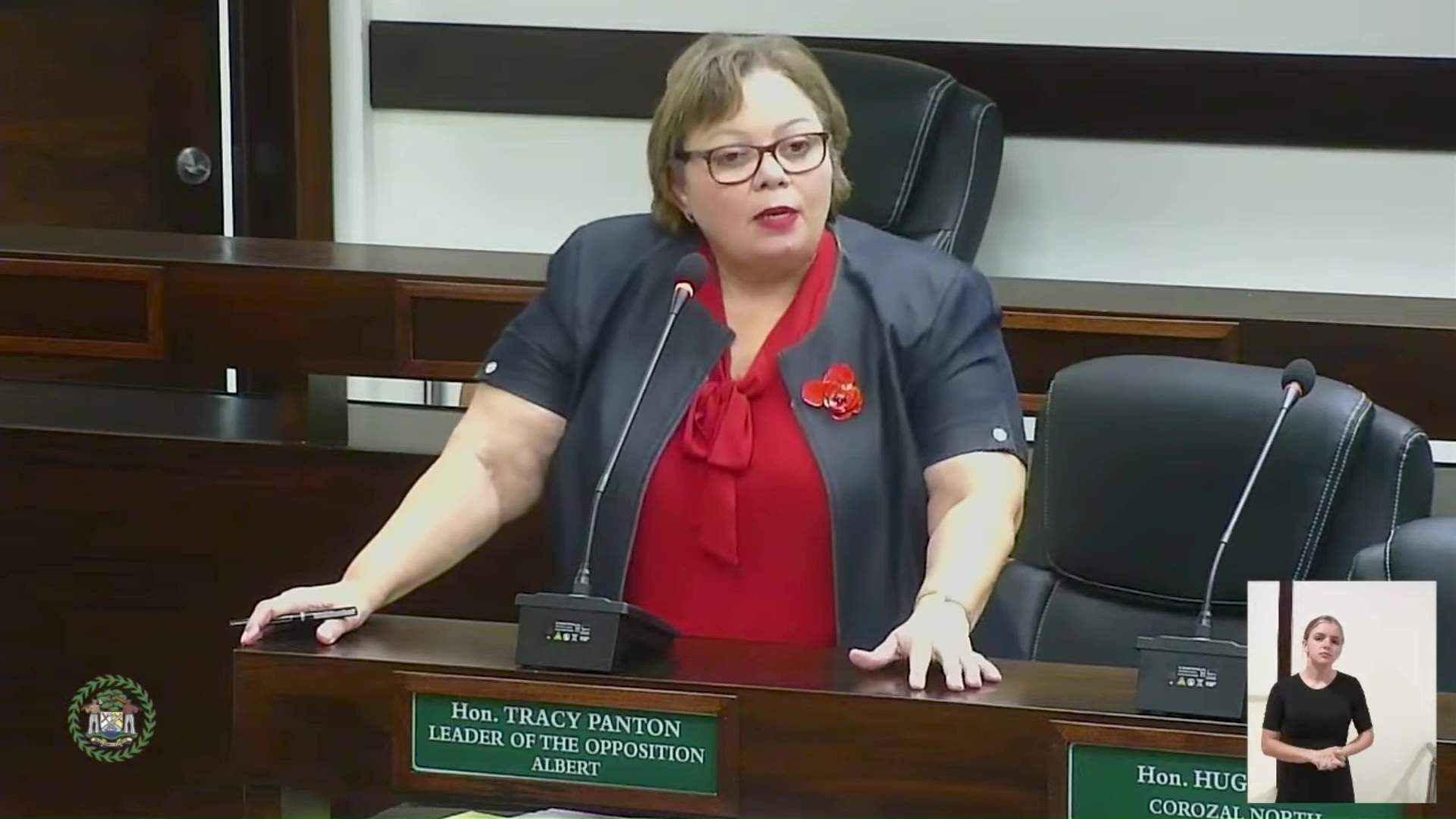
    Belize’s political landscape witnessed sharp criticism as Opposition Leader Tracy Panton delivered a scathing assessment of the Briceño administration’s recently presented national budget. Characterizing the government’s “Prosperity for Belizeans” theme as fundamentally disconnected from economic realities, Panton challenged the fiscal approach during a virtual address delivered via Zoom on March 11, 2026.

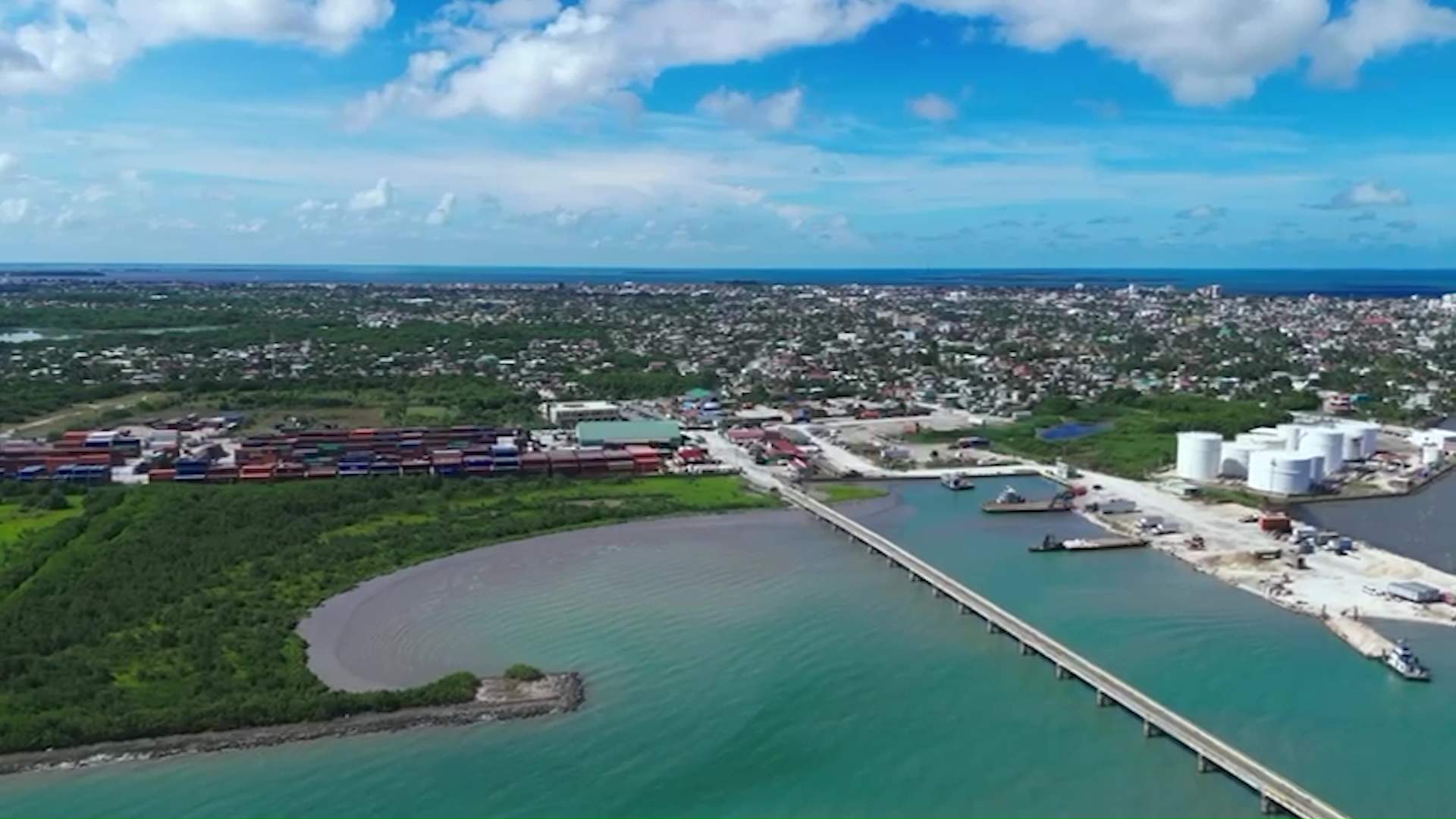
    The opposition leader highlighted the staggering $4.63 billion public debt burden that continues to loom over the nation’s economy. Panton expressed particular concern over proposed massive infrastructure investments, including a $450 million port facility project representing approximately half of the annual national budget. She questioned the feasibility of such expenditures given the country’s precarious debt situation.

    Revenue generation strategies drew significant criticism from the opposition, with Panton noting the government’s continued reliance on consumption-based taxation. She emphasized that taxes on fuel, food, excise duties, and import tariffs disproportionately affect working-class citizens who already struggle with rising living costs. The absence of a clear strategy to address the unbearable cost of living for average Belizeans formed the core of her critique, suggesting the budget favored grandiose projects over tangible household economic relief.

    The opposition leader’s remarks underscore growing tensions regarding fiscal policy direction in Belize, setting the stage for continued parliamentary debate over economic priorities and resource allocation.

  • Free Secondary Education Moves Closer to Reality

    Free Secondary Education Moves Closer to Reality

    The Government of Belize, under Prime Minister John Briceño, has announced a comprehensive suite of major national investments set to transform key public sectors in the upcoming 2026-2027 fiscal year. This ambitious development agenda prioritizes human capital and national infrastructure, signaling a period of significant public investment.

    Central to this initiative is the dramatic expansion of the Education Upliftment Project (EUP). Launched in 2022 as a small pilot with 947 students, the program has experienced exponential growth, surpassing 1,000% expansion. It is now projected to encompass over 14,000 students across 27 government secondary schools, effectively achieving tuition-free secondary education for 100% of students in the national system and realizing a historic goal for the nation.

    Parallel to educational reforms, the National Health Insurance (NHI) scheme is undergoing its most significant expansion. A strategic investment of $57 million will extend universal primary care coverage to the entire Cayo District, one of Belize’s fastest-growing regions. This expansion is projected to increase NHI enrollment beyond 325,000 Belizeans nationwide. The funding also addresses critical infrastructure and staffing shortages, with planned upgrades to polyclinics and recruitment of additional medical professionals to ensure service quality matches expanded coverage.

    Complementing these social programs, the government has committed over $80 million to a nationwide infrastructure overhaul. Major projects include a $21 million upgrade of the George Price Highway, an $8 million enhancement of the Philip Goldson Highway, and the complete replacement of Belize City’s iconic Swing Bridge and BELCAN Bridge at costs of $3.8 million and $3.5 million respectively. An additional $46 million is allocated for comprehensive road maintenance across the country, alongside a $1.6 million investment in sports facility improvements.

    Prime Minister Briceño emphasized that these interconnected initiatives represent a holistic approach to national development, aiming to eliminate financial barriers to education, achieve universal healthcare access, and modernize critical transportation networks simultaneously.

  • USA : The Trump administration asks the Supreme Court to authorize the abolition of TPS

    USA : The Trump administration asks the Supreme Court to authorize the abolition of TPS

    In a significant legal maneuver on March 11, 2026, the Trump Administration petitioned the U.S. Supreme Court to authorize the termination of Temporary Protected Status (TPS) for approximately 350,000 Haitian nationals residing in the United States. This emergency motion seeks to overturn a lower court ruling that had blocked the administration’s attempt to dismantle the humanitarian protection program.

    The Justice Department’s filing directly challenges District Judge Ana C. Reyes’s decision that maintained TPS protections for Haitian immigrants. In her earlier ruling, Judge Reyes found substantial evidence suggesting the administration’s termination efforts were potentially influenced by ‘racial animus’ against the Haitian community.

    This legal confrontation emerges despite ongoing severe violence in Haiti that has displaced over 1.4 million people according to recent estimates. The administration’s position contradicts the U.S. State Department’s own travel advisory, which explicitly warns American citizens against visiting Haiti due to ‘kidnapping, criminal activity, terrorist operations, civil unrest, and inadequate healthcare infrastructure.’

    The policy dispute originated in November 2025 when then-Secretary of Homeland Security Kristi Noem determined that Haiti no longer faced ‘extraordinary and temporary conditions’ warranting continued protected status. This conclusion has since been challenged by multiple humanitarian organizations and legal advocates who argue that returning migrants would face dire circumstances in the destabilized Caribbean nation.

  • Belize Investigates Elderly American Found on Drifting Catamaran

    Belize Investigates Elderly American Found on Drifting Catamaran

    Belizean authorities have launched a comprehensive investigation into the mysterious death of an elderly American man discovered aboard a drifting catamaran approximately sixty miles offshore. The case unfolded when the MSC Divina cruise ship crew relayed a distress call concerning a vessel in waters east of Belize City on Monday.

    According to official statements from Francis Usher, CEO of Belize’s Ministry of National Defense and Border Security, the cruise ship rescued a distressed woman from the catamaran who reported her husband had suffered sudden cardiac arrest. However, when Belize’s Rescue Team reached the abandoned vessel on Wednesday morning, they encountered a more complex scenario—the man’s body showed signs of blood and advanced decomposition, prompting immediate suspicion.

    The coast guard towed the catamaran to Caye Caulker for preliminary examination before transferring both the vessel and the deceased to Belize City for further analysis. Usher confirmed that the victim’s son is currently in Belize coordinating repatriation arrangements and provided crucial information that the couple had departed from Livingston, Guatemala, approximately one week earlier.

    Notably, authorities acknowledged significant response challenges due to the vessel’s remote location when the distress call was received. The distance proved too great for immediate coast guard intervention, forcing officials to consult regional partners while monitoring the craft’s movement via ocean currents.

    The Belize Police Department has taken custody of the catamaran at a secure coast guard base for detailed forensic examination. While officials refrain from openly speculating about foul play, the presence of unexplained wounds on the body has elevated the investigation’s priority status. The case continues to develop as forensic experts and maritime investigators work to reconstruct the couple’s final voyage.