作者: admin

  • LETTER: Abortion and the Constitution: Finally, We Had Our Day

    LETTER: Abortion and the Constitution: Finally, We Had Our Day

    A pivotal constitutional challenge against the nation’s abortion legislation reached its culmination in the High Court on World AIDS Day, December 1, marking the endpoint of a protracted 43-month legal journey. The proceedings unfolded with methodical legal arguments from both sides, absent of courtroom theatrics, leaving the matter now awaiting judicial determination.

    The case, spearheaded by advocacy group ASPIRE, encountered numerous procedural obstacles since its initial filing on April 18, 2024. Government attorneys employed successive delaying tactics, including the remarkable assertion that the legislation currently being enforced had supposedly been repealed in 1995—a claim unanimously dismissed by the Court of Appeal on February 28, 2025.

    With the constitutional question now before the High Court, ASPIRE emphasizes that the waiting period must not be passive. The organization outlines a comprehensive strategy focusing on educational reform regardless of the judicial outcome. Central to this mission is the transformation from criminalization and punishment toward legalization and education, particularly through strengthening Health and Family Life Education (HFLE) programs.

    Current regional educational standards fall significantly short of international benchmarks for comprehensive sexuality education. ASPIRE’s initiative calls for collaborative efforts with educators to develop improved curricular materials, alongside engaging parents who currently demonstrate low rates (5-10%) of discussing sexuality with their children. Additional outreach to religious leaders aims to reduce stigma while reinforcing positive moral messaging about sexuality.

    The proposed paradigm shift moves from a reactive “Accident and Emergency” model to a preventive framework of “Access and Education.” Empirical evidence consistently demonstrates that comprehensive sex education delays sexual debut, countering concerns that such education might encourage premature sexual activity. With approximately 70 schools and 90 churches within the state, ASPIRE envisions substantial societal transformation through committed implementation of these educational reforms.

  • CARICOM and Cuba Mark 53 Years of Diplomatic Relations

    CARICOM and Cuba Mark 53 Years of Diplomatic Relations

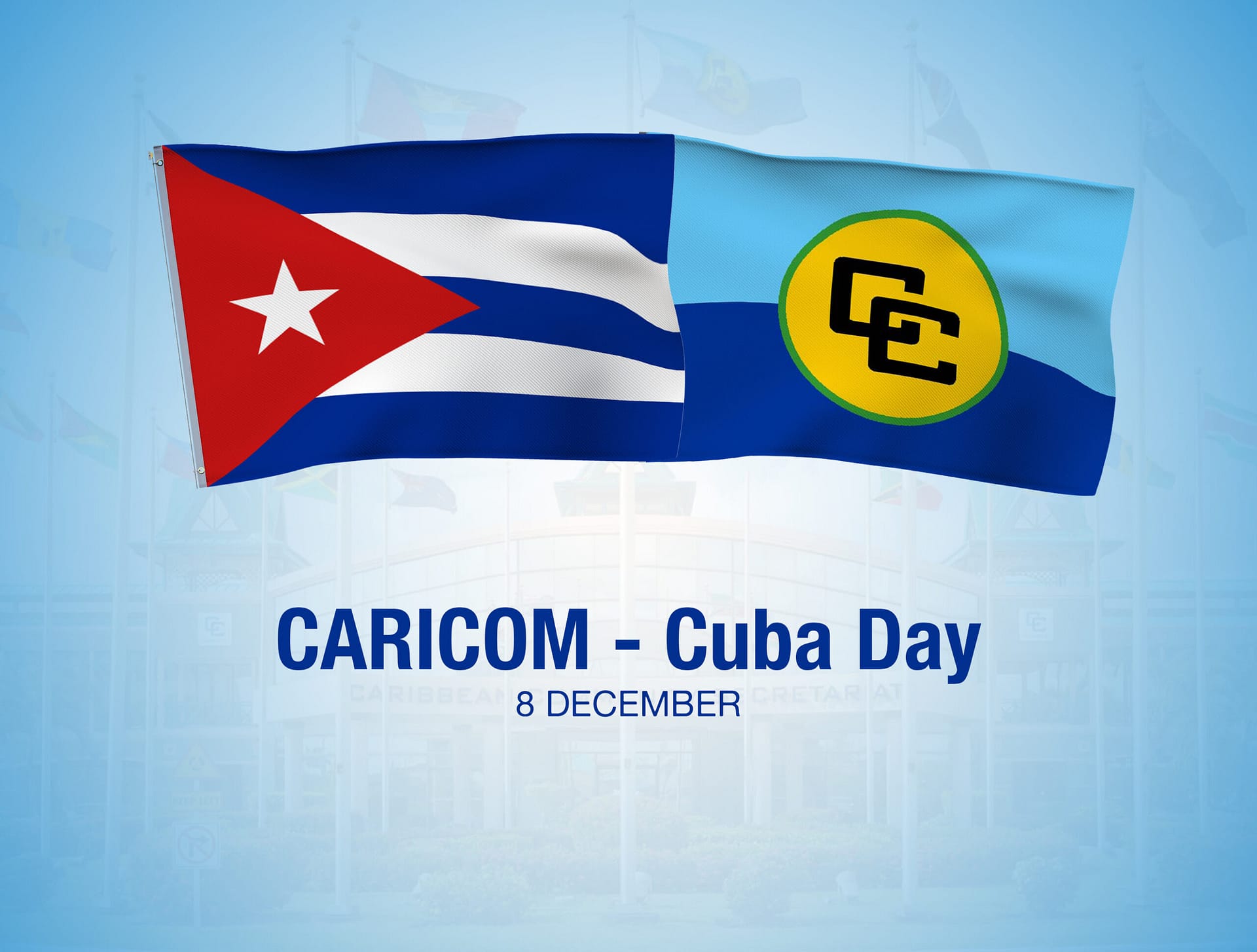
    December 8, 2025, commemorates the fifty-third anniversary of diplomatic relations established between Cuba and four pioneering Caribbean Community (CARICOM) member states: Barbados, Guyana, Jamaica, and Trinidad and Tobago. This historic decision, made on December 8, 1972, by the region’s then-independent nations, has matured into a robust and mutually advantageous partnership encompassing all CARICOM members and Cuba.

    Over the decades, this alliance has emerged as a exemplary model of South-South cooperation, characterized by sustained diplomatic engagement through eight high-level summits and six ministerial meetings. The relationship continues to evolve, with the Ninth CARICOM-Cuba Summit scheduled for March 2026 in Havana. This upcoming gathering will serve as a platform for addressing bilateral concerns, hemispheric matters, and global challenges of mutual interest, while exploring enhanced collaboration in critical sectors including trade, education, and public health initiatives.

    Despite these strengthening ties, both CARICOM and Cuba confront significant contemporary challenges. These include the escalating threats of climate change, transnational criminal networks, economic volatility, and the devastating impacts of natural disasters exemplified by recent Hurricane Melissa.

    In response to these shared vulnerabilities, both parties reaffirm their commitment to collective action and regional solidarity. The partnership remains guided by fundamental principles of international law, particularly respect for national sovereignty and the right to self-determination for all nations, providing a foundation for continued cooperation against common challenges.

  • Family Searching for Missing Dog Luna

    Family Searching for Missing Dog Luna

    A distressed family has launched an urgent public campaign seeking assistance in locating their beloved pet Luna, a light-brown pitbull they fear was deliberately taken from their residence. The missing canine possesses distinctive identifying features including a blue collar and a noticeable patch of missing fur along her back, characteristics the owners hope will aid in her recognition.

    Described as exceptionally friendly and gentle, Luna’s sudden disappearance has generated profound concern among family members who report being ‘extremely worried’ about her current condition and whereabouts. The emotional toll of the situation continues to mount as each day passes without any solid leads regarding her status.

    In a coordinated effort to maximize visibility, the family has distributed digital and physical flyers containing Luna’s photograph and descriptive details across their community and through social media channels. They are vigorously encouraging widespread sharing of these notices and have established direct communication channels for potential sightings or information.

    “Our primary focus remains entirely on Luna’s safe return to our household,” expressed the family through an emotional statement. They directly appealed to individuals possessing any knowledge of the dog’s situation to demonstrate compassion and come forward with details, regardless of how insignificant such information might appear. Community response has begun mobilizing as neighbors and local volunteers join the expanding search efforts.

  • Five Foreign Nationals to Be Deported After Overstaying in Antigua

    Five Foreign Nationals to Be Deported After Overstaying in Antigua

    Antiguan authorities have ordered the deportation of five foreign nationals following their conviction for immigration offenses in St. John’s Magistrate Court. The individuals, comprising one Trinidadian and four Jamaican citizens, formally admitted to overstaying their legally permitted duration in the country.

    Appearing before Senior Magistrate Ngaio Emanuel, the group—whose ages range from 28 to 39—entered guilty pleas to charges of violating Antigua’s immigration regulations. Among those facing removal are Cornelius Thomas, a 39-year-old nightclub manager at the Boardroom establishment on Nevis Street, and independent contractor Marcel Parker. The group further includes beauty specialist Kizzy Johnson, carpenter Javon Keroy Watson, and barber Luckicy Andra McDermott.

    Following judicial proceedings, all five individuals received formal removal orders mandating their expulsion from the nation. They are currently detained at a secure immigration holding facility under the supervision of border control authorities. Official sources confirm the deportations will be executed before the week’s conclusion, with arrangements underway for their repatriation to respective countries of origin.

    The case highlights Antigua and Barbuda’s strengthened enforcement of immigration protocols, particularly regarding visa compliance and authorized duration of stay for foreign workers. Legal experts note that such enforcement actions demonstrate the government’s commitment to maintaining immigration system integrity while addressing concerns about unauthorized employment practices.

  • Agriculture Ministry via Emergency Agricultural and Climate Resilience Project hand over equipment to 105 farmers

    Agriculture Ministry via Emergency Agricultural and Climate Resilience Project hand over equipment to 105 farmers

    The Government of Dominica, through its Emergency Agricultural Livelihoods and Climate Resilience Project (EALCRP), will officially transfer approximately EC$1 million worth of agricultural equipment to local producers on December 10, 2025. The ceremony at the DAPEX Warehouse Facility marks a significant milestone in the nation’s ongoing efforts to climate-proof its agricultural sector.

    As the EALCRP enters its final implementation phase, the project continues to support the Ministry of Agriculture, Fisheries, Blue and Green Economy in enhancing productivity nationwide. The event will showcase two critical initiatives funded through the Contingency Emergency Response Component: irrigation system distribution and beekeeping equipment provision.

    Ninety-five farmers and agribusiness operators will receive comprehensive irrigation kits containing water tanks, pumps, and durable polyethylene piping. These systems are designed to promote climate-resilient farming practices and optimize water management strategies.

    Concurrently, ten apiculture beneficiaries will obtain specialized beekeeping tools including honey extractors, hive components, wax melting vats, and filtration devices. This initiative aims to strengthen the honey production industry while increasing its climate adaptability.

    Over the past five years, the EALCRP has facilitated over EC$80 million in investments across Dominica’s agricultural and fisheries sectors. This substantial funding has supported diverse initiatives ranging from crop and livestock inputs to fishing gear provision and vessel construction. Significant infrastructure projects including the National Abattoir, Citrus Certification Facility, and multiple fish landing sites have been modernized through this program, benefiting thousands of stakeholders across the agricultural value chain.

    The December ceremony symbolizes the government’s sustained commitment to developing a climate-resilient agricultural economy. This approach emphasizes empowering local farmers, enhancing production systems, and safeguarding livelihoods against increasingly frequent climate-related challenges.

  • Mentale gezondheid centraal tijdens driedaags programma SAO

    Mentale gezondheid centraal tijdens driedaags programma SAO

    Suriname’s Directorate of Welfare and Labor, in collaboration with the Foundation for Labor Mobilization and Development (SAO), has inaugurated a comprehensive three-day mental health awareness program at the SAO complex in Geyersvlijt. The initiative, which commenced on Monday, aims to educate 220 vocational trainees through group sessions limited to 25 participants each day until Wednesday.

    The preventive program focuses on critical mental health issues, including substance abuse recognition and addiction management. Participants receive specialized training on identifying early warning signs and accessing timely professional support. The Bureau of Addiction Care under the PCS delivers these sessions utilizing interactive presentations and multimedia materials to enhance engagement and knowledge retention.

    Deputy Minister Raj Jadnanansing officially inaugurated the thematic days, emphasizing the holistic development approach required for SAO trainees. “Our students must develop not only technical vocational skills but also social and mental resilience,” stated Jadnanansing during his opening address. He highlighted growing societal pressures facing youth, the dangers of substance abuse, and the critical importance of seeking professional help when needed. The Deputy Minister specifically referenced the government’s online support portal as a key resource for mental health assistance.

    The event featured additional addresses from Naomi Esajas-Friperson, Chairperson of the Supervisory Board, and Joyce Lapar, Director of SAO. Both officials urged young participants to make conscious lifestyle choices and remain receptive to the preventive information being offered. Their messages aligned with the program’s central theme: ‘Stop, Think, and Choose Consciously,’ reinforcing the importance of mindful decision-making in personal development.

  • Trump’s drug war hypocrisy and the Caribbean Lesson

    Trump’s drug war hypocrisy and the Caribbean Lesson

    The recent presidential pardon granted by Donald Trump to former Honduran leader Juan Orlando Hernández has laid bare the profound contradictions embedded within Washington’s foreign policy apparatus. Hernández, who faced extradition in 2022 and subsequent conviction in American courts for facilitating the smuggling of over 400 tons of cocaine into the United States, has now been absolved of all charges through executive clemency.

    This judicial reversal underscores how America’s decades-long ‘war on drugs’ has functioned primarily as an instrument of geopolitical convenience rather than a consistent moral campaign. Evidence presented during Hernández’s trial detailed extensive bribery schemes, state-level complicity, and narco-political operations at the highest echelons of Honduran governance—prompting federal prosecutors to formally designate his administration a ‘narco-state.’

    The pardon emerges against a backdrop of strategic utility. Honduras maintained its value to successive U.S. administrations by hosting American military assets and supporting Washington’s aggressive stance toward Venezuela and Central American affairs. Trump’s intervention consequently appears less motivated by judicial mercy than by preserving political influence, demonstrating how rhetoric surrounding ‘rule of law’ readily dissipates when strategic alliances hang in the balance.

    Simultaneously, the Trump administration intensified allegations against Venezuela, accusing President Nicolás Maduro and even artisanal fishermen of narcotics trafficking—despite consistent reporting from the DEA and UN indicating that cocaine primarily transits through Honduras, Guatemala, and Mexico.

    This dichotomy reveals the underlying mechanics of U.S. drug policy: compliant allies receive forgiveness while adversarial nations face relentless scrutiny. For Caribbean communities bearing witness to decades of anti-narcotics operations, this pattern resonates with painful familiarity. Regional institutions now face renewed imperatives to develop independent narcotics policies grounded in transparency rather than dependency.

    The pardon further jeopardizes the integrity of America’s judicial institutions, suggesting that legal accountability remains subject to political whimsy. It ultimately confirms that the war on drugs has generated military contracts and diplomatic leverage while failing to meaningfully reduce consumption, trafficking, or violence. What began as a moral crusade has devolved into a naked struggle for control—with the Hernández case serving as its most revealing epitaph.

  • Guyanese father appeals for action over stalled Antigua autopsy

    Guyanese father appeals for action over stalled Antigua autopsy

    A grieving father from Guyana finds himself trapped in bureaucratic limbo on the island of Antigua, awaiting overdue autopsy procedures for his deceased son who perished in a tragic road accident more than two weeks ago. Brian Bristol arrived on the Caribbean island on November 24th, just four days after his 40-year-old son Brenton Bristol died when their vehicle collided with a horse along Friars Hill Road. While an inquest concluded last week, critical post-mortem examinations remain pending due to operational failures within the local medical system.

    The distressed father revealed to Stabroek News that authorities have provided no formal communication regarding the unexpected delay, which sources attribute to a malfunctioning X-ray machine required by local protocol before autopsy proceedings can commence. Mr. Bristol has explored alternative options including private medical services but has received no response to his inquiries regarding expedited solutions.

    Brenton Bristol, a long-term Antigua resident and dedicated employee at Sandals Resort, died instantly at the accident scene. The driver, identified as a close family friend, survived with significant head injuries while the involved horse also succumbed to impact wounds.

    The elder Bristol, a former Guyana Defence Force officer currently residing in the United States, expressed profound feelings of helplessness as bureaucratic hurdles prevent the issuance of an official death certificate required for his son’s body to be released and repatriated. Local regulations additionally mandate that a family member must be present during autopsy procedures, further complicating the emotional and logistical challenges.

    Despite occasional communication from local police authorities, no concrete timeline has been established for resolving the technical issues. The frustrated father pleaded for transparency: ‘We cannot continue sitting in uncertainty. Please provide us with actionable information.’

    Mr. Bristol acknowledged the supportive efforts of Sandals Antigua staff members and both Guyanese and Antiguan community representatives who have assisted during his prolonged stay. The situation recently gained diplomatic attention as Robert Edwin Reis, Honorary Consul of Antigua and Barbuda for Guyana, has pledged to investigate the case following a weekend meeting with the bereaved father.

    In a poignant conclusion, Mr. Bristol questioned whether the silence and delays would be tolerated if the deceased held citizenship from Western nations, emphasizing the need for improved cooperation within the Caribbean Community (CARICOM) regarding cross-border citizen services and crisis management.

  • Dominica Integrity Commission facilitates observance of International Anti-Corruption Day 2025

    Dominica Integrity Commission facilitates observance of International Anti-Corruption Day 2025

    The Commonwealth of Dominica marked International Anti-Corruption Day on December 9 with a series of official ceremonies and recognition events organized by the nation’s Integrity Commission. This global observance traces its origins to the United Nations Convention against Corruption adopted on October 31, 2003, serving as an annual reminder of the continuous international battle against corrupt practices.

    The 2025 commemorations commenced on December 8 with an Ecumenical Service and Awards Ceremony at Bethesda Methodist Church, held under the patronage of Honourable Rayburn Blackmoore, Minister for National Security and Legal Affairs. The event highlighted the Commission’s unwavering dedication to promoting principles of honesty, transparency, and accountability within public institutions.

    A significant highlight of the ceremony involved President Sylvanie Burton presenting Compliance Awards to seven distinguished public officials. These recipients were honored for their sustained commitment and strict adherence to the standards outlined in the Integrity in Public Office Act, with many being among the longest-serving declarants who have maintained exemplary compliance throughout their careers.

    In a special recognition, the Commission bestowed the Outstanding Service Award upon Mr. Julian Johnson, the inaugural Chairperson of the Integrity Commission. The accolade celebrated his exceptional leadership, unwavering integrity, and substantial contributions to public service during his tenure.

    Looking ahead, the Commission announced plans for a Prize Giving Ceremony in January 2026 to honor winners of school competitions focused on anti-corruption themes. These educational initiatives, including essay, painting, and poetry contests organized under the theme “Uniting With Youth Against Corruption: Shaping Tomorrow’s Integrity,” represent the Commission’s proactive efforts to instill ethical values among Dominica’s younger generation.

    The Commission’s concluding statement reinforced its commitment to fostering transparent governance and accountability structures throughout the Commonwealth of Dominica, emphasizing the collective responsibility shared by all citizens in supporting ethical conduct in public life.

  • Interrogating political masculinity

    Interrogating political masculinity

    The pervasive influence of patriarchal structures continues to define political landscapes worldwide, creating significant barriers to gender equality in governance. Political masculinity—the entrenched system where masculine norms, values, and identities dominate political discourse and leadership paradigms—remains a critical yet under-examined aspect of modern politics.

    Globally, women’s participation in representational politics demonstrates a fragmented pattern despite their fundamental role as the backbone of political organizations. Female politicians carry the additional burden of balancing familial responsibilities with their careers, unlike their male counterparts who historically benefit from gender stereotypes that permit absence from domestic duties. This disparity highlights how traditional gender roles continue to disadvantage women in political spheres.

    The recent global surge in right-wing populism and nationalism has further complicated gender dynamics in politics. These movements typically embrace misogynistic and sexist ideologies that directly contradict feminist principles and gender equality initiatives. Notably, governments adhering to populist frameworks often disregard United Nations Sustainable Development Goals (SDGs), instead prioritizing the restructuring of societies around traditional gender roles. This regression normalizes gender-based violence and systematically marginalizes women’s visibility in public life.

    Even when women break through the proverbial glass ceiling, they frequently receive masculine descriptors such as ‘iron lady’—a phenomenon observed with former leaders including Margaret Thatcher (UK), Indira Gandhi (India), and Eugenia Charles (Dominica). Caribbean leaders like Portia Simpson-Miller (Jamaica), Mia Mottley (Barbados), and Kamla Persad-Bissessar (Trinidad and Tobago) have navigated similar patriarchal challenges within their political cultures, where sexist paradigms often remain unchallenged.

    The cult-like personalities surrounding populist leaders accelerate the masculinization of politics, frequently manifesting as authoritarian leadership styles that violate human rights principles. While strong leadership can coexist with human rights adherence, the traditional form of political masculinity—often labeled ‘toxic’—promotes negative outcomes through its emphasis on aggression, emotional suppression, and dominance. This authoritarian model concentrates decision-making power exclusively with the leader, demanding unconditional obedience while reinforcing gendered inequalities and suppressing diverse perspectives.

    Despite its documented drawbacks, political masculinity maintains global resilience, adapting to cultural shifts rather than disappearing. In many regions, leadership remains synonymous with traditionally masculine traits like toughness and dominance, celebrated as necessary for ‘strong’ governance. The upcoming 2024 US Presidential Elections will inevitably reflect these dynamics, echoing Michelle Obama’s recent observation about societal readiness for female leadership.

    The militarization of policy approaches through masculine frameworks consistently drowns out alternative solutions proposed by women and marginalized groups. Moving forward, the international community must embrace political harmony—a state of cooperative governance characterized by minimal conflict, mutual respect, and effective dialogue that prioritizes collective progress over divisive power struggles.