作者: admin

  • Beekeeping on island receives boost with gov’t handing over equipment to over 90 farmers

    Beekeeping on island receives boost with gov’t handing over equipment to over 90 farmers

    The Dominican government has launched a substantial agricultural support program, distributing $944,964 worth of irrigation and beekeeping equipment to over ninety local farmers. The formal handover ceremony occurred at the Dominica Agricultural Producers and Exporters Limited (DAPEX) Warehouse Facility on Wednesday, marking a significant advancement in the nation’s agricultural development strategy.

    Agriculture Minister Roland Royer characterized the initiative as a pivotal investment in Dominica’s food security infrastructure, rural economic stability, and climate adaptation capabilities. “This is a major investment not only in equipment but in the future of the agriculture sector,” Minister Royer declared during the distribution event.

    The irrigation component directly addresses critical climate challenges affecting the island nation. Minister Royer identified climate change as the primary driver behind increasingly erratic rainfall patterns, prolonged dry spells, and intensified drought conditions that have threatened agricultural productivity. “For our farmers, access to water is no longer optional—it is essential,” he emphasized, noting that the new irrigation systems will guarantee year-round water availability, enable production expansion, and improve overall crop quality and yield.

    Concurrently, the beekeeping equipment distribution represents a strategic move toward agricultural diversification and environmental enhancement. Royer highlighted apiculture’s significant potential for rural income generation, emphasizing its multifaceted benefits: “Strengthening apiculture contributes directly to diversification of farmers’ livelihoods, increased honey production for local and export markets, enhanced crop pollination which boosts fruit production, and promotes a more balanced and biodiverse environment.”

    The government’s sustained investment in beekeeping infrastructure demonstrates its commitment to developing this niche sector into a thriving component of Dominica’s agricultural industry. This comprehensive support package reflects a dual approach to agricultural development—combining immediate climate adaptation measures with long-term economic diversification strategies to strengthen the nation’s agricultural resilience.


  • Eerste STEM-conventie laat kinderen spelend ontdekken hoe wetenschap werkt

    Eerste STEM-conventie laat kinderen spelend ontdekken hoe wetenschap werkt

    Suriname’s educational landscape witnessed a transformative event as the inaugural STEM Convention for children aged 3-14 erupted with excitement at the Assuria Highrise this Monday. Hundreds of young participants immersed themselves in interactive experiments, engineering challenges, and technological demonstrations, marking a significant milestone in the nation’s educational development.

    Organized through a collaborative effort between Surinaams Knutselhoekje (HSKH) and Esport Suriname, the convention transformed the venue into a dynamic learning laboratory. Children engaged with diverse stations featuring homemade lava lamps using cooking oil and effervescent tablets, constructed electric propellers from scratch, and operated full-feature racing simulators with steering wheels and pedal systems. This hands-on approach provided tangible introductions to fundamental principles of Science, Technology, Engineering, and Mathematics.

    Leann Djohari of HSKH explained the pedagogical philosophy behind the event: “STEM education fundamentally revolves around experiential learning. Children achieve deeper conceptual understanding when they physically execute tasks themselves. They observe immediate consequences of their actions—performing A results in B—which reinforces knowledge retention and develops critical cause-effect reasoning skills.”

    The convention’s practical methodology manifested through multiple engaging zones. Under the guidance of young instructors and digital tutorials, participants assembled functional robots, programmed basic devices, and explored electrical engineering concepts. A chemistry laboratory attracted considerable attention with interactive experiments, while a dedicated virtual reality zone allowed children to experience immersive digital environments.

    Founded by Cherelys Dwarkasing, HSKH has spent five years democratizing STEM education throughout Suriname. The organization visits a different district each quarter to ensure nationwide accessibility. This year’s convention coincidentally aligned with HSKH’s anniversary, adding celebratory significance to the event.

    Djohari declared the initiative an overwhelming success: “We anticipated approximately 300 children, but attendance substantially exceeded our projections.” She emphasized that STEM education extends beyond technical skills: “It cultivates creativity, critical thinking, collaboration, and communication—abilities increasingly essential in our rapidly evolving technological landscape. Early exposure better prepares children for future challenges, embodying the principle that early learning establishes lasting foundations.”

    Buoyed by the enthusiastic response, organizers indicate this inaugural event will likely catalyze expanded STEM initiatives throughout Suriname. HSKH aims to foster scientific and technical proficiency at a pace matching the boundless curiosity of children who exclaimed “Waaw!” throughout Monday’s groundbreaking convention.

  • Ayre Group Refutes Report Attempting to Tie Calvin Ayre to Wirecard Allegations

    Ayre Group Refutes Report Attempting to Tie Calvin Ayre to Wirecard Allegations

    The Ayre Group has issued a formal statement addressing circulating allegations attempting to link its Chairman, Calvin Ayre, to the ongoing Wirecard scandal. The group categorically denies any connection between Mr. Ayre and the collapsed German payment processor.

    According to the statement, Mr. Ayre has never had any association with Wirecard AG, its senior executives, or employees. The business magnate has reportedly never met with any representatives of the company and has had no business dealings with the organization whatsoever.

    The denial extends to financial transactions, with the statement clarifying that neither Mr. Ayre personally nor any of his business entities have ever utilized Wirecard’s payment processing services or maintained accounts with the company. The Ayre Group emphasizes that nothing in the official Wirecard criminal complaint suggests any wrongdoing or improper conduct by Mr. Ayre or his affiliated companies in relation to the embezzlement allegations surrounding Wirecard’s collapse.

    Citing respect for the ongoing legal proceedings in Germany, where Wirecard executives face charges of fraud, embezzlement, and market manipulation following one of Europe’s largest postwar financial scandals, Mr. Ayre has declined to make additional statements at this time. The brief declaration serves as both a denial of allegations and a commitment to allow the judicial process to proceed without interference.

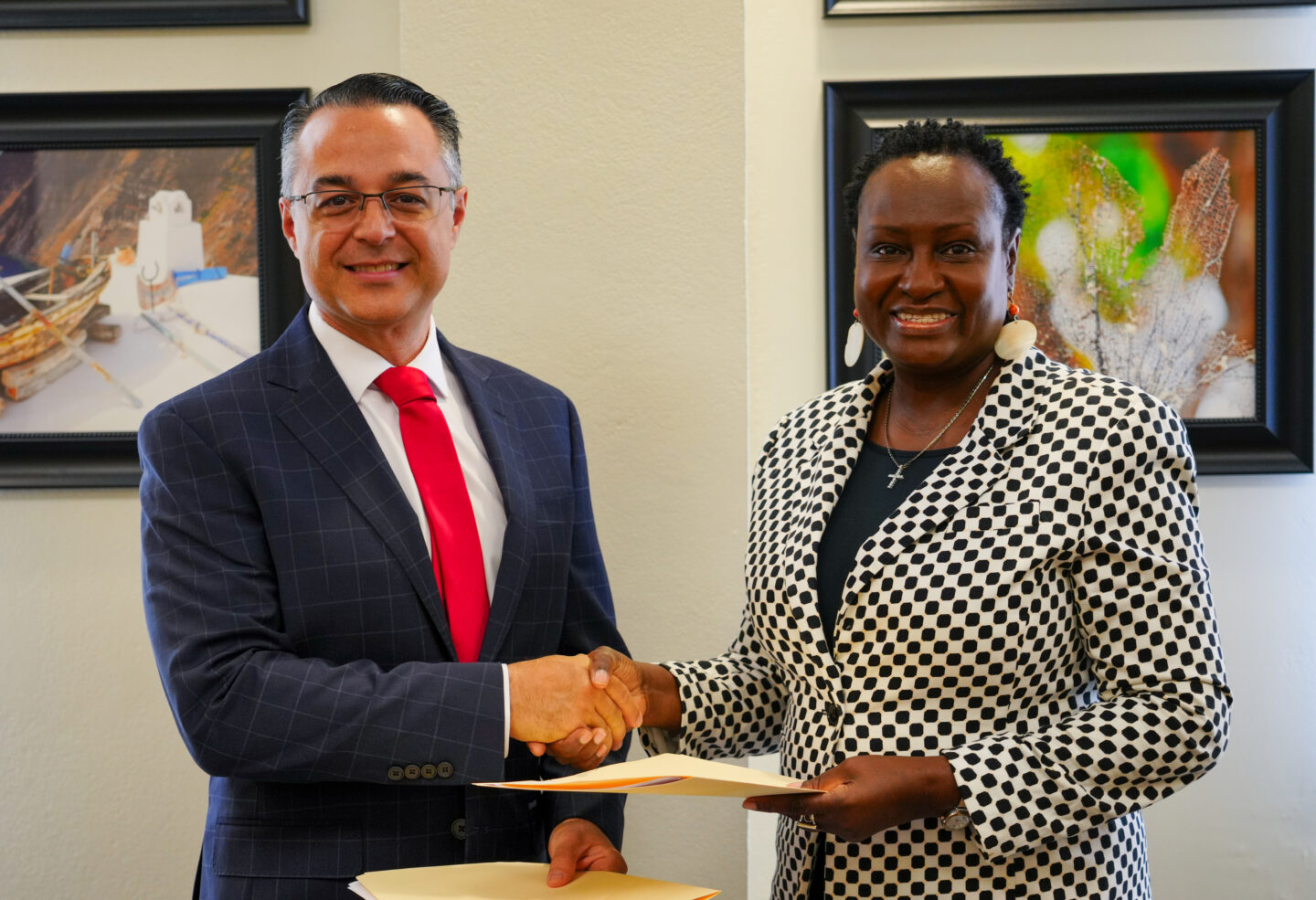
  • SGU and TAMCC sign agreement to expand higher education opportunities in Grenada

    SGU and TAMCC sign agreement to expand higher education opportunities in Grenada

    In a landmark development for Caribbean higher education, St. George’s University (SGU) and T.A. Marryshow Community College (TAMCC) have formalized a comprehensive partnership through a Memorandum of Understanding signed on December 10. The agreement establishes an integrated educational framework designed to create seamless academic progression opportunities for Grenadian students.

    The strategic collaboration will enable TAMCC graduates to transition directly into accelerated bachelor’s degree programs at SGU’s School of Arts and Sciences. Beyond articulation pathways, the partnership encompasses joint curriculum development, collaborative research initiatives, and community engagement programs across multiple disciplines including tourism and hospitality, information technology, natural sciences, and creative arts.

    Dr. Marios Loukas, SGU President and Dean of the School of Medicine, emphasized the transformative potential of the alliance: “This partnership represents our commitment to educational accessibility and excellence. By creating structured pathways between institutions, we’re investing in both human capital development and regional advancement.”

    The ceremonial signing at SGU’s Chancellor Charles Modica Campus brought together administrative leadership from both institutions. Dr. Wendy Grenade, Chair of the TAMCC Council, noted the agreement’s significance: “This collaboration allows us to leverage world-class resources while maintaining our commitment to accessible education. We’re building an integrated system that addresses both local needs and regional development goals.”

    Implementation will be managed through a joint working group with representatives from both institutions. The initial agreement remains effective for four years with built-in provisions for renewal, signaling a long-term commitment to educational cooperation in the Eastern Caribbean.

  • PM Recommends Dialogue as National Parks’ 1 a.m. Cut-Off Irks Public

    PM Recommends Dialogue as National Parks’ 1 a.m. Cut-Off Irks Public

    Prime Minister Gaston Browne has intervened in a growing public dispute over early entertainment curfews imposed by the National Parks Authority, pledging immediate stakeholder discussions to address mounting frustrations. The political leadership’s engagement follows a viral incident at Abracadabra where a DJ directed profane criticism at authorities after being compelled to terminate music at 1 a.m., sparking concerns about potential public unrest.

    The controversy gained momentum through a citizen’s letter characterizing the DJ’s behavior as profoundly disappointing and potentially incendiary, drawing parallels to inflammatory rhetoric associated with historical civil disturbances. Despite widespread public condemnation, no legal action has been initiated against the individual, with the correspondent emphasizing that the provocative footage remains publicly accessible and warrants judicial attention.

    This incident has reignited examination of noise regulation enforcement mechanisms across Antigua and Barbuda. The Noise Abatement Act (1997) designates exclusive enforcement authority to police services, yet consistent application has remained challenging despite recurrent complaints from hospitality establishments and residents affected by nocturnal disturbances. The correspondent expressed alarm over alleged political directives instructing law enforcement and park authorities to relax statutory enforcement, raising fundamental questions about governance consistency.

    With tourism operators, residents, and event organizers preparing for heightened holiday activity, the Prime Minister’s convening of multi-stakeholder dialogue suggests impending revisions to entertainment guidelines or enforcement protocols to balance cultural entertainment with community tranquility.

  • Head of the Directorate of Gender Affairs Addresses International Meeting on Digital Gender Based Violence

    Head of the Directorate of Gender Affairs Addresses International Meeting on Digital Gender Based Violence

    Fortaleza, Brazil – A pivotal regional conference has culminated in the adoption of a comprehensive legal framework designed to confront the escalating crisis of digital gender-based violence across Latin America and the Caribbean. The Tenth Conference of States Parties to the Follow-up Mechanism of the Belém do Para Convention, a significant gathering of regional leaders, served as the platform for this critical development.

    The conference, focused exclusively on legislation and policies to counter online abuse targeting women, convened a high-level assembly of government ministers, directors of national gender affairs agencies, international development representatives, and civil society advocates. A central feature of the event was a high-level panel discussion titled ‘From commitment to implementation: Pathways to Apply the model law on digital violence against women’.

    Mr. Jamie Saunders, Executive Director of the Directorate of Gender Affairs, contributed to the panel, providing expert analysis on the manifestations and impacts of digital violence in the region. He was joined by distinguished figures including Ingrid Gomez Saracibar, Deputy Secretary for the Right of a Life Free from Violence from Mexico’s Women’s Secretariat; Ana Carolina Querino, Acting Representative of UN Women in Brazil; and a representative from the regional advocacy group Hiperderecho.

    The cornerstone achievement of the meeting was the formal adoption of an Inter-American model law. This pioneering legal instrument provides a robust blueprint for member states to prevent, punish, and ultimately eradicate technology-facilitated gender-based violence. The framework empowers nations to adapt and enact tailored legislation within their own jurisdictions, marking a unified regional step toward creating safer digital environments for women and girls.

  • SAGE Learning Hub and Network Hardware launches at TAMCC and Newlo

    SAGE Learning Hub and Network Hardware launches at TAMCC and Newlo

    Grenada’s educational landscape is set for a significant transformation with the upcoming inauguration of two pioneering digital learning facilities. The Skills to Access the Green Economy (SAGE) programme will unveil a comprehensive SAGE Learning Hub and Network Hardware installation at T A Marryshow Community College (TAMCC) on December 15, 2025, followed by another hub at the New Life Organisation (Newlo) the subsequent day.

    These cutting-edge educational centers represent a strategic investment in Caribbean sustainable development, engineered to bridge digital divides and accelerate regional transition toward environmentally conscious economic models. Financed through substantial backing from the Government of Canada, the initiative underscores international cooperation in building climate-resilient education infrastructure.

    The newly established hubs feature innovative smart classroom technologies and interactive digital tools that redefine conventional pedagogical approaches. This educational architecture creates dynamic, flexible learning environments specifically designed to cultivate both digital literacy and green economy competencies essential for success in evolving global job markets.

    Pat Bidart, Senior Technical Advisor for the SAGE programme, emphasized the transformative potential of these facilities: “This infrastructure represents a quantum leap in educational methodology, fundamentally integrating sustainability principles with practical skills development. Through Canada’s partnership, we’re empowering Caribbean learners with future-ready capabilities for emerging green industries.”

    Beyond formal education, the hubs will serve as community resources, offering free access to digital equipment and dedicated learning spaces. Local residents will gain opportunities for online education participation, professional certification programs, and digital skill enhancement in supportive environments.

    This community-oriented strategy ensures that technological benefits extend beyond academic institutions to broader societal development. The programme particularly focuses on inclusive access for women and youth populations, addressing historical barriers to technological participation.

    As part of a broader regional transformation effort, SAGE continues to advance technical and vocational education through STEM integration, green learning pathways, and digital inclusion initiatives. The upcoming launch events will gather educators, students, community leaders, and development partners to celebrate these advancements in sustainable education infrastructure.

    The SAGE programme operates under Colleges and Institutes Canada (CICan) with Canadian government funding, working across six Caribbean nations to enhance institutional capacity, develop green sector training programs, and create economic opportunities through demand-driven skills development.

  • Belize’s Sugar Industry Does Not Have Enough Cane Cutters!

    Belize’s Sugar Industry Does Not Have Enough Cane Cutters!

    Belize’s vital sugar industry is confronting a severe labor crisis as it prepares for the upcoming harvest season, with a desperate shortage of cane cutters threatening agricultural productivity. The sector continues to grapple with last season’s troubling legacy where over 100,000 tonnes of sugarcane remained unharvested due to insufficient workforce availability.

    Industry authorities caution that this problematic pattern may recur amidst multiple operational challenges, including disease outbreaks in cultivation areas, inadequately maintained access roads, and persistent mill maintenance complications. These compounding factors create a precarious situation for one of Belize’s key economic sectors.

    Marcos Osorio, Chairman of the Sugar Industry Control Board, emphasized the necessity for industry self-organization before requesting governmental intervention. “For the imminent harvest season, we require approximately one hundred cane cutters,” Osorio stated. “We have currently identified eighteen potential workers from Guatemala and twenty from Honduras. Only after establishing these preliminary arrangements can we formally approach the government for procedural facilitation.”

    Osorio further detailed the substantial financial burden farmers encounter when recruiting foreign labor, noting that border documentation alone now costs approximately $600 per worker—a dramatic increase from the previous $50 monthly rate. An additional $300 permit approval fee further escalates recruitment expenses.

    Compounding these challenges, Belize Sugar Industries and the Belize Sugar Cane Farmers Association have not yet finalized a commercial agreement for the season. Historical precedents show such contractual delays have previously provoked industrial actions and milling operation suspensions, creating significant financial repercussions for agricultural stakeholders and the national economy.

    With harvesting operations already delayed by unfavorable weather conditions and ongoing mill maintenance, any additional contractual disputes could further postpone the season’s commencement. Despite these multifaceted challenges, Osorio expressed cautious optimism regarding ongoing negotiations, indicating confidence in reaching a timely resolution.

  • CCJ rules on Belize case, offers clarification on when courts can overlook a company’s separate legal identity

    CCJ rules on Belize case, offers clarification on when courts can overlook a company’s separate legal identity

    In a definitive judgment with far-reaching implications for corporate law across the Caribbean, the Caribbean Court of Justice (CCJ) has unanimously reversed a controversial appellate decision from Belize. The December 10, 2025, ruling in Beth Clifford and Beltway Investment Group Inc v LCW Investments, LLC reaffirms the foundational legal principle of corporate separateness.

    The case stemmed from a 2017 real estate development agreement between LCW Investments and Green Development Partners Ltd (GDP), a company directed and solely owned by Beth Clifford. The contract stipulated that LCW would purchase land and fund construction, with all payments directed to another Clifford-controlled entity, Beltway Investment Group Inc. After LCW paid substantial sums but received neither land titles nor the completed property, it terminated the contract and sued GDP, Beth Clifford, and Beltway.

    While Belize’s High Court correctly limited damages to GDP—the sole contracting party—the Court of Appeal controversially pierced the corporate veil. It held Ms. Clifford and Beltway jointly liable with GDP, citing ‘impropriety’ in the corporate structures and the transaction’s nature, despite acknowledging neither was a party to the original contract.

    The CCJ’s bench, comprising Justices Rajnauth-Lee, Barrow, Jamadar, Ononaiwu, and Eboe-Osuji, systematically dismantled this reasoning. The court emphasized that disregarding a company’s separate legal personality is an exceptional remedy reserved for demonstrable abuse or misuse of the corporate form—a threshold unmet in this case. There was no evidence Clifford had misused GDP’s corporate identity for fraudulent purposes. Regarding Beltway, the court found it acted as a lawful payment conduit per the contract, with no misappropriation of funds alleged.

    Consequently, the CCJ reinstated the High Court’s judgment, absolving Clifford and Beltway of liability and awarding them costs. This precedent reinforces statutory corporate protections, providing crucial certainty for investors and businesses operating within CCJ member states by curbing judicial overreach in veil-piercing.

  • Door VS onderschept ‘Guyanees’ vlaggend schip niet in Guyana geregistreerd

    Door VS onderschept ‘Guyanees’ vlaggend schip niet in Guyana geregistreerd

    The United States has escalated regional tensions through the dramatic seizure of oil tanker Skipper in international waters near Venezuela. American forces, utilizing helicopters, coast guard vessels, and marines, boarded the vessel on Wednesday in what marks the latest confrontation in ongoing geopolitical struggles over sanctioned oil shipments.

    According to U.S. authorities, the Skipper—previously known as Adisa—has been under American sanctions since 2022 for its involvement in oil trading operations benefiting Iran and Lebanese movement Hezbollah. Intelligence indicates the vessel had recently loaded approximately 1.1 million barrels of heavy Merey crude from Venezuela’s José port prior to its interception, based on data from TankerTrackers and sources within PDVSA.

    The operation has drawn fierce condemnation from Venezuela’s Maduro government, which characterized the seizure as ‘international piracy.’ Caracas accuses Washington of targeting Venezuela’s oil reserves, which remain barred from global markets due to U.S. sanctions. Venezuelan officials assert this action forms part of a broader American strategy to further isolate the country economically and increase political pressure.

    U.S. Attorney General Pam Bondi confirmed the seizure via social media, stating the operation was conducted ‘safely and responsibly’ against a vessel involved in transporting sanctioned oil from Iran and Venezuela. President Donald Trump notably described the captured tanker as ‘the largest ever seized by the United States.’

    The incident occurs amid significant U.S. military buildup in the Caribbean region, where tens of thousands of American troops are currently deployed alongside an aircraft carrier with combat jets. Shortly before the seizure, two U.S. fighter jets conducted flights lasting over thirty minutes in the Gulf of Venezuela—notably close to the Venezuelan mainland, though American officials described this as a ‘routine training flight.’

    Since September, the U.S. has conducted dozens of armed operations against suspected drug transports in the Caribbean and eastern Pacific, resulting in at least 90 casualties according to American figures.

    Complicating the situation, Guyana’s Maritime Administration (MARAD) has confirmed that although the Skipper sailed under the Guyanese flag, the vessel was not properly registered in the country. This represents another case of illegal flag usage, a practice that Guyana says it’s increasingly detecting. MARAD officials emphasized their collaboration with international partners to detect and prevent ship fraud, highlighting the vulnerability of smaller maritime states to identity abuse at sea.