作者: admin

  • Pierre and SLP Retain Government in St. Lucia

    Pierre and SLP Retain Government in St. Lucia

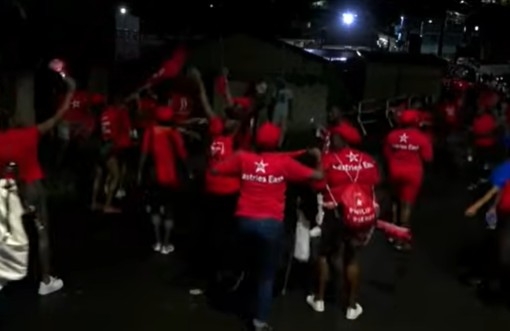
    In a landmark electoral outcome, the St. Lucia Labour Party (SLP) under Prime Minister Phillip J. Pierre has achieved a resounding victory in the nation’s general elections held on December 1, 2025. The ruling party secured an overwhelming mandate by capturing 14 out of the 17 parliamentary seats, solidifying their governance for another term.

    The electoral results revealed a significant setback for the primary opposition party, the United Workers Party (UWP) led by Allan Chastanet, which managed to secure only one seat. Adding to the SLP’s dominance, two independent candidates aligned with the ruling party claimed the remaining two constituencies.

    This triumph represents a historic breakthrough in St. Lucian politics, marking the first instance in ten years that an incumbent administration has successfully secured consecutive terms. The victory stands in contrast to recent regional political trends, particularly referencing the unexpected defeat of Prime Minister Dr. Ralph Gonsalves in neighboring St. Vincent and the Grenadines.

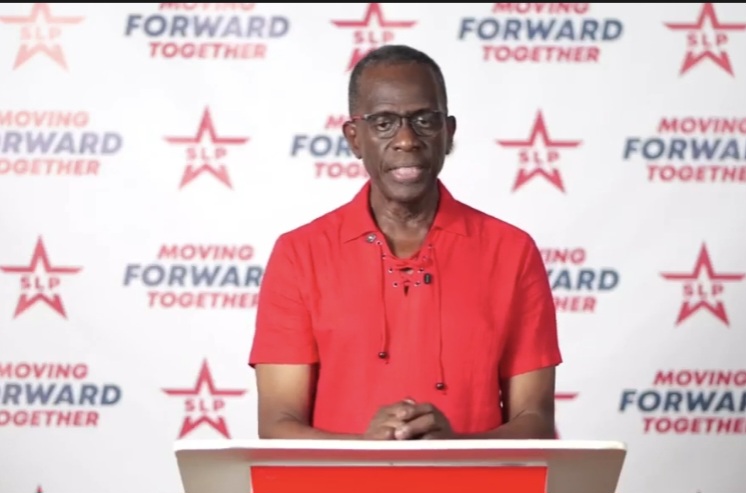
    Addressing media representatives during his post-victory appearance, Prime Minister Pierre expressed profound relief and gratitude. “I humbly accept this renewed mandate from the people of St. Lucia,” stated the Prime Minister, acknowledging that his party had not only retained power but expanded its parliamentary representation by one additional seat compared to previous elections.

    Pierre further reflected on the significance of his political standing: “I am fortunate to have the confidence of the people of St. Lucia—not only as a Parliamentary Representative, but also first as a minister and now as Prime Minister.” This electoral outcome reinforces the current administration’s policies and development agenda while potentially reshaping the Caribbean political landscape.
  • DGM eases entry requirements for tourists from the EU, U.S. and Latin America

    DGM eases entry requirements for tourists from the EU, U.S. and Latin America

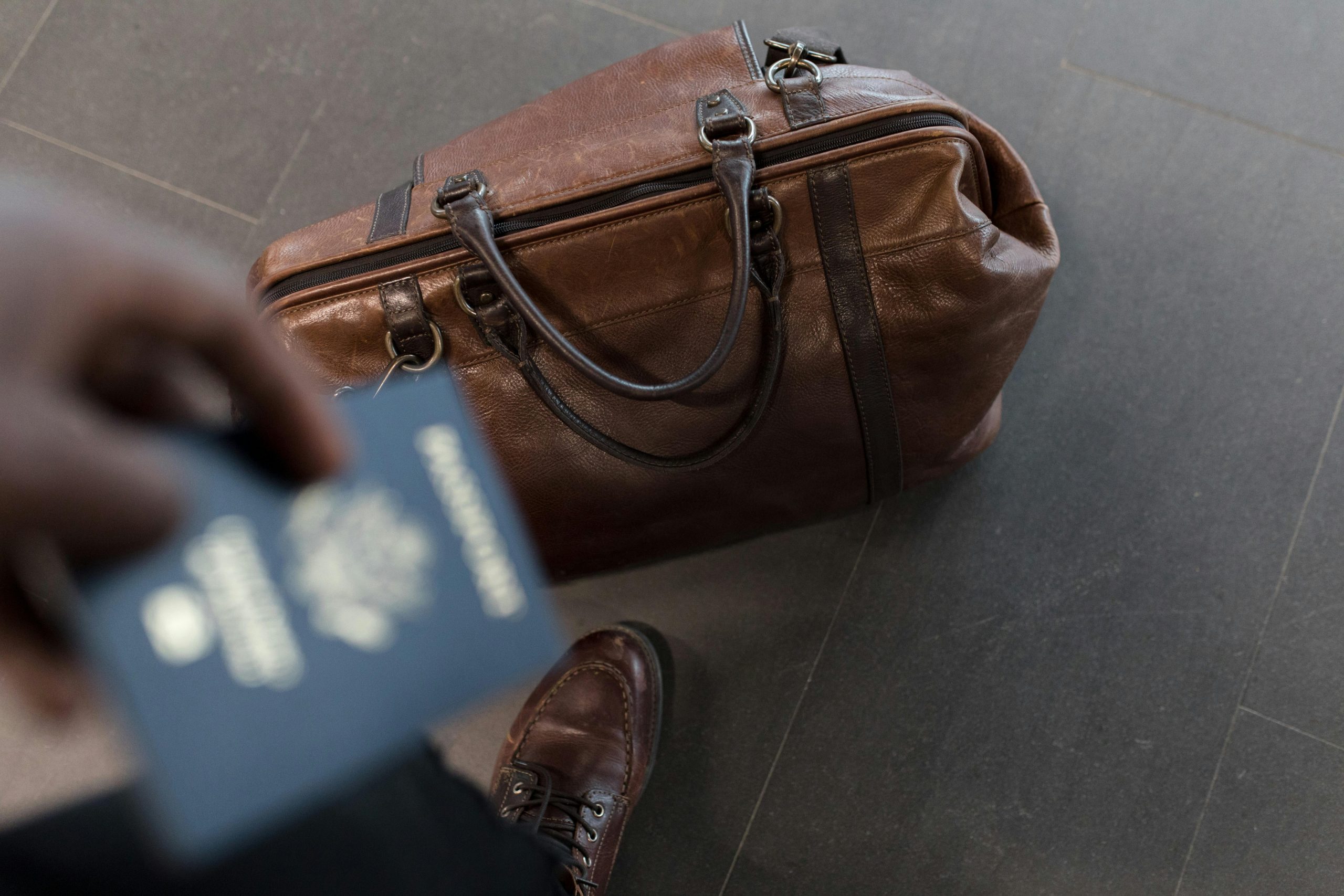
    The Dominican Republic has officially prolonged its streamlined entry protocol for international visitors, eliminating the standard six-month passport validity mandate for tourists from major source markets. This strategic immigration policy extension, enacted through Resolution DGM-01-2024, will remain effective for a full year from December 1, 2025, through December 31, 2026.

    Travelers originating from Argentina, Brazil, Canada, Chile, Colombia, Ecuador, the United States, the United Kingdom, and all European Union member states now only require a valid passport for admission, regardless of its remaining expiration timeframe. The policy also encompasses foreign nationals from other countries who possess valid documentation permitting entry into any of the aforementioned nations.

    The General Directorate of Migration (DGM) characterizes this measure as a deliberate governmental effort to revitalize and strengthen the nation’s tourism sector by simplifying border control procedures. Immigration authorities have highlighted that reducing administrative barriers is crucial for enhancing the visitor experience and accelerating processing times at ports of entry. This initiative forms part of a broader national strategy to position the Dominican Republic as a more accessible and competitive destination within the global tourism landscape.

  • NPS-fractieleider Pawiroredjo: Gelijkwaardigheid begint bij menswaardige visumbehandeling

    NPS-fractieleider Pawiroredjo: Gelijkwaardigheid begint bij menswaardige visumbehandeling

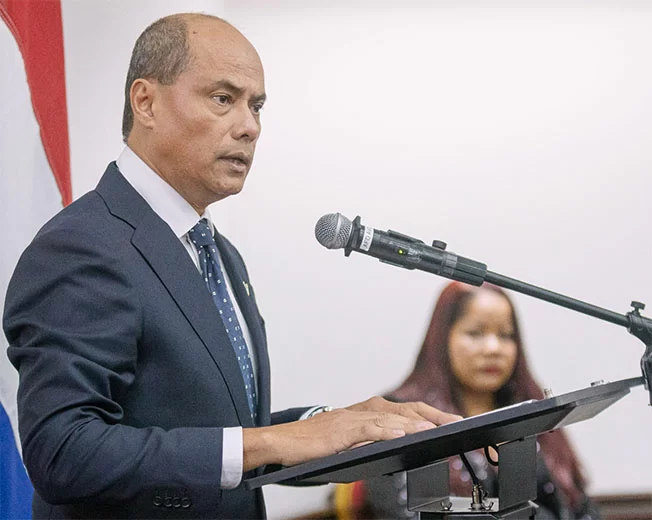
    Suriname’s National Party of Suriname (NPS) faction leader Jerrel Pawiroredjo has issued a forceful critique of the Netherlands’ visa policies toward Surinamese citizens, characterizing the current treatment as a persistent diplomatic concern that strains bilateral relations. The remarks were delivered Monday during an extraordinary public assembly attended by the Dutch royal couple.

    Pawiroredjo commenced his address by warmly welcoming King Willem-Alexander and Queen Máxima, acknowledging the profound linguistic and historical ties binding the two nations through a colonial history spanning over three centuries. While recognizing this shared past contains dark chapters, the parliamentarian noted it had ‘unintentionally laid the foundation for Suriname’s beautiful, diverse contemporary society.’

    The statesman then pivoted to what he described as matters requiring concrete action rather than rhetorical diplomacy: mutual respect and equality. ‘The treatment of our citizens during visa application procedures remains an enduring concern,’ Pawiroredjo asserted. He detailed how Surinamese applicants face exhaustive questioning while Dutch financial guarantors must disclose comprehensive personal financial information—a contrast he found particularly striking compared to larger South American nations whose citizens enjoy visa-free travel despite lacking historical ties with the Netherlands.

    The NPS leader simultaneously acknowledged decades of Dutch support across multiple sectors, specifically highlighting collaborative efforts in education, healthcare innovation, climate change mitigation, water management systems, and agricultural technology as areas ripe for continued partnership development. Pawiroredjo also expressed appreciation for the Netherlands’ formal apologies for historical slavery, suggesting the relationship should now progress forward-looking. ‘Let a positive vision for the future become our shared compass,’ he concluded, expressing hope that bilateral relations would deepen further for ‘the glory of both living communities.’

  • Prime Minister Pierre relieved at general election victory

    Prime Minister Pierre relieved at general election victory

    CASTRIES, St. Lucia – In a decisive electoral outcome that defied regional political trends, the St. Lucia Labour Party (SLP) has secured a second consecutive five-year term in office. Prime Minister Phillip J. Pierre’s administration achieved a resounding victory in Monday’s general elections, which international observers characterized as peaceful and well-administered.

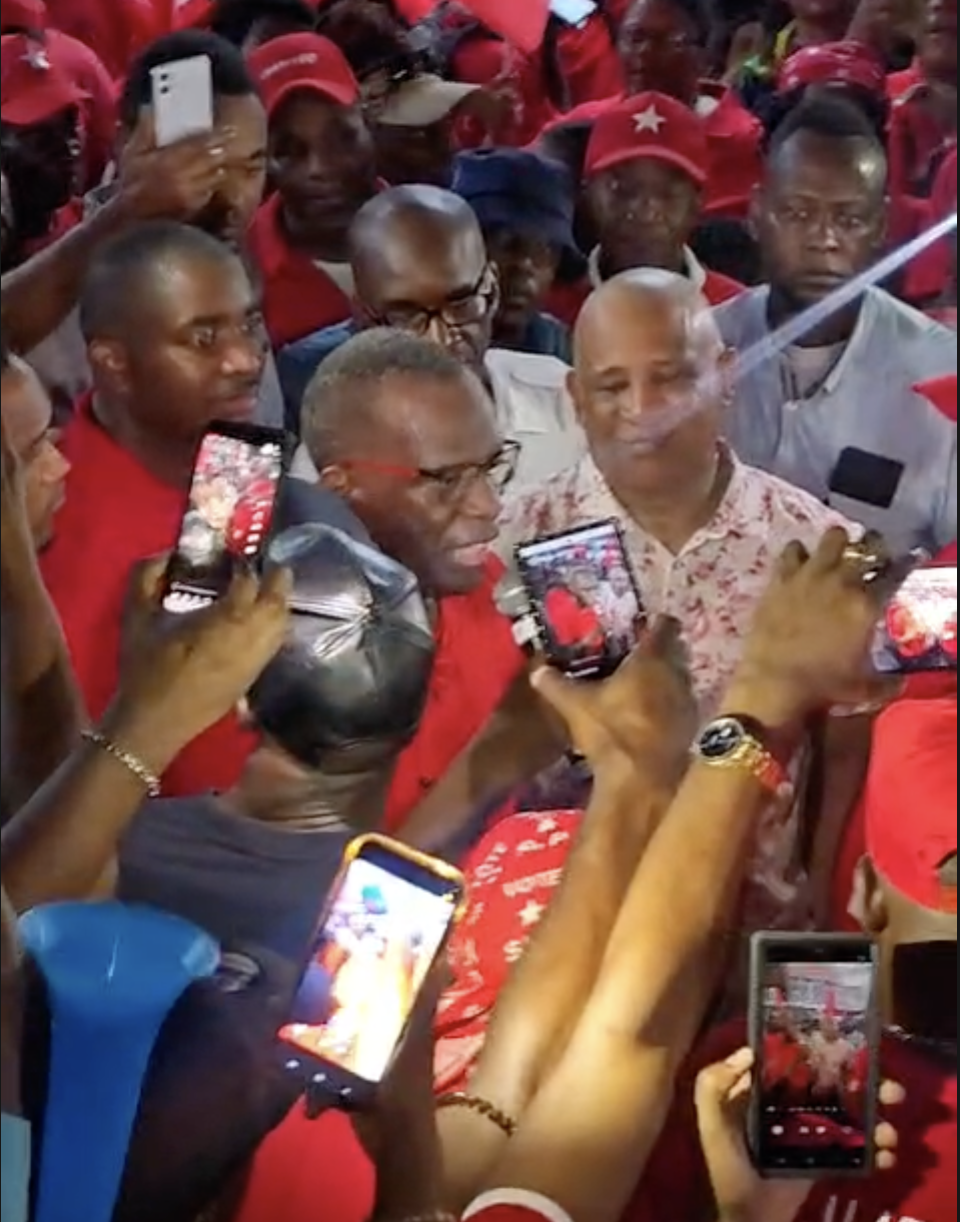
    The preliminary results indicate the SLP is positioned to surpass its previous 13-2 parliamentary majority from the 2021 elections. A visibly relieved Prime Minister Pierre, 71, addressed jubilant supporters, praising the maturity of St. Lucian democracy. “I would like to thank the people of St. Lucia for conducting what was a very decent election, an election free from violence,” Pierre stated, acknowledging the efforts of party members and constituency workers.

    The Prime Minister extended congratulations to United Workers Party (UWP) leader Allen Chastanet, who appears to be his party’s sole successful candidate. Pierre emphasized the importance of opposition in maintaining democratic traditions, despite the lopsided results.

    The election campaign was notably contentious, with the UWP focusing allegations of corruption and mismanagement against the government, particularly targeting the Citizenship by Investment program and Deputy Prime Minister Dr. Ernest Hilaire. These allegations were previously dismissed by the Caribbean Court of Justice earlier this year.

    Pierre criticized what he termed “misinformation and propaganda” that characterized opposition politics over the past four and a half years, expressing hope that such tactics would not return to St. Lucian politics. The Prime Minister indicated he would be sworn in later this week, with cabinet announcements expected next week.

    International observer missions from the Organization of American States and CARICOM monitored the polling process, which proceeded without significant incident.

  • Koning vraagt vergiffenis en spreekt met open hart over geschiedenis, heling en toekomst

    Koning vraagt vergiffenis en spreekt met open hart over geschiedenis, heling en toekomst

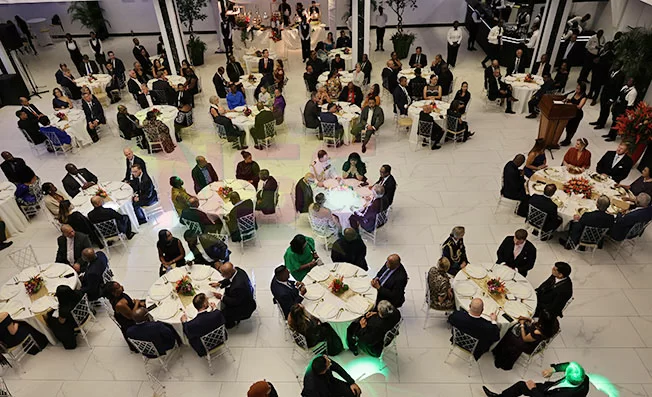
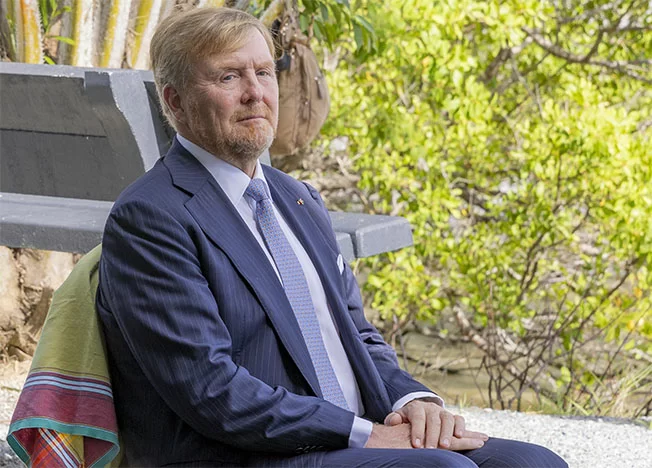
    In a remarkably personal address during Monday evening’s state banquet at Ballroom Prince, King Willem-Alexander of the Netherlands delivered an emotionally charged speech that transcended diplomatic formalities. The monarch’s visit to Suriname during its 50th anniversary of independence (Srefidensi) became a profound historical moment as he directly addressed the painful legacy of Dutch colonialism.

    The King, visibly moved, reflected on his family’s multi-generational connection to Suriname, noting how his grandparents had made the first state visit to the young republic. “Since then,” he observed, “much water has flowed through the Suriname River”—a poignant acknowledgment of turbulent political decades and enduring connections.

    Most significantly, Willem-Alexander built upon the Dutch government’s 2023 slavery apologies by personally requesting forgiveness for the historical failures of Dutch monarchs. “Your history bears the brand of slavery in the name of the Dutch state,” he stated. “The Dutch government has apologized for this, and personally I have added the request for forgiveness for the failure to act against this crime against humanity by stadholders and kings of the House of Orange-Nassau.”

    The King had previously repeated these apologies and personal requests for forgiveness during meetings with descendants of enslaved people and Indigenous communities, emphasizing that healing requires continuous generational truth recognition.

    Beyond historical reconciliation, Willem-Alexander praised Suriname’s resilience, describing the nation as a “beacon of humanity” in an increasingly polarized world. He specifically honored resistance heroes including the maroons who fiercely defended their hard-won freedom and legendary figures like Boni, whose moral authority inspired fights for dignified existence.

    The banquet also focused on future cooperation, with the King highlighting Suriname’s youth potential, rainforest conservation (noting the country absorbs more CO₂ than it emits), and responsible mineral resource management. He emphasized Dutch support would be offered “with due humility.”

    In a notable diplomatic gesture, the King announced the Dutch ambassador would lay a wreath at the December Murders monument during December 8th commemorations, acknowledging Suriname’s developing rule of law.

    The evening concluded with lighthearted moments as the King anticipated potential World Cup football rivalry between the nations in 2026, and a recitation of Dobru’s famous multicultural unity poem: “Wan Sranan, Someni wiwiri, Someni skin, Someni tongo, Wan pipel” (One Suriname, Many leaves, Many skins, Many tongues, One people).

  • ‘Humbled’ Pierre thanks supporters after seventh straight win in Castries East

    ‘Humbled’ Pierre thanks supporters after seventh straight win in Castries East

    In a resounding electoral triumph, Prime Minister Philip J. Pierre’s Saint Lucia Labour Party (SLP) has secured a commanding parliamentary majority, winning 14 of 15 seats in Monday’s general elections. The victory marks Pierre’s unprecedented seventh consecutive term representing Castries East, solidifying his political legacy.\n\nAddressing supporters from his constituency office in Marchand, the Prime Minister expressed profound humility regarding the public’s renewed confidence in his leadership. \”I remain humbled by the trust placed in me,\” Pierre stated, emphasizing his commitment to collaborative governance. \”We will move forward together as the country enters its new term.\”\n\nThe electoral outcome delivered a decisive rebuke to the United Workers Party (UWP), which secured only a single seat. Independent parliamentarians Richard Frederick (Castries Central) and Stephenson King (Castries North) both retained their positions, adding complexity to the parliamentary landscape.\n\nPierre specifically acknowledged the enduring support from constituents who have stood with him since his initial 1997 campaign, noting these long-term relationships reflect a deep bond between representative and community. He extended gratitude to family members, party workers, and public servants—including medical staff, law enforcement, and correctional facility employees—for their national service.\n\nThe Prime Minister condemned the deterioration of political discourse during the campaign, particularly referencing personal attacks against his daughter. \”I feel very sad that Saint Lucian politics reached the depth it reached,\” he remarked, expressing hope that future opposition parties would maintain higher ethical standards.\n\nIn a gesture of political reconciliation, Pierre congratulated Allen Chastanet, the sole successful UWP candidate, affirming that \”there is a place in Parliament for the opposition.\\” The Prime Minister credited former PM Dr. Kenny Anthony for initially bringing him into cabinet leadership.\n\nLooking forward, Pierre announced imminent policy implementations including VAT-free days and promised back pay for public servants. He expects to be sworn in by week’s end with cabinet appointments following next week, declaring \”this country is on the right trajectory\” toward continued progress.

  • Column: Koning, nooit meer oranje boven

    Column: Koning, nooit meer oranje boven

    In a strikingly candid address to visiting Dutch King Willem-Alexander, Surinamese commentator Nita Ramcharan delivered a powerful critique of contemporary Netherlands-Suriname relations during the monarch’s recent state visit. The article captures Suriname’s assertive national awakening fifty years after independence, challenging historical power dynamics and demanding equal partnership.

    The piece begins by acknowledging Suriname’s traditional hospitality while immediately establishing that formal politeness no longer masks unresolved tensions. Ramcharan references outdated colonial-era imagery of schoolchildren singing ‘orange above, long live the royal couple’ to highlight how far the nation has evolved into a digitally-connected modern society.

    King Willem-Alexander witnessed Suriname’s transformation firsthand—encountering tech-savvy youth who fact-check in real-time, engaging with traditional leaders, and receiving direct political messaging that ‘We walk beside you, not behind you’ in the National Assembly. This sets the stage for the central issue: visa policies that Surinamese citizens find deeply discriminatory.

    The author contrasts the seamless entry process for Dutch travelers to Suriname with the ‘theatrical tragedy’ Surinamese face when applying for Netherlands visas—requiring extensive documentation ‘as if leaking state secrets’ while subject to consular officials’ arbitrary decisions. Ramcharan dismisses potential Schengen Zone excuses, insisting the king possesses both platform and moral authority to address what she characterizes as institutional humiliation.

    Beyond visa grievances, the article outlines Suriname’s vision for truly balanced relations: trade without dependency, cooperation without paternalism, and ensuring future oil revenues benefit local generations. While acknowledging domestic challenges, Ramcharan emphasizes national resilience and self-determination.

    The powerful conclusion rejects orange symbolism entirely: ‘The shadow of orange lies behind us. The sun of Suriname lies before us.’ This encapsulates the piece’s core message—Suriname now stands beside its golden star symbol, on its own soil, as an equal partner rather than former colony.

  • Adhin: Koninklijk bezoek onderstreept nieuwe fase van democratische verdieping

    Adhin: Koninklijk bezoek onderstreept nieuwe fase van democratische verdieping

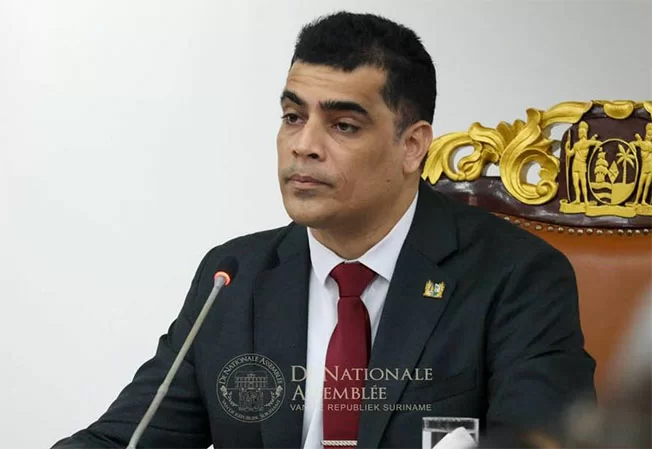
    The landmark visit of King Willem-Alexander and Queen Máxima to Suriname has been hailed by National Assembly Chairman Ashwin Adhin as a transformative moment in bilateral relations, marking a significant shift toward strengthened political responsibility and democratic development. During an extraordinary public assembly session, Adhin emphasized that the royal visit transcends ceremonial symbolism, representing instead a crucial opportunity for Suriname to redefine its democratic future with greater clarity.

    Coinciding with Suriname’s commemoration of fifty years of independence, the parliamentary leadership views the Dutch head of state’s visit as a powerful signal that bilateral relations can be substantially reinforced. This revitalized partnership, Adhin noted, would not focus on revisiting historical narratives but rather on collaboratively building a modern, equitable relationship framework.

    The Assembly Chairman asserted that the royal couple’s presence demonstrates the Netherlands’ genuine commitment to supporting parliamentary democracy and institutional development within Suriname. This diplomatic engagement creates an ideal platform for openly addressing contemporary challenges, reducing mutual misunderstandings, and exploring new cooperative opportunities spanning knowledge exchange to economic enhancement initiatives.

    Adhin characterized contemporary diplomacy as an essential instrument for building international trust, noting that the National Assembly considers this royal visit a catalyst for deeper cooperation and the strengthening of political institutions that form the foundation of liberty, justice, and stability. The parliamentary leader expressed hope that this visit would inspire both Surinamese and Dutch citizens to further deepen bilateral relations based on mutual respect, shared values, and a forward-looking vision that future generations could proudly build upon.

  • A meeting to continue promoting dialogue and inclusion

    A meeting to continue promoting dialogue and inclusion

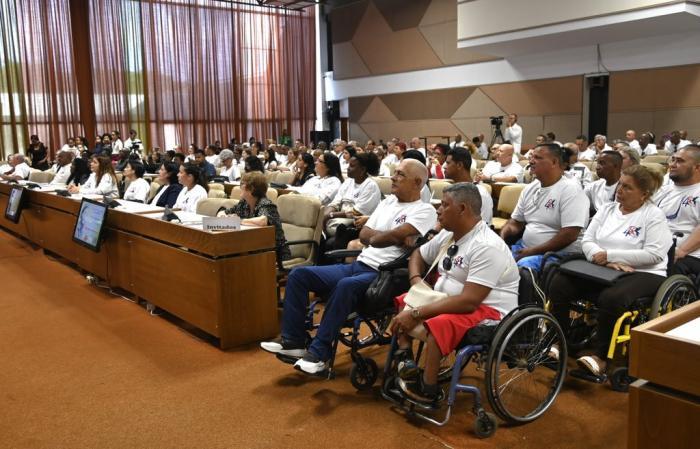
    In a landmark demonstration of governmental commitment to social inclusion, Cuban President Miguel Díaz-Canel inaugurated the inaugural Meeting of Organizations of Persons with Disabilities on Monday. The gathering, convened at Havana’s Convention Center, represents an unprecedented convergence of disability advocacy groups within the Communist nation.

    Addressing delegates, President Díaz-Canel, who also serves as First Secretary of the Communist Party’s Central Committee, articulated the government’s unwavering support for disability rights. “Your presence here reaffirms your essential role in our socialist construction,” he declared, emphasizing that persons with disabilities constitute a vital component of Cuba’s societal fabric.

    The forum, strategically timed to precede December 3rd’s International Day of Persons with Disabilities, occurs alongside the 15th National Conference on Equal Opportunities organized by the Cuban Association of People with Physical Disabilities (ACLIFIM). This parallel scheduling underscores Cuba’s integrated approach to disability advocacy despite confronting severe economic challenges exacerbated by international sanctions.

    President Díaz-Canel framed the current efforts within historical context, noting that contemporary initiatives build upon foundations established by revolutionary leader Fidel Castro. “We maintain our commitment to constructing an inclusive society despite the intensified economic blockade that has created significant difficulties across multiple sectors,” he asserted.

    The President characterized the meeting as an exercise in critical unity, describing how diverse organizations are collaborating to “build consensus on advancing disability rights amidst current challenges.” He explicitly welcomed constructive criticism as “a source for improving governmental work” and ensuring no citizen remains excluded from societal participation.

    Mabel Ballesteros López, National President of ACLIFIM, highlighted the historical significance of this consolidated gathering. She contrasted Cuba’s proactive stance with what she characterized as “passive governments worldwide” facing growing exclusion gaps. Ballesteros López explicitly connected contemporary disability policies to revolutionary legacy, noting how associative movements “have grown with the Revolution’s social policy, backed by Fidel’s vision for a just and equitable society.”

  • The epidemiological situation remains complex

    The epidemiological situation remains complex

    Cuban President Miguel Díaz-Canel Bermúdez convened with leading health experts and scientists this week to address the nation’s escalating arbovirus crisis, which has claimed 33 lives to date according to official figures. Health authorities confirmed dengue fever has resulted in 12 fatalities, including seven minors, while chikungunya has caused 21 deaths, 14 of whom were under 18 years old.

    Despite reporting a 2.4% national decrease in nonspecific febrile syndrome cases, Deputy Health Minister Dr. Carilda Peña García revealed concerning increases across seven provinces: Las Tunas, Holguín, Pinar del Río, Mayabeque, Granma, and Sancti Spíritus. The situation remains particularly critical in Las Tunas, Holguín, and Pinar del Río.

    Dr. Raúl Guinovart Díaz, Mathematics expert and Director of Science and Technology at the University of Havana, presented predictive models indicating unfavorable arbovirus trends in the coming weeks. While cooler temperatures typically reduce Aedes aegypti mosquito infestation, Guinovart warned that mosquitoes are now seeking refuge indoors, making household prevention measures critically important.

    Epidemiological data shows dengue transmission persisting at consistent levels across 14 provinces, 43 municipalities, and 51 health areas. Chikungunya infections have demonstrated a 25.9% reduction over three weeks, with 5,716 new suspected cases and 5,409 confirmations. Cumulative figures indicate 38,342 chikungunya cases nationwide, with infections reported across all 15 territories, 113 municipalities, and 199 health areas. No new Oropouche cases were reported in the past week.

    The meeting also addressed respiratory infections, which have declined over five consecutive weeks with 893 fewer medical visits recorded. However, health officials anticipate an upcoming increase in acute respiratory infections despite current numbers remaining within endemic corridors.

    COVID-19 surveillance data revealed only 13 cases diagnosed in October, with 3,407 tests conducted throughout the year. Health authorities confirmed no variations in circulating Omicron strains and sub-variants.

    President Díaz-Canel emphasized the necessity of transparent, comprehensive daily public communication regarding health threats. Meanwhile, IPK specialists discussed WHO and PAHO-endorsed innovative vector control technologies, including sterile insect techniques, genetic modification, and bacterial infection methods currently deployed in over 20 countries, with Brazil leading regional implementation.