作者: admin

  • Niger Timothy Houston graduates as Agricultural Engineer from EARTH University

    Niger Timothy Houston graduates as Agricultural Engineer from EARTH University

    Grenada has marked a significant educational achievement with Niger Timothy Houston’s graduation as an Agricultural Engineer from EARTH University in Costa Rica. The December 5th ceremony recognized 108 graduates from 27 countries, highlighting Grenada’s growing commitment to sustainable agriculture education.

    Houston represents an expanding cohort of Grenadian students choosing EARTH University for advanced training in sustainable agriculture. With four currently enrolled students and one previous graduate, this educational partnership strengthens as Grenada prioritizes agricultural modernization and food security resilience.

    In reflective remarks, Houston described his EARTH University experience as fundamentally transformative, providing both technical skills and personal development. “EARTH has equipped me with the confidence, global perspective, and practical abilities to serve Grenada meaningfully,” he stated, emphasizing the program’s focus on real-world problem solving and leadership development. Houston actively encouraged other young Grenadians to pursue this educational opportunity.

    The graduation ceremony attracted significant support from international education advocates. Dr. Khan Nedd, Chair of the W.K. Kellogg Foundation Board of Trustees and EARTH University director, attended to affirm the importance of educational investments that strengthen communities. Dr. Nedd’s philanthropic leadership aligns with EARTH’s mission to prepare professionals for agricultural, climate, and equity challenges.

    Victor Sánchez of EARTH’s Development and Advancement Division highlighted the university’s comprehensive educational approach, combining technical training with character development. “Our program cultivates persistence, discipline, and environmental responsibility while preparing students for global leadership,” Sánchez noted, expressing particular confidence in Grenadian students’ potential.

    Belmont Estate, through Managing Director Shadel Nyack Compton, has developed a robust partnership with EARTH University, providing internship opportunities for third-year students and graduates. Compton expressed strong endorsement of EARTH’s educational model, stating, “This institution delivers exactly the training Grenada needs to build an innovative, sustainable agricultural future.”

    The graduation celebrations concluded with vibrant cultural presentations featuring active participation from Grenadian students, symbolizing both national pride and global connectivity. This educational milestone represents Grenada’s strategic investment in developing leaders capable of advancing climate-smart agriculture and rural transformation.

  • ‘People first’: Pierre announces new Cabinet, sets uncompromising tone for second term

    ‘People first’: Pierre announces new Cabinet, sets uncompromising tone for second term

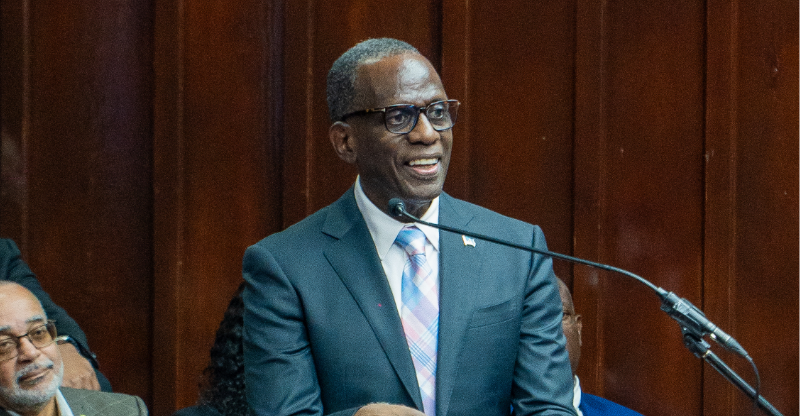
    In a decisive address at the House of Parliament on December 12, Prime Minister Philip J. Pierre formally introduced his restructured Cabinet following the Saint Lucia Labour Party’s decisive electoral victory on December 1. The ceremony marked a significant shift toward what Pierre termed “people-centred leadership” built upon three core pillars: discipline, accountability, and performance.

    Rooting his governance philosophy in spiritual principles, Pierre invoked Proverbs 3:5, emphasizing that divine guidance would inform his administration’s decisions. He characterized the election results as both “historic” and “overwhelming,” acknowledging the substantial responsibility bestowed upon his government.

    The newly configured Cabinet features several strategic portfolio adjustments reflecting contemporary challenges. Notably, Climate Change has been established as a formal ministerial responsibility under Lisa Jawahir, who will simultaneously oversee Agriculture, Fisheries, and Food Security. The portfolio of Public Service, Labour, and Gender Affairs has been strategically divided, with Emma Hippolyte assuming leadership of the consolidated Labour, Gender Affairs, Equity, Social Justice, and Consumer Welfare portfolio.

    Pierre established unequivocal performance expectations for his ministerial team, warning that appointments remain subject to change based on effectiveness. “Ministers within my Cabinet will be expected to conduct themselves with the highest levels of professionalism, integrity and effectiveness,” he stated, adding that the structure “is not permanent” and adjustments would occur “when and whenever necessary.”

    The Prime Minister personally assumes expanded responsibilities, retaining Finance and National Security while adding Constituency Development and People Empowerment—a deliberate consolidation he stated demonstrates his administration’s commitment to prioritizing citizen welfare.

    Several key reappointments include Moses Jn Baptiste (Health and Wellness, plus Nutrition), Stephenson King (Public Service, Transport, Information, and Utilities Regulations), and Alva Baptiste (External Affairs, International Trade, Civil Aviation, and Diaspora Affairs). Kenson Casimir sees his portfolio expanded to include Digital Transformation and Education alongside Youth Development and Sports.

    Notable absences include former Agriculture Minister Alfred Prospere, whose reappointment faces constitutional barriers related to the Deputy Speaker position. Pierre praised Prospere’s “stellar work” and indicated future consideration once legal obstacles are resolved.

    The administration has yet to assign several portfolios from the previous government, including Sustainable Development, Technology, Vocational Training, Manufacturing, Business Development, and Elderly Affairs, suggesting potential further restructuring.

  • Passengers Arrive Safely After Water Taxi Crashes into Mangroves

    Passengers Arrive Safely After Water Taxi Crashes into Mangroves

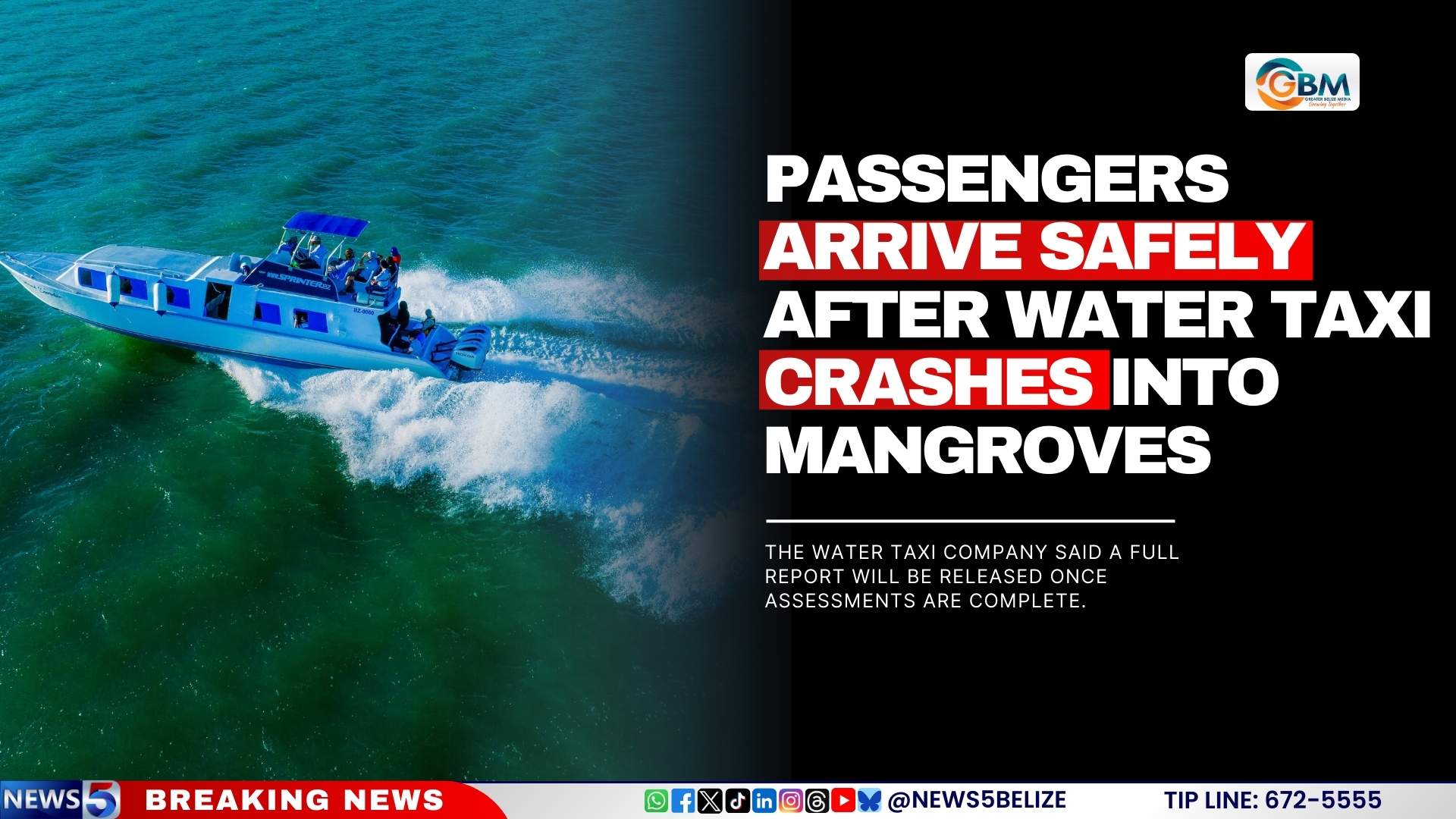
    A scheduled Caribbean Sprinter water taxi voyage experienced an unexpected deviation on December 13, 2025, when the vessel navigated into a mangrove territory off its standard course to Caye Caulker and Ambergris Caye. The maritime incident, occurring shortly after the 10:30 a.m. departure, culminated without major casualties through coordinated emergency protocols.

    Corporate officials confirmed the successful evacuation of all passengers and crew members, emphasizing that immediate response measures prioritized human safety above all other considerations. While the majority of travelers escaped physical harm, one female passenger sustained a hand injury during the evacuation process. Company representatives stated: ‘We are ensuring she receives prompt medical attention and comprehensive care.’

    The remaining passengers were systematically transferred to an alternative vessel to complete their journey under supervised conditions. Despite the professional handling of the situation, eyewitness accounts relayed moments of significant distress among those aboard following the impact. A relative of one passenger described scenes of panic as the vessel encountered difficulties.

    Caribbean Sprinter has committed to full transparency regarding the incident, noting that a comprehensive assessment is underway. The company pledged to release detailed findings upon conclusion of their internal investigation, potentially informing enhanced safety measures for future maritime operations in the region.

  • Progress on Green Hydrogen Production Plant in Colombia

    Progress on Green Hydrogen Production Plant in Colombia

    Colombian President Gustavo Petro has announced a groundbreaking green hydrogen initiative following his inspection of the Cartagena Refinery construction site. The project, leveraging newly inaugurated solar infrastructure, is projected to yield an annual production of 800 tons of green hydrogen starting April next year.

    President Petro emphasized the strategic significance of green hydrogen as a versatile energy carrier that can be transported through existing natural gas pipelines. “This development opens pathways for advanced phase exports of clean energy to global markets including Europe, the United States, and China through ammonia shipping,” he stated. The president further highlighted the dual benefit of producing green urea for domestic agriculture, enhancing both energy security and agricultural productivity.

    The announcement comes amid recognition of state-owned energy company Ecopetrol’s progressive strides in Colombia’s energy transition. However, President Petro identified a significant regulatory barrier: current legislation prohibits Ecopetrol from electricity generation for public distribution. Despite energy transition being a government priority, amending this restriction falls entirely under Congressional authority.

    “Ecopetrol must pursue legislative reform to enable commercial electricity generation,” Petro asserted, underscoring the need for regulatory modernization to align with national energy objectives.

    The green hydrogen facility, operating at five megawatts capacity, will produce premium-quality hydrogen for hydrotreating processes at the Cartagena refinery. This integration is projected to reduce carbon dioxide emissions by approximately 7,700 tons annually while simultaneously diminishing the carbon footprint of refined fuels. The project represents a crucial step toward enhancing Colombia’s energy independence and establishing the country as a participant in the global clean energy market.

  • Damage reported in central Cuba due to heavy rains

    Damage reported in central Cuba due to heavy rains

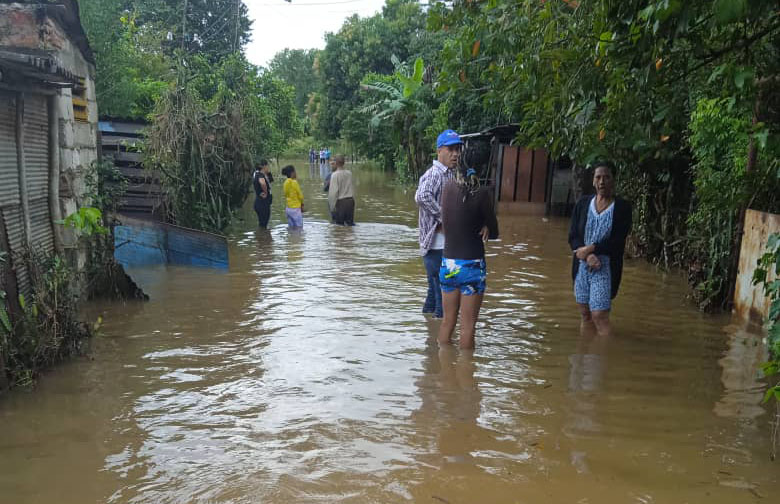
    Central Cuba’s Villa Clara province is confronting severe flooding as torrential rainfall continues to batter the region, affecting over 200 residents across multiple municipalities. The town of Sitiecito has emerged as the epicenter of the crisis, with overflowing rivers and severed road connections isolating communities.

    Meteorological experts from the Provincial Meteorological Center attribute the extreme weather conditions to a storm system currently positioned over central Cuba. Specialist Amaury Machado confirmed the system’s persistence, indicating that heavy precipitation will likely continue throughout the day.

    Quantitative measurements reveal the severity of the downpour. By 8:00 a.m. local time, the Institute of Hydraulic Resources recorded staggering rainfall accumulations: 156 millimeters in Sitiecito, 91.8 millimeters at the Alacranes reservoir, and 54 millimeters at the Sagua la Grande weather station. These measurements confirm locally intense rainfall exceeding normal thresholds.

    Provincial leadership has activated emergency protocols in response to the escalating situation. Governor Milaxy Sanchez announced comprehensive protective measures for vulnerable families, private property, and state infrastructure. Civil Defense units and the Integrated Medical Emergency System have been placed on high alert, implementing response strategies developed since the region’s last major flooding event in 2017.

  • CIP CEO defends programme’s integrity

    CIP CEO defends programme’s integrity

    Saint Lucia’s Citizenship by Investment Programme (CIP) has received a clean bill of health following an independent operational audit that found no evidence of corruption within its internal operations, according to CEO Mc Claude Emmanuel. The comprehensive review, conducted by professional services firm Deloitte, will be fully disclosed when the CIP’s 2024–2025 annual report is presented to Parliament in the upcoming session.

    This development emerges against the backdrop of ongoing legal proceedings initiated by former Prime Minister Allen Chastanet, who has sought judicial review of the program’s administration. The High Court is scheduled to hear Chastanet’s claim on January 26, though his previous application for an interlocutory injunction was rejected in an October judgment that permitted substantive allegations to proceed.

    Emmanuel, addressing corruption allegations in an exclusive interview with St. Lucia Times, emphasized that the audit examined processes spanning his tenure and previous administrations. “Internally, our audit shows that there has been no incidence of corruption,” he stated. “We recently performed our first operational audit by Deloitte, and nothing unsavoury was discovered.”

    The audit was conducted as part of Saint Lucia’s commitments under six agreed principles with the United States. Emmanuel provided conservative estimates indicating the program has generated “high hundreds of millions of dollars” since its inception, contributing approximately 7% (EC$189 million) to the national budget of EC$2 billion.

    Regarding fund allocation, Emmanuel clarified that while the CIP Unit processes applications and receives payments, all funds are transferred to the government treasury. “When it’s in the government’s control, I cannot tell you definitively what it is used for,” he explained, though noting several social initiatives funded through the program including infrastructure development, relief for vulnerable parents, subsidized school meals, and increased pensions.

    The program has approved only two projects in its nine-year history: the Caribbean Galaxy hotel project in Canelles and A’ila Resorts development at Rodney Bay. A third mega-project proposal never materialized due to missing approvals, policy changes, and COVID-19 disruptions.

    Emmanuel highlighted ongoing challenges including international pressure from countries like the United States and United Kingdom tightening border security measures. The program maintains strict due diligence procedures, currently banning applicants from Russia, Cuba, North Korea, Belarus, Italy, Venezuela, and Iran due to banking sanctions and due diligence limitations.

    Despite these safeguards, former Prime Minister Dr. Kenny Anthony predicts the program’s eventual collapse following recent agreements among OECS member states to establish a Regional CIP Regulatory Authority that would remove decision-making from national units.

  • Colombia and Russia strengthen ties in Education

    Colombia and Russia strengthen ties in Education

    Colombia and Russia have formalized a comprehensive educational partnership through a newly signed memorandum that establishes extensive academic exchange programs between the two nations. The agreement enables Colombian students, academics, and professionals to pursue undergraduate and graduate studies at Russian universities, with particular emphasis on strategic fields including artificial intelligence, agribusiness, advanced technologies, and applied sciences.

    As part of the enhanced cooperation, Russia has committed to increasing its scholarship allocation for Colombian candidates by confirming an additional 20 scholarships immediately. Both governments anticipate this number will grow progressively following the memorandum’s implementation. The partnership framework also facilitates the development of dual-degree programs, collaborative research initiatives, and mutual exchange of scientific materials and educational resources.

    The bilateral agreement further provides for the organization of joint academic conferences, seminars, and research projects designed to address global challenges. Colombian authorities emphasized that this collaboration will significantly strengthen the quality of higher education in Colombia while connecting the nation to cutting-edge scientific and technological advancements worldwide.

    In reciprocal arrangements, Colombia will facilitate access for Russian citizens to its higher education institutions and provide additional consideration points for Russian applicants seeking Colombia Scholarship opportunities. The alliance additionally promotes linguistic exchange through mutual support for Russian and Spanish language learning programs, creating enhanced opportunities for students and professionals from both countries.

  • Cuban Film Festival concludes with screenings of award-winning works

    Cuban Film Festival concludes with screenings of award-winning works

    The 46th Havana Film Festival culminated in a grand finale with special screenings of its most celebrated cinematic works across multiple venues. The festival’s closing events showcased an impressive array of international co-productions that had earned top honors in the prestigious Coral Awards competition.

    At the Charles Chaplin Cinema, audiences were treated to ‘A Poet,’ the festival’s most awarded feature film, followed by ‘The Mysterious Gaze of the Flamingo’ (Chile-France collaboration), which claimed the Best First Feature category, and the Colombian-Honduran co-production ‘Eva,’ recognized for its outstanding Artistic Contribution.

    Simultaneously, Yara Cinema presented a diverse program including Cuba’s ‘Raptus’ (Animated Short/Medium-Length Film winner), Brazil’s ‘Sappho’ (Special Jury Prize recipient), and the Franco-Brazilian production ‘Heart of Darkness’ (Animated Feature Film Award winner).

    La Rampa cinema featured the multinational documentary ‘The Prince of Nanawa’ (Argentina-Paraguay-Colombia-Germany), honored with the Best Documentary Feature Coral Award. Additional venues including Acapulco, Infanta, and Glauber Rocha Foundation theaters screened notable works such as Cuba’s ‘Nora,’ France’s ‘Case 137,’ the transnational production ‘The Reborn’ (Argentina-Chile-Spain), and ‘Oca’ (Mexico-Argentina collaboration).

    The festival’s final day included special presentations at 23 y 12 cinema of the Cuban-Italian project ‘Baracoa’ (Sumate Award winner with Honorable Mention from Havana’s Agrarian University) and ‘Son of Tiger and Mule’ (Panama-Colombia), recipient of the Special Coral Jury Prize for Best Documentary Feature. Multiple award-winning films including ‘Belen’ (Argentina), ‘Cuerpo Celeste’ (Chile-Italy), ‘Tierra enferma’ (Brazil), ‘El agente secreto’ (Brazil-France), and ‘Neurotica Anonima’ (Cuba) received encore presentations across Chaplin, Yara, and Acapulco theaters, bringing the cinematic celebration to a magnificent close.

  • BREAKING: Water Taxi Crashes, Passengers Injured

    BREAKING: Water Taxi Crashes, Passengers Injured

    A maritime emergency unfolded this morning when a Caribbean Sprinter water taxi vessel collided with a hazardous area known as ‘the cut off’ during its regular route from mainland Belize to the islands of Caye Caulker and Ambergris Caye. The incident occurred shortly after the vessel’s 10:30 a.m. departure, according to initial reports from local authorities.

    Multiple passengers sustained injuries of varying severity in the impact, though specific numbers and conditions have not been officially confirmed. Emergency response teams were immediately dispatched to the scene following distress calls, with rescue operations currently underway.

    Eyewitness accounts from relatives of passengers describe a scene of chaos and trauma, with those on board reportedly experiencing significant shock following the sudden collision. The Caribbean Sprinter, which operates on a scheduled daily route between popular tourist destinations, was carrying both local residents and international visitors at the time of the accident.

    Maritime safety investigators have launched a comprehensive inquiry to determine the exact circumstances that led to the vessel striking the well-known navigational hazard. The area where the collision occurred presents particular challenges to watercraft due to its unique underwater topography and strong currents.

    Medical personnel are standing by at nearby facilities to receive and treat injured passengers as they are transported from the scene. The Belize Coast Guard has established a security perimeter around the incident site while recovery operations continue.

    This incident represents one of the most significant maritime accidents in recent Belizean waters, raising immediate questions about safety protocols and navigational procedures for commercial water taxis operating in the region.

  • Recensie: Tomas Ross: Nacht over Paramaribo

    Recensie: Tomas Ross: Nacht over Paramaribo

    Dutch author Tomas Ross, pseudonym of Willem Hogendoorn, reaffirms his status as a master of the ‘faction’ genre with his latest novel ‘Night Over Paramaribo.’ This gripping 460-page thriller delivers both heart-pounding suspense and a penetrating examination of Suriname’s complex history and its intricate ties with the Netherlands.

    The narrative boldly incorporates real political figures including former Surinamese president Desi Bouterse and his wife Ingrid, current president Chan Santokhi and first lady Mellisa, alongside Dutch politicians such as Hans van Mierlo and even Prince Bernhard. Ross presents their achievements and flaws with unflinching candor.

    At the core of the plot lies a provocative question: Why did the Netherlands never attempt to arrest Bouterse despite multiple opportunities? The answer points toward potential Dutch involvement in the 1980 coup, referencing Colonel Valk and a secret document known as Operation Black Tulip. This document, allegedly held by Bouterse in a secure box obtained from a former Dutch embassy employee, becomes the story’s central MacGuffin—a potential tool for blackmailing the Dutch government.

    Following Bouterse’s death in late 2024, the box is stolen from his villa, triggering an international manhunt involving spies, secret agents, and rival factions. The action moves dynamically from Suriname to various European locations, featuring brutal confrontations across the Netherlands, France, and Spain.

    The final act returns to Suriname, where Bouterse’s loyalists, the Unity Council, prepare a new coup dubbed Operation Silver Arrow. Protagonists Lex Hansen and Suzy Ling find themselves in a desperate race against time as they hurry toward Paramaribo, coinciding with a multinational military exercise involving Suriname, the Netherlands, the United States, and France—which Ross ingeniously portrays as the coup’s actual execution.

    While grounded in historical fact, Ross skillfully incorporates fictional elements, including a car rental company in Snesi Kondre and the improbable rental of a motor yacht in an inland village for navigating the treacherous Marowijne River. This deliberate blending of fact and imagination enhances the story’s intrigue.

    Ross demonstrates exceptional narrative pace and precision throughout. His vivid depictions of Paramaribo’s atmosphere, the Surinamese jungle, and European urban landscapes create an immersive reading experience. The potent combination of political intrigue, espionage, and personal drama establishes ‘Night Over Paramaribo’ as a standout thriller that maintains relentless tension despite its complex cast of characters.