作者: admin

  • Soroptimistclub doneert kookvoorzieningen aan vrouwenafdeling Santo Boma

    Soroptimistclub doneert kookvoorzieningen aan vrouwenafdeling Santo Boma

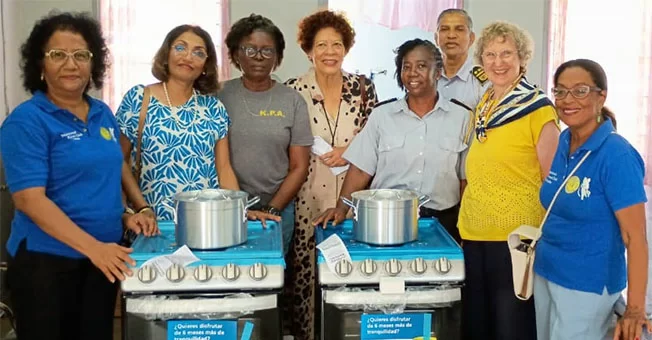
    The Soroptimist International Club Paramaribo (SICP) has significantly improved living conditions for incarcerated women at Santo Boma Central Penitentiary Institution’s female wing through a substantial donation of kitchen equipment. The humanitarian contribution included two gas stoves, two large cooking pots, and a gas cylinder, directly addressing practical needs expressed by the detained population.

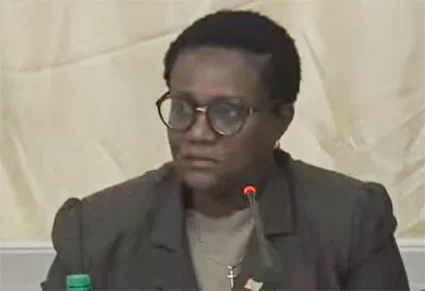
    During an official handover ceremony, Prison Corps Chief Joyce Alfaisi expressed profound gratitude for the initiative, noting that female detainees frequently face societal neglect despite their legitimate right to dignified treatment and rehabilitation support. Alfaisi emphasized the alignment between Soroptimist values and the correctional system’s fundamental mission: guiding inmates toward meaningful societal reintegration.

    SICP President Trees Cirino revealed that the donation resulted from a July 2025 visit to the facility where detainees specifically requested improved cooking facilities. This marks the organization’s continued engagement with the institution, following previous book donations facilitated through collaboration with Soroptimist Club Hilversum from the Netherlands.

    Cirino reinforced that Soroptimist advocacy for women’s empowerment explicitly includes incarcerated women, who deserve particular support during rehabilitation and personal development processes. The donation provides both practical benefits and psychological encouragement, enabling detainees to actively shape their daily routines while maintaining dignity and self-worth.

    The recipient women conveyed deep appreciation for the equipment, pledging responsible usage. The proceedings unfolded in an atmosphere characterized by mutual respect, positivity, and gratitude. This successful humanitarian endeavor was made possible through collaborative efforts among multiple partners and donors committed to penal system improvement.

  • Dominican child found during immigration operations where 28 Haitians were detained

    Dominican child found during immigration operations where 28 Haitians were detained

    VALVERDE, Dominican Republic – In a decisive security operation targeting illegal migration routes, the Dominican Republic Army (Ejército de la República Dominicana – ERD) successfully interdicted two vehicles engaged in human smuggling near the municipal district of Ámina. The operation culminated in the detention of 28 Haitian nationals found to be in an irregular migratory status within the country.

    The initial intervention occurred when ERD personnel identified and pursued a white Lexus SUV bearing license plate G094995. The driver, upon detecting military presence, executed an abrupt abandonment of the vehicle and fled the scene on foot. A subsequent inspection of the deserted Lexus revealed 20 undocumented Haitian migrants, comprising 17 adult males and 3 adult females.

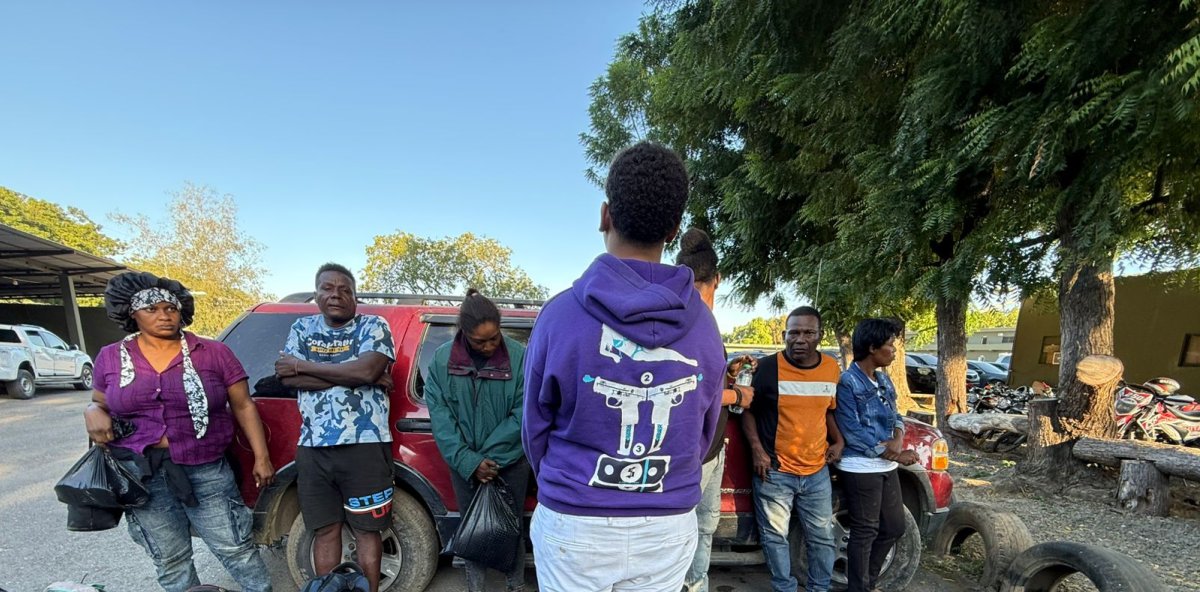
    In a simultaneous and coordinated action, a second ERD patrol unit intercepted a red Ford Explorer with license plate G202999. Mirroring the first incident, the operator of this vehicle also evaded capture by escaping into the surrounding area. This abandoned SUV contained a dual discovery: 8 Haitian nationals (4 men, 3 women, and 1 minor) and an unaccompanied Dominican minor who was left behind.

    All detained individuals, including the 28 Haitian migrants and the Dominican minor, were transported under military escort to the headquarters of the 4th Infantry Brigade. The two impounded vehicles were also conveyed to the base. Dominican authorities confirmed that standard legal protocols are now being administered to process each case in accordance with the nation’s immigration and security statutes.

  • SOVA vraagt zorgvuldige afweging bij inrichting derde rechterlijke instantie

    SOVA vraagt zorgvuldige afweging bij inrichting derde rechterlijke instantie

    The Suriname Bar Association (SOVA) has issued a comprehensive response to legislative proposals currently before the National Assembly regarding the establishment of a third judicial instance in the country’s legal system. SOVA Dean Alleson Freank emphasized that while the organization recognizes Suriname’s clear need for enhanced judicial oversight, any structural changes require meticulous examination before implementation.

    The proposed legislation includes a constitutional amendment to create a Surinamese High Council as the nation’s third judicial body. This initiative aligns with SOVA’s ongoing exploration of the same matter through a dedicated committee established earlier this year. The Bar Association acknowledges the fundamental importance of strengthening legal protections for Surinamese citizens through judicial reform.

    Critical to the debate is determining the most effective framework for this third instance. SOVA highlights that a domestic High Council represents only one potential solution, noting that several regional neighbors have instead chosen to integrate with the Appellate Jurisdiction of the Caribbean Court of Justice (CCJ). Both models present distinct advantages and considerations that warrant careful analysis.

    The Association’s committee has been tasked with evaluating both options objectively, examining which approach best suits Suriname’s legal system and societal context. This assessment requires comprehensive multidisciplinary research encompassing constitutional, legal, and practical implementation factors to ensure the chosen model functions effectively in daily practice.

    Following a recent general members’ meeting where preliminary findings were presented, SOVA plans to organize a discussion evening to foster broad-based consensus. The Association stresses that regardless of the selected model, professional and societal support remains essential, with timely involvement of relevant stakeholders including judiciary members, legal practitioners, and the Public Prosecutor’s Office.

    Regarding separate proposals to lower the retirement age for the Prosecutor General, SOVA notes that while no principled objections exist against age limits, such changes must consider available human resources and should generally apply only to future officeholders. The Association also questions how this initiative aligns with existing legislative proposals for Public Prosecutor’s Office reforms.

    SOVA expressed disappointment at not being consulted prior to the submission of these legislative initiatives but remains encouraged by the President’s commitment to stakeholder consultation during further deliberations. The organization reaffirms its dedication to constructively strengthening Suriname’s rule of law and anticipates continued productive dialogue on these crucial judicial matters.

  • Indomet forecasts that the effects of the trough will continue in several provinces of the country.

    Indomet forecasts that the effects of the trough will continue in several provinces of the country.

    The Dominican Institute of Meteorology (Indomet) has released a comprehensive weather advisory indicating that a high-altitude trough system continues to influence weather patterns across northeastern provinces. Meteorological data shows that Hato Mayor, Samaná, El Seibo, and María Trinidad Sánchez have already experienced precipitation episodes, with the atmospheric disturbance expected to progress toward Hermanas Mirabal, Espaillat, and Puerto Plata regions in subsequent hours.

    According to meteorological analysis, atmospheric humidity levels are projected to diminish post-noon hours, resulting in predominantly clear skies with intermittent cloud coverage across most national territories. This improvement in weather conditions follows the trough’s movement through affected areas.

    Meteorologists note that despite daytime clearing, nocturnal hours may bring precipitation to southeastern sectors and portions of the Central Mountain Range. The capital region, including Greater Santo Domingo and the National District, anticipates partly cloudy conditions with isolated showers throughout the day.

    Temperature metrics indicate minimum readings between 20-22°C (68-72°F) and maximum temperatures ranging from 30-32°C (86-90°F). The institute continues monitoring atmospheric developments and will provide updates as weather patterns evolve.

  • When does a vehicle cease to be useful in the Dominican Republic according to the law?

    When does a vehicle cease to be useful in the Dominican Republic according to the law?

    SANTO DOMINGO – The Dominican Republic has implemented sweeping vehicle safety and retirement regulations under its comprehensive Law No. 63-17 on Mobility, Land Transportation, Transit, and Road Safety. This legislation establishes precise criteria for determining when a vehicle must be permanently removed from circulation, prioritizing public safety and environmental protection.

    The law specifies three primary conditions under which a vehicle is deemed unroadworthy and must be demolished. First, mandatory age limits are imposed based on vehicle type: motorcycles (10 years), light passenger vehicles (15 years), minibuses (17-20 years depending on capacity), buses (25 years), and heavy cargo vehicles (30 years). Upon reaching these thresholds, vehicles become ineligible for inspection tags and operational permits.

    Second, regardless of age, any vehicle failing the mandatory Technical Vehicle Inspection (ITV) – which assesses mechanical integrity, safety features, and emissions compliance – will be prohibited from operation. The National Institute of Transit and Land Transportation (Intrant) holds authority to revoke circulation authorizations for vehicles presenting public safety risks.

    Third, insurance companies must declare vehicles as total losses following severe damage from accidents or fires, permitting sale only for parts or demolition. The law explicitly bans importing vehicles with salvage or rebuilt titles.

    Enforcement mechanisms require the General Directorate of Internal Taxes (DGII) to remove non-compliant vehicles from the National Registry, while Intrant coordinates immediate demolition operations. This regulatory framework represents one of the Caribbean’s most stringent vehicle safety initiatives, aiming to modernize the national fleet and reduce traffic fatalities.

  • US-based Dominican Kenny James Phillip faces new gun smuggling charges

    US-based Dominican Kenny James Phillip faces new gun smuggling charges

    Federal authorities in the United States have unsealed court documents detailing serious charges against Kenny James Phillip, a dual citizen of the U.S. and France, for allegedly orchestrating an international firearms smuggling operation from Florida to the Caribbean nation of Dominica. The case exposes sophisticated methods used to traffic weapons through commercial shipping channels.

    According to the federal indictment, Phillip utilized a shipping company in Orlando to dispatch multiple packages containing firearms and ammunition disguised as innocuous consumer goods. One intercepted shipment, falsely labeled as ‘clothing,’ was found to contain six firearms with obliterated serial numbers, 13 magazines, and 150 rounds of ammunition. A second package, declared as ‘canned food’ and intercepted in South Florida, concealed six 9mm handguns and 12 magazines destined for Dominica.

    Investigators successfully linked both shipments to Phillip after employees at the Orlando shipping facility identified him as the individual who had dropped off the packages. The court documents further reveal that Phillip was already a known fugitive from Dominican justice, having been charged in March 2021 for illegal ammunition possession in his hometown of Calibishie and subsequently denied bail before fleeing to Orlando.

    U.S. prosecutors are now emphasizing Phillip’s status as a significant flight risk, citing his dual citizenship and history of evading law enforcement. Defense attorney Rajan Joshi, who specializes in comparable international cases, provided context, noting that the abundance of firearms in the U.S. creates a pipeline feeding a thriving underground weapons market in the Caribbean region.

    Phillip is currently being held at a federal detention center in Miami. While specific details of his arrest remain undisclosed, authorities confirm this case underscores the ongoing challenge of transnational criminal networks exploiting global shipping infrastructure to traffic arms to small island nations, presenting persistent security concerns for Caribbean communities.

  • Hofpresident Rasoelbaks geïnformeerd over opname derde instantie in Grondwet

    Hofpresident Rasoelbaks geïnformeerd over opname derde instantie in Grondwet

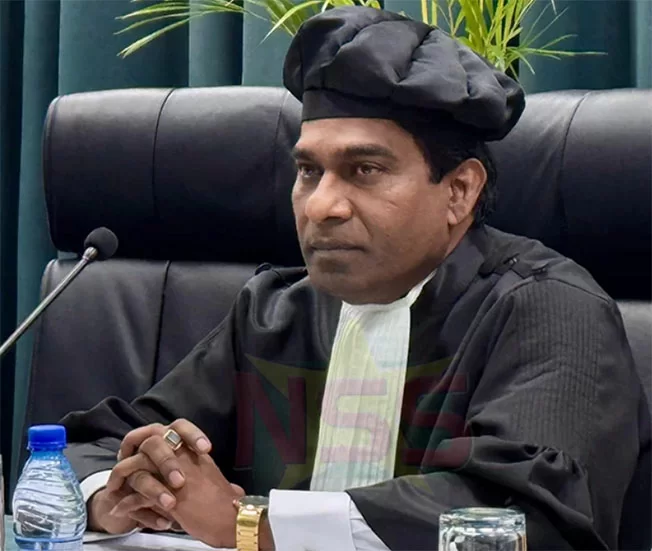
    Suriname’s judicial landscape may undergo significant transformation as six parliamentarians have submitted initiative proposals to establish a third-tier cassation court within the country’s legal system. The proposed constitutional amendments, introduced on Thursday, aim to create a Supreme Court or similar high judicial authority, though the current Court of Justice President Iwan Rasoelbaks confirms his institution hasn’t been formally consulted in the legislative drafting process.

    President Rasoelbaks clarified that while National Assembly President Jennifer Simons informed him about plans to constitutionally anchor the third instance, substantial consultations regarding implementation details would occur later through secondary regulations. The Court of Justice will thoroughly examine the proposed legislation once formally submitted for judicial review, after which lawmakers will receive comprehensive advisory input.

    The judicial leader emphasized the court’s longstanding support for cassation jurisdiction, noting that such reform would enhance legal development and broaden societal legal protection. For several years, the Court of Justice has independently researched possibilities through a specialized task force comprising local and international experts. This think tank produced two comprehensive options presented earlier this month to both the National Assembly and the President, with reports publicly available on the court’s website for transparent public access.

    The proposed models include conditional accession to the Caribbean Court of Justice’s appellate jurisdiction with a civil law chamber, or alternatively, establishing a domestic Supreme Court grounded in civil law tradition. Rasoelbaks stressed that any future cassation court wouldn’t function as a factual instance but would focus exclusively on reviewing proper legal application, while the Court of Justice would maintain its position as Suriname’s highest factual jurisdiction.

    Three of the four submitted initiatives concern constitutional modifications to judicial organization, with the fourth addressing the judicial branch’s legal status. This separation of competencies between factual and cassation jurisdictions aims to foster credible, thorough jurisprudence and legal evolution, according to the Court President.

  • Police investigate double homicide in Savanne Paille

    Police investigate double homicide in Savanne Paille

    Authorities in the Commonwealth of Dominica have initiated a comprehensive investigation following a deadly shooting incident that claimed the lives of two male victims this past weekend. The tragedy occurred in the Savanne Paille district on Saturday, though specific details surrounding the circumstances remain limited as police continue their preliminary examination of the case.

    The Commonwealth of Dominica Police Force (CDPF) has confirmed the active status of their investigation but has not yet released official statements regarding potential suspects, motives, or detailed chronology of events. This development marks a significant violent episode in the community, prompting heightened attention from local media and residents alike.

    Dominica News Online (DNO), the island’s premier digital news source, has committed to tracking the investigation’s progress and will provide subsequent updates as official information becomes available through proper channels. The community awaits further clarification from law enforcement officials as they work to establish the factual sequence of this fatal encounter and identify those responsible for the violence.

  • Constitutional Court upholds 20-year prison sentence for soldier for killing two men

    Constitutional Court upholds 20-year prison sentence for soldier for killing two men

    The Dominican Republic’s Constitutional Court has rejected an appeal filed by Army First Lieutenant Yarin Esteudy Novas Sena, who sought to overturn his 20-year prison sentence for the 2014 fatal shooting of two men. The court’s decision represents the final judicial resolution in a case that has spanned nearly a decade.

    Novas Sena’s conviction stems from a December 2014 incident in Los Guaricanos, Santo Domingo Norte, where he shot and killed Manuel José Crespo Núñez (‘El Mello’) and Yarel Jesús Taveras Ulloa (‘El Guardia’). The lieutenant claimed the victims had assaulted him moments earlier, stealing cash and his cellular phone.

    The constitutional appeal challenged Ruling No. 1305, issued by the Second Chamber of the Supreme Court of Justice on October 30, 2019, which had affirmed the original sentence handed down by the Collegiate Court of the Judicial District of Santo Domingo.

    While the Constitutional Court acknowledged technical validity regarding filing deadlines due to improper notification procedures, it ultimately determined the appeal lacked substantive legal foundation. The court concurred with the Attorney General’s Office that the petition failed to meet requirements established by Law No. 137-11, the Organic Law of the Constitutional Court.

    Judicial authorities noted that Novas Sena’s submission contained only superficial arguments without proper legal analysis. The appellant merely referenced constitutional provisions and criminal code articles—including Article 321 and 329(2) of the Criminal Code and Article 40.13 of the Constitution—without demonstrating their specific relevance to his case.

    The court emphasized that such perfunctory legal references prevented meaningful judicial review, making it impossible to assess whether the challenged ruling contained procedural deficiencies or fundamental rights violations. This absence of substantive argumentation led to the appeal’s inadmissibility declaration, effectively upholding all previous judicial determinations. The court additionally exempted Novas Sena from bearing procedural costs.

  • Nieuwe wet moet Surinaams natuurbeheer moderniseren

    Nieuwe wet moet Surinaams natuurbeheer moderniseren

    Suriname’s parliamentary coalition has introduced groundbreaking legislation aimed at fundamentally transforming the nation’s approach to environmental protection and resource management. The ‘Sustainable Nature Management’ initiative law represents a comprehensive overhaul of the country’s outdated 1954 Nature Protection Act, addressing contemporary ecological challenges while acknowledging economic realities.

    With approximately 93% forest coverage and ranking among the world’s most biodiverse nations, Suriname faces critical decisions regarding conservation amidst growing economic pressures. While internationally recognized as a High Forest Low Deforestation country, recent data reveals deforestation rates are climbing to approximately 0.06% annually. Mining operations account for the majority (73%) of forest loss, followed by infrastructure development and urbanization—trends that not only cause ecological damage but directly impact indigenous and tribal communities through habitat disruption and land use conflicts.

    The proposed legislation shifts from strict conservation toward sustainable management principles, recognizing nature as both ecological treasure and economic resource under stringent conditions. The core philosophy establishes that those who benefit from nature must contribute to its preservation. Innovative mechanisms include nature tourism concessions, payments for ecosystem services, and provisions for designating private lands as protected areas—all aimed at stimulating green growth while reducing economic dependence on oil and gold.

    A cornerstone of the new framework is the enhanced role of the National Environmental Authority (NMA), which will coordinate nature management, oversee protected areas, supervise concessions, and enforce regulations. The Environmental Fund will be expanded to finance nature management projects accessible to government agencies, local communities, and private managers alike.

    Perhaps the most transformative aspect is the formal incorporation of the Free, Prior and Informed Consent (FPIC) principle, requiring explicit approval from indigenous and tribal communities for protected areas, buffer zones, or concessions within their territories. The law further recognizes traditional knowledge and enables communities to submit proposals for independently managed protected areas, elevating their role from stakeholders to full partners in environmental stewardship.

    Aligned with IUCN guidelines and international biodiversity treaties, the legislation introduces modern enforcement mechanisms including administrative coercion, fines, and criminal sanctions for serious violations. It explicitly grants citizens and organizations access to objection and appeal procedures against NMA decisions, strengthening legal protection and transparency.

    This legislative initiative represents Suriname’s attempt to solidify its international reputation as a forest-rich biodiversity haven while promising greater participation, enhanced protection, and the integration of conservation with economic development. Its ultimate success will depend on implementation factors including adequate capacity, political will, and genuine community engagement—determining whether it becomes a paper reform or a foundational pillar of Suriname’s future environmental policy.